



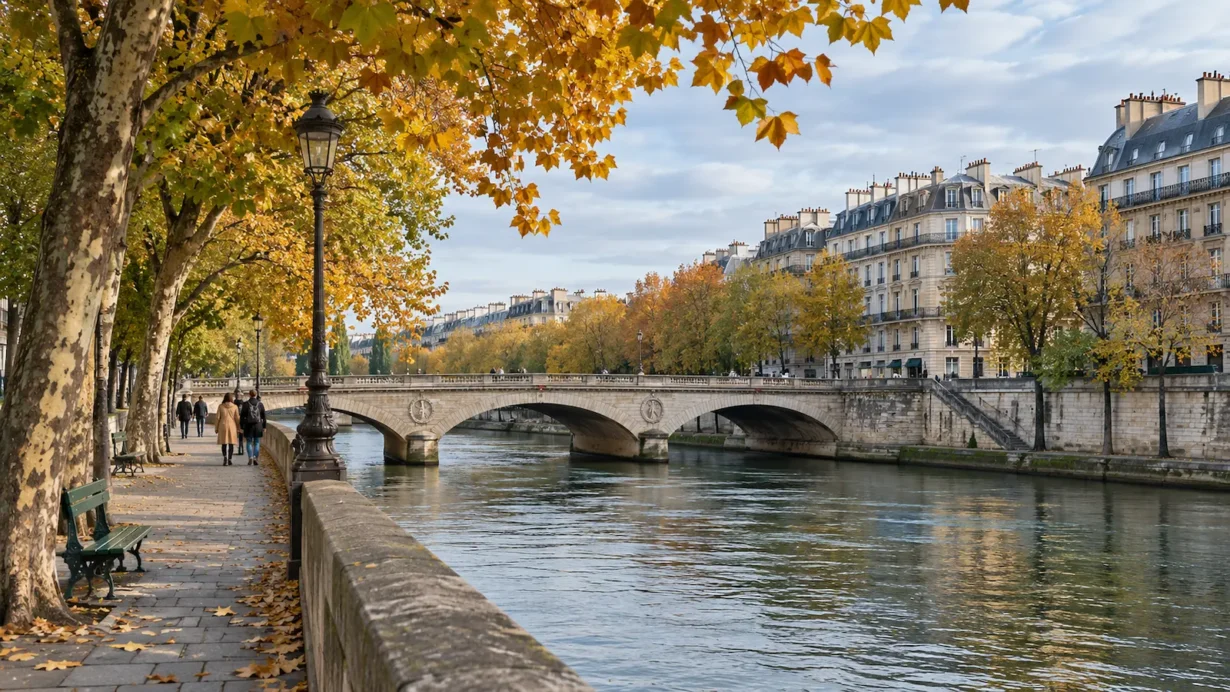
For a first Paris visit built around walks and museums, look at late April through May or late September through October. Compare hotel totals for the dates you can travel, since major events can change the value. January and February can cost less if you are happy with shorter days and more time indoors.
💡 先看重點
- For a first visit built around walking, compare late April–May and late September–October first, then remove dates that clash with the events and room prices you want to avoid. Pleasant weather does not guarantee a bargain.
- January and February outside holiday and event peaks are worth checking for value, but shorter days and cold rain change how much outdoor time you can use.
- July–August can work with long evenings and a slower schedule. Reliable room cooling, shaded breaks and flexibility matter more than a romantic summer photograph.
The best time to visit Paris depends on which inconvenience you are most willing to accept. Spring can bring gardens and cool showers, summer offers long evenings with a risk of uncomfortable heat, autumn changes quickly, and winter exchanges outdoor hours for a more indoor-focused trip. The wrong choice is choosing from a photograph while ignoring the hotel total, your walking tolerance and the calendar.
For an ordinary first city break, late April–May and late September–October are useful starting comparisons. That is an editorial preference for a walk-and-museum balance, not a claim that those dates are always dry, uncrowded or cheaper. If budget leads the decision, test winter dates outside the relevant events and holidays. If school breaks decide your travel window, adapt the daily plan instead of waiting for an impossible perfect month.
If two sets of dates look equally good, use our Paris budget guide to compare the full trip cost before choosing.
一分鐘速覽
- 3 至 4 月: Best for a spring atmosphere with a willingness to pack layers. March can still feel wintry; April gives a better chance of comfortable garden time. Rain and cool evenings remain possible. Compare Easter, school holidays and early-March events before paying for an inflexible stay. Do not book a whole trip on a guaranteed blossom date.
- 5 至 6 月: Best for long sightseeing days, outdoor meals and travelers who want a broad mix of activities. The catch is that attractive weather also attracts demand, and French public holidays or major events can complicate prices. June can already be hot; a light jacket and a wet-weather plan still have a role.
- 7 至 8 月: Best for people who value late evenings and can slow down in the afternoon. Main attractions remain popular even if some local businesses take summer breaks. Check room cooling, current heat alerts and the availability of any restaurant central to your plans. A lower room rate is not a saving if the room prevents good sleep.
- 9 至 11 月: Best for travelers who can choose where in a changing season they want to land. September can feel summery; October suits a mixed indoor/outdoor rhythm; November is a colder, shorter-day proposition. Business and fashion dates mean that “after summer” does not automatically mean cheap.
- 12–2 月: Best for museums, winter streets and travelers comfortable with limited daylight. Christmas/New Year and event dates are different pricing periods from a quiet winter weekday. Cold rain is more useful to plan for than a promise of picture-perfect snow. Verify holiday opening and the hotel’s heating/arrival arrangements.
實用貼士
- Choose the kind of day you want before the month. A photographer seeking long evening walks, a family needing room breaks and an art lover planning museum mornings need different conditions. Write your two most important experiences first. Then choose dates that support those experiences instead of a generic “best season.”
- Use climate figures as context, then use a forecast for the actual trip. The Paris tourism office’s monthly weather guide shows the broad seasonal range, while Météo-France’s Paris-Montsouris climate page explains the local climate reference. Neither can tell you whether your specific Tuesday will be dry. Avoid building an entire week around one exposed viewpoint.
- Compare hotel totals on several date sets. Use the same category, number of guests and cancellation terms. A spring Sunday–Thursday stay and a fashion-week stay can have different economics even within the same month. If one date is expensive, test a nearby combination before downgrading the hotel’s location or access.
- Check holiday zones and public holidays separately. Paris belongs to school-holiday Zone C, but visitors arrive from other French zones and countries too. A local school week does not prove a quiet museum. Check the official French school calendar 及 public-holiday list for the year you will travel.
- Verify cooling in the booked room category. In warm months, ask what cooling is provided and when it operates. A fan, an open window and air conditioning are different solutions, especially on a noisy street. Do not assume that one icon on a booking page describes every room and season.
- Price the weather backup. A rainy afternoon may mean a museum, a longer café stop or a taxi. Leave a small margin rather than filling every euro with prepaid outdoor activities. Book important interiors because you want them, not simply because an uncertain forecast frightened you into a package.
- Respect the seasonal clock. A garden that works after dinner in June may close before your late-afternoon walk in December. The Luxembourg Garden timetable changes through the year. Put exposed walks into usable daylight, and do not make winter dinner time dependent on a summer sunset photograph.
- Plan heat and rain around energy. On hot days, move the long outdoor section earlier, protect a real break and use the city’s current cooling and water information. In wet weather, shorten slippery or exposed routes instead of compensating with extra hurried steps. Travelers with mobility needs should check the complete transport and entrance route in any season.
詳細攻略
🌸 March–April: Spring Interest With Cool-Weather Flexibility
Gardens and city walks • Layered clothing • Holiday-date checks
Video context: A Walk in Paris’s Paris,France🇫🇷 – Paris April 2024 – 4K HDR Walking Tour | Spring 2024 | Paris 4K | A Walk In Paris shows a filmed April street walk rather than a forecast for every spring day. The clip is a published source, not a promise that current prices, access or queues match its filming date.
March and April should not be treated as one identical climate. In the tourism office’s monthly figures, typical daytime highs rise from about 13°C in March to about 17°C in April, while mornings and evenings remain cooler. A light rain layer and shoes comfortable on wet paving are more useful than assuming that a spring label means a warm café terrace.
Choose this window if you enjoy the change in gardens and street life and are happy to move an outdoor walk around showers. Blossom timing varies by tree, location and year, so treat flowers as a welcome possibility rather than a prepaid guarantee. A trip with a museum anchor, a neighborhood afternoon and flexible garden time is more resilient than one built entirely around the expected peak of a few trees.
For an upcoming 2027 visit, the official calendars provide reasons to compare dates carefully: Paris Zone C spring holidays run 3–19 April, and the women’s fashion schedule is 1–9 March. These are planning flags, not proof that every hotel or attraction is equally busy. Check the room total on your exact dates and preserve a cancellation option when that flexibility is valuable.
✅ 其他旅客怎麼看
A Walk in Paris’ April footage offers a visual sense of the streets and the clothes people wore on that filming day. Use it for atmosphere and route ideas. It is one observed visit, not evidence of a reliable bloom peak, a crowd-free season or a particular temperature throughout April.
⚠️ 安排行程時留意
Spring can combine high expectations with variable conditions. A room bought for an idealized blossom week can feel expensive if the weather turns cold and your only plan is outdoors. Keep one or two interior priorities, avoid an overfull first day and do not pay extra solely for a date someone online calls perfect.
☀️ May–June: Long Days Without a Guaranteed Low Price
Outdoor evenings • Broad activity choice • Event-sensitive dates
Video context: Visiting POV – The Paris Guide’s Paris, France 🇫🇷 – 4K PARIS 1 JUNE 2025 – 30°☀️Paris Walk with Captions shows a particular warm June day; its title’s temperature is not a monthly average. The clip is a published source, not a promise that current prices, access or queues match its filming date.
This is an appealing window for a first visit because outdoor time can fit comfortably around museums and meals. The monthly climate guide puts typical highs around 20°C in May and 23°C in June, although actual days can be cooler or substantially hotter. The useful advantage is flexibility: a daytime interior does not necessarily consume all your usable outdoor hours.
The practical cost is demand. May has several French public holidays, and major events can overlap the season. The official Roland-Garros site confirms 17 May–6 June 2027 for that edition; the fashion calendar lists menswear for 22–27 June 2027. If you want to attend an event, plan around its official ticket process. If you do not, compare nearby dates and hotel districts before assuming the whole period is unaffordable.
Use the longer evenings to spread the day out. A proper lunch or hotel break can be followed by a small walk rather than forcing all sightseeing into the hottest or busiest part of the afternoon. Book the important timed attraction and leave the surrounding neighborhood time adjustable. A later sunset is spare capacity, not a requirement to stay outside until exhaustion.
✅ 其他旅客怎麼看
The Visiting POV–The Paris Guide clip is titled as a 30°C day on 1 June 2025. It is a helpful reminder that early summer can already feel warm, while remaining only one visitor’s filmed conditions. Use the streetscape to plan shade and breaks; use a current forecast to choose clothing and daily timing.
⚠️ 安排行程時留意
Do not use “shoulder season” as a budget guarantee. A desirable room can be expensive on exactly the week you want, and an inflexible bargain can be poor value if your dates change. Check holiday closures and ticket availability before committing the entire trip around a cheap flight.
🌇 July–August: Long Evenings, Heat and a Different City Rhythm
Late outdoor time • Heat contingency • Confirm local openings
Video context: Visiting POV – The Paris Guide’s Paris, France 🇫🇷 – 4K PARIS HOT SUMMER Walk 🔥 19 JULY 2025 With Captions illustrates one filmed July walk and should not be treated as a promise about every summer day. The clip is a published source, not a promise that current prices, access or queues match its filming date.
Summer is workable when the schedule accepts summer conditions. The climate guide’s July and August typical highs sit near 26°C, but that average does not limit a heatwave. A plan that demands hours on exposed paving at midday is fragile. Put the longest outdoor section early or later, use shade where available and choose room cooling deliberately.
A quieter local street in August can coexist with busy landmark queues. Some neighborhood businesses take holidays, so confirm the restaurant, bakery or service that your plan depends on. Do not interpret a video of an empty avenue as proof that the Louvre, tower or river cruise will be empty. Tourist demand and local commuting patterns are different things.
This is a reasonable choice for travelers tied to school holidays who can slow the pace, and for those who enjoy late dinners and evenings outdoors. It is less attractive for someone who struggles with heat and wants an intensive walking itinerary every day. The solution is not simply to carry more water and keep the same exhausting schedule: remove an exposed section, add a real rest and preserve flexibility.
✅ 其他旅客怎麼看
The Visiting POV–The Paris Guide July clip provides a street-level example of a summer visit. It is useful for visualizing open spaces and a walking route. The conditions and pace shown belong to that recording; they cannot establish how hot, crowded or accessible your chosen day will be.
⚠️ 安排行程時留意
A room saving can disappear if you need repeated taxis or cannot sleep comfortably. Check the actual room’s cooling and noise situation, monitor current city and weather notices, and keep the afternoon optional. A paid high viewpoint or outdoor experience can also be affected by operational weather restrictions.
🍂 September–November: Choose Your Point in a Changing Season
Early-autumn walks • Shortening days • Business-calendar checks
Video context: Johlene Orton’s Autumn in Paris Travel Guide: Weather, Fall Food, & Must-Do Activities in October! offers an October-focused travel perspective rather than covering every month in this period equally. The clip is a published source, not a promise that current prices, access or queues match its filming date.
September can retain a summer feel, October usually asks for more layers, and November is a different short-day trip. The climate guide’s typical highs move from about 22°C in September to 17°C in October and 11°C in November. Choose the part of autumn that matches your priorities rather than treating three months as one uniform bargain season.
For a first visit with walks, cafés and museums, late September or October is worth comparing. Keep an indoor anchor and allow for showers, wet leaves and cooler evenings. If your main aim is galleries and restaurant time, later autumn can also work well. If you want long outdoor evenings, recognize the daylight trade before booking a November weekend.
Hotel demand can remain strong around business and fashion activity. The official women’s fashion dates for 2027 run 27 September–5 October. That does not prove a citywide price spike at every property, but it is a useful date flag when a quote surprises you. Compare exact stays on either side and use an actual booking total instead of declaring September automatically cheaper than summer.
✅ 其他旅客怎麼看
Johlene Orton’s autumn guide is explicitly October-oriented. It can help you imagine an autumn food-and-walk trip, while remaining one creator’s selection of experiences. Do not extend an October recommendation into a guarantee about early September weather, late November daylight or your own accommodation cost.
⚠️ 安排行程時留意
It is easy to combine summer expectations with winter-length afternoons. Check garden closing times and put the exposed viewpoint early enough. A late-afternoon garden, a long museum visit and a sunset across town may compete for the same shrinking hours. Choose the one that matters instead of chasing all three.
❄️ December–February: Museums, Winter Streets and Date-Specific Value
Indoor-friendly days • Short daylight • Holiday and event exceptions
Video context: ART VISION TV / C&B JOURNAL’s [🇫🇷Paris France 4K 120FPS Walking Tour] PARIS WINTER WALK 01/DECEMBER/2025 shows a December walk and gives seasonal street context, not a snow or weather guarantee. The clip is a published source, not a promise that current prices, access or queues match its filming date.
Winter suits a trip that enjoys interiors, slower meals and a smaller outdoor loop. Typical highs in the monthly guide are around 8°C in January, with cold mornings and evenings. Snow can be memorable, but it is not a sensible reason to promise a white Paris visit. Plan for cold rain and wind, then welcome brighter conditions when they arrive.
Separate Christmas and New Year from a quieter January or February stay. Confirm the restaurants and attractions you care about on the actual holiday, and price any special meal before assuming it fits the ordinary daily allowance. Hotel value depends on the exact dates, room and cancellation terms, not just whether the month is called low season.
For the 2026–2027 planning cycle, the official school calendar places the Christmas break at 19 December 2026–4 January 2027 and Paris Zone C winter holidays at 6–22 February 2027. Menswear fashion dates 19–24 January 2027 are another reason to test a nearby stay. Keep these as dated examples and check the calendar again when traveling in another year.
✅ 其他旅客怎麼看
ART VISION TV / C&B JOURNAL’s December footage gives a visual introduction to a winter street walk. It can suggest an atmosphere and route, but it cannot tell you whether a February afternoon will be dry or whether your holiday restaurant will open. Verify those separately.
⚠️ 安排行程時留意
Short daylight makes a long list of outdoor neighborhoods unrealistic. Protect one good walk, one meaningful interior and a warm break. The Centre Pompidou’s Beaubourg building is closed for the renovation aiming at 2030, so do not use an old guide’s building visit as your automatic rain-day fallback; check the institution’s current programme and locations.
Choose the Month by Your Actual Travel Style
If walking comfort leads: Compare late spring and early-to-mid autumn, check event dates and preserve a wet-weather option. Choose a hotel that makes a midday break practical. A slightly warmer or cooler forecast matters less when your day is not dependent on one long exposed march.
If the budget leads: Test January, February and later-autumn date combinations outside your identified peaks, then compare like-for-like room totals. Include heating/cooling needs, airport arrival time and cancellation conditions. Changing three nights within a month can be more useful than accepting a distant hotel simply to preserve a slogan about the cheapest season.
If children or school holidays lead: Accept the fixed window and improve the routine: an early outdoor anchor, a seated lunch, one substantial afternoon choice and a hotel with the space and facilities your family needs. An empty calendar is less important than a day that fits actual bedtimes and stamina.
If a particular event leads: Use its official dates and ticket process as the anchor. Compare hotels before purchasing non-refundable transport, then keep ordinary sightseeing lighter around the event. A tennis, fashion or festive trip has a different purpose and cost pattern from a general first-visit city break.
常見問題
What is the best month to visit Paris for good walking weather?
May and October are useful first comparisons, with late April or September also worth testing around your dates. None guarantees dry or mild conditions. Choose a flexible neighborhood-and-museum plan, then use the actual forecast rather than relying on a seasonal photograph.
What is usually the cheapest time to visit Paris?
January and February outside holidays and events are worth comparing, as are some later-autumn dates. No month is always cheapest. Check the whole stay with the same room and cancellation conditions, and flag the official fashion, school and major-event calendars.
Should I avoid Paris in August because everything closes?
No. A summer trip can work, and major attractions remain important visitor draws. Some neighborhood businesses take breaks, while heat can change a walking plan. Confirm the places you specifically want, choose reliable cooling and give the afternoon more flexibility.
最後的建議
Start with late spring or early-to-mid autumn for a balanced first visit, winter for an intentionally indoor-focused value search, and summer when long evenings and fixed holiday dates matter most. The right month is the one whose trade-offs you can enjoy. Price, weather tolerance and the way you spend a day should decide together.
Choose two or three possible date sets, compare a real hotel category through a verified property booking page such as Hôtel du Collège de France’s official site, and check the event and holiday calendars before committing. Then reserve only the essential dated experiences through their official ticket offices, including the Louvre’s booking page if it is a priority. Keep the surrounding walks flexible and recheck the forecast and operating notices close to departure.