💡 Key Takeaways
- Use the Tube or Elizabeth line for most district changes. For a short direct trip, walking or a local bus can save the station walk.
- Use one contactless card, device or Oyster card per paying passenger. The 2026 adult cap is £8.90 for eligible Zones 1–2 travel and £5.55 for buses and trams only.
- Check the whole route for step-free travel, including the change and the train gap. Airport trains and river services need their own fare check.
This London transportation guide starts with the trip you need to make. A Tube station looks close on the map, but a long passage or the wrong front door can add more time than the ride itself. A bus can beat a short Tube change, while the Elizabeth line can cross the city with one platform and one set of taps. For a first visit, map the hotel, your daily starting area and your late-night return. Then choose which trips actually need transport.
The 1-Min Cheat Sheet
- Tube, DLR and Overground: best for changing districts. Check the right direction and branch, and use TfL’s step-free maps where needed.
- Elizabeth line: strong for the Paddington–West End–City corridor and selected Heathrow trains. Pay as you go where accepted and check special airport fares.
- Bus: useful for a shorter direct ride, surface access and glimpses of the city. The adult Hopper fare is £1.85. Touch in at boarding.
- River Bus: a separate fare for a Thames journey, especially toward Greenwich or for the view. Check operating piers, direction and fare zones.
- Walk or Santander Cycles: useful within one district, around parks and between some river sights. Walk with luggage over short street routes. Rent a bike only for a route and docking plan you can comfortably use.
Top Survival Tips
- Pay with one identity. A bank card and its matching phone wallet can be seen as different payment methods. Choose one and use it consistently. For most rail services, touch in and out even if station gates are open. On TfL buses and trams, you usually only touch in, with any specific station instructions taking precedence.
- Read the destination or route number before boarding. A Tube line can split, and several buses can use the same streets before diverging. Read the final destination on the display and confirm your stop against the route map.
- Use caps as ceilings. The 2026 adult cap for eligible Zones 1–2 travel is £8.90. A small number of trips can cost less. The bus-and-tram-only cap is £5.55, and eligible transfers within an hour of the first bus or tram touch count under the £1.85 adult Hopper fare. Weekly TfL caps use Monday to Sunday. See TfL caps.
- Do the child fares before the first trip. Under-11s can travel free with a fare-paying adult on Tube, DLR, Elizabeth line, London Overground and some National Rail services, up to four children per adult. For a visitor aged 11–15, ask a member of TfL staff to add a Young Visitor discount to an eligible Oyster card. Airport operators and boats can have their own rules. Check visitor child fares.
- Check what your pass actually includes. Price your trips using the TfL single fare finder and compare the zones and days with a Travelcard. Heathrow Express and Thames Clippers have separate fares. For Heathrow Tube and Elizabeth line journeys through Zone 1, TfL uses peak fare treatment at any time.
- Run the accessibility and late-night check separately. Select a step-free route that works from street to train at both ends. Check platform gaps, lifts and interchanges. The Night Tube runs on selected lines and sections on Friday and Saturday nights. Check the date and branch first. See TfL step-free details · Check the Night Tube map.
London Transportation Guide by Mode
🚇 Tube, DLR and Overground — For Longer Cross-City Trips
Frequent rail · Branches and changes · Station access varies
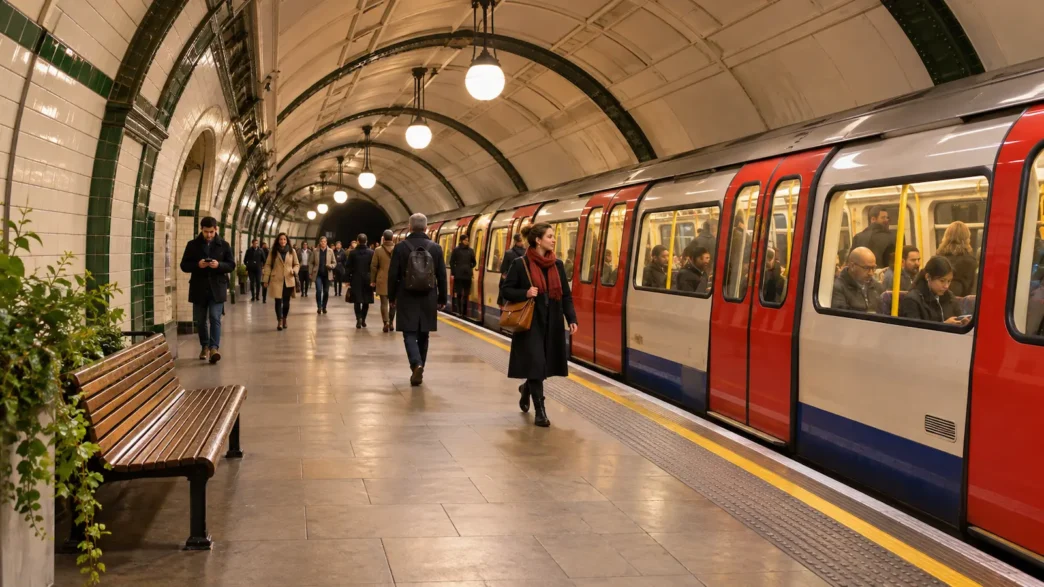
Choose the Tube when a direct line or easy interchange crosses much of central London. The Jubilee is useful between Westminster and London Bridge. The Piccadilly links many of the West End and museum stops. Use the map and check disruption rather than following a single saved route all week.
The DLR helps with Docklands and Greenwich trips, while Overground can be useful to districts outside the main tourist core. Choose by your actual stop. Check if an interchange needs a street walk or a different exit. Distinct stations with similar names can be a long way apart.
✅ What Other Travelers Say: The network makes a lot of neighbourhoods easy to combine when you use one line and a short walk.
⚠️ The Catch (Things to Keep in Mind): On routes with old stations, a brief train ride can still require steps and long passages. With baggage, compare the bus and plan an alternative before you are on the platform.
🚆 Elizabeth Line — For the Central East–West Corridor
Large trains · Several central stops · Airport branches
Use the Elizabeth line for a clean trip between Paddington, Bond Street, Tottenham Court Road, Farringdon and Liverpool Street. The line is especially useful with luggage because it can remove a Tube interchange. Check whether your destination is at the near or far end of the arrival station.
For Heathrow, verify the terminal and correct train. Services west of Paddington divide. Toward the east the branch also matters if you need Stratford or Canary Wharf. Check that you can board where you get on as well as exit where you get off. See TfL’s Elizabeth line airport information.
✅ What Other Travelers Say: Spacious train interiors and a series of central stops make it a favourite with travellers heading straight to a hotel.
⚠️ The Catch (Things to Keep in Mind): Terminals 4 and 5 have distinct service patterns, with fewer trains than the shared Terminals 2 and 3 stop. Use the timetable and airport fare rules for your exact trip.
🚌 London Buses — For Short Trips and Fewer Station Stairs
Street-level boarding · Hopper fare · Road traffic
For a trip along one main road, compare the bus boarding point with the time needed to walk to and through the next Tube station. Route 15 links the Trafalgar Square and Strand area with St Paul’s and Tower Hill when operating normally. Check the stop letter and traffic before choosing it.
Touch in on boarding and follow the route’s stop display. If you switch buses or trams within an hour of the first touch, use the same card or device for the Hopper fare. Give yourself some seating flexibility at busy times, especially with a pushchair or wheelchairs. See TfL route 15.
✅ What Other Travelers Say: Visitors often like seeing where they are going and avoiding a deep station for a short hop.
⚠️ The Catch (Things to Keep in Mind): Road delays and diversions are real. For the theatre or a timed attraction, compare live arrivals with rail or an earlier departure.
⛴️ River Bus — For Thames Views and Greenwich
Separate fares · Pier timetable · Worth taking for the view
Use the Thames Clippers service for a journey where the water is part of the day. A central pier to Greenwich can connect a sightseeing itinerary. Choose the exact boarding pier, direction and arrival pier. A stop shown on a map may have directional or timetable limits.
Pay before boarding. If using Oyster or contactless, the operator instructs passengers to touch in and out with the same card. River fares are separate from the TfL daily cap, and the boat has its own zone boundaries. Compare the online and card fares for your date before travelling. Check the operator’s fare and payment details.
✅ What Other Travelers Say: The views, seats and change of pace make the fare worthwhile for many visitors on a river day.
⚠️ The Catch (Things to Keep in Mind): A boat can be less convenient when departures are sparse, queues are long or you need a predictable arrival. Check your last return before committing.
🚶 Walk or Hire a Bike — For One District at a Time
Short walking links · Docked cycle hire · No station transfer
Walk when the next stop is across a single bridge or within the same neighbourhood. A walk between Covent Garden and Leicester Square can be quicker to manage than going through both station entrances. Choose a clear meeting point if a group splits.
Bike hire makes sense for confident riders with a calm route and a free docking space at the destination. Santander Cycles advertises pedal-bike hire from £1.65 for 30 minutes. Check the live app, the actual fee and docking confirmation before walking away. Consider quieter streets or a signed cycleway away from busy junctions. Check Santander Cycles hire and docking.
✅ What Other Travelers Say: Walking can reveal useful street connections that the Tube map tends to hide.
⚠️ The Catch (Things to Keep in Mind): A quick walk can become slow with bags, rain or an awkward crossing. It is fine to switch to a bus or licensed taxi when the group needs a break.
Key FAQs
Do tourists need an Oyster card to travel around London? Most adults with an accepted contactless card can use that. An Oyster card is useful if your bank fees or card acceptance are a concern, or if you need staff to add a Young Visitor discount for a child.
Will the TfL daily cap cover Heathrow and a boat ride? Heathrow trips can involve higher zones and special airport fares. The river service is priced separately, and Heathrow Express has its own fare. Check each operator and exact journey.
Can I use the same bank card for two people on the Tube? Each paying traveller needs their own eligible card, device or ticket. Each person should use the same payment identity at both ends and on all journeys counted toward their cap.
Final Verdict and Your Next Step
Start with your hotel postcode, and make the choices for your first and last rides before leaving home. Compare the airport and station travel guides if your journey begins with bags. Most Tube and bus rides need no reservation. For a river day, compare Thames Clippers tickets with the Klook Thames Clippers listing (affiliate link) for the piers, dates and trips you actually want.