
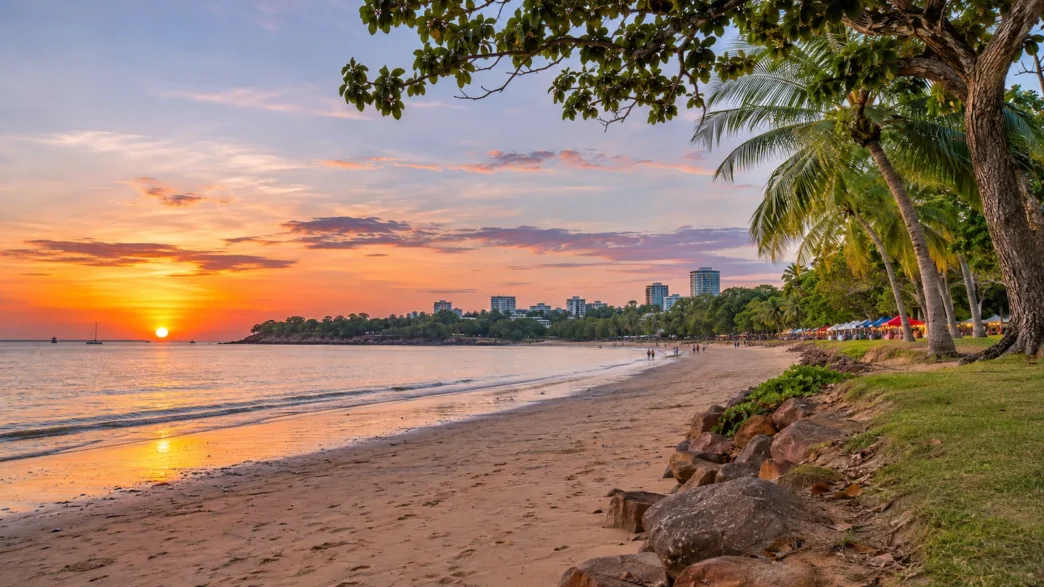
The best time to visit Darwin for a first trip is June or July. Pick late May or early September if you can be more flexible on heat and want to compare rates outside the busiest winter dates. For storm scenery and waterfalls, consider the wet season, with the understanding that a waterfall may be excellent to look at and closed for swimming. The choice is about what you need to be open, not just how much rain appears in the forecast.
💡 Key Takeaways
- June or July makes a walking-heavy visit and regional day trips easiest; August is still dry but can be busy around Darwin Festival.
- The wet season is a viable city trip if you build around indoor stops and leave the park day movable.
- Compare event dates and changeable rooms first. Check individual swims, tracks and roads again just before your trip.
The 1-Min Cheat Sheet: Best Time to Visit Darwin
- March to April: Choose for green scenery and a late wet-season trip. March is still very wet on average; April is a better bet for improving conditions, with site access still uncertain.
- May to June: The dry season settles in. June is the stronger option for low rain; late May can be a workable shoulder date if the regional trip is flexible.
- July to August: The most dependable window for outdoor planning, with busier accommodation dates around events and holidays. July is the cooler of the two on average.
- September to November: Early September is the better weather compromise. Humidity and rain rise through the build-up, especially in October and November.
- December to February: Pick for a city-led wet-season trip, not for collecting outdoor bookings across the Top End. Leave a real buffer for bad weather.
Top Survival Tips
- Read the Bureau of Meteorology’s Darwin Airport climate record as a planning baseline. June and July average under 2 mm of rain each; January is about 432 mm. These are long-run station averages, not promises for your dates.
- Separate seeing Litchfield waterfalls from swimming there. The current Litchfield access report lists site-specific status. For a self-drive trip, check the NT Road Report and visitor pass requirements as well.
- Treat event weekends as a separate price season. Compare the same room and cancellation terms on adjacent dates rather than guessing that every dry-season night costs the same.
- Do exposed walking early and use late afternoon for only one flexible outing. An indoor alternative within a short ride is worth more than another prepaid stop.
- Check the Mindil Beach Sunset Market calendar before moving flights. The regular Thursday and Sunday market is seasonal. The operator gives a usual late-April to late-October run, with the actual year’s dates and changes posted separately.
The Full Experience: How Each Travel Window Changes the Trip
🌿 March to April: Waterfall Views With a Flexible Plan
Late wet season · Green outlooks · Check the actual access
At Darwin Airport, average March rainfall is about 313 mm, dropping to around 102 mm in April. Late April has a better chance of a usable outdoor window than March, but rain in the catchment can still affect a track or swimming area after conditions in town improve.
Keep two Darwin days and put the regional drive between them. That way a wet morning does not wipe out the one outing you chose from the top of a park map. If markets are part of the plan, verify the opening date and day of the week.
✅ What Other Travelers Say: Wet-season trip accounts show why the green landscape appeals even when a swim is off the itinerary.
⚠️ The Catch (Things to Keep in Mind): A powerful waterfall can coincide with closed swimming or a section of road you cannot drive. Use the live access report and signs.
☀️ May to June: The Best Balance for a First Visit
Dry season arrives · Early evenings outside · Room rates vary
May averages about 20 mm of rain. By June the same station averages under 2 mm, with a mean daily maximum around 31°C. That makes shaded mornings, the Waterfront and the market a much simpler plan than in the wet season.
If you have fixed dates and the trip revolves around a park tour, lean towards June. Late May is a reasonable date to price against it if you can move the outing and are happy to spend the extra time in town.
✅ What Other Travelers Say: The local outing video gives a sense of how gardens and a Mindil Beach evening can fill different parts of a day.
⚠️ The Catch (Things to Keep in Mind): Outdoor schedules tighten as the dry season fills. Reserve a small-group tour or the right room category if those choices are hard to replace.
🎭 July to August: Reliable Outdoor Days and Busier Dates
Peak dry season · Festivals · Book specific nights early
July’s mean overnight low is about 19°C at the airport, welcome if you are used to hotter nights near the coast. August stays dry, but timing your trip for Darwin Festival can change what you pay and whether your preferred room is available. The official festival site lists 4–22 August for 2027.
Book your event ticket and lodging against the same evening dates. If you came for Litchfield and a quiet coast walk, compare non-festival weekdays instead of paying for a calendar you will not use.
✅ What Other Travelers Say: The festival’s own recap is a better guide to venue atmosphere than a crowd photograph with no date.
⚠️ The Catch (Things to Keep in Mind): Dry weather does not guarantee low heat. Take the exposed foreshore early and leave room between a full day trip and a late show.
⛈️ September to November: The Build-Up Changes the Day
September shoulder · Rising humidity · Storm breaks
September averages roughly 17 mm of rain. By November the average reaches about 147 mm, and both October and November have average highs around 33°C. Paying less for a later date can be a fair trade when your highlights are forgiving about timing.
Begin with an outdoor stop that you can finish before lunch, keep a museum or a long lunch for the heat, and decide the rest later. If you are travelling for Mindil Beach, check the end of the market season before booking in November.
✅ What Other Travelers Say: Storm footage shows how quickly an attractive afternoon can change. Short plans in one neighbourhood are easier to swap.
⚠️ The Catch (Things to Keep in Mind): Temperatures alone understate the comfort difference. An otherwise short walk can feel long in the build-up.
🌧️ December to February: A Wet-Season City Break
Monsoon rain · Indoor options · Keep bookings changeable
January and February average roughly 432 mm and 372 mm of rain. Some days give you a useful dry break and others do not. An afternoon museum, a room near dinner and a transferable day trip are more valuable than three stops at fixed times.
A lower accommodation quote is plausible in the wet season, but compare the full cost of changes, transport and missed tours. Look at the regional road report and official weather warnings the day before an out-of-town plan.
✅ What Other Travelers Say: Local weather coverage illustrates why a buffer night can protect a connection or trip you need to keep.
⚠️ The Catch (Things to Keep in Mind): Never build the plan around access to an unsupervised coastal swim or a road that might flood. Follow local closures and use designated facilities when open.
Key FAQs
What is the driest month to visit Darwin? July has the lowest mean rainfall in the Darwin Airport record, at about 1 mm. June and August are also typically very dry.
When is Darwin cheapest for hotels? Start by comparing flexible rates in the build-up or across wet-season weekday dates. Major events, school holidays and the risk of changing regional tours can outweigh a low room rate.
Is April a good time to visit Darwin for Litchfield? It can work if scenery matters and you are prepared to change the route. Compare the live park and road reports by site; a place can be open for viewing while swimming is closed.
Final Verdict and Your Next Step
Choose June first for a straightforward outdoor trip or pick an August festival date on purpose. For the wet season, build the accommodation around museums and dinner, then let a clear window decide the day trip. Check the official festival dates and ticket releases if travelling for a show, and use the accommodation guides to price equally flexible rooms in the right area.