
💡 Key Takeaways
- Do not treat Nara as one giant walkable park. Central Nara, Nishinokyo, Ikaruga and Asuka are separate travel zones, and mixing them carelessly creates long transfers and exhausted afternoons.
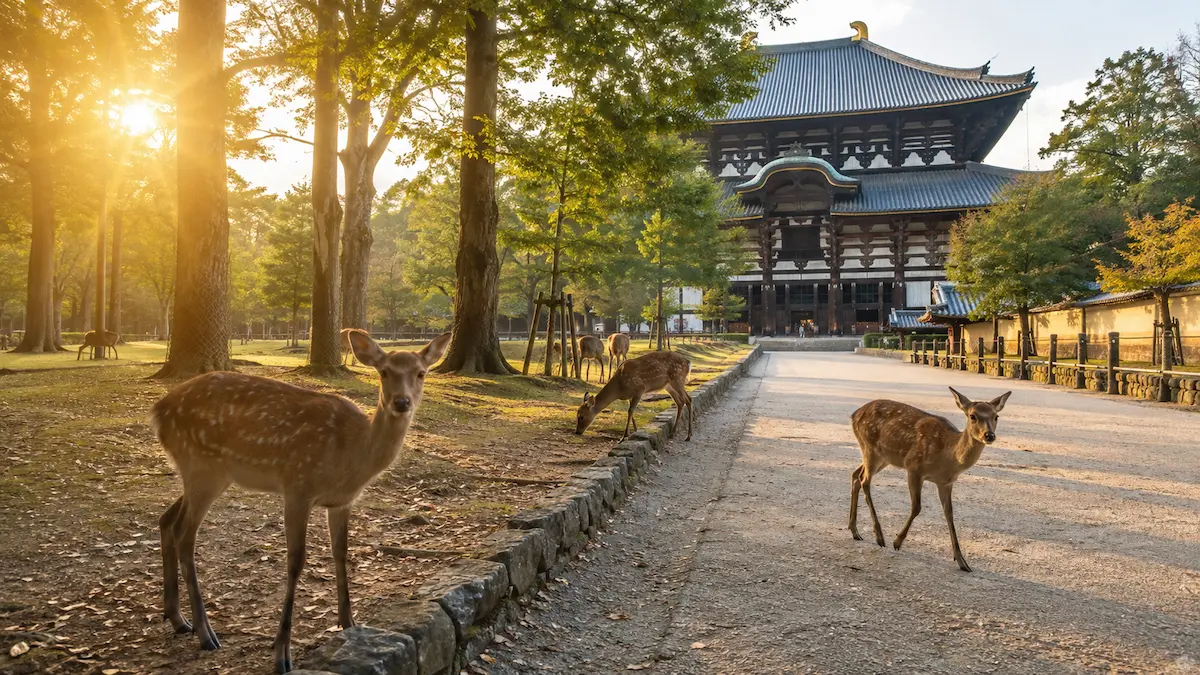
- Visit Tōdai-ji at opening time, not after a leisurely breakfast. The route between Nandaimon, the Great Buddha Hall and the deer-heavy central park becomes noticeably less pleasant when day-trippers arrive.
- Stay near Kintetsu-Nara Station, Higashimuki or the northern edge of Naramachi. This removes the need to return to JR Nara Station before every sightseeing day.
- Most major temples still use ordinary on-site ticket counters. “Skip-the-line Nara temple tickets” are often marketing language; the reservations that genuinely matter are limited-express seats, guided tours, kimono sessions and seasonal experiences.
- Kōfuku-ji’s famous five-story pagoda is enclosed for major conservation work, currently scheduled into the early 2030s. Visit for the sculpture collection and temple history, not for the classic unobstructed pagoda photo.
A good Nara 5-day itinerary should feel calm, not empty—and efficient, not rushed. The most common first-timer mistake is copying a one-day Nara Park checklist, stretching it over several days, and then adding Hōryū-ji, Yakushi-ji and Asuka wherever there appears to be a blank afternoon. On a map, the attractions all sit inside Nara Prefecture. On the ground, they belong to different railway corridors, have different closing times and demand very different amounts of walking.
This itinerary fixes the classic “popular but badly sequenced” route: Nara Park and its deer, Tōdai-ji, Kasuga Taisha, Kōfuku-ji, Naramachi, Nishinokyo’s temples, Hōryū-ji and rural Asuka. It keeps the places most first-time visitors genuinely want to see, but rearranges them into five geographic clusters. The goal is not to win a sightseeing contest. It is to finish each day with enough energy to enjoy dinner.
Research note: opening hours, admission policies, construction information and transport products were checked against official or operator sources in August 2026. Temple ceremonies, seasonal openings and train schedules can change, so recheck official pages shortly before travel.
The 1-Min Cheat Sheet
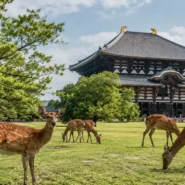
- Tōdai-ji and Nigatsu-dō: Best for first-time visitors who want Nara’s most impressive historic sight. Allow 1.5–2.5 hours. The Great Buddha Hall is paid entry; the wider precinct and Nigatsu-dō approach are free. Walk from central Nara or use a bus/taxi to reduce the approach.
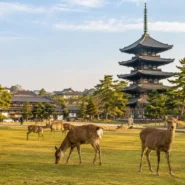
- Nara Park: Best for families, photographers and travelers who understand the deer are wild animals, not props. Allow 45–90 minutes as part of a wider route. Park entry is free; deer crackers are optional. No reservation is required.
- Kasuga Taisha: Best for forest atmosphere, lanterns and Shinto architecture. Allow 60–90 minutes. The outer grounds are free; the Special Worship area currently costs ¥700. Walk one way through the park and use a bus or taxi out if your legs are fading.
- Kōfuku-ji: Best for Buddhist sculpture and a convenient first or last stop near Kintetsu-Nara. Allow 45–90 minutes. The grounds are free; paid halls use separate on-site tickets. The five-story pagoda is hidden by a conservation enclosure, so do not visit solely for that photo.
- Naramachi: Best for cafés, crafts, traditional townhouses and a lower-intensity arrival day. Allow 2–3 hours. The district is free; individual museums and temples set their own fees. It is compact enough to explore on foot from Kintetsu-Nara.
- Yakushi-ji and Tōshōdai-ji: Best for architecture lovers and visitors who want a quieter contrast to Nara Park. Allow 1–1.5 hours at each, plus a 10–15 minute walk between them. Adult admission is currently ¥1,000 at each temple; use Kintetsu to Nishinokyo rather than a slow cross-city bus when traffic is heavy.
- Hōryū-ji: Best for serious history, early Buddhist art and travelers willing to devote most of a day to one complex. Allow 2.5–3.5 hours. Adult admission is currently ¥2,000 and includes the core precincts and treasure collection. Take JR to Hōryūji Station, then use the local bus or a short taxi rather than automatically adding a long roadside walk.
- Asuka Village and Ishibutai Tumulus: Best for rural scenery, archaeology and active travelers. Allow 5–7 hours including transport from Nara. Ishibutai currently costs ¥500 for adults; much of the surrounding landscape is free. An e-bike is the efficient option in good weather; the sightseeing bus is the safer rain-day choice.
The Most Practical 5-Day Itinerary
Day 1: Arrival, Kōfuku-ji and Naramachi Without Your Suitcase
- Suggested start: 1:00 p.m. after checking in. Arriving earlier is fine, but store luggage before sightseeing.
- Order: Kintetsu-Nara Station or hotel → Kōfuku-ji grounds and National Treasure Hall → Sarusawa Pond → Mochiidono shopping arcade → Naramachi Koshi-no-Ie or Gangō-ji → Naramachi cafés.
- Recommended time: 60–90 minutes at Kōfuku-ji, 15 minutes at Sarusawa Pond, and 2–3 hours in Naramachi depending on café and museum stops.
- Best transport: Walk. These places form a compact southbound chain. Starting at JR Nara Station adds an unnecessary approach unless your hotel is there.
- Lunch or rest: Eat near Higashimuki or Mochiidono before 1:30 p.m., or plan a café break inside Naramachi. Many small shops close earlier than travelers expect.
- Cut if tired: Skip the paid Kōfuku-ji halls and walk only the grounds, or choose either Gangō-ji or the townhouse museums—not every small attraction.
- Rain alternative: Spend more time in the Kōfuku-ji National Treasure Hall, Naramachi’s indoor craft museums and covered shopping arcades.
- Evening area: Higashimuki, Sanjō-dōri or the northern edge of Naramachi. These have more dinner choices than the park after temples close.
- Why this beats the influencer route: Many itineraries rush straight from arrival to the deer while carrying luggage or checking a clock. This gentle loop uses attractions near your accommodation, protects the crucial early start on Day 2 and turns Kōfuku-ji’s current pagoda construction into a manageable first-day stop rather than a major disappointment.
Day 2: Tōdai-ji at Opening, Nigatsu-dō, Kasuga Taisha and a One-Way Park Route
- Suggested start: Leave your hotel around 7:15–7:30 a.m. Aim to reach Nandaimon before the Great Buddha Hall opens or very soon afterward.
- Order: Kintetsu-Nara area → Nandaimon → Tōdai-ji Great Buddha Hall → Nigatsu-dō → lunch/rest near Tōdai-ji or Mizuya Chaya area → Kasuga Taisha → optional Nara National Museum or Isuien Garden → bus/taxi back to town.
- Recommended time: 60–75 minutes in the Great Buddha Hall area, 45–60 minutes for the climb and views at Nigatsu-dō, 60–90 minutes at Kasuga Taisha, and 60–90 minutes for one museum or garden.
- Best transport: Walk eastward through the historic core. Do not return to Kintetsu-Nara between sights. After Kasuga Taisha, take a bus from the shrine area or a short taxi if you have already walked 15,000 steps.
- Lunch or rest: Eat before the central lunch rush, ideally around 11:15 a.m. near Tōdai-ji, or reserve a proper lunch. Waiting until 12:30 around the park often means queues and limited seating.
- Cut if tired: Drop Nigatsu-dō if stairs are a problem, or skip the museum/garden. Do not cut Tōdai-ji to preserve a minor photo stop.
- Rain alternative: Keep Tōdai-ji, then spend the afternoon at the Nara National Museum. Skip the long forest approach to Kasuga Taisha and take a bus closer to the shrine.
- Evening area: Kintetsu-Nara, Higashimuki or a quiet dinner in Naramachi. Avoid planning a distant night attraction after the most walking-intensive day.
- Why this beats the influencer route: The common route begins with deer photos near the station, reaches Tōdai-ji at peak time, zigzags to Kasuga Taisha, then walks all the way back. This version puts the headline sight first, follows a continuous eastward line and pays for a short ride only when it has the greatest value.
Day 3: Heijō Palace, Tōshōdai-ji and Yakushi-ji on One West-Nara Corridor
- Suggested start: 8:30 a.m. from central Nara.
- Order: Central Nara → Heijō Palace Site museum or Suzaku Gate area → short taxi to Tōshōdai-ji → walk south to Yakushi-ji → Kintetsu Nishinokyo Station → return via Yamato-Saidaiji.
- Recommended time: 90 minutes at the palace site, 75–90 minutes at Tōshōdai-ji, 60–90 minutes at Yakushi-ji, plus a relaxed lunch.
- Best transport: Use rail to reach west Nara, then a taxi for the awkward palace-to-temple link. The 10–15 minute walk between Tōshōdai-ji and Yakushi-ji is straightforward. Finish at Nishinokyo Station rather than retracing the same path.
- Lunch or rest: Eat near Nishinokyo before or between the temples. Restaurant density is lower than central Nara, so do not assume you can improvise at 2:00 p.m.
- Cut if tired: Remove Heijō Palace first. The site is historically important but spatially large, and its reconstructed scale does not appeal to everyone. Keep both temples if early Buddhist architecture is your reason for visiting Nara.
- Rain alternative: Prioritize indoor exhibits at the palace site, then take taxis directly to temple gates. Yakushi-ji and Tōshōdai-ji still involve outdoor courtyards, so waterproof shoes matter more than an umbrella.
- Evening area: Yamato-Saidaiji for shopping and dinner, or return to central Nara. This is a good night for laundry or an early meal.
- Why this beats the influencer route: Generic itineraries attach Nishinokyo to Nara Park using a through-bus. That looks simple but can be slow in traffic and encourages cross-city backtracking. Rail plus one strategic taxi keeps the day inside western Nara and ends beside the station you actually need.
Day 4: Hōryū-ji and Ikaruga Without the Unnecessary Roadside Hike
- Suggested start: Leave JR Nara Station around 8:00 a.m. and reach Hōryū-ji near opening time.
- Order: JR Nara → JR Hōryūji Station → local bus or taxi to Hōryū-ji → Western Precinct → Gallery of Temple Treasures → Eastern Precinct and Yumedono → optional Chūgū-ji → Hōryū-ji i Center → bus/taxi back to JR station.
- Recommended time: 2.5–3.5 hours inside Hōryū-ji, 30–45 minutes at Chūgū-ji if open and appealing, and at least 45 minutes for lunch.
- Best transport: JR is the cleanest route from Nara City. The station-to-temple walk is possible, but using the bus or a taxi saves roughly 40–50 minutes of round-trip walking along ordinary roads. Save your legs for the temple complex.
- Lunch or rest: Eat near the temple approach before returning to the station. Choices are limited and some close between lunch and dinner.
- Cut if tired: Skip Chūgū-ji or any distant satellite temple. Hōryū-ji itself is the reason to make the journey; adding Hōki-ji on foot is not a compulsory badge of seriousness.
- Rain alternative: This day still works because the treasure gallery and halls provide shelter. Use taxis both ways and allow extra time on wet stone and gravel.
- Evening area: JR Nara Station’s west side or Sanjō-dōri. Keep the night flexible because the return time depends on how deeply you explore the art collection.
- Why this beats the influencer route: Online maps make the walk from JR Hōryūji look harmless, so travelers arrive already tired and then rush the best collection. This plan spends a small amount on the inconvenient last mile and gives the UNESCO complex the time it deserves.
Day 5: Asuka by E-Bike, With a Bus-Based Bad-Weather Plan
- Suggested start: Depart Kintetsu-Nara around 7:30 a.m. and aim to collect your bicycle shortly after arriving at Asuka Station.
- Order in good weather: Asuka Station → Takamatsuzuka area and mural museum if open → Kameishi → Ishibutai Tumulus → lunch near Ishibutai → Asuka-dera → optional Amakashi-no-oka viewpoint → return to Asuka Station.
- Recommended time: 45–60 minutes in the Takamatsuzuka area, 45 minutes at Ishibutai, 45–60 minutes at Asuka-dera, and 2–3 hours for cycling, lunch and unplanned rural stops.
- Best transport: Kintetsu to Asuka, then an e-bike. Ordinary bicycles are cheaper but the terrain and summer heat make the electric assist worthwhile. Reserve in cherry-blossom and autumn periods, and confirm the shop’s return deadline.
- Lunch or rest: Plan lunch around Ishibutai, where the visitor facilities are more useful than the scattered hamlets. Carry water; convenience stores are not positioned every few blocks.
- Cut if tired: Remove Amakashi-no-oka and any distant tomb. A compact Takamatsuzuka–Ishibutai route is still a successful day.
- Rain alternative: Do not force a cycling day on slick rural roads. Use the Asuka sightseeing bus, focus on Ishibutai and one museum, or replace the day with the Kashihara Archaeological Institute Museum and Kashihara-jingū area after checking opening days.
- Evening area: Return to central Nara for a final dinner. Do not book a tight airport transfer after a rural day with lower-frequency transport.
- Why this beats the influencer route: The failed version of Asuka is a list of tombs connected by optimistic walking times. The efficient version treats the landscape itself as the attraction, uses an e-bike to connect a small number of high-value stops and has a genuine no-bike rain plan.
Tourist Traps to Avoid & Itinerary Hacks
- The “Nara is just a day trip” trap: One day is enough for Tōdai-ji, the deer and perhaps Kasuga Taisha. It is not enough for Naramachi, Nishinokyo, Hōryū-ji and Asuka without turning the trip into a transport sprint.
- The “deer first” trap: Deer are visible throughout the park. Spending your quiet first hour staging cracker photos can push Tōdai-ji into its busiest period. See the Great Buddha first and interact with deer afterward.
- The food-and-paper trap: Nara’s deer are wild animals. Keep maps, tickets, plastic bags and loose paper secured, and feed only approved deer crackers. Stop showing food once the crackers are gone.
- The Kōfuku-ji photo trap: The iconic five-story pagoda is enclosed for major repairs. The temple is still worthwhile for the National Treasure Hall and other buildings, but old promotional photos do not reflect the current view.
- The cross-city bus trap: A single bus from central Nara to Nishinokyo appears convenient. During busy periods, road congestion can erase that convenience. Kintetsu rail via Yamato-Saidaiji is more predictable.
- The “walk from every station” trap: Hōryū-ji and parts of Heijō Palace have awkward last-mile approaches. A ¥1,000–¥2,000 taxi split between two or three people can save an hour and protect the rest of the day.
- The suitcase-in-the-park trap: Gravel, crowds, deer and temple steps are a terrible combination with a large roller bag. Use station lockers or have luggage delivered between hotels.
- The rail-pass reflex: A five-day pass is not automatically economical. This route uses Kintetsu, JR, walking, buses and a few taxis. Compare your actual intercity fares before purchasing.
- The JR Pass misunderstanding: JR products do not cover Kintetsu trains. Kintetsu-Nara is closer to the historic center than JR Nara, but that convenience requires a separate Kintetsu fare or pass.
- The late-lunch trap: Small restaurants near temples and rural areas may close after lunch or sell out. Move lunch to 11:15–11:45 on the park day and pre-plan Nishinokyo, Ikaruga and Asuka meals.
- The “Aoniyoshi is just another train” trap: Kintetsu’s Aoniyoshi sightseeing limited express uses reserved seating. It is a travel experience, not a walk-on commuter service, and requires the correct fare plus limited-express reservation.
- The seasonal-opening assumption: Special statues, mural chambers and temple halls may open only on selected dates. Never rebuild an entire day around a seasonal viewing without checking the official calendar.
Save Your Legs! The Most Efficient Route
Generic Japan itinerary templates often say Kyoto should be divided into Higashiyama, southern Kyoto, Arashiyama, northwest Kyoto and downtown. That is sensible for Kyoto—but copying those labels into a Nara article is a category error. Nara needs its own geography: Central Nara Park and Naramachi, western Nara and Nishinokyo, Ikaruga, and southern Nara/Asuka. The practical rule is the same—group places by corridor—but the zones and railway operators are different.
In central Nara, Kōfuku-ji, Sarusawa Pond, Naramachi and the shopping streets can be linked on foot. Tōdai-ji, Nigatsu-dō and Kasuga Taisha also form a logical walking chain, but it is a long one. Walk in one direction and use a bus or short taxi for the return. Do not walk from your hotel to the park, across the entire park and then all the way back simply because each individual segment looks manageable.
Use Kintetsu for Kintetsu-Nara, Yamato-Saidaiji, Nishinokyo and Asuka connections; use JR for the direct Nara–Hōryūji corridor. Local buses are useful for the last mile to Kasuga Taisha, Hōryū-ji and rural Asuka, but central Nara buses can be slow or full during weekends, cherry-blossom season, autumn foliage and major events. Taxis are most valuable when they replace an awkward transfer rather than a pleasant historic walk: Heijō Palace to Tōshōdai-ji, Hōryūji Station to the temple, or Kasuga Taisha back to town after a full park day.
Avoid returning to JR Nara Station after every attraction. The station is convenient for JR travel and luggage services, but it sits west of the main historic core. A hotel within roughly ten minutes of Kintetsu-Nara Station, Higashimuki or northern Naramachi reduces daily dead time and keeps dinner options close. Travelers with mobility limits may prefer the station area over a characterful but stair-heavy ryokan.
With large luggage, use a locker at Kintetsu-Nara, JR Nara, Yamato-Saidaiji or Asuka Station when available, or arrange hotel-to-hotel delivery. Kintetsu publishes current locker sizes and numbers, but availability is never guaranteed at peak arrival times. Delivery is especially sensible when transferring between Kyoto/Osaka and Nara, or when Day 5 ends before a move to another city. A locker is best for a same-day bag; luggage forwarding is better for a full-size suitcase that you do not need overnight.
Ticket Tips & Skip-the-Line Hacks
Do not expect theme-park-style fast passes. Tōdai-ji, Yakushi-ji, Tōshōdai-ji, Hōryū-ji and Kōfuku-ji’s paid halls generally use ordinary on-site admission. Arriving early saves more time than buying through an unneeded reseller. Tōdai-ji currently charges ¥800 for adults at the Great Buddha Hall; Yakushi-ji and Tōshōdai-ji currently charge ¥1,000 each; Hōryū-ji currently charges ¥2,000. Kōfuku-ji’s grounds are free, while paid halls use separate tickets and the official visitor information currently notes cash-only payment for its main admissions.
Free-entry places: Nara Park, Naramachi’s streets, Kōfuku-ji’s open grounds, Kasuga Taisha’s general precinct and much of the Heijō Palace Site. The free areas are not necessarily “lesser” experiences; in fact, the lantern-lined forest approach and Nigatsu-dō views are among the itinerary’s best moments.
Paid but normally not worth advance booking: Tōdai-ji’s Great Buddha Hall, Kasuga Taisha Special Worship, Yakushi-ji, Tōshōdai-ji, Hōryū-ji and Ishibutai. Buy on arrival unless an official site announces a special timed event. Carry cash even if you prefer cards.
Reserve in advance when relevant: Aoniyoshi or other Kintetsu limited-express reserved seats, English guided sightseeing buses, private guides, kimono rental with a specific early slot, popular cultural workshops, and e-bikes in peak seasons. Special mural viewings and normally closed temple buildings may use lottery or advance-registration systems; follow the individual organizer rather than assuming a universal Nara ticket platform.
Digital transport ticket: Kintetsu sells digital rail passes that can be used with a smartphone QR code at supported gates. A pass can make sense for travelers entering from Osaka or Kyoto and making repeated Kintetsu trips, but the standard five-day pass is not automatically the cheapest choice for this itinerary because Day 4 uses JR and central days are mostly on foot.
Verified affiliate booking options: These pages were active when checked. Prices, eligibility and included transport can change, so compare them with Kintetsu’s official product before paying.
- Check the Kintetsu Rail Pass on Klook
- Check the Kintetsu Rail Pass on KKday
- Check a reserved Kyoto–Nara Kintetsu express ticket on Klook
Affiliate disclosure: the site may earn a commission from qualifying bookings at no extra cost to the reader. A listing is included only when it matches a real transport need in this route.
Tried & Tested: My Honest Review
Traveler sentiment below summarizes recurring themes in public reviews and travel discussions; it is not a scientific survey. YouTube links are provided as standalone WordPress auto-embed URLs and were live when researched in August 2026. Video availability and embedding permissions can later change.
📍 Stop 1: Tōdai-ji and Nigatsu-dō
Tags: Essential first visit · Monumental scale · Early-start priority · Moderate walking
Tōdai-ji is the rare headline attraction that is not overhyped. The Great Buddha Hall’s scale survives crowds, bad weather and years of seeing temple photos online. Nigatsu-dō adds the quieter texture that rushed day-trippers miss: sloping lanes, older halls and a broad view over Nara.
✅ What Other Travelers Say: Even temple-fatigued visitors repeatedly describe the Great Buddha and hall as far more impressive in person than in photographs. Travelers who continue to Nigatsu-dō often mention it as the calmest part of the visit.
⚠️ The Catch (Things to Keep in Mind): The main approach becomes crowded, school groups can arrive in waves, and the walk to Nigatsu-dō includes slopes and steps. Arriving late turns an awe-inspiring site into a queue-management exercise.
📍 Stop 2: Nara Park and the Deer
Tags: Free attraction · Family favorite · Wildlife etiquette · Peak-time congestion
Nara Park is a landscape connecting temples, lawns and forest—not a fenced deer zoo. The best experience comes when deer encounters happen naturally while walking between historic sites. Buying crackers in the densest area near major approaches can create an intense cluster of animals and people.
✅ What Other Travelers Say: Families and first-time Japan visitors often rank the deer among their most memorable experiences. Many appreciate that the animals appear throughout the route rather than in a single enclosure.
⚠️ The Catch (Things to Keep in Mind): Deer may nip, push, pull paper or crowd someone holding food. Young children need close supervision. The bowing behavior is not a promise of gentle handling, and feeding non-approved food is irresponsible.
📍 Stop 3: Kasuga Taisha
Tags: Lantern-lined forest · Shinto heritage · One-way walking route · Optional paid inner area
Kasuga Taisha is more atmospheric than spectacular. The forest approach, mossy stone lanterns and gradual separation from the busiest lawns are the real appeal. Visitors expecting a huge interior complex may find the paid Special Worship area brief, but it gives a closer view of the sanctuary architecture.
✅ What Other Travelers Say: Travelers praise the lanterns, shaded approach and sense of transition from park to sacred forest. It is especially popular with people who prefer atmosphere over monumental scale.
⚠️ The Catch (Things to Keep in Mind): It is farther into the park than it first appears, and walking there after Tōdai-ji can be tiring. Some visitors feel the inner paid area is not essential. Use a bus or taxi on the return rather than proving a point with your feet.
📍 Stop 4: Kōfuku-ji
Tags: Near Kintetsu-Nara · Outstanding sculpture · Major restoration · Easy short visit
Kōfuku-ji is currently a case study in managing expectations. The famous five-story pagoda is enclosed for a long conservation project, so the postcard view is unavailable. The National Treasure Hall, however, remains one of Nara’s strongest art collections and gives the temple a clear reason to visit.
✅ What Other Travelers Say: Art-focused visitors are impressed by the Ashura and other sculptures, and almost everyone appreciates the temple’s convenient location beside the historic center.
⚠️ The Catch (Things to Keep in Mind): Anyone arriving for the pagoda photograph may feel misled by older images. Paid buildings have separate tickets, and the open grounds can feel visually fragmented during construction.
📍 Stop 5: Naramachi
Tags: Traditional townscape · Cafés and crafts · Low-stress arrival day · Early shop closures
Naramachi rewards slow browsing, but it is not an open-air museum preserved street by street. Historic townhouses sit beside ordinary homes, renovated cafés and modern buildings. That mixed reality is more interesting than a perfectly staged heritage district—provided you arrive without expecting Kyoto’s Gion.
✅ What Other Travelers Say: Visitors enjoy the quieter lanes, independent shops and chance to spend time in Nara beyond the deer. It is frequently mentioned as a pleasant surprise by travelers who stay overnight.
⚠️ The Catch (Things to Keep in Mind): Attractions and shops have varied closed days, and the area becomes subdued in the late afternoon. Wandering without two or three pinned destinations can lead to aimless walking.
📍 Stop 6: Yakushi-ji and Tōshōdai-ji
Tags: UNESCO temples · Quieter west Nara · Architectural contrast · Separate admission fees
These temples work best as a pair because they offer opposite moods. Yakushi-ji is formal, symmetrical and visually bright, while Tōshōdai-ji feels older, more restrained and contemplative. Seeing both prevents the day from becoming a blur of similar temple halls.
✅ What Other Travelers Say: Architecture lovers value the reduced crowds and the chance to spend time with buildings rather than tour groups. Tōshōdai-ji is often praised for its calm grounds.
⚠️ The Catch (Things to Keep in Mind): Paying ¥1,000 at each temple adds up, and casual visitors may experience “temple fatigue.” Special halls and the Ganjin statue are not continuously open. Do not assume the standard ticket includes every seasonal exhibition.
📍 Stop 7: Hōryū-ji
Tags: Early Buddhist architecture · Major art collection · Half-day commitment · Expensive by Nara standards
Hōryū-ji is not a quick add-on. Its value lies in the combination of ancient wooden architecture, the spatial relationship between precincts and the treasure collection. Travelers who rush through after another major sight often leave wondering why they paid ¥2,000; those who give it half a day usually understand.
✅ What Other Travelers Say: History and architecture enthusiasts describe the age and preservation of the complex as extraordinary. The treasure gallery is frequently singled out as essential rather than optional.
⚠️ The Catch (Things to Keep in Mind): The last mile from JR Hōryūji Station is inconvenient, the complex is large, and the admission price is high compared with other Nara temples. Visitors uninterested in Buddhist art may prefer a slower central Nara day.
📍 Stop 8: Asuka Village and Ishibutai Tumulus
Tags: Rural archaeology · E-bike route · Weather dependent · Full-day excursion
Asuka is less about one “must-see” object and more about understanding how tombs, temple sites and agricultural scenery share the same basin. Ishibutai is impressive but brief; the journey becomes worthwhile when combined with the surrounding landscape rather than treated as a single paid attraction.
✅ What Other Travelers Say: Active travelers love the freedom of cycling between fields and archaeological sites. The slower pace feels like a reset after Nara Park and Kyoto-style urban sightseeing.
⚠️ The Catch (Things to Keep in Mind): Summer heat, rain and low-frequency transport can ruin an improvised plan. Museum renewals and seasonal mural openings also change what is available. Check official information, reserve an e-bike in busy periods and carry water.
Key FAQs
Is five days in Nara too long for a first-time visitor?
Five days is too long if you spend every day around Nara Park. It is appropriate for travelers who include Nishinokyo, Hōryū-ji and Asuka, enjoy history and prefer slower travel. Travelers mainly interested in deer and headline temples should stay two nights and use the extra days elsewhere.
Where should first-time visitors stay for a Nara 5-day itinerary without wasting time?
Stay near Kintetsu-Nara Station, Higashimuki or northern Naramachi. This gives you walkable access to restaurants, Kōfuku-ji and the park, while preserving Kintetsu connections for Nishinokyo and Asuka. Stay near JR Nara only when JR access, airport buses or luggage services matter more than walking convenience.
Is the Kintetsu Rail Pass worth buying for five days in Nara?
Sometimes, but not automatically. It is more attractive when you enter from Osaka or Kyoto, use Kintetsu repeatedly and choose a version covering relevant Nara buses. This itinerary also uses JR for Hōryū-ji, significant walking and a few taxis. Add the actual fares before buying; convenience alone does not guarantee savings.
Final Verdict and Your Next Step
The smartest first-time Nara trip is not the one with the most pins. It is the one that reaches Tōdai-ji before the crowd, keeps luggage away from temple paths, uses rail for predictable cross-city movement and spends money on a taxi only where it eliminates an ugly last mile. Central Nara deserves one concentrated park day and one gentle town day; western Nara, Ikaruga and Asuka deserve their own corridors.
Before departure, reserve any sightseeing limited-express seat, guided tour, peak-season e-bike or time-specific cultural experience. Buy ordinary temple admission on site unless the official organizer announces a special reservation system. For transport, compare the verified Kintetsu pass pages below with individual fares rather than purchasing reflexively.
Final reality check: If your group dislikes temples, cannot cycle and has no interest in archaeology, do not force five Nara days because an itinerary says you should. Spend two excellent days in Nara instead. But for travelers who want Japan’s early history without Kyoto’s constant cross-city pressure, this five-day route is unusually rewarding—and much easier on the legs than the standard checklist.
Official references checked: Tōdai-ji, Kasuga Taisha, Kōfuku-ji, Yakushi-ji, Tōshōdai-ji, Hōryū-ji, Asuka Historical National Government Park, Kintetsu Railway, Nara Kotsu and the Official Nara Travel Guide. Always verify same-day closures and ceremonial restrictions directly with the venue.