
💡 Key Takeaways
- Choose Nagoya Station when you have day trips, a short stay, an early Shinkansen, or heavy luggage. It is the easiest base, but not the most atmospheric.
- Choose Sakae for the best mix of restaurants, shopping and nightlife. Stay near Hisaya-odori rather than deep inside the late-night streets if noise bothers you.
- Choose Fushimi when you want a calmer central location between Nagoya Station and Sakae, often with better-value business hotels.
- Choose Kanayama for convenient airport access and lower prices, especially before an early flight. It is practical rather than picturesque.
- Do not book only by the neighborhood name. Check the exact station exit, walking route, elevator access and which side of the station your hotel sits on.
Deciding where to stay in Nagoya is harder than it first appears. The city is easy to navigate once you understand its rail network, but a hotel that looks “central” on a booking map can still force you into an extra subway transfer, a long underground walk or an awkward luggage haul across a large station. First-time visitors also tend to underestimate how different Nagoya Station, Sakae and the quieter office districts feel after dark.
The good news is that there is no need to chase one universally “best” neighborhood. The right base depends on what will repeatedly slow you down: Shinkansen day trips, airport transfers, late-night dining, family logistics, limited mobility or a strict hotel budget. My practical recommendation for most first visits is simple: book Nagoya Station for transport-heavy itineraries, Sakae for a livelier city break, or Fushimi for the least complicated compromise between the two.
Price note: The nightly ranges below are realistic planning bands for a standard double or twin room, usually for two adults before taxes, based on live listing checks in August 2026. Nagoya hotel prices change sharply on Saturdays, public holidays, concert dates, Formula 1 periods and major events, so treat the figures as budgeting guidance rather than fixed quotes.
The 1-Minute Cheat Sheet
- Nagoya Station (Meieki): Best overall for first-time visitors with day trips, Shinkansen travel or large luggage. Expect the widest hotel choice and the shortest transport chain, but also higher rates and a huge station complex.
- Sakae: Best for shopping, restaurants, bars and an energetic evening atmosphere. Central and convenient, though some blocks stay noisy late and airport access is less direct.
- Fushimi: Best balanced choice for couples, business-leisure travelers and light sleepers. One subway stop from Nagoya Station, walkable toward Sakae, but quieter at night.
- Kanayama: Best for airport convenience and value. Direct Meitetsu trains serve the airport, and JR plus subway lines make the area efficient, but it lacks the sightseeing atmosphere of Sakae or Osu.
- Osu and Kamimaezu: Best for street food, vintage shopping, anime culture and a more local-feeling stay. Fun by day, with fewer hotels and less convenient access to the Shinkansen.
- Hisaya-odori and Marunouchi: Best for a calmer central stay near parks, offices and wide streets. Good for families and light sleepers, but not ideal for travelers who want busy nightlife outside the hotel door.
- Kinjofuto and the Port Area: Best only for LEGOLAND Japan, SCMAGLEV and Railway Park, or a specific port-side event. Poor as a general Nagoya sightseeing base.
Top Survival Tips Before You Choose an Area
- Count transfers, not just minutes on Google Maps. A journey that takes 18 minutes with two transfers is far more tiring than a 25-minute direct ride when you have a suitcase, stroller or tired children. Nagoya Station and Kanayama are usually the strongest bases when your itinerary includes several regional trains.
- Check the exact station exit and elevator route. “Three minutes from the station” may refer to the nearest stair-only exit. Large hubs also have long underground passages. Open the walking route in street view, confirm the correct exit number and look for elevator symbols before paying for a non-refundable room.
- At Nagoya Station, choose the correct side. The Sakura-dori east side feels more polished and places you closer to department stores, high-rise dining and much of the city-center action. The Taiko-dori west side often has cheaper business hotels and quick Shinkansen access, but some streets feel more utilitarian and include late-night bars and adult-oriented businesses.
- Do not assume Sakae is quiet because the hotel looks upscale. Sakae covers office streets, department stores, parks and late-night entertainment blocks. Hotels near Hisaya-odori Park or north of the busiest core are generally calmer than properties close to the nightlife streets of Nishiki.
- Stay on the line you will use most. The Higashiyama Line is especially useful for Nagoya Station, Fushimi and Sakae. The Sakura-dori Line is helpful for Marunouchi and Hisaya-odori. Kanayama is stronger for airport and JR connections, while Kinjofuto relies on the Aonami Line.
- Compare room size, not only star rating. A well-located Japanese business hotel may have a very compact double room. For two large suitcases, look for roughly 18 square metres or more, twin beds, under-bed storage, or a property with a luggage room and coin laundry.
- Saturday night can erase the “cheap area” advantage. Nagoya often offers good value compared with Tokyo, but event weekends can push central business hotels far above their normal range. Compare the total stay rather than assuming Fushimi or Kanayama will be cheaper every night.
- For an early international flight, Kanayama can beat Nagoya Station. Both are served by Meitetsu airport trains, but Kanayama is a smaller interchange and can be less stressful in the morning. Confirm the first suitable train for your terminal and departure date before choosing.
The Full Experience
📍 Nagoya Station (Meieki): Best Overall for First-Time Visitors and Day Trips
Tags: Shinkansen convenience · Airport access · Maximum hotel choice · Best with luggage
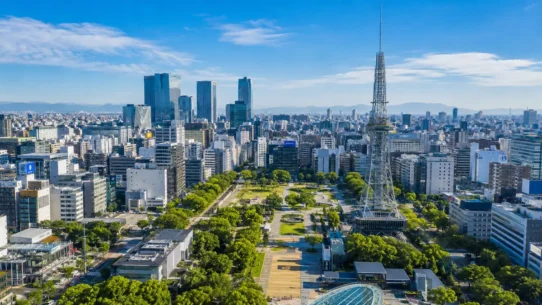
Nagoya Station is the safest recommendation for a first visit because it removes the most common source of wasted time: unnecessary transfers. JR local and limited-express services, the Tokaido Shinkansen, Meitetsu, Kintetsu, the Higashiyama and Sakura-dori subway lines, and the Aonami Line all converge around the station area.
This matters most when Nagoya is part of a wider Central Japan itinerary. Travelers heading to Kyoto, Osaka, Tokyo, Gifu, Takayama, Ise, Inuyama or the Kinjofuto attractions will usually save energy by sleeping near the main hub. It is also the easiest area for a one- or two-night stay because you can arrive, leave your bag and begin sightseeing without learning the city first.
Transport reality: Staying “at Nagoya Station” does not always mean a short walk. The station is large, and JR Nagoya, Meitetsu Nagoya and Kintetsu Nagoya are adjacent rather than sharing one simple concourse. A hotel five minutes from the wrong side can still add a long indoor walk. For the Shinkansen, the Taiko-dori side is especially convenient. For Sakae-facing city access, shopping and a more polished evening environment, the Sakura-dori side is often more pleasant.
Night environment: The east side remains active with restaurants, department-store dining floors and modern towers. The west side has many affordable hotels, izakayas and casual eateries, but the atmosphere becomes rougher around a few late-night blocks. It is not a reason to avoid the entire side, but families and solo travelers who prefer a calmer walk should inspect the exact street.
Typical hotel price: Around ¥11,000–¥25,000 for a solid business or mid-range room on ordinary dates. Premium station-connected hotels frequently start above ¥25,000 and can climb much higher on busy weekends.
Best for: First-time visitors, rail-pass users, short stays, travelers with large luggage, early Shinkansen departures and itineraries with multiple day trips.
Not ideal for: Travelers who want a charming neighborhood atmosphere, relaxed street life or nightlife concentrated within a few blocks.
✅ What Other Travelers Say
Recent hotel reviews repeatedly praise the convenience of arriving by train, leaving luggage quickly and accessing restaurants without another subway ride. Travelers also value the large selection of hotels and the ability to make spontaneous day trips. The recurring complaint is not the location itself but the scale of the station: first-time guests can lose time finding the correct exit or walking between rail operators.
⚠️ The Catch (Things to Keep in Mind)
Do not pay a premium for a vague “Nagoya Station area” label. A property 10 to 15 minutes away may offer none of the luggage benefits you expected. Also note that the Meitetsu-side station district is changing after major 2026 closures connected with redevelopment, so re-check entrances and walking routes close to your travel date.
📍 Sakae: Best for Nightlife, Shopping and Dining
Tags: Lively evenings · Department stores · Restaurants · Best urban atmosphere
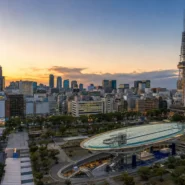
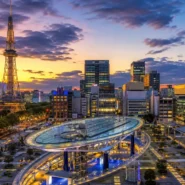
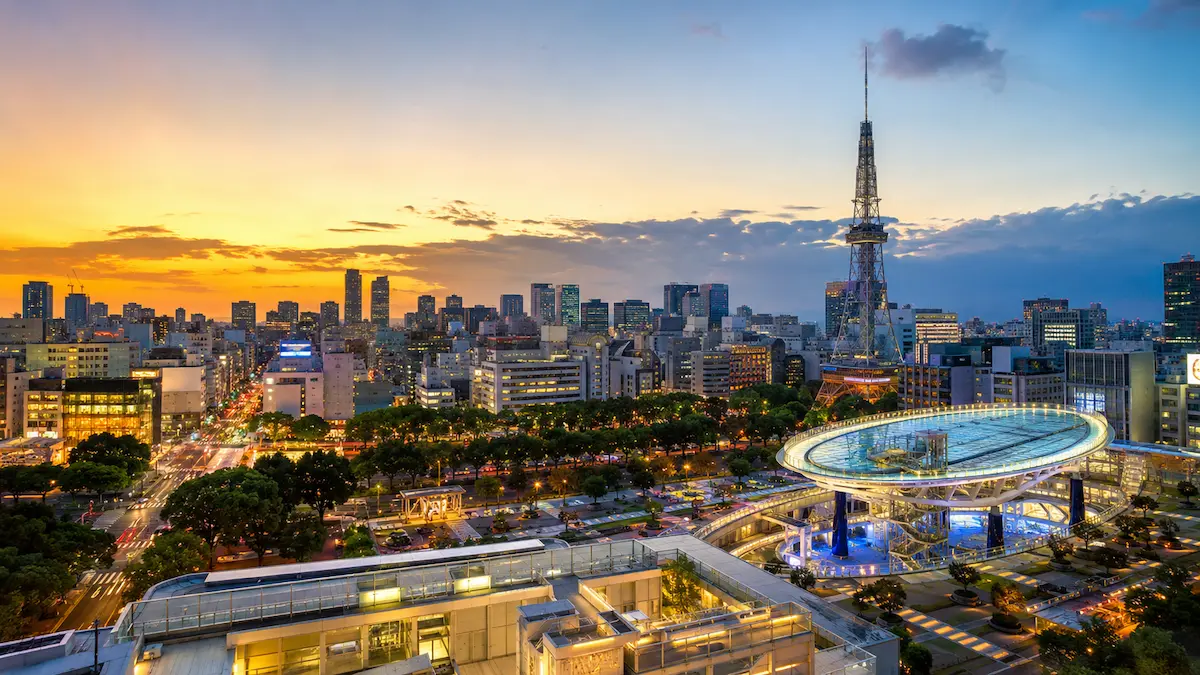
Sakae is where Nagoya feels most like a city break rather than a transport stop. Department stores, underground shopping, Oasis 21, Hisaya-odori Park, restaurants and nightlife are packed into a relatively walkable central district. From Nagoya Station, Sakae is only two stops away on the Higashiyama Line.
For travelers who plan to spend evenings eating, shopping or having drinks, Sakae is usually more enjoyable than Nagoya Station. You can finish sightseeing, return to the hotel and still have dozens of choices nearby. It is also convenient for the Nagoya City Science Museum, Osu, the castle area and central attractions.
Transport reality: Sakae is served by the Higashiyama and Meijo subway lines. That makes cross-city sightseeing easy, but regional trains and the Shinkansen still require a ride back to Nagoya Station. Airport passengers normally transfer to Meitetsu at Nagoya or Kanayama, so this is not the cleanest choice for a very early flight.
Night environment: Sakae changes block by block. Around Hisaya-odori Park, the atmosphere is open and modern. Around the busiest nightlife streets, especially parts of Nishiki, expect touts, bars, clubs and late-night foot traffic. Most visitors will simply find it lively, but families and light sleepers should avoid booking directly above entertainment venues.
Typical hotel price: Around ¥8,000–¥20,000 for budget to mid-range hotels, with newer and upscale properties often above ¥22,000.
Best for: Couples, food-focused travelers, shoppers, nightlife visitors and anyone who dislikes returning to a quiet station district after dinner.
Not ideal for: Early airport departures, repeated Shinkansen day trips, very light sleepers or travelers who prefer residential calm.
✅ What Other Travelers Say
Guests consistently praise the density of restaurants, shopping and evening entertainment. Many prefer the street-level energy here to the more functional atmosphere around Nagoya Station. Reviews also show that location satisfaction is highest when the hotel is close to a subway entrance but not directly inside the loudest nightlife blocks.
⚠️ The Catch (Things to Keep in Mind)
Sakae is not one uniform neighborhood. A low price may place you beside clubs, on a poorly lit side street or farther from the most useful station entrance. Read recent noise comments and inspect the surrounding businesses on the map before booking.
📍 Fushimi: Best Central Compromise for Quiet Nights and Good Value
Tags: Quiet central base · One stop from Nagoya · Business hotels · Good couples’ choice
Fushimi sits between Nagoya Station and Sakae and solves a common dilemma: you can stay central without sleeping in the busiest transport hub or nightlife district. It is one stop from Nagoya Station and one stop from Sakae on the Higashiyama Line, while the Tsurumai Line provides another useful north-south connection.
The area is office-heavy, which is exactly why it works. Weekdays bring commuters and lunch spots; evenings are calmer. The Nagoya City Science Museum and Shirakawa Park are nearby, and strong walkers can reach parts of Sakae or the station area without using the subway.
Transport reality: Fushimi is easy for central sightseeing, but you still need to return to Nagoya Station for the Shinkansen and most regional trains. The difference is only one subway stop, yet it becomes noticeable if you make several early day trips. Check which Fushimi exit has an elevator, because crossing a major road at street level with luggage can cancel out the apparent proximity.
Night environment: Generally quieter than Sakae, with restaurants and bars scattered through the business district. Some streets feel very empty after office hours. This suits light sleepers but can disappoint travelers expecting late-night browsing or a lively neighborhood.
Typical hotel price: Around ¥8,000–¥17,000, often representing better value than an equally modern hotel immediately beside Nagoya Station.
Best for: Couples, solo travelers, light sleepers, business-leisure trips and visitors who want balanced access to both Nagoya Station and Sakae.
Not ideal for: Travelers who want nightlife at the door, families needing constant access to department stores, or people taking a regional train every morning.
✅ What Other Travelers Say
Recent reviews commonly describe Fushimi hotels as clean, central and quiet. Guests like being able to reach both Nagoya Station and Sakae quickly without paying the highest station-area rates. The most frequent practical criticism concerns the final walk from the subway, especially when the nearest convenient exit does not have an elevator.
⚠️ The Catch (Things to Keep in Mind)
Fushimi can feel almost too quiet on Sunday evenings and late at night. Check restaurant opening hours if you arrive late. Also avoid confusing Nagoya’s Fushimi with Kyoto’s famous Fushimi district when searching maps or videos.
📍 Kanayama: Best for Airport Access, Lower Prices and Easy Rail Connections
Tags: Direct airport trains · JR and subway hub · Better value · Practical early-flight base
Kanayama is the smart alternative that many first-time visitors overlook. It is a major interchange for Meitetsu, JR and the Meijo and Meiko subway lines. Most importantly, Meitetsu airport services connect Kanayama with Chubu Centrair International Airport, making it an efficient first or final night in Nagoya.
The station area has supermarkets, convenience stores, casual restaurants and business hotels. You can reach Nagoya Station quickly by JR or Meitetsu and Sakae in roughly a short subway ride. For travelers who prioritize logistics over postcard scenery, Kanayama can reduce both hotel cost and morning stress.
Transport reality: Kanayama is excellent for the airport, Atsuta area and port-bound subway travel. It is less useful for the Shinkansen because you still need to change at Nagoya Station. The interchange is busy but generally easier to understand than the full Nagoya Station complex.
Night environment: Lively enough around the station, with izakayas, karaoke and local dining, but it does not have Sakae’s shopping or late-night variety. Concerts and events at nearby venues can create sudden crowds. A few blocks away, the area becomes quiet quickly.
Typical hotel price: Around ¥7,000–¥15,000, with good-value business hotels often available outside major event dates.
Best for: Early or late airport journeys, budget-conscious couples, solo travelers, repeat visitors and travelers who prefer a smaller transport hub.
Not ideal for: First-time visitors seeking the most attractive city-center atmosphere, luxury shopping or a hotel within walking distance of major tourist sights.
✅ What Other Travelers Say
Verified hotel reviews repeatedly highlight the short walk to the station, easy airport trains and quick access to both Sakae and Nagoya Station. Guests also appreciate the concentration of convenience stores and affordable restaurants. The area earns strong practical scores rather than emotional “favorite neighborhood” praise.
⚠️ The Catch (Things to Keep in Mind)
Kanayama saves money only when your itinerary matches its connections. If you take the Shinkansen every day or want to walk out into Nagoya’s main shopping district, the repeated ride back north can become annoying. Confirm whether your airport train uses ordinary or first-class cars and whether an additional first-class ticket is required.
📍 Osu and Kamimaezu: Best for Street Food, Vintage Shops and Local Character
Tags: Covered shopping arcades · Anime and vintage culture · Street food · More local atmosphere
Osu is the most characterful central option in this guide. Its covered shopping streets mix temples, second-hand fashion, electronics, anime shops, cafés and inexpensive food. Travelers who find station districts sterile often enjoy staying here because daily life begins outside the hotel rather than inside a transport complex.
Choose between Osu Kannon Station and Kamimaezu Station carefully. Osu Kannon is useful for the western side of the arcades and the temple. Kamimaezu has both the Meijo and Tsurumai lines, giving it stronger access toward Sakae and other parts of the city.
Transport reality: Osu is central but not on the direct subway line to Nagoya Station. From Osu Kannon, you normally change at Fushimi; from Kamimaezu, routes vary depending on your destination. This is manageable without luggage and mildly irritating with it. Taxi fares from Nagoya Station may be worth considering on arrival if you have several bags.
Night environment: The shopping arcades are busiest by day and early evening. Many shops close before Sakae’s nightlife peaks, after which some lanes become quiet. There are bars and niche cafés, but this is not the best district for polished late-night entertainment.
Typical hotel price: Around ¥6,500–¥15,000, although the hotel supply is smaller and apartment-style stays vary widely in quality.
Best for: Repeat Japan visitors, budget travelers, food explorers, anime and vintage fans, photographers and travelers who value local texture over maximum transport convenience.
Not ideal for: Large luggage, early Shinkansen departures, luxury-hotel seekers or travelers who need many step-free routes.
✅ What Other Travelers Say
Visitors praise the variety of food, shopping and people-watching, often describing Osu as one of Nagoya’s most enjoyable places to wander without a strict plan. Travelers like the covered arcades in bad weather. The trade-off is that hotel selection is thinner and the area becomes much quieter after shops close.
⚠️ The Catch (Things to Keep in Mind)
Do not assume every apartment or guesthouse has a lift, front desk or luggage storage. Read check-in instructions carefully. The arcades are convenient in rain, but the final route from the station to your property may still involve uneven pavements, crowds or narrow side streets.
📍 Hisaya-odori and Marunouchi: Best for a Calm, Central and Park-Side Stay
Tags: Quiet nights · Park access · Family-friendly feel · Direct Sakura-dori Line
Hisaya-odori and Marunouchi are excellent for travelers who want central access without sleeping in the busiest part of Sakae. Hisaya-odori Park creates a more open, landscaped environment, while Marunouchi has a quieter office-district feel and access to both the Sakura-dori and Tsurumai lines.
This area works particularly well for families, older travelers and light sleepers. You remain close to Sakae’s dining and shopping, but it is easier to find hotels on calmer streets. Hisaya-odori also connects directly with Nagoya Station on the Sakura-dori Line, which avoids the need to change trains.
Transport reality: Hisaya-odori is strong for Sakae, the castle side of central Nagoya and direct subway access to Nagoya Station. Marunouchi is also direct from Nagoya Station, but some hotels marketed under “Marunouchi” can sit farther from the lively areas than expected. Check walking distance to the specific station entrance.
Night environment: Park-side paths and main roads feel pleasant in the evening, while office streets empty out after work. Dining is available, but the choice thins sooner than in central Sakae. This is a benefit for sleep and a drawback for spontaneous late-night meals.
Typical hotel price: Around ¥8,000–¥18,000. Newer park-facing or design-led hotels can cost more, especially at weekends.
Best for: Families, couples, older travelers, light sleepers, park lovers and visitors who want Sakae nearby without its loudest streets.
Not ideal for: Travelers who want clubs, large department stores and late-night dining immediately outside the hotel.
✅ What Other Travelers Say
Hotel guests often praise the quiet rooms, park access and easy subway connections. Reviews commonly mention that the area feels central without being chaotic. Families appreciate the open space, although compact room sizes remain a recurring complaint in standard business hotels.
⚠️ The Catch (Things to Keep in Mind)
The words “Sakae,” “Hisaya-odori,” “Nishiki” and “Marunouchi” are sometimes used loosely on booking sites. A hotel can appear close to everything while requiring a 12-minute walk. Pin the property on a map and measure the route to the station you will actually use.
📍 Kinjofuto and the Port Area: Best Only for LEGOLAND and Specific Family Plans
Tags: LEGOLAND Japan · Railway museum · Family attractions · Poor general sightseeing base
Kinjofuto is a specialist choice, not a general recommendation. It is home to LEGOLAND Japan, SEA LIFE Nagoya and SCMAGLEV and Railway Park, all reached from Nagoya Station on the Aonami Line. Staying nearby can be worthwhile when these attractions are the main purpose of the trip and you want an early start with young children.
The broader port area also includes the Port of Nagoya Public Aquarium, but it is reached via a different southern route. Do not treat “Nagoya Port” as one compact resort district: Kinjofuto and Nagoyako are separate attraction clusters with different rail access.
Transport reality: Kinjofuto is roughly a direct Aonami Line ride from Nagoya Station, but it is far from Sakae, Osu and most central dining. Once you finish the attractions, returning downtown takes time. The area is especially inconvenient if your itinerary changes because alternative routes are limited.
Night environment: Very quiet after attractions close. Dining choices are limited compared with central Nagoya, and the area can feel deserted outside event or theme-park hours.
Typical hotel price: Highly variable and not always cheap. Limited family-oriented inventory can push rates above central business hotels, especially during school holidays.
Best for: Families devoting a full day to LEGOLAND, railway enthusiasts, exhibition visitors and travelers who value an easy attraction morning more than city nightlife.
Not ideal for: A first Nagoya trip focused on general sightseeing, food, shopping, nightlife or day trips beyond the port.
✅ What Other Travelers Say
Families appreciate being able to reach the theme park at opening time without a morning commute. Railway fans also value the proximity to SCMAGLEV and Railway Park. The consistent drawback is the lack of evening choice once the attractions close.
⚠️ The Catch (Things to Keep in Mind)
Staying here for several nights can create more transport time than it saves. A better plan for most families is to stay near Nagoya Station and take the direct Aonami Line, unless the themed hotel experience is itself a major part of the trip.
Key FAQs
What is the best area to stay in Nagoya for first-time visitors?
Nagoya Station is the best default choice for a first visit because it gives you the simplest access to the Shinkansen, regional trains, the airport railway and two subway lines. Choose Sakae instead when restaurants, shopping and nightlife matter more than day-trip convenience. Fushimi is the best middle ground for a quieter central stay.
Is it better to stay near Nagoya Station or Sakae?
Stay near Nagoya Station for short trips, heavy luggage, early departures and several day trips. Stay in Sakae for a livelier evening atmosphere, more dining choices and easier access to central shopping. For a three-night leisure trip with only one day trip, Sakae may feel more enjoyable; for a two-night rail-heavy stop, Nagoya Station is usually smarter.
Where should I stay in Nagoya for an early flight from Chubu Centrair Airport?
Kanayama is often the most practical option because Meitetsu airport trains stop there and the station is smaller than the Nagoya hub. Nagoya Station is also convenient and offers more hotels. Check the official timetable for your date, the terminal you need and whether your chosen service requires an additional first-class μticket.
Final Verdict and Your Next Step
For most first-time visitors, the decision comes down to three areas. Book Nagoya Station when transport efficiency is the priority. Book Sakae when you want the strongest food, shopping and nightlife experience. Book Fushimi when you want central convenience with quieter nights and often better value.
Kanayama is the practical airport-and-budget choice, Osu is the characterful choice, and Hisaya-odori is the calmer family-friendly choice. Kinjofuto should be reserved for a LEGOLAND- or railway-museum-focused plan rather than used as a general city base.
Before booking, open the hotel pin on a map and check four things: the station side, the correct exit, elevator access and the final street at night. That five-minute check prevents more frustration than choosing between two hotels with almost identical review scores.
Good-value rooms near Nagoya Station, Sakae and Fushimi can disappear quickly on Saturdays and event dates. Compare refundable rates first, reserve a sensible option early, then re-check prices before the cancellation deadline.
Check Nagoya hotel availability on Agoda
Compare Nagoya hotels on Booking.com
Book Nagoya attractions and day trips on Klook
Browse Nagoya tickets and tours on KKday