
💡 Key Takeaways
- Use the Meitetsu railway as your default airport transfer. The fastest μSKY journey takes about 28 minutes, but its reserved First Class seat requires a regular fare plus a separate ¥450 μticket. Do not board μSKY with only an IC card or base-fare ticket.
- Do not buy an unlimited pass until you count your actual rides and operators. Nagoya city passes do not cover JR, Meitetsu, Kintetsu, the Aonami Line or Linimo, so a “free travel day” can still produce several extra fares.
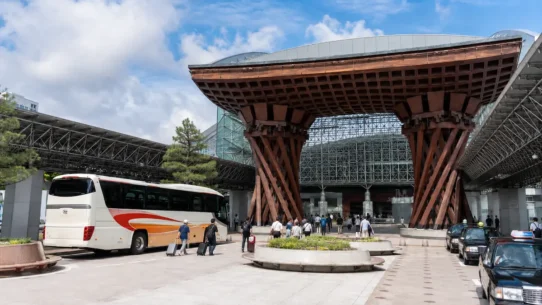
- Treat Nagoya Station as a group of neighbouring stations, not one building with easy internal transfers. JR, Shinkansen, Meitetsu, Kintetsu, subway and Aonami gates are separate. Allow at least 15–20 minutes between operators when carrying luggage.
The hardest part of using transport in Nagoya is not the number of train lines. It is knowing which company runs the journey you need, whether your pass covers it, and which side of a very large station you should be standing on. This Nagoya transportation guide is designed for first-time visitors who would rather spend their day eating hitsumabushi or exploring Nagoya Castle than dragging a suitcase through the wrong underground corridor.
Nagoya is easier than Tokyo once its logic clicks. The subway handles most city sightseeing. Meitetsu connects Chubu Centrair International Airport and several useful day-trip destinations. JR is important for the Shinkansen and regional trains. Kintetsu points toward Mie, Ise and Osaka, while the Aonami Line is the route to Kinjo-futo, LEGOLAND Japan and the SCMAGLEV and Railway Park. The expensive mistakes happen when travelers assume all of these are one system.
Fact-check note: Fares and operating details in this guide were checked on August 5, 2026 against official transport sources. Timetables, disruptions and airport bus routes can change, so recheck same-day operation before a flight or timed-entry attraction.
The 1-Min Cheat Sheet
- Chubu Centrair Airport to central Nagoya: Take a Meitetsu train. Choose μSKY when a guaranteed seat, luggage space and the fastest trip matter. Choose an ordinary car on a Rapid Limited Express or Limited Express when saving the ¥450 seat surcharge matters more.
- Nagoya Station, Sakae, Osu, Nagoya Castle and central sightseeing: Use the subway first. Pay with a compatible IC card for a light day; consider the ¥760 Subway 24-Hour Ticket when your route contains roughly three to four paid subway rides.
- Toyota Commemorative Museum, Nagoya Castle, Tokugawaen and a relaxed sightseeing loop: Me~guru can reduce route-planning stress, but it is slower than building a precise subway itinerary and normally does not operate on Mondays.
- Ghibli Park, LEGOLAND, Inuyama, Takayama, Ise or other day trips: Choose the operator that actually serves the destination. City subway passes cover only part—or none—of these journeys.
- Heavy luggage, mobility needs, small children or a very late arrival: Use a taxi for the final short section, or pre-book a private airport transfer. A taxi all the way from Centrair is convenient but expensive.
Top Survival Tips
- Search by operator before searching by platform. “Nagoya Station” can mean JR Nagoya, Meitetsu Nagoya, Kintetsu Nagoya, the municipal subway or the Aonami Line. First identify the operator, then the line, direction and platform.
- Use the two main sides of JR Nagoya Station as your compass. The Taiko-dori side is the west and Shinkansen side. The Sakura-dori side faces east toward the city center and is usually the more useful direction for JR Towers and onward walking toward Meitetsu or Kintetsu. Do not rely on indoor GPS alone; overhead signs are more dependable underground.
- Add a luggage transfer buffer. A connection that looks like five minutes on a route planner may assume fast walking and no wrong turns. Budget 15–20 minutes between JR/Shinkansen and Meitetsu or Kintetsu, and more if you need an elevator, ticket counter or restroom.
- Do the pass calculation before breakfast, not at the ticket machine. Ordinary subway fares are ¥210–¥340. A ¥760 Subway 24-Hour Ticket normally needs three or four rides to save money. The ¥620 Donichi Eco Kippu can pay off quickly on an eligible day because it covers city buses and subway, but it still excludes private railways.
- Understand the word “24-hour.” The Subway 24-Hour Ticket is valid for 24 hours from first use, which is useful when you begin sightseeing in the afternoon. A city bus and subway one-day ticket is a service-day ticket, not a rolling 24-hour product.
- Never confuse a base fare with a reserved-seat supplement. On Meitetsu, μSKY is entirely First Class and needs a ¥450 μticket in addition to the regular fare. On Rapid Limited Express and Limited Express trains, cars 1 and 2 may be First Class, while ordinary cars require only the regular fare. Check the car number before boarding.
- An IC card is a wallet, not an unlimited pass. Suica, PASMO, ICOCA, TOICA and manaca are excellent for tapping through local gates, but they do not magically include μSKY reserved seats, private-line day passes or a normal Shinkansen reservation.
- Do not assume an airport bus serves your exact Nagoya stop. As checked on August 5, 2026, the regular Centrair–Meitetsu Bus Center service is listed as suspended, while Sakae/Fushimi and a separate late-night or early-flight Nagoya Station West Gate service are listed. Verify the current route and boarding point instead of following an old blog post.
- Choose elevators before you choose exits. The nearest numbered exit on a map may have stairs only or place you across a wide road. With a suitcase, route to an elevator exit even when it adds two or three minutes. Save your hotel name and address in Japanese before leaving the station.
- Avoid designing a day around “unlimited rides.” A pass is valuable only when it supports the attractions you genuinely want. Spending an extra hour zigzagging across the city to recover ¥200 defeats the purpose of saving money.
The Full Experience
🚆 Meitetsu Airport Trains: Best for Centrair to Central Nagoya
Fastest Airport Option · Direct Rail Link · Reserved Seat Available · Luggage-Friendly
Central Japan International Airport Station is connected directly to Access Plaza. From Terminal 1, the route is straightforward. Terminal 2 passengers have an additional walk to the rail station, so do not build a tight connection immediately after landing.
The fastest μSKY service can reach Nagoya in about 28 minutes. Every μSKY car is First Class, meaning you need both the regular railway fare and a ¥450 μticket for a specific train and seat. This is the option to choose after a long flight when standing with luggage would be miserable, when you are traveling during a busy period, or when twenty minutes saved has real value.
There is a cheaper and still practical alternative. Rapid Limited Express and Limited Express services can include ordinary, non-reserved cars. Those ordinary cars require only the regular fare, which can be paid with a compatible IC card or ticket. The trap is boarding cars 1 or 2 when they are marked First Class, or stepping onto an all-reserved μSKY because the English word “express” sounds close enough.
- Choose μSKY when: you want a guaranteed seat, have a large suitcase, are traveling with children or need the simplest premium option.
- Choose an ordinary car when: you are comfortable without a reservation and want to avoid the ¥450 supplement.
- Consider the Sakae/Fushimi airport bus when: the current timetable fits your flight and it removes an awkward train transfer to a hotel near those stops. Road traffic makes its arrival less predictable.
- Use a private transfer when: the group can share the cost, there are several large bags, or the flight lands too late for a comfortable public-transport connection.
✅ What Other Travelers Say
The most common praise is how quickly the airport disappears behind you once you reach the train. Travelers using advance QR products also like avoiding a ticket-machine queue. The recurring source of confusion is not the route—it is discovering that a basic airport ticket does not automatically include the μSKY reserved-seat supplement.
⚠️ The Catch (Things to Keep in Mind)
A μticket is linked to a specific First Class seat and departure. Do not buy it too early if immigration or baggage delivery is unpredictable. Confirm the car type on the platform display, keep your phone charged if using a QR ticket, and remember that Meitetsu Nagoya Station is separate from the JR and Shinkansen gates. Reaching a JR platform after arrival requires walking outside the Meitetsu paid area.
🚇 Nagoya Subway: Best for Most First-Time Sightseeing Days
Six Lines · Easy Station Codes · Best City Coverage · 24-Hour Pass Option
The subway is the backbone of a first Nagoya trip. The Higashiyama Line is the line most visitors use first, connecting Nagoya Station, Fushimi, Sakae and Fujigaoka. The Sakura-dori Line also serves Nagoya Station and can be more comfortable for some east–west journeys. The Meijo Line forms a useful loop through major districts, while the Meiko Line serves the port area. Tsurumai and Kamiiida lines fill important gaps.
Use line letters, station numbers and final destinations together. Nagoya Station is H08 on the Higashiyama Line and S02 on the Sakura-dori Line. Sakae is H10/M05. This combination is safer than memorising a platform number, which can be less meaningful when you enter from another concourse.
The ticket decision is simple once you count the day:
- One or two subway rides: tap an IC card. A pass usually wastes money.
- Three rides: compare the actual fares. Three longer rides may beat ¥760; three short ¥210 rides do not.
- Four or more subway rides: the ¥760 Subway 24-Hour Ticket is often sensible, especially when rides span an afternoon and the following morning.
- Weekend, public holiday or the 8th of the month: the ¥620 Donichi Eco Kippu can be better if you will also use city buses or Me~guru.
- Mixed private-rail day: use an IC card or destination-specific ticket instead of forcing a city pass into the itinerary.
A practical central route might use the subway from Nagoya to Nagoya Castle, continue to Sakae, move to Osu, and return to the hotel. That can justify a pass. By contrast, a day spent walking between Sakae, Hisaya-odori and nearby shopping areas may involve only two paid rides.
✅ What Other Travelers Say
Visitors generally find Nagoya’s subway less intimidating than Tokyo’s once they stop thinking of every railway as one network. English signage, line colours and station codes work well. The complaint is usually about the distance between the platform and the desired street exit, not the train ride itself.
⚠️ The Catch (Things to Keep in Mind)
The ¥760 ticket is subway-only. It does not cover Meitetsu to the airport, the Aonami Line to LEGOLAND, or Linimo after Fujigaoka for Ghibli Park. A ticket bought from a subway machine must begin use by the last train on the purchase day; buy from a staffed location if you need an advance-use version. Also remember that a ¥870 city bus and subway one-day ticket expires by the end of that service day rather than 24 hours after first use.
🚄 JR, Meitetsu, Kintetsu and Aonami: Best for Day Trips and Cross-City Connections
Shinkansen Hub · Regional Day Trips · Separate Operators · Station Transfer Alert
Nagoya is an excellent transport base because several operators meet in the same district. It is also easy to choose the wrong operator because the station names look almost identical on a phone screen.
- JR: use it for the Tokaido Shinkansen, regional JR lines, Gifu and limited express services such as Hida toward Takayama.
- Meitetsu: use it for Centrair, Inuyama and many destinations in Aichi. Meitetsu Nagoya is an underground station beside, not inside, the JR paid area.
- Kintetsu: use it for routes toward Mie, Ise-Shima, Nara and Osaka when Kintetsu’s timetable or pass fits your plan.
- Aonami Line: use it from Nagoya to Kinjo-futo for LEGOLAND Japan and the SCMAGLEV and Railway Park. Nagoya city subway passes do not cover it.
- Linimo: use it after the Higashiyama Line to Fujigaoka for Ghibli Park. The city subway ticket covers only the subway section, not Linimo.
For Ghibli Park, the standard rail route is the Higashiyama Subway Line from Nagoya toward Fujigaoka, a short transfer walk, then Linimo to Ai-Chikyuhaku Kinen Koen. Official visitor guidance estimates about one hour from Nagoya Station. This is a perfect example of why “I have a subway pass” does not mean “my whole journey is covered.”
For LEGOLAND Japan, follow Aonami Line signs at Nagoya Station and travel to Kinjo-futo. Do not enter the municipal subway because the attraction is described as being “in Nagoya.” The operator, not the city boundary, determines the fare product.
For a Shinkansen journey, buy or link the correct bullet-train reservation. A normal stored-value IC card by itself is not a complete Shinkansen ticket unless it has been properly linked to a supported reservation service. When transferring from the Shinkansen to another company, expect to leave JR gates and navigate to a new station entrance.
✅ What Other Travelers Say
Travelers love Nagoya as a base because Kyoto, Tokyo, Osaka, Takayama, Ise and Aichi attractions can be combined efficiently. The repeated frustration is a route planner showing a short “Nagoya” connection without making the physical walk between operators feel obvious.
⚠️ The Catch (Things to Keep in Mind)
Do not buy a rail pass based only on the longest journey. List every operator and check what the pass excludes. At Nagoya Station, follow large operator signs rather than a moving blue dot on your phone. When a timed train matters, arrive early enough to find the correct gate, buy a supplement and still recover from one wrong turn.
🚌 City Buses and Me~guru: Best for Sights Beyond Convenient Subway Exits
Flat City Fare · Sightseeing Loop · Street-Level Views · Monday Warning
Nagoya city buses charge a flat adult fare of ¥210 on ordinary services. Most city buses board at the front, where you pay or tap, and exit from the rear. One important exception is the Key Route Bus No. 2/Shindekimachi service, which uses a different boarding and payment flow. Watch what local passengers do and read the door signs rather than applying one Japan-wide bus rule.
Me~guru is a sightseeing route bus linking Nagoya Station with major visitor areas such as the Toyota Commemorative Museum, Nagoya Castle, Tokugawaen and Sakae. A single adult ride is ¥210, while the dedicated one-day pass is ¥500. On pure fare maths, the pass begins to make sense at three rides because three singles cost ¥630. Attraction discounts can improve its value, but only when you actually plan to use them.
Me~guru normally operates Tuesday through Sunday and is closed on Monday, or the following weekday when Monday is a holiday, plus the year-end/New Year closure. Its frequency is far lower than a subway line, so check the timetable before entering a museum. Missing one departure can turn a convenient loop into a long wait.
The best pass choice depends on the day:
- Two Me~guru rides: pay two single fares unless attraction discounts justify the pass.
- Three or more Me~guru rides: the ¥500 Me~guru one-day pass is usually cheaper.
- Eligible Donichi day with subway use: the ¥620 Donichi Eco Kippu is often the stronger all-round choice because it covers city buses, subway and Me~guru.
- Subway-only 24-hour ticket: not valid on Me~guru.
✅ What Other Travelers Say
Travelers enjoy seeing the city at street level and reaching museum stops without planning several transfers. Me~guru is especially appealing on a first sightseeing day when convenience matters more than speed. The most common negative is waiting: the loop is useful only when its timetable matches the order of your attractions.
⚠️ The Catch (Things to Keep in Mind)
Me~guru is not a hop-on, hop-off bus with constant departures, and its loop direction may make a short-looking return surprisingly slow. It can also be delayed by road traffic. Check Monday operation, the final bus and each stop location. When the next bus is far away, the subway plus a short walk may save more time.
💳 IC Cards: Best for Flexible Pay-As-You-Go Travel
Tap and Go · No New Card Needed for Many Visitors · Not an Unlimited Pass · Supplement Rules Still Apply
If you already carry a compatible Suica, PASMO, ICOCA or another nationally interoperable transport card, you usually do not need to buy a new Nagoya-branded card. These cards can be used on Nagoya city subway and buses, and widely across local railways including Meitetsu, subject to each operator’s rules and coverage area.
Local choices include manaca and TOICA. A standard TOICA purchase costs ¥2,000, made up of a refundable ¥500 deposit and ¥1,500 stored value. The point of an IC card is convenience: no fare calculation for each ordinary ride, faster gates and easier transfers. It is not automatically cheaper than buying individual tickets.
Use an IC card when your day includes a few rides across different operators. This is often the least stressful option for a Nagoya–Sakae subway ride, a Meitetsu day trip and an Aonami journey on separate days. It also reduces the temptation to over-plan journeys just to recover the cost of a pass.
✅ What Other Travelers Say
The strongest consensus is that tapping an existing IC card removes small but repeated decisions. Travelers particularly value not having to study a fare map while people queue behind them. Mobile IC cards are convenient for supported phones, while physical cards remain simple for travelers who prefer cash loading.
⚠️ The Catch (Things to Keep in Mind)
Keep enough balance for the full trip and do not stack several IC cards together at the reader. An IC tap can cover the regular fare on a Meitetsu airport journey but not the required μticket for a First Class car. IC cards also have area and through-travel limitations; do not assume you can cross disconnected IC areas without buying a conventional ticket. For the Shinkansen, use a proper ticket or correctly linked reservation.
🚕 Taxis and Private Transfers: Best for Heavy Luggage, Families and Late Arrivals
Door-to-Door · Best Last Mile · High Airport Cost · Pre-Booking Recommended
Taxis are most valuable in Nagoya when used surgically. A short ride from a major station to a hotel can save energy, prevent a wet walk and avoid an inaccessible exit. A taxi from Centrair all the way to Nagoya Station is a different budget decision: the airport’s official estimate is about 50 minutes and ¥16,000, with expressway costs including the Centrair Bridge charged separately.
That airport fare can make sense for three or four travelers sharing the cost, especially with several suitcases, a stroller or limited mobility. It is poor value for a solo traveler when trains are running. A pre-booked private transfer provides clearer meeting instructions and vehicle planning, but check luggage capacity, waiting-time rules, child-seat availability and the terminal pickup location before paying.
For city taxis, show the destination in Japanese and include the exact hotel branch. Several hotels share similar English names. The correct side of Nagoya Station also matters: asking for the Taiko-dori side or Sakura-dori side can prevent an unnecessary loop through traffic.
✅ What Other Travelers Say
Travelers who use taxis for the last one or two kilometres often consider the money well spent, especially after a flight or during heavy rain. Airport taxi users value the door-to-door simplicity but are less enthusiastic when traffic, tolls and an undersized vehicle make the final cost feel uncertain.
⚠️ The Catch (Things to Keep in Mind)
The airport estimate is not a fixed quote. Traffic, waiting and highway charges can raise the total. A standard taxi may not hold four passengers plus four large suitcases. For a private transfer, confirm whether the booking covers your actual flight arrival time, terminal and baggage volume rather than simply selecting the cheapest vehicle category.
Key FAQs
What is the best way to get from Chubu Centrair Airport to Nagoya Station with luggage?
For most first-time visitors, the best balance of speed and simplicity is Meitetsu μSKY. It takes as little as about 28 minutes and provides a reserved seat, but you need the regular fare plus a ¥450 μticket. A Rapid Limited Express or Limited Express ordinary car is cheaper when you do not need a reserved seat. Terminal 2 users should allow extra time to reach the airport railway station.
Is the Nagoya Subway 24-Hour Ticket or Donichi Eco Kippu worth it?
The ¥760 Subway 24-Hour Ticket is usually worth considering at three longer rides or four ordinary city rides, especially when travel crosses two calendar days within 24 hours. The ¥620 Donichi Eco Kippu is often better on Saturdays, Sundays, public holidays and the 8th of the month when your plan mixes subway, city buses and Me~guru. Neither covers Meitetsu, JR, Kintetsu, Aonami or Linimo.
Can I use Suica, PASMO or ICOCA on Nagoya subway, buses and Meitetsu trains?
Yes, nationally interoperable IC cards such as Suica, PASMO and ICOCA are accepted across Nagoya city subway and buses and can be used for ordinary Meitetsu fares. They do not replace a μticket for a First Class car, do not turn into an unlimited pass and are not a complete Shinkansen ticket unless properly linked to a supported reservation.
Final Verdict and Your Next Step
The smartest Nagoya transport plan is deliberately boring: use an IC card for light or mixed-operator days, buy the Subway 24-Hour Ticket only when the ride count supports it, use Donichi Eco Kippu on an eligible bus-and-subway day, and take Meitetsu for the airport. Save taxis for the moments when they genuinely protect your time, energy or mobility.
Your hotel area can remove more transport friction than any pass:
- Stay near Nagoya Station for early Shinkansen departures, airport rail access and frequent regional day trips. Check the hotel’s exact station side so “five minutes away” does not become a long underground luggage walk.
- Stay in Sakae for restaurants, nightlife and central sightseeing. Expect a transfer or a timetable-dependent airport bus on arrival.
- Stay near Kanayama for a practical combination of Meitetsu airport access, JR and subway connections. It is less iconic than Nagoya Station or Sakae but often more efficient.
Book the parts that can sell out or become awkward after a delayed flight, but do not pre-purchase every transport product just to feel organised. Check the inclusions carefully—especially whether an airport rail e-ticket includes only an ordinary-car base fare or also a reserved μSKY seat.
- Compare Nagoya hotels on Booking.com — filter by walking distance from the exact station you plan to use.
- Compare Nagoya hotel deals on Agoda — useful for checking Nagoya Station, Sakae and Kanayama side by side.
- Check the Meitetsu airport railway e-ticket on Klook — read the package details and μSKY supplement rules before purchase.
- Check the Meitetsu airport railway e-ticket on KKday — verify eligibility, validity, redemption and reserved-seat exclusions.
- Compare pre-booked Centrair airport transfers on Klook — confirm passenger and luggage capacity before choosing a vehicle.
Official checks before departure: review the Nagoya City Transportation Bureau, Meitetsu airport access guide, Centrair access pages and Me~guru service guide for live operational changes.