
💡 Key Takeaways
- Omicho Market and Musashimachi are the best all-round base for most first-time visitors. You sit between Kanazawa Station and the historic sights, so no single journey becomes especially annoying.
- Stay by Kanazawa Station when luggage, early trains, late arrivals, or day trips matter more than atmosphere. It is operationally easy, but you will commute to most major sights.
- Korinbo and Katamachi are the smartest choice for restaurants and evenings. The area remains useful after the sightseeing buses wind down, though some streets can be noisy at night.
- Higashi Chaya is beautiful to wake up in but less practical than it looks on Instagram. Accommodation is limited, shops close early, and moving suitcases through old streets can be awkward.
- Do not choose a hotel from straight-line map distance alone. In Kanazawa, the nearest bus stop, loop direction, rain, snow, slopes, and evening transport matter more than a difference of a few hundred metres.
Deciding where to stay in Kanazawa is harder than it first appears. The city looks compact on a map, yet Kanazawa Station, Omicho Market, Kenrokuen Garden, Higashi Chaya District, and Katamachi form a spread-out sightseeing arc rather than one obvious centre. A hotel can be “central” and still leave you waiting for buses, climbing a wet slope, or dragging a suitcase over narrow pavements.
The mistake many first-time visitors make is booking beside the attraction they most want to photograph. That sounds logical until dinner time, when the teahouse streets become quiet, the main sightseeing loop is finishing for the day, and the restaurants you saved are on the other side of town. The opposite mistake is automatically booking at Kanazawa Station, then spending every day travelling back and forth to the historic centre.
This guide takes a firmer, practical view. It compares the areas by arrival convenience, walking load, bus dependence, evening atmosphere, hotel supply, likely room-price bands, and who should avoid each location. The price bands below are planning estimates for a standard double room before local taxes, not live quotes. Kanazawa rates move sharply on Saturdays, during cherry blossom season, autumn foliage, Japanese holiday periods, and popular winter weekends.
The 1-Min Cheat Sheet
- Kanazawa Station: Best for heavy luggage, early departures, rail-pass itineraries, one-night stays, families, and travellers taking day trips. Less convenient for walking to the main historic sights.
- Omicho Market and Musashimachi: Best overall for a first visit. Good bus access, strong hotel choice, easy breakfast options, and a sensible position between the station and sightseeing core.
- Korinbo, Katamachi and Nagamachi: Best for restaurants, bars, shopping, evening energy, and walking to the samurai district, 21st Century Museum, castle area, and Kenrokuen. Avoid the liveliest side streets if you sleep lightly.
- Kenrokuen, Kanazawa Castle and Hirosaka: Best for culture-focused travellers, museum lovers, early morning sightseeing, and a quieter stay. Dining becomes thinner later in the evening.
- Higashi Chaya, Kazuemachi and Hashiba: Best for atmosphere, couples, photography, and travellers willing to pay for a memorable machiya or ryokan-style stay. Weak for late-night convenience and large suitcases.
- Nishi Chaya and Teramachi: Best for quiet streets, repeat visitors, lower-key guesthouses, and travellers who enjoy residential neighbourhoods. Least suitable for a first trip built around maximum sightseeing efficiency.
Top Survival Tips
- Treat the sightseeing loop bus as a daytime tool, not an all-day transport guarantee. The main Kanazawa Loop Bus operates roughly from the morning until around 18:00, with the right loop generally more frequent than the left loop. This matters because a hotel that feels well connected at 11:00 may feel isolated after dinner. Check the latest schedule on the official Hokutetsu Kanazawa Loop Bus page before relying on it.
- Check the loop direction and bus-stop name before booking. Kanazawa’s loop routes travel in opposite directions. Two hotels near the same attraction can produce very different journey times depending on which side of the road your useful stop is on. Look for practical stops such as Musashigatsuji/Omicho Market, Korinbo, Hashiba-cho, and Kenrokuen-shita/Kanazawa-jo rather than trusting a generic “city centre” label.
- Do not underestimate rain, winter slush, or a 15-minute luggage walk. Kanazawa is known for sudden coastal showers. In winter, snow-melting water can keep central streets wet even when snow has cleared. A hotel that is technically walkable may not be comfortable with a full-size suitcase, children, or unsuitable shoes. A short taxi is often worth budgeting for.
- Use same-day luggage delivery when your hotel accepts it. The Kanazawa Station Tourist Information Centre offers delivery to many hotels and ryokan, letting you sightsee without taking a suitcase onto a crowded bus. However, unmanned rental houses and some whole-house machiya cannot receive bags. Confirm eligibility before planning around the service. Details are available on the official baggage delivery page.
- Choose your evening, not only your morning. Higashi Chaya is wonderful before the day-trippers arrive, but many shops close around late afternoon and the district becomes quiet. Katamachi is the opposite: less romantic at breakfast, much easier for dinner, drinks, and walking back to your room. For a two- or three-night trip, the evening experience often affects satisfaction more than being five minutes closer to one daytime sight.
- Budget for taxis strategically rather than avoiding them completely. Official tourism guidance estimates roughly seven minutes and from about ¥800 between Kanazawa Station and Omicho Market, about eleven minutes and from ¥1,600 to Higashi Chaya, and about fifteen minutes and from ¥1,800 to Kenrokuen. Split between two or three people, an occasional taxi can be better value than choosing a worse hotel purely to save one bus fare.
- Remember the local accommodation tax. Kanazawa charges per person per night: accommodation under ¥5,000 per person is exempt, stays below ¥20,000 are generally taxed at ¥200, and stays of ¥20,000 or more are generally taxed at ¥500. Some booking sites include it; others collect it at the property. Check the final payment screen rather than comparing only the headline room rate.
- Flying through Komatsu Airport changes the calculation. Airport buses serve Kanazawa Station, Musashigatsuji/Omicho Market, and Korinbo, making those three bases especially practical. As of August 2026, the official adult fare from these central stops is ¥1,400, but schedules are adjusted around flights, so verify your date.
The Full Experience
📍 Kanazawa Station: Best for Luggage, Rail Trips and Stress-Free Arrivals
Best for: Heavy luggage · Early trains · Late arrivals · Families · One-night stays · Shirakawa-go and regional day trips
Kanazawa Station is the most convenient place to arrive, but it is not the centre of the sightseeing experience. That distinction matters. Stay here and you can step off the Hokuriku Shinkansen, walk to your hotel, leave your bags, and continue with minimal friction. You also have the largest concentration of business hotels, major brands, convenience stores, station restaurants, and transport information.
For travellers carrying large luggage, this is the easiest answer. The pavements are wider, station facilities are weather-protected, taxis are readily available, and you avoid squeezing suitcases onto city buses. It is also the safest choice when your itinerary includes an early train to Tokyo, a transfer toward Kyoto or Osaka, or a bus trip to Shirakawa-go and Takayama.
The weakness is location. Omicho Market is around one kilometre away, while Higashi Chaya, Kenrokuen, the castle, Nagamachi, and Katamachi all require a bus, taxi, bicycle, or a longer walk. You may save twenty minutes on arrival and then spend extra time commuting on every sightseeing day. The streets around the station are convenient rather than atmospheric, so do not expect to open your curtains onto a preserved teahouse lane.
Typical room-price planning band: Approximately ¥8,000–¥25,000 for a double room, with premium station hotels and busy weekends often reaching ¥30,000–¥45,000 or more. The station has the deepest inventory, so it is often the easiest area for finding a last-minute room, though not always the cheapest on high-demand dates.
Hotel profile: You will find everything from compact business hotels to full-service properties. Commonly considered options include Hotel Nikko Kanazawa, Hyatt Centric Kanazawa, Hotel Vista Kanazawa, Dormy Inn Kanazawa, and HOTEL MYSTAYS PREMIER Kanazawa. Always check whether the property is on the east or west side of the station; the difference is small, but the east side is handier for the main city bus terminal.
✅ What Other Travelers Say
Guests repeatedly value the simple arrival, easy luggage storage, generous restaurant choice inside and around the station, and peace of mind before an early departure. Families and rail-heavy travellers often rate station hotels higher than visitors who came mainly for neighbourhood atmosphere.
⚠️ The Catch (Things to Keep in Mind)
You will not be able to walk casually from your hotel to every headline sight. Buses leaving the station can be busy in the morning, especially in rain or during peak sightseeing periods. If you are staying three nights and spending every day in the historic centre, the station can begin to feel like a transport base rather than part of the trip.
Stay here if: You have a large suitcase, arrive after dark, depart early, take several regional trips, or prefer a predictable full-service hotel.
Do not stay here if: Your priority is stepping outside into old Kanazawa, walking home after dinner in Katamachi, or visiting the main sights before tour groups arrive.
📍 Omicho Market and Musashimachi: Best Overall for First-Time Visitors
Best for: First visits · Balanced sightseeing · Seafood breakfasts · Couples · Families · Travellers who want fewer bad journeys
For most first-time visitors asking where to stay in Kanazawa, this is the answer I would choose. Omicho Market and the Musashimachi intersection sit between Kanazawa Station and the historic core. You are not directly beside every attraction, but you avoid being badly positioned for any of them.
Kanazawa Station is reachable by a short bus or taxi ride and, in fair weather, a manageable walk without heavy luggage. Higashi Chaya, the castle, Kenrokuen, Korinbo, and Katamachi are all connected by frequent daytime buses. The airport bus also serves Musashigatsuji/Omicho Market. This central position reduces backtracking, which is especially valuable on a two-night stay.
The market itself is a major advantage in the morning. You can reach popular seafood restaurants before the biggest daytime crowds and return to your hotel easily after shopping. Around Musashimachi you also have department-store facilities, convenience stores, bakeries, cafés, and practical services. Unlike Higashi Chaya, the area does not depend entirely on daytime tourism.
There is one important distinction: staying “near Omicho Market” can mean directly beside the market, along Hyakumangoku-dori, or several blocks toward the castle. All are useful, but check the exact entrance and nearest bus stop. The market arcades are lively by day and quiet after closing; the surrounding main streets remain more functional in the evening.
Typical room-price planning band: Approximately ¥9,000–¥28,000 for a double room. Stylish hotels with baths, larger rooms, or premium breakfasts can exceed ¥30,000 on Saturdays and peak dates. This area has strong mid-range supply, so it often offers better value than a small traditional property in Higashi Chaya.
Hotel profile: Popular examples in or near the area include Hotel Forza Kanazawa, SOKI Kanazawa, Onyado Nono Kanazawa, Tokyu Stay Kanazawa, Mitsui Garden Hotel Kanazawa, and The Hotel Sanraku Kanazawa. Boundaries overlap, so compare the actual map pin rather than relying on the neighbourhood name used by a booking site.
✅ What Other Travelers Say
Travellers often praise the ability to walk to breakfast, reach multiple attractions without returning to the station, and choose between walking, bus, and taxi. Hotel reviews in this zone commonly mention “close to everything” even though no single sight is directly outside the door. That is exactly why the area works.
⚠️ The Catch (Things to Keep in Mind)
The market is not an evening district. Many stalls and restaurants close in the afternoon, and some visitors are surprised by how calm the immediate lanes become. Rooms facing major roads may hear traffic, while market-adjacent hotels can have busy pavements in the morning. It is central in a practical sense, not in the sense of having nightlife under your window.
Stay here if: You want the most balanced base, dislike wasting time, value breakfast and transport options, or are visiting Kanazawa for two or three nights.
Do not stay here if: You want a late-night bar scene, complete silence, or the romantic feeling of sleeping inside an old chaya district.
📍 Korinbo, Katamachi and Nagamachi: Best for Food, Nightlife and Walking
Best for: Restaurants · Bars · Evening convenience · Couples · Solo travellers · Art and shopping · Longer stays
Korinbo and Katamachi are where Kanazawa feels most alive after dark. If your ideal day ends with sushi, oden, an izakaya, a cocktail bar, or a late dessert without checking the last sightseeing bus, this area is the strongest choice. It also sits beside Nagamachi Samurai District and within comfortable walking range of the 21st Century Museum, Hirosaka, Kenrokuen, Kanazawa Castle, Oyama Shrine, and Tatemachi.
Korinbo is the more polished commercial side, with department stores, larger hotels, and broad avenues. Katamachi becomes livelier and more local at night, with dense clusters of restaurants, bars, karaoke, and narrow side streets. Nagamachi, immediately beside them, offers a quieter historic atmosphere but fewer hotels within the preserved lanes themselves.
This is arguably a better sightseeing base than Kanazawa Station for travellers who are comfortable taking a bus or taxi with luggage on arrival. Once checked in, you can cover much of central Kanazawa on foot. The Komatsu Airport bus also serves Korinbo, which improves the area’s arrival convenience for flyers.
Typical room-price planning band: Approximately ¥7,000–¥25,000 for a double room. The area has excellent value because it combines business hotels, lifestyle hotels, and upscale properties. Friday and Saturday nights can be more expensive, particularly when local events increase domestic demand.
Hotel profile: Well-known options include Kanazawa Tokyu Hotel, KOKO HOTEL Premier Kanazawa Korinbo, Henn na Hotel Kanazawa Korinbo, OMO5 Kanazawa Katamachi, HOTEL AMANEK Kanazawa, and smaller hotels around Tatemachi. For light sleepers, read recent reviews for noise and ask for a room away from the street or elevators.
✅ What Other Travelers Say
Visitors love being able to finish sightseeing, rest briefly, and then walk out for dinner without another bus journey. Reviews frequently praise the access to restaurants, the short walk to Nagamachi, and the ability to reach the castle and museums on foot. Solo travellers often find the area easier at night because there are people, lights, taxis, and open businesses.
⚠️ The Catch (Things to Keep in Mind)
Katamachi is Kanazawa’s nightlife district. It is generally manageable rather than chaotic, but a room above or beside a busy lane can pick up voices, traffic, or late-night activity. The walk from Kanazawa Station is not sensible with heavy luggage, so plan a bus or taxi. Travellers seeking a hushed traditional setting may find the commercial streets visually ordinary.
Stay here if: Dinner is an important part of your trip, you like walking, you plan to visit museums and central sights, or you want the city to remain useful after 18:00.
Do not stay here if: You need absolute silence, dislike nightlife areas, or must catch a very early train with multiple suitcases.
📍 Kenrokuen, Kanazawa Castle and Hirosaka: Best for Culture and Early Starts
Best for: Garden lovers · Museums · Photography · Quiet evenings · Mature travellers · Second-time Japan visitors
Staying near Kenrokuen and Kanazawa Castle lets you experience the city’s cultural core at its best times: early morning, late afternoon, and during selected evening illuminations. You can enter the garden before the main tour flow, walk through the castle grounds when they feel spacious, and reach the 21st Century Museum and Hirosaka without transport.
This area is not one compact hotel district. Properties are scattered around Kenrokuen-shita, Marunouchi, Hirosaka, and the roads toward Korinbo. A hotel beside the castle’s northern side will feel different from one near the museum. Check which gate or bus stop you will actually use, because the castle grounds themselves can make a short straight-line distance misleading.
The strongest benefit is atmosphere without the daytime-tourist intensity of sleeping directly in Higashi Chaya. You remain near major sights while having access to proper roads, taxis, and established hotels. For travellers who care more about gardens, architecture, and museums than nightlife, this is a satisfying base.
Typical room-price planning band: Approximately ¥15,000–¥40,000 for a double room. There are fewer cheap business hotels than around the station or Katamachi. Properties with larger rooms, onsen facilities, traditional design, or castle-side positioning can rise above ¥40,000 during peak seasons.
Hotel profile: The Kanazawa Hakuchoro Hotel Sanraku is a recognisable full-service option near the castle, while smaller hotels, ryokan, and apartments appear around Hirosaka and the roads toward Korinbo. Some central properties marketed as “Kenrokuen area” are actually a ten- to fifteen-minute walk away, so inspect the pin carefully.
✅ What Other Travelers Say
Culture-focused guests value the ability to visit Kenrokuen before breakfast, return to the hotel for a break, and photograph the castle in changing light. The area is often described as calm and refined, with enough access to central Kanazawa to avoid feeling fully isolated.
⚠️ The Catch (Things to Keep in Mind)
Restaurant density drops compared with Katamachi, especially later at night. Some routes involve gentle slopes, long garden walls, or crossings that make map distances feel longer. During heavy rain or winter weather, walking back from dinner can be less pleasant than expected. Budget for an occasional taxi.
Stay here if: Kenrokuen, the castle, and museums are your priorities, you enjoy quiet mornings, or you prefer a cultural setting over nightlife.
Do not stay here if: You want many late restaurants at the door, are booking on a tight budget, or need the simplest possible rail connection.
📍 Higashi Chaya, Kazuemachi and Hashiba: Best for Romance and Old-Kanazawa Atmosphere
Best for: Couples · Machiya stays · Photography · Special occasions · Slow travel · Travellers who prioritise atmosphere
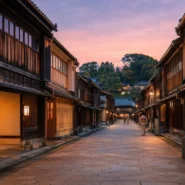
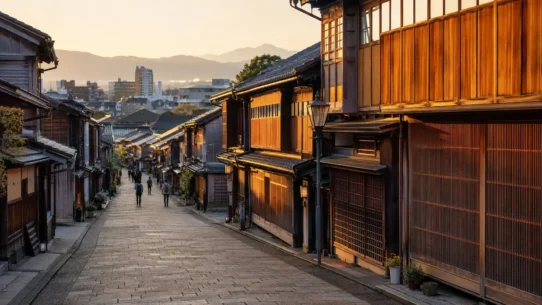
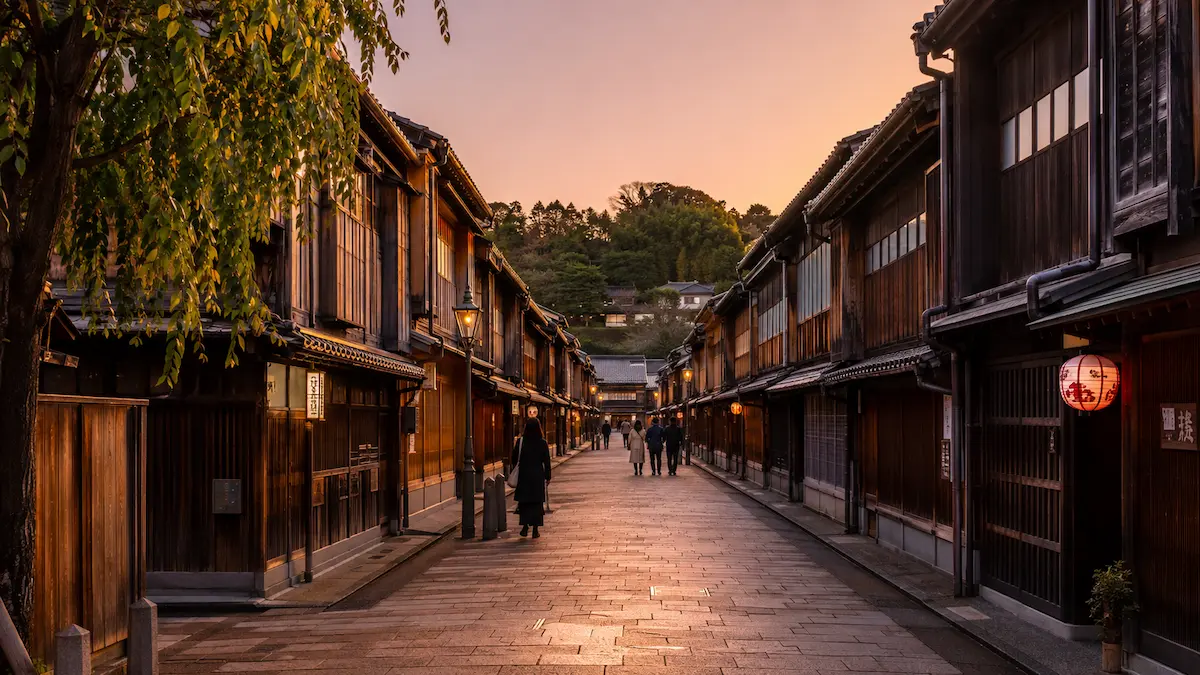
Higashi Chaya is the area many travellers imagine when they picture Kanazawa: wooden lattice fronts, narrow lanes, gold-leaf shops, teahouses, and the Asano River nearby. Kazuemachi, across the river, feels smaller and more intimate. Hashiba-cho is the practical transport edge connecting both districts to the rest of the city.
Waking up here can be genuinely special. Before the shops open and after day visitors leave, the streets feel completely different. Photographers, couples, and travellers booking a restored machiya may find the atmosphere worth every compromise. You can also walk to Kazuemachi, the river, and parts of Owaricho with ease.
However, this is not the best all-round location for most first-time visitors. Higashi Chaya is east of the main sightseeing cluster, while Kenrokuen and the castle sit across the river and uphill. Kanazawa Station is a bus or taxi ride away. Many shops close around 17:00, and the district can become extremely quiet. Dinner choices exist, but they are fewer, often require reservations, and may be expensive.
Traditional accommodation also brings practical trade-offs. Restored houses may have steep stairs, limited sound insulation, futons, no lift, small bathrooms, or a check-in process at another location. Whole-house rentals may not have a staffed front desk, which can prevent same-day luggage delivery. These are not flaws when expected; they are unpleasant surprises when ignored.
Typical room-price planning band: Approximately ¥18,000–¥50,000 or more for a double room or small machiya stay. Limited supply means prices can rise quickly. A premium here buys atmosphere and uniqueness rather than necessarily a larger room or more hotel services.
Hotel profile: Expect boutique inns, machiya rentals, ryokan-style properties, and a small number of upscale stays rather than rows of business hotels. Read check-in instructions carefully, confirm luggage storage, and verify whether the room has private bathing facilities if that matters to you.
✅ What Other Travelers Say
Guests who choose the area deliberately tend to love the quiet mornings, night walks by the Asano River, and feeling of staying inside historic Kanazawa rather than commuting to it. Couples often remember the neighbourhood more strongly than the room itself.
⚠️ The Catch (Things to Keep in Mind)
Daytime crowds can be heavy, while evenings may feel almost too quiet. Dragging wheeled luggage through narrow or uneven streets is inconvenient. Sightseeing buses are useful during the day but should not be your only plan after dinner. Some properties are expensive despite limited facilities, because you are paying for a rare location.
Stay here if: You are booking a special trip, want early and late access to historic streets, travel light, and are comfortable using taxis or planning dinner carefully.
Do not stay here if: You have heavy luggage, want spontaneous late-night dining, need a lift and full hotel service, or are trying to see Kanazawa as efficiently as possible in one day.
📍 Nishi Chaya and Teramachi: Best for Quiet Streets and a More Local Stay
Best for: Repeat visitors · Quiet nights · Budget guesthouses · Residential atmosphere · Long walks · Slow itineraries
Nishi Chaya and Teramachi sit southwest of the busiest sightseeing core. Nishi Chaya is smaller and less visited than Higashi Chaya, while Teramachi is known for temple-lined streets and a more residential feel. The area can be rewarding for travellers who have already seen Japan’s headline districts and want a quieter side of Kanazawa.
You are close to Myoryuji, commonly called the Ninja Temple, and within walking distance of Katamachi depending on the exact property. Accommodation can include simple guesthouses, apartments, small inns, and homes with more space than a central business hotel. Night-time noise is generally lower once you move away from Katamachi.
The main drawback is transport efficiency. This area is not the natural hub for Kanazawa Station, Omicho Market, Higashi Chaya, or the castle. Buses exist, but services and stop locations require more attention, and some journeys involve a transfer or a longer walk. When it rains, the extra distance becomes more noticeable.
Typical room-price planning band: Approximately ¥7,000–¥18,000 for simpler accommodation, with larger apartments or character properties costing more. The apparent value can disappear if you take several taxis each day, so compare total trip cost rather than room price alone.
Hotel profile: Supply is thin and scattered. Some listings described as Nishi Chaya are really on the Katamachi edge, which may be more convenient but less quiet. Check whether there is a staffed reception, luggage storage, nearby breakfast, and an easy route to the bus stop.
✅ What Other Travelers Say
Visitors who enjoy residential neighbourhoods appreciate the calm, lack of tour-bus crowds, and slower rhythm. Repeat travellers often find the area more authentic precisely because it is not built around maximum sightseeing convenience.
⚠️ The Catch (Things to Keep in Mind)
First-time visitors on a short schedule may spend too much time getting to the places they actually came to see. Restaurant choice becomes limited away from Katamachi, and late returns can require a taxi. The area is pleasant, but “quiet and local” should not be confused with “central and easy.”
Stay here if: You have three or more nights, enjoy walking, value quiet over convenience, or have already visited Kanazawa’s main sights.
Do not stay here if: This is your first one- or two-night visit, you travel with large bags, or you want the easiest route to the station and major attractions.
How to Choose Between Kanazawa Station, Omicho Market and Korinbo
These are the three areas most first-time visitors should compare seriously. The decision becomes easier when you ask which inconvenience you are most willing to accept.
- Choose Kanazawa Station when you would rather commute to sights than struggle with luggage, train times, or transfers.
- Choose Omicho Market when you want the fewest bad journeys and a base that works reasonably well for almost everything.
- Choose Korinbo or Katamachi when you would rather take one arrival taxi and then enjoy better walking, dining, and evenings for the rest of the stay.
My practical ranking for a standard two-night first visit is Omicho Market first, Korinbo/Katamachi second, and Kanazawa Station third. I would move the station to first place for a one-night stop, an early departure, a family with multiple suitcases, or an itinerary dominated by regional day trips.
Key FAQs
What is the best area to stay in Kanazawa for first-time visitors without a car?
Omicho Market and Musashimachi are the best overall base for most first-time visitors without a car. The area is positioned between Kanazawa Station and the main historic sights, has useful bus stops, and gives you the option to walk or take a short taxi when weather or crowds make buses inconvenient. Korinbo is a strong alternative for travellers who care more about restaurants and evening life.
Is it better to stay near Kanazawa Station or near Kenrokuen Garden?
Stay near Kanazawa Station for luggage, early trains, late arrivals, and day trips. Stay near Kenrokuen for culture, quiet mornings, photography, and easy access to the castle and museums. For a typical two-night first visit, Omicho Market or Korinbo often provides a better compromise than either extreme.
How many nights should I stay in Kanazawa, and does the area matter for a short trip?
Two nights is the practical minimum for seeing the major sights without rushing, while three nights allows better meals, museums, and weather flexibility. The shorter the stay, the more the area matters. On a one-night visit, station convenience may outweigh atmosphere. On a three-night visit, Korinbo, Omicho, or a character stay near Higashi Chaya becomes easier to justify.
Final Verdict and Your Next Step
For most first-time visitors, book near Omicho Market or Musashimachi. It is the least risky choice: useful buses, manageable station access, morning food, solid hotel selection, and no major attraction placed unreasonably far away.
Choose Kanazawa Station when logistics dominate the trip. Choose Korinbo or Katamachi when dinner and evening convenience matter. Choose Kenrokuen for a culture-first stay. Choose Higashi Chaya for atmosphere only when you accept the luggage, price, and late-evening compromises. Choose Nishi Chaya or Teramachi when quiet local streets matter more than first-visit efficiency.
Do not wait too long if your dates fall on a Saturday, during cherry blossom season, autumn foliage, Japanese public holidays, or a winter weekend. Kanazawa has plenty of hotels overall, but the best-located rooms with sensible cancellation terms disappear first. Compare the map pin, final tax-inclusive price, room size, luggage storage, and nearest useful bus stop before paying.
Check Kanazawa hotel availability on Booking.com
Compare Kanazawa hotel prices on Agoda
Book Kanazawa attractions and day trips on Klook
View a bookable Kanazawa city tour on KKday
The safest booking strategy is simple: reserve a refundable room in your preferred area early, then recheck prices closer to the trip. Saving a small amount is rarely worth adding two extra bus rides, a wet suitcase walk, or a taxi every evening.