
💡 Key Takeaways
- Best overall for most first-time visitors: Omicho Market and Musashigatsuji. It sits between Kanazawa Station and the historic center, so you can walk to more places without sacrificing easy bus access.
- Best for a one-night stay, heavy luggage, or multiple day trips: Kanazawa Station. It is the easiest arrival-and-departure base, but it is not the most atmospheric place to spend your evenings.
- Biggest booking mistake: choosing a beautiful-looking property in Higashi Chaya or a cheap station hotel without checking your evening plans, exact bus stop, luggage route, and walking time in rain or snow.
Choosing among the best areas to stay in Kanazawa looks easy on a map because the city is compact. In practice, the wrong location can still leave you waiting for buses, dragging a suitcase over wet pavement, or crossing the city twice a day between the station, historic districts, museums, and dinner.
Kanazawa does not have one perfect neighborhood for everyone. The station is unbeatable for transport but less convenient for sightseeing on foot. Omicho Market offers the best balance, yet much of the market shuts down before dinner. Katamachi is excellent for restaurants and nightlife, but some streets are noisy. Kenrokuen is peaceful and cultured, though less practical after dark. Higashi Chaya is the most romantic choice, but it can be expensive, quiet at night, and awkward with luggage.
The useful question is therefore not simply, “Which area is central?” It is: central to what you will actually do, at the times you will actually do it? The comparison below is designed to help you answer that before you book.
The 1-Min Cheat Sheet
- Kanazawa Station: Choose it for a one-night stop, early train, highway bus, Shirakawa-go day trip, large suitcase, or a trip built around regional transport. Skip it when atmosphere and easy evening walks matter more than departure convenience.
- Omicho Market and Musashigatsuji: The best all-round base for first-time visitors, food lovers, couples, and two- or three-night stays. You are between the station and the main historic sights, with strong bus connections and realistic walking options.
- Korinbo, Katamachi and Nagamachi: Best for dining, bars, shopping, nightlife, and travelers who prefer to walk to Kenrokuen, the 21st Century Museum area, and the samurai district. Choose your exact street carefully if you are sensitive to noise.
- Kenrokuen and Hirosaka: Best for gardens, museums, early mornings, slower sightseeing, and travelers who want a calm base near Kanazawa’s cultural core. Less suitable for late dinners, station access, or travelers who want shops outside the door.
- Higashi Chaya and Kazue-machi: Best for romance, traditional architecture, photography, boutique ryokan, and travelers who value atmosphere over convenience. Expect fewer hotel choices, higher rates, and more planning for luggage and dinner.
Top Survival Tips for Choosing Where to Stay in Kanazawa
- Do not automatically book beside the station for a multi-night city break. Kanazawa Station is about a 15-minute walk from Omicho Market, while Omicho Market is roughly another 9-minute walk from Kanazawa Castle’s Otemon Gate. That means a station hotel can add a substantial out-and-back walk every sightseeing day. For two or more nights, Omicho or downtown often saves more time overall.
- Check the exact bus stop, not just the neighborhood name. Kanazawa’s major attractions are concentrated around the castle, and the Loop Bus connects the station, Omicho Market, Higashi Chaya, Kenrokuen, Hirosaka, Nagamachi, and Katamachi. A hotel five minutes from a useful stop can be more practical than a supposedly “central” property hidden several blocks away. Review the official Kanazawa transport guide before paying for a non-refundable room.
- Factor in rain, snow, heat, and luggage. Kanazawa is known for sudden coastal showers. A 15-minute walk that feels easy on a dry afternoon may be unpleasant with a suitcase, umbrella, and crowded pavement. Taxis are often worth the cost for hotel transfers because the center is compact; save your legs for sightseeing rather than proving you can walk from the station.
- Use the bus pass only when your itinerary justifies it. At the time of writing, the Loop Bus fare is listed at ¥220 per adult ride and the One Day Pass at ¥800. Four rides can make the pass worthwhile, but a well-located Omicho or Katamachi hotel may let you walk enough that single fares are cheaper. Confirm current prices on the Hokuriku Railroad website.
- Do not confuse daytime charm with nighttime convenience. Omicho Market and Higashi Chaya are liveliest during the day. After shops close, the atmosphere becomes much quieter and the number of spontaneous dinner choices drops. Travelers who enjoy late meals, izakaya hopping, or returning to a lively street should favor Katamachi or Korinbo.
- Read room-location reviews, not only hotel scores. In Katamachi, ask whether the room faces a nightlife street or main road. In a machiya around Higashi Chaya, check for steep stairs, shared spaces, weak sound insulation, and no elevator. Near the station, check which exit the hotel uses; “station area” can still mean an exposed walk around a large block.
- Families should prioritize a simple daily route. A spacious room is not a bargain if every outing requires a crowded bus. Omicho is usually the safest compromise for families because breakfast, taxis, buses, the market, convenience stores, and several major attractions are within practical reach.
- For one night, optimize the transfer; for three nights, optimize daily life. This single rule prevents most location regrets. A one-night visitor benefits from staying near Kanazawa Station. A traveler staying two or three nights usually gains more by staying around Omicho, Korinbo, or Katamachi.
The Full Experience: Kanazawa Neighborhoods Compared
🚉 Kanazawa Station: Best for Easy Transport, Day Trips and Heavy Luggage
Feature tags: Shinkansen access · Highway buses · One-night stays · Large luggage · Families · Early departures
Kanazawa Station is the most practical answer when your itinerary is built around transport rather than the city itself. The Shinkansen, local trains, sightseeing buses, highway buses, taxis, tourist information, luggage services, shops, and a useful cluster of restaurants are all concentrated here. Arriving late or leaving early is painless, and you can avoid hauling bags through the historic center.
This is also the sensible base for travelers making one or more day trips. Many excursions toward Shirakawa-go, Gokayama, Takayama, the Noto area, or other regional destinations begin around the station. Being able to walk downstairs rather than cross town before an early departure has real value.
The station area is not lifeless. Inside and around the complex you will find seafood, Kanazawa curry, sushi, bakeries, souvenir shops, department-store food halls, and dependable late-arrival meals. On bad-weather days, the covered station facilities are genuinely useful.
However, most of the places travelers picture when they imagine Kanazawa are not outside the station. Omicho Market is approximately a 15-minute walk away, and the castle, Kenrokuen, museums, Nagamachi, and the chaya districts are farther. You will depend more on buses or repeatedly walk the same corridor into town.
✅ What Other Travelers Say
Recurring guest feedback praises the ease of arriving and departing with luggage, the short walk to trains and buses, and the number of food options nearby. Travelers on short stays often feel that the convenience outweighs the less historic atmosphere.
⚠️ The Catch (Things to Keep in Mind)
The station is a transport hub, not the center of the sightseeing experience. A cheap room here can cost you time if you spend two or three days commuting to the castle side of town. The area also feels more modern and businesslike in the evening. Check whether your hotel is at the east or west exit and how exposed the luggage walk is.
Choose Kanazawa Station when: you have one night, an early departure, several regional trips, mobility concerns, young children, or heavy luggage.
Choose somewhere else when: you want to walk out after dinner into historic streets, minimize daily bus use, or spend most of your time around Kenrokuen, Nagamachi, and the chaya districts.
🦀 Omicho Market and Musashigatsuji: Best Overall for First-Time Visitors and Food Lovers
Feature tags: Best overall balance · Seafood · Walkability · First visit · Couples · Two- to three-night stays
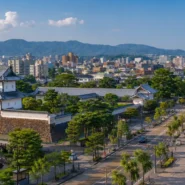
For most first-time visitors, Omicho Market and Musashigatsuji offer the best compromise in Kanazawa. This area sits between the station and the historic center. You can walk from Kanazawa Station in roughly 15 minutes, reach Kanazawa Castle’s Otemon side in around 9 minutes, and connect to the Loop Bus for Higashi Chaya, Kenrokuen, Hirosaka, Nagamachi, and the station.
That position matters more than it first appears. You are close enough to the station that a taxi transfer is quick, but far enough into the city that each sightseeing day starts in the right direction. Many travelers can walk to the castle, Oyama Shrine, Nagamachi, and even Higashi Chaya depending on weather and energy.
The obvious attraction is Omicho Market, Kanazawa’s historic food market. Staying nearby makes it easy to arrive early, before the busiest visitor period, and enjoy breakfast or seafood without building your whole morning around a bus ride. The surrounding streets also contain hotels in several price ranges, convenience stores, cafes, restaurants, and department-store facilities.
This area is particularly good for travelers who dislike rigid schedules. You can walk when the weather is pleasant, take a bus when it rains, and use a short taxi ride when carrying luggage. It is the neighborhood least likely to force one transport strategy on you.
✅ What Other Travelers Say
Hotel reviews around Omicho repeatedly highlight the ability to walk to major attractions and the convenience of being opposite or beside the market. Many guests report using fewer buses or taxis than expected because the castle, downtown streets, and food options are all reasonably close.
⚠️ The Catch (Things to Keep in Mind)
Omicho Market is a daytime destination. Many stalls and casual food businesses close in the late afternoon, so do not assume the market itself will provide a lively dinner scene. The most famous seafood restaurants can have queues, and rooms facing major roads may hear traffic. For late-night dining, Katamachi has a stronger selection.
Choose Omicho when: this is your first visit, you are staying two or three nights, you want a central but practical base, or you value food and walkability.
Choose somewhere else when: you want nightlife outside the hotel, need to catch an extremely early train, or dream of sleeping inside a traditional chaya district.
🍶 Korinbo, Katamachi and Nagamachi: Best for Restaurants, Nightlife and Walking
Feature tags: Izakaya · Bars · Shopping · Samurai district · Central sightseeing · Adults · Evening energy
Korinbo and Katamachi form Kanazawa’s most useful downtown zone after dark. Korinbo is the polished shopping and department-store side; Katamachi is the restaurant, izakaya, bar, and nightlife side. Nagamachi, with its preserved samurai streets and earthen walls, sits immediately beside them and adds historic character to an otherwise practical city-center base.
This is arguably the best area for travelers who want to sightsee by day and eat well at night without returning to the station area. Kenrokuen, Kanazawa Castle, the 21st Century Museum area, Oyama Shrine, Nagamachi, Nishi Chaya, and many central shops are reachable on foot from well-positioned hotels. Bus links to the station and Higashi Chaya are also straightforward.
Katamachi is especially valuable in a city where some visitor districts become quiet early. You can finish dinner late, try local sake, explore narrow dining alleys, and walk back to your room. Solo travelers and couples who dislike eating in hotel restaurants often find this more enjoyable than staying near the station or Kenrokuen.
The neighborhood is not one uniform block. A hotel near Korinbo or the Nagamachi edge can offer a calmer night while remaining close to restaurants. A room deep in Katamachi gives you maximum nightlife access but may come with street noise. Map the property precisely rather than relying on the broad area label.
✅ What Other Travelers Say
Guests often praise this area for being able to walk to gardens, museums, shopping, and dinner. Reviews around Katamachi commonly mention the excellent central location, while travelers near the Nagamachi side appreciate having historical streets close by without feeling isolated after sunset.
⚠️ The Catch (Things to Keep in Mind)
Noise is the main risk. Rooms facing bar streets, busy roads, or late-night pedestrian routes may not suit light sleepers or families with small children. The station is not walkable with luggage for everyone, so budget for a bus or taxi on arrival. Also check whether the nearest bus stop serves the direction you need rather than assuming every bus goes directly to the station.
Choose Korinbo or Katamachi when: restaurants and nightlife matter, you enjoy walking, or you want the most convenient base for both Nagamachi and Kenrokuen.
Choose somewhere else when: you are noise-sensitive, traveling with a very early train, or prefer quiet traditional surroundings.
🌿 Kenrokuen and Hirosaka: Best for Gardens, Museums and Peaceful Mornings
Feature tags: Kenrokuen · Art museums · Early entry · Quiet nights · Culture lovers · Slow travel · Mature travelers
The Kenrokuen and Hirosaka area places you beside Kanazawa’s cultural core. Kenrokuen Garden, Kanazawa Castle, the 21st Century Museum of Contemporary Art, the National Crafts Museum, the D.T. Suzuki Museum, and several smaller cultural sites are concentrated around this side of town.
The strongest reason to stay here is the morning. Kenrokuen offers early access during designated hours, allowing early risers to experience the garden before regular daytime crowds. Even when you are not entering at dawn, being able to walk over before tour groups arrive changes the quality of the visit.
This area also works well for travelers who prefer one or two major sights per day rather than a packed checklist. You can pause at cafes, return to the hotel between museums, and avoid treating the cultural district as a rushed bus stop. The atmosphere is calmer than Katamachi and more scenic than the station.
Walking connections are better than many maps suggest. Kenrokuen is only a few minutes from the 21st Century Museum, about 15 minutes on foot from Nagamachi, and around 20 minutes from Higashi Chaya, depending on the gate and route. However, the return to Kanazawa Station is still a bus or taxi journey for most travelers with bags.
Important planning note: the 21st Century Museum of Contemporary Art is scheduled to close for large-scale renovations from May 6, 2027 to March 2028. Travelers visiting during that period should confirm the latest program and reconsider paying a premium solely to stay beside the museum.
✅ What Other Travelers Say
Travelers who choose this area tend to value calm mornings, short walks to the garden and museums, and the feeling of staying close to Kanazawa’s cultural identity. It is often described as relaxing rather than exciting.
⚠️ The Catch (Things to Keep in Mind)
The restaurant and convenience-store selection is thinner than around Omicho or Katamachi, especially later in the evening. Some routes involve slopes, stone paving, or exposed walks in bad weather. A hotel that appears beside Kenrokuen on a map may be closer to one gate than another, so check the actual entrance you plan to use.
Choose Kenrokuen or Hirosaka when: gardens, museums, photography, and quiet mornings are the center of your trip.
Choose somewhere else when: you want lively dinners, frequent station access, extensive shopping, or the widest choice of budget hotels.
🏮 Higashi Chaya and Kazue-machi: Best for Romance, Traditional Atmosphere and Boutique Stays
Feature tags: Historic streets · Machiya · Ryokan · Couples · Photography · Quiet evenings · Special occasions
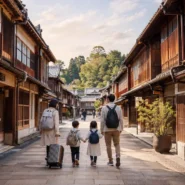
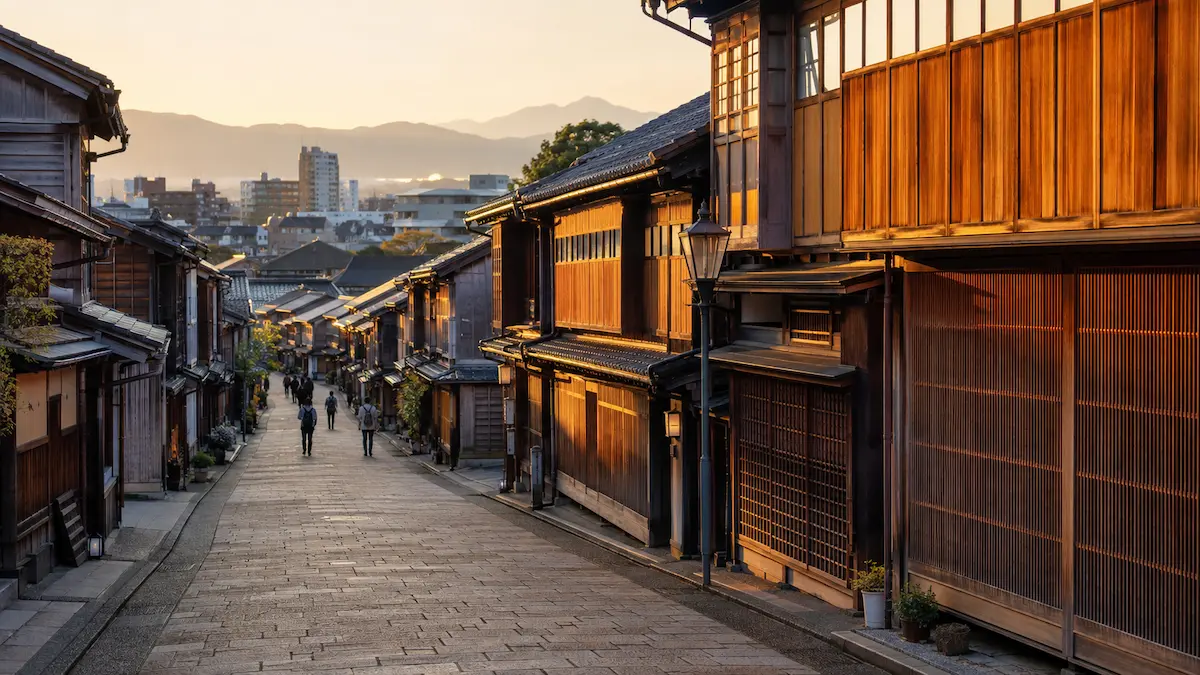
Higashi Chaya is Kanazawa’s most visually distinctive accommodation area. Traditional wooden facades, latticework, teahouses, craft shops, the Asano River, and nearby Kazue-machi create the setting many travelers hope to find in an old Japanese city. Staying here gives you the rare chance to see the district before day-trippers arrive and after most shops close.
That early and late access is the real luxury. During the busiest daytime hours, Higashi Chaya can feel like a major attraction. In the morning or at dusk, the same lanes become much calmer. Couples, photographers, honeymooners, and travelers celebrating a special occasion may find the premium worthwhile.
Accommodation tends to be smaller-scale and character-driven: renovated machiya, boutique inns, guesthouses, and high-end ryokan rather than rows of business hotels. Service can feel more personal, and the architecture can make the stay itself part of the trip.
The location is not as remote as it looks. The Loop Bus stops at Hashiba-cho, Kenrokuen is around a 20-minute walk away, and Omicho can also be reached on foot. Nevertheless, the area is less flexible than Omicho. There are fewer rooms, fewer late-night restaurants, and less margin for changing plans when the weather is poor.
✅ What Other Travelers Say
Guest reviews frequently praise the quiet streets, beautiful surroundings, friendly small-property service, and the pleasure of being steps from Higashi Chaya and the river. Travelers often describe the atmosphere as a highlight of the stay rather than merely a convenient location.
⚠️ The Catch (Things to Keep in Mind)
Traditional atmosphere can come with traditional-building compromises: stairs, no elevator, compact bathrooms, visible beams, limited soundproofing, or rules about shoes and shared spaces. Dinner choices narrow after the daytime shops close, so reserve meals or plan a bus or taxi to Omicho or Katamachi. Luggage transfer or a taxi is strongly recommended for larger bags.
Choose Higashi Chaya or Kazue-machi when: the hotel experience and historic atmosphere are central to your trip, especially for a romantic or slower stay.
Choose somewhere else when: you are on a tight budget, need late-night dining, dislike stairs, carry heavy luggage, or want maximum freedom to change plans.
Key FAQs
Is it better to stay near Kanazawa Station or Omicho Market?
For one night, an early departure, heavy luggage, or several day trips, Kanazawa Station is better. For a first visit of two or more nights, Omicho Market is usually the smarter choice because it reduces daily travel while keeping the station within a short bus, taxi, or 15-minute walk.
What is the best area to stay in Kanazawa for first-time visitors without a car?
Omicho Market and Musashigatsuji are the best overall base. The area is served by major buses, sits between the station and historic center, and lets you walk to the castle, market, Oyama Shrine, and parts of downtown. Korinbo is a strong alternative for travelers who prioritize restaurants and evening activity.
Where should I stay in Kanazawa for a Shirakawa-go day trip?
Stay near Kanazawa Station when the day trip leaves early, returns late, or forms a major part of a short itinerary. For a three-night Kanazawa stay with only one day trip, Omicho can still be better overall; take a short taxi or early bus to the station on the excursion day rather than commuting from the station every day.
Final Verdict and Your Next Step
For most first-time visitors, book around Omicho Market or Musashigatsuji. It is the least risky choice: central without being inconvenient for the station, walkable without forcing you to walk everywhere, and practical in both good and bad weather.
Choose Kanazawa Station for a one-night stop, heavy luggage, early transport, or multiple regional excursions. Choose Korinbo or Katamachi for the best dining and nightlife. Choose Kenrokuen or Hirosaka for gardens, museums, and calm mornings. Choose Higashi Chaya when atmosphere is worth paying more and accepting some inconvenience.
Whichever area you choose, book earlier than you think you need to. Kanazawa has many good hotels, but the best-located rooms, family rooms, boutique machiya, and quiet rooms in nightlife districts disappear first on weekends, during cherry blossom season, autumn foliage periods, major holidays, and popular winter travel dates.
Check live availability and compare cancellation terms before committing: