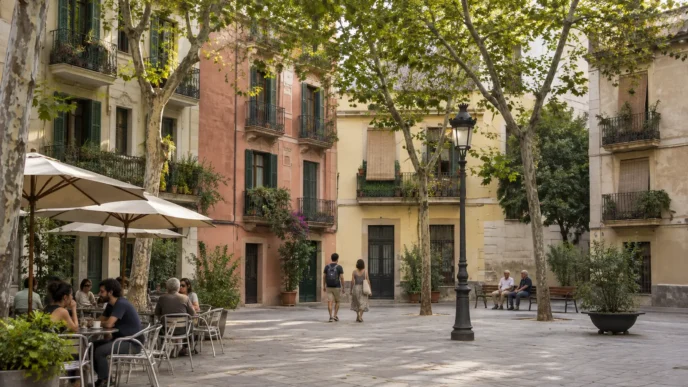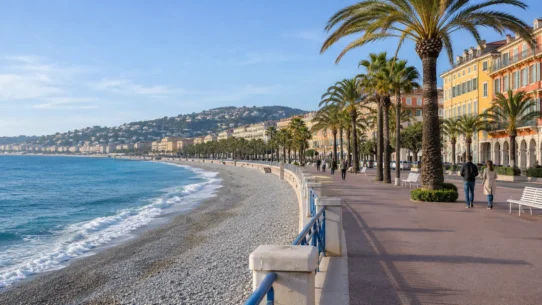
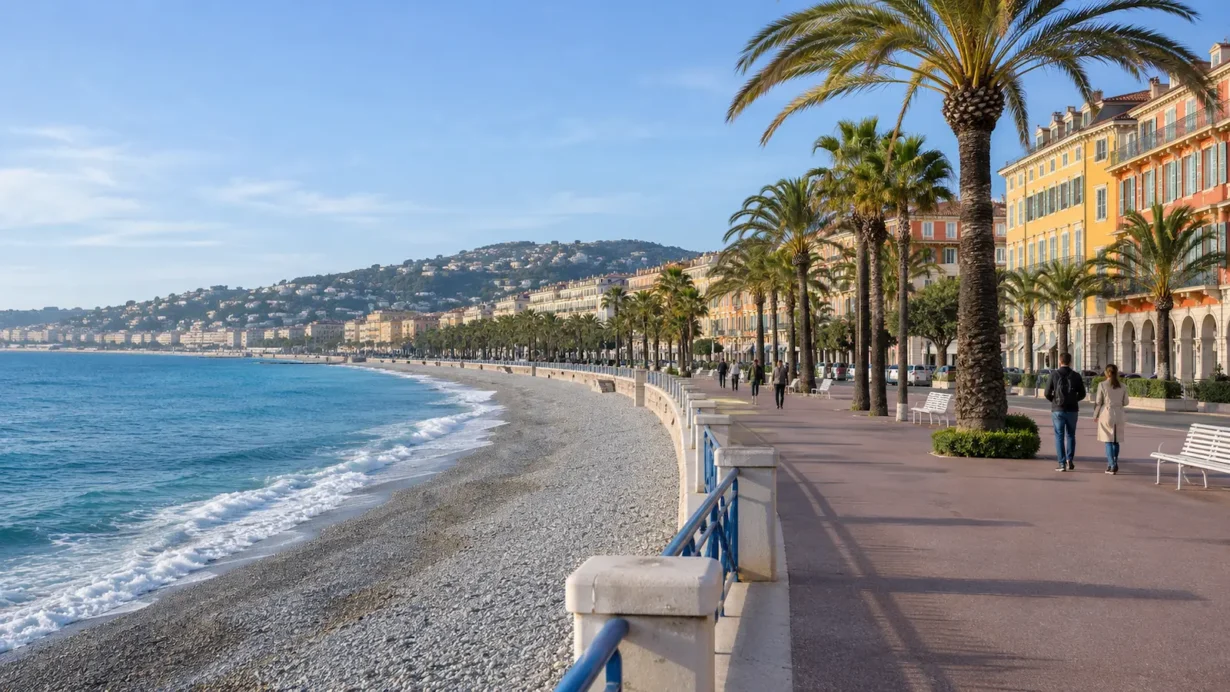
Stay near Jean-Médecin for a first visit to Nice if you want an airport tram connection and a central base. Pick Carré d’Or for regular beach walks, or Musiciens if you will take several trains from Nice-Ville. Vieux-Nice suits evenings on foot, but check for stairs and street noise before booking.
💡 Key Takeaways
- Choose Jean-Médecin for the simplest all-round first visit, or Carré d’Or if frequent beach walks matter more than the shortest train-station approach.
- Vieux-Nice buys atmosphere; Musiciens buys a more practical rail-and-city balance. Neither label guarantees a quiet room, a lift or a car-accessible entrance.
- Port Lympia suits an eastern base with a direct airport tram; Libération suits market mornings and a longer stay rather than constant beach returns.
- Price the complete stay: room category, cooling, breakfast, local tax and the last luggage walk. A cheaper pin can create a daily transport bill.
Working out where to stay in Nice means choosing between several different versions of convenience. A hotel near the sea may be well away from your airport tram stop. An old-town apartment may have a beautiful balcony and several flights of stairs. A station-side room can make Riviera train trips easier while leaving a longer evening walk from dinner.
These six areas are useful starting points for a first visit. The boundaries are practical search zones, not a claim that every booking platform uses the same neighborhood definitions. Use the tourist office’s central Nice map to locate the actual address, then test the journeys you will repeat. The advice below combines official transport information, local sources and clearly identified neighborhood videos; it does not pretend that a daytime walk proves how every bedroom sounds at midnight.
Booking two French cities on the same trip? Our Paris neighborhood guide helps you choose a base there by arrival route and walking distance, too.
The 1-Min Cheat Sheet
- Jean-Médecin and the central shopping streets: best overall for a first visit mixing the airport tram, sightseeing and restaurants. Broad range of room prices; choose the precise street and window orientation.
- Carré d’Or and the central Promenade: best for beach-and-city days and a higher comfort budget. Sea-facing rooms command a premium, while a slightly inland room can offer better value.
- Vieux-Nice: best for travelers who want markets and dinner close by and can handle an irregular luggage approach. Characterful rooms and apartments; noise and stairs are the essential checks.
- Port Lympia and the eastern streets: best for a harbor setting and the line 2 airport terminus. Mixed boutique and apartment choices; the central swimming beaches and Nice-Ville station are farther away.
- Musiciens and the Nice-Ville side: best for several train day trips with a manageable city walk. Value to midrange options; verify the building and address rather than booking by station keywords.
- Libération: best for food-market mornings, shopping for an apartment and a slower stay. Potentially better space for the money; the beach becomes a planned trip rather than a doorstep activity.
Top Survival Tips
- Draw a triangle before opening hotel photos. Put the hotel between your arrival point, the part of the city where you will spend evenings, and your most repeated daytime journey. A rail-heavy holiday may favor Musiciens; a beach-heavy one may favor Carré d’Or. Compare the actual walking routes, not straight-line distances across a map.
- Separate line 1 from line 2 at Jean-Médecin. The airport uses line 2; the north–south surface route uses line 1. The operator’s interchange map shows distinct platforms, entrances and a street connection. A booking description that says “near Jean-Médecin tram” still leaves an important question: which entrance is nearest the hotel with bags?
- Understand the airport ticket before buying one per leg. Lignes d’Azur confirms line 2 between the airport, Jean-Médecin and Port Lympia. Its current ticket page lists a €10 airport round trip; ordinary urban Solo travel is €1.70 with 74-minute connections, subject to ticket rules. Existing Lignes d’Azur card products can have different airport conditions. Check the product you actually hold rather than assuming every ticket sold at an airport machine is a single ride.
- Ask about the route to the room. Request the nearest practical vehicle drop-off, entrance steps, lift dimensions and any stairs after the lift. This is especially useful in old buildings and pedestrian streets. “Lift available” describes equipment, not the whole journey for a wheelchair, stroller or heavy case.
- Buy the room feature in writing. Sea view, balcony, terrace and garden view are different categories. Ask whether a sea view is frontal or partial, and whether a room faces a busy avenue. In warm weather, confirm cooling for your dates. An attractive public garden does not guarantee a large bedroom.
- Check your dates against the city’s calendar before paying a deposit. Carnival, sporting events and busy Riviera weekends can change rates and street access. Treat a flexible reservation as part of the budget if flights or day trips are unsettled. A nominally cheap prepaid room can be expensive to replace.
- Judge the street you will use after dinner. Every district contains different blocks and room orientations. Read recent, specific comments about nighttime sound, lighting and access; do not rely on blanket safe/unsafe neighborhood labels. If you arrive late, obtain the entry procedure and save the address offline.
The Full Experience
📍 Jean-Médecin: Best Overall for a First Visit
Airport tram access • Shopping and practical errands • Mixed room budgets • Exact entrance matters
This is the most useful first search zone when you want to explore Nice without committing every day to the beach or the railway. Search near the central stretch of Avenue Jean-Médecin and the side streets toward Place Masséna. You can organize mornings around shopping, a stroll toward the old town or the seafront, then return to the hotel before dinner without treating the room as a remote base.
The practical advantage is the line 2 airport connection, but use the actual underground entrance on your arrival plan. A few blocks on a smooth street are often easier than adding another vehicle for a tiny apparent time saving. If your accommodation is near the northern end, test its Nice-Ville station approach separately; being on the same avenue as a tram stop is not the same as being at the station.
For room value, compare small central hotels against apartments on the same dates. An apartment may buy floor space but add key-collection conditions, stairs or a cleaning charge. A simple hotel can be stronger value on a short stay when reception, luggage storage and easy check-in solve the arrival.
✅ What Other Travelers Say
Walk with Morteza’s linked walking video follows Jean-Médecin and is useful for seeing the commercial street setting and tram environment. It is visual orientation, not a bedroom review or proof that every side street is equally busy.
⚠️ The Catch (Things to Keep in Mind)
A central avenue is an active urban address. Ask for the room orientation and recent noise information, especially if open windows matter to you. The best overall area can still contain a room that is wrong for a light sleeper.
📍 Carré d’Or and the Central Promenade: Best for Beach-and-City Days
Frequent seafront walks • Higher comfort spending • Inland value options • View premium
This zone makes the strongest case when the waterfront is something you want to use several times a day: an early walk, a swim break and a sunset return. Concentrate on the central stretch rather than treating the full length of the Promenade as one location. A hotel far to the west can share the famous road name while changing the walking pattern substantially.
The choice is between paying for a view and paying for proximity. A room a few streets inland may still make the beach practical without the cost of a frontage category. The tourism bureau’s shopping guide locates Carré d’Or streets such as Rue Paradis, Rue Alphonse Karr and Avenue de Suède. Those streets are a more useful search anchor than an expansive “Nice beach” filter.
When comparing waterfront hotels, separate the public beach from paid beach services. A room beside the sea is not a promise of a sunbed, umbrella or beach-club package. Check any inclusions for the rate you select, and confirm how the street crossing and entrance work with your mobility needs.
✅ What Other Travelers Say
The Travel Centric walking film above shows the seafront promenade and adjoining architecture. Use it to assess the type of setting you want; its enthusiastic title is the creator’s framing, not a price or luxury ranking used by this guide.
⚠️ The Catch (Things to Keep in Mind)
Sea views can coexist with traffic, and a long promenade walk is less appealing after a hot afternoon or with tired children. Check the distance from your precise hotel to the old-town approach and your airport tram entrance.
📍 Vieux-Nice: Best for Atmosphere and Dinner on Foot
Market and restaurant setting • Historic buildings • Irregular access • Noise-sensitive choice
Choose Vieux-Nice when being inside the old streets is a meaningful part of the trip. You can go out for a short wander without first crossing a modern shopping district, return after dinner on foot and explore the market area early. The tourist office describes its narrow streets, squares and Cours Saleya market—exactly the setting that makes it appealing and complicates some arrivals.
The booking decision is unusually room-specific. An attractive apartment photograph may tell you very little about the staircase, the street below or where a taxi can legally stop. Ask the host to describe the approach from the nearest drop-off with your actual luggage. If you need to store cases before check-in, confirm the arrangement instead of assuming apartment access works like a staffed hotel.
This can be a strong fit for couples who pack lightly and prioritize evenings nearby. For a family with a stroller, a traveler with limited stamina or anyone who needs an early, quiet night, compare a hotel on the outer edge against a deeper interior address. You can enjoy the old town every day without necessarily sleeping over its busiest activity.
✅ What Other Travelers Say
Riviera Go!’s old-town guide provides the district context. It is a useful introduction to the streets and attractions, not a survey of apartment sound insulation or an endorsement of a particular host.
⚠️ The Catch (Things to Keep in Mind)
Book atmosphere with realistic sleep expectations. Ask whether the windows face a restaurant terrace or a through-route and whether there is reliable cooling, so keeping a window closed is a workable option.
📍 Port Lympia: Best for an Eastern Base with a Direct Airport Tram
Harbor setting • Line 2 terminus • Eastern restaurants • Longer rail approach
Port Lympia makes sense when you like a harbor setting and expect to spend time around the eastern side of the center. The airport tram’s terminus gives it a clear arrival advantage, provided your accommodation is a manageable walk from the stop. Search the exact quay or side street; a broad “port” label can extend into routes that climb or add a longer approach.
For evenings, you can base your plans around the port and the streets between it and Place Garibaldi rather than repeatedly crossing back to the western center. That is the main benefit. It is less compelling if every morning begins at Nice-Ville railway station or every afternoon requires a return from the central swimming beaches.
Choose your route around Castle Hill deliberately. It is an attraction, not a shortcut that luggage travelers should blindly follow. The official Nice guide distinguishes approaches via the old town, the port and a lift near Rue des Ponchettes. When going to your accommodation, use an ordinary street route suitable for bags rather than an attractive pedestrian sightseeing climb.
✅ What Other Travelers Say
Living Walks’ Port Lympia film is a walking preview of the harbor area. The visible surroundings help you decide whether the port setting appeals; they do not establish the current noise level outside a specific room.
⚠️ The Catch (Things to Keep in Mind)
Do not price the port as if it were simultaneously beside Nice-Ville station, every beach and the whole old town. Check the repeated journeys on your itinerary; several daily crossings can outweigh the direct airport arrival.
📍 Musiciens and the Nice-Ville Side: Best for Train Day Trips
Rail-heavy itinerary • Belle Époque streets • Value to midrange • Hotel identity check
If several days begin with a train to another Riviera town, start on the Musiciens side of the center and compare routes to Nice-Ville station. Staying south or southwest of the station can balance the departure walk with access toward the sea. The district label alone is too broad to promise a specific travel time: plot both the station entrance and your hotel door.
The neighborhood’s residential architecture is part of its appeal. The local Musiciens neighborhood committee describes the streets named after composers, including the Rossini, Verdi and Gounod area. For visitors, the practical consequence is a choice of side-street bases away from the central shopping avenue, with a different rhythm from sleeping inside Vieux-Nice.
Compare the full hotel names carefully. Nice has multiple ibis and ibis Styles properties, and station-related wording can be similar. Use the address on the confirmation. A room near the railway is useful when the rail trips are real; booking there for a single arrival and then spending every day at the beach can be the wrong optimization.
✅ What Other Travelers Say
happygoluckytravel’s Musicians Quarter video is a neighborhood overview with architectural and day-to-day context. The travelers’ interest in a slower stay explains its perspective; it is not a guarantee that every building has modern access or a quiet outlook.
⚠️ The Catch (Things to Keep in Mind)
Ask about road-facing windows, the last walk after an evening out and luggage storage on your departure day. A station-side hotel still needs the right room and a comfortable return route.
📍 Libération: Best for Market Mornings and a Longer Stay
Food shopping • Line 1 access • Apartment-friendly routine • Beach farther away
Libération is worth comparing when you want a routine as well as sightseeing: breakfast shopping, neighborhood cafés and an apartment where preparing a simple meal is useful. It sits beyond the railway from the central seaside visitor zone, so it suits a slower stay better than a short break built around repeated swims and old-town evenings.
The concrete attraction is the food market. Nice Shopping’s market page places it around Place du Général de Gaulle and neighboring streets and identifies the Libération stop on tram line 1. That makes the tram relationship clear. For an airport arrival on line 2, plan the interchange and the final walk; there is no direct airport tram to every Libération doorway.
Potential value here is about usable space and the routine you will actually enjoy. Compare an apartment’s kitchen equipment, lift and total cleaning charge against a smaller central hotel. If you do not intend to cook and you plan to spend every evening near the water, the supposed saving may mostly buy extra travel.
✅ What Other Travelers Say
Riviera Go!’s Libération guide presents market and neighborhood life. Its venue recommendations and opening information date from the video; check a business directly before building your day around it. The clip is context for the area, not a current operating guide to every food venue.
⚠️ The Catch (Things to Keep in Mind)
Do not confuse the former Gare du Sud building or the nearby Train des Pignes departure with Nice-Ville mainline station. Check the station name on your ticket, and avoid renting farther uphill just because a listing uses the attractive Libération label.
Key FAQs
What is the best area to stay in Nice for a first visit without a car? Start around Jean-Médecin for a mixed city stay, then compare Carré d’Or if the seafront matters most. Both require checking the actual hotel’s route to a line 2 entrance, not just a neighborhood name. Choose Musiciens instead when several mornings start with trains from Nice-Ville.
Is it better to stay in Nice Old Town or near the Promenade des Anglais? Vieux-Nice suits market walks, restaurants and historic atmosphere, with extra care over stairs and nighttime sound. The central Promenade and nearby Carré d’Or suit frequent seafront returns and clearer hotel-style access. Price the exact room: an inland room near the promenade and a sea-facing room are different purchases.
Where should I stay in Nice for train day trips and an airport tram arrival? Compare a Musiciens or Nice-Ville-side address with an easy walk to the station and a reasonable route to line 2. Jean-Médecin can balance the two, but its airport and surface tram stops are distinct. Confirm the full walk with luggage and the departure station before choosing a non-refundable rate.
Final Verdict and Your Next Step
For a first visit with no specialist requirement, begin with Jean-Médecin and the inland edge of Carré d’Or. Move toward the central Promenade for beach-heavy days, Vieux-Nice for atmosphere, Musiciens for rail-heavy days, the port for an eastern base or Libération for a slower market-and-apartment routine. The best choice is the one that makes your ordinary day easier.
Before reserving, compare two complete stays with the same guest numbers and cancellation terms. Hôtel Florence’s direct room-and-booking page is one real central reference point; Villa Victoria’s direct booking site is a reference for a more western base near Alsace Lorraine. Use them to test the area and room trade-off, then book early for fixed travel dates once the access, room category and full total are clear.