



💡 Key Takeaways
- Do not copy the classic “Old City + Doi Suthep + elephants + Chiang Rai + Doi Inthanon” itinerary literally. The last three are long excursion days, and stacking them creates more van time than vacation. This route keeps Chiang Rai out of the five-day core and gives you a useful city buffer instead.
- Start Doi Suthep early and travel downhill, not uphill in pieces. Go to the mountaintop temple first, then stop at Wat Pha Lat on the descent and finish in Nimman. It avoids unnecessary backtracking through the city.
- Prebook only the things that actually sell out or need transport coordination. Elephant programs and Doi Inthanon tours deserve advance booking; ordinary Old City temples, public gates and markets usually do not have a meaningful “fast pass.”
- Keep large luggage out of sightseeing days. Use your hotel’s storage first; on arrival/departure days, use a staffed left-luggage service or a reputable luggage-storage/delivery provider rather than dragging a suitcase through temple lanes or Sunday market crowds.
- Stay where the route starts, not where your plane or train arrived. For a first visit, the east/central Old City or the Tha Phae–Nimman corridor is usually more useful than repeatedly returning to the airport or railway station area.
A good Chiang Mai 5-Day Itinerary is not a contest to see how many temples, mountains and markets you can pin to Google Maps. The most common first-timer mistake is copying a “greatest hits” list without noticing that the Old City, Doi Suthep, Mae Taeng elephant projects and Doi Inthanon sit in very different directions. Add Sunday road closures, mountain traffic, long tour pickups and a suitcase on checkout day, and a seemingly easy plan can turn into hours of waiting and backtracking.
This version is built around one rule: each day should have one geographic job. You will walk the Old City in one direction, handle the Doi Suthep hillside as one continuous downhill route, keep the two big nature experiences on their own days, and finish with a lighter market-and-river day that works as a weather, fatigue or departure buffer. It is less glamorous on paper than a five-day checklist with Chiang Rai squeezed in—but much more pleasant in real life.
Fact-check note: Operating hours, entrance fees, tour inclusions and market conditions can change. This article was last fact-checked on 17 August 2026 using official tourism/operator pages, current booking pages and recent traveler feedback. Where sources disagree on a small temple fee, I flag the uncertainty instead of pretending there is one timeless price.
The 1-Min Cheat Sheet
- Wat Phra Singh — Best for: first-time temple visitors who want an ornate Lanna complex without leaving the Old City. Suggested stay: 45–60 minutes. Ticket/transport: walk from central Old City; foreign-visitor admission is commonly charged at the temple, so carry small cash and check the current posted fee.
- Wat Chedi Luang — Best for: history, photography and people who prefer one genuinely monumental ruin over collecting ten small temples. Suggested stay: 45–60 minutes. Ticket/transport: walk from Wat Phra Singh; admission is handled on site and is commonly around THB 50 for foreign visitors, but posted fees can change.
- Tha Phae Gate & Sunday Walking Street — Best for: street food, crafts and a lively first-night atmosphere. Suggested stay: 30 minutes for the gate; 1.5–3 hours for the Sunday market. Ticket/transport: free public area; walk or get dropped outside the road-closure zone. The Sunday market runs along Ratchadamnoen Road and becomes much denser after the early-evening start.
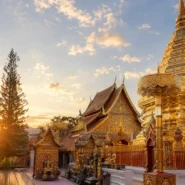
- Wat Phra That Doi Suthep — Best for: first-time visitors who want Chiang Mai’s signature mountaintop temple. Suggested stay: 60–90 minutes. Ticket/transport: small foreign-visitor fee paid on site; ride-hailing car, taxi or a negotiated/shared red songthaew is more practical than trying to combine multiple city buses. Sources currently differ on the exact foreign fee, so check the booth rather than relying on an old screenshot.
- Wat Pha Lat — Best for: forest atmosphere, quieter temple grounds and a short taste of the Monk’s Trail. Suggested stay: 45–75 minutes. Ticket/transport: free; easiest on the downhill leg from Doi Suthep by car. Fit walkers can hike the lower Monk’s Trail section to or from the temple, but hiking all the way to Doi Suthep is not the “save your legs” option.
- Elephant Nature Park / observation-led rescue program — Best for: travelers who want an animal-welfare-focused day rather than rides or staged shows. Suggested stay: full day. Ticket/transport: advance booking is strongly recommended; programs include scheduled transfers and vary in price and exact activities. Check the current program rather than assuming every product with the word “ethical” follows the same welfare standard.
- Doi Inthanon National Park — Best for: waterfalls, cool mountain air, forest boardwalks and a one-day nature contrast to the city. Suggested stay: full day. Ticket/transport: the current park information lists foreign admission at THB 300 per adult and THB 150 per child aged 3–14, with the Two Chedis charging a separate THB 100 entry. Organized tours remove the need to arrange a driver between widely scattered stops. Kew Mae Pan is seasonally closed from June through October.
- Warorot Market, Wat Ket & Chiang Mai Night Bazaar — Best for: a lighter final day with food, local shopping and easy evening energy. Suggested stay: 1–1.5 hours at Warorot, 45–60 minutes around Wat Ket/Ping River, 1.5–2.5 hours at Night Bazaar. Ticket/transport: free to enter; walking works within each cluster, while a short Grab/taxi between clusters saves energy in heat or rain.
The Most Practical 5-Day Itinerary
Day 1: Old City West-to-East — Wat Phra Singh → Wat Chedi Luang → Ratchadamnoen → Tha Phae Gate
- Suggested start: 7:30–8:00am. You are using your freshest legs for the only temple-heavy walking day.
- Stop 1 — Wat Phra Singh: 45–60 minutes. Start at the western side of the Old City and move east. This gives you a clean line across the historic center instead of zigzagging.
- Stop 2 — Wat Chedi Luang: 45–60 minutes, reached on foot in roughly 10–15 minutes depending on your route and photo stops. The ruined chedi feels substantially different from Wat Phra Singh, so this pair gives variety without temple fatigue.
- Lunch/rest: 11:30am–1:30pm around Ratchadamnoen Road or the central Old City. Treat the hottest part of the day as a sit-down meal, café break or hotel rest—not a heroic walk across town.
- Optional afternoon: Add one small temple, a massage, café or Lanna museum only if your energy is good. Delete this first if you arrived on an overnight flight or train.
- Final daytime stop — Tha Phae Gate: 30–45 minutes in late afternoon. It is a useful landmark and atmosphere stop, but it is not worth building an entire half-day around.
- Sunday-only evening: If Day 1 is Sunday, enter the Sunday Walking Street near its early start, roughly 4:30–5:30pm, before the biggest evening crush. The street extends westward from Tha Phae Gate along Ratchadamnoen, so you can browse and finish closer to where you started instead of fighting traffic across the road closure.
- If it rains: Shorten the temple loop, take a café/massage break, then use a short Grab/taxi to the Chiang Mai City Arts & Cultural Centre area or another indoor attraction that is open that day. Do not assume umbrellas solve a tropical downpour on polished temple paving.
- Best evening area: Tha Phae/east Old City; on non-Sundays, keep it simple with dinner in the Old City rather than chasing a distant night market immediately after arrival.
- Why this beats the influencer version: Many lists bounce from a west-side temple to a north-side temple, then to a market, then back to Tha Phae. This route turns the Old City into one directional walk and makes the Sunday market, when applicable, the natural finish rather than an extra commute.
Day 2: Doi Suthep Downhill — Doi Suthep → Wat Pha Lat → Nimman
- Suggested start: Leave your hotel around 6:30–7:00am. Early morning means cooler air, softer light and a better chance of reaching Doi Suthep before tour groups stack up.
- Stop 1 — Wat Phra That Doi Suthep: 60–90 minutes. Go straight to the top first. Pay the current admission on site; there is no practical reason to buy a fake “skip-the-line temple ticket” from a random reseller.
- Transport to Wat Pha Lat: Continue downhill by the same private car/taxi or pre-arranged red songthaew. If you came by a shared songthaew, agree on the next leg before leaving the vehicle or be prepared to arrange another ride.
- Stop 2 — Wat Pha Lat: 45–75 minutes. The forest setting is the antidote to Doi Suthep’s popularity. If the trail is dry and you genuinely enjoy walking, sample the lower Monk’s Trail section; if your priority is saving your legs, simply visit the temple and continue by car.
- Lunch/rest: Head to Nimman for lunch around 11:30am–12:30pm. This is exactly where a short ride is smarter than forcing another walk: you have already been on slopes and stairs for hours.
- Afternoon: Café, massage, MAYA/Nimman shopping or hotel pool. Delete extra temples today; the mountain pair is enough.
- If it rains: Keep Doi Suthep only if visibility and road conditions are reasonable, skip the trail section at Wat Pha Lat, then move the afternoon indoors in Nimman. If mountain weather is truly poor, swap Day 2 with Day 5 rather than forcing a viewpoint day with no view.
- Best evening area: Nimman. Staying here for dinner prevents a needless return to the Old City before coming back west again.
- Why this beats the influencer version: A common plan visits Wat Pha Lat first, climbs or drives up to Doi Suthep, returns to the Old City, then travels west again for Nimman at night. Starting at the highest point and descending once is easier on both your route and your knees.
Day 3: Elephant Rescue Day — One Program, No Extra Sightseeing Marathon
- Suggested start: Follow your booked pickup window; many full-day programs begin hotel pickups around 7:30–8:30am. Be in the lobby early because group pickups can involve multiple hotels.
- Main activity: Choose one current, observation-led rescue/sanctuary program with transparent welfare practices. Elephant Nature Park is the best-known example in the region, but always read the current program description because activities can differ between projects and dates.
- Suggested stay: Treat it as a full day. Do not schedule a cooking class, Doi Suthep sunset or a fixed-ticket performance immediately afterward; return times can shift with traffic and the specific project.
- Lunch/rest: Use the included lunch if your program provides one. Bring water and sun/rain protection, but avoid carrying a large daypack you will constantly move around.
- Animal-welfare filter: Skip programs built around riding, tricks, performances or forced bathing/photo contact. Major animal-welfare guidance increasingly favors observation-led experiences and warns against activities that require close-control handling.
- What to cut: Everything else. This is the day to resist “while we are north of town, let’s add…” logic. Mae Taeng-area attractions look close on a map but can turn a meaningful animal experience into a rushed checklist.
- If it rains: Follow the operator’s safety instructions; outdoor programs often continue in light rain. Pack quick-dry clothing. If an operator cancels for safety, use Day 5’s city plan and reschedule only if your remaining dates permit.
- Best evening area: Near your hotel—Old City or Nimman—with dinner, massage and an early night.
- Why this beats the influencer version: A sanctuary day already involves transfers, walking and a fixed group schedule. Adding a second headline attraction makes you spend the day checking your watch instead of understanding the place you paid to visit.
Day 4: Doi Inthanon — Mountain Summit → Forest Walk → Pagodas → Waterfall
- Suggested start: 6:30–7:30am depending on your tour or driver. Doi Inthanon is not “just outside Chiang Mai”; it is a full-day excursion with a long drive each way.
- Practical order: Let the tour’s road logic dictate the exact sequence, but aim for the summit/Ang Ka boardwalk, the twin royal pagodas, a local lunch/community stop and one major waterfall such as Wachirathan. The attractions are spread around the park, so a driver matters more than obsessing over a minute-by-minute list.
- Stop 1 — Summit & Ang Ka: 45–60 minutes. The boardwalk is short and atmospheric; carry a light layer because the summit can feel dramatically cooler than Chiang Mai city.
- Stop 2 — Kew Mae Pan, only when open: Allow roughly 2–3 hours if your chosen itinerary specifically includes it. The trail closes annually from June through October and requires local guide arrangements when open. If it is closed, do not book a product that still advertises it as guaranteed.
- Stop 3 — Twin Royal Pagodas: 45–60 minutes. Note that the pagoda area has its own additional admission fee beyond the national park entrance on many itineraries.
- Lunch/rest: Eat in the park or at the tour’s included restaurant/community stop. This is not the day to hunt for a viral café 40 minutes off route.
- Stop 4 — Waterfall: 30–45 minutes. Wachirathan is visually rewarding without requiring a long hike, which makes sense late in the day.
- What to cut: A second waterfall or an extra village if weather, motion sickness or fatigue is setting in. The park’s roads are winding; quantity is not quality.
- If it rains: Waterfalls can be impressive, but viewpoints may disappear into cloud and trails can be slippery. Keep flexible expectations. During the June–October closure, substitute Ang Ka and other accessible park stops rather than trying to “find a way around” the Kew Mae Pan rule.
- Best evening area: Your hotel neighborhood. Expect a late-afternoon or early-evening return and avoid reservations with a punitive cancellation policy.
- Why this beats the influencer version: Doi Inthanon is already a long road day. Pairing it with another distant attraction—or doing Chiang Rai the day before and Doi Inthanon the day after—creates two or three consecutive days dominated by van seats. This plan protects your energy with a lighter Day 5.
Day 5: Warorot & Ping River → Wat Ket → Rest → Night Bazaar
- Suggested start: 8:30–9:00am. This deliberately slower morning is your recovery and logistics buffer.
- Stop 1 — Warorot Market (Kad Luang): 60–90 minutes. Go in the morning when the market is functioning as a real local shopping area rather than as a late-night attraction.
- Stop 2 — Ping River / Wat Ket area: 45–60 minutes. Cross to the east bank for a quieter change of pace. Use a short car ride if heat, rain or luggage makes the river crossing unpleasant.
- Lunch/rest: Eat around Wat Ket/Charoen Rat or return to your hotel for a proper break. If this is checkout day, leave your luggage with the hotel and collect it later; do not haul it through Warorot’s narrow aisles.
- Optional afternoon: Massage, café, shopping or an indoor museum. This is also the slot to absorb anything you skipped because of rain on Day 1 or Day 2.
- Final stop — Chiang Mai Night Bazaar: Arrive around 5:30–6:00pm as stalls come alive. Give it 1.5–2.5 hours. It is convenient and atmospheric, but it is tourist-oriented; compare prices and do not treat the first quoted souvenir price as sacred.
- What to cut: The Night Bazaar if you already did a packed Sunday Walking Street and do not enjoy shopping. A relaxed riverside dinner may be a better final night.
- If it rains: Warorot still works in sections, but use Grab/taxi between covered areas and spend more time in cafés, malls or a massage. The Night Bazaar is less fun in sustained heavy rain, so move dinner indoors.
- Best evening area: Night Bazaar/Chang Khlan or riverside, especially if your hotel is on the east side of the Old City.
- Why this beats the influencer version: Your fifth day is not wasted—it is insurance. It absorbs weather, fatigue, shopping, laundry, massage, checkout and airport timing without destroying a prepaid mountain or sanctuary booking.
Tourist Traps to Avoid & Itinerary Hacks
- Trap: the five-day “greatest hits” plan with both Chiang Rai and Doi Inthanon. Many popular itineraries add a Chiang Rai day trip simply because the White Temple is famous. Current tour listings commonly turn it into an 11–13+ hour day. If Chiang Rai is a priority, sleep there; if Chiang Mai is the priority, keep the five-day core geographically sane.
- Trap: buying a “skip-the-line” product for a temple that does not have a meaningful fast lane. At ordinary temples, the real queue-saving trick is arriving early and carrying small cash—not buying an unnecessary reseller ticket.
- Trap: assuming “ethical elephant sanctuary” is a regulated quality label. It is not proof by itself. Read what guests actually do. Riding, tricks, performances and forced bathing/contact are red flags under major animal-welfare guidance. Prefer observation-led programs with transparent rescue, care and education practices.
- Trap: taking a shared red songthaew when you have a time-sensitive connection. Shared trucks can wait for more passengers. They are great when you are flexible; a Grab/taxi or privately hired songthaew can be the better-value choice when four people are splitting the fare or you need to make a tour/check-in time.
- Trap: arriving at the Sunday Walking Street at 7:30–8:30pm because “night market means night.” That is when the pedestrian flow can become exhausting. Arrive near opening, eat early, then leave before the densest wave if you dislike shoulder-to-shoulder crowds.
- Trap: overestimating Tha Phae Gate. It is an iconic meeting point and a useful market gateway, but it is not a half-day attraction. Give the historic square 30–45 minutes and spend your time on the Old City streets around it.
- Trap: paying for every temple because a blog lists ten of them. Temple fatigue is real. Wat Phra Singh + Wat Chedi Luang + Doi Suthep + Wat Pha Lat already give you four very different experiences. More is optional, not mandatory.
- Hack: keep a “weather swap” day. Doi Suthep and Doi Inthanon are much less rewarding when mountain views disappear. Day 5 exists partly so you can swap a mountain day with a city day if the forecast looks clearly better later.
- Hack: use ride-hailing as a leg-saving tool, not a luxury. A THB-priced short ride can be a smarter budget choice than losing an hour to heat, navigation and a long walk—especially after temple stairs or when two to four people share the cost.
- Hack: check air quality in the late dry season. Severe haze affected Chiang Mai in 2026 and can obscure mountain views. If your dates fall in a smoky period, check current AQI and visibility before committing your best day to a viewpoint-heavy excursion.
Save Your Legs! The Most Efficient Route
The easiest way to understand Chiang Mai is to stop thinking of it as one compact city. For itinerary purposes, divide it into Old City, the Doi Suthep/Nimman west side, the northern Mae Taeng excursion zone, the southwest Doi Inthanon excursion zone, and the Ping River/Night Bazaar east side. That is why this plan never sends you from a mountain back to the Old City for lunch and then out to another western district for dinner.
Walk where the street itself is the attraction. Wat Phra Singh → Wat Chedi Luang → Ratchadamnoen → Tha Phae is a natural Old City walking chain. Warorot Market → Ping River → Wat Ket can also be linked on foot in decent weather. Inside Nimman, short blocks are walkable once you are already there.
Use a car for elevation, long cross-city hops and hot midday transfers. Doi Suthep is where a Grab/taxi/private songthaew earns its keep. Going straight to the top and descending via Wat Pha Lat avoids repeating the mountain road. A short ride from Wat Pha Lat to Nimman is also far more sensible than trying to prove your fitness in the midday heat.
Use organized transfers for Day 3 and Day 4. Elephant programs and Doi Inthanon tours are not just “tickets”; the transport coordination is a large part of what you are buying. Doi Inthanon’s attractions are dispersed, and Mae Taeng-area sanctuary programs run on fixed pickup/return schedules. Unless you already have a trusted driver, pre-arranged transport saves more time than trying to improvise each leg.
Do not automatically default to buses or songthaews for every cheap ride. Shared red songthaews are iconic and useful, but they can wait to fill and are vulnerable to city traffic. On Sunday evening, road closures around the Walking Street make any road-based vehicle less useful near Ratchadamnoen. Get dropped near the edge and walk in. During commuter peaks or heavy rain, a short taxi can still be slow—but at least you are not carrying your bag through traffic.
Do not return to Chiang Mai Railway Station, the airport or your hotel between every attraction. The station and airport are arrival infrastructure, not sightseeing hubs. Pick a hotel in the east/central Old City, near Tha Phae, or in the Nimman corridor depending on your priorities. If you are a first-timer without a scooter, the east/central Old City is the easiest all-round base; Nimman is better if cafés, nightlife and quick western access matter more than walking to historic temples.
Large luggage: hotel storage is the first choice because it eliminates another transaction and trip. If you have a long gap between checkout and a night train/flight, Chiang Mai Railway Station has a staffed left-luggage service and the city also has commercial luggage-storage/delivery providers. Do not assume every transport hub has the same self-service locker setup you may know from Japan. For a market day, leave the suitcase behind and travel with a small day bag.
Ticket Tips & Skip-the-Line Hacks
The biggest ticket mistake in Chiang Mai is assuming every popular attraction should be prebooked. The city has a mixed model: some experiences are capacity-controlled tours, while many temples and public spaces are simply free or paid on arrival. “Skip the line” is often less important than “skip the transport uncertainty.”
Worth booking online in advance: a reputable elephant rescue/sanctuary program, a Doi Inthanon day tour if you are not hiring a private driver, cooking classes with limited stations, popular cultural experiences with fixed seating, and major seasonal events if your travel dates coincide with them. Elephant Nature Park’s official site uses advance booking for its programs, and current third-party inventory also offers selected experiences with transfers included.
Usually buy/pay on arrival: Wat Phra Singh, Wat Chedi Luang and Wat Phra That Doi Suthep. These are not attractions where an unofficial “fast pass” meaningfully improves your day. Fees and opening hours can change, and current sources even disagree slightly on Doi Suthep’s foreign-visitor fee; check the current sign at the booth.
Free entry: Wat Pha Lat, Tha Phae Gate, the Sunday Walking Street and Chiang Mai Night Bazaar do not require an admission ticket. Naturally, food, shopping, transport and donations are separate.
Seasonal/restricted access: Kew Mae Pan Nature Trail in Doi Inthanon closes annually from June through October and reopens in the cool season; local guide requirements apply when it is open. Do not book a tour solely for that trail without checking your dates and the current product itinerary.
Where online booking genuinely saves time: the following pages were live when this article was fact-checked. These are the sensible affiliate-click positions because they bundle a capacity-limited activity or complex transport—not because they manufacture a fake priority lane.
- Doi Inthanon full-day tour on Klook: Check current Doi Inthanon tour options and availability on Klook.
- Doi Inthanon / Pha Dok Siew option on KKday: Check the current Doi Inthanon itinerary on KKday. Confirm seasonal trail availability before buying.
- Elephant Nature Park experience on KKday: Check current Elephant Nature Park availability on KKday. Also compare the exact program with the sanctuary’s official booking page before payment.
Affiliate disclosure: if you book through a marked Klook or KKday link above, this site may earn a commission at no extra cost to you. Availability, inclusions and cancellation rules are controlled by the booking platform/operator, so re-read the live product page before paying.
Tried & Tested: My Honest Review
Editorial note: the verdicts below combine current operator/official information, route-efficiency testing and recent traveler feedback. They are written in a practical first-person editorial voice, but I will not pretend a fee, queue or operating rule is “personally verified today” when it comes from a current published source. YouTube watch-page URLs were live when checked; YouTube can change availability or embed permissions later.
📍 Stop 1: Wat Phra Singh
Tags: Lanna architecture · Old City · Easy walking · Best early
My verdict: Start here, but do not turn it into a temple-completion challenge. The elaborate buildings and active religious setting make it a strong first temple, and its western Old City location is perfect for a one-way route toward Wat Chedi Luang.
✅ What Other Travelers Say: Recent reviews consistently praise the ornate interiors, golden details and atmospheric evening lighting. Many also note that it remains an active temple rather than a museum set.
⚠️ The Catch (Things to Keep in Mind): Popularity means tour groups do appear, and modest dress is required. If you come in the hottest middle of the day, the experience is less pleasant than the same temple in the morning.
📍 Stop 2: Wat Chedi Luang
Tags: Historic chedi · Old City · High visual impact · On-site ticket
My verdict: If you only have energy for one more Old City temple after Wat Phra Singh, make it this one. The scale and age of the chedi give you a completely different visual story, so it does not feel like a duplicate stop.
✅ What Other Travelers Say: The massive ruined chedi is repeatedly described as one of the Old City’s most impressive historic sights, and visitors appreciate how easy it is to reach on foot from other central landmarks.
⚠️ The Catch (Things to Keep in Mind): Midday is hotter and usually busier. Admission is paid on site, and the current posted fee matters more than a price copied from an old blog.
📍 Stop 3: Tha Phae Gate & Sunday Walking Street
Tags: Iconic gate · Street food · Sunday only market · Crowd warning
My verdict: Tha Phae Gate is worth seeing; it is not worth worshipping. Its real itinerary value is as a transport landmark and the eastern gateway to the Sunday Walking Street. On Sunday, arrive near opening and browse before the road becomes a human traffic jam.
✅ What Other Travelers Say: Visitors love the range of snacks, crafts, performers and the sheer energy of the Sunday market. It is often named as one of Chiang Mai’s essential night experiences.
⚠️ The Catch (Things to Keep in Mind): The same reviews warn that the market becomes extremely crowded later in the evening. Road closures also make “door-to-door taxi” expectations unrealistic; get dropped near an entrance and walk.
📍 Stop 4: Wat Phra That Doi Suthep
Tags: Mountain temple · Signature Chiang Mai sight · Stairs/funicular · Go early
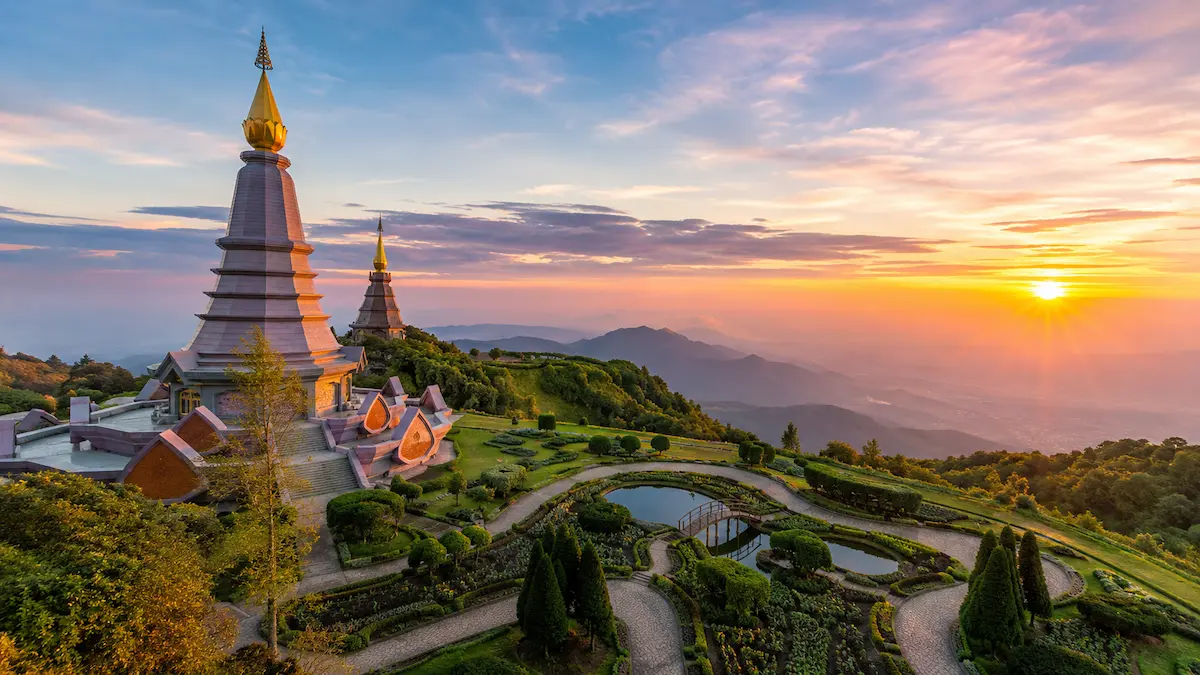
My verdict: Yes, it is touristy. Go anyway—just go early. The gilded stupa, mountain setting and relationship to the city make it one of the few “must-sees” I would defend for a first trip.
✅ What Other Travelers Say: Travelers repeatedly praise the gold-covered temple complex and city views when weather is clear. Early visitors report a calmer atmosphere before larger groups arrive.
⚠️ The Catch (Things to Keep in Mind): Peak times can feel crowded, the road is winding, and views depend on haze/cloud. Current sources disagree on the exact foreign admission amount, which is why I recommend budgeting for a small on-site fee rather than quoting a supposedly permanent number.
📍 Stop 5: Wat Pha Lat & the Lower Monk’s Trail
Tags: Forest temple · Quieter stop · Short hike option · Free entry
Featured YouTube: https://www.youtube.com/watch?v=wL64-vHDSaM
My verdict: This is the stop many rushed itineraries miss. It feels softer and more contemplative than Doi Suthep, and it makes geographic sense on the same downhill route. If you dislike hiking, you can still enjoy the temple without turning the visit into a trek.
✅ What Other Travelers Say: Recent visitors often describe Wat Pha Lat as peaceful, atmospheric and less crowded, with the forest setting doing as much work as the architecture.
⚠️ The Catch (Things to Keep in Mind): The trail can be slippery after rain, and “Monk’s Trail” is not shorthand for an easy all-the-way hike to Doi Suthep. The lower section to Wat Pha Lat is the sensible sample for most first-timers.
📍 Stop 6: Elephant Nature Park / an Observation-Led Rescue Program
Tags: Animal welfare · Full-day tour · Advance booking · No-riding priority
Featured YouTube: https://www.youtube.com/watch?v=IsxqyqcI_Bs
My verdict: This can be the most meaningful day of the trip, but only if you are willing to judge the activity by welfare practices rather than Instagram closeness. I would choose observation, rescue education and space over riding, tricks or forced bathing every time.
✅ What Other Travelers Say: Guests value the educational focus, rescue stories and the convenience of organized transport/lunch. The experience is structured and guided, which helps first-time visitors understand what they are seeing.
⚠️ The Catch (Things to Keep in Mind): It is a comparatively expensive day and not a “wild safari.” Programs vary, so read the exact current activity list. The word “ethical” in a product title is marketing; it is not a substitute for checking whether the program avoids riding, performances and high-contact interactions.
📍 Stop 7: Doi Inthanon National Park
Tags: Thailand’s highest mountain · Waterfalls · Full-day drive · Seasonal trail
Featured YouTube: https://www.youtube.com/watch?v=d6Jis-yk9ig
My verdict: Worth a day if you enjoy nature and can tolerate the drive. It is not a single viewpoint; the appeal comes from combining cool forest, summit boardwalk, pagodas and waterfalls.
✅ What Other Travelers Say: Recent reviews praise the variety of scenery and the relief of cooler mountain temperatures. Well-run tours are appreciated because the park’s major stops are spread out.
⚠️ The Catch (Things to Keep in Mind): The drive is long and winding, tour pacing and lunch quality vary, and cloud can erase the postcard views. Kew Mae Pan is not year-round—it closes June through October—so do not let an outdated itinerary sell you a trail you cannot legally walk.
📍 Stop 8: Warorot Market, Wat Ket & Chiang Mai Night Bazaar
Tags: Local market · Riverside · Night shopping · Best as a flexible final day
Featured YouTube: https://www.youtube.com/watch?v=FbUT42sj_os
My verdict: Warorot is the more interesting daytime market; Night Bazaar is the easier tourist evening. Pairing them on a low-pressure final day lets you enjoy both without pretending they are the same experience.
✅ What Other Travelers Say: Visitors like the Night Bazaar’s food, atmosphere and convenience on any night of the week, while Warorot earns points for feeling more locally grounded and practical.
⚠️ The Catch (Things to Keep in Mind): Night Bazaar souvenir pricing can be tourist-oriented and bargaining pressure is part of the experience. If you already did the Sunday Walking Street, you may find the merchandise repetitive; go for food and atmosphere, not because you “must” shop twice.
Key FAQs
Is 5 days enough for Chiang Mai for first-time visitors?
Yes—if you resist the temptation to make Chiang Mai a base for every northern Thailand day trip. Five days is enough for the Old City, Doi Suthep/Wat Pha Lat, one responsible elephant day, Doi Inthanon and one flexible city/market day. If you want Chiang Rai, Pai or a multi-day trek, add nights rather than compressing them into the same five-day itinerary.
What is the best area to stay in Chiang Mai for a 5-day itinerary without renting a scooter?
For most first-timers, the east or central Old City—especially within an easy walk of Tha Phae and Ratchadamnoen—is the most forgiving base. You can walk Day 1, reach the Sunday market easily, and use Grab/taxi for the west-side mountain day. Nimman is excellent for cafés and nightlife but requires more rides to the historic core. I would not choose the airport or railway station area just to be close to arrival/departure transport.
Should I book Chiang Mai attractions in advance or buy tickets on arrival?
Book capacity-limited experiences and long-distance tours in advance: elephant programs, Doi Inthanon tours, cooking classes and date-specific seasonal events. Pay on site for ordinary temples such as Wat Phra Singh, Wat Chedi Luang and Doi Suthep, and remember that Wat Pha Lat, Tha Phae Gate and the major public markets do not need an admission ticket. In Chiang Mai, the best “skip-the-line hack” is selective prebooking—not prebooking everything.
Final Verdict and Your Next Step
The smartest first-time Chiang Mai plan is not the one with the most pins. It is the one where each day has a clear geographic purpose, your legs still work at dinner, and a late pickup or rain shower does not collapse the next three bookings. Keep Day 1 in the Old City, make Day 2 a downhill Doi Suthep–Wat Pha Lat–Nimman route, give Day 3 and Day 4 to one major excursion each, and protect Day 5 as your flexible market, river, luggage and weather buffer.
If your dates are fixed, book the capacity-limited days first, then build the free/on-site temple days around them. For Doi Inthanon, compare the live route and cancellation terms on Klook or KKday. For an elephant day, compare the current program details and availability on the KKday Elephant Nature Park page and the operator’s own website before paying.
One final warning: do not let a “limited-time deal” force you into a bad route. A cheaper ticket is not a saving if it adds two hours of transfers, locks you into a rainy viewpoint day or makes you drag luggage across town. Buy early where capacity matters; stay flexible everywhere else.
Verification Sources & Planning References
- Tourism Authority of Thailand — Wat Phra That Doi Suthep
- Tourism Authority of Thailand — Wat Chedi Luang
- Thai National Parks — Doi Inthanon National Park
- Elephant Nature Park — Official booking information
- ABTA — Animal welfare advice for travelers
- World Animal Protection — Elephant-friendly tourist guidance