This Sydney transportation guide starts with one rule: use a separate contactless card, device or Opal card for each passenger and tap with the same one throughout the journey. Choose suburban rail for longer links, Metro for its direct station pairs, light rail for the city spine, buses for neighbourhoods and the coast, and ferries when the wharf is where you want to be. A direct route with a sensible final walk usually beats the fastest-looking connection.
💡 Key Takeaways
- Adult caps are currently A$19.30 Monday to Thursday, A$9.65 Friday to Sunday and public holidays, and A$50 in the Opal week. The Sydney Airport station access fee is separate.
- Sydney Trains, Metro and light rail are different modes with multiple names around Central. Pin the correct stop or entrance.
- Public ferries follow Opal travel rules. A private service at a neighbouring wharf can charge separately or use different payment rules.
The 1-Min Cheat Sheet
- Sydney Trains: Longer city and suburban links, plus the T8 train to the SYD airport stations. Check platform and stopping pattern.
- Sydney Metro: M1 links including Central, Gadigal, Martin Place and Barangaroo. Check the actual endpoint and lift route.
- Light rail: L2/L3 along George Street and L1 towards parts of the western harbour. Board at the correct Central stop.
- Buses: Useful for Bondi and other coast or neighbourhood trips where the nearest train stops inland.
- Public ferries: Good for harbour destinations including Manly and the Taronga wharf. Check the service code and return timetable.
Top Survival Tips
- Give each passenger a fare medium. A phone wallet and the underlying plastic card can behave as different tap records. Keep to the same one from start to finish.
- Follow the signs to the correct stop. A route planner may tell you “Central” on both sides of a change even when you need to walk through the building or across a street.
- Check the trip, then estimate the price. Most distance-based fares and transfer rules are applied automatically when taps match. Use the official Opal rule guide for exceptions and eligible concessions.
- Add separately paid travel. The rail gate fees at the two SYD airport stations and private ferry costs are examples of prices that need separate checks.
- Check later service before leaving. With a timed return, verify the route and disruption for the actual hour. Do the same for a late coach or bus connection and plan a taxi when needed.
The Full Experience
Sydney Transportation Guide: Which Option Fits Your Trip?
🚆 Sydney Trains: Best for Longer Links and the Airport Corridor
Suburban rail • T8 to SYD • Distance-based fares
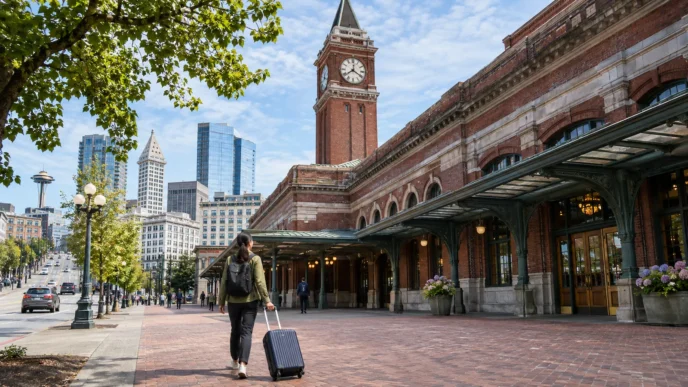
Use suburban rail when it takes you close to the final address in one ride. The T4 is useful for Bondi Junction and Kings Cross, while T8 is usually the straightforward rail link to Sydney Kingsford Smith Airport. Look up the station and actual stop before choosing the line or city direction.
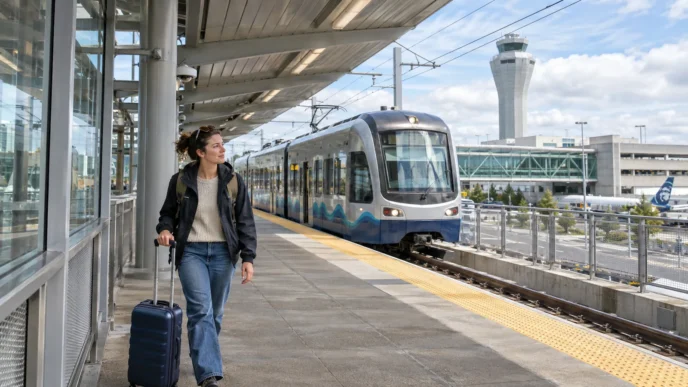
Airport train stations have an additional access charge and the trip to Western Sydney International (WSI) is different. The official SYD guide gives current fees and bus alternatives. For the Blue Mountains, check the intercity route and the final bus or walk separately.
You can tap a contactless card, device or Opal card as applicable. Older fixed single-trip assumptions may put you on a less useful fare. Use station signs and nearby lift access for the last part of the journey with bags.
✅ What Other Travelers Say: Rail is often a sensible choice when the final approach requires fewer street crossings or bus connections.
⚠️ The Catch (Things to Keep in Mind): A train entering the city does not necessarily stop at every CBD station. Always inspect the stopping pattern.
🚇 Sydney Metro: Best for Direct M1 Station Pairs
M1 • Central, Gadigal and Barangaroo • Check current endpoints
Metro often works well for a route between the named M1 stations and a hotel or venue nearby. Use Gadigal for parts of the retail core and Hyde Park side, Martin Place for many commercial addresses and Barangaroo for the northern waterfront. Notice that the suburban stop at Town Hall is separate.
The Transport for NSW southwest Metro update describes the extension to Bankstown. Earlier video guides may show Sydenham as the end of the line. City directions still depend on which station you are starting from, so check before boarding.
A Metro transfer can be useful for a direct onward line, but the route inside Central can include a longer walk than the distance between nearby station pins suggests. Find the lift route in advance where it matters.
✅ What Other Travelers Say: Direct station pairs can save both waiting and repeated outdoor crossings.
⚠️ The Catch (Things to Keep in Mind): Check the service direction and exit first. Some station approaches require a longer walk than they appear to on an overview map.
🚊 Light Rail: Best for a Surface Route Along the City Spine
L2/L3 on George Street • L1 to western stops • Stop readers
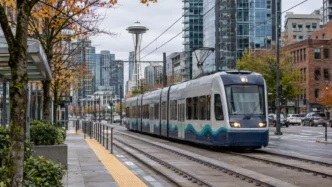
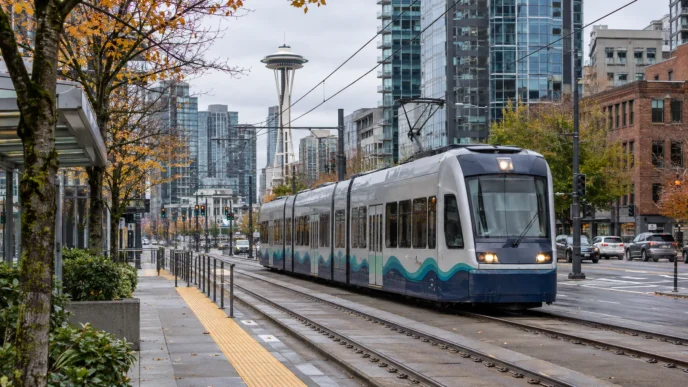
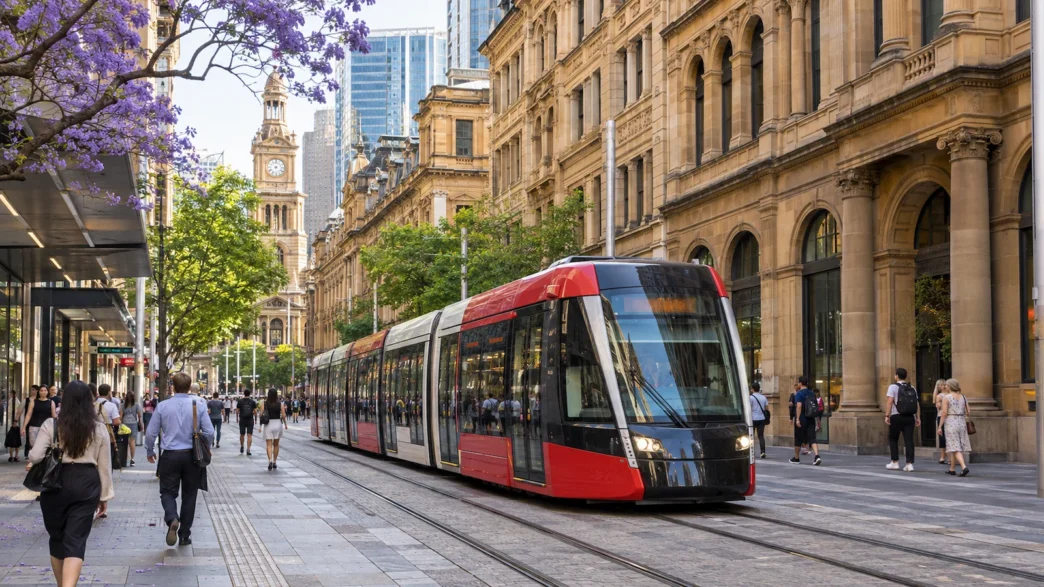
L2 and L3 are useful for many George Street trips between Circular Quay, the city centre and the southern CBD axis. L1 uses a different Central terminus and serves parts of the western waterfront. Check the correct light rail boarding point at Central before going outside.
Tap your fare medium on and off at the stop. The official light-rail service guide shows route groupings. If your hotel and attraction are only one or two stops apart, compare an easy walk first. It can be faster than arriving just after the previous tram.
For a family or guest with bags, a nearby tram is valuable when using it removes several crossings or an awkward last climb. Check event conditions and do not board a different branch just because it shares a section.
✅ What Other Travelers Say: A surface ride can be less confusing than the nearest underground station for a particular door.
⚠️ The Catch (Things to Keep in Mind): George Street is shared by two light-rail lines, while L1 has its own track and boarding points. Confirm your destination.
🚌 Buses: Best for Beaches and the Last Leg Into a Neighbourhood
Coast links • Local stops • Tap on and off
For Bondi Beach, check route 333 or the rail-and-bus connection from Bondi Junction. The train station is inland, so a trip labelled “Bondi Junction” is not a beach arrival. Choose the stop that matches your walking direction.
Beyond the coast, bus decisions are usually about the last few blocks and the evening return. Use the live planner with a full street address, and check the stop side, number and destination. Tap on and off with the same fare medium and have it ready when boarding.
Night and event schedules vary. Compare the route by the time you will actually leave, and decide whether a train plus bus remains practical or whether one direct ride will be easier.
✅ What Other Travelers Say: A direct bus can be the fastest real option if the train would add a change and a long walk.
⚠️ The Catch (Things to Keep in Mind): Traffic, temporary stops and crowded departures can change the plan. Keep one easy alternate.
⛴️ Public Ferries: Best When the Harbour Is Part of the Day
F1 Manly • F2 Taronga Zoo • Check operator and wharf
Use the correct service, not just a map icon for a wharf. F1 serves Manly, and F2 is useful for the Taronga wharf. Check boarding details and what happens after you leave the vessel. A zoo ticket or a rail transfer is not automatically included with a ferry fare.
Refer to the Transport for NSW ferry payment guide for public and private operators. Some accept an Opal card in different ways or have separate conditions. Do not assume you can use the same discount or cap across every sailing.
Save a practical return departure and one later alternative. Services may be affected by weather, maintenance or changes around a festival. If you have a timed event in the city, return earlier rather than assuming a boat will run immediately.
✅ What Other Travelers Say: A public ferry is both a transport choice and a cheap way to put the harbour into a full day.
⚠️ The Catch (Things to Keep in Mind): The wharf number, operator and final walk all matter. Read posted notices near departure.
Key FAQs
Do tourists need to buy an Opal card in Sydney? Many adult visitors can use one eligible contactless card or device per person instead. Check the operator and concession options before travelling. Always use the same medium to tap off.
Do Sydney public transport caps include the airport train fee? No, the airport station access fee is separate from ordinary travel caps. Use the official planner for your actual station pair and check the separate weekly airport access cap rules.
Does the same fare work on all Sydney ferries? Public ferry services generally follow Opal travel rules. Private services can have their own fares or accept OpalPay under different conditions. Verify the service and payment before boarding.
Final Verdict and Your Next Step
Start with the exact hotel, event, wharf or beach stop. Plan the simplest route and keep one card or device per adult consistent. Check the live planner and make any airport or late-night cost a separate decision.
Compare Sydney rooms near the stops you plan to use. For more planning help, see more transfer and transit guides.