
💡 Key Takeaways
- A realistic daily Gangneung budget starts at about ₩75,000–125,000 (roughly US$53–88) for a solo budget traveler including accommodation. Mid-range travelers should plan closer to ₩140,000–230,000 (about US$99–162), while a comfortable beachfront trip can easily reach ₩260,000–450,000+ (about US$184–318+).
- The cheapest hotel is not always the cheapest trip. Gangneung’s attractions are spread between the station and city center, Gyeongpo and Gangmun, Anmok, Jumunjin and Jeongdongjin. Saving ₩20,000 on a remote room can disappear after extra taxi rides and wasted travel time.
- The biggest budget spikes are predictable: summer beach weekends, cherry blossom weekends, major Korean holiday periods, the Gangneung Coffee Festival, and New Year sunrise demand around Gyeongpo and Jeongdongjin. Treat these dates differently from an ordinary weekday.
A useful Gangneung Travel Budget cannot be built from one vague “average daily cost.” Gangneung looks simple on a map, but the money leaks usually happen between the lines: a beachfront hotel that requires taxis to dinner, a cheap room far from the attractions you actually want to see, three café stops because this is one of Korea’s most famous coffee cities, a last-minute KTX ticket at an inconvenient time, or a rainy day when your free beach itinerary suddenly becomes museums, taxis and indoor cafés.
There is another problem with many budget guides: they quietly reuse Seoul or even Japan travel advice. That does not work here. Gangneung has no subway network, Japan’s JR Pass and Golden Week are irrelevant, and the real transport decision is usually between KTX, intercity or express bus, local bus and taxi. Likewise, a “theme park day” is not the normal Gangneung spending spike; a private taxi tour, surfing lesson, museum-heavy day, coastal day trip or ski add-on is the more realistic equivalent.
This guide therefore uses planning ranges rather than fake precision. Hotel prices move by date, room type, weekday, event and sea view. Transport schedules change. Exchange rates move daily. For the USD estimates below, I use approximately US$1 = ₩1,416, close to the mid-market rate checked on August 12, 2026. Treat the dollar amounts as quick mental conversions, not guaranteed card rates.
The 1-Min Cheat Sheet
- Budget Traveler: ₩75,000–125,000 per person per day (about US$53–88), including accommodation. This assumes a solo traveler using a simple guesthouse, motel-style hotel or discounted city-center room, eating mostly local set meals, noodles, kimbap, market food and convenience-store breakfasts, using local buses for most trips, walking sensible clusters, and choosing mainly free beaches and low-cost sights. On strong weekday deals, rooms near Gangneung Station or the city center can fall into the lower end of this range, but summer Saturdays and event weekends can push the same category much higher.
- Mid-Range Traveler: ₩140,000–230,000 per person per day (about US$99–162), including accommodation. This is the most realistic range for travelers who want a clean private hotel room, two proper restaurant meals, one or two good coffees, a mixture of bus and taxi, and at least one paid attraction or activity. It also leaves enough room to choose Gyeongpo, Gangmun or another convenient coastal base without having to calculate every ₩1,000.
- Comfortable Traveler: ₩260,000–450,000+ per person per day (about US$184–318+), including accommodation. This covers a higher-end beachfront or ocean-view stay, more taxis, better seafood or specialty meals, multiple cafés, paid museums or experiences, and fewer compromises about timing. Luxury rooms can exceed this range by themselves on peak dates, especially when sea views, weekends and festivals overlap.
What is not included in those daily figures? International flights to Korea, major shopping, a Seoul–Gangneung round-trip train or bus ticket, long-distance onward travel to another Korean city, ski-resort days, private charters, surfing packages and other high-cost activities. Keep those as separate line items. Mixing them into a daily average hides where your money is actually going.
If two people share one hotel room, the per-person daily cost can fall substantially because accommodation is usually priced per room, not per traveler. A couple staying in a ₩120,000 room effectively allocates ₩60,000 each before food and transport; a solo traveler pays the full ₩120,000.
What Actually Makes Up a Gangneung Travel Budget?
Accommodation: the biggest variable
Accommodation is where Gangneung budgets swing the most. Current hotel searches show simple properties around Gangneung Station and the city area from roughly the mid-US$30s to low-US$50s on some dates, while beachfront and higher-end properties can move well above US$100, and luxury stays can run several hundred dollars per night. Agoda’s recent Gangneung listings also show a broad standard-room planning range around ₩70,000–150,000, but that is not a ceiling.
For practical planning, I would use these room-level targets: ₩50,000–90,000 for a good-value basic room on easier weekdays, ₩90,000–170,000 for a comfortable mid-range hotel, and ₩180,000–350,000+ for more desirable beachfront, ocean-view or upscale stays. During peak beach weekends, cherry blossom demand, festivals and New Year, expect less choice and sharper jumps.
Food: inexpensive if you eat locally, expensive if you “café hop” all day
Gangneung is easy to eat well without spending heavily, but it is also remarkably easy to underestimate food because coffee and snacks feel like small purchases. A practical food budget is ₩25,000–40,000 per day for a frugal traveler, ₩40,000–70,000 for a relaxed mid-range traveler, and ₩70,000–120,000+ if you want seafood, desserts, several specialty coffees and drinks.
A convenience-store breakfast can be kept around ₩4,000–8,000 with kimbap, a rice ball, yogurt, eggs or coffee. A simple Korean meal often fits around ₩8,000–15,000. Gangneung’s famous sundubu meals can be higher depending on the restaurant and dish; current menu references for well-known Chodang tofu restaurants put many items roughly in the ₩10,000–25,000 range. Seafood is where “local specialty” can become a major budget event, especially if ordering crab, sashimi or multi-person platters without checking the full price first.
Transport inside Gangneung: cheap by bus, but taxis can quietly dominate
There is no subway system to simplify everything. Local buses are the cheapest backbone, and T-money is generally usable on Gangneung public buses. A bus-heavy sightseeing day can stay inexpensive, but the trade-off is waiting time and slower cross-city travel. Taxi use becomes attractive when you are carrying luggage, traveling as a pair or family, or linking poorly connected coastal stops.
Do not budget taxis as “just one or two short rides” if your itinerary jumps between Jumunjin in the north, Gyeongpo and Chodang in the middle, Anmok farther south, and Jeongdongjin even farther down the coast. That geography is exactly how a low-cost hotel can become an expensive itinerary.
Getting to Gangneung: keep it outside the daily budget
KTX is usually the cleanest time-versus-cost choice from Seoul. Current planning figures are roughly ₩26,000 from Cheongnyangni to Gangneung and ₩27,600 from Seoul Station to Gangneung one way, with travel times around two hours depending on service. Express and intercity buses can be cheaper, commonly around the low-₩20,000s to around ₩30,000 depending on bus type and departure terminal, but road traffic can make the journey less predictable.
From Incheon International Airport, a direct intercity or airport bus can be easier with large luggage because it avoids transferring through Seoul. Current route listings are often around ₩30,000–45,000 depending on bus class, and Korea Tourism Organization guidance puts the direct airport-to-Gangneung journey at around four hours. The alternative is airport transport into Seoul plus KTX. It can be faster in ideal connections, but it also means another transfer, more walking and more chances to drag luggage through a station.
Top Budget Survival Tips
- 1. Do not compare hotels by room price alone; calculate the “hotel + daily transport” cost. A ₩65,000 room is not a bargain if you spend ₩25,000–40,000 extra on taxis every day. Before booking, list your top three sightseeing zones. If most of your plans are Gyeongpo, Chodang and Gangmun, paying more to stay near that cluster can save both money and energy. If your focus is Jungang Market, Wolhwa Street and easy KTX access, the station/city-center area often gives better value.
- 2. Do not buy a rail pass because “passes save money.” Compare it against your actual rides. A simple Seoul–Gangneung round trip is roughly ₩52,000–55,200 in standard KTX fares using the usual point-to-point prices. A Korail Pass is designed for travelers doing multiple long-distance rail journeys, not someone making only one return trip to Gangneung. Write down every intercity train you will genuinely take, price them individually, and only then compare the pass. The word “unlimited” is not the same as “cheaper.”
- 3. The cheapest airport route is not automatically the best route with a 25 kg suitcase. Airport rail plus Seoul transfer plus KTX can look efficient on paper, but elevators, platform changes and missed connections matter. A direct Incheon–Gangneung bus can be the better-value decision for travelers with large luggage, children or limited mobility because it reduces handling. Conversely, if you are traveling light and already staying in Seoul first, KTX is usually the more logical choice.
- 4. Book peak dates earlier, but understand what “peak” actually means in Gangneung. Summer weekends near Gyeongpo, cherry blossom weekends around early April, major Korean public-holiday weekends, the late-October coffee festival period and New Year sunrise dates can tighten room supply quickly. Friday and Saturday can matter more than the month itself. Do not assume “April is expensive” or “January is cheap” without checking the specific weekday and event calendar.
- 5. Give activity-heavy days their own budget instead of pretending every day costs the same. Gangneung does not need a Tokyo-style “theme park budget,” but the same budgeting principle applies. A day with a private taxi tour, ARTE Museum, surfing lesson, rail bike, specialty cafés and seafood can easily cost two or three times a beach-and-market day. Put that high-spend day in a separate line rather than increasing every day’s average.
- 6. Use convenience stores strategically, not as an excuse to snack constantly. Convenience stores work best for breakfast, bottled water, simple late-night food and emergency supplies. If you buy a drink, dessert and snack every time you pass a CU, GS25 or 7-Eleven, the “cheap” strategy stops being cheap. A better system is one convenience-store meal or snack block per day, then spend properly on one local meal you actually care about.
- 7. Check supermarkets and food halls near closing for markdowns, but do not build your entire meal plan around them. Prepared foods at large supermarkets and some food halls may receive markdown stickers later in the evening, often in the final hours before closing. The exact timing and discount vary by store and day, so treat it as a bonus rather than a guaranteed 50% dinner. This strategy is especially useful if your hotel has a fridge and you want fruit, yogurt, ready-to-eat meals or breakfast supplies.
- 8. Group your itinerary by geography to stop paying for the same distance twice. A sensible coastal plan might group Gyeongpo Lake, Gyeongpodae, Chodang Sundubu Village, ARTE Museum and nearby Gangmun on the same day. Put Anmok Coffee Street on the same general south-coast day. Give Jumunjin its own northern block, and Jeongdongjin its own southern block. The expensive mistake is breakfast in the center, a trip north, lunch back near Gyeongpo, sunset south, then dinner back downtown.
- 9. Walk when the route itself is pleasant; pay for transport when walking only drains your next activity. Walking around Gyeongpo Lake, between nearby beach areas, through Jungang Market and Wolhwa Street, or around a compact attraction cluster can be part of the experience. Walking several extra kilometers beside ordinary roads just to save a small bus fare is false economy if it makes you too tired to enjoy the beach, museum or evening market. Your legs are also a travel resource.
- 10. Keep an emergency buffer for rain, impulse shopping and a missed last bus or train. For a two- or three-day Gangneung trip, I would keep at least ₩50,000–100,000 separate from the planned spending money. Rain can convert a free beach day into taxis, cafés and paid indoor attractions. A late finish in Jumunjin or Jeongdongjin can create an unexpected taxi bill. A buffer protects the itinerary without forcing you to cut meals the next day.
- 11. Pay in Korean won and be suspicious of dynamic currency conversion. If a card terminal or ATM offers to charge you in your home currency, that is dynamic currency conversion (DCC). Visa warns that DCC includes its own exchange rate and additional fees, and paying in local currency can help avoid the markup. Also check your card’s foreign transaction fee before leaving home. A “points card” charging 3% overseas can wipe out a lot of careful food savings.
- 12. Withdraw cash fewer times if your bank and the Korean ATM both charge fees. ATM costs depend on your home bank, card and the machine used. Instead of making many small withdrawals, check your card’s limits and fees, then withdraw a sensible amount once or twice. Keep some cash because smaller market stalls may be easier with cash, but there is no need to carry the whole trip budget in notes.
Where You Stay Changes Your Gangneung Budget
Gangneung Station and city center: best for transport efficiency and food access
This is usually the strongest value choice for a first-time budget traveler. You arrive by KTX, can reach Jungang Market and central restaurants without a major detour, and have a wider spread of simple hotels. The downside is obvious: the beach is not outside your door. If your dream trip is sunrise, sunset and late-night beach walks every day, you may spend the savings on taxis.
Gyeongpo and Gangmun: pay more for the location, save time on the classic sights
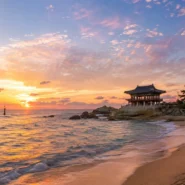
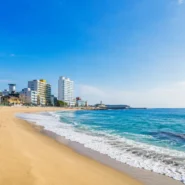
Gyeongpo is convenient for the lake, beach, cafés, Chodang and ARTE Museum. It is a good mid-range base because several popular stops can be grouped without long transfers. The budget danger is paying a premium for “ocean view” and then barely being in the room during daylight. If the view is important to you, buy it deliberately. If not, a room one or two blocks inland can give better value.
Anmok: excellent for coffee lovers, less ideal as an all-purpose base
Anmok Coffee Street is one of the city’s signature experiences, but staying here only makes financial sense if you genuinely want repeated access to the cafés and beach. Travelers planning Ojukheon, Gyeongpo, Jumunjin and Jeongdongjin may still spend considerable time moving around.
Jumunjin or Jeongdongjin: good when they are the destination, expensive when they are just the hotel
These areas can be wonderful for sunrise, coastal atmosphere or specific filming locations. They are poor “cheap hotel hacks” if you intend to travel into central Gangneung and Gyeongpo every day. Book them because you want to wake up there, not because the room looked ₩15,000 cheaper.
Gangneung Budget by Travel Season
Cherry blossom season: early April can be beautiful and surprisingly competitive
Gangneung’s cherry blossoms usually arrive around the beginning of April; the 2026 forecast placed first bloom around April 1, with the Gyeongpo area being one of the best-known spring spots. The budget issue is not that the whole month is expensive. It is that good-weather weekends around peak bloom can compress demand into a very short window. Gyeongpo-area rooms, especially those with views or easy lake access, can disappear first.
How to save: stay Sunday to Thursday if possible, check city-center rooms as well as Gyeongpo, and do not wait for the blossom forecast to become “perfect” before reserving a refundable room. Nature does not guarantee a date, so flexibility is more valuable than chasing one supposedly exact peak day.
Golden Week? Not in Korea — watch Korean holiday weekends instead
Japan’s Golden Week is not a Gangneung pricing season. The relevant pressure comes from Korean public holidays and long weekends, including Seollal, Children’s Day/Buddha’s Birthday combinations when dates align, Chuseok and other three-day weekends. Domestic travelers from Seoul can reach Gangneung quickly, so a holiday can tighten KTX seats, buses and beachfront rooms even when international visitors are not expecting a “peak season.”
How to save: check Korea’s holiday calendar before locking your dates, and book the KTX at the same time as the hotel when your trip falls on a holiday weekend. If you have flexibility, shifting by one day can make a bigger difference than changing hotel category.
Summer: the most dangerous season for beach-hotel budgets
Late July and early August are the classic high-demand beach period. In 2026, Gyeongpo Summer Festival ran from July 30 to August 5, illustrating how events can overlap with naturally strong beach demand. Warm weekends can push Gyeongpo and other coastal rooms sharply higher, and the best-value rooms sell before luxury inventory does.
How to save: compare late June, early July and late August if swimming is not the only reason for the trip. If you must go in peak summer, reserve the room early and make the rest of the trip cheaper: use buses, eat one market meal, and choose free beach time instead of stacking paid activities.
Autumn foliage and coffee season: great weather, but watch late October
Autumn is one of the easiest seasons to overspend because the weather encourages longer days out, more café stops and side trips into Gangwon’s mountain areas. Gangneung’s Coffee Festival is also a real demand event; for 2026 it was scheduled for October 21–25 around Coffee Street and across the city. Foliage timing varies with weather and altitude, so there is no single guaranteed “expensive autumn week,” but late-October weekends deserve attention.
How to save: book accommodation before finalizing every café and attraction. If hotel prices jump for a festival weekend, compare the week before or after instead of assuming all of October costs the same.
Christmas and New Year: Christmas can be manageable; New Year sunrise is the real pressure point
Gangneung’s East Sea sunrise culture makes New Year different from an ordinary winter week. Gyeongpo and Jeongdongjin host sunrise celebrations, and Jeongdongjin is one of Korea’s most famous New Year sunrise destinations. That can create crowded trains, sold-out rooms and higher coastal prices around December 31 and January 1.
How to save: if sunrise is not the point of your trip, avoid New Year’s Eve. If it is the point, accept that this is a premium experience day and budget accordingly rather than trying to force a low-season price onto a high-demand event.
Quieter winter periods: often good value, but never assume an entire month is cheap
Winter weekdays after New Year and outside Lunar New Year can offer some of the best hotel value, particularly for travelers who enjoy cold beaches, coffee shops and fewer crowds. However, Gangwon winter travel also attracts ski visitors, and specific weekends or events can still raise prices. Coastal weather can be windy and very cold, which may increase taxi and indoor-attraction spending.
How to save: look for Sunday–Thursday hotel deals, choose a base with easy restaurants nearby so bad weather does not force taxis, and keep your itinerary flexible enough to swap a beach walk for a museum or café without adding an expensive cross-city transfer.
Common Budget Mistakes
1. Counting only the hotel and the train
The mistake: “My hotel is ₩90,000 and my KTX is ₩27,600, so the trip is cheap.” Food, coffee, taxis, attractions, luggage, shopping and small convenience-store purchases are missing.
The fix: build five separate envelopes: accommodation, food, local transport, activities and discretionary spending. Add a sixth emergency reserve that you do not plan to spend.
2. Forgetting the airport-to-Gangneung journey
The mistake: treating the flight to Korea as the only arrival cost. Gangneung is not next to Incheon Airport.
The fix: price the entire airport chain before booking: direct bus, or airport-to-Seoul plus KTX. Include the time cost and luggage handling, not only the ticket price.
3. Assuming a Korail Pass covers every useful ride
The mistake: buying a national rail pass without checking whether your Gangneung sightseeing will actually use trains. Local Gangneung movement is mainly bus, taxi and walking, not KTX.
The fix: use point-to-point fares for Seoul–Gangneung unless your wider Korea itinerary genuinely contains enough long-distance rail journeys to make a pass worthwhile.
4. Planning north, center and south coast on the same day
The mistake: placing Jumunjin, Gyeongpo, Anmok and Jeongdongjin into one “coast day” because they all look coastal on a map.
The fix: split the coast into geographic blocks. North = Jumunjin. Central = Gyeongpo, Chodang, Gangmun. South = Anmok and farther south; Jeongdongjin is better treated as its own destination block.
5. Setting a low food budget but buying coffee, dessert and late-night snacks every day
The mistake: counting only breakfast, lunch and dinner. In Gangneung, the fourth meal is often coffee, and the fifth is “just one thing” at the market.
The fix: create a daily café-and-snack cap, for example ₩10,000–20,000. If you want a premium ocean-view café, skip the random convenience-store coffees that day.
6. Having no separate shopping limit
The mistake: treating coffee beans, packaged snacks, cosmetics, souvenirs and market purchases as “small extras.”
The fix: set a hard trip-level shopping number before arrival. When it is gone, it is gone. This makes it easier to spend confidently on items you genuinely want instead of feeling guilty about every purchase.
7. Ignoring luggage storage or delivery costs
The mistake: arriving at Gangneung Station at 10 a.m. with a 24-inch suitcase and assuming your hotel will always store it or that lockers will always be available.
The fix: confirm hotel storage before arrival. Gangneung Station also has third-party luggage delivery options, including services that can deliver bags to registered hotels, but price and surcharges depend on bag size and destination. Budget it if it saves you from a taxi or several hours of dragging luggage.
8. Booking a transport-inconvenient hotel purely to save ₩10,000–20,000
The mistake: picking the lowest room price in the whole city.
The fix: calculate two sample days from that hotel using Naver Map or KakaoMap before booking. If both days require multiple long transfers or taxis, the “cheap” hotel is probably not cheap.
9. Leaving no emergency money
The mistake: allocating every won to planned activities.
The fix: keep ₩50,000–100,000 separate for a short trip. Do not count it as money available for shopping. It is there for rain, missed transport, an unexpected taxi, medicine or a last-minute schedule change.
10. Accepting dynamic currency conversion because the terminal shows a familiar currency
The mistake: selecting USD, HKD, GBP or another home currency at the card terminal because the final number looks easier to understand.
The fix: choose KRW unless you have a very specific reason not to. Let your card network and issuer handle conversion, and know your card’s overseas fee before the trip.
Sample Gangneung Budgets That Are Actually Usable
Two-day budget trip from Seoul
For one solo traveler, a sensible target is roughly ₩210,000–330,000 total before shopping. That could include one night in a value hotel, a round-trip KTX or bus from Seoul, local buses with one or two taxis, simple local meals, market snacks and mostly free sights. If you share a room with another traveler, the per-person total can drop noticeably.
Two-night mid-range coastal break
A realistic target is around ₩400,000–650,000 per person including two nights, round-trip transport from Seoul, meals, cafés, a mix of bus and taxi, and one or two paid attractions. This is the range where you can stop obsessing over every fare while still making sensible choices.
Comfortable weekend with ocean-view hotel and taxis
Expect roughly ₩700,000–1,100,000+ per person for two nights once you combine a higher-end coastal hotel, KTX, taxis, seafood, cafés and paid experiences. Peak summer, festival weekends or premium rooms can push the total higher. If this surprises you, the room is usually the first place to investigate, not the bus fare.
Key FAQs
How much money do I need per day in Gangneung, South Korea?
A practical solo budget is about ₩75,000–125,000 (US$53–88) per day including accommodation. Mid-range travelers should plan ₩140,000–230,000 (US$99–162), while comfortable travelers using beachfront hotels and taxis can spend ₩260,000–450,000+ (US$184–318+). These figures exclude flights to Korea, major shopping and long-distance transport to and from Gangneung.
Is Gangneung expensive compared with Seoul for tourists?
Gangneung can be cheaper than Seoul for simple hotels and local food, especially on weekdays, but it has a different budget trap: spread-out attractions and seasonal beachfront pricing. A Seoul traveler can often rely on subway transfers; a Gangneung traveler may need buses and taxis between coastal zones. In peak summer or around major events, desirable beach hotels can become as expensive as city hotels in Seoul.
What is the cheapest way to travel from Seoul to Gangneung?
Express or intercity bus is often cheaper than KTX, commonly in roughly the ₩20,000–30,000 one-way range depending on bus class and departure terminal. KTX is usually around ₩26,000–27,600 one way and is faster and more predictable. The best-value choice depends on where you are staying in Seoul, your departure time, traffic risk and how much you value an extra hour of holiday time.
Final Verdict and Your Next Step
If you are a budget traveler, Gangneung is very manageable when you stay near Gangneung Station or another transport-friendly area, group attractions geographically, use buses and keep café spending under control. Aim for around ₩75,000–125,000 per day including accommodation, then add your Seoul–Gangneung transport separately.
If you are a mid-range traveler, the sweet spot is around ₩140,000–230,000 per day including accommodation. This gives you enough room for a more convenient Gyeongpo or central hotel, proper local meals, good coffee, a few taxis and paid attractions without turning the trip into a spreadsheet exercise.
If you want a comfortable coastal escape, budget ₩260,000–450,000+ per day, especially if ocean views, taxis, seafood and paid experiences matter to you. The key is not to spend less on everything; it is to decide which premium is worth paying for. A sea-view room you will enjoy every morning may be worth more than three rushed attractions. A taxi that saves an hour can be better value than a “free” walk that exhausts you.
Book accommodation early if your dates fall on a summer weekend, cherry blossom period, Korean holiday, Coffee Festival or New Year sunrise period. Use refundable rates when possible, then recheck prices before the free-cancellation deadline. For live inventory, compare more than one platform because the cheapest site can change by room type and date.
- Check Gangneung hotel prices on Agoda
- Compare Gangneung hotels on Booking.com
- Check the Gangneung 3-hour taxi tour on Klook
- Check Gangneung ARTE Museum tickets on KKday
Price-check note: This guide was researched and checked on August 12, 2026. Hotel rates, transport fares, attraction prices, event dates and exchange rates can change. Always verify the final price and cancellation terms before paying.
Sources Used for Price and Transport Checks
- KORAIL official website — train reservations and current service information.
- VISITKOREA — Gangneung transport, KTX, airport access, seasonal events and attraction information.
- Booking.com Gangneung and Agoda Gangneung — live hotel inventory and price-range checks.
- Visa Dynamic Currency Conversion guide — explanation of DCC and local-currency payment.