


💡 Key Takeaways
- Start with October–November for a walking-oriented visit, especially if lower rainfall matters. It remains a seasonal probability, not a promise of clear skies or clean air.
- December–February needs layers and a room suitable for cool conditions. March–April can be mild but damp; low rainfall totals do not necessarily mean few wet days.
- May–June brings substantial heat and increasing rain. July–September needs the strongest rain and transport contingency, with September still wetter than the later autumn months.
- Check current forecasts, dated air-quality observations and the actual year’s holiday calendar separately. None can be inferred reliably from a seasonal video.
The best time to visit Hanoi is usually the autumn window for travelers who want comfortable city walks with a lower-rainfall starting point. October–November is a useful first comparison. Spring is another possibility if you accept damp conditions, while winter and summer require different packing and daily routines.
Hanoi is not hot and dry in the same months as Ho Chi Minh City. Its northern seasonal pattern includes cool winters, damp spring weather and hot, wet summers. Vietnam’s official tourism guide identifies autumn as a preferred period and describes four distinct seasons.
The five planning periods below use the WMO World Weather Information Service’s actual Hanoi record, supplied by Viet Nam’s meteorological authority. Its published climate-normal period is 1991–2020. These are long-term monthly averages, not a forecast for your travel week, observed 2026 totals or a guarantee about every neighborhood.
The 1-Min Cheat Sheet
- December–February: compare for cooler city days and travelers who prefer avoiding summer heat. Pack layers and rain protection; confirm the room’s heating arrangements if important.
- March–April: compare for milder spring temperatures with damp-weather flexibility. Allow for light rain and wet surfaces rather than expecting uninterrupted sunshine.
- May–June: compare when dates are fixed and you can manage heat plus rain. Shorter outdoor blocks and a convenient midday return make the plan more realistic.
- July–September: compare for a flexible city visit with indoor alternatives and generous transfer buffers. Do not treat early September as identical to November.
- October–November: the strongest starting window here for ordinary sightseeing walks. Compare November’s lower rainfall against October, while checking actual weather and air quality near the trip.
Top Survival Tips
- Check forecasts close to the activity. Use the national meteorological forecasting service for current conditions and warnings. A monthly normal helps choose a season; it cannot decide whether tomorrow’s outdoor excursion should run.
- Check air quality separately. Hanoi’s environment department warned of winter–spring pollution risk in a September 2026 report. Use the city monitoring portal, selecting the station and checking its timestamp. This guide does not assign a clean-air month or treat an old reading as current.
- Give each day a nearby alternative. Pair an outdoor priority with an indoor option in the same part of town. Changing the order is easier when the fallback does not create a cross-city journey.
- Choose the room for the season. In cool months, ask about heating and bedding. In hot months, confirm air conditioning. If you expect more room time, daylight and usable space may be worth more than a large advertised discount.
- Keep transport buffers. Rain, road conditions and temporary restrictions can affect the last approach. Confirm your airport terminal or actual train departure point, and avoid building a plan around a fixed driving time.
- Check each destination separately. Hanoi weather does not establish Ha Long Bay sailing conditions, Sapa temperatures or conditions elsewhere in Vietnam. Read the actual operator’s weather, amendment and cancellation policy.
- Separate seasons from prices and festivals. Compare dated hotel totals, taxes and cancellation terms. Tet and other holidays require the correct year’s verified calendar and actual service checks; no blanket seasonal discount or closure rule is assumed here.
The Full Experience
🧥 December–February: Best for Travelers Who Prefer Cooler City Days
Video context: Review_X Channel published this explicitly winter and Tet 2020 Hanoi walk in January 2020. It is a dated street account, not evidence of future holiday dates or present opening arrangements.
Choose this period when escaping summer heat is more important than guaranteed sunny weather. January’s WMO mean daily minimum is 14.6°C and mean daily maximum 20.0°C. Those are averages, not the coldest or warmest temperatures you might encounter.
Pack layers that work for a cool morning, an indoor stop and an evening return. Include rain protection and footwear suited to wet surfaces. A winter visit can still involve damp conditions even when monthly rainfall totals are lower than summer’s.
The hotel matters differently here. Ask how heating works in the chosen room and what bedding is available, particularly if you are arriving after time in southern Vietnam. Do not assume a property advertised with air conditioning supplies the winter room comfort you prefer.
Tet can fall within this broad planning period, but its dates and service arrangements change by year. Confirm the actual calendar, meals, attractions and transfers you need. A winter video with Tet in its title cannot establish next year’s closures or a specific hotel price.
✅ What Other Travelers Say
Review_X Channel documents an actual Hanoi winter walk around Tet 2020 with street sound. It provides dated seasonal context, without proving that every winter day is cool in the same way or that current businesses follow the same schedule.
⚠️ The Catch (Things to Keep in Mind)
Lower rainfall is not a guarantee of blue skies, dry surfaces or clean air. Bring suitable layers, check the room and use current weather and air-quality information rather than treating winter as automatically ideal.
🌸 March–April: Best for Mild-Weather Walks with Damp-Day Flexibility
Video context: Wander Vietnam published this explicitly March spring walk around Hoan Kiem Lake in March 2026. The creator describes a pleasant, lightly clouded day; it is one visit, not a seasonal forecast.
Spring is a worthwhile alternative when you want milder temperatures without choosing the coldest part of winter. It should not be sold simply as a dry-season substitute. March’s table records 55 millimeters of rainfall across an average eighteen rain days, using a threshold of at least 0.1 millimeter.
That distinction matters: modest total rainfall can coexist with many days containing some rain. Plan for damp streets and a flexible sequence rather than judging the month only by its rainfall amount. A short local walk followed by a café or indoor visit can be more comfortable than a fixed all-day outdoor circuit.
April is warmer in the normals, so pack adaptable clothing rather than assuming the entire period feels like a single mild March day. Check the actual forecast when deciding how long to spend outside and which day to reserve an excursion.
The March video illustrates a pleasant spring opportunity; it does not establish an annual flower-viewing timetable or guarantee a particular blossom for your booking. Keep those expectations separate from choosing a generally workable season.
✅ What Other Travelers Say
Wander Vietnam describes a calm, pleasant spring lake walk in the March 2026 account. That positive individual experience supports considering spring, while the climate record explains why another day may be damp.
⚠️ The Catch (Things to Keep in Mind)
Do not interpret a low rainfall total as a small number of wet days. Pack for light rain, check current air quality and avoid paying for a whole outdoor schedule on the assumption that spring guarantees sunshine.
🌡️ May–June: Best When You Can Manage Heat and Increasing Rain
Video context: Vietnam 4K Walking identifies this heavy-rain account as the evening of 20 June 2023. It documents one event, not the expected condition of every June evening.
This is a meaningful change from spring. June has the highest mean daily maximum in the cited Hanoi table, at 33.8°C. Heat and rain need to be planned together rather than assuming a shower makes the whole day comfortable.
Use shorter outdoor blocks, a midday rest and a manageable evening route. A convenient hotel return can be more useful than squeezing another distant sight into the schedule. Families and travelers who dislike sustained heat should compare this period with autumn before committing to restrictive dates.
The June 2023 film documents rain and traffic difficulty on a particular evening. It is a practical reason to keep documents dry and allow a change of order, not proof of permanent flood conditions across the city. Check the route and current official warnings when heavy weather is occurring.
For an excursion, ask about outdoor exposure, shelter, amendment terms and how the operator communicates changes. A city café is a useful fallback for a neighborhood walk; it is not a contingency plan for every boat trip or distant activity.
✅ What Other Travelers Say
Vietnam 4K Walking’s 20 June 2023 description reports heavy rain and difficult traffic on some roads. Treat this as a named creator’s dated event account, without turning it into a forecast or a claim about all hotel approaches.
⚠️ The Catch (Things to Keep in Mind)
A schedule can fail through heat fatigue as well as rainfall. Compare actual daily demands, hotel air conditioning and transport flexibility. No summer hotel saving is guaranteed until you compare a dated offer.
☔ July–September: Best for a Flexible Visit with Strong Rain Alternatives
Video context: Wander Vietnam published this Hanoi Old Quarter rain walk in August 2026. The exact recording day is not confirmed here; no storm identifier from the creator’s description is adopted as an official weather finding.
Plan this as the main wet-season part of the year. August has the highest rainfall total in the published table, 335 millimeters. September improves from that peak but remains substantially wetter than November.
A city visit can still work when you can move outdoor plans, take breaks and choose alternatives close by. Avoid stacking weather-sensitive appointments across several distant areas. One compact part of town with an indoor fallback is easier to adapt than a route built around preserving every reservation.
Keep extra time before the airport, a train or a separately booked onward journey. Ask the hotel about the practical vehicle approach during heavy rain, especially if your entrance is in a lane. Do not enter floodwater simply to maintain a timetable.
If your trip is short and depends on one outdoor experience, compare a later period and the operator’s actual cancellation terms. If your dates are fixed, budget for flexibility rather than assuming the rainy-season label guarantees empty sights or cheaper rooms.
✅ What Other Travelers Say
Wander Vietnam’s August 2026 publication describes an evening walk after a rain-filled day, including streets and cafés around the Old Quarter. It illustrates a specific wet-weather visit, not the frequency of such conditions on your dates.
⚠️ The Catch (Things to Keep in Mind)
September is a transition within a still-wet period, not an automatic autumn-weather switch. Current forecasts, road conditions and the destination of an excursion matter more than a broad seasonal label.
🍂 October–November: Best Starting Window for Ordinary City Sightseeing
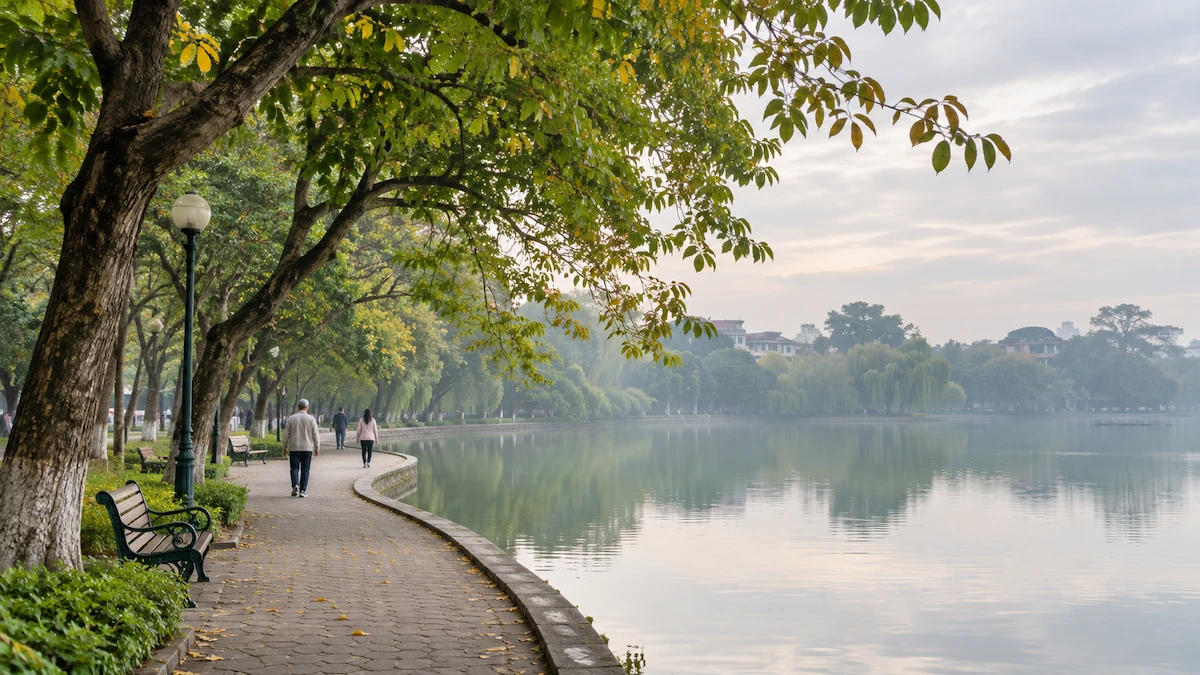
Video context: Wander Vietnam published this explicitly autumn Hanoi walk in October 2026. The warm temperature in its title is the creator’s context, not an official observation or a prediction for November.
This is the strongest starting comparison for many visitors. The WMO rainfall totals fall from 126 millimeters in October to 48 in November. The period becomes milder too, but the exact day can still differ from a pleasant autumn image.
Choose it for a walking-oriented city stay, then build a realistic route with breaks and a nearby hotel return. If you can choose between dates, compare the later autumn pattern with your own preference for warmth or cooler evenings rather than expecting one perfect temperature.
Good sightseeing weather does not settle air quality. The city’s September 2026 environment report discusses seasonal pollution risk and changing conditions. Check a current station reading and timestamp near your outdoor plans; no month receives a clean-air guarantee in this guide.
For a combined Vietnam itinerary, check the other destinations individually. Hanoi’s autumn pattern cannot establish conditions in central Vietnam, on a northern bay or in the mountains. Compare the complete trip before buying nonrefundable transport around one city’s averages.
✅ What Other Travelers Say
Wander Vietnam describes a warm autumn morning through the lake and central streets in the October 2026 account. That is useful dated context for expecting variation, without replacing the official climate record or your final forecast check.
⚠️ The Catch (Things to Keep in Mind)
Autumn is a useful probability-based choice, not a promise about rain, pollution, room prices or an excursion’s operation. Compare actual bookings and current conditions before finalizing the day’s outdoor plan.
Key FAQs
Is October or November better for visiting Hanoi?
Both are useful starting points. November has lower rainfall and cooler temperatures in the cited normals. Your preferred warmth, exact itinerary and current weather and air-quality information still matter.
Is Hanoi cold in January and February?
It is much cooler than summer and different from southern Vietnam’s tropical pattern. Pack layers and confirm room heating if needed. Monthly mean temperatures are not a guarantee of the coldest or warmest day.
Is spring dry enough for a Hanoi walking holiday?
It can work with flexibility, but distinguish total rainfall from rain days. March’s modest rainfall total is spread across many days with some rain in the normals. Keep rain protection and nearby alternatives.
Final Verdict and Your Next Step
Begin with October–November for ordinary sightseeing. Choose winter for cooler conditions with layers, spring for mild but potentially damp days, early summer with a heat-conscious routine, and July–September with the strongest rain contingency.
Check current forecasts, the air-monitoring timestamp and the correct holiday year, then compare real rooms through La Siesta Ma May’s reservations or Somerset Grand’s official booking page. Reserve ahead for fixed dates once the room and amendment terms fit the season you chose.