



💡 Key Takeaways
- March and April are the strongest starting point for a balanced city-and-beach trip: less heat than midsummer and much less normal rainfall than autumn. This is an editorial recommendation, not a weather guarantee.
- May to July suits travelers who can organize days around heat. August and September are a changing pair; September’s normal rainfall is substantially higher than August’s.
- October to December requires a flexible rainy-season plan. A cheaper room is a poor saving when the holiday depends on uninterrupted swimming, clear mountain views or a tight onward connection.
The best time to visit Da Nang depends on which inconvenience you prefer to manage: summer heat, wetter and cooler periods, or the cost and crowds around a particular holiday or event. A month that works for cafés, food and a longer stay may be frustrating for a short beach holiday with one chance to see Ba Na Hills clearly.
Da Nang sits on Vietnam’s central coast, where the autumn rainfall pattern differs from Hanoi and Ho Chi Minh City. The city’s beach strip, the higher Ba Na area and the wider administrative territory do not share identical conditions. A sunny morning in town is not a forecast for the mountain or permission to swim.
The figures below use WMO’s official Da Nang city climate information, based on 1991–2020 monthly averages supplied through the national meteorological service. A rain day means at least 0.1 millimeter, which can include very light rain. These are climate normals, not a forecast, and neither rainfall totals nor rain-day counts describe how every holiday will unfold.
The 1-Min Cheat Sheet
- January–February: compare for cooler city days and flexible beach time. January retains more normal rain; February is considerably drier. Do not assume the two months provide the same seaside experience.
- March–April: start here for a balanced first visit combining city sights, meals and weather-dependent beach outings. April is warmer, and exact holiday dates can change the price comparison.
- May–July: compare for an intentional summer trip with early starts, indoor rests and a realistic heat budget. Events can concentrate demand on particular nights rather than every day of the season.
- August–September: treat this as a transition, not a single bargain category. August stays very hot; September’s heavier normal rainfall makes flexibility more valuable.
- October–December: compare for a slower food-and-city stay that accepts rain and possible disruption. It is a weak default for a short holiday whose success requires reliable swimming and outdoor excursions.
Top Survival Tips
- Choose the main experience before the month. Write down the activity you would most regret missing. A beach-focused break and a flexible café-and-food stay tolerate different conditions, even with the same hotel budget.
- Separate climate from the live decision. Use the normals to choose dates, then check Vietnam’s national forecast and warning service close to travel. Read the issue time and affected location; an archived warning or a viral old flood video is not a current forecast.
- Price an actual date set. Compare refundable and non-refundable rooms with the same guests and meals. A low-season label cannot establish the cheapest fare or hotel rate for your dates, especially around holidays and events.
- Keep weather-dependent excursions movable. Avoid committing every outdoor outing to a single fixed day when the booking permits flexibility. Read cancellation and rescheduling terms before paying, and allow an indoor alternative you would genuinely enjoy.
- Check the sea separately. Follow lifeguard instructions, posted warnings and closures at the actual beach. Bright skies and warm air do not establish safe sea conditions. Confirm pool opening and whether it is heated rather than assuming the hotel substitutes for swimming outside.
- Distinguish town and mountain conditions. The tourism authority’s weather guide discusses the coastal lowlands and cooler higher areas separately. Bring an appropriate extra layer for Ba Na and check mountain visibility before treating a clear city sky as a promise.
- Protect the onward journey. During heavy-rain or storm warnings, check the actual airline, railway or tour operator. Leave useful flexibility before a separate international connection; a discounted hotel cannot compensate for an itinerary with no recovery time.
The Full Experience
🧥 January–February: Cooler City Days, with a Drier February
Video context: Social Samy Walks published this January 2026 beach-and-An Thuong update at the start of the month. It documents one local period, not the climate of every January or February.
WMO’s January normals are 19.7°C for the mean daily minimum and 25.2°C for the mean daily maximum, with eighty-three millimeters of rain. February’s normal rainfall drops to twenty-two millimeters. That difference is why the two months deserve separate attention even within this cooler planning period.
This can be a good match for a city-and-food itinerary when you prefer less intense heat and do not need to swim every day. Plan the cathedral, riverfront, markets and cafés in manageable clusters, and keep a beach walk as a flexible addition rather than the only purpose of the trip.
For a hotel stay, ask whether the pool is heated and usable during the conditions you actually encounter. A sea-view balcony may still be enjoyable, but it is a different purchase from a guaranteed warm swimming holiday. Pack a light layer and something useful in rain rather than filling the bag only with summer beach clothes.
✅ What Other Travelers Say
Social Samy Walks describes checking the weather and the changing street atmosphere around An Thuong in this January update. The account offers a real local snapshot. It does not show that every winter day has identical rain, crowds or sea conditions.
⚠️ The Catch (Things to Keep in Mind)
January and February should not receive one blanket dry-weather promise. Check the exact Lunar New Year calendar and booking conditions for the year you travel. No universal holiday surcharge, quiet-city claim or fixed annual event date is assumed here.
☀️ March–April: The Best Starting Point for a Balanced First Visit
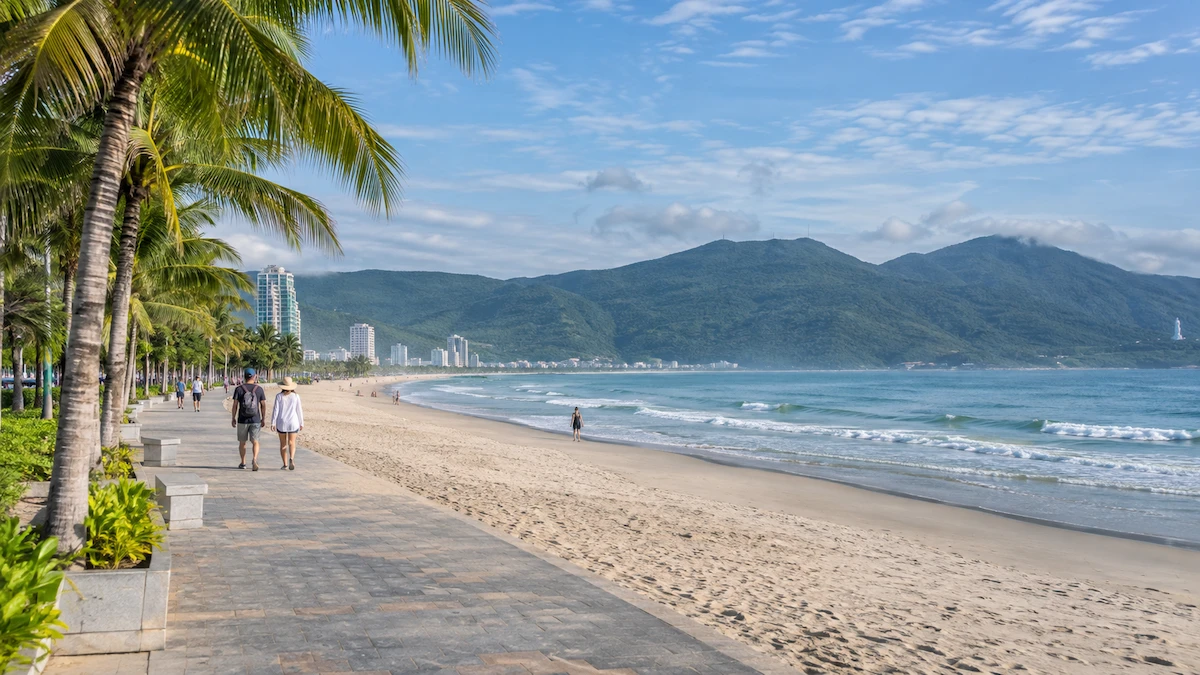
Video context: Walk With Kiet labels this My Khe beach walk as 27 March 2026. It is a specific dated coastal view, not a promise about your travel week.
March’s WMO mean daily maximum is 28.4°C, rising to 30.9°C in April. Normal rainfall is thirty-six and fifty millimeters respectively. Those figures make this pair a reasonable editorial starting point when you want a mixture of outdoor sightseeing and beach time without midsummer’s usual heat.
A practical plan leaves the early part of the day for walking or a weather-dependent outing, keeps lunch unhurried and uses the late afternoon for the river or beach. You still need shade, drinking water and a comfortable return route. A lower monthly rainfall total does not remove the need for a short-range check.
Choose the hotel around the routine. A west-bank base helps a city-and-food trip; a mainland beach hotel is useful if sand and swimming repeatedly bring you back during the day. You do not need to choose a distant resort simply because the month is attractive for outdoor activity.
✅ What Other Travelers Say
Walk With Kiet presents an actual March beach-weather update. This gives a dated visual reference for the promenade and coastal setting, without claiming it is a survey or representative weather sample. Use current warnings and beach instructions for the day you visit.
⚠️ The Catch (Things to Keep in Mind)
Good seasonal odds can attract other travelers, and late-April holiday dates can affect individual departures and rooms. Compare your actual dates rather than assuming March–April is either cheap or expensive. Book weather-dependent plans with terms you are comfortable accepting.
🌡️ May–July: Summer Works Best When You Plan Around the Heat
Video context: Social Samy published this June 2026 summer tour with a chapter specifically about handling the June heat. It also covers the An Thuong neighborhood; it is not a thermometer record or a forecast.
June’s WMO mean daily maximum reaches 34.9°C, with a mean daily minimum of 26.3°C. Those are monthly averages of daily values, not an upper limit on how hot a particular afternoon can become. The practical consequence is to make recovery time part of the itinerary.
Put the most exposed walking early, arrange a sensible return for lunch or rest, and avoid treating an ambitious midday staircase climb as essential. A hotel that makes those returns easy can provide more value than another attraction. Check air conditioning, room layout and the full journey from the places you expect to visit.
Summer also needs a date-specific event check. The official DIFF 2026 schedule listed six competition nights between 30 May and 11 July. That edition is already past at this October 2026 check. It illustrates why you should verify the actual year’s schedule rather than assume fireworks happen every night or repeat the same dates next year.
✅ What Other Travelers Say
Social Samy’s June account explicitly addresses dealing with heat while exploring a changing neighborhood. It supports the practical value of short outings and breaks. The creator’s summer experience does not establish the temperature or crowd level for every week.
⚠️ The Catch (Things to Keep in Mind)
Summer is not automatically the least rainy holiday you personally experience, nor does a festival-season hotel guarantee a view of the display. Confirm the date, room orientation and any event access separately. A smaller nightly saving can disappear if a remote base forces repeated hot journeys.
🌦️ August–September: A Transition That Deserves Flexible Bookings
Video context: rrainbby’s September Da Nang account was published in October 2026. Its description mentions unpredictable rain; the filming year is not independently established here.
WMO’s normal rainfall rises from 167 millimeters in August to 394 in September. August’s mean daily maximum remains 34.0°C. This is not a tidy move from dry sunshine to pleasantly cool autumn; a traveler may need to manage both warmth and a changing rain pattern.
Compare this period when you have enough time to move a beach outing or excursion and still enjoy a food-and-city day. A three-night holiday with every activity prepaid for a fixed morning is a different risk from a longer stay with several possible windows.
Look at the price of flexibility directly. Compare the extra cost of a refundable room with the amount at stake if the itinerary changes. Check tour weather policies and transport arrangements. The tourism authority describes an autumn rainy season, but its general promotional language should not replace a current warning or a destination-specific forecast.
✅ What Other Travelers Say
rrainbby describes the September trip as fun while noting that rain can arrive unpredictably. That is a useful individual account of enjoying a mixed-weather visit. It does not establish that all rain is brief or that a particular week will retain enough clear weather for every excursion.
⚠️ The Catch (Things to Keep in Mind)
August and September have materially different rainfall normals. Do not apply an August beach image to a late-September booking without checking conditions. A good promotional rate is worthwhile only if the trip remains appealing when an outdoor day is lost or rearranged.
🌧️ October–December: Build the Holiday Around Rain Tolerance
Video context: Ordinary Peebles explicitly describes traveling in November 2023, with rain on most days but an enjoyable trip. The film combines Da Nang and nearby destinations, which are separate journeys.
October is the wettest WMO normal month here at 658 millimeters, followed by November at 486 and December at 272. Each has twenty-one normal rain days under the 0.1-millimeter definition. That does not mean every day rains continuously, but it is a serious planning difference from the drier spring months.
This period can work for travelers who want a slower stay, meals, cafés and flexible city sightseeing, and who accept that the sea or a mountain outing may be unavailable or unrewarding. Choose accommodation you would be comfortable spending extra time inside, with useful nearby meals and a straightforward vehicle pickup.
When warnings concern heavy rain, flooding, rough seas or slope risk, follow the actual affected-area advice and the relevant operator’s decisions. Do not enter flooded routes simply because an older travel video makes rainy-season sightseeing look manageable. Hoi An, mountain roads and offshore trips require their own local condition checks.
✅ What Other Travelers Say
Ordinary Peebles says the November 2023 trip was rainy on most days and still enjoyable, with food and sightseeing part of the account. This is a balanced example of adapting expectations. It is not proof that the same itinerary remains safe or available during a later warning.
⚠️ The Catch (Things to Keep in Mind)
There is no guaranteed cheap month and no date when all weather risk disappears. Christmas and year-end travel can differ from an ordinary wet-season weekday. A short non-refundable beach break or an unprotected onward connection is a poor match for a plan with little room to change.
Key FAQs
What is the best month for a first Da Nang trip?
Start by comparing March and April for a balanced city-and-beach holiday, then check actual dates and prices. This recommendation follows the climate pattern and practical itinerary tradeoffs; it cannot guarantee sunshine or safe sea conditions.
Is Da Nang’s rainy season the same as Hanoi or Ho Chi Minh City?
No. Use Da Nang’s own central-coast climate information. Autumn brings its major rainfall concentration, and the five planning periods here distinguish hotter summer months from the wetter late-year stretch.
Is rainy-season Da Nang worth visiting to save money?
It can be for a flexible food-and-city stay, after comparing actual refundable room and flight totals. It is less attractive when uninterrupted swimming or one fixed outdoor excursion defines the holiday. A low-season label is not a live price quote.
Final Verdict and Your Next Step
Start with March–April for balance, January–February for a cooler city routine, and May–July when summer heat is manageable with rests. Treat August–September as a transition and October–December as a deliberate flexible rainy-season choice.
Compare the exact dates through Monarque’s official room reservations or Vanda’s central hotel booking pages. Reserve ahead once the total price and cancellation terms fit the trip, then return to the official forecast and operators close to departure.