
💡 Key Takeaways
- Use three full sightseeing days for three coherent areas: the civic center, the university side, and San Luca’s southwest hill. Keep one hotel base and move whole day modules around closures.
- Book the Archiginnasio’s paid visit before arranging the surrounding day. The palace normally closes Sunday; the Pinacoteca and Santo Stefano’s tourist route normally close Monday.
- Do not plan an Asinelli climb or San Petronio terrace visit: both are unavailable under the current notices. Old walking videos show places and access that may have changed.
- Treat San Luca as a half-day decision. The uphill portico is demanding, while the tourist service currently requires getting off at the sanctuary and taking a later return; an immediate round trip is not the plan.
This 3-day Bologna itinerary gives the city room to breathe. The familiar mistake is to combine every central church, a tower climb, a hill walk and a food tour before dinner, then discover that the ticket slot, the Monday closure and your legs have other ideas. A better first visit uses compact street groups and leaves enough time to sit down for lunch.
The route and practical information were researched against official attraction, city and operator information on 5 November 2026. The judgments below are a planning assessment, not a claim that the writer personally tested these walks or surveyed guest reviews. Suggested starting times and visit lengths are allowances, not appointments or measured walking times. Check the actual dates before paying.
The 1-Min Cheat Sheet
- Piazza Maggiore and San Petronio: best for first orientation and a substantial church interior. Allow about an hour for the square and an ordinary basilica visit; add time if choosing the separate chapel route. The square and ordinary individual basilica visit are free; the chapel route is €5 full price. Walk here from your central base rather than treating the railway station as a required interchange. Aim for the morning after the basilica’s published 10:00 tourist opening. Small independent visits do not normally need a reservation, but group rules differ. The panoramic terrace is permanently closed under the owner’s current notice.
- Archiginnasio: best for travelers interested in the old university and its wooden Anatomical Theatre. Allow around an hour, with more for the guided option. The ordinary audioguided visit is €10 and the guided option €12; online booking is compulsory. Its Piazza Galvani entrance sits beside the civic core. A late-morning slot fits the first day, subject to availability. The palace normally closes Sunday, the working library is not a tourist attraction, and the Stabat Mater room can be unavailable for institutional activities.
- Santo Stefano: best for layered religious architecture and a slower finish to the center walk. Allow 45–60 minutes for the tourist route and a square-side break. The owner currently lists free entry, with donations welcome; walk from the Quadrilatero area. A weekday afternoon after the 14:30 reopening fits this route. Ordinary visits do not require a paid ticket. Tourist visits normally stop on Monday and pause for lunch; liturgy takes priority, and the crypt is reserved for prayer rather than sightseeing.
- Pinacoteca Nazionale: best for travelers who want a focused painting collection, not another quick doorway photograph. Allow about two hours, then lunch around the university streets. It is at Via delle Belle Arti 56, reached on foot through the northeast side of the center. The ordinary full ticket is €12; group reservation rules and exhibition conditions differ. A morning visit on an open day is a practical starting point. It normally opens Tuesday–Sunday, 09:00–19:00, with last admission 30 minutes before closing. Do not assume the same ticket means Palazzo Pepoli Campogrande is open: the current official page marks that separate site temporarily closed.
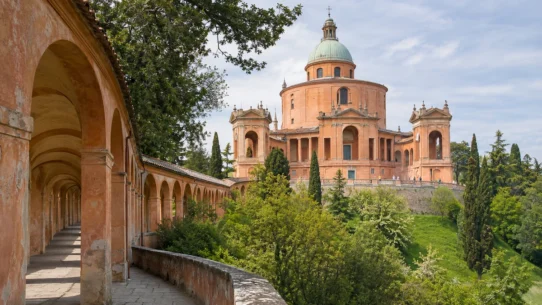
- San Luca sanctuary and the portico: best for the hill setting, a religious visit and an optional demanding walk. Allow a half day including transport or the walk and a real rest. Ordinary sanctuary entry is free; the dome is a separate experience. Choose the uphill portico or the San Luca Express tourist service, currently €15 full-price same-day return. Check its actual Piazza Galvani stop and departure notices. Prefer daylight and suitable weather. Reserve any needed wheelchair space with the operator; a free basilica visit does not make the uphill walking route step-free.
Tourist Traps to Avoid & Itinerary Hacks
- Delete the unavailable climbs before building the day. Bologna Welcome currently says the Asinelli Tower is closed for maintenance in the area; Garisenda is not accessible either. San Petronio’s owner says its panoramic terrace is permanently closed. An old video of a climb is not a bookable opening.
- Put the weekday calendar ahead of the numbered days. Archiginnasio is normally closed Sunday, while the Pinacoteca and Santo Stefano tourist visits normally stop Monday. These are three modules, not instructions to arrive at a closed entrance. A Saturday–Monday stay can use the core Saturday, the gallery Sunday and San Luca Monday. Other date combinations need their own rearrangement.
- Do not confuse a covered route with an easy route. San Luca’s portico has a sustained climb and steps. It shelters parts of the walk from direct rain or sun, but it does not remove heat, slippery surfaces, exertion or the downhill return.
- Keep lunch close to the day’s area. Choose a meal around the civic core on Day 1 and the university side on Day 2. A restaurant booking on the opposite side of town can undo all the benefit of sensible grouping. Compare the menu and any cover charge before sitting down; no fixed meal-price promise is made here.
- Buy a visit, not an undefined “skip the line” label. A guided walking tour, a reserved attraction slot and transport are different products. A free church does not require a reseller ticket for ordinary entry, and a prepaid voucher does not waive worship, security or capacity restrictions.
- Do not take luggage into the itinerary. Confirm hotel storage and collection hours before arrival. San Petronio expressly prohibits suitcases and baggage. An early arrival does not create an exception or turn every museum cloakroom into a luggage depot.
The Perfect 3-Day Itinerary at a Glance
Day 1: Piazza Maggiore, Archiginnasio and the Southeast Lanes
- Start: around 09:30 at Piazza del Nettuno and Piazza Maggiore for outdoor orientation. Enter San Petronio after its published tourist opening, allowing about 30–45 minutes for the ordinary interior if worship permits.
- Order: book a suitable late-morning Archiginnasio slot next; allow about an hour for an audioguided visit and arrival margin. Then move into the Quadrilatero lanes for lunch and a seated break. Continue southeast to Piazza Santo Stefano, entering the complex only in an open tourist period, normally from 14:30 Tuesday–Saturday.
- Transport and effort: walk between these nearby central places. Expect a moderate day on hard street surfaces, with standing inside attractions and occasional steps. The point is several short links rather than a long cross-city march.
- Cut first: extra shopping lanes or an additional paid chapel, not the lunch break or the margin before your booked slot. The Two Towers can remain a street-level orientation point if the current pedestrian arrangement allows it; no climb is included.
- Rain or low energy: shorten the outdoor browsing and keep the booked indoor visit. Choose one church interior rather than forcing both. Return to the hotel when needed instead of adding an unrelated museum across town.
- Evening: stay around the civic center or Santo Stefano for dinner, according to your hotel route. This keeps the final leg simple and avoids turning a relaxed meal into another transfer.
Day 2: Via Zamboni and the University Side
- Start: around 09:30 on a day the Pinacoteca opens. Follow the university-side streets toward Via delle Belle Arti rather than looping back through the station.
- Order: give the Pinacoteca around two hours. Take lunch and a proper rest nearby, then use Via Zamboni and Piazza Verdi for a flexible architecture-and-street-life walk. End the afternoon when your interest does; the buildings are not an invitation to enter teaching or study spaces without permission.
- Transport and effort: mostly walking on the eastern side of the center, with a moderate indoor standing load. Use a suitable city bus or taxi for a hotel far outside this cluster rather than adding a long walk merely to claim the whole day was on foot.
- Cut first: extra university detours or a return to the tower area. Art enthusiasts can spend longer in the gallery; mixed-interest groups can choose fewer rooms and leave together.
- Rain or low energy: concentrate on the gallery and a nearby meal. Indoor does not automatically mean accessible: check the exact entrance, lift and room route if mobility is a concern.
- Evening: eat on the university side or return toward your base before dinner. A restaurant atmosphere that suits a late evening may not suit a room where you want an early night; assess the actual hotel street separately.
Day 3: San Luca and the Southwest Porticoes
- Start: aim for a morning departure that works with the current operator timetable or weather. Keep this a hill-and-southwest day, with no fixed gallery appointment immediately afterward.
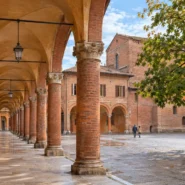
- Order: choose transport to the sanctuary and back, or make the portico walk the main activity. Walking from the Porta Saragozza side toward Meloncello and uphill is the physically demanding version. A shorter look at the lower portico is a valid choice for anyone who does not want the whole climb.
- Time and lunch: reserve a half day, with longer for a slow walk and breaks. Carry water and arrange lunch after descending or returning to the center; do not depend on an unverified hilltop table or a tight return connection.
- Transport and effort: the tourist service reduces the climb but has its own waiting and boarding conditions. Walking uphill is the strenuous day of this itinerary; returning downhill still loads knees and feet. A taxi may help a small group, but confirm pickup, price basis and the actual destination before relying on it.
- Cut first: the dome experience, a full downhill walk or a further city detour. None is needed to make the sanctuary visit worthwhile.
- Rain or low energy: move this module to the better weather day. If that is impossible, choose an indoor attraction that is actually open and bookable on your date; do not force the hill in a weather warning.
- Evening: return to the center or your hotel neighborhood for an unhurried final dinner. Keep the last hours free for packing and the next day’s departure.
Save Your Legs! The Most Efficient Route
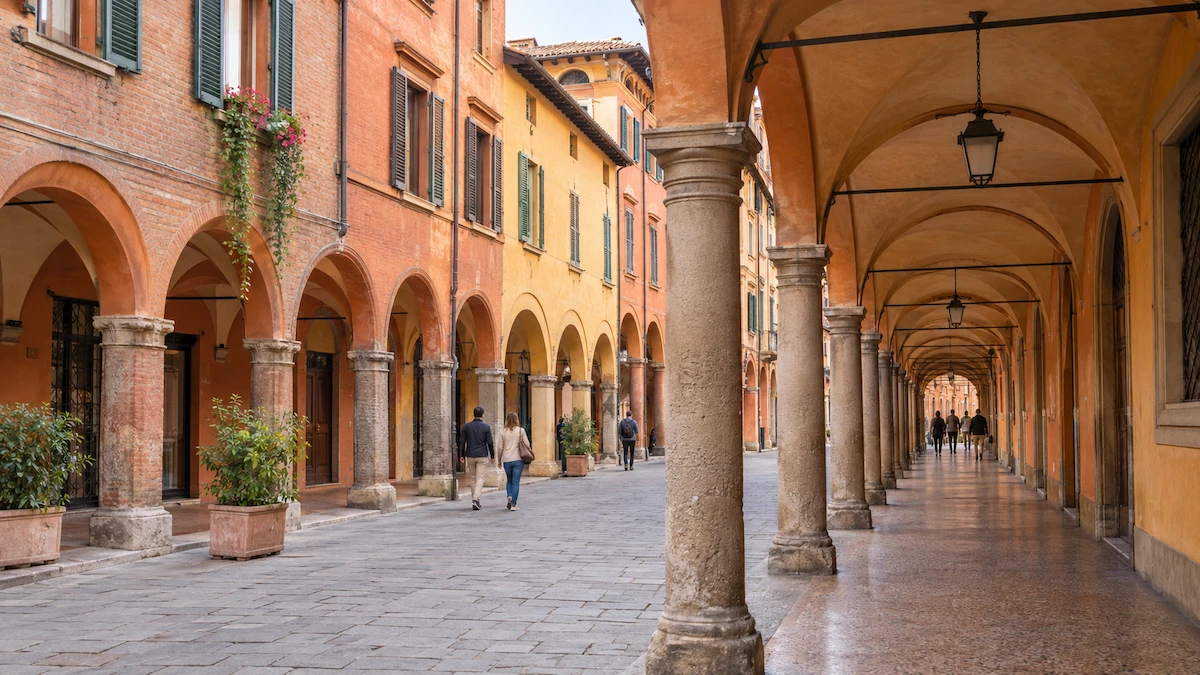
The first day keeps Piazza Maggiore, Piazza Galvani, the Quadrilatero and Santo Stefano in one central-to-southeast progression. The second gives the northeast university area its own time. The third faces southwest toward San Luca. This arrangement avoids repeatedly crossing the old center to collect unrelated landmarks, and it gives you one clear decision when weather or a closure intervenes: move a module, rather than rearranging eight appointments.
Do not combine the full San Luca climb with a hurried Pinacoteca visit just because both appear under “Bologna attractions.” They pull you in different directions and ask different things of your body. A long gallery visit also contains plenty of standing. Likewise, the free Archiginnasio courtyard is not interchangeable with a paid, booked theatre visit; one cannot absorb a missed slot simply by shortening a street walk.
Walking is the useful default within each compact cluster. Bologna does not have a visitor metro that links these five stops. For a longer hotel leg, use TPER’s actual fare and route information; the ordinary Bologna urban ticket is currently €2.30 for 75 minutes, with validation requirements. That is not an airport product or a promise that every vehicle on your map is covered. Confirm current stops, diversions and accessibility instead of memorizing an old blog’s bus number.
Choose accommodation around the civic center if returning for room breaks matters most, or compare the station side if early rail travel dominates. A station hotel saves an arrival leg but can add daily trips into the historic core. Santo Stefano’s surroundings suit the southeast module; they do not put you beside every museum or the airport train. Confirm the exact door, steps before the lift, room floor and evening street environment.
Keep one base for all three days. Three full sightseeing days may require arriving the previous afternoon and leaving the following morning: four hotel nights in that example. For arrival and departure days, agree luggage storage with the hotel or book an actual staffed storage service after checking its hours, bag limits and collection deadline. Leave enough time to collect bags before reaching the correct Centrale platform, especially when using its underground high-speed levels.
Ticket Tips & Skip-the-Line Hacks
Reserve Archiginnasio first. The real guided or audioguided booking page lets you choose the product and available visit. Read the confirmation and bring the required voucher or ticket; do not assume every booking is a direct QR scan through an unattended gate. The audioguided product uses your smartphone for its web content, so check equipment and instructions. The library is for study, not a hidden sightseeing upgrade.
Separate free entry from optional paid areas. San Petronio’s ordinary individual visit is free without reservation; its chapel route is a separate on-site purchase. Group thresholds and special visits have different rules. Santo Stefano’s ordinary route is currently free, with worship restrictions. Neither requires buying a generic city pass simply to enter.
For the Pinacoteca, use the museum’s actual ticket entry. Its official visitor page links the Musei Italiani purchase system and explains reductions and group rules. Check the dated product and any exhibition variation. Ordinary individual ticket purchase and a required group reservation are different things; this guide does not promise a queue-free entrance or access to every work in an old film.
Read San Luca’s live transport notice before buying. The operator’s real product page currently requires getting off at the sanctuary and waiting for a later return, with a minimum two-hour tour. Its November notice also removes specified Tuesday–Thursday departures. Use the current map, selected date and actual Piazza Galvani meeting information; do not rely on an older listing’s one-hour description. A prepaid ticket does not guarantee immediate boarding or a wheelchair place without the operator’s confirmation.
The useful advance purchases here are the visits or transport you actually choose. No independently verified Klook or KKday product is needed for the ordinary route, so the links above go to genuine official booking information rather than a speculative affiliate checkout. Check cancellation terms before converting a flexible day into several non-refundable purchases.
Tried & Tested: My Honest Review of the Route
These are researched recommendations supported by dated creator footage, not invented first-hand field tests. Real searches favored relevant, higher-view films where available; the whole films were not watched. The inspected visual samples help explain the setting, while current official pages control entry and transport.
📍 Stop 1: Piazza Maggiore and San Petronio
First orientation · Civic square · Free ordinary basilica visit
The civic core earns its place first because it gives the rest of the itinerary a useful anchor. Look at the square, understand where Piazza Galvani and the food lanes sit, and then choose how deeply to explore the basilica. This is a better use of the morning than collecting several churches before you know their hours.
✅ What Other Travelers Say
Prowalk Tours’ film was published in March 2024 and identifies its filming date as July 2023. Inspected storyboard samples show the Neptune/Maggiore squares and San Petronio’s interior. They provide visual context, not a current visitor survey. Later tower footage in the same long film predates the present closure.
⚠️ The Catch (Things to Keep in Mind)
The owner’s current information lists tourist opening 10:00–18:00, last entry 17:50, appropriate clothing and no suitcases. Worship and special arrangements can affect a visit. The terrace is permanently closed; choose a different, genuinely bookable viewpoint if a panorama is essential.
📍 Stop 2: Archiginnasio and the Anatomical Theatre
University history · Booked interior · Courtyard and decorated galleries
This is the small, specific cultural appointment worth protecting on Day 1. The theatre is more meaningful when treated as a visit in its own right, rather than a two-minute stop between lunch and a tower. Choose guided interpretation if that interests you; choose the audioguided format if its pace and smartphone requirements suit your group.
✅ What Other Travelers Say
VinceRocca’s July 2017 vlog supplies a genuine older visitor perspective. Inspected sheets show decorated passages, the wooden theatre, seating and the central table. That confirms the kind of setting, not today’s price or the writer’s experience. The current booking system must take precedence over a film made years before it.
⚠️ The Catch (Things to Keep in Mind)
The palace and paid-visit schedules differ. Book the actual slot, and remember that the Stabat Mater room is conditional on institutional use. For reduced mobility, the official palace page identifies the Via de’ Foscherari 2 access and staff contact arrangement. Confirm assistance rather than assuming the main staircase is the only route or that a lift is always unattended and available.
📍 Stop 3: Santo Stefano and Its Square
Religious complex · Courtyards · Good after-lunch pairing
The square and complex provide a different scale after the large civic spaces. Leave time to notice the changes between rooms and courtyards instead of approaching the visit as seven separate attractions to tick off. A square-side rest also makes the southeast end of Day 1 a satisfying destination rather than a turnaround point.
✅ What Other Travelers Say
DiarioBlu’s December 2021 film combines the basilica, antique-fair scenes and Christmas atmosphere. Inspected samples show stone interiors, brick courtyards, the square and seasonal stalls. The market and festive setting belong to that dated film; they are not promised features of your visit.
⚠️ The Catch (Things to Keep in Mind)
The owner’s tourist timetable has Monday suspension and a midday break. Sunday afternoon begins at 15:00 in its schedule, and liturgy can still change access. The crypt is reserved for prayer, not an extra photographic room. Respect a restriction instead of treating free admission as unrestricted access.
📍 Stop 4: Pinacoteca Nazionale and the University Streets
Painting collection · Northeast cluster · Useful indoor anchor
The gallery is the best reason to give this side of Bologna its own morning. Two attentive hours can be more rewarding than four hurried indoor visits. If your group has limited interest in painting, agree a shorter selection beforehand and give the remaining time to lunch and the surrounding university streets.
✅ What Other Travelers Say
Rocky Ruggiero’s August 2024 introduction is a popular relevant art-history clip among the search results checked. Its inspected sheets show the courtyard, entrance context and the presenter; they do not show a complete gallery tour. Use it to judge the subject, not to infer that a particular room or painting is currently accessible.
⚠️ The Catch (Things to Keep in Mind)
Monday is normally closed. A combined ticket description does not reopen the separate Palazzo Pepoli Campogrande site. Check the museum’s current notices, and keep the lunch plan outside the gallery rather than assuming there is an on-site café.
📍 Stop 5: San Luca and the Portico
Hilltop sanctuary · Optional strenuous walk · Weather-sensitive views
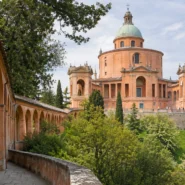
San Luca is the itinerary’s deliberate change of pace. The hill and portico are worth choosing because you want that experience, not because a list says every visitor must walk the whole way. Taking transport up and back is a reasonable plan, and a short lower-portico walk can give you architectural context without committing to the climb.
✅ What Other Travelers Say
Rocky Ruggiero’s March 2026 film is the higher-view directly relevant sanctuary introduction found in the searches checked. Inspected sheets show the hill setting, façade, exterior stairs, portico and church details. They do not establish current boarding arrangements, visibility or a measured walking duration.
⚠️ The Catch (Things to Keep in Mind)
The sanctuary timetable and religious services differ from the separate dome experience and transport timetable. The dome is optional and not an accessible substitute for the church. Confirm the complete route for a wheelchair or stroller, and keep a weather fallback that does not depend on the same hill.
Key FAQs
Is three days enough for Bologna without taking day trips?
Yes, three full days work well for these city modules at a moderate pace, with a more demanding San Luca option. Arrival and departure reduce usable time. If you also want Modena or another city, add a day or replace a whole Bologna module rather than inserting an excursion between booked attractions.
How should I arrange a 3-day Bologna itinerary that includes Sunday and Monday?
Place Archiginnasio on a non-Sunday opening day and the Pinacoteca and Santo Stefano on a non-Monday tourist day. San Luca can be a flexible module, subject to worship, weather and actual transport. For a Saturday–Monday stay, the core Saturday, gallery Sunday and hill Monday is a sensible starting order; check special calendars before booking.
Can I visit San Luca without walking the whole uphill portico?
Yes. Compare the real tourist service and a confirmed taxi arrangement with the walking option. The San Luca Express currently requires a later return after alighting at the sanctuary; allow at least its stated two-hour minimum and check November departures. Reserve any necessary wheelchair place instead of assuming every departure can accommodate you.
Final Verdict and Your Next Step
Keep the first trip simple: one base, three geographic modules and one or two meaningful indoor visits each day. Give San Luca daylight and enough energy, protect lunch and rest, and remove the unavailable climbs from your expectations. A route with room to adapt is more useful than a perfect-looking list that collapses at the first closed door.
Start by checking your actual weekdays and the Archiginnasio booking calendar. Then compare the Pinacoteca’s current ticket information and, if you choose the hill transport, the San Luca Express product and notices. Save the confirmations beside your hotel’s luggage and arrival instructions. Those few checks do more for the trip than buying a bundle of unrelated “fast-track” promises.