
💡 Key Takeaways
- Walk between the historic center’s close sights and buy transport for the journeys you actually need. A city bus ticket, Marconi Express airport ticket, regional train ticket and San Luca tourist ticket are different products.
- For TPER buses, validate every time you board. Bank-card contactless is for one passenger per card: use the same physical card or device throughout, and keep it available for inspection.
- Check the actual departure and stop before a late airport journey. The current winter Q timetable has an airport-to-Centrale gap between 02:15 and 04:20 at Aeroporto MEX; “night service” does not mean a bus whenever you arrive.
This Bologna Transportation Guide starts with the mistake that makes an easy city feel complicated: treating every vehicle as part of one interchangeable network. The airport monorail is not a city bus, the little train to San Luca is a sightseeing service, and a regional train to Modena needs the right rail ticket. Meanwhile, paying for a bus between two nearby central sights can add waiting and a detour to a journey that works better on foot.
The useful approach is to solve four journeys before buying anything: arrival to your actual hotel entrance, your longest city outing, any rail excursion, and the return to the airport or station. Official fares, conditions and notices were checked on 5 November 2026. The judgments below are a researched assessment supported by the linked operators and identified travel videos, rather than claims of personal route tests or a survey of traveler reviews. Old video captions are useful for orientation; current operator conditions govern your journey.
The 1-Min Cheat Sheet
- Marconi Express: the straightforward airport–Bologna Centrale rail link during its published 05:40–midnight operating window. The standard fare is €12.80 single or €23.30 return. It still leaves the station-to-hotel leg; compare the complete journey with a licensed taxi for a group or heavy luggage.
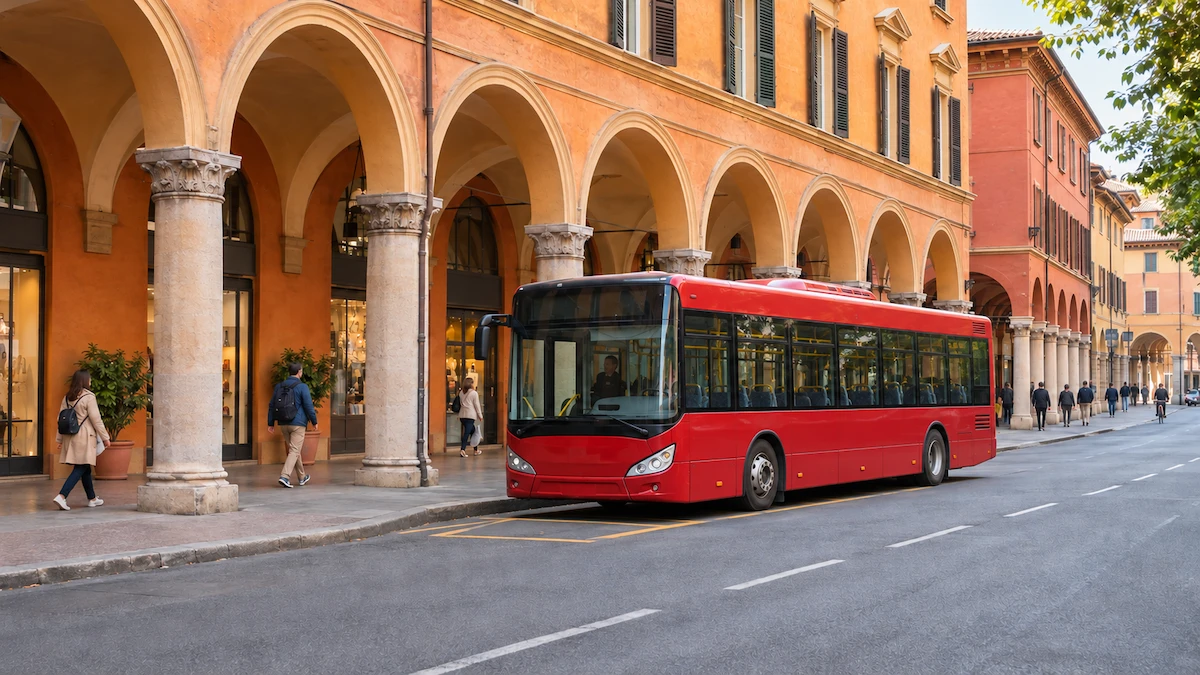
- TPER city buses: useful for a hotel beyond a comfortable walk, a longer cross-city link or tired legs. The ordinary urban fare is €2.30 for 75 minutes; a €9 ordinary daily ticket lasts 24 hours from validation. Buying a pass is worthwhile only when your actual paid journeys justify it.
- Bologna Centrale and regional trains: use these for another town, not as a substitute for understanding the city bus fare. Check the train category, departure board, platform and ticket rules. An underground high-speed arrival and a surface regional departure can involve a substantial station transfer.
- San Luca Express: a separate paid tourist connection from Piazza Galvani to the sanctuary. Its current €15 full-price return requires getting off at San Luca and returning on a later departure, with a stated minimum two-hour outing. November reductions make the date-specific timetable essential.
- Walking, with a selective taxi: walking works well for a coherent central route around Piazza Maggiore, the Quadrilatero and Santo Stefano. Choose a taxi when luggage, mobility or the hill makes that sensible. A rental car adds restricted-access and parking decisions to central sightseeing.
Top Survival Tips
- Map the entrance, not just the neighborhood. A hotel north of the station and a hotel near Piazza Maggiore suggest different exits. Check the full address before leaving the station and ask the hotel which entrance works for a taxi or step-free arrival.
- Separate sightseeing time from transfer time. Airport formalities, the walk to the departure point, waiting, station passages and the final hotel approach sit outside a vehicle’s advertised ride time. Leave a usable margin before a flight or reserved long-distance train.
- Save the return trip while you have a connection. Keep the current timetable, booking confirmation and hotel address available offline. Save both directions of the route; the opposite bus stop may be on another street or temporarily moved.
- Read the destination on the vehicle. A route number does not prove that every departure reaches the same terminus. This matters particularly for the Q airport bus, whose daytime and night patterns differ.
- Allow for current roadworks. The official tram project announced technical trials in October 2026 and further road resurfacing from 2 November around Indipendenza/Matteotti and other work areas. That is not a passenger tram timetable. Check TPER’s current diversions before trusting an old stop screenshot or a saved walking approach.
- Arrange access before relying on it. A low-floor vehicle, an available wheelchair space, a workable stop and an operating station lift are separate questions. Use the operator’s bus accessibility information and the relevant rail assistance service for your exact journey.
- Keep luggage under control. Choose a position that leaves doors and aisles usable. A crowded bus with a large suitcase may be a poor saving even when the ticket is cheap; consider paying for a simpler arrival and walking later without bags.
The Full Experience
🚝 Marconi Express: Best for the Airport–Centrale Link
Features: Airport connection · Separate fare · Station transfer required · Useful urban-bus integration
Global Walks’ March 2025 video follows the station passages, ticket machines, platform and vehicle. It is useful preparation for the fact that reaching the monorail is part of the trip. Its older screens and route instructions are not a promise that every sign or passage will be identical on your travel day.
The operator currently advertises service from 05:40 to midnight, with standard tickets at €12.80 single or €23.30 return. Buy through the official fares and ticket page, which links the actual checkout. Eligible standard digital and flex tickets include 75 minutes on TPER urban lines under the published conditions. With qualifying contactless journeys, the system can recognize the integrated transfer; keep the same payment device. Check that coverage before paying again for a short city-bus connection.
For a solo traveler with a station-side hotel, this can be an uncomplicated choice. For several adults staying deeper in the center, compare the total group ticket cost and final connection with an actual licensed-taxi quote. A fixed-price airport product is convenient, but its per-person price does not make it the automatic winner for every party.
✅ What Other Travelers Say
The filmed station approach makes a useful point more clearly than an airport slogan: the vehicle is only one part of the route. The video shows real passengers using the platform and cabin, which helps assess luggage handling and the station environment. That is visual context, not evidence of a guaranteed queue or a current reliability score.
⚠️ The Catch (Things to Keep in Mind)
For late arrivals, use the actual Q winter timetable, valid 15 September 2026–5 June 2027. Its night services reach Centrale, while the daytime airport pattern ends at Ospedale Maggiore. At Aeroporto MEX, airport-to-Centrale departures include 00:15, 00:45, 01:15, 01:45 and 02:15, then resume at 04:20 and 04:50. There is a substantial gap, not continuous overnight availability. The separate Aeroporto stop has different rows and times: do not substitute one stop for the other.
The Marconi operator confirms its tickets are accepted on Q, but check the current bus fare and exact departure before choosing a ticket. If your flight is delayed into the timetable gap, compare waiting with a licensed taxi and tell the accommodation your revised arrival time. Do not build a flight connection around the assumption that the last advertised rail departure is still reachable after landing.
🚌 TPER Buses: Best for Longer Urban Links and Resting Your Feet
Features: Ordinary urban fares · Contactless payment · Validation on every boarding · Route-specific diversions
Gone On Vacation’s January 2024 tutorial introduces bus stops, route finding and ticket equipment before moving on to trains. Use the bus chapter to recognize the process, then follow current conditions below. The film predates today’s fares and ticket rules; its airport-bus discussion and regional validation instructions must not replace current operator information.
The current ordinary Bologna urban ticket is €2.30 for 75 minutes, with validation on boarding and at each bus change. The ordinary daily ticket costs €9 and lasts 24 hours from its first validation. Four separate €2.30 tickets cost €9.20, while two cost €4.60: count chargeable validity periods, not merely the number of vehicles. A change within a valid 75-minute journey does not automatically mean another full ticket. Coin-machine purchases on board cost €2.50 and the machines do not give change.
Bank-card contactless uses the green validator. Tap on every bus, wait for confirmation, and keep the same card or device throughout. A phone wallet and its underlying physical card count as different payment supports. Each bank card covers one passenger at a time. The urban best-fare calculation uses journeys between 02:01 and 02:00 the following day, with a maximum corresponding to the daily fare; this is distinct from a prepaid daily ticket’s rolling 24 hours.
For a group using many buses, compare the €19 ten-journey CityPass with individual payments. Its €1.90 journeys help only if you use enough of the bundle. A Boost card costs €2 and can hold CityPass; it has a separate multi-passenger validation procedure using the person-plus control, selecting the party and tapping again. Do not apply that procedure to an ordinary bank card. Buying extra hardware for a couple of rides is rarely the easiest starting point.
✅ What Other Travelers Say
The tutorial’s strength is showing the practical steps around an ordinary ride. A longer bus link can preserve energy for the part of the day you actually came to see. The reasonable inference is to use buses selectively; the existence of a pass is not a reason to turn every short central walk into a transfer.
⚠️ The Catch (Things to Keep in Mind)
Check the stop, direction and service day in the current operator information or Roger app. Urban validity does not make every out-of-town route, airport product or train ride eligible. Temporary bank preauthorizations can also differ from the eventual fare: TPER explains the current process. Keep a usable payment alternative, especially when your party cannot all use separate bank cards.
🚆 Bologna Centrale and Regional Trains: Best for a Proper Day Trip
Features: Regional and long-distance services · Several station levels · Separate rail tickets · Train-category checks
Travelcation’s August 2022 station film shows the historic frontage, main concourse, surface platforms and underground high-speed areas. It is especially helpful if you imagine “Centrale” as one small platform hall. Shops, exits and operating arrangements can change; follow the live board and staff instructions.
The station sits on the northern edge of the historic center. The traditional frontage on the Piazza Medaglie d’Oro/Viale Pietramellara side suits the central-city approach; Via de’ Carracci is on the Bolognina side. FS describes the underground high-speed station and its connection with the historic station. A hotel described as “near Centrale” may be near one side and awkward for another arrival point.
For a Modena or Ferrara excursion, compare actual departures, arrival stations and total costs in the official rail booking engine. Check whether you are buying Regionale, Intercity, Frecciarossa or another operator’s product. A regional ticket is not permission to board any train following the same general corridor. Avoid a tightly timed attraction immediately after arrival until the full station-to-attraction journey is clear.
✅ What Other Travelers Say
The station film shows why rail travelers benefit from identifying the level and platform before collecting snacks or leaving the building. Regional rail can make one focused excursion a good use of an extra day. It becomes less attractive when several towns are packed into the same afternoon and every missed connection removes the time meant for sightseeing.
⚠️ The Catch (Things to Keep in Mind)
Trenitalia’s current rules distinguish ticket formats. A Biglietto Digitale Regionale activates automatically at the selected train’s scheduled departure; ordinary paper regional tickets require validation before departure. Read the conditions of the actual ticket, including changes and identification requirements. Do not follow an old tutorial’s manual digital check-in step by habit, or assume a screenshot proves a live digital ticket is valid.
An ordinary city bus ticket is not a general rail pass. Some urban subscriptions include specified rail travel, but that does not turn a visitor’s single bus ticket into unlimited trains. Arrange any required assistance in advance and allow for lifts, passages and platform changes rather than inventing a universal ten-minute connection.
🚂 San Luca Express: Best for Reaching the Hill Without the Full Climb
Features: Separate tourist ticket · Piazza Galvani departure · Later return required · Date-specific timetable
BFree & Adventures’ November 2024 film shows the small road train and its passage through the city. It is a tourist vehicle on roads, not a funicular or a city rail line. Use the scenes to judge the seating and sightseeing format; older departure captions and the creator’s descriptive claims are not current ticket conditions.
The actual operator product currently costs €15 full price for a same-day return from Piazza Galvani. Getting off at San Luca and taking a later return is mandatory, and the operator states a minimum two-hour outing. From November, the 13:30, 15:20 and 17:20 departures and returns are not active Tuesday–Thursday. Check the current date before buying: a broad “runs daily” heading does not restore a canceled departure.
Choose this when the sanctuary interests you but the full uphill portico would consume too much energy. Ordinary basilica entry is free; optional visits and transport are separate. The sanctuary’s own opening and celebration information matters as much as the vehicle timetable. Leave time to visit respectfully and find the return point.
✅ What Other Travelers Say
The filmed ride shows the appeal of seeing streets from a seated tourist service. For families or anyone saving their legs, removing the full ascent can make the hill a realistic choice. That does not establish a smooth ride for every passenger or guarantee that a wheelchair place will be available.
⚠️ The Catch (Things to Keep in Mind)
This is a separate sightseeing purchase; a TPER daily ticket does not cover it. Confirm the operator’s wheelchair space and boarding arrangement in advance if needed. A same-day return should not be treated as permission to take a seat on any full departure. Keep a sensible return margin and check the final usable service before spending longer at the sanctuary.
Walking the portico is the cheaper transport choice, but it is an uphill outing with a demanding return for some knees. Try a lower section if you want the atmosphere without the full climb. Do not put a fixed museum appointment immediately afterward or assume shelter means the paving cannot become slippery.
🚶 Walking and Selective Taxis: Best for a Compact Center Without Luggage Stress
Features: Flexible central routes · Hard paving and crossings · Metered taxi alternative · Restricted car access
Academy Travel’s September 2024 presentation with Dr Jeni Ryde shows Piazza Maggiore, San Petronio’s exterior, the civic buildings and Neptune. It is architectural context for a pedestrian visit, not a measured luggage walk, an accessibility audit or evidence that a taxi may drive across the square.
For a first central day, group Piazza Maggiore, the Quadrilatero lanes and Santo Stefano instead of repeatedly returning to the station. The official tourist map makes the geography clearer: the university side lies east of the main civic core, MAMbo is to the northwest, and the San Luca hill is a separate southwest outing. Map scale is useful; it does not describe every curb or current worksite.
Reserve a taxi for the leg where it changes the day: a late arrival, large luggage, an unsuitable station transfer or a journey your group cannot comfortably walk. Use a licensed rank or an established dispatch service, confirm the actual address and ask about luggage, party size and access needs. The municipal taxi tariff distinguishes starting charges, distance/time charging and supplements. A starting charge is not the whole journey price, and a group comparison should use the whole vehicle cost.
✅ What Other Travelers Say
The walking film supports the center’s main advantage: the streets and squares between major sights are part of the visit. You can stop for a rest or change direction without waiting for another service. That flexibility is most useful after dropping bags at the accommodation, rather than hauling them through a sightseeing loop.
⚠️ The Catch (Things to Keep in Mind)
“Walkable” is a route choice, not a promise of smooth surfaces, a dry day or equal stamina. Plan seated breaks and use transport when the full day becomes too much. For a rental car, the official hotel-access guidance explains restricted-zone authorization through the accommodation. Confirm plate registration, the permitted approach and parking before driving in. A hotel booking or a navigation arrow alone does not authorize every restricted or pedestrian street.
Key FAQs
Is a Bologna public transport day pass worth it for tourists?
It can be if you need several separate urban ticket periods. At current ordinary fares, two €2.30 tickets total €4.60 and four total €9.20, compared with a €9 daily ticket. Count valid transfers correctly and compare contactless best fare or a ten-journey bundle where appropriate. Do not include the airport monorail, San Luca tourist service or an ordinary intercity rail trip as though the urban pass covers them.
Does Bologna have a visitor tram or metro I can use now?
Do not plan one from a future network map. The municipality’s October 2026 tram announcement concerns technical trials; current project notices still describe works. Build the trip around services actually listed for your date, with buses, walking and the airport link serving different needs.
What is the easiest Bologna airport transfer late at night?
Check the exact landing time against the actual Q departure row and allow for arrival formalities. The current airport-to-Centrale night timetable has a gap after the 02:15 Aeroporto MEX departure until 04:20. A licensed taxi may make more sense than a long wait, especially for a group or a distant hotel; confirm its total fare basis and availability rather than relying on an old flat-price claim.
Final Verdict and Your Next Step
For a solo visitor based centrally, start with walking and a payment method for occasional buses. For a family or a group with bags, compare the full airport-to-hotel journey and use a taxi when it removes an awkward change. For travelers with limited mobility, confirm the actual accessible vehicle, stop and station route before making a timed booking. For a longer stay, use regional rail for one well-planned excursion and leave your main luggage at the same hotel.
Before reserving anything, pin the hotel entrance and check the current arrival and departure services. Then use the genuine Marconi Express ticket entry, San Luca Express booking product or Trenitalia journey search for the trips you actually intend to take. Book the chosen dated products once the route works, and recheck disruption notices before traveling. The useful saving is a simpler day, with no money spent on a pass that solves journeys you never needed.