
💡 Key Takeaways
- Landing at Suvarnabhumi (BKK) with light luggage? The Airport Rail Link is usually the best-value way into central Bangkok: 45 THB to Phaya Thai, with no road traffic to worry about.
- Two or more people with large suitcases, children, or a hotel far from a station? A taxi, Grab, or pre-booked private transfer often makes more sense once you count the extra BTS/MRT fares, station walking, heat, stairs, and the final trip to your hotel.
- Do not assume “airport train” means door-to-door. Both BKK’s Airport Rail Link and DMK’s SRT Red Line usually require another train, taxi, or walk. The cheapest fare can become the most tiring option after a long flight.
If you are trying to work out how to get from Bangkok airport to the city center, the first thing to know is that Bangkok does not have one single airport or one neat “downtown” district. Most long-haul international flights use Suvarnabhumi Airport (BKK), while many low-cost and regional flights use Don Mueang Airport (DMK). Your best transfer also changes dramatically depending on whether your hotel is in Sukhumvit, Siam, Pratunam, Silom, Khao San Road, Chinatown, or along the riverside.
The cheapest option is therefore not automatically the smartest one. A 45 THB airport train sounds unbeatable until you add a BTS or MRT transfer, a final walk in Bangkok’s heat, and a 20 kg suitcase. On the other hand, paying for a car at 5:30 PM can mean sitting in traffic while the train sails past the expressway. This guide focuses on the trade-offs that actually matter: total journey effort, luggage handling, number of changes, traffic risk, arrival time, group size, and your exact hotel area.
Information check: Transport details and fares in this guide were reviewed on 17 August 2026. Bangkok transport schedules can change, so recheck the official operator on your travel day if your plan depends on the first or last service.
The 1-Min Cheat Sheet
- 🚆 BKK Airport Rail Link — best for solo travellers and light packers: 45 THB to Phaya Thai or 35 THB to Makkasan, about 26–30 minutes on the train. Best for Siam, Pratunam, Phaya Thai, and travellers happy to connect to BTS/MRT. Poorer choice with several large bags or a hotel that is not close to rail.
- 🚆 DMK SRT Red Line — best traffic-proof budget option from Don Mueang: 33 THB from Don Mueang to Krung Thep Aphiwat on the current adult fare schedule. The train ride is quick, but factor in the covered walk from the terminal and another transfer to the MRT for most central neighbourhoods.
- 🚕 Metered taxi / Grab / private transfer — best door-to-door choice: Usually the least physically demanding. Grab currently quotes roughly 350–500 THB between BKK and central Bangkok and around 250–400 THB between DMK and Bangkok, before you assume every ride or traffic situation will be identical. Best for couples, families, groups, late arrivals and heavy luggage.
- 🚌 Airport bus — best if its route already matches your hotel: BKK’s S1 is particularly useful for Khao San Road and Sanam Luang; DMK’s A1–A4 buses cover Mo Chit, Victory Monument, Pratunam/Ratchaprasong/Lumpini and Khao San/Sanam Luang. Cheap, but road traffic is the price you pay.
Top Survival Tips
- Check the airport code before planning anything. “Bangkok Airport” could mean BKK or DMK, and the rail systems are completely different.
- Choose by hotel area, not by headline fare. Airport Rail Link is excellent if your hotel is near Phaya Thai, Ratchaprarop, or an easy BTS/MRT connection. It is less attractive if you are staying deep in the Old City or riverside lanes.
- Count transfers as a cost. One train change with a cabin bag is easy; two changes with children, a stroller and three suitcases can wipe out every baht you saved.
- Do not follow random taxi touts in the arrivals hall. At BKK, use the official taxi queue on Level 1 or the official Grab pickup point at Level 1, Gate 4. At DMK, use the airport taxi counters or the designated app pickup instructions shown in your ride-hailing app.
- Remember the airport taxi extras. At both BKK and DMK, official metered airport taxis add a 50 THB airport surcharge. Expressway tolls are paid by the passenger, and legitimate luggage charges can apply under official rules.
- Have small Thai baht available. It is useful for train ticket machines, buses, tolls, and situations where a driver or counter cannot easily break a large note.
- If you land near the last train, do not gamble on it. Immigration, baggage reclaim, a remote gate and a delayed bag can easily turn a “23:15 arrival” into a post-midnight exit.
- For Khao San Road, direct bus or car usually beats rail. There is no BTS station on Khao San Road itself, so an airport train often creates an unnecessary final taxi or bus leg.
- For three or four people, compare the total—not the per-person train fare. A fixed car split across the group can be surprisingly close to the combined cost of rail connections, especially when the hotel is not beside a station.
The Full Experience
🚆 BKK Airport Rail Link: Best for Phaya Thai, Pratunam, Siam and Light Luggage
Tags: 💰 Cheapest fast option from BKK · ⏱ Traffic-proof · 🎒 Best with light/medium luggage · 🔄 Usually 1 onward transfer
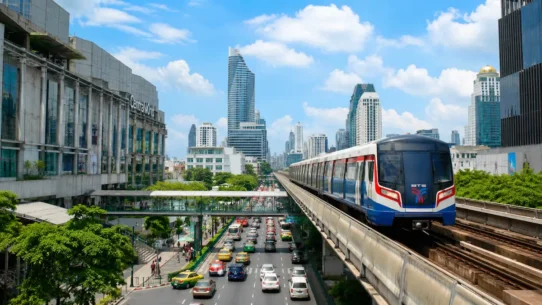
The Airport Rail Link (ARL) is the option I would look at first for a daytime arrival at Suvarnabhumi Airport if I were travelling alone or as a couple with manageable luggage. The station is on Level B1 of the main terminal. Trains run between Suvarnabhumi and Phaya Thai, with useful stops including Makkasan and Ratchaprarop.
The current standard fare is 45 THB from BKK to Phaya Thai and 35 THB to Makkasan. The end-to-end train ride is roughly 26–30 minutes, and the published operating window is around 05:30 to midnight. That makes it one of the few Bangkok airport options where rush-hour road traffic simply does not matter.
Where I would use it: If you are staying around Phaya Thai, Victory Monument, Siam or the eastern side of central Bangkok near a straightforward BTS connection, ARL is hard to beat. For Pratunam, Ratchaprarop station can put you closer than going all the way to Phaya Thai. For Asok/Sukhumvit, Makkasan gives access to MRT Phetchaburi, although the journey still involves walking through the interchange and buying an onward MRT fare.
Where I would think twice: Khao San Road, the riverside, small sois far from stations, and any trip involving several large suitcases. The train itself is easy; the tiring part is what comes after it.
✅ What Other Travelers Say
The positive comments are consistent: travellers like the speed, predictable journey time and low fare. It is especially popular with repeat Bangkok visitors who already understand where to change for BTS or MRT. The recurring negative feedback is not really about the train—it is about handling luggage through the second leg. Travellers with children or big suitcases often say the transfer becomes the part they regret.
⚠️ The Catch (Things to Keep in Mind)
- The 45 THB fare gets you to Phaya Thai, not to your hotel. Add the onward BTS/MRT fare or a short taxi.
- Peak periods can be crowded. A suitcase that feels easy in the airport can feel enormous on a packed commuter train.
- Do not treat “midnight” as permission to arrive at the station at 23:59. If your flight lands late, build a realistic immigration and baggage buffer.
- If your hotel is a 10–15 minute outdoor walk from the final station, Bangkok’s heat, rain and uneven pavements can turn that “short walk” into the worst part of your arrival.
Official service check: Suvarnabhumi Airport transportation information.
🚆 DMK SRT Red Line: Best Budget Choice From Don Mueang When Traffic Is Bad
Tags: 💰 33 THB to Krung Thep Aphiwat · ⏱ Fast rail segment · 🚶 Longer airport/station walk · 🔄 MRT connection needed for most central hotels
Don Mueang’s SRT Dark Red Line is much better than many older Bangkok guides make it sound, but there is one detail that matters: the station is not sitting directly underneath your arrival hall. You follow the SRT Red Line signs and use the pedestrian connection to Don Mueang station. With luggage, allow roughly 10 minutes or more for the walk rather than treating the train time as your total airport-to-city time.
On the fare schedule checked on 17 August 2026, an adult ticket from Don Mueang to Krung Thep Aphiwat costs 33 THB. The rail segment is under 20 minutes on many journeys. From Krung Thep Aphiwat, most visitors continue via the MRT Blue Line from the Bang Sue interchange area toward Sukhumvit, Silom, Chinatown and other central districts.
This is a very good option if you want to avoid the Don Mueang Tollway traffic and you are comfortable navigating a large station. It is less compelling if your definition of “easy” means stepping into one vehicle at the terminal and getting out at the hotel.
Best practical use: solo travellers, backpackers, budget couples and anyone arriving during a nasty road rush hour. If you are heading to Sukhumvit, you can continue on the MRT Blue Line. If you are heading toward Mo Chit/Chatuchak, compare the Red Line with the A1 airport bus—the bus can involve less station walking when traffic is flowing.
✅ What Other Travelers Say
Travellers who use the Red Line generally appreciate how cheap and uncrowded it can feel compared with road transport. A repeated observation, however, is that first-time visitors underestimate the walking: from the terminal to the rail station, then through the large Krung Thep Aphiwat/Bang Sue complex for the onward MRT connection. For a backpack, that is fine; for a family luggage trolley’s worth of bags, it changes the equation.
⚠️ The Catch (Things to Keep in Mind)
- Do not confuse the Red Line train time with your hotel arrival time. The first and last walking/transfer legs are significant.
- Krung Thep Aphiwat is a huge transport hub. Follow the MRT signs rather than assuming the next platform is beside you.
- If you have mobility issues, several bulky bags or very young children, a direct car is usually worth the extra cost.
- Timetables change by time of day. If you are travelling early or late, check the official SRTET timetable on the day.
Official fare check: SRTET Red Line fare information.
🚕 Taxi, Grab or Pre-Booked Private Transfer: Best for Door-to-Door Convenience
Tags: 🧳 Best with heavy luggage · 👨👩👧 Best for families/groups · 🌙 Best late at night · 🚦 Traffic-sensitive · 🚪 Hotel door to airport door
For many travellers, this is the most sensible option even though it is not the cheapest. After a 10-hour flight, “one car, one hotel, no stairs” has real value. The decision is mainly between an official metered taxi, Grab, and a pre-booked private transfer.
From BKK: official taxis operate 24 hours from Level 1, with queue tickets issued in the taxi area between Gates 4 and 7. The meter fare has a 50 THB airport surcharge; passengers also pay expressway tolls, and official luggage charges may apply. Grab’s designated BKK pickup is Level 1, Gate 4, and the airport says the pickup point operates 24 hours.
Grab’s current airport guide gives a useful reality check rather than a guaranteed quote: about 350–500 THB between Suvarnabhumi and central Bangkok, with an average drive of roughly 40–60 minutes. Traffic can make the ride much longer at the wrong time.
From DMK: official metered taxi counters serve both terminals 24 hours. The same 50 THB airport surcharge applies, with passenger-paid tolls and regulated luggage charges. Grab’s current guide puts an approximate Bangkok fare around 250–400 THB and typical travel time around 35–50 minutes, again subject to traffic and demand.
When I prefer a metered taxi: when the official queue is moving, I have cash, and I want a straightforward Bangkok taxi without app surge pricing. When I prefer Grab: when I want the destination locked into the app, an upfront fare for most car categories, cashless payment, and less language friction. When I prefer a pre-booked private transfer: when I land late, travel with children or older relatives, need a van, have lots of luggage, or simply do not want to solve transport decisions after immigration.
For three or four passengers, do the maths per vehicle rather than per person. Four separate ARL fares plus onward rail fares and a final taxi can narrow the price gap with a private car surprisingly quickly.
✅ What Other Travelers Say
Recent airport-transfer reviews consistently praise pre-booked cars for punctual pickups, clean vehicles and the relief of not negotiating after a flight. Taxi and Grab users like the flexibility of booking only after they exit customs. The most common complaints across car options are predictable: queues at busy arrival periods, confusion over meeting points, surge pricing on app rides, and disagreements when travellers do not understand that tolls or official airport extras may be separate.
⚠️ The Catch (Things to Keep in Mind)
- Traffic is the big risk. A car can be brilliant at 11:30 PM and frustrating at 5:30 PM.
- With a metered taxi, the 50 THB airport surcharge is legitimate. Expressway tolls are also the passenger’s responsibility.
- Do not agree to a random “special airport price” from an unofficial tout when an official queue or app ride is available.
- For Grab, compare the live app quote with the official taxi option before booking. Convenience is valuable, but surge pricing can erase Grab’s price advantage.
- For a private transfer, read the vehicle’s luggage capacity, not just the passenger capacity. A “4-seater” may not fit four adults plus four checked suitcases.
Want the least stressful arrival? Compare pre-booked cars before you fly: Check Bangkok airport transfers on Klook, check BKK private transfers on KKday, or check DMK private transfers on KKday.
🚌 Airport Bus: Best for Khao San Road and Routes That Match Your Hotel
Tags: 💰 Very cheap · 🏛 Best for Khao San/Old City · 🚌 Fewer rail changes · 🚦 Traffic-sensitive · 💵 Keep small cash ready
Airport buses are often ignored because trains look easier on a map. But if your bus goes close to your hotel, a direct bus can be much smarter than taking a train in the wrong direction and then making two more transfers.
From BKK, the key tourist route is S1, linking Suvarnabhumi with the Khao San Road/Sanam Luang area for 60 THB. This is the budget option I would seriously consider for Khao San, Banglamphu and the Old City because there is no BTS station directly at Khao San Road.
There is an important planning warning: current Airports of Thailand pages do not show a perfectly consistent S1 closing time. The detailed BKK transportation page checked for this guide lists S1 from 06:00 to 20:00, while another AOT airport page still displays 06:00 to 17:00. I would therefore use S1 confidently as a daytime option, but I would not build a tight late-evening arrival around an assumed last bus without checking the airport display or AOT information counter that day.
From DMK, the A-series buses are genuinely useful:
- A1: Don Mueang → BTS Chatuchak/Mo Chit 2 Bus Terminal, 30 THB.
- A2: Don Mueang → BTS Chatuchak → Victory Monument, 30 THB.
- A3: Don Mueang → Pratunam → Ratchaprasong → Lumpini Park, 50 THB.
- A4: Don Mueang → Democracy Monument → Khao San → Sanam Luang, 50 THB.
A1 can be a clever alternative to the Red Line if you want a simpler connection to BTS/MRT around Mo Chit and road traffic is not terrible. A3 can be surprisingly convenient for Pratunam and Ratchaprasong because it reduces the amount of rail interchange walking. A4 is the obvious budget choice for Khao San Road.
✅ What Other Travelers Say
Budget travellers like the buses because the fare is simple and the route can eliminate a rail change. Khao San travellers especially appreciate arriving in the right part of town rather than navigating BTS/MRT with luggage. The downside is equally consistent: journey times can be unpredictable, buses are not as luggage-friendly as a private car, and first-time visitors sometimes miss their stop because the route feels less intuitive than a train line.
⚠️ The Catch (Things to Keep in Mind)
- Bangkok traffic can turn a cheap bus into a long ride. Avoid it when you have a fixed appointment shortly after landing.
- Large suitcases are awkward when the bus is busy. This is a budget service, not a luggage coach.
- For BKK S1, verify the same-day final service if arriving later in the day because AOT’s published pages currently conflict.
- Know the nearest landmark or stop to your hotel before boarding. A direct bus is only “easy” if you know where to get off.
Official bus checks: BKK transportation and DMK A1–A4 routes.
Which Option Is Best for Your Bangkok Area?
- Siam / Phaya Thai: From BKK, Airport Rail Link to Phaya Thai is the obvious first choice unless you have heavy luggage. From DMK, a taxi/private car is easiest; public-transport users can connect via Red Line + MRT/BTS or A1/A2 depending on traffic.
- Pratunam / Ratchaprasong: From BKK, ARL to Ratchaprarop can save money and avoid traffic. From DMK, A3 is a useful direct budget route; a taxi is better with large bags.
- Asok / Sukhumvit: From BKK, ARL to Makkasan + MRT from Phetchaburi is efficient with light luggage. From DMK, Red Line + MRT works, but a direct car is much less tiring after a long flight.
- Silom / Sathorn: Public transport is possible from either airport, but expect a transfer. If you have two large bags or more, I would lean toward taxi/Grab/private transfer.
- Khao San Road / Old City: BKK S1 or a direct car; DMK A4 or a direct car. Rail is rarely the simplest arrival route here.
- Chinatown / Riverside: Rail can work if you are comfortable with MRT connections and a final walk/taxi, but door-to-door transport is noticeably easier with luggage because many riverside hotels are not right beside a station entrance.
Key FAQs
What is the cheapest way from Suvarnabhumi Airport to Bangkok city center?
For most central areas, the Airport Rail Link is the best combination of low price and speed. The fare is 45 THB to Phaya Thai and 35 THB to Makkasan. However, your true total may be higher if you need BTS, MRT or a taxi after the train. For Khao San Road, the 60 THB S1 bus can be more direct than rail.
Is Grab cheaper than a taxi from Bangkok airport to the city center?
Not always. Grab is attractive because you see the fare and destination in the app, but prices change with demand. A metered airport taxi can be cheaper when the taxi queue is reasonable and app fares are surging. Remember that official airport taxis add a 50 THB airport surcharge, passenger-paid tolls and, where applicable, regulated luggage charges. Check the live Grab quote, then compare before committing.
What is the easiest way from Don Mueang Airport to Sukhumvit with luggage?
With one small bag, the SRT Red Line to Krung Thep Aphiwat followed by the MRT Blue Line is cheap and avoids traffic. With large suitcases, children or several travellers, a taxi, Grab or pre-booked private transfer is usually easier because the Red Line route includes a terminal-to-station walk and a sizeable interchange before you even reach Sukhumvit.
Final Verdict and Your Next Step
If you want one rule that works for most arrivals, use this: take the train when your luggage is light and the rail network matches your hotel; take a car when your luggage, group size, arrival time or hotel location makes transfers annoying.
For BKK → Siam, Phaya Thai or Pratunam, the Airport Rail Link is my default. For BKK → Sukhumvit, ARL + MRT is excellent for light packers, while a taxi or private transfer wins for families. For DMK → central Bangkok, the Red Line is a strong traffic-proof budget choice, but the A1 bus can be simpler for Mo Chit/Chatuchak and the A3/A4 buses are useful when their routes match your neighbourhood. For Khao San Road, use S1 from BKK or A4 from DMK when the timing works; otherwise go straight by car.
If you are landing late, travelling with children, carrying two or more large suitcases, or arriving as a group of three or more, I would compare a private transfer before the trip. The small premium can buy back a lot of time and energy when you are tired, hot and still need to find your hotel entrance.
Check prices before you fly:
→ Compare BKK and DMK airport transfers on Klook
→ Compare Suvarnabhumi (BKK) private transfers on KKday
→ Compare Don Mueang (DMK) private transfers on KKday