
💡 Key Takeaways
- May and September are strong starting comparisons. They balance warmer daytime conditions with less summer heat; rain and busy event dates still matter.
- June is warmer; July and August need a heat plan. Linate’s historical average daily highs reach about 31°C in July, with hotter individual days possible.
- Pick dates before promising value. Trade fairs, fashion calendars and holidays can outweigh a broad seasonal label.
The best time to visit Milan depends on what you want to do outdoors, how much heat or cold you enjoy, and whether your dates overlap an event. For a first visit with plenty of walking, start by comparing May and September, then weigh April’s cooler conditions and October’s shorter, wetter-feeling city break. Museum-heavy winter and deliberately paced summer can also work well.
This guide was prepared on 21 October 2026. Its weather baseline is the WMO 1991–2020 Milano Linate station file archived by NOAA, station 16080, an airport observation site at about 108 metres elevation. It is not a central-Milan forecast. The videos are dated creator walks, checked for working embedded playback at preparation time; their single-day conditions do not establish a seasonal average.
The 1-Min Cheat Sheet
- March–April: a cooler spring walking break with layers and an indoor backup; check Easter and the actual design-fair dates.
- May–June: longer outdoor days; May is the milder starting choice, while June needs more shade and a midday rest.
- July–August: plan early walks, indoor afternoons and confirmed air conditioning; ask individual businesses about holiday closures.
- September–November: September’s warmer start gives way to cool autumn; November has the highest monthly rainfall total in this station normal.
- December–February: museums, performances and winter atmosphere, with cold evenings and short daylight; holiday footage does not promise future market dates.
Top Survival Tips
- Separate the average from the day you get. An average daily high is the mean of daily maxima, not an all-day temperature and not an upper limit. Keep a forecast check near departure and leave one movable indoor block.
- Compare event dates with your hotel dates. Salone del Mobile currently announces 13–18 April 2027 at Fiera Milano Rho. Camera Nazionale della Moda Italiana’s calendar lists women’s events for 23 February–1 March and 21–27 September 2027. These announced dates are examples, not a recurring promise or proof of higher rates in every property.
- Book the limited visit first. If the Last Supper is essential, check its real timed availability before locking a nonrefundable room. General museum-season advice cannot replace a ticket.
- Confirm indoor comfort. Ask your hotel when the booked room’s heating or air conditioning operates, and whether it can be individually controlled. A sunny clip does not prove the room will be cool.
- Keep lake and mountain days flexible. Conditions outside Milan can differ substantially from the Linate normal. Buy any nonrefundable transport or excursion with its actual cancellation terms in mind.
- Plan the street, not just the temperature. Comfortable shoes, a compact rain layer, water and an afternoon rest often matter more than choosing a supposedly perfect month.
All Twelve Months: What the Station Normal Actually Says
Below, mean is average daily temperature, high is average daily maximum, both in °C, and rain is average monthly precipitation in millimetres. Values are rounded from the observed CSV. The 1991–2020 reporting period does not imply every series has all 30 complete years: the file’s monthly coverage is 26–30 years for mean temperature, 26–29 for highs and 26–29 for precipitation. City streets can feel different from the airport station, especially in sun or after dark; these normals are neither a 2027 prediction nor a live forecast.
- January: mean 3.2°C; high 7.3°C; rain 37 mm.
- February: mean 5.2°C; high 10.2°C; rain 38 mm.
- March: mean 9.9°C; high 15.5°C; rain 42 mm.
- April: mean 13.8°C; high 19.3°C; rain 58 mm.
- May: mean 18.5°C; high 23.9°C; rain 70 mm.
- June: mean 22.7°C; high 28.1°C; rain 67 mm.
- July: mean 25.1°C; high 30.7°C; rain 44 mm.
- August: mean 24.4°C; high 29.9°C; rain 59 mm.
- September: mean 19.9°C; high 25.5°C; rain 74 mm.
- October: mean 14.4°C; high 18.9°C; rain 82 mm.
- November: mean 8.7°C; high 12.4°C; rain 104 mm.
- December: mean 3.9°C; high 7.5°C; rain 46 mm.
July has the warmest mean and highest average high in this file; November has the largest precipitation total. The July rainfall total is lower than May’s, but that does not make every summer walk dry or rule out a thunderstorm. The station file has no populated sunshine series, so this guide does not invent sunshine-hour figures.
The Full Experience
🌸 March–April: Cooler Spring Walks
Layers · Flexible outdoor plans · Dated design-fair checks
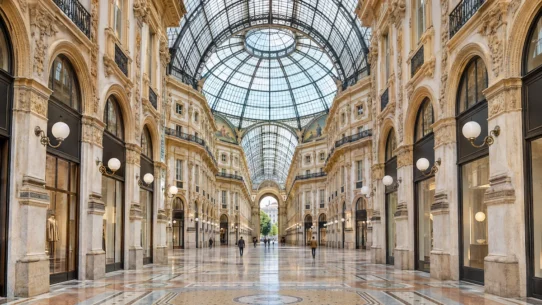
March’s normal mean is 9.9°C and average high 15.5°C; April rises to 13.8°C and 19.3°C. That supports a walking-focused visit with a warm layer for the beginning and end of the day. Build a Duomo-and-Galleria route, then use a museum or covered stop if the day turns wet. It is a practical season for people who enjoy cooler walking more than sitting outside late.
Choose April because the pace suits you, then compare the exact room dates. The currently announced 2027 Salone dates fall in April, but the fair’s venue at Rho and the city’s various design events have their own schedules. Check the relevant organizer rather than treating all of April as one fixed-price peak.
✅ What Other Travelers Say
Milan Walkflow’s March 2026 film follows blooming magnolias toward the Duomo. Its description records a spring afternoon, making it a useful visual example of that walk. It is one creator’s dated outing, not a bloom forecast or a promise that late March will reproduce those trees and conditions.
⚠️ The Catch (Things to Keep in Mind)
Spring is not automatically dry or cheap. Rain, cooler evenings, Easter dates and specific event demand can change the plan. Carry a light waterproof layer and compare refundable hotel dates if flowers or outdoor photography are central to the trip.
☀️ May–June: Longer Days, Rising Heat
Outdoor breaks · May for milder afternoons · Shade by June
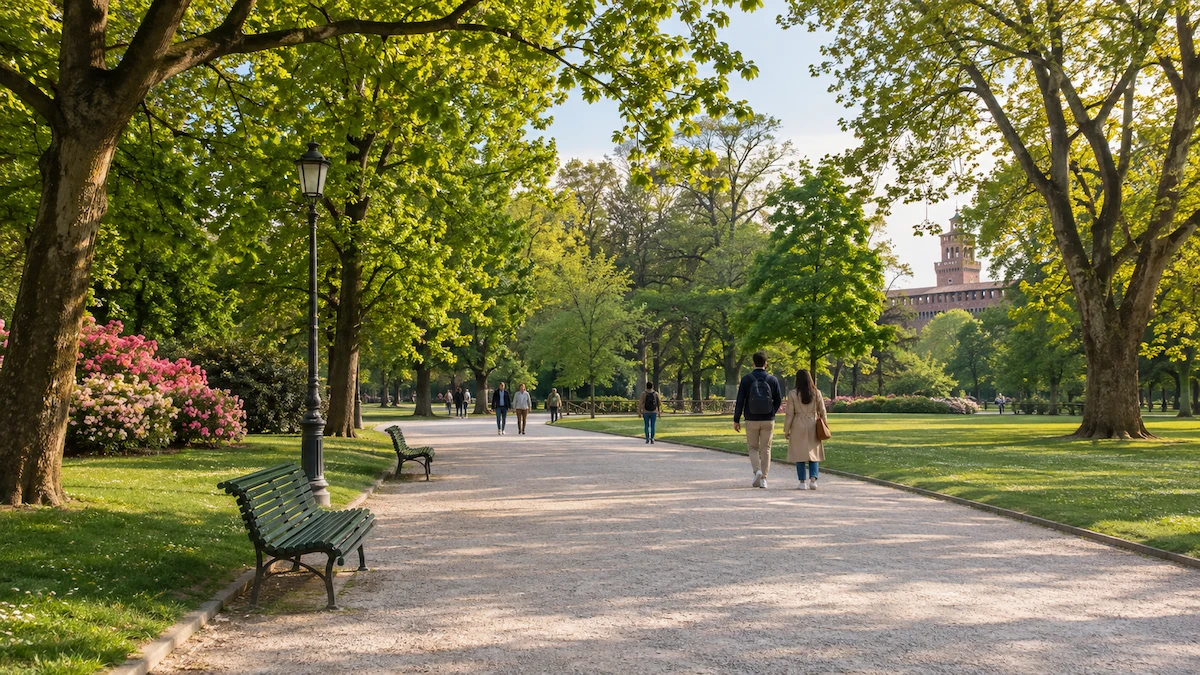
May’s normal mean/high are 18.5°C/23.9°C; June’s are 22.7°C/28.1°C. For a first visit, May offers a comfortable starting comparison for parks, outdoor café stops and several walking districts. June still works well if you start earlier, leave an indoor afternoon block and keep enough energy for an evening in Navigli.
Do not call May a dry-season bargain: its normal precipitation is about 70 mm, compared with June’s 67 mm. Those are totals, not a rain schedule, and they do not predict whether your particular weekend will be clear. Confirm air conditioning when booking an upper-floor or sun-exposed room.
✅ What Other Travelers Say
Duslin Travels’ June 2026 city walk labels its filming weather as 32°C and moves through the Duomo, Galleria, Brera and castle route. That single-day creator observation helps explain why June visitors may need shade; it does not replace the station’s 28.1°C normal average high or prove every day is that hot.
⚠️ The Catch (Things to Keep in Mind)
An ambitious all-day walking itinerary can feel very different by June. Shorten the midday route, refill water and reserve timed indoor visits at a pace that permits a rest. Compare actual event and hotel dates before expecting a shoulder-season discount.
🌡️ July–August: A City Break With a Heat Plan
Early starts · Indoor afternoons · Check holiday closures
July’s normal mean/high are 25.1°C/30.7°C, and August’s 24.4°C/29.9°C. Individual hot days can exceed those averages. Plan the cathedral-area walk early, reserve an indoor visit when practical, then return to the hotel before setting out for an evening meal. If midday outdoor sightseeing is your main pleasure, another period may fit you better.
An August stay should be planned business by business. Ask the specific restaurant, small shop or hotel service about its holiday dates, including the period around Ferragosto on 15 August. Do not assume the whole city closes or that every room becomes cheap. Air conditioning, cancellation flexibility and a base suited to afternoon returns can earn their cost.
✅ What Other Travelers Say
HP Walking Tours’ film was published in August 2025 and explicitly says it was filmed in July 2025. Its route includes Duomo, Navigli and Porta Nuova. Use it as a dated summer street reference; publication month alone would have been the wrong reason to label it an August walk.
⚠️ The Catch (Things to Keep in Mind)
A polished summer video can hide the effort of walking for hours in heat. Confirm cooling, keep a weather alert and forecast check, and avoid rigid outdoor blocks in the hottest part of the day. No hotel pool, lake swimming condition or uninterrupted restaurant opening is guaranteed here.
🍂 September–November: A Warm Start, Then Indoor Autumn
September for warmth · October layers · November rain flexibility
September’s normal mean/high are 19.9°C/25.5°C, October’s 14.4°C/18.9°C and November’s 8.7°C/12.4°C. They are meaningfully different trips. Start with September if you want warmer outdoor evenings; choose October for cooler walking with layers; give November a stronger museum and café focus.
The station’s normal rain totals increase from about 74 mm in September to 82 mm in October and 104 mm in November. November therefore has the largest monthly precipitation total in this file, but it is not a promise of constant rain. Keep one outdoor block movable. September fashion dates can also affect the lodging search, so compare the announced calendar and actual quotes.
✅ What Other Travelers Say
Dream Walking Tours’ October film was shot on 17 October 2025 and published on 1 November. It follows an evening route through Via Torino, Duomo, the Galleria and toward the castle. The dated walk illustrates central streets after dark, without establishing November weather or a consensus that autumn hotels cost less.
⚠️ The Catch (Things to Keep in Mind)
Do not book “autumn” as though September and late November offer the same light or temperature. Carry a warmer evening layer as the season progresses, and reserve the indoor sights you value instead of treating rain as something to solve only after every timed ticket sells out.
🎄 December–February: Museums and Winter Atmosphere
Cold evenings · Indoor culture · Verify holiday schedules
December’s normal mean/high are 3.9°C/7.5°C, January’s 3.2°C/7.3°C and February’s 5.2°C/10.2°C. January’s average daily minimum is slightly below freezing in the station file. Warm footwear and layers make the short outdoor links between museums, cafés and performances more comfortable; do not turn a winter museum trip into a forced day-long walk.
December decorations can be a reason to visit, but current official market and event dates must be checked separately. Christmas, New Year and individual museum closure days can change both opening and restaurant plans. February is not universally a low-demand month: the currently announced women’s fashion event begins on 23 February 2027.
✅ What Other Travelers Say
Dream Walking Tours’ Christmas video explicitly identifies filming on 23 December 2025, with publication two days later. Its lights and market scenes describe that visit. They do not announce 2026 or 2027 opening dates, snowfall or the same future decorations.
⚠️ The Catch (Things to Keep in Mind)
Cold and short daylight reduce the appeal of long outdoor waits, and fog or poor weather can affect a chosen excursion. Book the museum or performance that motivates the trip, check holiday service times and keep an indoor alternative. A snowy Milan scene is not something to promise from these monthly averages.
Key FAQs
What is the best month for a first Milan trip?
Start by comparing May and September for a walking-heavy visit. Linate’s historical average highs are about 24°C and 26°C respectively, but both can be wet and busy on particular dates. Check your exact event calendar, room offer and forecast before committing.
Is August a bad time to visit Milan?
It can work if you enjoy early walks and indoor afternoons, have confirmed room cooling and check individual holiday closures. The normal average high is about 30°C, and individual days can be hotter. Do not assume every business closes or every hotel is discounted.
When is Milan cheapest?
There is no verified universal cheapest month here. Compare actual refundable room offers across several dates and check major event calendars. A lower winter or summer quote may bring weather or service trade-offs; these historical weather normals do not establish hotel price trends.
Final Verdict and Your Next Step
For a flexible first visit, compare May and September, then choose the period whose temperature, daylight and indoor-outdoor balance suits your travel style. Milan works across the year when the plan follows the season rather than expecting every month to feel like the same trip.
Check the official event dates, secure the limited timed visit you care about, then compare an actual owner booking entry such as Hotel Berna’s rooms or Hotel Garda’s room categories. Enter your dates and party before comparing the complete stay and cancellation terms. No date-specific hotel availability, seasonal price ranking or guaranteed weather was verified.