A useful Darwin travel budget is A$100–155 a day for one person in a dorm, A$155–250 per person when sharing a mid-range room, or A$265–430 per person for a more comfortable twin-share trip. Those bands include accommodation, meals, local trips and a city activity allowance. Keep airport transfers and big days such as Litchfield separate. A paid park trip or a peak-date room can move the total more than a week of small savings on local travel.
💡 Key Takeaways
- Price a room at the real occupancy first. Rate changes for the specific night matter more than the distance between most central hotels.
- Keep one separate line for each park day and airport trip. Check pickup, transport, entry and meals before paying for any tour.
- City days can cost less with free walks, MAGNT and current bus fare rules. Save that difference for one excursion you will actually enjoy.
The 1-Min Cheat Sheet: Darwin Travel Budget
- Budget traveller: A$100–155 (about US$67–103) a day, including a solo dorm. Allow A$45–75 for the dorm, A$35–50 for meals, A$0–10 for local travel, and A$20 for admission or a spare-weather fund. A dorm bed is per guest, so it does not become half-price when you travel as a pair.
- Mid-range traveller: A$155–250 (about US$103–167) a day per person, including half of a private room. Allow A$95–145 per adult for lodging, A$45–65 for meals, A$5–20 for local travel and A$10–20 for a city activity. The room example assumes A$190–290 total for two.
- Comfortable traveller: A$265–430 (about US$177–287) per day per person, including half of a better room. Allow A$155–235 each for the room, A$60–110 for meals, A$25–45 for direct rides and A$25–40 for activities. Price a solo room separately.
These are planning estimates. They omit flights, shopping, airport transfers, major tours, train tickets and park days outside Darwin. USD equivalents round the Reserve Bank of Australia reference rate for 20 November 2026, when one Australian dollar was about US$0.67. The exchange rate charged by your card can differ.
Top Budget Survival Tips
- Compare the whole stay, including the least convenient morning. A cheaper room outside the city may require paid rides to a tour pickup or a final bus stop. Write down the two journeys the hotel will force you to take, with the actual luggage and times, before you compare another room.
- Check transport by date. The current NT Government bus information states that ordinary public buses stay free through the last services on 24 January 2027. The published fare from 25 January is A$1 for a three-hour travel period. A transfer product or private bus is a separate purchase. Match the likely trip and time of day instead of subtracting an assumed pass saving.
- Separate the airport ride from local spending. Pull a quote for the actual terminal, hour and group size from the airport’s listed options. Consider bags, waiting time and the last walk. A low fare with a difficult transfer may leave you paying for a second ride anyway.
- Reserve a park day before buying small extras. On 23 November 2026 Offroad Dreaming advertised a Litchfield Essentials tour at A$145 per adult. An independent visitor should allow for fuel and the current NT Parks Visitor Pass where required. Check whether your selected operator includes the pass, pickup and meal, and compare the final dated price.
- Use groceries to buy back time. Stock breakfast, water and a picnic before an early tour or self-drive day. Then spend on the one meal you would want to sit down for. The point of a kitchen is to replace spending you would otherwise make, and it only pays off if the room’s total is comparable.
- Decide where walking helps. Group a city walk and a nearby museum. Save an exposed longer leg for a bus or a short shared car, especially during heat or after dark. On wet days, make the free indoor option your anchor and keep a small ride reserve for the return.
- Take local-currency charges seriously. Compare your card’s foreign-exchange, cash-withdrawal and conversion terms before accepting a home-currency charge. Set aside one accessible backup payment method for transport or an unexpected meal.
What a Four-Night Darwin Trip Can Cost
Consider two adults sharing an A$220 room for four nights. Each person’s share is A$440. Three local days at A$55 per person outside the room add A$165. One Litchfield day at A$145, plus an A$10 pass if excluded and A$40 for meals and extras, adds A$195. An A$40 per-person allowance for the return airport ride takes this model to A$840 per person (about US$560) before flights or shopping. It is a worked example using room and ride allowances, with an advertised tour price used as a benchmark. Reprice the dates you will actually travel.
Darwin Budget by Travel Season
The dry season generally supports more reliable road and excursion planning. Peak-season weekends can stretch the room budget, especially around major dates on the Darwin Festival calendar or during other city events. Compare the same refundable room over the same weekday pattern before locking a cheaper-looking stay. For the wetter months, leave more room in the budget for sheltered attractions, vehicle trips and flexible bookings. November can still be hot and changeable. Tourism Darwin’s season guide is useful for choosing travel dates and sensible backups.
A late-dry or early-wet deal can be worthwhile if you came for city meals and museums. For a park-heavy trip, a room saving has less value if the best timed tour or swim site is closed. Choose the important activity first, then compare rooms for the days it can actually happen.
A Low-Cost City Day That Still Feels Like Darwin
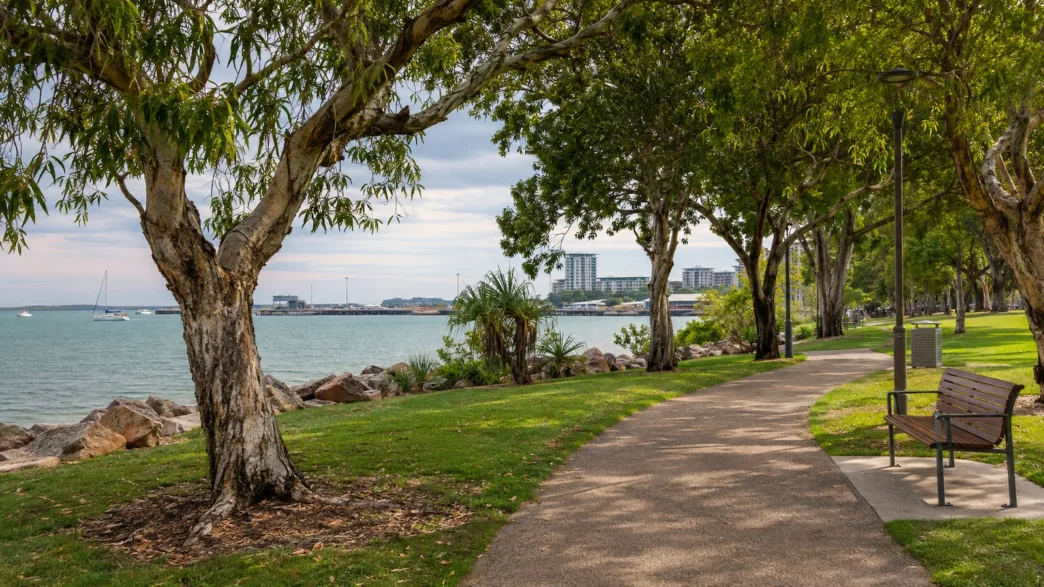
Start on the Esplanade early. Save the midday slot for the museum at Bullocky Point or another venue you want to see and leave a later hour for one Waterfront stop. The Recreation Lagoon and the paid Wave Lagoon are separate. At the time of checking the published Wave Lagoon rate for visitors aged 15 or above was A$10. Verify conditions and access on the day.
Common Budget Mistakes
- Counting a room rate as a per-person cost. Use the total for two and divide it once. Price a second room if the group does not fit the advertised occupancy.
- Leaving the airport fare for arrival day. Compare the actual journey both ways using the operator and total baggage requirements.
- Adding a tour and park pass twice. Ask what is included. Pay for a separate pass only where it applies and the tour has not covered it.
- Moving hotels for an attractive single night. Add the cost of bags, rides and the interval without a usable room before buying the second stay.
- Using a fixed summer outing regardless of conditions. Keep an indoor substitute and read rescheduling or cancellation terms before paying.
- Forgetting small purchases in heat. Plan water top-ups, breakfast and a modest snack allowance instead of depending on cafés for each break.
- Spending the wet-weather reserve on souvenirs. Give shopping a separate cap. Leave enough for a ride, a covered meal or a missed local connection.
- Assuming a current promotional price holds year-round. Read the total on your dates, including the room terms, pickup and any fees that apply.
Key FAQs
How much should I save for four nights in Darwin? A mid-range twin-share plan can start around A$620–1,000 per person for four room-and-city units. Then add actual airport, park-day and longer transport costs, adjusting for light arrival and departure days.
Is Darwin affordable without a car? Yes for a city-centred visit. Price a long park day with pickup separately and compare a city room to the cost of driving and returning a vehicle.
Where should I save and where should I spend? Use free city walks and general museum admission when the fit is right. Spend where the cost solves a real problem, such as a transfer from an awkward address or a day tour that reaches a place you came to see.
Final Verdict and Your Next Step
Start with a refundable room on your actual dates, add the airport journey on a separate line, then compare the total price of one park or wetland trip. Check live Litchfield tours and booking options if the park is a priority, and use the city hotel guides to judge what you are getting for the room cost.