
💡 Key Takeaways
- Give the Duomo, Uffizi, northern museums, Oltrarno and Fiesole separate geographic days. A short map distance does not cancel museum fatigue or a hill.
- Reserve Uffizi and Accademia times before fixing the calendar. San Marco closes early, while the main galleries normally close Monday.
- The €40 Uffizi/Pitti/Boboli five-day ticket requires the Uffizi first. It is a museum product, not a Florence transport pass.
- Use bus 7 from Libertà for Fiesole, not a guessed departure at Santa Maria Novella. Current urban tickets cost €2 for 90 minutes.
- Five full sightseeing days plus arrival and departure outside them mean six hotel nights. Keep luggage off the museum route.
A useful Florence 5-day itinerary gives each major visit room to breathe. The common mistake is to put the Duomo climb, David, the Uffizi and a sunset hill on the same day, then spend the following days recovering or taking hurried trips elsewhere. Florence rewards a slower order: understand a building, enjoy a collection, eat nearby and leave enough attention for the next morning.
This plan uses eight anchors across five connected days, with one actual hill-town outing rather than an undefined “Tuscany day.” It is based on current venue and transport information checked on 20 October 2026, with named, dated films used for orientation. Recommendations and walking allowances are editorial judgments; no personal test visit, universal quiet hour or live ticket availability is implied.
The 1-Min Cheat Sheet
- Duomo complex: architecture lovers; allow 3–4 hours across selected monuments. Cathedral ordinary entry is free. Ghiberti €15 excludes climbs, Giotto €20 adds the bell tower, Brunelleschi €30 includes the dome. Book the relevant primary slot; the dome is not an elevator ride.
- Uffizi Gallery: Renaissance painting enthusiasts; 2½–3½ hours plus entry. Current standard full admission is €29 bought before the visit day, versus €25 same day. Reserve the museum time; do not assume the Vasari Corridor is included.
- Accademia: Michelangelo/David first-timers; 75–105 minutes plus security. The current full ticket is €20 with €4 reservation, using the official B-Ticket route. Via Ricasoli is the approach; large travel bags cannot come in.
- San Marco Museum: visitors wanting frescoes in their convent setting; 60–90 minutes. The city’s 2026 listing gives €11 and morning/early-afternoon access. Pair it with nearby Accademia before lunch, not at the end of an afternoon.
- Pitti Palace: palace interiors and art; roughly 2 hours for a selective route. Full advance admission is €19, or €25 for advance Pitti+Boboli. Choose what you will actually see; collections and rooms can close.
- Boboli Gardens: landscape and outdoor-art visitors; 1½–2 hours on a chosen loop. Advance full admission is €13 alone, or use a relevant combined ticket. Gravel, gradients, weather closures and seasonal closing times matter.
- Piazzale Michelangelo: skyline photographers; 45–75 minutes at the public viewpoint, plus the approach. The square is free; arrange a workable bus/taxi or accept the climb. San Miniato is a separate, optional uphill extension.
- Fiesole: travelers wanting a manageable change of scene; 4–5 hours including a village walk and lunch, plus transport. Bus 7 links Libertà–Piazza Mino under urban fare. Public streets/viewpoints need no museum ticket; archaeological interiors cost separately.
The Most Practical 5-Day Itinerary
Arrive on Day 0, sleep in Florence, use Days 1–5 and depart on Day 6: six nights. A Monday–Friday sightseeing sequence works in an ordinary week: Duomo Monday, Uffizi Tuesday, Accademia/San Marco Wednesday, Pitti/Boboli Thursday and Fiesole Friday. Rotate whole days around actual tickets, worship, museum maintenance and weather. Do not preserve a numbered day at the expense of a closed venue.
Day 1: The Duomo Complex and a Compact Central Afternoon
- Start: eat before leaving and reach Piazza del Duomo around 08:30. Use a confirmed morning museum opening and spend about 75–90 minutes with its sculpture and original doors. This is a calm subject-focused start, not a promise of empty rooms.
- Order: organize the museum, a booked Santa Reparata time around 10:30 if available, and the Baptistery within the pass rules. Allow security and movement between actual doors. Ordinary Cathedral entry is separate and free; do not join an unrelated queue simply because it is the longest one.
- Lunch and rest: stop around the Duomo/San Lorenzo side around 12:30, then take a real hotel break. Walk to Piazza della Repubblica and the surrounding streets in the late afternoon, keeping dinner close to the center or your base.
- Effort and transport: most links are short walks. An editorial 3–5 km across the day excludes an optional climb. A Ghiberti-based day needs no tower ascent; if the dome is essential, buy the correct pass and replace other content with its accepted slot.
- Cut or rain plan: omit the climb and shopping detour first. The museum remains the indoor anchor subject to its calendar; the church is not guaranteed shelter during worship. In heavy rain keep fewer outdoor links and use an actual seated lunch.
- Why this order: the complex is one coherent district. You learn the objects and architecture without racing to David or the river galleries. Check the museum’s own maintenance calendar before confirming this Monday plan.
Day 2: Uffizi, Signoria and the River
- Start: reach the Uffizi courtyard around 08:00 for an accepted 08:15 or later morning entry. Follow your ticket’s collection/entry instructions. A 15-minute orientation allowance is editorial, not a substitute for a required voucher exchange.
- Order: spend roughly 2½–3½ hours inside, selecting a few painters and allowing a pause. Emerge to Piazza della Signoria and the riverfront rather than joining another large gallery. Walk over Ponte Vecchio only when it suits the crowd and your next stop.
- Lunch and rest: find a menu-priced lunch on the Signoria/river side around 12:00–13:00, then return to the hotel for at least 90 minutes. Use the late afternoon for a gentle river walk; dinner can stay in the core or Santa Croce-side streets.
- Effort and transport: walk between these adjacent sights; allow roughly 4–6 km including the gallery and hotel links. A taxi can protect energy for a distant hotel return, but a tram is not a door-to-door Uffizi shuttle.
- Cut or rain plan: remove a bridge-shopping loop before cutting the meal. In persistent rain retain the reserved Uffizi, a sheltered lunch and the hotel rest. The Vasari Corridor is outside this baseline; adding it changes the product and timing.
- Why this order: this is the first visit required by the Uffizi five-day combined ticket. It activates the useful museum sequence without making you see Pitti and Boboli immediately afterward.
Day 3: Accademia, San Marco and the Northern Streets
- Start: aim for an accepted Accademia entry around 08:15–08:30, arriving in accordance with its ticket instructions. Plan 75–105 minutes for David, the unfinished Michelangelo works and selected other rooms; stop treating it as a five-minute photograph.
- Order: allow 15–25 minutes as an editorial gap for exit, the short street connection and orientation at San Marco. Target its museum around 10:30–10:45 and allow 60–90 minutes. Its city-listed ticket office closes at 12:45, so lunch comes afterward.
- Lunch and rest: eat around San Marco/Santissima Annunziata around noon, then rest at the hotel. In the later afternoon use Via dei Servi or the San Lorenzo streets for a short wander; keep dinner north of the river or near your base.
- Effort and transport: the two museums are near each other, making walking sensible for those who can manage it. Roughly 3–5 km including interiors and a later circuit is a planning range. Ask venues for their actual accessible route rather than assuming nearby means step-free.
- Cut or rain plan: remove the optional later market/shopping circuit. If Accademia’s accepted slot moves late enough to threaten San Marco’s morning, put San Marco first on a valid day or move it to another morning; do not arrive after its ticket office closes.
- Why this order: two contrasting, relatively focused collections share the northern approach. The early closure dictates the sequence, while the afternoon stays deliberately free of another museum appointment.
Day 4: Boboli, Pitti and an Optional Skyline Finish
- Start: reach an operating Boboli entrance around 08:15–08:30 and spend 1½–2 hours on a chosen loop. Starting with the garden reduces the exposed walking later in the day; it does not promise cool weather or access to every path.
- Order: finish the garden route at a suitable exit and approach Pitti’s actual entrance for roughly 10:30–12:30. Choose one or two collection priorities. Your earlier Uffizi visit permits this order under the five-day ticket; you are not starting the pass at Boboli.
- Lunch and rest: eat around Pitti/Santo Spirito around 13:00, then have a long hotel or seated break. Only if legs and daylight permit, arrange the late-afternoon journey toward Piazzale Michelangelo. In winter, bring that viewpoint earlier rather than waiting for a summer clock time.
- Effort and transport: garden, palace and a full hill walk can become 6–9 km with substantial slopes. Use an editorial 4–6 km target by shortening the garden and taking an agreed taxi or checked bus for the hill. Pitti and Piazzale are on the same bank but not interchangeable flat neighbors.
- Cut or rain plan: remove Piazzale first if tired. In sustained rain or a weather closure, retain Pitti and a long lunch; do not insist on Boboli or a slippery viewpoint. Choose an available later day for a short skyline visit, without breaking a non-changeable admission.
- Evening and efficiency: eat in Santo Spirito or lower San Niccolò according to where you actually finish. The day keeps its main paid sites on one bank, while the optional viewpoint is acknowledged as an extra journey.
Day 5: Fiesole by the Actual Bus Route
- Start: after breakfast, reach the current Libertà Porta San Gallo stop for bus 7 toward Fiesole Piazza Mino. Allow 45–75 minutes from a central hotel as an editorial planning window for reaching the stop, waiting and riding; use the actual day’s timetable for departure.
- Order: orient around Piazza Mino, then choose the climb toward the San Francesco viewpoint only if the gradient suits you. Allow 1½–2 hours with pauses across the compact public-street circuit. This is a town above Florence, not a level garden outside the Duomo.
- Lunch and pause: reserve or choose an actual table in Fiesole around 12:00–13:00. Afterward enjoy a shorter village loop or a seated break. An archaeological museum/area visit is optional and needs its own current admission and opening check; it is not silently included in this plan’s transport fare.
- Return and evening: check the return stop and current bus 7 departures before the outward ride, then return during the afternoon rather than relying on the last bus. Keep the final Florence evening near the hotel for dinner, collecting stored purchases and packing.
- Effort and cuts: roughly 2–4 km in the village plus hotel/stop links can be enough, with an optional steep viewpoint. Skip that climb first. A view from a vehicle does not make every pavement or terrace accessible; arrange your own workable route.
- Rain alternative: move this weather-sensitive day before committing the calendar if possible. With persistent rain, abandon the hill outing, retain a relaxed Florence day and choose only a genuinely open, available indoor visit. Do not substitute a rushed, unresearched Siena–San Gimignano–Pisa circuit.
- Why this works: one real urban-bus destination supplies a change of scale while keeping the same hotel. You avoid packing, a car rental and an assortment of distant places that deserve their own travel days.
Tourist Traps to Avoid & Itinerary Hacks
- Buying every headline before choosing a calendar: reserve compatible times, then rotate whole geographic days. Monday and early museum closures are more decisive than a route that looks tidy on a social post.
- Assuming the biggest pass is best: the Duomo climbs, Uffizi system and Accademia system are separate. A five-day Uffizi ticket does not buy David, urban transport or five days of unlimited museum re-entry.
- Using old fares: Florence’s ordinary urban fare became €2 from 1 August 2026. Earlier €1.70 transport guides and the Accademia page’s old €16 notice should not set this trip’s budget.
- Two full climbs after two full museums: steep steps and standing time are real work. Choose a climb because you want it, then remove something else. A panoramic ticket is poor value if it makes the rest of the day miserable.
- Calling a voucher a universal fast lane: read the actual collection, security and entry instructions. An affiliate package can add a guide or meeting task rather than remove it.
- Buying a central pin without an entrance: hotel stairs, the permissible taxi drop and the final bag walk can matter more than a few metres. Ask about the whole arrival, not simply “close to the station.”
- Confusing an attractive free day with an efficient day: free museum days have their own rules; the Uffizi pass’s priority benefit is suspended then. A queue can consume the morning you were trying to save.
Save Your Legs! The Most Efficient Route
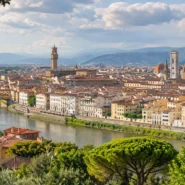
The five useful units are the Duomo district, the Uffizi/river edge, the Accademia–San Marco north, Pitti/Boboli across the Arno and Fiesole. The first three are close enough for neighboring walking links, but seeing their interiors still takes hours. Pitti and Boboli are naturally paired; Piazzale is a separate hill decision. Fiesole belongs to one outward-and-return bus journey, not an evening detour after a long gallery day.
Keep one hotel for all six nights. The station–Duomo corridor suits rail arrivals and northern walks; the compact central streets favor repeated room breaks; Santo Spirito/San Niccolò make south-bank evenings easier but add a deliberate station approach. Compare your actual door, accepted lift route and daily plans. Going back to Santa Maria Novella between adjacent central sights wastes the compact geography you paid for.
Use GEST’s actual T1/T2 lines for an airport or useful outer approach, bus 7 for Libertà–Fiesole and licensed taxis when a hill or tired return would use up the day. Check stops, direction and current notices. A bus in traffic and an overloaded last departure are weak foundations for a close museum appointment. The urban ticket is €2/90 minutes under the current fares; an outing with a long lunch generally needs a new ticket for its return.
Leave travel cases at the hotel or a separately confirmed storage provider on Day 0 and Day 6. Accademia has no cloakroom and rejects bulky items over 40 × 30 × 18 cm under its published access rules. Uffizi/Pitti cloakroom arrangements do not make them whole-day airport storage. The Duomo complex requires its specified deposit for unsuitable bags; collect items before leaving that district. Confirm a storage operator’s opening and collection deadline instead of assuming that a station icon means a vacant locker.
Ticket Tips & Skip-the-Line Hacks
Begin at the Uffizi official ticket information and its linked actual ticketing site. The €40 five-day PassePartout covers one admission each to Uffizi, Pitti and Boboli, with Uffizi first at a reserved time. Our Day 2–Day 4 sequence fits its window. The published single advance Uffizi €29 plus advance Pitti+Boboli €25 totals €54, so compare the €40 combined product before buying both separately. Check the final selected product and any service adjustments; do not add the same reservation component twice. The ordinary combo excludes the Vasari Corridor.
Use Accademia’s own page and its observed B-Ticket purchase entry. Full admission is currently €20, with €4 for a reservation; an old €16 notice remains lower on the page. The July 2026 ticket regulation makes online/call-centre tickets nominal and allows identity checks. Enter accurate names and bring valid identification; permitted one-time corrections have narrow grounds and a deadline, not a free-resale right. The access rules also require security and restrict baggage. Reserve a real morning rather than treating a purchased barcode as permission to arrive whenever you like.
Choose the Duomo pass for the visit you want: €15 Ghiberti, €20 Giotto or €30 Brunelleschi at the published full rates. The primary reserved time is Santa Reparata, bell tower or dome respectively. Under the current terms, other included monuments are single-entry within three calendar days starting at midnight of the selected day, not a rolling 72 hours from your first afternoon scan. Reservations are not ordinarily changeable/refundable. Cathedral ordinary entry remains free; no pass turns every worship/security queue into unrestricted entry.
San Marco is a separate ticket and its city’s current museum listing gives €11, Tuesday–Sunday 08:30–13:50, ticket office closing 12:45, with Monday and fifth-Sunday closure. Check the venue’s latest notice and actual selling channel for your date; an early-arrival museum fits more reliably than an afternoon rescue visit. At Pitti, room-specific closures and Royal Apartment products need separate attention. Boboli has its own seasonal and weather limits even when you hold a valid combined ticket.
Compare a third-party guided option only when its exact included tickets, language, meeting point, cancellation and total suit these days. Electronic delivery still needs a readable accepted ticket and the actual venue’s admission process.
Count the Nights, Meals and Admissions
For an ordinary non-exempt adult, the published core-product example is Ghiberti €15 + Uffizi/Pitti/Boboli five-day €40 + reserved Accademia €24 + the city-listed San Marco €11 = €90. Fiesole public streets and Piazzale add no admission; two separately required urban tickets at €2 add €4. That €94 baseline excludes optional climbs/upgrades, Fiesole interiors, guides, checkout adjustments, additional local rides and airport transport. Confirm the selected products before payment; availability and later fee changes are not guaranteed.
For a transparent accommodation scenario, assume two taxable adults share a four-star room at an unobserved €150 per room per night for six nights, with breakfast explicitly included. Room total is €900. Florence’s municipal hotel-tax schedule lists €7 per eligible person per night at four stars, adding €84 for the pair over six nights: €984 together, or €492 each. The ordinary cap is seven consecutive nights, and children before twelve are exempt; hotel child pricing is separate. This adult example is not a live hotel quote.
Five lunches at an assumed €15 and five dinners at €25 add €200 per adult for ten meals. Together with €492 accommodation/tax share and the €94 core example, that gives €786 per adult before arrival/departure meals, airport transport, extra rides, snacks and optional admissions. Six included breakfasts cover the mornings after six nights; a room-only offer needs breakfast added. Keep these assumptions separate from published ticket and tax amounts.
Evidence and Practical Tradeoffs
The eight films below are named, dated creator perspectives. Their value is scale, art and route orientation. Current prices and access come from the linked venues; older footage does not establish today’s ticket rules, room openings or crowd level.
📍 Stop 1: Duomo Complex
Architecture · Separate products · Optional steep climb
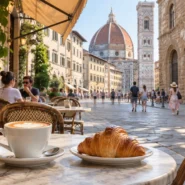
Choose the museum and selected monuments to understand how the Cathedral was made. Looking at the original sculpture and doors can be more rewarding than buying a climb only because everyone else has one. The free nave and a timed dome ascent are distinct experiences.
The operator’s planning page warns that the Baptistery’s vault mosaics are under restoration and not visible. The dome involves 463 steps and no lift; a bell-tower climb is another substantial stair route. The current service notice also names dome maintenance for 16–20 November 2026, bell-tower closure for 9–13 November 2026, and potentially reduced tower views during restoration. It redirects Baptistery entry to the South Door from 10 September. These are dated/site-specific conditions, not closure of every monument.
✅ What Other Travelers Say Rick Steves’ Europe’s 16 October 2013 film explains the dome and bronze doors as Renaissance achievements. It is art/travel interpretation from a named presenter, not a current account of restoration access or the room allocation of a 2026 pass.
⚠️ The Catch (Things to Keep in Mind) If stairs, confined passages or height are uncomfortable, make the non-climb monuments the plan. Cover appropriately for worship buildings, use the required deposit and respect the booked primary slot. A paid pass is not a reason to attempt a route your body cannot comfortably manage.
📍 Stop 2: Uffizi Gallery and the River Edge
Timed art morning · Selective collection · Free afternoon outside
The useful goal is to see a manageable set of works attentively. Pick a few painters and leave room to compare what you are seeing, rather than walking every room at the same speed. The long interior makes a modest-looking map day substantial.
The venue normally opens Tuesday–Sunday 08:15–18:30. Plan a meal afterward and treat Signoria/Ponte Vecchio as flexible outdoor additions. The standard gallery does not include passage through the Vasari Corridor.
✅ What Other Travelers Say Rick Steves’ Europe’s 26 February 2014 film introduces Giotto, Botticelli and the Renaissance collection. Its enthusiastic sweep is useful context; the old one-floor framing and booking advice are not a current floor plan or ticket instruction.
⚠️ The Catch (Things to Keep in Mind) A reservation does not control how long another visitor stands in front of a painting. Use the current route and staff advice. Keep large bags out of the gallery, and do not put another non-refundable museum immediately after your estimated exit.
📍 Stop 3: Accademia and Michelangelo’s David
Named ticket · Focused sculpture visit · Small bags
Allow enough time to look at David from different positions and compare the unfinished works. Even someone who does not want a large painting gallery can find this a focused visit. Buying it only for a quick selfie undervalues both the sculpture and the effort of entry.
The museum on Via Ricasoli is the actual original-David visit. Replicas in the city are useful free orientation, but do not substitute their locations into a museum booking. Security, valid names and the accepted entrance time still govern arrival.
✅ What Other Travelers Say The Tour Guy’s 12 April 2024 film presents an Accademia visit and promotes that company’s tours. Its chapters offer visual orientation, and its roughly 90-minute visit discussion helps frame the scale. It is commercial creator guidance, not independent guest consensus or today’s €20 tariff evidence.
⚠️ The Catch (Things to Keep in Mind) There is no cloakroom rescue for a suitcase. Bring permitted essentials, valid identification and your actual ticket. If an accepted late slot threatens the nearby San Marco visit, alter the schedule rather than shortening both into a gate-to-gate sprint.
📍 Stop 4: San Marco Museum
Convent frescoes · Northern pairing · Early close
The setting changes the kind of looking: cells, corridors and communal rooms provide context for the frescoes. It contrasts well with Accademia without requiring a cross-city transfer. Choose a few rooms and let that quieter scale shape the visit.
Its morning calendar is the practical constraint. Arriving after a long lunch defeats this pairing even when the map distance is tiny. The city describes specific platform-lift/ramp arrangements; contact staff about your actual access need before assuming the historic entrance works independently.
✅ What Other Travelers Say Rocky Ruggiero’s 22 September 2023 film discusses the Medici convent and Fra Angelico, with links to his art-history programs. It offers an identified specialist’s interpretation, not a live inspection of which rooms are open or a present ticket offer.
⚠️ The Catch (Things to Keep in Mind) Keep the early ticket-office cutoff visible in the plan. If frescoes and convent life do not interest you, omit this admission and keep the morning selective; paying for a second collection is not automatically a better use of a holiday.
📍 Stop 5: Pitti Palace
Palace interiors · Select collections · Steep approach
Pitti rewards visitors interested in a palace setting rather than another conventional wall-by-wall gallery. Choose which collection matters before you enter. An all-collections ticket does not mean equal attention, or guaranteed opening, for every room.
The owner publishes lifts and a steep square approach. Arrange the route you need with staff. Treat current room notices as part of planning, and do not assume an old tour’s Royal Apartment sequence is included in your ordinary admission.
✅ What Other Travelers Say Academy Travel’s 7 August 2024 guided film features Kate Bolton-Porciatti in selected palace rooms and Boboli. Its description promotes a May 2025 tour. That named professional presentation can help you decide what interests you; it does not establish that today’s room route matches the film.
⚠️ The Catch (Things to Keep in Mind) The palace can absorb more time than you intended. Leave enough for lunch and stop before attention disappears. On the checked date the official site displayed room/Treasury closure notices; check the actual visit date rather than promising every collection is accessible.
📍 Stop 6: Boboli Gardens
Sloping landscape · Weather-sensitive · Choose a loop
Boboli is an outdoor landscape with sculptures, long axes and changing levels. It works best when you choose a route rather than treating “garden” as shorthand for a flat rest. Take water and think about where you will exit toward the next appointment.
The garden’s official calendar has seasonal closing times, last entry an hour beforehand and first/last-Monday closures. It can close during dangerous weather. Its clay/gravel slopes also mean an accessible entry does not make the entire garden independently easy.
✅ What Other Travelers Say The Italy Guy’s 8 June 2022 video describes being impressed while exploring the gardens. That is one creator’s enthusiastic perspective and a dated visual introduction, not proof that a particular fountain, path or museum is open today.
⚠️ The Catch (Things to Keep in Mind) A combined ticket saves admission cost only if you want and can use the visit. Cut a distant garden section before lunch or fatigue becomes a problem. Do not promise the Porcelain Museum as a rainy-day refuge; its current venue page states a refurbishment closure.
📍 Stop 7: Piazzale Michelangelo
Free public view · Separate hill journey · Daylight matters
The view is the reason to go, so give it an unhurried window. A short stay with a good route home is more useful than racing up at the exact moment every guide calls sunset. Time of year, weather and your willingness to stand decide the experience.
Use a checked urban-bus journey or an agreed legal taxi stop if the walk would be the last straw. Lower San Niccolò, the viewpoint and San Miniato occupy different levels. Keep the church extension optional and respect its actual worship/opening arrangements.
✅ What Other Travelers Say Rick Steves’ Europe’s 16 December 2015 film connects San Miniato’s monastery setting and the nearby city panorama. It explains the hillside context, but does not guarantee a current service, a quiet sunset or barrier-free movement between the two places.
⚠️ The Catch (Things to Keep in Mind) The square is free; the time and hill effort are not. Remove it after a demanding Pitti/Boboli day if necessary. Arrange a return plan before darkness or tired knees turn a nice view into an uncomfortable descent.
📍 Stop 8: Fiesole Village and Viewpoints
Bus 7 · Piazza Mino · Optional steep terrace
This is a defined outing with a known bus terminus. Begin in Piazza Mino, choose the public streets and viewpoint you can comfortably manage, then have lunch before the return. A whole extra hotel change is unnecessary for a modest change of scene.
The local tourism authority’s directions and actual bus 7 route support the transport plan. The municipal tourism viewpoint guide helps distinguish the town’s different outlooks. Optional archaeological interiors are a separate purchase, not something the €2 urban ticket includes.
✅ What Other Travelers Say Just Walking Around’s 6 October 2023 film provides a continuous village walk and views. It is useful for seeing gradients and streets; its descriptive claims about local wealth and history are not used to promise service quality, today’s opening hours or a short walk for every traveler.
⚠️ The Catch (Things to Keep in Mind) Do not take an all-day bag load or rely on a guessed San Marco bus departure. Check both directions from Libertà and a sensible return. In poor weather, a closer indoor Florence plan can be the better choice; the itinerary should serve your day, not force a hill trip.
Key FAQs
How many hotel nights do I need for five full days in Florence? Six nights when arrival is on Day 0 and departure on Day 6. Five nights can work with favorable travel times, but does not automatically give these same five full sightseeing days. Count usable hours before buying timed admissions.
Is the Uffizi five-day ticket worth it for this itinerary? At the published full rates it is worth comparing: €40 for Uffizi, Pitti and Boboli versus €54 for advance Uffizi plus advance Pitti/Boboli. You must visit Uffizi first and fit the later single entries inside its validity. It does not include Accademia, the Duomo or transport.
Should I add Pisa or Siena to five days in Florence? Only by removing one of these geographic days and checking the entire separate journey. This route deliberately uses Fiesole as a modest actual bus outing. Trying to add several distant towns while preserving every major Florence museum creates the rushed trip these five days are meant to avoid.
Final Verdict and Your Next Step
Reserve compatible Uffizi and Accademia mornings, choose your actual Duomo product, then protect lunch and rest around them. Keep the south-bank and Fiesole days flexible enough for weather and tired feet. Five days buy attention and a better rhythm, not an obligation to collect every admission.
Start with the official Uffizi booking entry, actual Accademia B-Ticket product and official Duomo shop. Confirm the names, date, time, inclusions and cancellation conditions before paying. Then save the actual hotel door and current Fiesole bus route with the reservations. A coherent week is the useful souvenir of planning.