💡 Key Takeaways
- Start with A$90–140 per person per day for two adults sharing a basic room with simple meals. Midrange is about A$155–240; comfortable is A$260–400.
- Budget for a separate dated theme park ticket, airport transfer and shopping. The 50-cent local fare keeps casual tram days cheap.
- Price the same refundable hotel for your exact dates first. School holidays, major events and a room to yourself can change the total far more than bus fares.
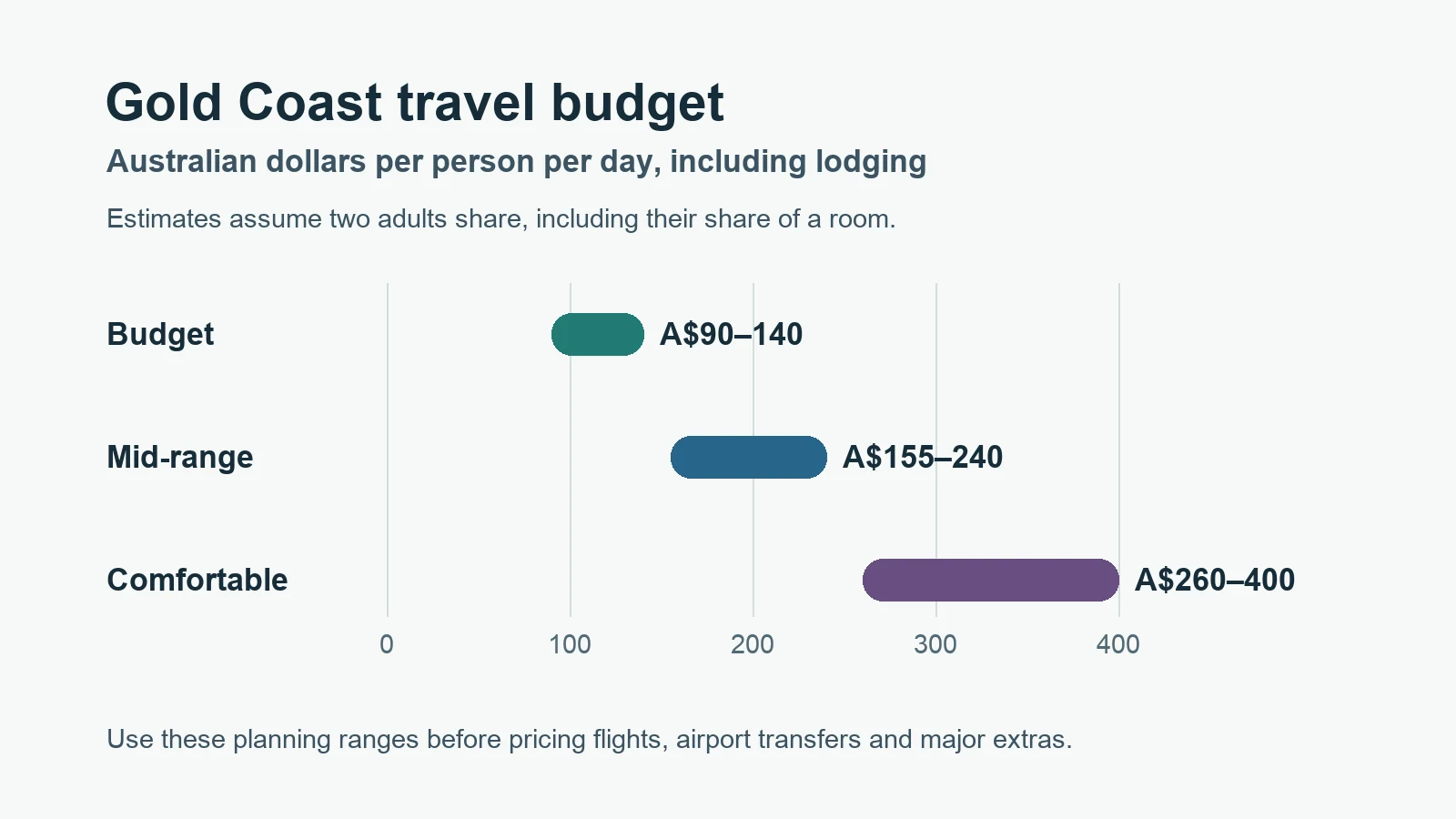
A realistic Gold Coast travel budget starts at about A$90–140 per person per day when two adults share a simple room, keep meals casual and spend most days on free coastal activities. Budget A$155–240 for a conventional room and sit-down meals, or A$260–400 for a better room, longer meals and occasional rides. Price a theme park or airport transfer on a separate line.
These are planning bands for two adults sharing one room, using Australian dollars. They include ordinary food, the stated share of accommodation and daily local travel. They are approximate working ranges and can change with room rates, group size and demand. For comparison the Reserve Bank of Australia quoted US$0.6666 per A$1 on 20 November 2026, used for the rounded examples here. Card rates and fees can differ.
Gold Coast Travel Budget by Style
The 1-Min Cheat Sheet
- Budget · A$90–140 (around US$60–93) each: Plan on a modest share of a room, grocery breakfast, a casual lunch and one inexpensive dinner. Walk for pleasure and use the tram for longer links.
- Midrange · A$155–240 (around US$103–160) each: Share a conventional hotel or apartment, budget for cafe breakfasts and some table-service meals, and keep a margin for a local ride in rain.
- Comfortable · A$260–400 (around US$173–267) each: Make room for apartment or resort premiums, two longer meals and an occasional private ride. Recheck special dates and specific hotel inclusions.
Allow separately for flights, travel to another city, a large taxi transfer, shopping and park tickets. A solo visitor pays the room substantially differently. For example, a A$150 room is A$75 each for two people or A$150 for one. Add the same food and transport separately.
Top Budget Survival Tips
- Start from the room and the actual commute. One motel lists some rooms from A$125 at Burleigh Gold Coast Motel. Use live rates for a useful baseline. A cheaper room may make a second late ride or taxi necessary, which can shrink the saving.
- Skip a pass unless it covers something you’ll use. Translink charges 50 cents for a standard eligible journey. Four separately charged journeys would cost A$2. Brisbane Airport’s Airtrain has a special fare. Keep tour coaches, tourist ferries and paid attractions in separate columns.
- Pay in one currency you can compare. When a terminal offers home currency, check the conversion and fees against your card’s foreign purchase terms. A rate converted on the spot can cost more. Carry a separate buffer for card or ATM fees.
- Price a real grocery run. Pick one quick breakfast and one lunch you can make in your room or carry to Kurrawa. Buy quantities you can finish before checkout. At Pacific Fair, compare one takeaway meal against a bigger restaurant plan without adding a second trip.
- Make the first and last ride appropriate for your bags. At OOL, compare the 777 and tram change with a shuttle or ride from the airport’s ground transport list. The public option saves money if you can make the change comfortably and the service is still running.
- Get the park number from your entry date. Start with the dated Sea World single-day ticket or the equivalent operator page for your chosen park. Add meals, lockers, parking or any reservation fee as you’ll actually use them. Compare that total with the same day on the coast.
- Keep a rainy-day reserve. Put a limited amount aside for one unplanned indoor ticket, a dry taxi leg or a meal near the hotel. Plan to go back to the tram the next day rather than carrying the new spending level forward.
Gold Coast Budget by Travel Season
Compare a few weekdays in May, early June or early spring against dates surrounding school breaks if your travel is flexible. A cheaper weekday often matters more than selecting a theoretically quiet month. Queensland’s school term dates help identify demand changes, and check the event calendar for exhibitions, racing and concerts near your accommodation.
Midyear school holidays can raise the cost of a family trip despite milder beach weather. Spring has good walking options, but major events can concentrate demand in Surfers or Broadbeach. During late November check Queensland’s Schoolies information for the dates, location and local conditions, especially for central Surfers.
Christmas, New Year and summer school breaks can reduce room choice, particularly for apartments with several beds. Shift the dates or compare a lower-demand suburb near the L1. First reprice a comparable room and cancellation terms. Then verify that your alternate plan still works when you come home from dinner.
Common Budget Mistakes
- Only adding up flights and hotels. Make a daily budget for meals, attractions and transfer time; check it against your planned days.
- Assuming OOL and BNE have the same airport fare. Check the booked code and actual local service. The Airtrain station fare is separate from ordinary Translink travel.
- Booking an outlying bargain with no late option. Use a specific last dinner time in the live planner and add a backup fare. Calculate the full stay before choosing it.
- Allowing several paid parks in one daily figure. Price the park and its on-site spending separately, then mark the remaining coast days as low-cost.
- Buying every coffee and snack before your first stop. Set a breakfast and snack plan for the mornings when your main meal will be later. Keep a small daily treat envelope if that’s important to you.
- Choosing a photo-worthy room without needed beds. Read the room’s sleeping and luggage terms. Price a second room or rollaway if the room has a strict guest limit.
- Leaving a self-managed apartment’s luggage policy until checkout. Identify the key-return and storage details. If you need storage, reserve the bag service with an easy route to the tram.
- Using cashless fares on different cards. Tap on and off with the same card or device and use one per person; verify Translink transfer rules and payment options before splitting a family’s payment.
- Letting the shopping allowance float. Name a maximum and reserve it outside the daily spending bands so purchases cannot consume the airport reserve.
Three Ways to Keep a Low-Cost Day Interesting
Plan a coastal path day
Choose a tram-accessible walk and a visit to a public park or foreshore. Keep one stop optional when the outdoor part of your budget depends on calm weather.
Make the food stop do more work
Choose a meal or a grocery stop you will use anyway. Add an indoor break during a long beach day and return using the tram across the road.
Check the public bus to your park
Use the footage for ideas and the official current planner for your route. Coach companies and private shuttle services set their own fares.
Key FAQs
How much should two adults budget for three ordinary days? At A$90–140 each per day, the couple’s ordinary budget is A$540–840 for three days, including shared rooms and basic food. Add separate airport, flight and attraction costs.
Can I save money by hiring a car for the whole visit? For coastal touring the standard tram and bus fares make a car hard to justify on money alone. Price a single-day hire or tour for the hinterland when the time saved is useful.
Do I need to pay for every beach outing? There is no general admission charge for the public coastal paths and beaches discussed here. Activities, parking, transport and food can still carry costs.
Final Verdict and Your Next Step
Price the actual room in the Gold Coast booking calendar, add an airport line and put one preferred park on a dated quote. Compare the result with Travel Stay Guide’s cost guides before committing to meals or upgrades.