
💡 Key Takeaways
- Keep three clear days: Accademia and the Duomo in the north/central core; Uffizi and the eastern center; Oltrarno and the south-bank viewpoint. Stay in one hotel and leave your cases there.
- Build around the real ticket calendar. Uffizi and Accademia normally close Mondays; the Opera del Duomo Museum closes the first Tuesday of the month. Reorder the days before buying fixed slots.
- Choose one major climb. Brunelleschi’s Dome has 463 steps without a lift; Giotto’s Bell Tower has 414. A pass including both is not an instruction to climb both.
- Use current ticket prices and conditions: advance Uffizi €29; Accademia €20 plus €4 reservation; Brunelleschi Pass €30. A reseller voucher may still require a host or exchange, and security queues remain.
- For November 2026, check announced maintenance: Dome 16–20 November and Bell Tower 9–13 November. Baptistery vault mosaics are currently hidden by restoration; do not buy a pass expecting an unrestricted mosaic view.
A 3-day Florence itinerary works best when you stop trying to turn every short map distance into another reservation. Accademia, the Duomo and the Uffizi are close enough to tempt you into one museum marathon. Add a dome climb and a sunset hill, and the day becomes a chain of deadlines with nowhere to put your bags or eat lunch.
This route gives the city three different rhythms: a north-to-center day, a riverside art day, and a south-bank day with an optional climb or vehicle uphill. It assumes three full sightseeing days, with arrival before Day 1 and departure after Day 3—usually four hotel nights. If your arrival or flight occupies part of the three days, remove optional stops and reduce the plan; do not describe two usable days as three.
Opening rules, published prices and access conditions were checked on 20 October 2026 using the linked operators and official sites. Suggested times, walking ranges and meal allowances are planning choices, not measured personal test walks or available reservations. Choose the actual calendar and issued ticket instructions before paying.
The 1-Min Cheat Sheet
- Accademia Gallery: best for Michelangelo and sculpture; allow 75–90 minutes inside plus entry procedures. Current regular admission €20 plus €4 if reserved. Use Via Ricasoli 58/60, reached on foot from the San Marco/Duomo area; SMN is the main rail arrival, not a station at the gallery door. Reserve an early open-day slot. The catch is a small, heavily focused visit that still has security and no museum cloakroom.
- Duomo complex: best for architecture and the sculpture museum; allow about 90 minutes for the museum plus roughly 45 minutes for an optional Dome climb, with bags, queues and lunch outside that allowance. Brunelleschi Pass €30; no-climb Ghiberti Pass €15; the ordinary Cathedral interior is free. Walk to Piazza del Duomo. The relevant first-day slot must be booked, with a fixed Dome time for Brunelleschi. Avoid pairing two high climbs; check the museum’s first-Tuesday closure.
- Uffizi Gallery: best for Renaissance painting; reserve roughly three hours, longer for a broad collection visit. Regular entry is €25 when bought on the visit date or €29 in advance. Walk to the courtyard near Piazza della Signoria from a central base; do not add a bus for a short central walk. Book an early open-day slot. The catch is the scale of the collection and persistent entry checks, rather than simply finding a ticket.
- Ponte Vecchio and Oltrarno: best for a flexible walking day, neighborhood streets and river views; allow half a day with lunch, or more if adding a paid museum. Public streets and the bridge need no admission ticket or reservation. Walk across the river; individual interiors and Pitti/Boboli are separate purchases. Start earlier for a less compressed bridge walk. Narrow, busy lanes and uneven paving make large cases a poor companion.
- Piazzale Michelangelo: best for the skyline; allow 45–60 minutes at the public terrace plus the journey. The square has no admission ticket or reservation. Use an uphill walk from lower San Niccolò, or a current city-bus plan or agreed taxi. Choose late-afternoon light only when weather and daylight work. The catch is the climb, exposed weather and a busy return after sunset.
Tourist Traps to Avoid & Itinerary Hacks
- Do not stack three large ticketed experiences just because the map is compact. Accademia and the Duomo can share Day 1 with a substantial meal break; the Uffizi deserves a separate morning. A missed fixed Dome slot is not repaired by showing that the preceding museum ran late.
- A pass is a choice of access, not a completion challenge. The Duomo passes cover three calendar days and one access to each included monument. Choose what interests you. Climbing both the Dome and Bell Tower, rushing the museum and queuing again for another interior can use your energy without improving the trip.
- Pay for a useful reservation or service. Buy a confirmed museum time, a genuine guided explanation or an audio package you will use. Read whether the seller issues an entrance ticket, sends a later operator ticket or requires a meeting. “Skip the line” is not a promise to skip security, and Opera explicitly says it has no such extra service for the Duomo.
- Keep free admission separate from a time-saving plan. First-Sunday entry can save money at the state museums but normally removes standard advance priority. For a short visit, the resulting queue may cost more time than you intended. It also does not make the privately administered Duomo passes free.
- Use meals as real breaks. Choose lunch near where the morning ends and check the menu, seating charge and serving style before sitting. The cost of a seated meal is different from a counter purchase. Pick a sensible nearby option rather than walking across town for one internet-famous sandwich queue.
- Keep optional shopping and extra interiors optional. A shop on Ponte Vecchio, an extra palace room or another church is not part of your reserved museum route. If you find a place you enjoy, spend time there and drop the weakest extra stop instead of borrowing time from a fixed ticket.
The Perfect 3-Day Itinerary at a Glance
The example clock below assumes normal opening days and a central hotel. Reserve the two museum mornings and your chosen Duomo product first, then reorder the geographic days. If Monday falls within your stay, put the outdoor south-bank day there. If the first Tuesday affects the Duomo Museum, move that visit to another valid pass day or choose a different purchase; do not book a museum-closed day by default.
Day 1: Accademia, San Marco and the Duomo Core
- Start: leave the hotel around 07:45–08:00 for an early available Accademia reservation. The actual voucher may require collection or a meeting buffer; follow it. Do not make a same-morning flight arrival responsible for the first timed ticket.
- Morning order: Accademia first, then walk south along Via Ricasoli toward the Duomo. Allow 75–90 minutes inside, with extra time for entry and the short neighborhood walk. Concentrate on the original David, the unfinished sculptures and a manageable selection of other rooms.
- Late morning and lunch: visit the Opera del Duomo Museum if open and included in your pass, or take an earlier lunch if the museum entrance is busy. Use about 90 minutes for the collection, rather than trying to replace it with a quick photograph. Lunch around the Duomo/San Lorenzo side keeps you in the same part of the city.
- Afternoon: if you chose Brunelleschi Pass and are comfortable with the climb, target an available Dome slot around 14:30–15:30. This is a scheduling example, not a checked offer. Complete the required bag drop before the slot. A no-climb day can use the museum, Cathedral exterior and the included interiors appropriate to the selected Ghiberti product instead.
- Effort: roughly 4–6 km of central walking as a planning range, plus museum standing and any 463-step Dome ascent. Your hotel door and detours change the total. Do not add a Bell Tower climb merely because it is included.
- First thing to cut: the Bell Tower or another church interior. Rain/low-energy alternative: keep the reserved Accademia and the Duomo Museum, choose a long seated lunch, and skip the climb. A weather problem does not automatically make a non-refundable climb reservation transferable.
Day 2: Uffizi, Piazza della Signoria and the Eastern Center
- Start: leave enough time to meet the actual Uffizi entry or operator procedure for an early reservation, usually aiming to reach the courtyard before the first sightseeing rush. Eat beforehand; your three-hour art visit needs a useful breakfast.
- Morning order: Uffizi, then a seated break around Piazza della Signoria. Use a small highlights list—Botticelli, Leonardo and selected later rooms—rather than treating every room as compulsory. Allow around three hours inside; a deeper art interest may justify more.
- Lunch: stay in the central/eastern area after the museum. Check the menu and take a real rest before deciding whether you want more walking. The Uffizi ticket is single entry, so leaving for lunch is not a promise that you can return on the same ticket.
- Afternoon order: Piazza della Signoria’s outdoor setting, streets toward Santa Croce and a lower river walk. Santa Croce’s exterior is the flexible default here; an interior visit is an additional decision with its own ticket and hours. End with time at the hotel rather than racing north to a second booked museum.
- Effort: plan roughly 4–6 km for the day from a central base, plus long indoor standing. First thing to cut: Santa Croce or extra shopping after lunch. Rain/low-energy alternative: shorten the street loop, keep a longer café or hotel break, and leave enough energy for Day 3.
- If the Duomo Museum was closed on Day 1: a later Day 2 visit can replace the eastern street loop, provided the ticket is valid and the museum is open. This is a replacement, not one more obligation on top of the full afternoon.
Day 3: Ponte Vecchio, Oltrarno and the Viewpoint
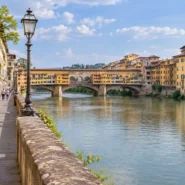
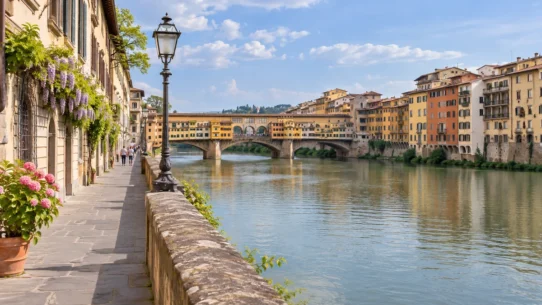
- Start: around 08:30–09:00 for a bridge crossing before the busiest middle of the day. Walk from the central side across Ponte Vecchio, then explore the lower Oltrarno streets around Palazzo Pitti and Santo Spirito. Save time for ordinary streets rather than visiting only the photo stops.
- Optional morning interior: choose Palazzo Pitti if another museum is a priority, or keep the morning as a flexible neighborhood walk. Its museums normally close Mondays, so the Monday version stays outdoors. Boboli is a separate, uphill garden commitment; do not add both palace and gardens to a tired day by default. Current notices and the selected product determine available rooms and entry.
- Lunch: eat on the lower south bank before moving toward San Niccolò. Decide at lunch whether to climb, take an accepted vehicle route or stay by the river. This is the day with the greatest flexibility, not a final endurance test.
- Afternoon order: lower Oltrarno toward San Niccolò, then uphill to Piazzale Michelangelo if conditions suit. Plan the actual sunset for your date, rather than assigning a fixed 18:00 sunset year-round. Leave extra time for a rest, crowding and the descent or return vehicle.
- Effort: roughly 6–8 km if walking the south-bank loop and the hill, with steep sections and stairs. These are planning ranges, not a step-free measurement. A current Autolinee Toscane journey plan or a pre-agreed taxi can replace the uphill section; verify the actual stop, road pickup and service time.
- First thing to cut: Boboli or the additional walk above the terrace to San Miniato. Rain/low-energy alternative: keep the lower streets and an indoor Pitti visit if chosen and open, or return to the hotel; a grey, slippery hill need not be the final memory. If moving luggage that day, store it before sightseeing and allow collection time before departure.
Save Your Legs! The Most Efficient Route
Day 1 joins the northern Accademia door to the Duomo core by a short southward street walk. Day 2 keeps the Uffizi with the squares and streets east of the center. Day 3 stays on the south bank before choosing the hill. This division removes the most tiring pattern: repeated crossings of the same center while racing between reserved interiors.
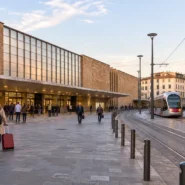
Walking is normally the useful connection between the central stops. Florence’s tram is valuable for an airport or outer-city approach, but it does not deliver you to the Uffizi doorway or the Dome entrance. A bus or taxi becomes useful for the hill, a mobility requirement or an agreed luggage transfer. Get the actual pickup and stop rather than assuming a private car can enter every central street.
Use a hotel around SMN for a simpler rail arrival and departure; it adds an approach walk toward the northern and river sights. The Duomo/San Giovanni core supports frequent midday returns but can involve restricted car access and very different room entrances. Lower Santo Spirito or San Niccolò can suit south-bank evenings, with a deliberate station transfer. A hilltop address and a lower-river address are not interchangeable just because both say Oltrarno.
The difficult sections are the Dome’s narrow stair route, the optional Bell Tower, uneven paving and the viewpoint ascent. Do not bring a large suitcase or expect a stroller to solve a stair climb. Use the museum’s accepted accessible entrance and lift arrangements when needed. Accademia publishes access from Via Ricasoli 60; Uffizi publishes a ramp on Via della Ninna and staff-assisted arrangements. Ask the institutions about your exact requirements before attaching a fixed onward deadline.
For arrival and departure, the simplest plan is often approved hotel luggage storage. RFI lists storage at SMN, but check the actual operator’s current hours, size rules, price and collection deadline. Accademia does not have a museum cloakroom; a separately mentioned shop service is not an all-day free bag guarantee. Duomo’s ticket-holder bag drop is linked to a visit, rather than a substitute for solving every transfer day.
Ticket Tips & Skip-the-Line Hacks
Reserve the actual product before filling the rest of the day. The Accademia’s official page lists regular entry at €20 and a €4 booking charge through its authorized B-Ticket channel. The current Uffizi schedule lists €25 for a regular ticket bought on the visit date and €29 when bought earlier. Use the current total, rather than adding another assumed reservation fee to the €29 advance price.
Choose the Duomo pass by what you will do. The official price page lists Brunelleschi at €30, Giotto at €20 and Ghiberti at €15 for full-paying visitors. The ordinary Cathedral is free, without a ticket or booking, during its visiting hours. Brunelleschi requires a fixed Dome slot on the first validity day; Giotto fixes the Bell Tower slot; Ghiberti fixes Santa Reparata. The remaining included monuments follow each pass’s rules over three calendar days, with one entry each. The Dome reservation cannot simply be changed if another visit takes longer.
Names, ID and bags can decide entry. Brunelleschi Pass requires the actual visitor’s name, and staff check an identity document at the Dome. Uffizi sells named tickets: enter the correct visitors and follow the issued identity and entry instructions. Accademia’s current ticket regulation makes online and call-centre tickets named: book each visitor’s correct name and carry valid ID. Staff may compare the document with the ticket; a mismatch or missing requested ID can mean refusal without a refund. Carry any additional proof for an age or concession ticket. Accademia’s July 2026 GAMB regulation sets a maximum permitted bag size of 40 × 30 × 18 cm, while its visit page says there is no museum cloakroom. Store larger luggage first. At the Duomo, the mandatory bag service for prohibited objects is at Piazza Duomo 38/r; leave time for the walk there and back.
Keep the ticket and the voucher distinct. Download the actual issued documents and the redemption instructions before leaving reliable internet. A scannable final ticket and a reseller booking voucher are different things. Use a phone code only when the issued instructions authorize it; an operator exchange or host meeting may still precede the museum entrance. Every ticket remains subject to the museum’s entry and security procedure.
For an optional service comparison, the Klook Uffizi timed-ticket and audio-app package currently describes operator assistance and an app. It says its Klook voucher is not the final entrance voucher: exchange with the indicated staff or use the operator ticket sent through the specified channel, and reach the meeting point 15 minutes early. Confirm the selected package’s latest instructions and child rules. The seller’s added services and fees should be compared with official entry; a higher price does not remove security checks. This is an affiliate link.
There is no magic Duomo queue bypass. Opera’s own FAQ says there is no extra “skip the line” service; the booked slot is the queue-management arrangement. It also warns against unauthorized products claiming this access. For the Uffizi and Accademia, an actual reservation can reduce the ordinary purchase queue, while bag checks and entry processing remain. On free state-museum days, ordinary advance priority is generally unavailable; read the official free-day procedure instead of buying a supposed shortcut.
Check current closures after choosing the date. Uffizi and Accademia ordinarily close Mondays. The Duomo Museum closes the first Tuesday monthly, and the Cathedral closes to ordinary sightseeing on Sundays and religious celebrations. Current Opera notices list Dome maintenance on 16–20 November 2026 and Bell Tower maintenance on 9–13 November 2026. Bell Tower works can restrict views, and Baptistery vault mosaics are hidden by restoration. A current notice also redirects Baptistery entry to the South Door from 10 September; follow the latest signs and FAQ.
Price only the attractions you choose. The climb version of these three days uses €24 Accademia with reservation + €29 advance Uffizi + €30 Brunelleschi = €83 per full-paying adult. Choose €15 Ghiberti instead of Brunelleschi for a no-climb version and that becomes €68. Other concessions, guided services and extras change the total. Do not add the price of an included monument again.
If you will actually visit Pitti on Day 3, compare the current €40 Uffizi/Pitti/Boboli five-day pass with €29 advance Uffizi plus €19 advance Pitti, totaling €48. The pass requires Uffizi as the first museum and a booked Uffizi entry; it does not include Accademia or the Duomo. In that version the three core ticket purchases cost €24 + €30 + €40 = €94 per adult. Verify the current product before buying, and do not buy a garden visit merely to justify a bundle.
What Three Full Days Cost: A Clear Planning Example
For two full-paying adults sharing an illustrative three-star room at €160 nightly with breakfast included, four nights cost €640. At the published €6 city-tax rate, two liable adults over four nights add €48: accommodation totals €688 for the pair, or €344 each. The room allowance is not a quotation for a named hotel. Check the current Florence tax rules and your accepted rate; ordinary taxation is capped at seven consecutive nights, and children before twelve are exempt.
Three €15 lunches and three €25 dinners add an illustrative €120 each. Add the €83 climb-version tickets and the partial total is €547 per adult, or €1,094 for two. This excludes travel to Florence, airport or intercity transport, local rides, drinks and snacks, optional Pitti, and meals on the arrival/departure days. Breakfast is not charged twice in this example. A shorter actual stay or a different pass changes the arithmetic.
The Five Stops: Evidence and Practical Tradeoffs
📍 Stop 1: Accademia Gallery
Original David · Northern start · A focused museum visit
The Accademia is a good first reservation because it gives the day a manageable focus. Use the original David as the central encounter, then give the unfinished sculptures enough time to make the visit more than a quick photograph. The separate outdoor copies around Florence do not replace this museum visit.
Its Via Ricasoli entrance sits naturally above the Duomo core. That is why it belongs at the start of the north-to-center day, rather than after a long Uffizi morning across the center. Allow for the actual voucher procedure and the security line before judging how early your next appointment can be.
✅ What Other Travelers Say The Tour Guy’s April 2024 film, presented by Angel Castellanos, explains the gallery and a roughly 90-minute approach. It is a tour operator’s commercial guide with tour links, not this article’s personal visit or proof of 2026 prices. The current institution’s €20 admission and reservation conditions take precedence over any older film advice.
⚠️ The Catch (Things to Keep in Mind) There is no museum cloakroom for a large bag. The museum’s current security rules and fixed booking process still apply to a reserved visitor. Keep a small accepted bag, carry the issued ticket and valid ID for a name check, plus any age or concession proof, and avoid a tight immediate connection to a Dome slot.
Read current Accademia ticket rules and follow its official Buy link
📍 Stop 2: Duomo Complex and the Opera Museum
Several distinct monuments · One chosen climb · Three calendar days
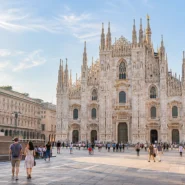
The Duomo is a group of different visits, rather than one doorway. The museum gives useful context for the exterior and the original works, while the Dome is a separate physical commitment. Pick the experiences you want instead of allowing the pass contents to set an endurance target.
On Day 1, an unhurried museum visit and lunch leave a deliberate gap before a chosen afternoon Dome slot. The museum can be visited earlier on that same valid pass day. A visitor who does not want the climb can still make a worthwhile architecture-and-sculpture day with a different pass, respecting its own first-day slot.
✅ What Other Travelers Say Anne and Ed of Our Big Italian Adventure published their complex guide in July 2025, explaining why its different doors and passes confuse first visitors. Their description discloses affiliate links and emphasizes the museum as well as the climb. It is a useful dated perspective; current Opera rules and the 2026 restoration notices determine your actual purchase.
⚠️ The Catch (Things to Keep in Mind) The Dome has 463 steps and no lift. Its named-ticket and punctuality rules matter, and the pass is not freely reschedulable. The Baptistery’s vault mosaics are not currently visible, and maintenance can remove a climb on the announced November dates. Choose the product that remains useful on your actual day.
Open the genuine official Brunelleschi Pass product and current calendar
📍 Stop 3: Uffizi Gallery
Renaissance painting · A separate morning · Highlights rather than a sprint
The Uffizi deserves its own morning because looking and standing become tiring long before the map distance does. Decide which painters or themes matter to you and allow pauses between rooms. A short highlights list is a way to enjoy the collection, not a competition to complete it in the minimum possible time.
The surrounding Piazza della Signoria and eastern streets make an easy continuation after lunch. Another timed gallery across the center would replace that recovery with a new deadline. If a particular artwork is essential, check the institution’s current notices and works off display before treating a guide’s route as a guarantee.
✅ What Other Travelers Say Our Big Italian Adventure’s February 2026 film offers a two-hour highlights strategy and explains the collection’s layout; its creators disclose affiliate links. This itinerary allows about three hours so that entry, interest and fatigue do not have to match a creator’s pace. Their video title is not a compulsory visit duration.
⚠️ The Catch (Things to Keep in Mind) A regular Uffizi ticket does not include the Vasari Corridor, which is a different product and reservation. Security and cloakroom procedures take time, and a single-entry ticket cannot be used for a lunch exit and later return. Check your final ticket’s name, time and entry or operator procedure.
Compare current official Uffizi products and prices
📍 Stop 4: Ponte Vecchio and Lower Oltrarno
River crossing · Lower streets · Optional palace rather than every interior
This part of Day 3 changes the pace from gallery rooms to streets, small squares and a meal on the other bank. Start with the bridge and keep the lower Oltrarno walk flexible. The route can be enjoyable without buying every palace, garden and church entry you pass.
If Pitti is important, make it the morning’s optional museum and shorten something else. Boboli is not a flat shortcut between sights; adding a garden visit also adds slopes and time. Keep the lower neighborhood and the later viewpoint as separate effort decisions, particularly with children, a stroller or a tired traveling companion.
✅ What Other Travelers Say Travels with Matteo & Micha’s April 2023 guide starts at Ponte Vecchio and moves through Oltrarno, including Santo Spirito, Pitti and the hill. The creators disclose affiliate links. It shows how the parts relate geographically; their full filmed selection is not a sensible obligation for every visitor in one afternoon.
⚠️ The Catch (Things to Keep in Mind) The public bridge crossing is different from a paid Vasari Corridor visit above it. Individual museums and church interiors have their own tickets and hours. Avoid a large suitcase on the narrow, busy streets, and choose a few places you actually want to explore rather than following an old food or shop opening time.
Read the city tourism office’s Ponte Vecchio information
📍 Stop 5: Piazzale Michelangelo
Public skyline terrace · A real hill · Weather-dependent finish
Piazzale Michelangelo is a satisfying finish when the weather, light and your legs cooperate. Its main value is the skyline, rather than another interior collection. Allow time to arrive, rest and look; a hurried photo after a forced climb is a weak use of the final afternoon.
Approach from lower San Niccolò only after deciding whether you want the stairs and slope. A current bus journey or an agreed taxi pickup can preserve the view without requiring the whole ascent on foot. The return after sunset also needs a plan, especially when daylight is short or a child is already tired.
✅ What Other Travelers Say RomeWise’s walking film was published in May 2023 and shows the route from the center via the river, San Niccolò and stairs to the viewpoint. Its description includes affiliate links. Use that dated route presentation to understand the effort, with current local conditions and an actual weather check deciding whether to walk it.
⚠️ The Catch (Things to Keep in Mind) This is an exposed public terrace, with a steep approach and no guaranteed clear sunset. The nearby Iris Garden is seasonal, not an always-open extra, and the walk above to San Miniato adds further effort. Keep the lower-river alternative if the hill no longer improves your day.
Check the municipality’s actual Piazzale Michelangelo information
Key FAQs
Is three days enough for Florence without rushing? Three full days can cover these five anchors with breaks if you separate the Uffizi morning from the north/central museum day and keep the south-bank day flexible. Arrival and departure time reduce the usable sightseeing period. Protect the essential reservations and remove optional Pitti, Boboli or extra climbs before removing meals and rest.
What should I do if one Florence day is a Monday? Put the lower Oltrarno and viewpoint day on Monday, then use open days for the Uffizi and Accademia. Check each institution’s actual calendar, including the Duomo Museum’s first-Tuesday closure and free-admission days. Book the reordered dates before treating the sample Day 1/2/3 labels as fixed.
Do I need skip-the-line tickets for the Duomo, Uffizi and Accademia? You need the appropriate real reservation or pass, with its actual entry procedure. Opera explicitly has no extra Duomo skip-line service beyond its booked-slot system. A museum reservation can reduce ordinary purchase waiting, but security and any voucher exchange or operator meeting remain. Read the issued document rather than relying on a package label.
Final Verdict and Your Next Step
Book the Accademia morning, Uffizi morning and the Duomo product that fits your actual calendar and stair tolerance. Then add meals, a useful hotel break and the south-bank day. Keep the last hill optional so that the three days finish with a view you enjoy, rather than a deadline you survive.
Buy ahead once the dates and essential rules are clear, using the official entries or a service package with clear entry instructions. Confirm names, guest ages, fixed slots, bags and the final ticket or voucher procedure before payment. No availability, live quote or instant security-free entry has been established here.