


💡 Key Takeaways
- Best overall balance: Late October to mid-November offers comfortable walking weather, clearer skies and autumn color without the punishing humidity of summer. Late November can be beautiful, but it is often busier.
- Best value window: The second half of May is the sweet spot after Golden Week and before the wettest part of the rainy season. You get long days, warm weather and generally better hotel value than during cherry blossom season.
- Biggest trap: July and August look attractive for festivals, but Nara is a walking-heavy destination. Heat, humidity and exposed paths can turn a simple temple route into an exhausting day.
The best time to visit Nara is not simply the month with the prettiest photos. Cherry blossom season is spectacular, but accommodation can cost more and the most famous areas become crowded. Summer brings festivals and long evenings, yet the heat and humidity can seriously reduce how much ground you cover on foot. The June rainy season does not mean nonstop rain every day, but forecasts are less dependable and wet shoes can ruin a temple-hopping plan. Golden Week, Japanese public holidays and major events can push up prices, while winter is quieter and often cheaper but comes with colder mornings and shorter daylight. The right month depends on which compromise you are willing to make.
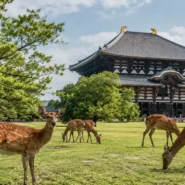
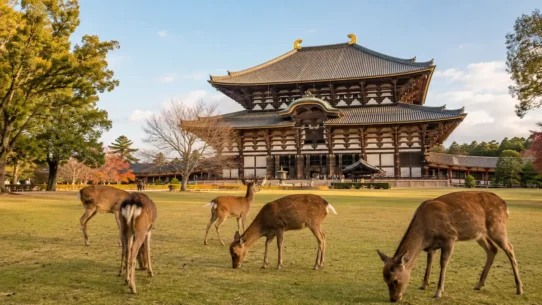
Nara deserves more than a rushed deer-photo stop. Nara Park alone covers a huge area, and the classic route between Kofuku-ji, Todai-ji, Kasuga Taisha, Naramachi and the slopes around Mount Wakakusa involves much more walking than many first-time visitors expect. Weather therefore matters more here than it might in a compact city where you can duck into shops every ten minutes.
The 1-Min Cheat Sheet
- March to April: Choose this period for cherry blossoms, spring atmosphere and mild daytime temperatures. Expect the highest competition for good-value rooms, unpredictable bloom timing and very busy weekends. Early March is quieter but still cool; late March to early April is the headline season.
- May to June: Late May is one of Nara’s smartest value picks. Avoid Golden Week in early May. June is greener and less crowded, but it is the wettest month in Nara’s long-term climate averages, so build flexibility into the itinerary.
- July to August: Best for summer festivals and travelers who tolerate heat well. Average daytime highs rise above 31°C in July and 33°C in August, before accounting for humidity or hotter-than-average days. Start at sunrise, rest at midday and do not treat heat warnings as an inconvenience.
- September to November: September can still feel like summer and carries greater rain and typhoon disruption risk. October is comfortable and practical. Late October to mid-November is the best all-round window; foliage at lower elevations often strengthens from mid-November onward.
- December to February: Best for lower prices, fewer tour groups and quiet temple grounds, except around New Year and festival weekends. Days are short, mornings can be near freezing and mountain routes may be limited by winter conditions.
Top Survival Tips
- Do not book only by a cherry blossom forecast issued months in advance. Full bloom can shift with temperature, wind and rain, and the photogenic peak is brief. Reserve refundable accommodation, then refine day trips when short-range forecasts become useful.
- Treat Golden Week as a separate season. Late April through early May is one of Japan’s busiest domestic travel periods. Transport and well-located rooms can sell out, and a normally peaceful temple approach may feel like a queue. The second half of May is a completely different experience.
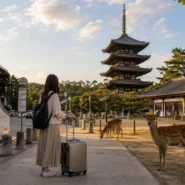
- Use Nara as an overnight destination during peak seasons. Day-trippers from Kyoto and Osaka tend to concentrate between late morning and mid-afternoon. Staying overnight lets you see Nara Park around sunrise and after the last major groups leave.
- Plan around walking exposure, not just the headline temperature. The route from the stations into Nara Park and onward to temples includes long outdoor stretches. In summer, schedule one major outdoor zone before 10:00 a.m., take a long indoor lunch break and return after 4:00 p.m.
- Do not confuse September with cool autumn. Early and mid-September can remain hot, humid and storm-prone. For genuinely comfortable walking weather, October is a safer bet.
- Rainy season is manageable with the right setup. June is not automatically a washout. Carry a compact umbrella, use quick-drying shoes, pack a spare pair of socks and keep Naramachi museums, cafes and covered shopping streets as wet-weather backups.
- Check attraction hours before a winter day trip. Shorter opening hours and early sunset compress the sightseeing day. Begin with the attraction that matters most rather than assuming you can improvise until late afternoon.
- Protect paper, maps and food around the deer. Deer may nudge or nip when they smell crackers or see paper in your hands. Feed only approved deer crackers, show empty hands when finished and keep tickets and documents zipped away.
- Compare Nara hotels with Kyoto and Osaka, not just with one another. During Kyoto’s peak blossom and foliage dates, sleeping in Nara can sometimes improve both price and atmosphere. On other dates, a day trip may be cheaper. Check the total cost after transport, not the room rate alone.
The Full Experience
🌸 March to April: Best for Cherry Blossoms, but Not for Bargain Hunters
Best for: Cherry blossoms, spring photography, first-time visits | Crowds: High to very high | Price level: High around peak bloom
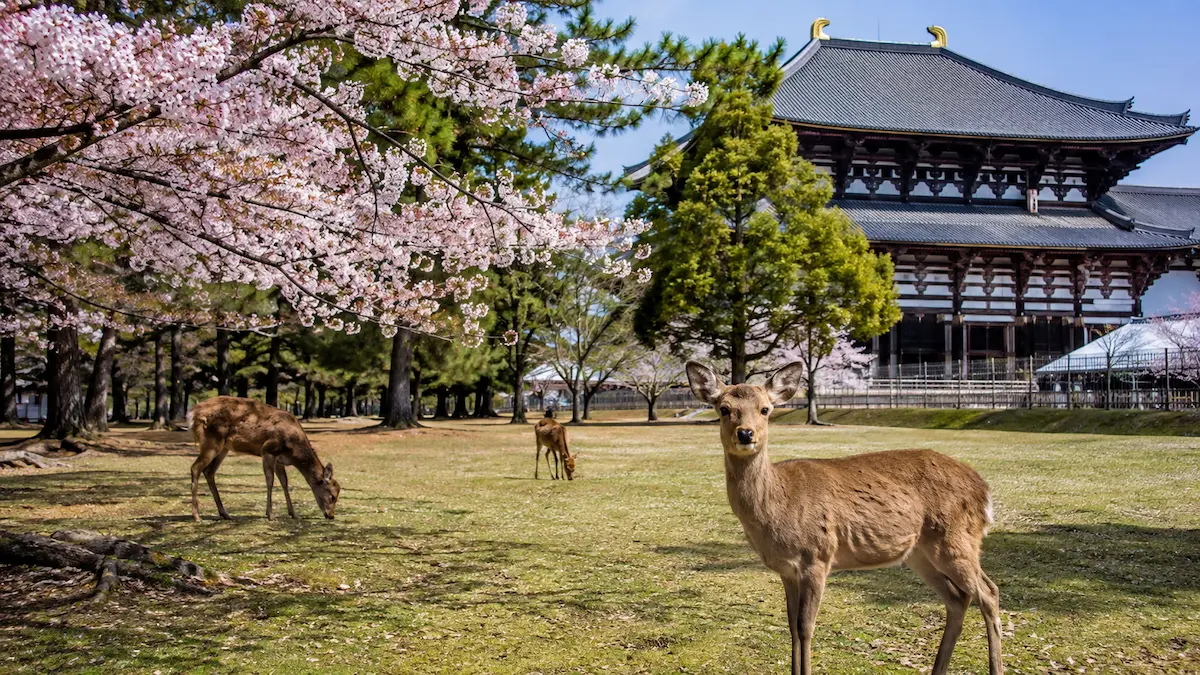
March begins cool, with Nara’s long-term average high around 13.9°C, then April becomes much gentler at roughly 19.8°C. That sounds ideal because it mostly is: spring is comfortable for the long walk through Nara Park, and cherry blossoms add drama to temple roofs, ponds and deer-filled lawns.
The problem is timing. Nara City commonly sees its main bloom from late March into early April, while Mount Yoshino in southern Nara Prefecture generally flowers in stages from early to mid-April because of its elevation. A date that works for central Nara may be too early or too late for Yoshino. Rain or wind can also shorten the best-looking period.
March 1 to 14 also brings the historic Shunie ceremonies at Todai-ji, commonly associated with Omizutori. This can be a compelling cultural reason to visit before peak blossoms, but evening ceremonies and special dates draw additional interest. By late April, Japan begins moving toward Golden Week, when domestic travel demand surges.
✅ What Other Travelers Say
Travelers consistently praise Nara in bloom, especially early in the morning when deer, temples and petals can be photographed without dense tour groups. They also report that weekdays and lesser-known blossom spots are noticeably calmer than the famous central viewpoints. A common lesson is that exact bloom timing is fickle, so rigid, nonrefundable plans create unnecessary stress.
⚠️ The Catch (Things to Keep in Mind)
Spring is visually rewarding but poor value if your main goal is simply to see temples and deer. Hotel prices can rise while the experience becomes less peaceful. Peak bloom often lasts roughly a week under favorable conditions, so paying a large premium months in advance does not guarantee perfect flowers. Cold mornings also surprise travelers who pack for warm afternoons only.
Best choice within this period: Visit on a weekday in the final days of March or first part of April, stay overnight, and enter Nara Park before 8:00 a.m. Travelers who care more about comfort and price than blossoms should shift to the second half of May.
🌿 May to June: Best Value after Golden Week, with a Rainy-Season Gamble
Best for: Green scenery, value, fewer crowds, longer daylight | Crowds: High in early May, moderate later | Price level: Better after Golden Week
May is split into two completely different travel experiences. Early May overlaps with Golden Week, one of Japan’s busiest holiday periods. Trains, attractions and hotels can be crowded or heavily booked. After that surge ends, the second half of May becomes one of the most sensible times to visit Nara: average highs are around 24.9°C, greenery is fresh, days are long and the heavy summer humidity has not fully arrived.
June is more complicated. Nara’s 1991–2020 climate normal shows about 184.1 mm of precipitation in June, the highest monthly average of the year. However, rainy season does not normally mean continuous rain from morning to night for an entire month. It means a higher chance of wet spells, gray skies, sudden changes and forecasts that remain uncertain until close to the date.
There are real advantages. Moss, garden stones and forest paths around Kasuga Taisha can look richer after rain, hydrangeas appear in the region, and visitor pressure is usually lower than during spring blossoms or autumn foliage. Rain also gives Naramachi’s old streets a moody atmosphere that clear-sky promotional photos rarely capture.
✅ What Other Travelers Say
Traveler reports are mixed in a useful way: some encounter several damp days, while others experience little rain and pleasant temperatures. The repeated advice is to watch short-range forecasts, carry a compact umbrella and bring footwear that can dry overnight. Flexible travelers often regard June as better than its reputation.
⚠️ The Catch (Things to Keep in Mind)
Wet stone steps can be slippery, humidity rises, and a rain jacket may feel clammy during uphill walks. A tightly scheduled outdoor itinerary can unravel if the wettest period lands on your only day. Early May is also not a budget loophole; Golden Week can produce peak-season conditions without cherry blossoms.
Best choice within this period: Target roughly mid- to late May for the strongest balance of weather, daylight and cost. Choose June only when you can accept changing plans and have at least one indoor or covered backup route.
🔥 July to August: Best for Festivals, Worst for Heat-Sensitive Travelers
Best for: Evening festivals, long days, summer atmosphere | Crowds: Variable, higher around Obon and events | Price level: Mixed; event dates can spike
July and August are the months most likely to look acceptable on paper and feel punishing in practice. Nara’s climate normals show an average high of about 31.7°C in July and 33.4°C in August. Those are averages, not maximums. Heat waves can push temperatures higher, while humidity reduces the body’s ability to cool down.
This matters because Nara sightseeing is unusually exposed. Todai-ji, Kasuga Taisha, Mount Wakakusa and the park are not connected by one air-conditioned corridor. Shade helps, but shaded humidity is still humidity. Travelers who normally complete a full Nara day in spring may need to cut the same plan by a third in August.
The reward is the evening calendar. Nara Tokae, usually held from August 5 to 14, illuminates parts of Nara Park with candles and creates one of the city’s most atmospheric night experiences. Summer evenings can be memorable, and early mornings are peaceful before day-trippers arrive. Mid-August Obon travel, however, adds domestic demand and can affect transport and accommodation.
✅ What Other Travelers Say
Travelers who enjoy summer festivals say Nara can still work well when the day is deliberately split: dawn sightseeing, a long midday break and an evening return. Others describe the Kansai heat as brutal because so much of the sightseeing is outdoors. Both views are valid; the difference is heat tolerance and itinerary discipline.
⚠️ The Catch (Things to Keep in Mind)
Dehydration is not the only issue. Heat can reduce appetite, concentration and patience, making temple fatigue arrive much earlier. Afternoon thunderstorms are possible, July may still overlap with the rainy season, and late summer begins the period when typhoons can disrupt rail and flight plans. Festival dates also do not guarantee cool evenings.
Best choice within this period: Visit only when a summer event is a major priority or when your schedule cannot move. Reserve accommodation close to Kintetsu Nara or JR Nara Station, start before 7:30 a.m., and treat noon to 3:30 p.m. as recovery time rather than sightseeing time.
🍁 September to November: Best Overall, Once Summer Finally Lets Go
Best for: Comfortable walks, autumn foliage, balanced conditions | Crowds: Moderate, rising at peak foliage | Price level: Moderate to high in late November
This three-month block contains Nara’s strongest travel window, but September should not be marketed as cool autumn. Its average high is still around 28.8°C, humidity can linger and September’s average rainfall is about 159.0 mm. Typhoons do not strike on a fixed schedule, yet they can cause heavy rain and transport disruption in late summer and early autumn.
October is the reset month. The average high falls to about 22.6°C, mornings become fresher and long outdoor routes feel realistic again. Foliage starts earlier at higher-elevation destinations in Nara Prefecture, such as Odaigahara, while Nara City generally colors later.
November delivers the strongest combination of crisp weather and autumn scenery. Official Nara travel guidance places much of the prefecture’s autumn color from mid-November into December, although mountain valleys and highland areas can peak earlier. Nara Park, Yoshikien, Isuien and temple grounds become increasingly photogenic as the month progresses.
✅ What Other Travelers Say
Many travelers find early November pleasantly uncrowded compared with the better-known late-November foliage period. Reports from peak foliage weekends describe much heavier foot traffic, particularly around famous gardens and central temple routes. The practical consensus is that autumn beauty increases as November advances, but so does competition for space and rooms.
⚠️ The Catch (Things to Keep in Mind)
Foliage timing varies by elevation and year, so there is no single perfect date for all of Nara Prefecture. Late November may overlap with Kyoto’s peak autumn demand, which can raise regional hotel prices even when Nara itself feels less intense. Daytime can be mild while evenings become cold quickly, especially after sunset in the park.
Best choice within this period: Choose late October to mid-November for the best overall balance. Choose the second half of November for stronger color, accepting higher prices and crowds. Avoid relying on early September for comfortable walking weather.
❄️ December to February: Best for Quiet Temples and Lower Prices
Best for: Budget stays, photography without crowds, winter events | Crowds: Low outside New Year and festivals | Price level: Often lowest in midwinter
Winter is Nara’s most underrated season for travelers who value space over color. January’s average temperature is about 4.5°C, with an average low near 0.8°C; February is only slightly warmer. Snow in central Nara is possible but not dependable, so do not book expecting a white landscape. What you can expect is clearer sightlines, quieter temple approaches and a better chance of experiencing the city without being carried along by a tour-group flow.
There are several reasons to visit beyond low prices. Wakakusa Yamayaki is normally held on the fourth Saturday of January. Kasuga Taisha’s Setsubun Mantoro on February 3 lights thousands of lanterns, while Nara Rurie typically brings evening illumination in the week before Valentine’s Day. These dates can briefly increase demand, so winter is not uniformly empty.
New Year is another exception. Hatsumode temple and shrine visits create a distinctive atmosphere, but some businesses close or reduce hours from late December into early January, and transport hubs can be busy. This is a cultural trip, not the easiest bargain trip.
✅ What Other Travelers Say
Travelers often describe winter Nara as peaceful and more intimate, especially early in the morning. Some specifically enjoy New Year traditions and the contrast between cold air and illuminated temples. Others warn that hungry deer can become more assertive around food, so keep paper and snacks secured.
⚠️ The Catch (Things to Keep in Mind)
Sunset comes early, bare gardens are less dramatic, and standing still at outdoor temples feels colder than the temperature suggests. Mountain trails and remote scenic routes may be limited by snow or ice. Travelers who arrive late in the morning can run out of daylight before completing a full park-and-temple circuit.
Best choice within this period: Pick mid-January to late February for quiet sightseeing and better-value rooms, avoiding New Year unless the celebrations are the point of the trip. Dress in removable layers and begin your main route soon after attractions open.
So, What Is the Best Month to Visit Nara?
For most travelers, November is the best month to visit Nara, but the answer needs one qualification. Early to mid-November usually gives a better balance of comfort and manageable crowds, while the strongest low-elevation foliage may arrive later. Travelers who want the best weather rather than guaranteed peak color should choose late October through mid-November.
May is the best alternative. Book after Golden Week, preferably in the second half of the month. You lose cherry blossoms and autumn leaves, but gain long daylight, warm conditions and a much better chance of finding sensible accommodation prices.
January and February are best for budget-conscious travelers who do not mind cold mornings and shorter days. April is best for iconic scenery if you accept crowds and price risk. July and August are the weakest general recommendation unless summer festivals matter enough to justify the physical discomfort.
Key FAQs
What is the best time to visit Nara for good weather and fewer crowds?
Late October to mid-November is the strongest overall choice. Temperatures are comfortable for walking and the worst summer humidity has passed. For fewer people, favor weekdays and the first half of November rather than peak foliage weekends later in the month.
Is Nara worth visiting during cherry blossom season?
Yes, especially for a first visit or photography-focused trip, but it is not the best value. The bloom window is short, exact timing changes each year and famous areas become crowded. Stay overnight, visit early and use refundable bookings to reduce the risk of paying peak prices for pre- or post-bloom dates.
Is June a bad time to visit Nara because of the rainy season?
No, but it is a higher-risk month for outdoor plans. June has Nara’s highest average monthly rainfall in the 1991–2020 climate normals, yet rain is not guaranteed all day, every day. June suits flexible travelers who appreciate greener scenery, lighter crowds and can switch between outdoor temples and indoor Naramachi attractions.
Final Verdict and Your Next Step
Choose late October to mid-November for the best overall experience, the second half of May for the best balance of value and weather, or mid-January to February for quiet sightseeing on a tighter budget. Book cherry blossom dates, peak foliage weekends, Golden Week, Obon and major festival nights as early as possible. For ordinary weekdays outside those periods, compare prices before committing because Nara rates can move differently from Kyoto and Osaka.
Check live availability rather than assuming one booking platform is always cheapest: compare Nara hotels on Agoda and Nara accommodation on Booking.com. For tours, passes and activities, browse Nara experiences on Klook and Nara tours on KKday. Always compare cancellation terms, meeting points and the final checkout total—not just the headline discount.
Editorial Data Note
Temperature and rainfall figures in this guide use the Japan Meteorological Agency’s 1991–2020 climate normals for Nara. Seasonal timing and event guidance were cross-checked with official Japan and Nara tourism resources. Climate averages describe typical conditions, not a guarantee for a specific travel date.
- Japan Meteorological Agency: Nara climate normals
- Japan National Tourism Organization: Golden Week travel guidance
- Official Nara Travel Guide: seasons in Nara
- Official Nara Travel Guide: Nara Tokae
Seasonal YouTube embed URLs and booking pages were checked during publication preparation. Third-party platforms can later change video embedding permissions, URLs, availability or commercial terms.