


💡 Key Takeaways
- Best overall balance: late April to May and October to early November usually give you the easiest mix of comfortable temperatures, outdoor-friendly weather and manageable humidity.
- Biggest weather trap: July and August can look perfect in beach photos, but heat, humidity, heavy rain and occasional typhoon disruption can make a packed sightseeing itinerary exhausting.
- Best value: winter is often easier on the accommodation budget, but strong coastal wind, shorter daylight and possible snow or ice around Hallasan mean it is not simply a “cheap version” of spring or autumn.
If you are trying to work out the best time to visit Jeju City, the hardest part is that every “good” month comes with a trade-off. Cherry blossom season can be beautiful, but the most famous flower roads and photogenic cafés attract extra visitors. Early summer brings lush scenery and hydrangeas, but rainfall becomes less predictable. July and August are the obvious beach months, yet high humidity can turn a relaxed coastal walk into a sweaty endurance test. Autumn is arguably the safest all-round choice, but Korean holiday weekends can still push up airfares and room rates. Winter is often calmer and cheaper, though wind chill and shorter daylight reduce how much you can comfortably fit into one day.
One important correction for trip planning: Jeju is in South Korea, so Japanese Golden Week and Japanese public holidays are not the main calendar to watch. What matters more is the Korean domestic travel calendar, especially long weekends, Seollal (Lunar New Year), Chuseok and popular school-holiday periods. Jeju is heavily visited by domestic travelers, so a Korean holiday can affect flight availability and hotel pricing even when international demand looks quiet.
The 1-Min Cheat Sheet
- March to April: Best for cherry blossoms and canola flowers. Go if spring scenery is the priority; avoid relying on exact bloom dates because a warm spell, cold snap or rain can shift the peak.
- May to June: One of the smartest windows for mild-to-warm weather, green landscapes and hydrangeas. May is easier; June becomes wetter and more humid as summer approaches.
- July to August: Best for swimming, beaches and full summer energy. Worst for travelers who dislike humidity, sudden downpours or weather-related itinerary changes.
- September to November: Best all-round period for walking, road trips, Olle trails, oreum hikes and lower humidity. October is the sweet spot for many first-time visitors.
- December to February: Best for quieter travel, winter scenery, tangerines and potentially lower accommodation costs. Pack for wind, not just the temperature shown in the forecast.
Top Survival Tips
- Do not plan Jeju using temperature alone. Wind, humidity and rain change how the same temperature feels. A 27°C summer day with high humidity can be far more tiring than the number suggests, while a mild winter day can feel much colder on an exposed coast.
- Do not build a flower trip around one exact date months in advance. Cherry blossoms are weather-sensitive. Use the annual forecast when it is released, then keep one or two itinerary days flexible so you can chase the best bloom area rather than forcing a fixed photo stop.
- Rainy season does not mean nonstop rain every day. The real problem is unpredictability: an outdoor-heavy itinerary can lose half a day to heavy showers, low cloud or wind even if the whole week is not washed out.
- For July to September, protect your “must-do” day. If Hallasan, Udo, a boat trip or a major coastal hike is essential, schedule it early in the trip. That gives you a backup day if weather forces a change.
- Check Korean holidays before booking flights. Jeju is a major domestic leisure destination. Seollal, Chuseok and long weekends can create price spikes and sold-out transport that surprise international visitors.
- Do not assume autumn foliage works like mainland Korea. Jeju’s milder climate means the island’s autumn appeal is often silver grass, pink muhly, clear skies, citrus season and comfortable walking weather rather than endless streets of red maple trees.
- Stay realistic about transport. Jeju City is a convenient airport and bus base, but many natural attractions are spread across the island. A rental car, taxi day tour or organized tour can save a lot of time, especially on a short trip.
- Compare total trip cost, not only hotel price. A cheaper winter room may be great value, but if short daylight, wind or weather force more taxi use and indoor activities, the savings can shrink. Likewise, a higher spring hotel rate may be worth it if the trip is specifically about blossom photography.
The Full Experience
🌸 March to April: Best for Cherry Blossoms, but Not for Fixed-Date Perfectionists
Best for: cherry blossoms, canola flowers, photography, spring road trips | Risk level: medium crowd risk, changeable weather, bloom timing uncertainty
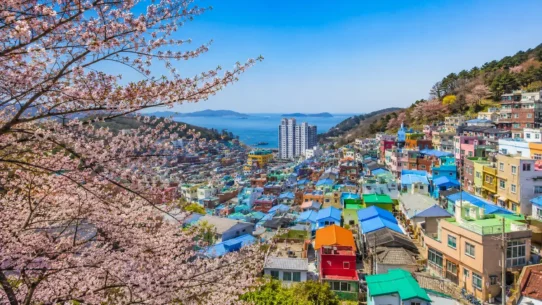
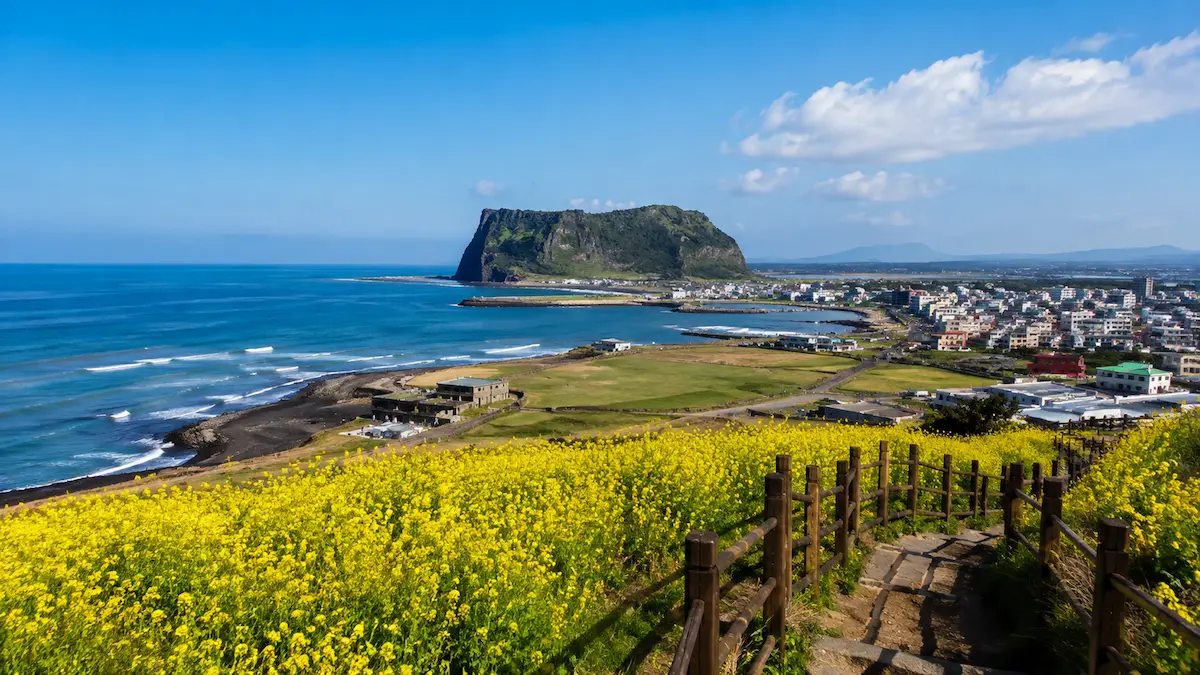
Spring is the most visually seductive answer to the best-time question. Jeju’s king cherry blossoms and yellow canola fields can create exactly the pink-and-gold road scenes people imagine when planning a Korea spring trip. For 2026, Korea Tourism Organization’s forecast placed Jeju’s first cherry blossoms around late March, with peak bloom roughly a week later, but the important lesson is not the exact date: the peak moves from year to year.
March itself can still feel cool and exposed, especially in the morning and along the coast. April is generally easier for walking and driving, and by later April you have a better chance of comfortable sightseeing without the narrow pressure of chasing peak blossom days. If flowers are the entire reason for your trip, aim for the late-March-to-early-April zone and accept the risk. If you simply want pleasant spring weather, later April is the more forgiving choice.
✅ What Other Travelers Say
Recent traveler discussions repeatedly make the same practical point: the famous blossom streets can be busy, but Jeju is large enough that you can escape the crowds by visiting popular blossom spots on weekdays, going early, or choosing less famous roads and small oreum viewpoints. In other words, blossom season does not automatically mean the entire island feels crushed.
⚠️ The Catch (Things to Keep in Mind)
Do not book an expensive non-refundable trip because a social post claims the blossoms “always peak” on a specific date. A cold snap can delay bloom; warm weather can advance it; strong wind or rain can shorten the best-looking period. Also, spring weather can swing sharply between sunny afternoons and chilly, windy mornings, so layers matter.
🌿 May to June: Best Weather-to-Crowd Balance Before Summer Gets Sticky
Best for: first-time visitors, road trips, hiking, hydrangeas, outdoor sightseeing | Risk level: low to medium in May, rising rain and humidity in June
If you want a practical answer rather than the most photogenic one, May is one of the strongest months to visit Jeju City. The island is green, daylight is generous, and you can spend long periods outdoors before midsummer humidity becomes oppressive. It is especially good for travelers who want a mixed itinerary: Jeju City food and markets, coastal drives, waterfalls, oreum walks, cafés and a day of hiking.
June is more complicated. The landscape becomes lush and hydrangea season adds another visual reason to visit, but rainfall risk rises and humid air becomes more noticeable. This does not mean you should avoid June. It means you should stop planning every day as if the sky will stay clear from breakfast to sunset. Build in indoor options such as museums, tea experiences, cafés or markets and keep the most weather-sensitive activity movable.
✅ What Other Travelers Say
Travelers planning short Jeju trips often emphasize how much a car, driver or day tour improves the experience because the island’s best natural stops are spread out. In mild-weather months this matters even more: when conditions are good, you want to spend the day enjoying multiple areas, not losing hours to awkward transfers.
⚠️ The Catch (Things to Keep in Mind)
Late May and June can look deceptively “safe” in a generic climate chart. In reality, Jeju is weather-sensitive and rain can arrive in blocks rather than neat afternoon showers. June travelers should prioritize flexible bookings and avoid stacking several prepaid outdoor activities on consecutive days.
🏖️ July to August: Best for Beaches, Worst for Heat-and-Humidity Haters
Best for: swimming, beaches, summer atmosphere, water activities | Risk level: high humidity, heavy rain, storms or typhoon disruption, peak-season demand
Summer is the easiest season to misunderstand. Yes, this is when Jeju looks most like a classic island holiday: warm sea, busy beaches, lush forest, waterfalls and long evenings. But it is also the period when an overpacked itinerary can fall apart fastest. Official Jeju guidance describes summer as hot and humid with the possibility of storms or typhoons, and that combination matters much more than the headline temperature.
If your priority is swimming and beach time, July and August make sense. If your dream trip is walking from attraction to attraction, hiking exposed trails and taking midday photos for eight hours, summer is a poor match unless you handle heat extremely well. Plan outdoor activities early in the morning, use the middle of the day for lunch, cafés or indoor attractions, then go outside again later.
There is also a price issue. Summer holiday demand can raise the cost of popular resorts, rental cars and convenient flight times. A cheap room is not impossible, but the best-located or most photogenic options may not be cheap once school holidays and weekend demand hit.
✅ What Other Travelers Say
Summer visitors tend to get the most value when they lean into what the season is actually good at: beaches, coastal drives, water activities and a slower pace. Trying to force a spring-style hiking schedule into August is where frustration begins.
⚠️ The Catch (Things to Keep in Mind)
The biggest trap is assuming rain is the only weather problem. Strong wind can cancel or disrupt boats, low cloud can ruin mountain views, and a tropical system can affect flights. Keep Udo, yacht trips and major hikes flexible. Travel insurance and changeable bookings are more valuable in this season than they may look at checkout.
🍂 September to November: Best Overall for Comfortable Exploring
Best for: walking, Olle trails, oreum hikes, road trips, silver grass, tangerines | Risk level: early-autumn rain or storm risk, Korean holiday price spikes
For most first-time visitors, this is the period I would choose. September can still feel summery and carries some rain or storm risk, but once the worst humidity fades, Jeju becomes dramatically easier to explore. October in particular is a strong compromise: pleasant walking temperatures, clearer-feeling air, good road-trip conditions and attractive seasonal scenery without the flower-chasing pressure of spring.
Jeju autumn is not only about red and orange leaves. Depending on the location and year, the stronger visual identity can be silver grass, pink muhly, buckwheat flowers and citrus. November also brings mandarin season into focus and can be excellent for food-driven travel, though mornings and evenings cool down quickly.
The main booking warning is the Korean holiday calendar. Chuseok is one of the country’s most important holidays and its date changes each year. If your trip overlaps a major holiday or substitute holiday, domestic flights and accommodation can tighten quickly. Check the exact year’s calendar before assuming an autumn weekday will be quiet.
✅ What Other Travelers Say
Recent community discussions often describe late October and early November as an excellent time for Jeju’s natural scenery, while also warning travelers not to expect mainland-style foliage everywhere. Locals and repeat visitors frequently point to Hallasan and higher areas for stronger fall color, with the rest of the island offering a milder, more mixed autumn look.
⚠️ The Catch (Things to Keep in Mind)
September is not automatically “safe autumn.” Residual summer humidity, rain and typhoon influence can linger. If weather stability is your top priority, October is generally the more comfortable target. By late November, daylight shortens and wind becomes a more noticeable part of the day.
❄️ December to February: Best for Quieter Travel and Winter Value
Best for: quieter streets, winter cafés, tangerines, snowy Hallasan scenery, value-focused trips | Risk level: strong wind, shorter daylight, possible snow or ice at elevation
Winter is underrated if you travel for food, cafés, markets, photography and a slower island rhythm rather than swimming. Jeju is milder than much of mainland Korea, and sub-zero temperatures are less common at low elevation. But this is where many travelers make a packing mistake: the wind can make Jeju feel much colder than the thermometer suggests.
Hallasan is the big winter wildcard. Snow on the mountain can create spectacular scenery, but it also changes the practical side of the trip. Trails may require winter equipment, road conditions can change and access can be restricted. Never treat a winter Hallasan hike as a casual add-on without checking current conditions.
For budget travelers, winter can offer attractive hotel rates outside holiday peaks. The trade-off is shorter daylight, so a three-day winter trip simply has fewer usable outdoor hours than a three-day May trip. Prioritize geographically tight days instead of trying to cross the island repeatedly.
✅ What Other Travelers Say
Winter visitors often highlight snowy Hallasan as the memorable part of the season, while Jeju City itself remains a useful base for food, markets and easier transport. The island can still be enjoyable without snow, but travelers who expect a guaranteed white landscape at sea level are likely to be disappointed.
⚠️ The Catch (Things to Keep in Mind)
Winter is not automatically crowd-free or cheap. Seollal, New Year periods and popular winter weekends can affect transport and hotel supply. Coastal wind can also make exposed attractions much less comfortable than sheltered cafés or forest walks.
So, What Is the Best Month to Visit Jeju City?
For the best all-round experience, choose May or October. May gives you green landscapes, comfortable outdoor weather and long days before summer humidity fully arrives. October gives you a similarly strong weather window with lower humidity, great walking conditions and distinctive autumn scenery.
If cherry blossoms are non-negotiable, choose late March to early April and accept higher uncertainty. If beaches are the priority, choose July or August and design the trip around heat and weather flexibility. If price and quiet matter more than long outdoor days, look at January, February or early December outside major holidays.
Key FAQs
What is the best time to visit Jeju City for good weather and fewer crowds?
Late April to May and October are the strongest choices. You usually avoid the worst midsummer humidity while still getting comfortable conditions for walking, driving and outdoor attractions. Weekdays are noticeably easier than weekends at the most famous spots.
Is Jeju City worth visiting during the rainy season in June and July?
Yes, if you keep your itinerary flexible. Rainy season does not mean every day is a complete washout, but weather becomes harder to predict. Mix outdoor plans with markets, museums, cafés and other indoor backups, and avoid making every paid activity weather-dependent.
Is cherry blossom season the best time to visit Jeju City?
It is the best time for spring flower photography, not necessarily the best time for every traveler. Bloom dates are short and weather-sensitive, popular blossom roads attract crowds, and accommodation can cost more. If you value easy weather over flowers, late April or May is a safer choice.
Final Verdict and Your Next Step
If you want the simplest recommendation, book May or October. They give most travelers the best balance of weather, outdoor time and trip reliability. Choose late March to early April only if cherry blossoms are a major goal, choose July to August for beaches, and choose winter if you value quieter travel and do not mind wind and shorter days.
Whichever month you choose, book earlier if your dates overlap cherry blossom weekends, Korean public holidays, summer school holidays or a major event. Jeju has plenty of accommodation, but the best-located rooms and best-value flights disappear before the island is technically “sold out.”
Check live accommodation availability:
Agoda – Jeju hotels
Booking.com – Jeju hotels
Compare tours and activities:
Klook – Jeju things to do
KKday – Jeju tours and experiences