
💡 Key Takeaways
- For the best overall balance, aim for late October to early November or May. You get far more comfortable walking weather than midsummer, while avoiding some of the price-and-crowd pain of peak cherry blossom weekends.
- Cherry blossom season is beautiful but unforgiving if your dates are rigid. Gyeongju’s bloom can shift with the weather, and the photogenic window around late March and early April is short. Book cancellable accommodation early, then follow the city’s blossom updates.
- July and August are the hardest months for a sightseeing-heavy trip. Heat, humidity, summer rain and occasional typhoon disruption can turn a pleasant temple-and-tombs itinerary into a sequence of air-conditioning breaks.
The best time to visit Gyeongju depends less on finding one “perfect” month and more on deciding which inconvenience you are willing to accept. Cherry blossom season can make Daereungwon, Bomun Lake and the historic district look spectacular, but the most photogenic weekends also attract heavy demand. Summer gives you long daylight hours and lush scenery, yet Gyeongju is a walking-intensive destination and high heat plus humidity can seriously reduce how much you enjoy the day.
The rainy season is another point travelers often misunderstand. It does not mean rain falls continuously every day, but from late June into July the forecast becomes less dependable and downpours can be intense. Autumn is usually the easiest season for long outdoor days, although foliage weekends and major events can increase hotel rates. Winter is quieter and can offer better value, especially if you care more about history than greenery, but daylight is shorter and the landscape can look brown rather than postcard-perfect.
One more calendar trap: Japan’s Golden Week is not Gyeongju’s main holiday calendar. It can contribute some extra inbound demand in early May, but Korean public holidays, long weekends, Seollal, Chuseok and Gyeongju’s own large festivals have a more direct effect on domestic transport and local accommodation. In other words, check both regional travel demand and South Korea’s calendar instead of assuming Japanese holidays alone will determine crowds.
The 1-Min Cheat Sheet
- March to April — Best for cherry blossoms and spring atmosphere: Cool-to-mild walking weather, rapidly changing bloom timing and some of the year’s most sought-after weekends. Great if blossoms are the purpose of the trip; less attractive for bargain hunters who hate crowds.
- May to June — Best shoulder-season compromise: May is one of the easiest months for outdoor sightseeing, with warmer days and long daylight. June becomes greener and more humid, and rain risk rises as the country approaches the summer monsoon period.
- July to August — Best only if summer is your fixed travel window: Lush, lively and full of long evenings, but also hot, humid and wet. Travelers who struggle with heat should treat this as the least comfortable window for a walk-heavy Gyeongju itinerary.
- September to November — Best overall for weather and autumn scenery: September can still feel humid and wet, while October and early November generally bring the most comfortable combination of cooler air, clearer walking conditions and fall color. Watch Korean holiday weekends and October events.
- December to February — Best for quiet sightseeing and a slower pace: Cold, dry and less green, but the major historic sights remain visitable. This season suits travelers who value lower crowd levels more than seasonal scenery.
Top Survival Tips
- Do not book cherry blossom dates from an old blog post. Bloom timing changes every year. Gyeongju’s official 2026 blossom monitor, for example, expected first bloom around March 26 and peak around March 30 under the forecast conditions, while the city moved the Daereungwon Stonewall Cherry Blossom Festival to April 3–5 to better match the flowers. Treat late March to early April as a planning window, not a guarantee.
- Book the room before you book the blossom photo plan. If you are visiting on a spring weekend, a fall foliage weekend or a major festival date, lock in a refundable hotel early. You can re-check rates later, but waiting for a last-minute bargain can leave you choosing between poor location and poor value.
- Do not assume “rainy season” means a total washout. Rain can arrive as heavy bursts with usable dry periods between them; in other years, systems linger and produce long wet spells. Build one indoor or weather-resistant block into the itinerary rather than abandoning the season completely.
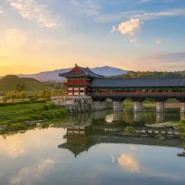
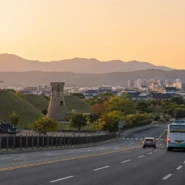
- In summer, distance on a map understates the effort. Daereungwon, Cheomseongdae, Woljeonggyo, Hwangnidan-gil and nearby heritage areas look close together, but repeated outdoor walking in high humidity adds up. Start early, use cafés or museums as cooling stops, and save a taxi budget for the hottest part of the day.
- September is not automatically “autumn weather.” Early September can still feel like an extension of summer, and fall color frequently arrives later than first-time visitors expect. If leaves are a priority, late October to early November is a safer target than mid-September.
- Check Korean holidays before Japan’s Golden Week. Seollal and Chuseok trigger large domestic travel movements, while long weekends around Korean public holidays can affect trains, buses and hotel demand. Golden Week may add visitors, but it is a secondary factor in Gyeongju rather than the core local crowd calendar.
- Do not confuse the cheapest displayed month with the best value. Live hotel trend pages can disagree because prices change by booking date, room inventory and day of week. Recent comparison data has shown low prices in winter on one site and surprisingly competitive June rates on another. The practical move is to compare your exact dates, especially weekdays versus Friday and Saturday.
- Typhoon risk is low-frequency but high-impact. South Korea can be affected by typhoons from summer into autumn. Most trips will not be disrupted, but if you travel from roughly June through October, keep transport plans flexible and check the Korea Meteorological Administration forecast close to departure.
The Full Experience
🌸 March to April: Best for Cherry Blossoms, but Not for Bargain Hunters
Best for: Cherry blossoms · Spring photography · Cool walking weather · First-time visitors
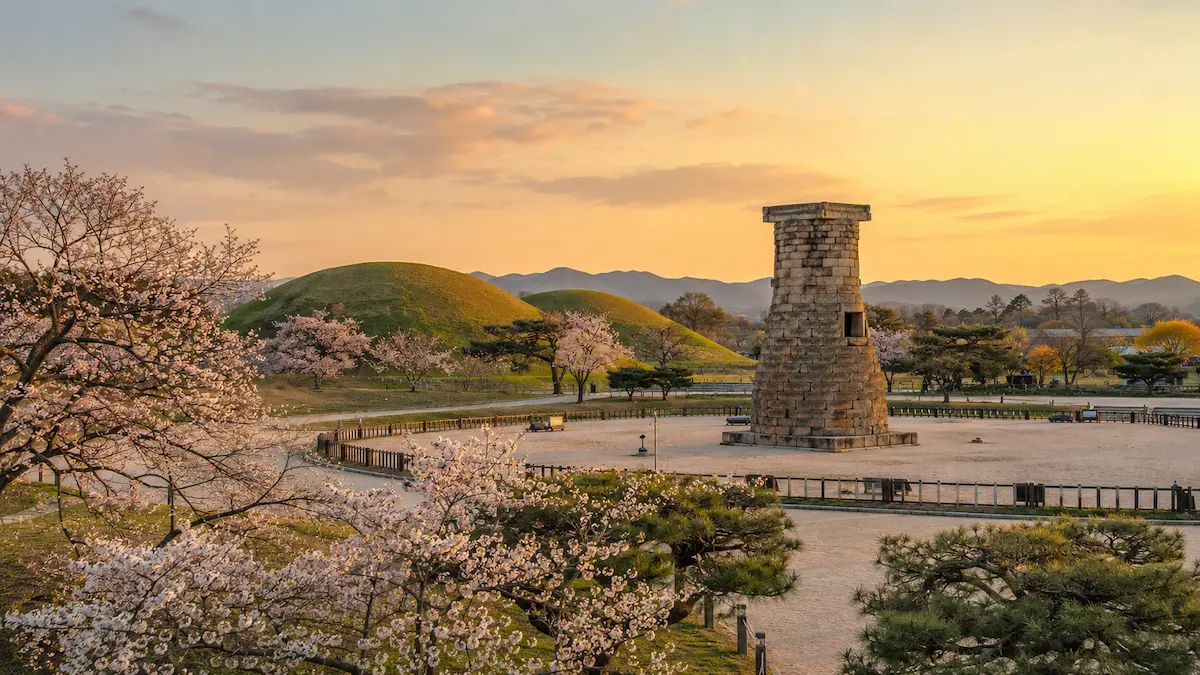
For many travelers, this is the dream version of Gyeongju. Cherry trees frame historic walls, royal tombs and roads around Bomun Tourist Complex, and the city traditionally holds its cherry blossom celebrations around early April. If your main goal is spring scenery, this is the strongest reason to choose Gyeongju over a generic city break elsewhere in Korea.
Weather is usually much kinder to walkers than in summer. Long-term climate data puts the average March temperature at about 6°C and April at about 12°C, with average daytime highs rising from roughly 12°C in March to around 18°C in April. You will still want layers, especially for early starts and evenings, but you can cover the historic core without fighting oppressive heat.
The problem is timing. Blossoms do not respect flight bookings. Gyeongju’s official 2026 monitoring page noted that cherry blossoms can reach peak only around five to seven days after flowering begins, and the city adjusted its festival dates to match that year’s bloom. A warm spell, cold snap, rain or wind can pull the best photo window forward or shorten it quickly.
This is also the period when travelers most easily overpay for the idea of “peak spring.” Hotel pricing is dynamic rather than universally expensive every day of April, but desirable weekends close to bloom and events are less forgiving. If your dates are fixed and you do not particularly care about cherry blossoms, paying a spring premium just to stand in a crowd is a poor trade.
✅ What Other Travelers Say
Recent traveler reports commonly describe early-April Gyeongju as gorgeous when the bloom lines up, but they also show how quickly conditions change: flowers can be at full bloom, already falling or partly finished within the same general week. The useful lesson is not “book April X”; it is to watch current bloom updates and keep expectations flexible.
⚠️ The Catch (Things to Keep in Mind)
- Peak bloom is brief and weather-sensitive.
- Popular photo spots feel dramatically busier on weekends.
- Wind or rain can shorten the peak-looking period.
- If blossoms are optional rather than essential, May often offers a calmer trade-off.
🌿 May to June: Best for Comfortable Walking and Shoulder-Season Value
Best for: Long sightseeing days · Green landscapes · Couples · Travelers avoiding peak blossom crowds
May is one of the easiest months to recommend. The spring rush is fading, temperatures are warmer without reaching midsummer discomfort, and long daylight gives you room to combine temples, tombs, cafés and an evening visit to illuminated sites. Long-term figures put May’s average temperature around 17°C, with average highs around 23°C. It is warm enough to travel light but usually still pleasant for extended walking.
June is more complicated. Gyeongju becomes beautifully green, hydrangeas and summer vegetation add color, and the days remain long. The city’s own June travel recommendations highlight the transition into summer and the appeal of greener scenery. But humidity rises sharply, average rainfall increases and the approach of the summer rainy period adds uncertainty.
That makes late May and early June a useful value window for travelers who do not need cherry blossoms or fall leaves. You may find rates that compare well with headline-season weekends, although hotel pricing changes constantly and should be checked for your exact dates. If a booking site shows a surprisingly cheap June stay, remember that the discount may partly compensate for less reliable weather.
Early May deserves a calendar check. Japan’s Golden Week can create some extra regional travel demand, but Korean holidays such as Children’s Day, Buddha’s Birthday and substitute holidays can be more directly relevant to transport and domestic crowding. Their dates and weekday placement change from year to year, so a quiet-looking Tuesday can become part of a long weekend in a particular calendar.
✅ What Other Travelers Say
Walking-heavy trip reports from late May and early June generally support what the climate data suggests: this window can be productive for travelers who want to spend most of the day outside. The main difference between a comfortable trip and a sticky one is often whether you arrive before humidity and repeated rain systems intensify.
⚠️ The Catch (Things to Keep in Mind)
- Late June is less dependable than May for dry sightseeing days.
- Humidity rises before many travelers mentally switch into “summer mode.”
- Holiday weekends can erase the expected shoulder-season price advantage.
- If you dislike rain uncertainty, choose May over late June.
☀️ July to August: Best for Long Evenings, Worst for Heat-Sensitive Travelers
Best for: Summer-only schedules · Green scenery · Night sightseeing · Travelers comfortable with heat
This is the period to choose because your calendar requires it, not because the climate is ideal. Gyeongju’s most famous sights are spread across large outdoor heritage areas, and summer heat changes the practical meaning of every itinerary. Long-term data puts average highs around 28°C in both July and August, but humidity is high and heat waves can push actual daytime conditions far beyond the averages.
Rain is the second issue. Climate data shows July and August among Gyeongju’s wettest months, while VisitKorea notes that the country’s rainy season usually overlaps part of late June through late July. “Monsoon” does not mean guaranteed all-day rain. Travelers sometimes get short violent showers followed by usable weather; other trips run into repeated rain bands that disrupt outdoor plans for days.
Recent extreme heat is also a reminder not to treat historical averages as a ceiling. South Korea experienced record-breaking heat in 2026, with very high temperatures affecting multiple regions. A 28°C monthly average high does not protect you from a 34–37°C afternoon during a heat wave.
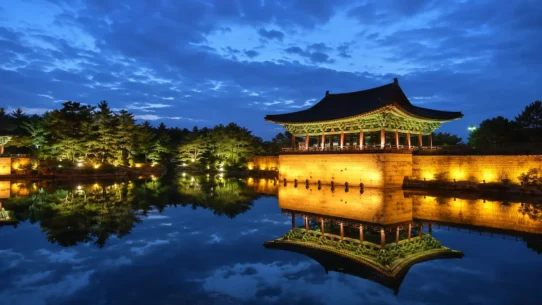
If July or August is your only option, redesign the day instead of trying to imitate a spring itinerary. Visit outdoor heritage sites early, take a long indoor or air-conditioned break after lunch, and return outside in late afternoon. Evening stops such as Woljeonggyo and Donggung Palace and Wolji Pond become much more attractive when the sun is lower.
✅ What Other Travelers Say
Summer reports are genuinely mixed, which is useful. Some visitors describe August walking in Korea as exhausting or borderline unbearable in high humidity; others manage it with early starts, regular air-conditioning breaks and realistic pacing. The disagreement is less about the weather itself than personal heat tolerance and itinerary design.
⚠️ The Catch (Things to Keep in Mind)
- Heat and humidity can cut your realistic sightseeing output by hours.
- July carries significant rainy-season uncertainty; August can still be very wet.
- Summer through early autumn also overlaps the broader typhoon-risk period.
- Pack for both intense sun and sudden heavy rain, not one or the other.
🍁 September to November: Best Overall for Weather, with October Crowd Traps
Best for: Autumn foliage · Long heritage walks · Photography · First-time visitors · Best overall balance
If you want one broad season with the highest chance of enjoying Gyeongju on foot, choose autumn — but aim later than many travelers expect. September can still be warm, humid and wet. Long-term figures put September’s average temperature near 20°C and rainfall around 166 mm, so arriving on September 10 and expecting crisp fall air is a common planning mistake.
October is much more comfortable, with an average temperature around 15°C and substantially less rain in the long-term climate record. This is the kind of weather that lets you walk from Daereungwon through the historic district without constantly negotiating heat, umbrellas or indoor recovery stops. Late October into early November also gives you a better chance of fall color at places such as Bulguksa, although the exact peak shifts with the year’s temperatures.
The downside is that everybody else understands the appeal of autumn too. Hotel comparison data can show October as one of the more expensive months, and the city’s October event calendar can be busy. The Silla Cultural Festival is a major draw: in 2026 it was scheduled for October 9–11 around Bonghwangdae and Woljeonggyo, and the festival has attracted well over 100,000 visitors in recent editions. That is a reason to attend if you like atmosphere — and a reason to avoid that weekend if you want quiet.
South Korean public holidays can amplify the squeeze. Chuseok often falls in September or October depending on the lunar calendar, while National Foundation Day and Hangeul Day can create October long-weekend effects depending on the year. Trains and buses deserve as much attention as hotel rates during these windows.
My practical sweet spot is late October to early November if your priority is weather plus scenery and you can avoid a major holiday or festival weekend. If crowd avoidance matters more than peak foliage, early-to-mid November can be even easier, with cooler evenings and less seasonal hype.
✅ What Other Travelers Say
Traveler discussions repeatedly warn that September can be too early for strong fall color and that foliage timing can run later in warm years. That aligns with official foliage guidance, which commonly places peak color in many Korean destinations from late October into early November rather than early fall.
⚠️ The Catch (Things to Keep in Mind)
- September may still feel humid and summery.
- October weekends can be expensive, especially around holidays and major events.
- Fall foliage is weather-dependent; no date guarantees peak color.
- Bring a layer for cold evenings if traveling in November.
❄️ December to February: Best for Quiet History, Not for Postcard Scenery
Best for: Low crowds · History-focused trips · Quiet photography · Flexible budget travelers
Winter Gyeongju is underrated if your main interests are Silla history, temples, museums and uncluttered historic sites. It is also the season when you are least likely to spend half the day waiting for a clean photo angle at famous outdoor landmarks. January is the coldest month in the long-term climate record, averaging around -0.5°C overall, with average nighttime lows near -4°C.
The weather is comparatively dry, which is useful, but the trade-off is visual. Bare trees, brown grass and shorter daylight make some landscapes feel subdued compared with spring and autumn. If the mental picture that sold you on Gyeongju is pink blossoms or fiery foliage, a cheap January room may not actually be good value for your priorities.
Price-wise, winter often improves your odds of finding softer hotel demand, and one current hotel comparison dataset identifies January as Gyeongju’s cheapest month on average. Another live rate tracker shows more variation by month, which is exactly why “winter is always cheapest” is too simplistic. Weekday stays, refundable bookings and exact-date comparisons matter more than a single annual chart.
There are also winter-specific reasons to visit. Gyeongju holds year-end and New Year sunrise events near the coast around King Munmu’s Tomb area, and indoor attractions such as the Gyeongju National Museum become especially useful when temperatures drop. February begins to feel like a transition month, but it is still winter rather than early cherry season.
✅ What Other Travelers Say
Winter visitors often say Gyeongju remains worthwhile because the historical value does not disappear with the leaves. The recurring caveat is scenery: travelers who arrive expecting lush grounds can find the season visually flat, while those who prioritize archaeology and quiet streets may prefer it.
⚠️ The Catch (Things to Keep in Mind)
- Cold mornings and evenings require proper layers.
- Shorter daylight compresses outdoor sightseeing time.
- Brown winter scenery is a real aesthetic trade-off.
- Seollal can create major domestic transport demand even during an otherwise quiet season.
So, What Is the Best Month to Visit Gyeongju?
Choose May if you want comfortable walking, long days and a good chance of avoiding the most intense seasonal crowds. It is the easiest all-round recommendation for travelers who do not need cherry blossoms or autumn leaves.
Choose late October to early November if weather and scenery matter most. This is the strongest overall window for cool heritage walks and fall color, but check the holiday and festival calendar before paying for a high-demand weekend.
Choose late March to early April only if cherry blossoms are a top priority and you can accept timing risk, busier attractions and less forgiving accommodation demand.
Avoid July and August if you are heat-sensitive or if your plan is built around walking all day. The trip can still work, but you need a slower schedule, weather backups and realistic expectations.
Choose January or February if quiet historic sites matter more to you than colorful landscapes. Winter is not the prettiest version of Gyeongju, but it can be one of the least stressful.
Key FAQs
What is the best month to visit Gyeongju for good weather and fewer crowds?
May is the safest compromise for mild-to-warm weather, long sightseeing days and fewer headline-season pressures than cherry blossom weekends. If you prefer cooler weather and fall scenery, early November is another strong choice. Late October often has excellent conditions, but popular foliage weekends can be busier and more expensive.
When is cherry blossom season in Gyeongju, and is it worth the crowds?
Gyeongju’s cherry blossom window usually centers on late March to early April, while the city’s main blossom celebrations are typically scheduled around early April. Exact timing varies each year. In 2026, the city’s official monitor forecast flowering around March 26 and peak around March 30 under then-current weather conditions, with peak generally arriving roughly five to seven days after bloom begins. It is worth the crowds if blossoms are one of your main reasons for visiting; otherwise, May is easier.
Is July a bad time to visit Gyeongju because of monsoon rain and heat?
July is not impossible, but it is one of the least comfortable months for a walking-heavy trip. Long-term climate data shows an average high near 28°C, high humidity and around 193 mm of monthly precipitation. South Korea’s summer rainy season commonly overlaps late June through late July, so plan early outdoor starts, indoor backup stops and flexible evenings rather than assuming every day will be dry — or that every day will be a washout.
Sources and Editorial Verification Notes
This guide separates long-term climate averages from date-specific forecasts and live hotel pricing. Seasonal conditions, bloom dates, holiday placement and accommodation rates change every year, so re-check them before booking.
- Gyeongju City: 2026 Cherry Blossom Bloom Status and Forecast
- Gyeongju City: Annual Festivals
- Gyeongju City: Silla Cultural Festival
- VisitKorea: Climate and Seasonal Weather in Korea
- VisitKorea: Korean Public Holidays
- Climate-Data.org: Gyeongju Monthly Climate Averages
- Expedia: Gyeongju Hotel Price Trends
- trivago: Gyeongju Hotel Price Comparisons
Final Verdict and Your Next Step
If you want the simplest answer, visit Gyeongju in May or from late October to early November. May is the low-drama choice: comfortable walking weather, long days and fewer blossom-season complications. Late October to early November is the higher-reward choice: cooler air and better autumn scenery, with the trade-off of stronger weekend and event demand.
Cherry blossom season is absolutely worth planning around if the flowers are central to your trip, but do not build a non-refundable itinerary around a precise bloom date months in advance. Summer is workable rather than ideal; winter is quiet rather than scenic. Matching the month to your personal tolerance for heat, crowds, price swings and weather risk will improve the trip far more than chasing a generic “best season.”
Booking strategy: for cherry blossom weekends, autumn foliage weekends and major local events, reserve a well-located, cancellable room early and re-check the price later. For ordinary weekdays, compare live rates instead of assuming one platform or month is automatically cheapest.
Check Gyeongju hotel rates on Agoda
Browse Gyeongju tours and activities on Klook
Browse Gyeongju experiences on KKday