
💡 Key Takeaways
Most first-time visitors underestimate Daejeon for the wrong reason. The city looks compact on a national map, KTX makes it feel almost like an extension of Seoul, and many attraction lists suggest you can simply hop from one sight to the next. In practice, a good Daejeon travel guide needs to start with the opposite message: Daejeon is not difficult, but it rewards smart clustering. The old downtown, government district, Expo and science zone, Yuseong hot spring area and outer nature spots do not all sit neatly on one tourist circuit. Plan by area, use taxis strategically when they save a bad transfer, and you can have a relaxed, good-value trip instead of spending half the day waiting for buses.
Daejeon is also a city that benefits from realistic expectations. It is not Seoul without the crowds, and it is not Busan without the beach. Its appeal is more specific: excellent rail access, a serious local food culture, one of Korea’s strongest science identities, green urban spaces, hot-spring history and easy access to forest scenery. That makes it especially good for travelers who like slower city breaks, families, repeat visitors to Korea and anyone moving between Seoul and Busan who wants a worthwhile stop rather than another major-city checklist.
The 1-Min Cheat Sheet
- How long to stay: One night and two days is enough for the classic city highlights. Two nights is much better if you want Jangtaesan, a slower Yuseong stay or museum time with children.
- Best arrival point: Daejeon Station is the natural gateway for most travelers using the Seoul-Busan Gyeongbu KTX corridor. Double-check your ticket because Daejeon Station and Seodaejeon Station are different stations and are not interchangeable.
- Best base for a very short trip: Daejeon Station or Jungangno. You can reach the old downtown on foot or by one metro stop, eat well, buy Sungsimdang bread and get back to KTX with minimal friction.
- Best all-round base: City Hall/Dunsan. It is not the city’s most atmospheric area, but it gives a sensible middle position between the station, Expo zone and Yuseong.
- Best base for a slower trip: Yuseong Spa. Stay here if the foot bath, hotel spa facilities, the National Science Museum or the western side of the city matter more than old-town nightlife.
- Transport reality in 2026: Daejeon currently has one operating metro line. Line 1 is useful, but it is only the backbone; buses and taxis finish many journeys. Line 2 is still under construction and is not a usable tourist option.
- What is genuinely worth prioritizing: Hanbat Arboretum, the National Science Museum for families and science fans, a well-timed Yuseong stop, the old downtown food circuit, and Jangtaesan if you have enough time to justify the transfer.
- What is often overhyped: Expo Science Park as a stand-alone daytime attraction. The area makes more sense when combined with Hanbat Arboretum, the science museum and an evening walk around Expo Bridge.
- What to eat: Bread, kalguksu and dubu duruchigi are the three foods to remember. Sungsimdang is famous for a reason, but do not let one bakery queue consume the only afternoon you have in the city.
- Best budget strategy: Spend less on attraction tickets and more on location. Many of Daejeon’s best experiences are free or inexpensive; paying a little more for a better hotel base or one well-timed taxi often saves more value than chasing the cheapest room across town.
Top Survival Tips
- Do not treat the subway map as the sightseeing map. Line 1 is excellent for Daejeon Station, Jungangno, City Hall, Government Complex and Yuseong Spa, but several headline attractions sit beyond a simple station exit. Expo Park, Hanbat Arboretum and the National Science Museum are manageable from the metro corridor, yet you may still need a walk, bus or short taxi. Jangtaesan is a completely different level of commitment. Build your day around geographic clusters rather than trying to force every stop onto Line 1.
- In 2026, ignore any outdated guide that makes Line 2 sound operational. Daejeon’s Line 2 tram is under construction, and its planned opening has been pushed into 2030. For current trip planning, assume the real network is Line 1 plus buses and taxis. Surface construction can also create localized delays, so leave buffer time if you have a fixed KTX departure.
- Use Daejeon Station as your luggage anchor whenever possible. Dragging a suitcase through transfers just to save a few won is rarely worth it. If you arrive before hotel check-in, store your luggage at or around the station, sightsee light and collect it later. This is especially useful if your first stops are Jungangno, Sungsimdang or the traditional market. Do not take full-size luggage to Jangtaesan or try to squeeze it onto a long local bus journey.
- Do not confuse Daejeon Station with Seodaejeon Station. Daejeon Station is the major central station on the Gyeongbu corridor and the obvious choice for most Seoul-Busan itineraries. Seodaejeon serves different rail patterns, especially toward the southwest. Always book by the exact station name shown on your route rather than assuming anything with “Daejeon” is the same terminal.
- Book KTX early when your travel date matters. On ordinary weekdays, Daejeon has frequent rail connections and same-day flexibility can be good. That changes around Korean public holidays, Friday evenings and Sunday returns. KORAIL’s official foreign-language site currently allows advance ticket purchase up to one month before departure. If your hotel, flight or onward train depends on a specific service, reserve it instead of treating the train as a walk-up metro ride.
- Install a Korean navigation app before you need it. Naver Map or KakaoMap is useful for live bus routing, stop names and walking approaches. Save the Korean names of your most important destinations as well as the English names. This matters most for outer nature spots and smaller restaurants where English map labels can be inconsistent.
- Use taxis as a time-saving tool, not a luxury splurge. Daejeon is one of those cities where a short taxi can turn a clumsy two-transfer journey into a ten- or fifteen-minute ride. If two people are traveling together, the time saved can be worth much more than the small fare difference. The best moments to use a taxi are usually between the Expo/science cluster and your next district, after a late dinner, or for a time-sensitive connection.
- Do not visit Expo Park in isolation and expect a full attraction. The 1993 Expo legacy is important to Daejeon’s identity, but the outdoor park can feel quiet or dated if you arrive at noon expecting a futuristic theme park. Pair it with Hanbat Arboretum and the National Science Museum, then stay toward dusk for the riverfront and bridge atmosphere. That turns a potentially underwhelming stop into a coherent half-day.
- Treat Sungsimdang as food, not a religion. The bakery is genuinely woven into Daejeon’s identity and it deserves a stop. It is also crowded enough that first-timers can make the mistake of waiting a long time, buying too much and then carrying boxes all day. Go with a short list, visit outside peak rush if possible and remember that Daejeon also has kalguksu, dubu duruchigi, markets and smaller bakeries worth your stomach space.
- Do not make Jangtaesan your “quick morning stop.” The forest is on the outer edge of the city and public transport requires more planning than urban sightseeing. Bus intervals can be long, and missed timing can cost far more than the walking time inside the forest. If autumn foliage is a priority, give it a proper half-day or use a taxi/tour strategy. If you have only one day in Daejeon, skipping it is often the smarter choice.
The Full Experience
📍 Daejeon Station & Eunhaeng-dong: Best for First-Time Convenience, Local Food and Old Downtown Energy
Tags: KTX access · Sungsimdang · Jungang Market · Skyroad · short stays · easy luggage management
If you have only one night, this is the easiest part of Daejeon to understand. Daejeon Station puts you directly on Line 1, Jungangno is one metro stop away, and the core of the older downtown is compact enough to explore on foot once you are there. It is also the best area for travelers who want to arrive by KTX, drop a bag, eat immediately and start sightseeing without learning the bus network on day one.
The obvious headline is Sungsimdang, the bakery that began in Daejeon in the 1950s and grew into one of the city’s most famous institutions. The main store is around Eunhaeng-dong, close to the shopping streets and Skyroad. Try the classics, but avoid turning your visit into a bakery logistics operation. If the queue is extreme, prioritize the breads you actually want rather than buying a giant box because everyone else is doing it.
From there, walk through Euneungjeongi Culture Street and Daejeon Skyroad, then continue toward Daejeon Central Market if you like traditional markets. This is not the polished, highly curated version of Korea you might know from Myeongdong or Seongsu. It feels more ordinary, local and slightly rough around the edges, which is exactly why it works as a first look at Daejeon.
Food deserves more attention than sightseeing here. Daejeon is strongly associated with kalguksu, and spicy dubu duruchigi is another dish worth seeking out. A simple bowl of noodles followed by bread is a much more convincing local experience than rushing across the city for a minor photo spot.
Best use of your time: Arrive, store luggage, eat lunch, explore Jungangno/Eunhaeng-dong, visit the market, pick up bread later in the day, then take Line 1 or a taxi to your evening base. If you are leaving Daejeon the same night, this is the safest district to keep at the end of your itinerary because you can get back to the station quickly.
✅ What Other Travelers Say
Traveler reviews consistently treat Sungsimdang as one of Daejeon’s defining stops, with high marks for value and variety even when the shop is crowded. The surrounding old downtown is appreciated more for atmosphere, food and convenience than for one spectacular landmark. That is the right way to approach it: come for a cluster of small experiences, not a single “must-see” monument.
⚠️ The Catch (Things to Keep in Mind)
Skyroad is often oversold in generic attraction lists. It is a fun piece of the district, particularly after dark, but do not expect a Shibuya-scale spectacle. The old downtown can also feel quieter outside shopping and meal hours. If your main interests are science museums, business hotels and wide modern boulevards, Dunsan or Yuseong will suit you better.
📍 Expo Science Park & Hanbat Arboretum: Best for Families, Science Lovers and a Low-Stress Half-Day
Tags: Hanbat Arboretum · National Science Museum · Expo Bridge · families · green space · rainy-day backup
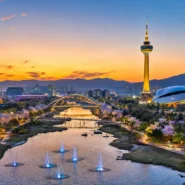
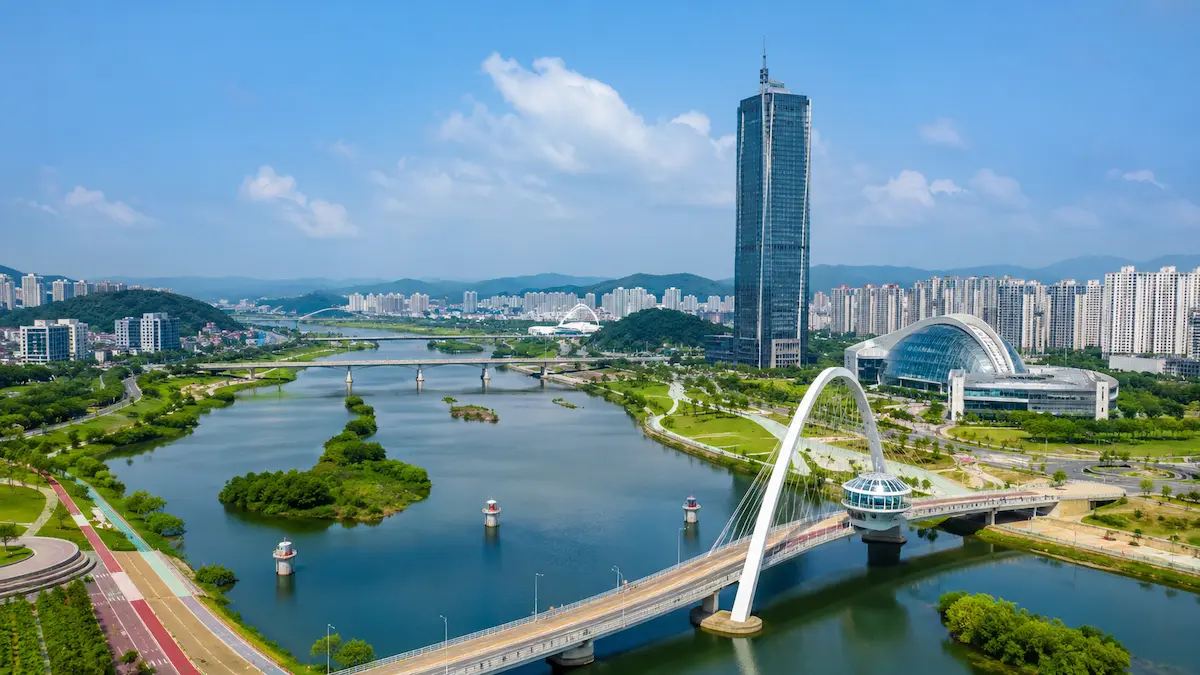
This is Daejeon’s strongest sightseeing cluster for travelers who prefer a coherent half-day over scattered photo stops. The trick is to see the area as three connected experiences: National Science Museum for substance, Hanbat Arboretum for open-air breathing room, and the Expo Park/Expo Bridge zone for the city’s 1993 Expo identity and evening skyline.
Start with the National Science Museum if it is open on your travel day. It is particularly strong for families, but adults who enjoy natural history, engineering or Korea’s science story can easily spend a few hours here. The museum’s current published hours are 09:30 to 17:30 with last admission at 17:00, and it is normally closed on Mondays and the day after a national holiday. Always re-check the official site because special closures can change.
Next, move to Hanbat Arboretum. This is one of the city’s easiest recommendations because the value-to-effort ratio is excellent: large gardens, seasonal color, ponds and long walking paths without a major admission cost. Autumn is especially attractive, but the arboretum also works as a decompression stop after museum time or a long train journey.
Finish around Expo Science Park and Expo Bridge. The outdoor Expo area alone is not a reason to build your trip around Daejeon, but it works much better as the last chapter of this cluster. The science-city identity becomes more obvious when you have already visited the museum and arboretum, and the riverfront feels more atmospheric around dusk than at midday.
Transport shortcut: If you are staying near City Hall or Government Complex, do not automatically force a long walk just because the metro got you “close.” A short bus or taxi can be sensible, especially with children, in summer heat or after a full museum visit.
✅ What Other Travelers Say
Hanbat Arboretum receives consistently strong traveler feedback for relaxed walking, seasonal scenery and the amount of space available in the middle of the city. Reviews of the National Science Museum often praise the breadth of exhibits and note that major sections have useful English explanations. Families tend to get more out of this zone than travelers chasing nightlife or iconic Korean architecture.
⚠️ The Catch (Things to Keep in Mind)
The biggest trap is allocating equal time to every attraction. If you are not interested in science, the museum can be shortened or skipped. If the weather is poor, reverse the plan and spend more time indoors. And if you reach Expo Park in bright midday light expecting a futuristic theme park, you may wonder why it was ranked so highly. The area is about the combination, not one blockbuster sight.
📍 Yuseong Hot Springs: Best for Wellness, Quieter Evenings and a Slower Daejeon Stay
Tags: Yuseong Foot Spa · Line 1 access · wellness · hotel spas · cafes · slower pace
Yuseong is easy to misunderstand because “hot springs” creates expectations of an onsen village, a mountain resort or a large outdoor bathing complex. That is not the best mental picture. Yuseong today is an urban district with a long hot-spring tradition, hotels, restaurants, universities and a public foot-bath experience woven into the neighborhood.
The Yuseong Foot Spa is the simplest introduction. It is public, easy to combine with a walk and currently operates as a free hot-spring foot-bath experience. This is a pleasant recovery stop after a day of walking, but it is not a full-body public bath. If your dream is a proper soak, book a hotel or bathhouse that specifically offers hot-spring bathing and confirm the facility rules before arrival.
Yuseong’s biggest advantage is not that it has more “must-see” attractions than the old downtown. It is that it is a comfortable base for people whose itinerary leans west: the science district, KAIST area, the National Science Museum, nearby parks and a calmer evening atmosphere. Yuseong Spa Station on Line 1 also keeps the district connected to Daejeon Station without a complicated rail transfer.
For food, this is a good place to slow down over kalguksu, Korean barbecue or a cafe rather than rushing back downtown immediately. If your hotel includes a proper bath facility, build in time to use it. Paying for a spa-oriented hotel and then checking out early without enjoying the bath defeats the point of staying here.
Who should stay here: couples wanting a quieter night, repeat Korea visitors, travelers prioritizing wellness, conference travelers in the Yuseong/Expo side of town, and anyone planning a science-heavy itinerary. Who should not: one-night visitors whose main goals are Sungsimdang, the old market and a very early KTX departure.
✅ What Other Travelers Say
Traveler reviews commonly describe the public foot bath as warm, relaxing and pleasantly local. A recurring theme is that the surrounding park can look ordinary at first, then the hot-spring element becomes the memorable part. That is a useful expectation to carry: Yuseong is about slowing down rather than being visually dramatic.
⚠️ The Catch (Things to Keep in Mind)
Do not cross the entire city just for a ten-minute foot soak if you only have one day. Yuseong works best as part of a western Daejeon cluster or as your accommodation base. Also, not every hotel in the district offers the same bathing experience, so verify whether the property has an actual hot-spring bath, a standard bathtub, a sauna or no public bathing facility at all.
📍 Jangtaesan Recreational Forest: Best for Autumn Color, Nature and Travelers Who Can Spare the Transfer Time
Tags: metasequoia forest · Sky Tower · autumn foliage · hiking · outer Daejeon · half-day commitment
Jangtaesan is one of the few Daejeon attractions that can genuinely make a first-time visitor say, “I did not expect this here.” The forest is known for its tall metasequoia scenery, elevated walkways and easy-to-access viewpoints. In autumn, the color and vertical tree lines can be spectacular. Even outside peak foliage, the shaded walking environment makes it a strong escape from the city’s broad roads and apartment districts.
The forest itself is not the problem. Getting there efficiently is. It sits well outside the central metro corridor, and public-bus timing matters. Travelers regularly report long intervals on the relevant outer-city routes. That means a missed bus can erase the time you thought you saved by avoiding a taxi. Check live routing on the morning of your visit and build the return journey into your plan before you start walking.
If you are a confident hiker, you can extend your time into longer trails. If you mainly want the metasequoia scenery and elevated structures, you do not need to turn the visit into an all-day mountain hike. The accessible boardwalk-style sections are part of the appeal and make the forest workable for mixed-ability groups, although steep or elevated sections may not suit everyone.
Best timing: Go early if you want quieter paths, or plan around late-afternoon light in autumn while leaving enough margin to get back to the city. Worst timing: trying to squeeze it in between hotel checkout and a fixed early-afternoon KTX.
When to skip it: If you have only one day, the weather is poor or foliage/nature is not a priority, stay in the urban core. Daejeon has enough city experiences to fill a good day without spending hours on an outer transfer.
✅ What Other Travelers Say
Visitors regularly praise Jangtaesan for the relaxed walk, towering trees and relatively approachable paths. Reviews often mention the boardwalk and Sky Tower area as the visual highlight rather than a difficult summit challenge. In autumn, traveler photos and trip reports become much more enthusiastic, which explains why the forest’s reputation can feel season-dependent.
⚠️ The Catch (Things to Keep in Mind)
This is the easiest Daejeon attraction to underestimate logistically. The destination is free and beautiful, but transport can be the real cost. If you are traveling with children, seniors or limited time, consider spending money on a taxi or organized transfer instead of “saving” money and losing a large part of the day to waiting.
How to Build a Realistic Daejeon Itinerary
One day: Keep it urban. Arrive at Daejeon Station, explore the old downtown and Sungsimdang, have a proper local lunch, then choose either the Expo/Hanbat/Science cluster or Yuseong. Do not add Jangtaesan unless nature is the entire reason for your visit.
Two days, one night: Day one can cover Daejeon Station, Jungangno, the market and evening food. Day two can focus on the National Science Museum, Hanbat Arboretum and Expo riverfront. If you prefer wellness to museums, swap the science zone for Yuseong.
Three days, two nights: This is the comfortable version. Use one day for old downtown, one for Expo/Hanbat/Yuseong and one half-day for Jangtaesan or another nature route. The extra night removes the pressure to cross the city repeatedly with luggage.
For families: Give the National Science Museum real time, then use Hanbat Arboretum as the low-stimulation outdoor break. Skip unnecessary district-hopping. A central hotel around Dunsan or the Expo side can be more convenient than staying beside Daejeon Station if you are spending most of the trip in museums and parks.
For food-first travelers: Stay near Daejeon Station/Jungangno, eat kalguksu and dubu duruchigi, visit the traditional market, and treat Sungsimdang as one stop among several. Daejeon’s strongest food trip is broader than pastry alone.
For couples: Yuseong makes sense if you book a hotel with verified spa facilities and want a calmer night. Pair it with Hanbat Arboretum and a sunset walk near Expo Bridge rather than racing back to the old downtown.
For autumn travelers: Jangtaesan becomes much easier to justify. If foliage is good, give it the time it deserves and keep the rest of that day light. Do not stack a long forest transfer with museum opening hours and a fixed KTX departure.
Where to Stay in Daejeon Without Regretting Your Location
Daejeon Station/Jungangno: Best for one-night stays, KTX convenience, old-town food and travelers with early or late trains. The trade-off is that the Expo and Yuseong side of the city will require more crossing.
City Hall/Dunsan: Best overall compromise. You stay on Line 1, sit closer to the geographic middle of many first-time routes, and have plenty of restaurants and practical services. The downside is atmosphere: it can feel more like a modern administrative/business district than a romantic travel neighborhood.
Yuseong Spa: Best for wellness, science/Expo access and quieter evenings. The downside is distance from the old downtown, especially if your only must-dos are Sungsimdang and Daejeon Central Market.
Expo/DCC area: Best for convention travelers and upscale stays near the riverfront, Hanbat Arboretum and Expo attractions. It can be convenient for a very specific itinerary but is less useful if you want to wander out of the hotel and immediately find dense old-town street life.
The cheapest hotel is not always the cheapest trip. If a remote room forces four extra taxi rides or repeated cross-city transfers, you have paid for the difference in time and transport. For a first visit, choose a hotel based on the two areas you will visit most, not on the citywide map alone.
Key FAQs
How many days do you need in Daejeon for a first-time visit?
Most first-time visitors need one night and two days for a satisfying Daejeon trip. That is enough for the old downtown, local food, Hanbat Arboretum and either the science museum or Yuseong. Add a second night if you want Jangtaesan Recreational Forest without rushing or if you are traveling with children and plan to spend several hours in the National Science Museum.
Is Daejeon worth visiting from Seoul as a day trip?
Yes, especially if you already know Seoul well and want a lower-stress change of pace. KTX makes the rail journey short enough for a day trip, but you should choose one or two clusters rather than trying to “see all of Daejeon.” A good day-trip combination is old downtown plus Expo/Hanbat, or old downtown plus Yuseong. Jangtaesan is better with an overnight stay unless nature is your single priority.
What is the best area to stay in Daejeon without a car?
For most first-time visitors, City Hall/Dunsan is the most balanced no-car base because it sits on Line 1 and reduces the distance between Daejeon Station, Expo-area attractions and Yuseong. If your stay is only one night and tied closely to KTX, Daejeon Station/Jungangno is easier. If hot springs and science sights are your focus, Yuseong Spa is the better fit.
Final Verdict and Your Next Step
Daejeon is a strong first-time stop when you plan it for what it actually is: a spread-out, highly connected inland city with excellent rail access, serious local food, science attractions, green space and a wellness tradition. It becomes disappointing only when you force it into the wrong template — expecting Seoul-level spectacle, assuming the subway reaches every sight, or trying to collect too many districts in one day.
If you are staying one night, prioritize Daejeon Station/Jungangno and one western cluster. If you are a family, build around the National Science Museum and Hanbat Arboretum. If you are a couple or slow traveler, Yuseong is a better base than the station. If you are an autumn nature traveler, give Jangtaesan a dedicated half-day and accept that transport is part of the experience. If you are a food-first traveler, spend less time chasing attractions and more time eating bread, kalguksu and dubu duruchigi.
The practical move is to book the two fixed parts first: your hotel location and your intercity train. Good-value rooms near Line 1 can disappear on busy weekends, and the exact KTX service you want can sell out around holidays. Once those anchors are fixed, the rest of Daejeon is easy to adjust around weather and energy levels.
- Check Daejeon hotel availability on Booking.com
- Compare Daejeon hotels on Agoda
- Book Korea rail tickets on Klook
- Check the KORAIL Pass on KKday
Planning note: Transport projects, museum closures, hot-spring operating details and bus intervals can change. Core planning details in this guide were cross-checked against current Daejeon city, KORAIL, VISITKOREA, National Science Museum and major booking-platform information available in August 2026. Re-check live schedules before a time-sensitive journey.