


💡 Key Takeaways
- Do not treat Jeonju Station as if it were inside Hanok Village. The KTX is fast, but you still need a separate local transfer after arriving. With luggage, a taxi is usually worth the small extra cost.
- Jeonju is compact where it matters. Most first-time highlights sit in one walkable old-town cluster, so repeatedly taking buses between Hanok Village, Gyeonggijeon, Jeondong Cathedral, Pungnammun and Nambu Market wastes more time than it saves.
- The biggest “tourist trap” is poor timing, not Jeonju itself. Hanok Village can feel commercial at midday, Jaman Mural Village is smaller and steeper than photos suggest, and Nambu Night Market is only worth planning around when it is actually operating.
A first-time Jeonju travel guide should solve one problem before anything else: how do you enjoy Korea’s most famous traditional-food city without spending half your day on transfers, dragging luggage over uneven streets, queuing for overhyped snacks, or trying to squeeze a two-day experience into five rushed hours? Jeonju looks simple on a map, and the old town is genuinely easy to explore once you are there, but the arrival points, opening patterns and “must-do” lists can mislead first-time visitors into making the day much harder than necessary.
The good news is that Jeonju rewards sensible planning. The historic core is compact, the food is a real reason to visit, and an overnight stay gives you something day-trippers often miss: quiet hanok lanes after the crowds thin out. The bad news is that not every famous stop deserves equal time. This guide focuses on the practical choices that matter most: which transport is actually easiest, where to base yourself, what is worth paying for, what can be skipped, and how to build a realistic one- or two-day itinerary.
The 1-Min Cheat Sheet
- Best trip length: one full day for the essentials; one night and two relaxed days if food, photography or a hanok stay matters to you.
- Best arrival from Seoul: KTX from Yongsan is usually the cleanest option for first-timers, with the rail journey taking roughly 1 hour 40 minutes before the local transfer into the old town.
- Best arrival with heavy luggage: consider a direct airport or intercity bus when it saves you a Seoul transfer; luggage can go underneath the coach.
- Best base: on or immediately beside Jeonju Hanok Village if this is your first visit and sightseeing convenience matters more than nightlife.
- Best sightseeing strategy: do the Hanok Village core on foot, then use a taxi only for places farther away such as Deokjin Park.
- Best first stop: Gyeonggijeon and the quieter lanes early, before the central shopping streets become busy.
- Best evening: Nambu Market on Friday or Saturday, or a slow dinner and night walk around the old town on other days.
- Best foods to prioritise: Jeonju bibimbap, kongnamul gukbap, market food and one proper local meal rather than nonstop snack grazing.
- Most overrated mistake: assuming every viral snack, mural and photo spot is a must. Jeonju is better when you leave space to wander and eat slowly.
- Navigation: use NAVER Map or KakaoMap for local routing rather than relying only on Google Maps.
Top Survival Tips
- Search Yongsan Station, not only Seoul Station, when checking KTX. Jeonju-bound KTX services are often easier to find from Yongsan. If you search only “Seoul Station,” you can mistakenly think the schedule is poor or sold out.
- Book intercity transport before weekends and Korean holiday periods. Jeonju is popular with domestic travellers, especially during spring, autumn, festivals and long weekends. A spontaneous same-day ticket can work, but it is not a smart plan if your hotel or onward train depends on a specific departure.
- Do not drag a suitcase around the Hanok Village for hours. The historic lanes are made for strolling, not luggage. If you are day-tripping, use the lockers by the Hanok Village Tourist Information Center when available, or ask your accommodation to hold bags.
- Use a taxi for the “last mile” when luggage is involved. Jeonju Station is several kilometres from the Hanok Village. A city bus is cheaper, but the savings are modest compared with the inconvenience of boarding with a large suitcase and then walking from the stop.
- Start before the photogenic streets turn into shopping streets. Central Hanok Village is not a silent preserved museum. It is a living tourist district with rental shops, cafés, snacks, souvenirs and traffic at the edges. Early morning gives you a much calmer version.
- Do not rent hanbok unless the photo experience genuinely matters to you. It can be fun and memorable, but changing, hair styling and photo stops can easily consume a large chunk of a short day. If you only have five or six hours, sightseeing first may be the better trade.
- Do not schedule Nambu Night Market blindly. The official night market currently operates Friday and Saturday evenings. On other nights, the traditional market still exists, but the special night-market atmosphere you saw online will not be there.
- Wear shoes for slopes, not just cute photos. The Hanok Village core is comfortable for most people, but Omokdae and Jaman Mural Village involve hills, steps and uneven surfaces.
- Do not build your food plan entirely around the busiest tourist lane. Jeonju is a UNESCO Creative City of Gastronomy. The point is not just eating a branded choco pie and one photogenic bibimbap; try at least one local soup, market meal or restaurant away from the most crowded snack strip.
- Know when to skip Deokjin Park. It is beautiful when the lotus pond is at its best and pleasant at night, but for a short first visit it is secondary to the old town. Adding it to a tight day can create unnecessary backtracking.
How to Get to Jeonju Without Losing Half a Day
From Seoul: KTX Is Usually the Best First-Time Choice
For most visitors already staying in Seoul, the KTX is the easiest balance of speed and predictability. The rail journey from Yongsan to Jeonju is roughly 1 hour 40 minutes on faster services. The important detail is what happens after the train: Jeonju Station is not in the Hanok Village. Treat the station-to-hotel leg as a separate transfer rather than assuming you will step off the train and start sightseeing immediately.
If you have a backpack, local buses are reasonable. If you have a suitcase, children, limited mobility or a tight itinerary, take a taxi from the station. The ride is short enough that saving money by wrestling bags onto a bus often makes little sense. Traffic changes the exact time and fare, so use a live local map or taxi app rather than memorising a number from an old blog.
From Incheon Airport: A Direct Bus Can Beat Going Through Seoul
If Jeonju is your first stop after landing, a direct airport bus can be more comfortable than hauling luggage onto AREX, crossing Seoul and then boarding a KTX. The bus is slower on paper and vulnerable to road traffic, but it avoids a major transfer and lets you store large bags under the coach. That trade-off can be excellent after a long flight.
Do not book an airport bus too close to your scheduled landing time. Immigration, baggage claim and terminal navigation can vary dramatically. Leave a generous buffer, especially if your ticket is tied to a specific departure.
From Busan or Gyeongju: Check the Whole Journey, Not Just the Distance
Jeonju sits on the western side of the country, so adding it between Gyeongju or Busan and Seoul is not always as smooth as the map makes it look. The practical issue is not whether the cities look close; it is whether your chosen train or bus route requires a transfer and how well the timetables connect. This is one reason Jeonju works especially well as a side trip from Seoul but can feel awkward when inserted into an already busy east-coast itinerary.
If your Korea trip is short and you are already giving Gyeongju only one night, adding Jeonju may create more transit than travel. Choose Jeonju because food culture, hanok streets and a slower city appeal to you, not because you feel obliged to collect another famous destination.
How Many Days Do You Really Need in Jeonju?
One Day: Enough for the Core, but Keep It Tight
A well-planned day can cover Gyeonggijeon, Jeondong Cathedral, Hanok Village lanes, Jeonju Hyanggyo or Omokdae, a proper lunch and Nambu Market. What it cannot comfortably include is every museum, a two-hour hanbok shoot, multiple cafés, Deokjin Park and a relaxed dinner without turning the day into a checklist.
If you are coming from Seoul and returning the same night, arrive early and decide in advance what your optional stop is. Jaman Mural Village or Deokjin Park should be “if time allows,” not guaranteed essentials.
One Night: The Sweet Spot for Most First-Time Visitors
One night removes the pressure to catch an early evening train and lets you experience the old town after many day visitors leave. It also makes a traditional hanok stay possible without sacrificing your sightseeing hours. For most travellers, this is the best value-to-effort option.
Two Nights: Worth It for Food Lovers and Slow Travellers
Stay two nights if you want cafés, markets, libraries, neighbourhood walks, Deokjin Park, makgeolli culture or simply a slower pace. Otherwise, the third day can start to feel thin compared with Seoul, Busan or Gyeongju.
Where to Stay in Jeonju: Convenience vs Comfort
Inside or Beside Hanok Village: Best for First-Time Sightseeing
This is the easiest location if your priority is walking to the main attractions. You can start early, return for a break, and enjoy the lanes again at night. The trade-off is that the most atmospheric accommodation is not always the most comfortable.
Important hanok warning: some traditional stays use floor bedding on heated ondol floors rather than Western mattresses. That is culturally interesting, but it can be uncomfortable if you have back, hip or knee issues or simply sleep badly on firm surfaces. Read the room description and guest photos carefully rather than assuming “traditional” automatically means luxurious.
Modern Hotel Near the Old Town: Best for Sleep Quality
If you want a normal mattress, lift access, easier luggage handling and predictable soundproofing, choose a modern hotel within walking distance of the village. This is often the smartest compromise for couples, families and anyone arriving with large suitcases.
Near the Station or Bus Terminal: Usually Not the Best First Visit
Staying near your arrival point may look efficient, but it means commuting to the area you actually came to see. Unless you have an extremely early departure, a one-night stopover or a specific hotel deal, the old-town side is usually more convenient overall.
The Full Experience
📍 Jeonju Hanok Village Core: Best for First-Time History, Architecture and Easy Walking
Best for: First visits · Hanok architecture · Gyeonggijeon · Jeondong Cathedral · Hanbok photos · Cafés · Easy sightseeing
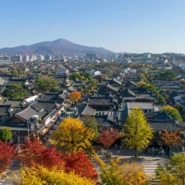
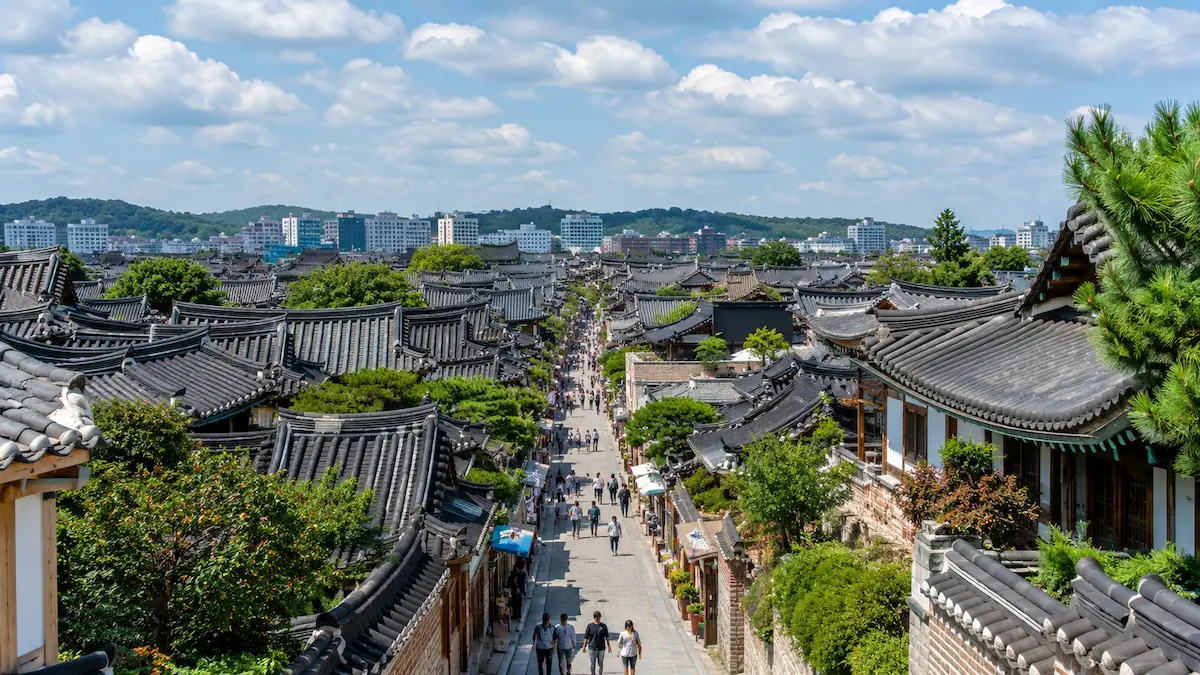
Jeonju Hanok Village is the obvious starting point, and despite the commercialisation, it still deserves that status. The district contains hundreds of traditional hanok buildings, with Gyeonggijeon, Jeondong Cathedral, Jeonju Hyanggyo and smaller cultural spaces woven into a walkable area rather than separated into a theme park.
The smartest way to experience it is not to march down the busiest central lane from shop to shop. Begin with Gyeonggijeon Shrine when it opens or soon after. Its courtyards, old trees, walls and quieter side paths give you more historical atmosphere than the snack-heavy main street. Then cross toward Jeondong Cathedral and Pungnammun, before looping back through smaller alleys.
Gyeonggijeon is also one of the places where a hanbok rental makes visual sense if you want photos. If not, do not let social media convince you that you are “missing” Jeonju. You can appreciate the architecture perfectly well in normal clothes and save both money and time.
What Is Actually Worth Your Time Here?
- Gyeonggijeon Shrine: a genuine must for first-timers who care about Joseon history and traditional architecture.
- Jeondong Cathedral: worth a short stop because of its history and striking contrast with the surrounding hanok district.
- Jeonju Hyanggyo: a better choice than another souvenir shop if you want a quieter, more contemplative traditional setting.
- Hanok lanes at dusk or early morning: often more memorable than any single paid attraction.
- Hanbok rental: worthwhile for photography-focused travellers; skippable for everyone else.
✅ What Other Travelers Say
Recent traveller discussions are split in a useful way: many visitors love Jeonju for its food, atmosphere and walkability, while others call the central Hanok Village touristy because of the concentration of cafés, rental shops and souvenir businesses. The most consistent positive feedback comes from people who explore beyond the busiest commercial lane or stay into the evening, when the district feels calmer.
⚠️ The Catch (Things to Keep in Mind)
The village is not a perfectly preserved historical set. It is a functioning tourism district, and midday weekends can feel crowded and commercial. If you arrive expecting silent lanes, no signage and untouched traditional homes everywhere, you may be disappointed. Go early, prioritise the cultural sites, and treat the shopping streets as optional rather than the main event.
📍 Nambu Market & Pungnammun: Best for Food, Evening Atmosphere and a Less Polished Side of Jeonju
Best for: Local food · Kongnamul gukbap · Street snacks · Friday/Saturday night market · Pungnammun · Budget-friendly eating
Nambu Market is only a few minutes on foot from the Hanok Village, which is exactly why you should not waste time treating it as a separate transport stop. Walk through Pungnammun Gate, enter the market, and let the food decide how long you stay.
During the day, Nambu is a working traditional market with produce, dry goods, household items and food stalls. On Friday and Saturday evenings, the Hanok Village Night Market changes the atmosphere with additional food vendors and crowds. The official current operating window is Friday and Saturday, 17:00–23:00, but special events and operational changes can happen, so confirm again if the night market is a major reason for your visit.
This is a better place to be hungry than the central souvenir streets. Instead of buying five random viral snacks, have one proper bowl of kongnamul gukbap, try market food and save room for dinner. Jeonju’s reputation as Korea’s first UNESCO Creative City of Gastronomy deserves more than a snack crawl.
What to Eat Without Turning It Into a Food Marathon
- Kongnamul gukbap: hot bean-sprout rice soup that works especially well for breakfast or a cold day.
- Jeonju bibimbap: try it once properly, but do not assume the most famous queue automatically means the best meal for you.
- Market snacks: choose one or two things that are freshly cooked in front of you rather than buying everything because it appeared in a reel.
- Moju or makgeolli: interesting if you drink alcohol, but check strength and portion size before ordering multiple rounds.
✅ What Other Travelers Say
Visitors who enjoy Nambu Market tend to praise its food and livelier, more local feel compared with the polished centre of Hanok Village. Night-market reviews are especially positive when travellers arrive early enough to browse before popular stalls develop long queues.
⚠️ The Catch (Things to Keep in Mind)
The night market is not a seven-night-a-week attraction. If you arrive on the wrong evening, the experience will be completely different. Also, “street food” does not always mean “cheap”; several small portions can cost more than one satisfying sit-down meal. Budget travellers should eat strategically rather than graze continuously.
📍 Omokdae, Jaman Mural Village & Jeonju Hyanggyo: Best for Rooftop Views, Quiet Lanes and a Break from the Main Crowd
Best for: Hanok rooftop views · Short uphill walk · Murals · Photography · Quieter traditional streets · Sunset
This eastern edge of the old town is where many visitors finally understand why Jeonju works better as a slow walk than as a list of attractions. Omokdae gives you elevation and a different perspective over the tiled roofs. Jaman Mural Village sits nearby on the hillside, while Jeonju Hyanggyo offers a calmer traditional setting that can feel far removed from the souvenir streets even though it is still close.
For first-timers, the best order is usually to climb toward Omokdae while your legs are fresh, continue to Jaman only if the weather and energy level are good, then descend toward the quieter lanes and Jeonju Hyanggyo. That avoids unnecessary backtracking.
Jaman Mural Village needs expectation management. The murals are colourful, cafés make pleasant rest stops, and the view back toward the Hanok Village can be attractive. But the area is small, steep and less polished than social media sometimes suggests. If you have seen several mural villages in Korea or elsewhere, this is not automatically a must.
Who Should Prioritise This Area?
- Photographers: yes, especially for elevated hanok roof views and golden-hour light.
- Families with small children: maybe, but expect stairs and slopes.
- Travellers with mobility issues: skip Jaman and focus on flatter parts of the historic core.
- Very short day-trippers: Omokdae can fit; Jaman is the first thing to cut if time is running out.
- Repeat visitors: spend more time around Hyanggyo and the quieter eastern lanes instead of revisiting the busiest shopping street.
✅ What Other Travelers Say
Travellers often enjoy the view over the Hanok Village and the change of pace from the central crowd. Jaman receives more mixed reactions: some visitors love the quirky murals and cafés, while others find it too small to justify a special detour.
⚠️ The Catch (Things to Keep in Mind)
The climb is real. Uneven steps, sloped lanes and summer heat can make a “ten-minute detour” feel much longer. Do not drag luggage here, and do not force this stop into a tightly timed day just because it appears on every generic top-ten list.
📍 Deokjin Park & Jeonbuk National University Side: Best for Lotus Season, Night Views and a More Local Pace
Best for: Lotus flowers · Lake walks · Yeonhwajeong Library · Night lighting · Second-day sightseeing · Escaping the old-town tourist zone
Deokjin Park is the place to add when you have more than the basic old-town day. The large pond, bridges, traditional-style pavilions and Yeonhwajeong Library make it a pleasant contrast to the dense Hanok Village. The park is especially photogenic around the early-summer lotus season; the official tourism site highlights early July as a prime period for blooming lotus flowers.
Outside lotus season, the park can still be a calm walk and the evening lighting is attractive, but it becomes more of a “nice if you have time” stop than a must-see. That distinction matters for first-time visitors. A park that feels restorative on a two-day trip can feel like wasted transit on a six-hour day trip.
The easiest way to include it is by taxi rather than trying to create a complicated bus loop from the old town. Pair it with the Jeonbuk National University side, a café stop or another northern Jeonju activity so the transfer has a purpose.
✅ What Other Travelers Say
Positive reviews focus on the lotus pond, bridge views, peaceful walking paths and evening atmosphere. Visitors who see the flowers in season are usually much more enthusiastic than those who arrive expecting a major attraction at a random time of year.
⚠️ The Catch (Things to Keep in Mind)
Seasonality matters. Do not expect a pond full of lotus blossoms year-round. Deokjin Park is also outside the main Hanok Village sightseeing cluster, so it adds transport time. If your schedule is tight, use that time for a relaxed meal or Gyeonggijeon instead.
What Is Overhyped in Jeonju?
Viral Street Snacks
Some are fun, few are essential. The problem is not quality so much as opportunity cost. If you spend the afternoon queuing for skewers, cheese-filled snacks, giant dumplings and desserts, you may be too full for the proper Jeonju meal that would have been more memorable.
Jaman Mural Village as a “Must-See”
It is a pleasant add-on, not a trip-defining attraction. Go if you like street art or hillside cafés; skip it without guilt if you have limited time, poor weather or mobility concerns.
A Hanbok Rental for Everyone
Hanbok is excellent for travellers who value photography and cultural dress experiences. It is not mandatory. Renting one because “everyone does it” can mean spending more time changing and posing than exploring.
Jeonju Choco Pie as a Destination
Try one if you are curious. Buy a box if you genuinely like it. But there is no need to design your route around a bakery queue when the city’s deeper food culture is far more interesting.
What to Eat in Jeonju Without Falling Into Tourist-Menu Mode
Jeonju’s food reputation is not marketing fluff: the city is part of UNESCO’s Creative Cities Network for gastronomy. But a strong food reputation also produces mediocre tourist-oriented versions of famous dishes. The solution is not obsessively hunting one “best” restaurant; it is choosing a balanced set of experiences.
- Have bibimbap once, properly. Choose a restaurant where the meal itself is the focus, not just a storefront designed for photo traffic.
- Try kongnamul gukbap. It is less glamorous in photographs but often more satisfying as breakfast or a cold-weather meal.
- Use Nambu Market for contrast. A market meal gives you a different side of Jeonju from a polished traditional restaurant.
- Consider makgeolli culture if you drink. The appeal is the social spread of drinks and anju, not simply consuming alcohol quickly.
- Do not eat every “famous” snack in one afternoon. Share portions if travelling with someone, then save appetite for dinner.
Realistic Jeonju Itineraries
One-Day Jeonju Itinerary from Seoul
- Early morning: KTX from Yongsan to Jeonju.
- On arrival: taxi directly to Hanok Village or your luggage drop point.
- Morning: Gyeonggijeon Shrine, quieter Hanok Village lanes and Jeondong Cathedral.
- Lunch: proper Jeonju bibimbap or kongnamul gukbap.
- Early afternoon: Jeonju Hyanggyo and Omokdae.
- Optional: Jaman Mural Village only if you still have time and energy.
- Late afternoon: Pungnammun and Nambu Market.
- Evening: if it is Friday or Saturday, experience the night market; otherwise have dinner near the old town.
- Return: taxi to Jeonju Station with a sensible buffer before your booked train.
Do not add Deokjin Park to this itinerary unless you deliberately remove something else. It is possible, but “possible” is not the same as enjoyable.
Two-Day, One-Night Jeonju Itinerary
Day 1: arrive before lunch, drop luggage, explore Gyeonggijeon and the Hanok Village core, have a proper lunch, climb Omokdae, visit Jaman if interested, then enjoy Nambu Market or a relaxed dinner. Walk the Hanok Village again after dark.
Day 2: start with breakfast such as kongnamul gukbap, visit Jeonju Hyanggyo or any old-town sites you skipped, then take a taxi to Deokjin Park. Have lunch away from the busiest tourist lane, collect luggage and depart in the afternoon.
Best Time to Visit Jeonju
Spring
Mild weather and blossom season make walking pleasant, but weekends can be busy. Book transport and accommodation early if your dates overlap major blossom periods or festivals.
Summer
Expect heat and humidity. The old-town lanes offer limited relief at midday, so start early, take café breaks and save Deokjin Park for lotus season or later in the day.
Autumn
Arguably the easiest season for first-timers: comfortable walking temperatures, attractive foliage and good food weather. It is also popular, so spontaneous weekend KTX plans are less reliable.
Winter
Cold weather reduces casual wandering, but the heated floors of a hanok and hot soup become more appealing. Choose accommodation carefully if you dislike sleeping on floor bedding.
Key FAQs
Is Jeonju worth visiting for a first trip to South Korea?
Yes, if you care about Korean food, hanok architecture and a slower contrast to Seoul. It is less essential if your itinerary is already packed with Gyeongju and you have little interest in regional food. Jeonju is most rewarding when you give it a full day or one night rather than forcing it into a rushed half-day stop.
Can you do a Jeonju day trip from Seoul by KTX without a tour?
Absolutely. Independent travel is straightforward: book a morning KTX, take a taxi or city bus from Jeonju Station to the Hanok Village, walk the historic core, and return by pre-booked evening train. The main risk is overplanning. Keep Deokjin Park and Jaman Mural Village optional so you are not sprinting back to the station.
Where should first-time visitors stay in Jeonju without dragging luggage everywhere?
Stay inside or immediately beside Jeonju Hanok Village if sightseeing convenience is the priority. Choose a modern hotel near the old town if you want lift access and a Western bed; choose a traditional hanok only after checking whether the room uses floor bedding. Avoid staying by the station just to save one taxi ride unless you have an unusually early departure.
Final Verdict and Your Next Step
Jeonju is worth visiting, but only if you plan it for what it actually is: a compact food-and-heritage city, not a giant attraction park. First-time visitors should focus on the Hanok Village core, Gyeonggijeon, one meaningful food experience and the Nambu Market side. Add Omokdae or Jaman when you want views and have the energy for hills. Add Deokjin Park when you have a second day, good seasonal timing or a genuine reason to go.
For a Seoul day-tripper: pre-book your KTX, travel light, arrive early and keep the itinerary centred on the old town. For couples and photographers: stay one night so you get morning and evening light without the midday rush. For families or travellers with large luggage: choose a modern hotel beside the Hanok Village and use taxis strategically. For food lovers: stay at least one night and do not spend your entire appetite on viral snacks.
The final planning mistake is leaving transport and accommodation until the last minute. Jeonju can be easy and reasonably priced, but popular weekends, blossom periods, autumn dates and festival seasons can remove the best train times and well-located rooms first. Once your dates are fixed, compare accommodation and book the major transport legs early.
- Compare Jeonju hotels on Agoda: Check Jeonju hotel prices on Agoda
- Compare Jeonju hotels on Booking.com: Check Jeonju hotel availability on Booking.com
- Browse Jeonju tours and activities on Klook: See Jeonju Hanok Village activities on Klook
- Browse Jeonju tours and experiences on KKday: See Jeonju experiences on KKday
Planning note: train schedules, market operations, admission hours and individual business opening times can change. Recheck your exact travel date on official or live booking platforms before departure, especially for weekends and Korean public holidays.