

💡 Key Takeaways
- For an ordinary walking-focused first visit, start your search in late spring or early autumn, then check events and the exact forecast. A pleasant season does not guarantee an uncrowded weekend.
- The Palio on 2 July and 16 August changes the purpose of a summer visit. Book for the event deliberately or move your dates rather than treating it as an incidental evening show.
- Winter can suit art, food and quieter streets, but reduced hours and closures need a real plan. Summer needs shade, a midday break and a room whose cooling you have checked.
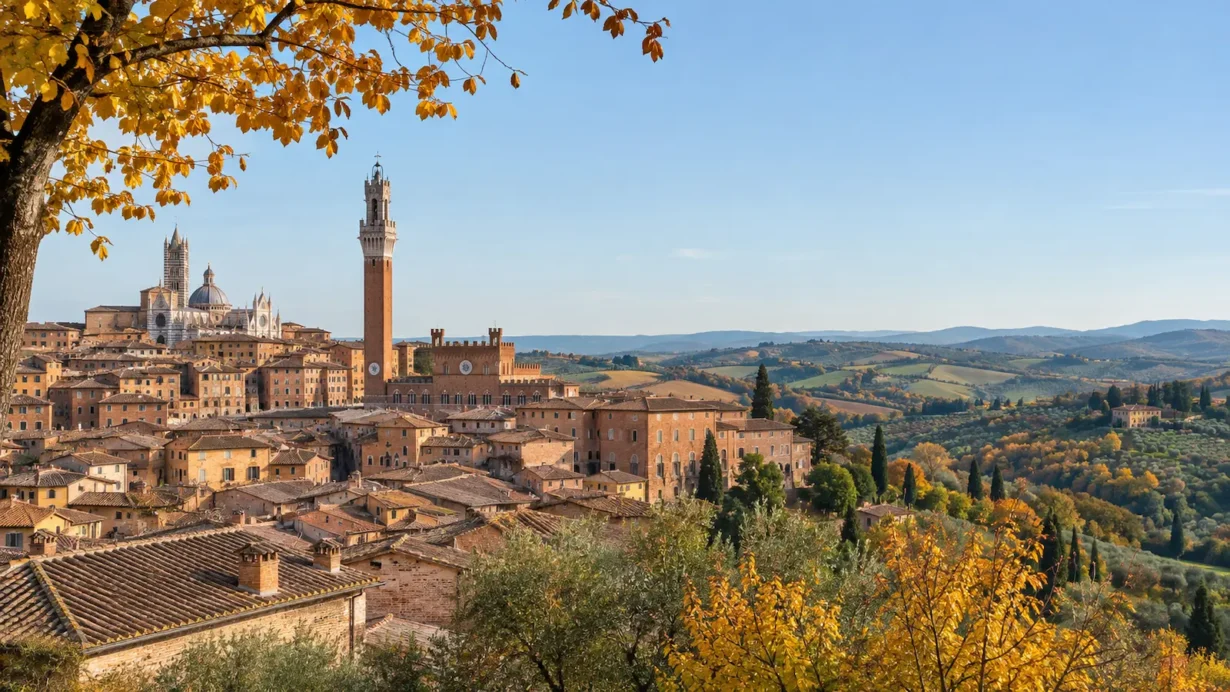
The best time to visit Siena depends on what you want the city to feel like. A long walk through its steep lanes, a close look at cathedral art and the intensity of a Palio visit are different trips. Choosing a month by an attractive photograph alone can leave you with expensive accommodation, a hot uphill route or a museum list that does not fit the opening calendar.
For most first-time visitors who want ordinary sightseeing, late April through June and September through October are useful starting windows. That is an editorial planning preference, not a guarantee about weather or hotel prices. Split September from November, check the actual dates around public holidays and decide whether the Palio is an attraction you want or a disruption you would rather avoid.
The 1-Min Cheat Sheet
- March to April: Good for travelers happy to carry a layer and adjust for rain. Spring can make walking comfortable, but Easter and holiday weekends require their own room search. March is not simply a quieter version of late April.
- May to June: A strong general-purpose choice for longer days and a walking-led stay. Aim for morning sightseeing and leave a rest interval as June warms up. Late June also moves toward Palio preparations.
- July to August: Best for visitors deliberately choosing summer events or the Palio. Exposed stone streets and crowded event periods demand a slower route and early accommodation decisions. A midday hill-heavy itinerary is a poor fit.
- September to November: Early autumn can suit active sightseeing; later autumn asks for more weather flexibility and careful opening-hour checks. Do not treat a September evening and a November afternoon as the same proposition.
- December to February: Best for travelers content with short outdoor loops, food and selected interiors. Holiday dates can be lively; quieter winter weeks may offer better value. Expect shorter daylight and plan around the days museums actually open.
Top Survival Tips
- Look at the event calendar before the average temperature. The official Palio calendar gives the traditional dates as 2 July and 16 August. Preparations and trials affect more than race night. If you want an ordinary first visit, avoid placing your only central sightseeing afternoon inside an event timetable you have not read.
- Make the room part of the seasonal decision. In summer, verify air conditioning for the actual booked room and its operating conditions. In winter, verify heating, check-in time and whether the restaurant or breakfast service runs on your dates. A terrace photograph says little about how the room works in January.
- Book a location you can return to. A convenient midday hotel break is particularly valuable in hot weather, with young children or limited stamina. A cheaper room that requires a long climb or another bus can reduce the benefit of that break. Compare Siena’s lodging areas around your likely arrival route.
- Do not buy a weather-sensitive schedule too early. Secure accommodation with terms you understand, but leave room to swap an outdoor walk and an interior visit. Separate a museum ticket’s booking rule from a viewpoint’s weather conditions. Advance purchase is useful when it solves a real availability issue, not when it merely locks you into a poor day.
- Check what is actually open this season. The Pinacoteca Nazionale currently reports a closure for works. That makes generic advice to spend any rainy day there unreliable. Santa Maria della Scala’s current winter notice closes the museum on Tuesdays and gives shorter weekday hours. Recheck before travel because these are operating notices, not permanent facts.
- Check cathedral floor dates separately from the weather. The official cathedral page currently lists floor-uncovering periods of 27 June–31 July and 18 August–15 November, with a different pass price during those dates. Confirm the year and the product before booking; a spring visit and an uncovered-floor visit are not automatically the same trip.
- Move effort away from the hardest hours. In hot months, start with the uphill or exposed section early, choose a long lunch or hotel break, then walk again later. In winter, use daylight for the outer streets and place your booked interior inside its operating hours. The compact map does not eliminate the hills.
- Keep transport and departure dates in view. A quiet date is less useful if your flight creates an awkward overnight transfer. Check the Sunday or holiday timetable for the exact connection and the final journey from Siena. Keep a taxi reserve when heavy rain or luggage makes a supposedly short walk unreasonable.
The Full Experience
The videos below are independent visual context for different times of year, with filming periods identified in their titles or descriptions where available. They are not forecasts, live crowd reports or a statistically representative set of traveler reviews. Each uses a different video, and the practical judgments combine those views with the official operating information linked here.
🌱 March to April: Best for Flexible Walkers Who Can Carry a Layer
Feature tags: Changeable spring weather · Holiday-date checks · Layered clothing · Early walks
Tripalot’s walk identifies its filming date as 30 April 2026 and begins early in the day. It is useful for judging the feel of the streets before they become busier, rather than promising that every April morning looks like this. March and early April can ask for a warmer layer and a more flexible plan than the final week of the period.
This is a sensible window if your main interest is walking between neighborhoods and spending time in selected churches or museums. Build one outdoor loop at a time and keep a covered alternative that is actually open. A wet surface, a gusty viewpoint and several steep streets can be tiring even when the temperature is moderate. Footwear with grip matters more than adding a sixth sight.
✅ What Other Travelers Say: The filmmaker describes enjoying the quiet early streets in this particular visit. Treat that as one reason to start early, not evidence that spring is always empty or that accommodation is inexpensive.
⚠️ The Catch (Things to Keep in Mind): Easter varies by year, and the 25 April holiday can create a different weekend market. Compare room prices for the full stay and read the cancellation terms. Anyone wanting reliably warm outdoor dinners every night may be happier later in the year.
☀️ May to June: Best for a Broad First Visit, With a Heat-Aware Route
Feature tags: Longer days · Cultural sightseeing · Morning effort · Late-June event checks
Step by Step Tours’ Piazza del Campo video is explicitly labeled June 2025. It offers a focused look at the open square, which is useful when deciding how much exposed time your day contains. It does not cover every hill, a full day’s heat or a future holiday crowd.
May and much of June suit a first trip that mixes architecture, wandering and a couple of interiors. Give the morning to the route that needs the most concentration and effort, then leave a comfortable lunch and rest interval. The extra daylight can tempt you to overfill the schedule; use it instead to take a slower evening walk after you have recovered.
June also deserves a more specific question: which week? A visit close to the July Palio can involve preparations that an ordinary mid-month itinerary does not. Check access notices and the event program before assuming the Campo will operate exactly as a quiet weekday photograph suggests.
✅ What Other Travelers Say: The linked June footage makes the square’s scale and open setting easy to assess. The useful takeaway is visual: a scenic place to linger can also be an exposed part of a long walking day.
⚠️ The Catch (Things to Keep in Mind): This is a popular travel window, not a secret low-price season. Travelers sensitive to heat should compare early May with late June rather than treating them as identical.
🏇 July to August: Best for Deliberate Palio Plans, Harder for a Casual Walk
Feature tags: Palio culture · Summer heat · Advance accommodation · Event access rules
The BBC’s Palio feature is cultural background, not a current-year attendance guide. It helps explain why the event is much more than a short race added to an ordinary tourist afternoon. The official calendar and current visitor notices should determine practical arrangements.
Choose this period if you actively want Siena’s summer atmosphere and are willing to change your route around it. For the Palio itself, book lodging and viewing arrangements carefully, understand what any paid package includes and allow for the possibility that weather changes the program. Do not promise yourself a tight train connection immediately after an event whose timing you do not control.
Outside the event dates, summer can still work with an early start, a real midday break and fewer consecutive outdoor climbs. A well-cooled room in a useful location can be worth more than an impressive list of amenities you never use. Carry water and make shade or an interior stop part of the route before you need it.
✅ What Other Travelers Say: The BBC film presents residents’ strong attachment to the Palio. That perspective is a useful reminder to respect the event’s local meaning and instructions, rather than treating preparations or district activity as background scenery for a photograph.
⚠️ The Catch (Things to Keep in Mind): This is a poor default for a visitor who dislikes heat, dense crowds and altered access. The 15 August national holiday sits immediately before the traditional August race date, so check the whole date sequence rather than a single night.
🍂 September to November: Best for Choice, With Increasing Weather Risk
Feature tags: Early-autumn walking · Later rain flexibility · Shortening days · Timed cultural visits
Kamran Afridi Vlogs labels this Siena walk October 2024. It is a modest street-level snapshot of that visit, not proof of an average October day. Use it to inspect the setting, then plan your own dates with a current forecast and opening calendar.
September and early October are useful starting points for travelers who want substantial outdoor time without deliberately choosing the height of summer. They are still popular, and an event weekend can make both the room search and the street experience different from a midweek stay. Do the accommodation comparison before declaring the period good value.
As the period moves toward November, shorten the outdoor loop and protect an indoor alternative. A flexible afternoon is more useful than a plan that relies on a long countryside outing and a late viewpoint visit on the same day. If the cathedral’s uncovered floor matters, verify the published dates rather than assuming all autumn days qualify.
✅ What Other Travelers Say: The dated walking footage gives a traveler’s view of central streets in October. Its value is the ordinary setting rather than a universal claim about crowd levels. A single dry or quiet clip cannot predict your weekend.
⚠️ The Catch (Things to Keep in Mind): September and November should not share one packing list or one timetable assumption. By November, daylight and museum hours can constrain the order of a visit, and a rainy-day substitute may have a weekly closure.
🧣 December to February: Best for a Shorter Outdoor Day and Selected Interiors
Feature tags: Winter atmosphere · Short daylight · Holiday exceptions · Museum-calendar planning
Valaureon Travels’ winter walk is a different visual reference from the warm-season films. It offers atmosphere and street context, rather than a guarantee of snow, festive decorations or a particular temperature. Check the current event program if Christmas activities are the main reason for your trip.
A winter stay can work well when you enjoy food, architecture and a small selection of interiors more than long outdoor days. Keep your main walk within the daylight you want to use, then plan a comfortable meal or an open cultural visit. Ask the property about heating and check-in arrangements and avoid booking a distant room merely because the nightly rate is lower.
Plan the museum days before the hotel nights. Santa Maria della Scala currently closes on Tuesday in its winter schedule, while the Pinacoteca Nazionale’s principal building is closed for works. Palazzo Chigi Piccolomini alla Postierla has separate limited opening days and is not a drop-in substitute available at all times. Check the official museum notice for the dates you will travel.
✅ What Other Travelers Say: The winter film provides a personal view of Siena beyond Palio season. It supports considering a different kind of trip, without establishing that every winter stay is quiet, cheaper or equally convenient.
⚠️ The Catch (Things to Keep in Mind): Christmas and New Year demand their own availability search, and holiday opening exceptions can override a normal week. This is a weaker choice if your ideal trip requires long outdoor dinners and an unrestricted countryside schedule.
Key FAQs
What is the best month to visit Siena for walking and sightseeing? Start with late April, May, early June, September or October, then compare your actual dates against holidays, events and the forecast. These are useful planning windows rather than a promise of perfect conditions. Choose a central rest stop and an open indoor alternative whatever month you select.
Should I avoid Siena during the Palio if I am visiting for the first time? Avoid it if you want an ordinary, flexible sightseeing visit and dislike crowds or access changes. Choose it deliberately if the event is your priority, and plan around the official program. The preparations and surrounding dates matter as well as the traditional 2 July and 16 August race days.
Is Siena worth visiting in winter or on a rainy weekend? Yes, for travelers happy with shorter walks, meals and selected cultural visits. Check the actual museum dates first, because current closures and weekly closing days can remove a convenient fallback. Keep the room comfortable and the arrival route simple, then leave space to swap the order of the day.
Final Verdict and Your Next Step
Choose the season around the experience you want, then test the date against three things: the event calendar, the room you can actually book and the cultural sites that will be open. For a general first visit, a shoulder-season search is a useful beginning. For the Palio, summer or winter, the right plan matters more than finding a supposedly perfect month.
Check the official cathedral visit options before reserving. If you prefer a guided introduction, compare this Siena walking tour and the selected cathedral option on Klook, including meeting time and cancellation terms. Affiliate disclosure: the Klook link may earn this site a commission if you book; it does not make every package suitable for every date.