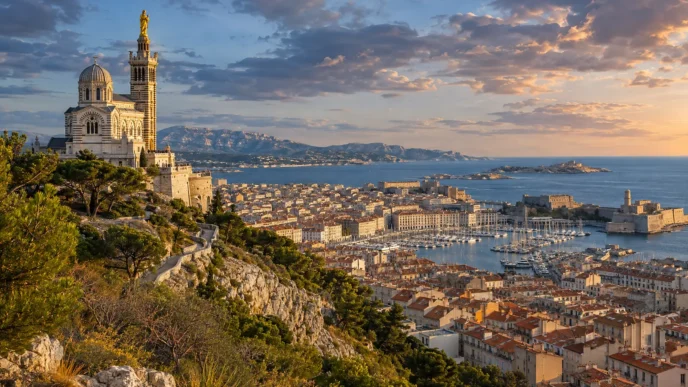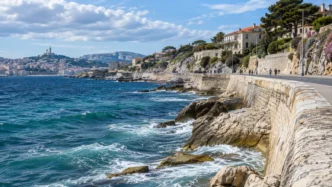
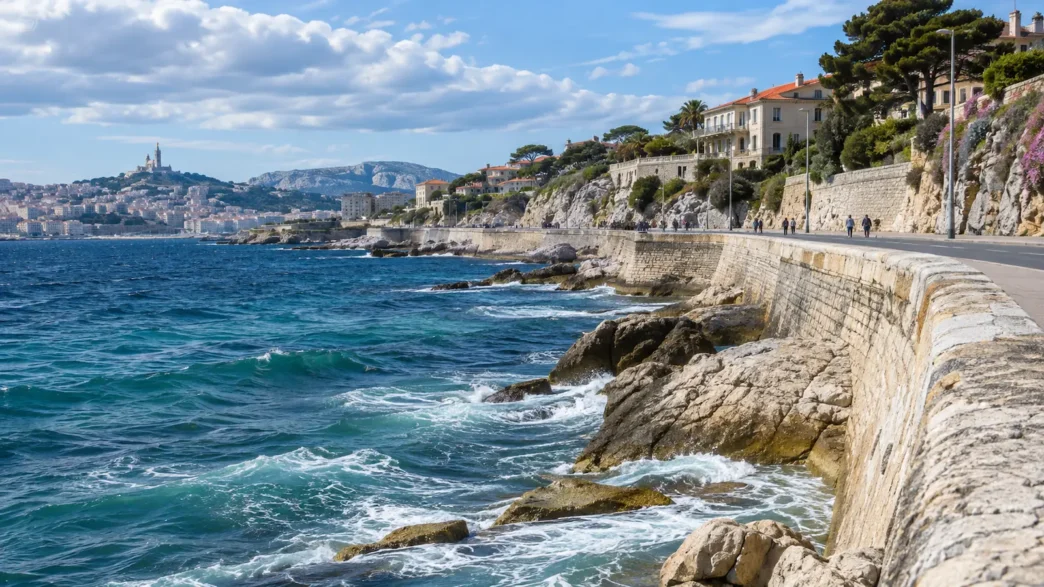
The best time to visit Marseille for a first trip is late May to early June or the first half of September. Pick May for walking and a better chance of fitting a trail in before the usual summer fire-risk period, or early September for a warmer sea with less peak-August pressure. January and February are good candidates for a cheaper museum-and-food break. July and August work best if swimming matters more than walking all afternoon.
💡 Key Takeaways
- Plan for the wind independently of the temperature. A sunny day can still be uncomfortable on a boat deck, the basilica terraces or the Corniche.
- Keep one coastal day movable. Summer fire restrictions can close trails, while boat and ferry schedules depend on conditions at sea. Recheck both close to departure.
- Compare the actual dates. An event, school break or holiday can move hotel prices more than the average difference between two neighboring months.
Marseille does not have one magic month. A family booking for a swim has different needs from two adults who would happily take a cooler morning in Le Panier and an afternoon in the galleries. The figures below use Météo-France’s 1991–2020 normals at Marignane near the airport as broad context. They describe the average daily high, not the forecast for the harbor, the high terraces or your sailing.
The 1-Min Cheat Sheet
- March–April: Good for museums, Vieux-Port and hill walks. Average daily highs are roughly 16–19°C (about 62–67°F). Pack a windproof layer and leave swimming as a bonus.
- May–June: Best for combining city days, coastal walks and longer evenings. Marignane averages about 24–28°C (75–82°F) for daily highs; June can already feel hot away from shade.
- July–August: Best if beaches are the trip. Average daytime highs are about 31°C (88°F) near the airport and heat spells can be hotter. Book air conditioning and plan a long midday break.
- September–November: September still offers beach weather on some days. October and November shift the balance toward restaurants, museums and walks during brighter windows.
- December–February: Better for a compact city stay than a beach holiday. Expect daily highs around 12–13°C (54–55°F) on average, shorter daylight and potentially strong wind.
Top Survival Tips
- Look at wind gusts and wave conditions. A weather app’s high temperature can make the day look perfect even if the harbor is choppy. Put the boat on the better sea day and swap to a sheltered urban walk or museum when needed. The city tourism wind-day guide gives realistic indoor and sheltered ideas.
- Do not let a Calanques reservation dictate a closed day. From June 1 through September 30, the Calanques fire-risk rules can restrict access. June and September are within that window. For specified Sugiton dates, arrange the free entry reservation and save it offline. A cancellation means choosing somewhere permitted, not looking for another entrance.
- Check the event footprint, not just the date. The Marseille festival calendar and the Marseille–Cassis organizer help flag busy nights and affected routes. A festival at J4 and an event at the Vélodrome have different effects on a hotel and the trip to dinner.
- Set your main outdoor activity first. A swim needs suitable conditions and supervision if you are relying on it. A winter harbor walk mostly needs wind protection. Pick a hotel that still suits the trip when the main activity moves a day.
- Give warm-weather walks a morning start. In hot weather, take bus 60 uphill to Notre-Dame rather than spending the whole climb in sun. Save the Corniche for late light if conditions permit and check the city’s cool places and heat notices before a day of exposed walking.
The Best Time to Visit Marseille by Season
🌿 March to April: Best for City Walks and Flexible Days
Spring walking · Wind layer · Earlier coastal outings
Start in Le Panier and the Old Port. Cooler daytime air is useful on sloping lanes that can feel tiring in summer. Keep the blue-sky morning for the basilica and take the museum when the wind rises. A shorter Mucem loop still works if you have only one sunny afternoon.
March can feel cool on exposed terraces despite a comfortable lunch inland. April is a better default for longer walks, but Easter and school holidays can change room rates and availability. Compare a few weekdays and use a central hotel rather than booking a quieter coastal address solely for a swim.
✅ What Other Travelers Say: The April city-walk footage makes a good case for exploration on foot. It shows a working city, not a summer beach film, and makes it easier to imagine a food-and-culture trip.
⚠️ The Catch (Things to Keep in Mind): Pack for a cool morning, sun on the quays and an exposed lookout all on the same day. Boat departures can be less convenient or weather-affected.
🌼 May to June: Best for a First Visit With a Coastal Day
Longer daylight · Walkable city days · Early heat possible
Late May is an excellent choice if you want both the streets and a coastal walk, especially if summer swimming is optional. Start with a weekday in the city and hold a coastal morning for the best conditions. Near the water the difference between sunny and calm still matters.
June gives you longer evenings for outdoor meals. It also marks the start of the usual fire-risk season on June 1. Bring enough water, check access and read the actual festival dates. The tourism office’s seasonal overview is a good start, but the dated park and operator notices decide the day.
✅ What Other Travelers Say: The spring travel diary pairs a city base with separate coastal hikes. The timing makes more sense than walking the harbor, squeezing in a cove and racing to a third town after lunch.
⚠️ The Catch (Things to Keep in Mind): Late spring does not guarantee water warm enough for every visitor. Family beach supervision and seasonal ferry calendars should be checked for your exact dates.
☀️ July to August: Best for Beaches and Evening Energy
Peak coast demand · Hot afternoons · Check trail access
Choose these months if an urban beach, swimming or long evenings are central to the trip. Compare a stay near Prado or Catalans with a central room near transit. Check whether the room has individually controllable air conditioning and how many outdoor transfers you will need.
Treat a midday gallery, lunch and a rest as part of the itinerary. Check the city’s beach conditions and bathing notices and posted flags. If you care about a particular boat, reserve it with a policy you understand and have an inland backup that does not need a car.
✅ What Other Travelers Say: The summer diary illustrates why spreading the old town and the coast across different days feels better than a long sunny march between them.
⚠️ The Catch (Things to Keep in Mind): Heat and fire-risk restrictions change the usable hours. A hike, ferry and beach can each have separate restrictions even when temperatures are attractive.
🍂 September to November: Best for September Water or an October City Break
Warm early autumn · Wet spells · Check event dates
Early September fits travelers who want one coastal outing and a few city days. The benchmark for average daily highs at Marignane is about 26°C (79°F). Weather varies and the usual summer access checks continue through the end of September. Save the sunnier day for the water.
October can be the better choice for galleries, food and walking if you accept that it can rain hard. The city has indoor options on both sides of the port. Later in autumn, set out earlier because you have less daylight and prop up the trip with a museum and lunch. If you are going near the Marseille–Cassis race weekend, compare the organizer’s date and traffic plan against your transfer.
✅ What Other Travelers Say: The October walk gives a realistic preview of using a mild day to link different city districts. It also shows how much ground is possible even without promising beach weather.
⚠️ The Catch (Things to Keep in Mind): September is not one continuous season with November. Use separate clothing and backup plans for the month you actually book, and do not extrapolate August ferry hours.
❄️ December to February: Best for Museums, Food and Value
Cool and bright days possible · Short sunset window · Market season varies
A winter trip is appealing if you are after the Mucem, the old lanes and long lunches more than a beach. On the clearest dry morning, take bus 60 to the basilica and do the longer interior visit when the sun or wind makes the quay less inviting. Keep a hotel near the center so you can reset easily.
Holiday weeks and winter weekdays are different markets. The city’s current Christmas program runs from November 14, 2026 to January 3, 2027. For a later trip, use the same city page for the new edition rather than relying on that range. After the holidays, compare a midweek quote with the same room over a weekend.
✅ What Other Travelers Say: The winter market footage shows what a holiday trip offers that a quieter February stay does not. January and February make more sense when atmosphere is optional and value is the priority.
⚠️ The Catch (Things to Keep in Mind): The water can be rough and the end of a day is earlier. Check Frioul timetable and disruptions before choosing an island day. Keep an indoor alternative where your hotel is.
Key FAQs
Which month should I choose for a first visit to Marseille? Late May for mild walking weather and a long day outside, or early September for a better chance of comfortable swimming. Keep one variable-weather activity movable in either case.
What is the cheapest time to go to Marseille? Look first at ordinary January and February weekdays, away from event dates and school holidays. You may find a better room for the money, but budget for museum tickets and shorter daytime sightseeing.
Can I hike the Calanques in summer? Sometimes, only when the day’s access rules and your route allow it. Check the park’s posted fire decision and any Sugiton reservation rule. Use an early time, carry enough water and do not attempt a closed or unsuitable route.
Final Verdict and Your Next Step
Only make the sea the centerpiece if the people on the trip actually want a swim, a boat or a long coastal walk. Otherwise May, September and the better autumn weekends are strongest for time outside without counting on a beach. Open Météo-France’s local normals for context and the dated forecast for your travel week. Keep an indoor fallback and the Mucem booking calendar handy. Compare independent hotel-area advice and confirm a refundable rate through the property’s listed booking contact before fixing the rest.