
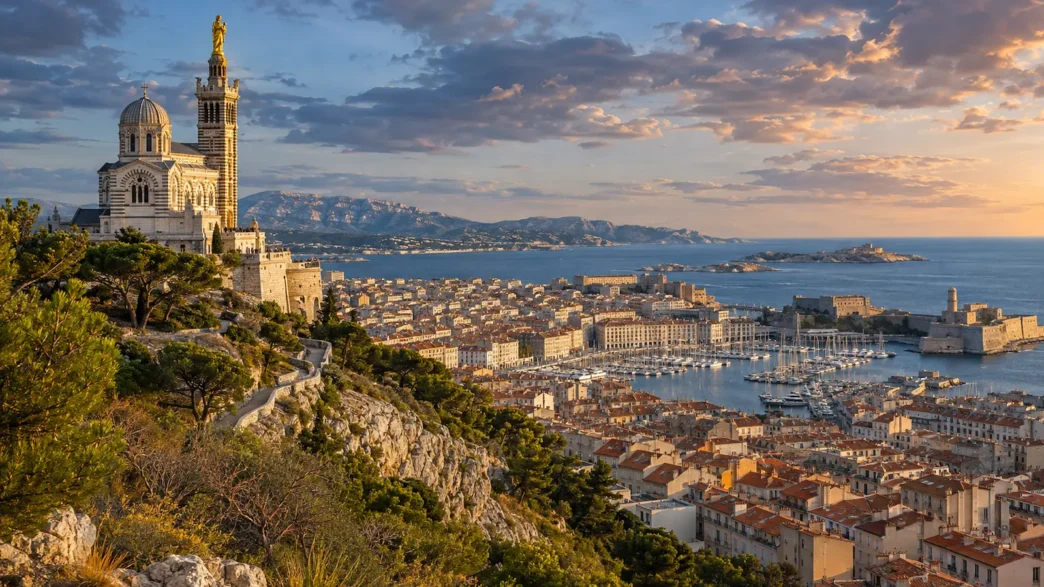
This Marseille travel guide for first-time visitors starts with a simple plan: stay near the Vieux-Port, give the harbor and Le Panier one unhurried day, and use a bus for the basilica or the Corniche. Allow three full days if you want the Calanques as well. With one day, keep it to the Old Port, the Panier and the fort. That gives Marseille room to feel like a city rather than a transfer between photos.
💡 Key Takeaways
- The Old Port is the easiest default. Choose Joliette for a flatter museum-side approach or Saint-Charles for an early departure.
- One coast plan is enough on a short trip. Pick a city coast walk, a Frioul ferry, a Calanques boat or a trail. They involve different time and effort.
- Read the actual opening and wind notices. Tuesday is the Mucem closure. A clear forecast can still produce a rough sea or a windy hilltop.
The mistake that costs first-timers the most time is treating “central Marseille” as one flat sightseeing district. The station is uphill, two main hotel corridors meet the harbor from different shores, and the coast gets quickly bigger than it looks on a phone. Decide where you want to spend your first evening before you choose a hotel. Give the next morning to that side of town.
The 1-Min Cheat Sheet
- Where to sleep: Vieux-Port is the most forgiving base for a short trip. Choose Joliette for a waterfront-first visit or Saint-Charles if you have a dawn train. The exact hotel entrance matters more than the neighborhood label.
- How to arrive: A1 goes directly from Marseille Provence Airport to the Saint-Charles coach station. The full-price November 2026 single is €15 under the published metropolitan tariff. Use M1 for Vieux-Port and budget the separate or combined city fare.
- What to see first: The head of the Old Port and Le Panier are one walk. The fort and Mucem make a useful continuation if open. The fort has free outdoor areas and standard exhibitions cost €11.
- What to save for a second day: Bus 60 uphill for Notre-Dame de la Garde. Add a short Corniche stop by bus 83 or spend longer over lunch. A short walk and a quiet meal use the area better than doing both sides of the port again.
- When to book: Fix a hotel that suits your route, then choose only timed activities you actually want. For the Calanques, check trail access or boat conditions before making that outing the center of your trip.
Top Survival Tips
- Exit the right station before you change levels. At Saint-Charles, go straight to M1 toward La Fourragère for Vieux-Port or M2 for Joliette and Castellane. The outdoor staircase is not part of a metro transfer. Leave bags at the hotel or use official station storage instead of rolling them through Le Panier.
- Put the exact port and quay on your phone. The cruise terminals, dock for the Old Port Ferry Boat, and departure for Frioul are not one place. If you are arriving by ship, open the official cruise terminal access guide and use the terminal named by your operator.
- Make the Corniche a short, deliberate stop. Walk to the view you want and take a bus for the less interesting connecting legs. From the bridge over Vallon des Auffes you already get the fishing harbor view. Descend only if you want the stairs, a meal or a closer look.
- Be selective about the views. When visibility is good, the basilica has a different reward from the port. If it is windy and gray, spend time in the interior or keep the afternoon for a gallery. A viewpoint is a poor reason to spend your last morning traveling across town in low cloud.
- Read access decisions and leave the coast movable. The Calanques park fire-risk page explains summer closures. Specific Sugiton dates require a free reservation. Sea excursions depend on the operator’s forecast and route. Keep a city backup on the same side of town.
- Compare the hours and the ticket package. If you want only the fort and a few city rides, pay for just those. A CityPass can make sense for a concentrated block of included experiences, provided you actually choose among the options it treats as alternatives.
The Full Experience: Marseille Travel Guide for First-Time Visitors
📍 Vieux-Port: The Easiest Place to Get Your Bearings
M1 · Flat harbor head · Early market
Begin under the mirror canopy at Quai de la Fraternité. It is an easy place to meet, check which shore you need and decide whether to walk northwest toward Hôtel de Ville or south toward La Criée. Give the morning to the working port and a coffee. A full loop is less useful than lingering at the part you actually enjoy.
For a one- or two-night trip, a hotel in this area is hard to beat if you plan several walks and a harbor departure. A room above the weekend activity will feel different from one on a parallel street. Ask about the actual facade, lift and entrance before paying for the view.
✅ What Other Travelers Say: The harbor walk shows how quickly the mood changes along the quays. Travelers can get a satisfying first look without trying to walk around the whole port.
⚠️ The Catch (Things to Keep in Mind): The closest metro may be a longer walk than the picture suggests if the room is at the far end of a quay. The harbor’s head is also more exposed than the streets just inland.
📍 Le Panier: Best for Old Lanes at a Slow Pace
Historic lanes · Uneven paving · Cafés and squares
Choose one approach from Quai du Port and one exit toward La Major or the fort. The tourism office’s half-day walk includes the Vieille Charité and area viewpoints. Even a short loop gives you a sense of the hill and the old street plan without copying every stop on the map.
If you like the neighborhood after seeing a video, check whether your accommodation is uphill from the street where a taxi can actually stop. This is a good walking district with light bags. For a stroller or a chair, ask which route to the address avoids the steepest approaches.
✅ What Other Travelers Say: The biggest difference is between the quieter lanes and well-known photo squares, which are rarely far apart. A loose route gives you time to notice both.
⚠️ The Catch (Things to Keep in Mind): Slopes, steps and rough surfaces can turn a short walk into a slow one. Leave room for residents on the narrow streets.
📍 La Major and J4: Best for Museums and the Waterfront
Fort and galleries · Joliette approach · Tuesday closed at Mucem
For a rainy or windy day, put one indoor visit at the center of the route. The Mucem visitor page lists free outdoor access during opening hours, a standard €11 exhibition ticket and the earlier bridge closing. The museum closes Tuesdays. From the flatter waterfront side, the J4 entrance is a logical choice when reaching the bridge from the Panier would be difficult.
Across the esplanade, Cosquer Méditerranée uses timed entries for the cave replica. Book an available slot when it suits your group. Check its latest age and access conditions before choosing it as a family outing. For a less expensive day, walk past La Major and enjoy the fort’s outdoor route when it is open.
✅ What Other Travelers Say: The waterfront tour makes the contrast between the fort and the newer museum easy to see. The space between the venues itself is part of the appeal.
⚠️ The Catch (Things to Keep in Mind): The fort paths and bridges are subject to opening, and there is little shelter on some stretches. Keep the museum or Cosquer as the paid anchor rather than buying both by default.
📍 Noailles and Cours Julien: Best for Food and Street Art
Market streets · M2 · A short uphill link
Start with the Marché des Capucins area for food and small shops. A morning or lunch is a more reliable plan than an evening visit to a market that has closed. Take the short uphill connection to Cours Julien after you have eaten, or use M2 to Notre-Dame du Mont if that approach better suits you. The official Cours Julien guide describes its bars, shops and street art.
For a stay near nightlife, look at the exact street and ask about window insulation. A central place that is delightful for dinner can be less helpful if you need to sleep early. If you are here only for lunch, spend that evening wherever you can get back easily.
✅ What Other Travelers Say: The Cours Julien clip shows the lively public space that makes the climb worthwhile. The nearby market gives the outing a different pace before you head up.
⚠️ The Catch (Things to Keep in Mind): The most direct pedestrian links can involve steps. Do not bring luggage just to stop for photographs on the way to a hotel.
📍 Saint-Victor and the South Coast: Best for a Short Waterfront Escape
Abbey · Easy link to bus 83 · Exposed sea views
Use Saint-Victor as the beginning of a south-side outing, not a quick detour from a north-shore museum appointment. Walk from the south quay if the grade and weather suit, then use bus 83 for Vallon des Auffes. Make it a different day from La Major and J4. If you want the basilica as well, take bus 60 uphill and plan the rest of your time on the south side.
A first visit need not go all the way to Les Goudes for a view. The Corniche has several stretches that work with a shorter plan. For a beach day, pick one place and check conditions rather than expecting a tiny harbor to work as a full beach.
✅ What Other Travelers Say: The abbey video provides a quieter side of the area. Paired with a coastal stop, it offers a different day from the heavily visited harbor head.
⚠️ The Catch (Things to Keep in Mind): The sea-facing walk is exposed. Save this for the better of two weather windows, and plan the return bus before you walk away from the main road.
How Much Time to Give Marseille
One usable day: Start at the Old Port, walk through the Panier to the historic waterfront, and finish with one museum, the free fort or a late lunch. The local sightseeing route is a useful orientation tool. On Tuesday, put the paid museum visit at a venue that is open or focus on the streets and basilica instead.
Two usable days: Use one harbor day and one south-side day with the basilica and Corniche. Fit in Noailles for one meal if it is easy from where you already are. For a trip focused on food rather than coastal views, swap the Corniche for a longer time around Noailles and Cours Julien.
Three usable days: Keep the same two blocks and use the calmest weather for one day near or on the water. Decide between Frioul, a Calanques boat and a marked trail by your group’s needs. Do not turn the day you need to leave for the airport into a first attempt at a long island connection.
Key FAQs
Where should a first-time visitor stay in Marseille? Near Vieux-Port for the easiest mix of sights, transit and waterfront departures. Joliette can be easier for J4 and the waterfront, while Saint-Charles makes sense for early trains. Compare the actual hotel approach, especially with several bags.
Is Marseille easy to visit without a car? Yes for the main neighborhoods. Walk the inner harbor, take M1 or M2 for longer urban legs and use a bus for the steeper or coastal parts. A car is rarely useful just to reach central sights.
Do I need to book the Calanques before I get to Marseille? Check the exact itinerary. Some park routes require a free reservation on designated days. A paid boat is a separate booking; confirm sailing, meeting point and cancellation terms before paying.
Final Verdict and Your Next Step
Plan the hotel and the first useful morning before the rest of the itinerary. Give yourself one area at a time and let the longest coastal outing move with weather. Use our where-to-stay guides for the neighborhood decision and the tourism office’s hotel listing and booking details to compare a real harbor room. Check your airport ride before finalizing the hotel’s arrival time.