
💡 Key Takeaways
- October is the best all-round month for comfortable walking weather, manageable crowds and fewer weather disruptions than September.
- Late March to early April is beautiful but expensive and unpredictable. Cherry blossoms can justify the premium for a first trip, but peak bloom is brief and the most famous spots become packed.
- July and August are the biggest itinerary trap. Osaka’s summer heat and humidity can turn a realistic sightseeing plan into a daily search for air-conditioning.
Choosing the best time to visit Osaka is not as simple as picking spring or autumn. Cherry blossom season looks spectacular, but hotel rates rise and popular parks can feel more like event venues than peaceful gardens. Summer brings major festivals, yet Osaka’s combination of high temperatures, warm nights and heavy humidity can seriously reduce how much ground you cover. June’s rainy season is inconvenient, but it does not usually mean nonstop rain from morning to night. Golden Week, Obon, New Year and large events can create sudden price spikes even in an otherwise sensible month. Winter is often better value, although daylight is shorter and cold evenings make long outdoor days less appealing.
This guide compares the real trade-offs: weather, crowds, travel costs, seasonal events and the amount of flexibility each period requires. Climate figures refer to the Japan Meteorological Agency’s 1991–2020 Osaka normals, so treat them as planning baselines rather than a forecast for your exact dates.
The 1-Min Cheat Sheet
- March to April: Best for cherry blossoms and first-time visitors who value scenery over savings. Expect mild days, cool evenings, premium room rates and concentrated crowds around peak bloom.
- May to June: Best value-weather compromise after Golden Week. Late May is especially strong; June is warmer, wetter and more humid, but often less crowded and easier on the budget.
- July to August: Best for Tenjin Matsuri, fireworks and summer atmosphere. Worst for heat-sensitive travelers, families pushing strollers, theme-park marathons and tightly packed walking itineraries.
- September to November: Best overall period, but the three months are not equal. September can still feel like summer and carries typhoon risk; October is the sweet spot; mid-to-late November is best for foliage but busier.
- December to February: Best for lower prices, food-focused trips, shopping and lighter crowds after the New Year rush. Snow is uncommon in central Osaka, but wind, dry air and shorter days still matter.
Top Survival Tips
- Do not judge a month by its seasonal label. Early September is usually hot, while early March can still feel wintry after sunset. Plan with daily highs and lows, not the words “spring” and “autumn.”
- Avoid Japan’s major domestic travel periods unless the event itself is your reason for going. Golden Week runs from late April into early May, Obon drives heavy movement in mid-August, and the year-end/New Year period can bring full transport, higher rates and reduced business hours.
- Book a refundable hotel before peak dates sell out. For cherry blossom weeks, Golden Week and late-November weekends, start monitoring rooms several months ahead. Recheck the same dates later and replace the booking if a better cancellable rate appears.
- Never build a sakura trip around one exact bloom date. Temperature, rain and wind can shift the season. Give yourself several nights in Kansai and keep Osaka, Kyoto, Himeji and nearby parks as interchangeable options.
- In summer, reduce the itinerary before you arrive. Plan one major outdoor zone in the morning, a long indoor lunch or museum break, and a second neighborhood after sunset. A six-attraction day on paper can become miserable by noon.
- June needs waterproof shoes more than a heroic umbrella. Wet socks, slippery station stairs and damp luggage cause more day-to-day frustration than the rain itself. Carry a compact umbrella, but also pack quick-drying clothing and a spare pair of socks.
- Check event calendars before paying for non-refundable rooms. Concerts, sports fixtures, festivals and long weekends can inflate hotel prices in Namba, Umeda and the Osaka Bay area even outside classic peak season.
- Stay near the route you will use most. Namba works well for nightlife and southern sights; Umeda is stronger for Kyoto, Kobe and northern Osaka day trips. Saving a small amount on a distant hotel can cost you time and energy every day.
The Full Experience
🌸 March to April: Best for Cherry Blossoms, but Not for Bargain Hunters
Season tags: Cherry blossoms · Mild afternoons · Peak demand · Photography · Advance booking essential
March begins cooler than many first-time visitors expect. Osaka’s normal daily high is about 14.2°C in March, with a low near 6.0°C. April is much easier for walking, averaging roughly 19.9°C by day and 10.9°C at night. A light jacket is still useful, especially for early mornings, river cruises and evening blossom illuminations.
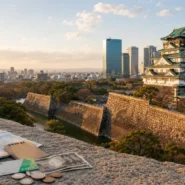
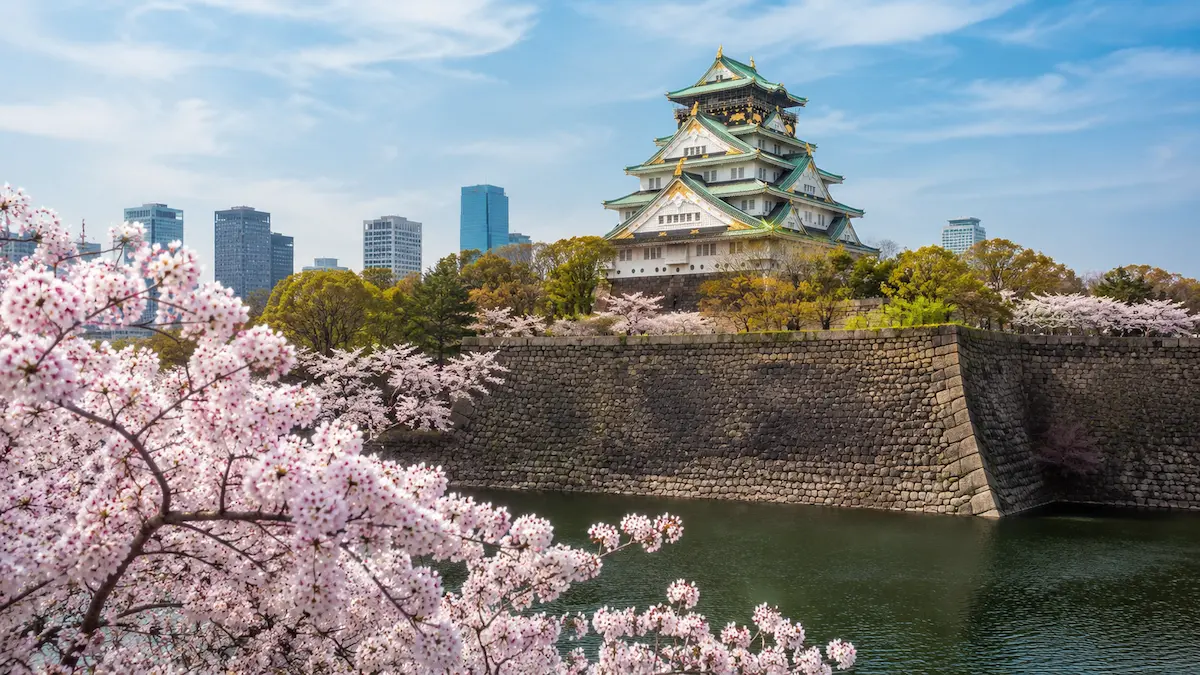
The headline attraction is sakura. In Osaka, the main Somei Yoshino cherry blossoms usually appear from late March into early April, with Osaka Castle Park, Kema Sakuranomiya Park and riverside areas drawing the biggest crowds. The scenery can be genuinely memorable: castle walls framed by pale blossoms, picnic groups under the trees and long stretches of pink beside the Okawa River. For a first Japan trip, it can feel worth the effort.
But this is not a reliable bargain season. The most desirable dates are compressed into a short, forecast-dependent window, so travelers compete for the same hotels, weekend restaurant bookings and attraction time slots. The risk is not only paying more. You may book months ahead and still arrive before full bloom, after strong wind has stripped the petals, or during several grey days.
Best timing within the period: Early to mid-March is calmer and can offer better value, but it is too early for the main cherry blossom display. Late March to the first part of April is the classic sakura gamble. Mid-to-late April often has pleasant weather after the main bloom, although tourist demand remains strong and Golden Week approaches at the end of the month.
✅ What Other Travelers Say
A recurring theme in traveler reports is that the crowds are highly concentrated. Osaka Castle’s best-known blossom viewpoints and the Dotonbori bottleneck can be intense, but quieter streets and less-famous parks may feel completely different only a few blocks away. Some repeat visitors consider sakura a worthwhile once-in-a-lifetime experience; others prefer autumn because the visual season lasts longer and is less vulnerable to one storm.
⚠️ The Catch (Things to Keep in Mind)
Do not pay a huge non-refundable premium just to chase one predicted peak date. Use cancellable accommodation, watch the official forecast as your trip approaches and visit major blossom sites early on weekdays. If you dislike crowds or are mainly interested in food, shopping and day trips, mid-April after peak bloom may deliver a better overall Osaka experience than the most famous sakura weekend.
🌿 May to June: Best Weather-Value Balance—If You Dodge Golden Week
Season tags: Late-spring comfort · Rainy-season value · Hydrangeas · Fewer international crowds · Flexible planning
May and June are often grouped together, but they offer very different trips. May has one of Osaka’s most comfortable temperature ranges, with a normal high around 24.9°C and a low near 16.0°C. June climbs to about 28.0°C by day and 20.3°C at night, while average monthly rainfall rises to roughly 185.1 mm—the highest monthly total in Osaka’s JMA climate-normal set.
The first major trap is Golden Week. Japan’s cluster of national holidays from late April into early May produces packed transport, busy attractions and limited hotel choice. Pleasant weather does not compensate for the friction if you are not specifically interested in the holiday atmosphere. The second half of May is much better: warm without peak-summer oppression, greener landscapes, longer sightseeing days and usually calmer domestic travel demand.
June is more complicated than its reputation. The rainy season does not guarantee an all-day downpour every day. You may get overcast skies, short heavy showers, humid dry spells or several good days in a row. The real problem is uncertainty. Outdoor plans become harder to lock in, and a warm wet day can feel tiring even when the thermometer is not extreme.
Osaka handles rain better than temple-heavy itineraries. Covered shopping arcades, underground passages, department stores, museums, Kaiyukan aquarium, food halls, cafés and long indoor meals give you realistic backup options. June can therefore work well for repeat visitors, food-focused travelers and anyone willing to swap plans each morning.
Best timing within the period: Mid-to-late May is one of the strongest windows of the entire year. Early June can still be manageable, while the middle and latter part of June demand more weather flexibility. Hydrangea spots and lush temple grounds are a genuine seasonal bonus, not merely consolation for rain.
✅ What Other Travelers Say
Traveler experiences in June are mixed, which is exactly the point: some report only a handful of rainy days and surprisingly pleasant conditions, while others encounter persistent humidity and disrupted outdoor plans. Many agree that Osaka is easier than expected in wet weather because its food, shopping and entertainment strengths are not dependent on clear skies.
⚠️ The Catch (Things to Keep in Mind)
Lower demand does not automatically mean every date is cheap, and a festival, concert or weekend can still raise rates. Build a rain-proof itinerary before arrival rather than improvising after a storm starts. Keep Minoh, open-air observation decks and long walking routes on flexible days; reserve indoor attractions and restaurant-heavy neighborhoods for the wettest forecast.
🔥 July to August: Best for Festivals, Worst for Long Walking Days
Season tags: Extreme heat · High humidity · Summer festivals · Fireworks · Obon crowds · Heat-sensitive travelers beware
July and August are the months most likely to expose an unrealistic itinerary. Osaka’s normal daily high reaches about 31.8°C in July and 33.7°C in August. More importantly, normal nighttime lows remain around 24.6°C and 25.8°C. The city often does not cool enough overnight to give your body a proper reset, and the humidity makes long waits, uncovered platforms and afternoon walks feel harder than the raw temperature suggests.
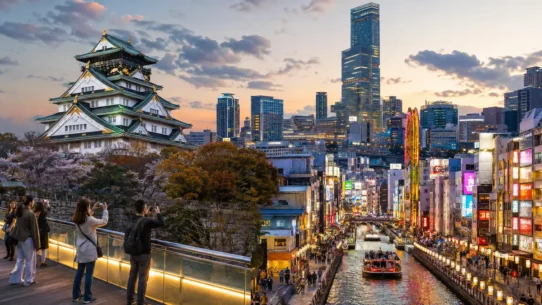
This is also a lively cultural season. Tenjin Matsuri takes place every year on July 24 and 25, with processions, river activity and fireworks creating one of Osaka’s most atmospheric nights. Summer food, evening festivals and late-opening entertainment can be excellent. Travelers who enjoy heat, nightlife and event energy may prefer this period to a quieter winter trip.
The mistake is trying to sightsee as if it were October. Osaka Castle grounds, Shinsekai, Dotonbori, Kuromon Market and Umeda can involve far more walking and exposed pavement than expected. Universal Studios Japan becomes particularly demanding because the heat is combined with queues, limited shade and a full-day schedule.
Mid-August adds another complication: Obon is one of Japan’s major domestic travel periods. Trains, airports and popular leisure attractions can become busier, while accommodation rates may rise. August and September also overlap with Japan’s peak typhoon season, so flight and outdoor-event disruption is possible even when central Osaka avoids the worst conditions.
Best timing within the period: Early July may be marginally easier than August, although the rainy season can linger and humidity is already high. Late July is strongest for Tenjin Matsuri. August is the hardest month for daytime comfort and should be chosen deliberately, not because a generic guide called summer “festival season.”
✅ What Other Travelers Say
Traveler feedback is unusually consistent: many still have an excellent trip, but they do much less outdoors than planned and remember the humidity as much as the attractions. Visitors from hot climates sometimes cope well, while travelers from cooler or drier regions can find even a short station-to-station walk exhausting. The positive reports usually come from people who start early, rest indoors for several hours and return outside in the evening.
⚠️ The Catch (Things to Keep in Mind)
If you are heat-sensitive, have small children, are pregnant, have mobility limitations or want to walk 20,000 steps a day, July and August are poor choices. Carry water and electrolytes, use sun protection, schedule air-conditioned breaks and treat heat warnings as a reason to cut plans—not a challenge to push through. For most first-time visitors with flexible dates, this is the period to avoid.
🍁 September to November: Best Overall, but September Is Not Autumn Yet
Season tags: October sweet spot · Typhoon risk in September · Autumn foliage · Comfortable walking · Strong late-November demand
This is Osaka’s best broad travel season, but September, October and November should not be treated as interchangeable. September still has a normal high around 29.5°C and a low near 21.9°C. It may look like autumn on a calendar while feeling like extended summer on the street. Typhoons are also most frequent from late August through much of September, so leave slack in any itinerary involving flights, ferries or exposed day trips.
October is the best time to visit Osaka for most travelers. The normal high falls to about 23.7°C, with a low around 16.0°C. Humidity is lower, the worst summer heat has passed and typhoon season is usually winding down. You can walk between neighborhoods, spend a full day at a theme park and take day trips without designing your schedule around survival breaks.
The compromise is that October is often too early for Osaka’s strongest autumn foliage. Urban trees begin changing gradually, but famous spots such as Minoh Falls and Katsuo-ji generally look their best from mid-November into early December. November’s normal high of about 17.8°C and low near 10.2°C remain comfortable with layers, and the visual payoff can be excellent.
Late November is therefore the choice for foliage-focused travelers, while October is the better decision for weather-focused travelers. Accommodation demand can strengthen on foliage weekends and around Kyoto, which affects Osaka because many visitors use the city as a cheaper, livelier base for Kansai day trips.
Best timing within the period: Skip early September if you are trying to escape summer. Choose mid-to-late October for the safest weather-and-crowd balance. Choose mid-to-late November for autumn color, accepting cooler evenings and heavier weekend demand.
✅ What Other Travelers Say
Many travelers describe late October and November as the easiest time for full sightseeing days. Reports commonly mention comfortable daytime walking, crisp evenings and less weather fatigue than summer. Foliage hunters repeatedly warn that early November can be too soon for Osaka’s best colors, especially at lower-elevation city locations.
⚠️ The Catch (Things to Keep in Mind)
Do not book an early-October trip and expect the deep red scenery shown in late-November photos. Likewise, do not assume September is a cheaper version of October; the heat and storm risk materially change the experience. If your trip includes Kyoto, visit famous temples early and sleep in Osaka, where evenings are livelier and hotel choice is often broader.
✨ December to February: Best for Value and Low Crowds, with Shorter Days
Season tags: Lower-season value · Dry weather · Winter illuminations · Food and shopping · New Year disruption · Plum blossoms
Winter is underrated for Osaka. Normal daily highs are about 12.3°C in December, 9.7°C in January and 10.5°C in February. Normal lows sit near 5.3°C, 3.0°C and 3.2°C respectively. Snow is rare in central Osaka, and monthly precipitation is much lower than in the rainy season, so many winter days are dry enough for comfortable sightseeing with the right layers.
For value, the strongest window is usually after the New Year travel rush and before spring demand builds. Mid-January through February can offer better room availability and a calmer atmosphere at major sights. Osaka also suits cold-weather travel: covered arcades, underground malls, department stores, food basements, izakaya districts and indoor attractions make it easy to alternate between outdoor walks and warm stops.
December has more visual atmosphere than many travelers expect. Illuminations brighten Midosuji and Nakanoshima, seasonal markets appear, and Universal Studios Japan runs winter programming. February adds plum blossoms at Osaka Castle Park, offering an early hint of spring without peak sakura crowds.
The main exception is the year-end and New Year period. Domestic travel becomes intense, some independent businesses close or shorten hours, and transport can require advance reservations. The city is not empty, but your ideal restaurant list may not operate normally. Check opening schedules rather than assuming every attraction follows its standard calendar.
Best timing within the period: Early December is good for illuminations before holiday demand peaks. Mid-January is strong for price-conscious city breaks. February is the quietest-feeling choice for travelers who do not mind cold mornings and want plum blossoms or easy restaurant access.
✅ What Other Travelers Say
Winter travelers often describe Osaka’s cold as manageable while walking, especially compared with northern Japan, North America or northern Europe. They value lighter crowds, easier restaurant decisions and the ability to use Osaka as a base for Nara, Kobe, Himeji and Kyoto. Visitors from tropical climates are more likely to underestimate wind and the temperature drop after sunset.
⚠️ The Catch (Things to Keep in Mind)
Winter is not the right season for lush scenery, long garden days or guaranteed snow. Daylight is shorter, bare trees can make some parks feel subdued, and outdoor observation decks may be uncomfortable in strong wind. Pack layers, lip balm and gloves, then build the trip around food, neighborhoods, museums, shopping and efficient day trips.
Key FAQs
What is the best month to visit Osaka for good weather and fewer crowds?
October is the strongest all-round choice. It is usually cooler and less humid than September, while avoiding the concentrated late-November foliage crowds. Travelers who prioritize lower prices over perfect weather should also consider the second half of May or mid-January through February.
Is cherry blossom season in Osaka worth the higher hotel prices?
Yes for a first-time visitor, photographer or traveler who considers sakura a major trip goal. No if you dislike crowds, need fixed low-cost dates or would be disappointed by missing a brief peak. The blossoms are beautiful, but autumn gives you a wider timing window and more reliable full-day sightseeing weather.
Is June a bad time to visit Osaka because of the rainy season?
Not necessarily. June is wetter and less predictable, but rain is not guaranteed all day, every day. Osaka has enough covered shopping, indoor attractions and food experiences to make a wet-weather trip work. It becomes a bad choice only when your itinerary depends on clear skies, long hikes or rigid outdoor reservations.
Final Verdict and Your Next Step
Choose October for the best overall balance of weather, walking comfort and manageable risk. Choose mid-to-late November if autumn foliage matters more than lighter crowds. Choose late March to early April for cherry blossoms, but accept higher prices and bloom uncertainty. Choose mid-January to February for lower-season value. Avoid July and August unless festivals or school holidays leave you no alternative, and avoid Golden Week if you do not actively want the holiday atmosphere.
The smartest move is to reserve a well-located, cancellable hotel as soon as your dates are reasonably firm—especially for sakura season, Golden Week and late-November weekends. Then recheck prices, event calendars and the weather closer to departure.
- Compare Osaka hotel prices on Agoda
- Check cancellable Osaka stays on Booking.com
- Book Osaka attractions and passes on Klook
- Browse Osaka tours and tickets on KKday
Disclosure: Some booking links may be affiliate links. You pay the same displayed price, while the site may earn a commission that supports independent travel research. Always compare the final price, cancellation terms and official attraction availability before paying.
Planning Sources and Data Notes
- Japan Meteorological Agency: Osaka climatological normals, 1991–2020
- Japan National Tourism Organization: major holiday and business-hour guidance
- Japan National Tourism Organization: June and rainy-season guidance
- Japan National Tourism Organization: September and typhoon-season guidance
- Osaka Official Tourism Guide: spring and cherry blossom timing
- Osaka Official Tourism Guide: autumn foliage timing