
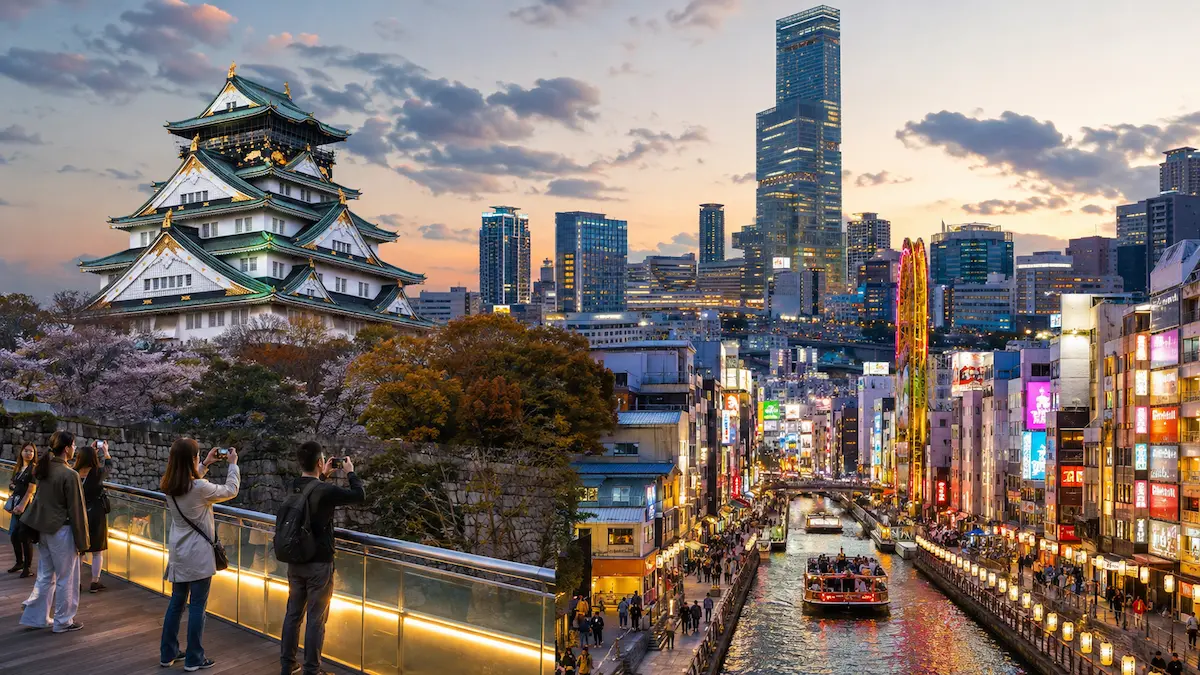
💡 Key Takeaways
- Osaka is not one compact centre. Namba, Umeda, Osaka Castle, Tennoji and the Bay Area work best as separate sightseeing clusters. Crossing the city repeatedly wastes more time than most first-time visitors expect.
- Your hotel location matters more than a small nightly price difference. Namba is best for food and nightlife, Umeda is best for regional day trips, and Tennoji is often the practical budget choice with easier airport access.
- Do not buy every pass or “must-have” attraction ticket automatically. An IC card is enough for many trips, Dotonbori is better for atmosphere than bargain dining, and Universal Studios Japan requires a full-day strategy rather than casual drop-in planning.
An Osaka Travel Guide for First-Time Visitors should begin with the problem most glossy guides avoid: Osaka looks easy on a map, but the city can quietly drain your time through confusing station names, long underground walks, unnecessary transfers and badly grouped attractions. A hotel described as “near Namba” may be convenient for one railway but awkward for another. A route that looks like one quick train ride can become a 15-minute station walk with luggage. A famous food street may be memorable but not where you will eat your best or cheapest meal.
Osaka is generous, lively and wonderfully unpolished, but it rewards travellers who plan by area rather than by attraction ranking. The goal of this guide is not to tell you to visit everything. It is to help you decide what deserves your limited time, what can be shortened, where the tourist traps are, and how to build an Osaka itinerary that still feels enjoyable at the end of the day.
Planning note: transport fares, attraction rules and opening schedules can change. Recheck official operating information shortly before travel, especially for Universal Studios Japan, seasonal events and airport trains.
The 1-Min Cheat Sheet
- Ideal stay: Three full city days is comfortable. Add a fourth day for Universal Studios Japan. Add a fifth if you want Kyoto, Nara or Kobe without sacrificing Osaka itself.
- Best first-time base: Choose Namba for night food and easy Kansai Airport access; Umeda for Kyoto, Kobe and regional trains; Tennoji for value, airport convenience and a less polished but practical location.
- Best airport route: Use Nankai Railway for Namba. Use JR for Tennoji, Osaka/Umeda, Shin-Osaka or Kyoto. A direct airport bus can be worth paying for when it stops near your hotel and you have large luggage.
- Best transport tool: Use an ICOCA, Suica or another compatible IC card for ordinary trips. Osaka Metro also accepts supported contactless bank cards, but an IC card remains more broadly useful across JR, metro and private railways.
- Best planning rule: Visit one major zone in the daytime and one nearby zone in the evening. Do not bounce between Namba, Umeda and the Bay Area several times in one day.
- Best first evening: Namba, Hozenji Yokocho and Dotonbori. You get the famous Osaka atmosphere without spending prime daytime hours there.
- Most overhyped expectation: Dotonbori and Kuromon Market are not guaranteed to deliver Osaka’s best-value food. Treat them as sightseeing areas, compare prices and eat a few streets away when possible.
- Biggest ticket mistake: A Universal Studios Japan Express Pass is separate from park admission. Check exactly which rides, timed-entry benefits and time slots your chosen product includes.
- Biggest luggage mistake: Dragging a large suitcase through Umeda’s underground passages or transferring between the different “Namba” stations during rush hour.
- Booking priority: Reserve your hotel first, then USJ and date-specific attractions, then special restaurants. Ordinary city transport usually does not need advance booking.
Top Survival Tips
1. Learn the Osaka station-name trap before you arrive
“Namba Station” is not a single simple station. Nankai Namba, Osaka-Namba, JR Namba and Osaka Metro Namba serve different operators and are connected imperfectly. The walk between them can feel much longer with luggage, children or a tight departure time. Always check the railway company and station exit, not only the station name.
Umeda has the opposite problem: several major stations sit inside one enormous commercial and underground network. JR Osaka Station, Osaka-Umeda stations for Hankyu and Hanshin, and the Metro’s Umeda, Higashi-Umeda and Nishi-Umeda stations are close in geographic terms but not necessarily quick to navigate. Save the exact exit number and a nearby landmark before you start walking.
2. Choose the airport train according to your hotel, not according to the train’s reputation
The Nankai Rapi:t is comfortable, reserved and can reach Nankai Namba in roughly 34 minutes on the fastest service. The cheaper Airport Express takes longer but still reaches Namba without a transfer. This is usually the cleanest choice for hotels around Namba, Dotonbori and southern Shinsaibashi.
JR is generally more logical for Tennoji, Osaka/Umeda, Shin-Osaka and Kyoto. The HARUKA connects Kansai Airport with major JR stations, while the Kansai Airport Rapid Service can be cheaper but slower and busier. Do not take a train to the “wrong” city centre simply because it is famous; one extra transfer with a suitcase can erase the time you thought you saved.
3. Do not drag luggage through sightseeing days
Coin lockers exist at major stations, but large lockers can fill quickly during weekends, holidays and peak check-in hours. A safer plan is to ask your hotel to store luggage, reserve a staffed storage service, or use Japan’s luggage-forwarding service between hotels. This is especially useful when moving from Osaka to Kyoto: send the large bag ahead and travel with a small overnight bag rather than turning a simple train ride into a stressful station expedition.
4. Group Osaka by north, south, east and west
A sensible first trip usually looks like this: Minami on one day, Osaka Castle plus Umeda on another, Tennoji plus Shinsekai on another, and the Bay Area on its own day. This matters because the visible train time is only part of the journey. Walking to platforms, finding exits and moving through shopping complexes can add 10 to 20 minutes each time.
5. Use Dotonbori for atmosphere, then eat beyond the brightest signs
Dotonbori deserves a visit. The canal, illuminated billboards and noisy food façades are part of the Osaka experience. The mistake is assuming that the longest queue or largest moving crab sign guarantees the best meal. Tourist-heavy restaurants can be good, but you often pay for position and spectacle. Walk five to ten minutes into Ura Namba, Hozenji Yokocho or side streets away from the canal before choosing dinner.
6. Treat Kuromon Market as a tasting stop, not a guaranteed bargain
Kuromon is convenient, visual and easy to combine with Namba. It is also heavily geared toward visitors, and premium seafood, fruit and wagyu portions can be expensive. Check the displayed price before ordering, confirm whether the price is per piece or per weight, and do not build your entire food day around the market. One or two carefully chosen snacks is often more satisfying than an expensive grazing session.
7. Buy a transport pass only after doing the arithmetic
Many travellers buy an unlimited pass because it feels simpler, then discover that their itinerary includes JR, private railways or long walking periods that the pass does not cover. An Osaka Metro day pass can make sense on a metro-heavy day with roughly four or more paid rides, but an IC card is often better for a relaxed itinerary. Attraction bundles can save money only when you genuinely want the included sights and can use them within the validity window.
8. Understand what Osaka Castle actually is
The exterior and park are photogenic, especially in blossom and autumn foliage seasons. The main tower interior is a modern museum rather than a preserved wooden castle experience. History-focused travellers may appreciate the displays and city view; architecture purists who are also visiting Himeji may prefer to enjoy Osaka Castle from outside and spend the saved time elsewhere.
9. Plan Universal Studios Japan as a controlled operation
USJ is not a casual half-day add-on for most first-time visitors. Buy dated admission, download the official app, register tickets where required and understand the difference between park admission, Express Pass access and Area Timed Entry. From January 5, 2026, the official app is required for obtaining Area Timed Entry Tickets and Standby Entry Tickets inside the park. Some Express Pass products include advance timed entry to popular areas, while others do not.
Arrive well before the published opening because entry queues form early. Decide in advance whether you prefer to spend money on an Express Pass or spend time in standby lines. Families, visitors with one fixed park day and travellers who care about several headline rides gain the most from Express Passes; flexible visitors on quieter weekdays may accept the queues and save the money.
10. Do not schedule Kyoto and Nara as if they were Osaka neighbourhoods
Both are easy from Osaka, but they are still separate destinations. A rushed Kyoto morning followed by Nara deer, then Dotonbori dinner looks efficient on paper and feels exhausting in practice. Choose one regional day trip per day. Stay in Umeda if you expect several JR or Hankyu day trips; stay in Namba if Osaka evenings matter more.
11. Avoid tout-led nightlife decisions
Osaka is generally easy to explore, but the usual big-city rule applies in nightlife districts: do not follow aggressive street promoters into an unknown bar, club or adult venue. Check recent reviews, confirm cover charges and menu prices, and keep control of your drink. This is more relevant around late-night entertainment streets than at ordinary restaurants and izakaya.
12. Leave room for unplanned food stops
Osaka works best when every meal is not locked to a viral recommendation. Small okonomiyaki shops, standing sushi counters, department-store food halls and neighbourhood izakaya often provide better value and less waiting than headline venues. Reserve only the places you would genuinely regret missing.
The Full Experience
📍 Namba & Dotonbori: Best for First-Time Energy, Food and Late Nights
Tags: Neon nightlife · Street food · Shopping · Easy KIX access · First-night favourite
Namba is the version of Osaka most first-time visitors imagine: animated signs, crowded arcades, late-night restaurants, comedy culture and endless visual noise. It is the strongest base for travellers who want to step out of the hotel and immediately find food, shopping and nightlife. It is also convenient for Kansai Airport via Nankai Railway.
The efficient route is to begin at Kuromon Market or Nipponbashi in late morning, move through Namba Parks or Ura Namba, then walk toward Hozenji Yokocho and Dotonbori before sunset. Continue north through Shinsaibashi-suji if you still want shopping. Reversing this route repeatedly or returning to the hotel between every stop adds unnecessary station walking.
- Allow: Half a day plus an evening, or one full day if shopping and food are priorities.
- Worth your time: Hozenji Yokocho, the Dotonbori canal after dark, Ura Namba, Namba Yasaka Shrine and the covered shopping arcades.
- Lower priority: Waiting an hour for a restaurant solely because it is famous online.
- Hotel reality: Check whether the property is near Nankai Namba, Osaka Metro Namba, Osaka-Namba or JR Namba. “Namba area” alone is not precise enough.
✅ What Other Travelers Say
Visitors consistently enjoy the first visual impact, walkability and sheer number of food choices. Many also say the most enjoyable meals are found one or two streets away from the canal rather than directly under the largest signs. Night owls usually love staying here; early sleepers can find the crowds and street noise tiring.
⚠️ The Catch (Things to Keep in Mind)
Dotonbori is crowded, commercial and designed to capture tourist spending. It is not a hidden local dining district. Kuromon Market can feel expensive, and large seafood or wagyu portions can destroy a daily food budget quickly. Visit for the atmosphere, take your photos, compare menus and then decide whether the premium is worth it.
📍 Umeda & Osaka Station: Best for Day Trips, Shopping and Transport Connections
Tags: Regional rail hub · Department stores · Skyline views · Rainy-day friendly · Navigation challenge
Umeda is Osaka’s polished northern centre. It is the best base for travellers planning Kyoto, Kobe, Himeji or other regional outings because JR, Hankyu and Hanshin services converge here. It also offers department stores, underground food streets, electronics, rooftop spaces and major hotels without requiring a separate sightseeing journey.
For a first visit, do not try to “see all of Umeda.” Choose a simple sequence: Osaka Station City and Grand Front Osaka, a meal in a department-store basement or restaurant floor, then either Umeda Sky Building or another skyline viewpoint near sunset. The area is at its best when used as a transport base and evening destination rather than a checklist of malls.
- Allow: Half a day and an evening; more for serious shopping.
- Worth your time: Osaka Station’s upper terraces, Grand Front Osaka, department-store food halls and Umeda Sky Building if the weather is clear.
- Lower priority: Crossing the station complex repeatedly to compare similar malls.
- Hotel reality: A property on the wrong side of the station can add a long indoor walk. Check the closest station entrance and railway line.
✅ What Other Travelers Say
Travellers appreciate Umeda’s excellent connectivity, huge choice of shopping and easy access to Kyoto and Kobe. Many are surprised by how much food and nightlife sits below office towers and department stores. Repeat visitors often prefer Umeda because it is practical without feeling as tourist-saturated as Dotonbori.
⚠️ The Catch (Things to Keep in Mind)
The station complex is famously disorienting. GPS can behave poorly underground, exits may lead to opposite sides of a wide road, and two places that look adjacent on a map may require changing levels several times. With luggage, follow signs for your railway first and avoid improvising through underground malls. Umeda Sky Building is also farther from the main JR platforms than many visitors expect.
📍 Osaka Castle & Tanimachi: Best for History, Park Walks and a Slower Morning
Tags: Landmark photos · History museum · Spacious park · Seasonal scenery · Long approach walk
Osaka Castle is the city’s obvious historical symbol, but the best visit depends on your expectations. The park, moats, stone walls and tower exterior create the strongest experience. Inside, the main tower functions as a modern museum with exhibits and an observation level. That is useful for learning the Toyotomi-era story, but it is not the same as walking through an original wooden keep.
Arrive in the morning, especially during cherry blossom season, autumn weekends or hot weather. The grounds are large, and the walk from the station to the tower can take longer than expected. Combine the castle with the Osaka Museum of History or continue to Umeda later; do not return to Namba for lunch and then travel north again unless you have a specific reason.
- Allow: Two hours for the park and exterior; three to four hours with the museum or nearby history attractions.
- Worth your time: The moat views, stone ramparts, Nishinomaru side and a slow park walk.
- Lower priority: The interior if you dislike crowded museums or are already prioritising Himeji Castle.
- Mobility reality: The park involves distance, slopes and uneven route choices even though accessible options exist inside the main tower.
✅ What Other Travelers Say
Opinions are genuinely divided. Some visitors enjoy the museum displays and skyline view; others feel the exterior and park are the real highlights. Travellers who understand the reconstructed, museum-style interior before arriving are usually more satisfied than those expecting a preserved feudal castle.
⚠️ The Catch (Things to Keep in Mind)
The castle can consume half a day once station walks, photos, queues and the park are included. In summer, the exposed walking can be tiring. If your trip already includes Himeji and you have only two days in Osaka, a short exterior visit may be enough. Do not keep it on the itinerary purely because every top-ten list says you must enter.
📍 Tennoji & Shinsekai: Best for Retro Osaka, Better-Value Hotels and Contrasting City Views
Tags: Retro streets · Kushikatsu · Budget base · Airport-friendly JR access · Grittier atmosphere
Tennoji and Shinsekai show a more layered Osaka. Tennoji has major transport connections, shopping complexes, parks and the high-rise Abeno Harukas area. A short walk away, Shinsekai delivers retro signs, kushikatsu restaurants, arcades and Tsutenkaku Tower. The contrast is more interesting than either area alone.
This is a strong half-day route: begin around Tennoji Park or Abeno, continue through Shinsekai in late afternoon, eat early, then decide whether to return to Namba or stay for the lights. Families may prefer the park, zoo or observatory side; photographers and casual food explorers may spend more time around Shinsekai.
- Allow: Half a day; a full day if adding the zoo, museums or extensive shopping.
- Worth your time: Abeno skyline views, Tennoji Park, Janjan Yokocho and Shinsekai’s illuminated streets.
- Lower priority: Paying for multiple observation decks in one trip. Choose Abeno Harukas, Umeda Sky Building or Tsutenkaku according to location and budget.
- Hotel reality: Tennoji is more practical than romantic, but often provides larger rooms or lower rates than central Namba.
✅ What Other Travelers Say
Many visitors enjoy Shinsekai precisely because it feels less polished and more visually distinctive than modern shopping districts. Others find it underwhelming after one short walk. Tennoji receives praise as a useful transport base with easier access to Kansai Airport and reasonable connections to Nara.
⚠️ The Catch (Things to Keep in Mind)
Shinsekai is not a full-day attraction for most first-timers. Some restaurants are heavily tourist-facing, and the retro image can feel staged around the main streets. The wider area is grittier than Umeda or central Shinsaibashi. That does not make it automatically unsafe, but visitors should use normal late-night awareness and avoid assuming every cheap-looking venue is good value.
📍 Universal City & Osaka Bay: Best for USJ, Families and One Dedicated Entertainment Day
Tags: Theme parks · Aquarium · Family travel · Advance tickets · Full-day commitment
The Bay Area contains two of Osaka’s biggest family attractions: Universal Studios Japan and Osaka Aquarium Kaiyukan. A common planning mistake is treating them as neighbouring stops that can be completed together. They sit in different parts of the bay and are not a simple walk from each other. USJ normally deserves a full day by itself; Kaiyukan works better as a separate half-day paired with Tempozan or a relaxed evening elsewhere.
For USJ, book dated admission early, compare Express Pass combinations carefully and download the official app before arrival. Confirm whether your selected Express Pass guarantees entry to SUPER NINTENDO WORLD and which ride times are fixed. A cheap-looking pass that excludes your priority ride is not a bargain.
For Kaiyukan, book a timed ticket during busy periods and avoid arriving at the same time as large tour groups when possible. The aquarium’s route is structured and can become slow when crowded, so allow more time than a quick “one-hour aquarium” assumption.
- Allow: One full day for USJ; three to five hours for Kaiyukan and Tempozan.
- Worth your time: USJ for franchise fans and ride-focused travellers; Kaiyukan for families, marine-life enthusiasts and bad-weather days.
- Lower priority: Staying in Universal City for the whole Osaka trip unless the park is your main reason for visiting.
- Hotel reality: A Universal City hotel can make an early park start easier, but it is less convenient for nightly dining in Namba or regional day trips.
✅ What Other Travelers Say
USJ visitors often describe the day as a choice between paying with money or paying with queue time. Families and travellers with only one available date tend to value Express Passes most. Kaiyukan is widely liked for its central tank and gradual spiral route, although crowding can reduce the sense of calm.
⚠️ The Catch (Things to Keep in Mind)
USJ costs rise quickly because admission, Express Passes, food and merchandise are separate decisions. Timed-entry rules and attraction operations can change, and an Express Pass does not replace admission. At Kaiyukan, timed tickets do not guarantee an empty building. Do not schedule a fixed dinner across town too soon after either attraction.
A Realistic Osaka Itinerary for First-Time Visitors
Two Days: The Essential Osaka Version
- Day 1: Kuromon Market for a light tasting, Namba Yasaka Shrine or Nipponbashi, Ura Namba, Hozenji Yokocho, Dotonbori at dusk and Shinsaibashi in the evening.
- Day 2: Osaka Castle in the morning, lunch near Tanimachi or Umeda, Osaka Station area in the afternoon, then a skyline viewpoint or department-store dinner.
This version skips Tennoji, Shinsekai and the Bay Area. It is appropriate only when Osaka is a short stop between Kyoto and another city.
Three Days: The Best First-Time Balance
- Day 1: Namba, Dotonbori, Hozenji and Shinsaibashi.
- Day 2: Osaka Castle, Osaka Museum of History or a relaxed park walk, then Umeda and a night view.
- Day 3: Tennoji, Abeno and Shinsekai, with free time for shopping, food or an onsen-style relaxation stop.
This gives you Osaka’s southern energy, northern modernity and historical centre without turning every day into a race.
Four Days: Add One Major Attraction Day
- Option A: Universal Studios Japan for the full fourth day.
- Option B: Kaiyukan and Tempozan, followed by a slower evening in Namba or Umeda.
- Option C: A day trip to Nara, Kobe or Kyoto if Osaka’s city attractions matter less to you.
Five Days: Add a Regional Day Trip Without Sacrificing Osaka
Use the fifth day for one destination only. Nara is easy for temples, parkland and a slower pace. Kobe works for waterfront scenery and dining. Kyoto deserves an entire day at minimum and is better with a tightly focused district plan rather than an attempt to cover the whole city.
How to Choose the Best Area to Stay in Osaka
Stay in Namba if nightlife and food are the priority
Namba is ideal for first visits, couples, friends and travellers who want late dinners without a train ride home. It is also the easiest central area for Nankai access to Kansai Airport. Avoid rooms immediately over nightlife streets if you sleep lightly.
Stay in Umeda if you are taking several day trips
Umeda saves time for JR and Hankyu journeys toward Kyoto, Kobe and Himeji. It suits shoppers, business-style travellers and people who prefer polished surroundings. The downside is navigation complexity and higher prices around the most convenient station exits.
Stay in Tennoji if value and airport access matter
Tennoji is a practical compromise for budget-conscious travellers, families and those who want JR access to Kansai Airport and Nara. It is less atmospheric at night than Namba, but the money saved can be meaningful. Check the immediate block around the hotel rather than judging the whole district by the station name.
Stay in Shin-Osaka only for a specific transport reason
Shin-Osaka is useful for very early Shinkansen departures, frequent bullet-train trips or a one-night transit stay. It is not the most rewarding base for a first Osaka holiday. You will commute to the city’s dining and sightseeing areas, and the surroundings feel more functional than memorable.
Stay in Universal City only when USJ dominates the trip
A park-side hotel reduces morning stress and can be valuable for families. For a multi-day Osaka city trip, however, it creates repeated journeys to Namba, Umeda and other districts. One night near USJ followed by a central hotel can work, but changing hotels also costs time; compare that cost honestly.
Budget Decisions That Actually Save Money
- Spend on location before room size: Saving a small amount on a distant hotel can create daily transport costs and lost evening energy.
- Use lunch for premium meals: Some restaurants offer better-value lunch sets than dinner menus.
- Use department-store basements intelligently: Visit before closing for prepared food discounts, but do not expect every item to be reduced.
- Limit paid observation decks: Osaka has several. One carefully timed sunset view is usually enough.
- Compare USJ Express Pass packages, not just prices: The cheapest pass can be poor value if it excludes your priority attractions.
- Do not buy a regional rail pass automatically: Price individual trips first. A nationwide JR Pass is rarely justified by an Osaka city stay alone.
- Carry some cash: Major transport and shops are easy with cards, but small eateries, market stalls and older ticket machines may still be simpler with yen.
Key FAQs
What is the best area to stay in Osaka for first-time visitors?
Namba is the easiest all-round choice for food, nightlife and direct Nankai access to Kansai Airport. Umeda is better for travellers making several Kyoto, Kobe or Himeji day trips. Tennoji is often the smartest value choice for airport access, Nara connections and lower hotel prices. The best area is therefore the one that removes the most daily transfers from your personal itinerary.
How many days do first-time visitors need in Osaka?
Three full days is the best balance for Namba, Osaka Castle, Umeda, Tennoji and Shinsekai. Add one full day for Universal Studios Japan. A two-day visit is possible but forces you to skip either the northern, southern or Bay Area experience. Five days works well when you also want one regional day trip without rushing Osaka.
What is the easiest way to get from Kansai Airport to Osaka with luggage?
Take Nankai Railway for Namba and southern Shinsaibashi. Take JR for Tennoji, Osaka/Umeda, Shin-Osaka or Kyoto. Choose a direct airport bus when it stops at or very near your hotel, especially with children or multiple large suitcases. The easiest route is the one with the fewest station changes and shortest final walk, not necessarily the fastest train on paper.
Final Verdict and Your Next Step
The central principle of this Osaka Travel Guide for First-Time Visitors is simple: organise the trip around transport reality, not a giant attraction list. Osaka is most enjoyable when you give each district enough time to reveal itself. Namba should feel like an evening of wandering, not a race between viral restaurants. Umeda should function as a transport and shopping hub, not an underground maze you cross five times. Osaka Castle should match your interest in history, not an obligation created by a top-ten list. USJ should be a planned full day, not an optimistic add-on.
For food lovers and night owls: stay in Namba, but eat beyond the canal and compare prices at Kuromon.
For Kyoto, Kobe and Himeji day-trippers: stay in Umeda and learn your closest station exit before arrival.
For families and value-focused travellers: compare Tennoji hotels and keep USJ or Kaiyukan on separate days.
For travellers with only two days: prioritise Namba, Osaka Castle and Umeda; do not force every district into the schedule.
For travellers who hate complex transfers: pay slightly more for a hotel beside the correct railway and consider luggage forwarding between cities.
Osaka hotels, USJ tickets and popular timed attractions can become more expensive or lose availability on weekends, Japanese holidays, cherry blossom dates and major event periods. Book the parts that are difficult to replace, but keep ordinary meals and neighbourhood wandering flexible.
Check accommodation availability:
Compare Osaka hotels on Agoda or
check Osaka stays on Booking.com.
Compare the final price, room size, cancellation terms and exact station entrance rather than trusting the headline rate alone.
Reserve attractions and transport:
browse Osaka tickets and experiences on Klook or
compare Osaka activities on KKday.
Before paying, confirm the visit date, cancellation rules, ticket collection method and whether USJ admission and Express Pass access are sold separately.
Book your hotel around the railway you will genuinely use, reserve the few attractions that can sell out, and leave enough open time to enjoy the everyday Osaka that rarely appears on a checklist.