
💡 Key Takeaways
- Kyoto is not one compact sightseeing district. Group attractions by area or you can lose hours crossing the city on slow, crowded buses.
- The famous places are often worth seeing, but not at the obvious time. Fushimi Inari, Kiyomizu-dera and Arashiyama feel completely different early in the morning or near sunset.
- Your hotel location matters more than a small room-price difference. Staying near a useful railway or subway station can save more time, energy and taxi money than choosing a cheaper hotel in an awkward residential location.
Last reviewed and updated in August 2026.
A first trip to Kyoto can go wrong even when every attraction on your list is excellent. The problem is rarely a lack of things to see. It is the distance between them, the hills around major temples, the crowded buses, the early closing times and the temptation to squeeze Arashiyama, Kiyomizu-dera, Fushimi Inari and the Golden Pavilion into one exhausting day.
This Kyoto travel guide for first-time visitors is designed around the problems that actually cost travelers time: choosing the wrong base, dragging luggage onto local transport, arriving at Instagram-famous places at peak hour and building a route that looks efficient on a map but is miserable in real life.
Kyoto deserves more than a checklist. The city is at its best in the quiet moments between headline sights: an almost-empty shrine path before breakfast, a garden after a tour group leaves, a neighborhood restaurant away from the market and an evening walk beside the Kamo River. The goal is not to “beat” Kyoto. It is to plan well enough that the city still has room to breathe.
The 1-Min Cheat Sheet
- Ideal first stay: Three full sightseeing days; four days is better if you enjoy gardens, food, photography or slower mornings.
- Best all-round base: Downtown Kyoto around Shijo, Karasuma, Kawaramachi or Sanjo.
- Best base for luggage and day trips: Kyoto Station, especially for late arrivals, early departures, Nara, Osaka or Hiroshima connections.
- Best base for atmosphere: The edge of Gion or Higashiyama, provided you accept fewer direct transport options and higher prices.
- Best transport rule: Use trains and the subway for the long section, then walk, take a short bus ride or use a taxi for the final gap.
- Do not rely on old blog posts: The old bus-only one-day pass is no longer sold. The current Subway & Bus 1-Day Pass is a different product and is not automatically good value for every route.
- Best crowd strategy: Put one major headline attraction first each morning, not three.
- Best luggage strategy: Leave bags at your hotel, a station locker or a delivery counter. Do not sightsee with a full-size suitcase.
- Most overrated as a standalone stop: Arashiyama Bamboo Grove. It is a short path, not an all-day forest experience.
- Most common planning error: Visiting Kinkaku-ji, Arashiyama, Fushimi Inari and Kiyomizu-dera on the same day because they all look close on a small map.
- Best free experiences: Fushimi Inari, Yasaka Shrine, the Kamo River, Kyoto Imperial Palace grounds and neighborhood walks.
- Weather reality: Summer heat can turn a normal walking day into a survival exercise. Build in indoor breaks and start earlier than you think.
Before You Arrive: The Decisions That Make Kyoto Easier
How Many Days Do You Really Need?
Two days is enough to see a few icons, but it encourages bad routing and constant clock-watching. Three full days is the practical minimum for a first visit: one day for Southern Higashiyama and Gion, one for Arashiyama or Northern Kyoto, and one for Fushimi Inari plus downtown or another eastern district.
Four days gives you room for a slower temple morning, a proper food experience, a rainy-day adjustment or a half-day in Uji. Travelers who dislike early starts should strongly consider four days because the easiest way to avoid crowds is to spread the highlights across more mornings.
Getting from Kansai Airport to Kyoto Without a Bad Transfer
The direct JR Haruka limited express is usually the simplest rail option from Kansai International Airport to Kyoto Station. It avoids changing trains with luggage and is particularly useful when your hotel is near Kyoto Station or connected by subway. Check the current timetable and ticket rules on the official JR West Haruka page.
The airport limousine bus can be more comfortable when you have heavy luggage, prefer not to navigate a station immediately after a long flight or are staying close to the Hachijo side of Kyoto Station. Road traffic makes its arrival time less predictable than the train, so do not choose it when you have a tight onward connection.
Avoid this mistake: booking a hotel described as “near Kyoto Station” without checking which side of the station it is on. Kyoto Station is large. The north Central Exit and south Hachijo exits can feel like different neighborhoods when you are tired and pulling luggage.
Where to Stay: Location Beats a Slightly Cheaper Room
Downtown Kyoto is the safest recommendation for most first-time visitors. It gives you restaurants after temples close, access to the Karasuma subway, Hankyu Railway and Keihan Railway, and walkable evenings around the Kamo River, Pontocho and shopping arcades.
Kyoto Station is the practical choice for families, travelers with large suitcases, rail-pass users and anyone making several day trips. The atmosphere is more modern and less romantic, but the convenience is real.
Gion and Higashiyama are beautiful in the morning and evening, yet some properties require uphill walking, bus dependence or a taxi from Kyoto Station. Stay here for atmosphere, not because it is the easiest transport hub.
Arashiyama is peaceful after day-trippers leave, but it is a poor all-purpose base for a first Kyoto trip unless the riverside atmosphere is a major priority. You will spend extra time reaching eastern and southern Kyoto.
Budget for Kyoto’s Accommodation Tax
Kyoto City charges an accommodation tax per person, per night, with rates linked to the lodging price. The structure changed on March 1, 2026, and the tax may be collected separately from the amount displayed during an online hotel search. Check the official Kyoto accommodation-tax notice before finalizing your budget, especially for premium ryokan and luxury hotels.
Use Luggage Delivery Instead of Treating Your Suitcase Like a Travel Partner
Large luggage is especially awkward in Kyoto because many sightseeing routes involve narrow buses, stairs, gravel, steep approaches and crowded pavements. Kyoto’s official Hands Free Kyoto service directory lists storage and delivery options, including services between Kyoto Station and participating accommodation.
On a hotel-change day, send your main suitcase ahead and keep a small overnight bag. The delivery fee often costs less than the combination of a taxi, wasted time, locker hunting and frustration.
Top Survival Tips
- Build each day around one side of the city. Kyoto’s attractions form clusters, not a neat central loop. A good route feels almost boring on the map because the stops sit close together.
- Use buses as connectors, not as the entire plan. Buses reach many temples, but road traffic and full vehicles can destroy a tightly timed schedule. The official city guidance actively encourages travelers to combine subway, rail and bus rather than concentrating on buses.
- Check the crowd forecast before breakfast. Kyoto’s official maps and congestion tools can help you decide whether to swap two mornings.
- Start uphill and walk downhill. At Kiyomizu-dera, begin near the temple and descend through Sannenzaka and Ninenzaka. In outer Arashiyama, consider reaching the northern temples first and walking back toward the central river area.
- Do not confuse “open 24 hours” with “equally good all day.” Fushimi Inari never closes, but the lower gates can be extremely busy during normal sightseeing hours.
- Carry fewer temples on your list. Temple fatigue is real. Two well-chosen gardens and one atmospheric shrine can be more memorable than eight rushed admissions.
- A short taxi can be a smart budget decision. For three or four travelers, a taxi that avoids a long wait and an awkward transfer may cost little more per person than public transport. Use it selectively, especially early in the morning or between poorly connected districts.
- Wear shoes for distance, slopes and gravel. Kyoto’s elegant streets hide a lot of hard walking. New fashion shoes are one of the easiest ways to ruin day two.
- Expect earlier closing times than Tokyo or Osaka. Many temples stop admission in the late afternoon. Put paid cultural sights first and save riverside walks, shopping streets and Gion for later.
- Reserve the experiences that have limited seats. Popular tea ceremonies, small-group food tours, geiko or maiko performances, scenic trains and special seasonal temple openings can sell out while ordinary shrine visits do not need booking.
- Respect Gion as a working neighborhood. Do not block lanes, enter signed private property, chase geiko or maiko, or take unauthorized close-up photos. Read the official Gion manners guidance.
- Keep a weather backup. Kyoto Railway Museum, Kyoto International Manga Museum, Kyoto National Museum, covered shopping arcades and a long lunch can rescue a day of heavy rain or dangerous summer heat.
A Realistic 3-Day Kyoto Itinerary for First-Time Visitors
Day 1: Southern Higashiyama, Kiyomizu-dera and Gion
Start at Kiyomizu-dera near opening time. Walk downhill through Sannenzaka and Ninenzaka before the lanes become congested, then continue toward Kodai-ji, Yasaka Shrine and Maruyama Park. Take a long lunch or hotel break, then return for Gion and the Kamo River in the late afternoon or evening.
Do not add Arashiyama. The distance looks manageable online, but the transfer breaks the flow of the day and puts you in both districts at their busiest times.
Day 2: Arashiyama Done Properly
Arrive early and treat the bamboo grove as the beginning, not the whole experience. Add Tenryu-ji, Okochi Sanso or a quieter northern temple, then spend time by the river. Travelers who enjoy walking can continue to Gio-ji or Otagi Nenbutsu-ji; families may prefer the railway museum or a relaxed afternoon downtown instead of overextending the day.
Day 3: Fushimi Inari, Downtown Kyoto and a Flexible Finish
Visit Fushimi Inari early. You do not need to climb to the summit to have a meaningful experience; the best decision depends on your fitness, weather and schedule. Continue to Tofuku-ji in foliage season, explore the Fushimi sake district later, or return downtown for Nishiki Market, Nijo Castle and shopping.
Alternative for garden lovers: replace downtown with Nanzen-ji, the Philosopher’s Path and Ginkaku-ji. Do not attempt both the northern Higashiyama route and the Fushimi sake district unless you are comfortable with a long day.
The Full Experience: Kyoto Area by Area
📍 Kyoto Station and South Kyoto: Best for Easy Arrivals, Luggage and Rail Connections
Features: Major transport hub · Airport access · Family convenience · Rainy-day options · Less traditional atmosphere
Kyoto Station is not the Kyoto of wooden lanes and lanterns, but dismissing it as “just a station” is a mistake. For a first visit, it can remove several logistical problems at once: airport access, luggage storage, food options, shopping, train connections and easy departures to Nara or Osaka.
The building itself is enormous. Learn the difference between the north side, where Kyoto Tower and many city buses are located, and the south Hachijo side, where airport buses and many hotels sit. Give yourself extra time the first time you catch a train because platform access, shopping zones and underground passages can be confusing.
What Is Worth Doing Nearby
- Higashi Hongan-ji: a spacious, free temple complex within walking distance and a useful first or final stop.
- To-ji: famous for its pagoda and especially worthwhile when a market or seasonal event is taking place.
- Sanjusangen-do: one of Kyoto’s most distinctive interiors and a strong choice when you want something more memorable than another garden.
- Kyoto Railway Museum: an excellent family and rainy-day option, but allow enough time; it is not a quick photo stop.
- Kyoto Station Skyway and rooftop areas: useful for a free city view and an easy evening activity.
✅ What Other Travelers Say
Travelers repeatedly value the area for convenience, especially when arriving with children, large bags or a late train. Hotels directly connected to or close to the station often receive strong feedback for making day trips and departures painless.
⚠️ The Catch (Things to Keep in Mind)
The station area can feel generic after dark, and not every hotel marketed with “Kyoto Station” in its name is genuinely close to the entrance you need. Check the walking route, station side and whether it involves stairs or a busy road. For a trip focused mainly on Gion and Higashiyama, downtown may save more time overall.
Best Choice For
Families, rail travelers, short stays, heavy luggage, day-trip-heavy itineraries and anyone who prioritizes simplicity over romantic atmosphere.
📍 Downtown Kyoto and Kawaramachi: Best for First-Time Balance, Food and Evening Convenience
Features: Restaurants · Shopping · Multiple rail lines · Walkable evenings · Best overall base
Downtown Kyoto is the most forgiving base for a first visit. It sits between the eastern sights and the western rail connections, and it stays useful after temples close. The best zone is not one exact block; look broadly around Shijo, Karasuma, Kawaramachi, Sanjo and Kyoto Shiyakusho-mae.
Nishiki Market is the headline attraction, but it should not control your whole day. Arrive before the tight arcade becomes jammed, try a small number of foods you genuinely want and then continue into Teramachi, Shinkyogoku or the quieter streets west of the market. Many visitors expect a huge meal from random snacks and end up spending more than they would on a proper lunch.
What Is Worth Doing Nearby
- Nishiki Market: best for browsing specialty ingredients, pickles, sweets and small tastings rather than treating every stall as essential.
- Teramachi and Shinkyogoku arcades: practical in rain and useful for souvenirs, casual shopping and breaks from temple sightseeing.
- Pontocho and Kiyamachi: atmospheric in the evening, though river-facing restaurants can charge for the setting.
- Kamo River: one of Kyoto’s easiest free pleasures and a welcome decompression zone after crowded lanes.
- Nijo Castle: historically important and easier to appreciate when you allow time for the palace interior and grounds rather than rushing through.
✅ What Other Travelers Say
The strongest positive feedback is about convenience: easy access to food, shopping and several transport systems without returning to Kyoto Station. Visitors also appreciate being able to walk in the evening when many temple districts have gone quiet.
⚠️ The Catch (Things to Keep in Mind)
Nishiki Market can feel commercial, cramped and overpriced at peak time. It is still interesting, but it is not a secret local market. Follow each stall’s rules, avoid blocking the narrow passage and do not assume that eating while walking is welcome everywhere. Pontocho is atmospheric, yet restaurant quality and value vary widely, so book a specific place rather than choosing only by lanterns and river views.
Best Choice For
Most first-time visitors, food-focused travelers, couples who want nightlife without a party district and anyone seeking the best balance between sightseeing and practical transport.
📍 Gion and Southern Higashiyama: Best for Classic Kyoto Streets and Early-Morning Atmosphere
Features: Kiyomizu-dera · Historic lanes · Yasaka Shrine · Evening walks · Heavy daytime crowds
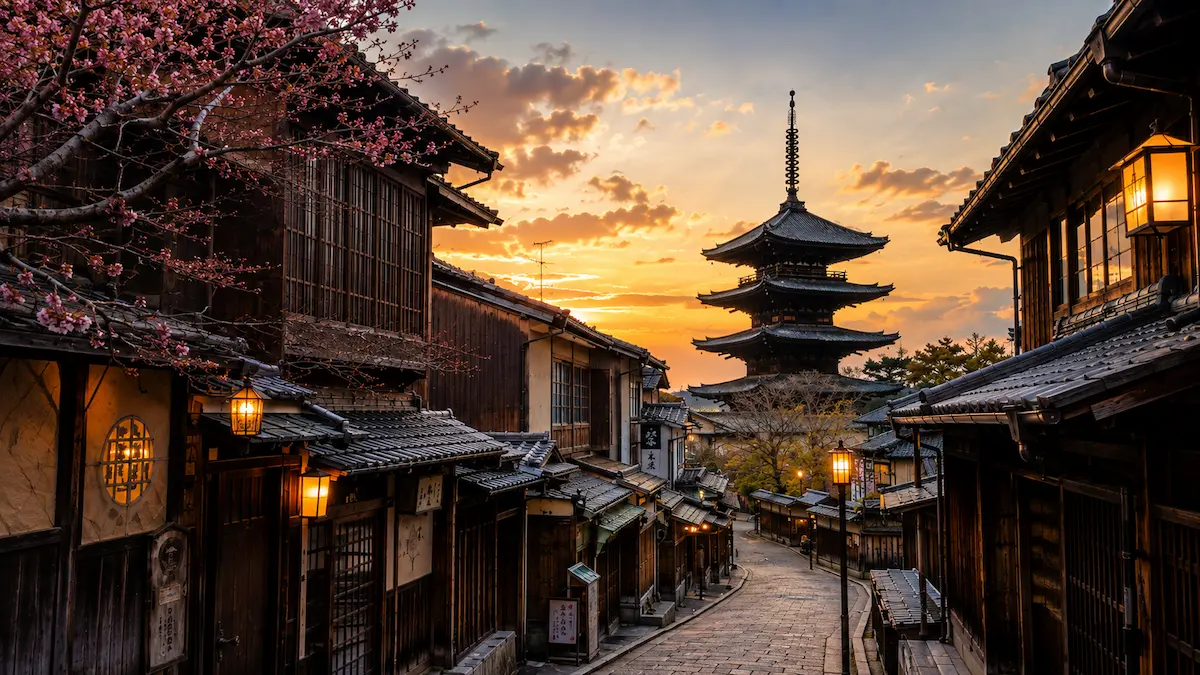
This is the Kyoto most people imagine before arriving: tiled roofs, stone lanes, temple gates, teahouses and distant pagoda views. It is also the area where poor timing has the biggest impact. At midday, the lanes near Kiyomizu-dera can become a slow-moving crowd. Early in the morning, the same route can be one of the best walks in Japan.
The smartest direction is usually from Kiyomizu-dera downhill toward Gion. Starting low and walking uphill wastes energy and places you at the temple later, when the approach is busier. After the main morning route, take a break. Gion is better again toward dusk, when day-trip groups thin and the streets regain some atmosphere.
What Is Worth Doing Nearby
- Kiyomizu-dera: genuinely worth the fame for its setting, views and scale, but arrive early.
- Sannenzaka and Ninenzaka: beautiful historic lanes that become difficult to enjoy when packed; browse selectively rather than entering every souvenir shop.
- Kodai-ji: a useful quieter contrast, especially during seasonal evening illuminations.
- Yasaka Shrine and Maruyama Park: free, open late and easy to combine with an evening walk.
- Kennin-ji: a calmer temple option near Gion with art and gardens that reward a slower visit.
✅ What Other Travelers Say
Visitors who arrive early often describe Southern Higashiyama as the emotional highlight of Kyoto. The route offers a strong mix of architecture, street atmosphere, views and temples without needing constant transport.
⚠️ The Catch (Things to Keep in Mind)
Some Gion lanes are private property, and photography restrictions apply in specific areas. Geiko and maiko are working professionals, not street performers. Do not follow, touch, stop or photograph them without permission. Also be realistic about accommodation: a charming machiya on a quiet slope may be inconvenient with luggage, children or limited mobility.
Best Choice For
First-time photographers, couples, history lovers and early risers. Travelers who dislike crowds should visit at dawn or stay nearby rather than arriving on a midday bus.
📍 Northern Higashiyama and the Philosopher’s Path: Best for Gardens, Slower Walking and Seasonal Beauty
Features: Nanzen-ji · Ginkaku-ji · Canal walk · Gardens · Best in blossom or foliage season
Northern Higashiyama is the better choice when you want Kyoto to feel contemplative rather than theatrical. Nanzen-ji, smaller sub-temples, the aqueduct, the Philosopher’s Path and Ginkaku-ji form a logical north-south route with fewer commercial distractions than the Kiyomizu area.
However, the Philosopher’s Path is often oversold as an attraction in itself. Outside cherry blossom and autumn foliage periods, it is a pleasant canal-side walk rather than a life-changing sight. Its value comes from connecting worthwhile temples and neighborhoods, not from the path alone.
What Is Worth Doing Nearby
- Nanzen-ji: a large, free-to-enter complex with paid sub-temples, a photogenic aqueduct and space to slow down.
- Eikan-do: especially famous in autumn, when crowd levels and special admission arrangements may change.
- Philosopher’s Path: best when paired with temple stops, cafes or a seasonal walk.
- Honen-in: a small, atmospheric detour that often feels calmer than the headline sites.
- Ginkaku-ji: less visually flashy than Kinkaku-ji but richer as a complete garden experience for many visitors.
✅ What Other Travelers Say
Garden lovers and repeat visitors often prefer this district because the experience feels less like moving through a sequence of photo queues. Nanzen-ji and Ginkaku-ji receive particular praise from travelers who enjoy landscape design and quiet observation.
⚠️ The Catch (Things to Keep in Mind)
The route is less convenient from Kyoto Station and can involve bus traffic at both ends. Cafes and small shops may open later than your sightseeing start, so eat breakfast before arriving. During peak blossom season, the Philosopher’s Path loses much of its quiet character.
Best Choice For
Garden lovers, walkers, photographers in spring or autumn, repeat visitors and first-timers who prefer depth over collecting the most famous icons.
📍 Arashiyama: Best for a Scenic Half-Day—If You Go Beyond the Bamboo Grove
Features: Bamboo grove · River scenery · Temples · Scenic railway · Severe midday crowding
Arashiyama is worth visiting, but the bamboo grove is one of Kyoto’s most misunderstood attractions. Online photos create the impression of a vast, silent forest. In reality, the famous central path is short and often crowded. The area becomes rewarding when you combine it with gardens, temples, the river and the quieter northern lanes.
Arrive early, walk through the grove before the main flow builds and continue rather than turning back immediately. Okochi Sanso offers gardens and elevated views, while Tenryu-ji provides cultural context. Travelers with more time can reach Gio-ji, Adashino Nenbutsu-ji or Otagi Nenbutsu-ji, ideally using transport to reduce backtracking.
What Is Worth Doing Nearby
- Bamboo Grove: see it early, keep expectations realistic and spend more time elsewhere in the district.
- Tenryu-ji: convenient, historically important and best approached as a garden visit rather than a quick entrance fee.
- Okochi Sanso: a paid garden that can feel like better value than another ten minutes fighting for bamboo photos.
- Togetsukyo Bridge and riverbank: scenic and spacious, especially outside the midday peak.
- Monkey Park Iwatayama: rewarding for active travelers, but the climb is steep and exposed in hot weather.
- Outer Arashiyama temples: the strongest option for travelers willing to walk farther or use a short taxi ride.
✅ What Other Travelers Say
Travelers who explore beyond the bamboo path often love Arashiyama for its mix of river, hills, temples and slower neighborhoods. Those who visit only the grove at noon are far more likely to call it overrated.
⚠️ The Catch (Things to Keep in Mind)
The central streets can feel like a theme-park corridor during peak hours. The scenic railway and river boat require separate planning, and cancellations or schedule changes can affect a tightly built day. Do not combine every Arashiyama activity simply because each looks attractive online; choose one main paid experience and leave time to walk.
Best Choice For
Scenery lovers, families who choose activities carefully, photographers who can arrive early and travelers willing to explore beyond the most famous 200 meters.
📍 Fushimi Inari and the Fushimi Sake District: Best for an Early Shrine Hike and a Less Obvious Afternoon
Features: Torii gates · Flexible hiking · Free entry · Sake heritage · Two separate sub-areas
Fushimi Inari is famous for good reason. The thousands of torii gates create an experience that is difficult to replicate elsewhere, and the shrine’s 24-hour access makes it the easiest major sight to move outside normal tourist hours.
The lower tunnel of gates is the busiest section. Walk beyond it and the crowds usually thin, although the degree varies by season and time. You do not need to reach the summit. A shorter loop to a viewpoint or quieter shrine section gives many first-time visitors the experience they want without consuming half a day.
The Fushimi sake district is in the same wider ward but is not directly beside the shrine entrance. Treat it as a separate stop reached by rail and walking. Its canals, breweries and tasting rooms create a calmer afternoon, especially for adults who want more than another temple.
What Is Worth Doing Nearby
- Fushimi Inari lower shrine and torii route: essential for most first trips, ideally early morning, evening or after rain.
- Partial mountain loop: a good compromise for travelers who want quieter gates without a full summit hike.
- Tofuku-ji: an excellent seasonal pairing, particularly in autumn, but check special crowd controls and admission arrangements.
- Fushimi sake district: breweries, tasting opportunities, canals and a less frantic neighborhood atmosphere.
- Uji extension: possible for tea lovers when you start early, though it deserves its own half-day rather than a rushed photo stop.
✅ What Other Travelers Say
Many visitors consider Fushimi Inari one of Kyoto’s few mega-famous attractions that still delivers—provided they walk beyond the first photo zone. The flexibility to choose a 45-minute visit or a longer hike is a major advantage.
⚠️ The Catch (Things to Keep in Mind)
The route is a real uphill walk with steps, uneven surfaces and humid forest sections. Summer heat can make a full summit attempt unpleasant or unsafe. Food stalls and souvenir areas are concentrated near the entrance, and the shrine can feel extremely commercial at busy times. In the sake district, check brewery opening days before traveling; not every tasting room operates daily.
Best Choice For
Early risers, active travelers, shrine lovers, budget-conscious visitors and adults interested in pairing a famous sight with a quieter food-and-drink district.
What Is Overrated, What Is Underrated and What Depends on Timing?
Arashiyama Bamboo Grove: Overrated Alone, Worthwhile as Part of Arashiyama
Do not cross Kyoto for the bamboo path alone. Go early and combine it with a garden, temple, river walk or outer Arashiyama route. That turns a short photo stop into a satisfying half-day.
Kinkaku-ji: Visually Impressive but Logistically Awkward
The Golden Pavilion is undeniably photogenic, yet the standard visitor route is controlled and relatively short. Its location can force a bus-heavy detour. It is worth prioritizing for architecture lovers and first-time visitors who have dreamed of seeing it; it is easier to skip for travelers who prefer immersive interiors, long gardens or quieter temples.
Nishiki Market: Interesting, Not a Bargain Food Hall
Visit for Kyoto ingredients, specialty foods and atmosphere, not because every snack is cheap or local-only. A focused 45- to 90-minute visit is usually enough.
Philosopher’s Path: Seasonal Rather Than Essential
During cherry blossom season it can be beautiful and crowded. At other times it is a pleasant connector. Pair it with Nanzen-ji, Honen-in and Ginkaku-ji instead of treating the path as the main event.
Kyoto Station: More Underrated Than Romantic
It will not satisfy your old-Kyoto fantasy, but the architecture, food floors, rooftop spaces and transport convenience make it useful. It is especially underrated on a rainy evening or departure day.
Kyoto Budget Tips That Do Not Ruin the Experience
- Spend on location first. A well-located hotel can reduce daily transport and taxi costs.
- Choose one premium cultural experience. A good tea ceremony, food tour, special garden or performance is usually more memorable than several mediocre attractions.
- Use free headline sights. Fushimi Inari, Yasaka Shrine, the Imperial Palace grounds and the Kamo River balance paid temple admissions.
- Eat one proper meal instead of grazing all day. Market snacks and tourist-zone cafes add up quickly.
- Do the pass calculation from your actual route. The Subway & Bus 1-Day Pass costs more than a few individual rides and only makes sense when its coverage matches your day. It is valid for the calendar day of use, not for 24 hours.
- Do not buy a nationwide JR Pass only for Kyoto. Most city sightseeing uses non-JR trains, subway, buses, walking and occasional taxis.
- Book refundable accommodation early in peak seasons. You can protect a reasonable rate while retaining flexibility.
Key FAQs
How many days do first-time visitors need in Kyoto?
Three full days is the practical minimum for a balanced first trip. Four days is ideal if you want slower mornings, gardens, food experiences or a half-day in Uji. With only two days, choose Southern Higashiyama and either Arashiyama or Fushimi Inari rather than trying to see every famous sight.
Where is the best area to stay in Kyoto for first-time visitors?
Downtown Kyoto around Shijo, Karasuma, Kawaramachi or Sanjo offers the best overall balance of transport, food and evening convenience. Kyoto Station is better for large luggage, families and frequent day trips. Gion is best for atmosphere but can be less convenient and more expensive.
Is Kyoto worth an overnight stay, or can I visit as a day trip from Osaka?
Kyoto is possible as an Osaka day trip, but an overnight stay is much better for first-time visitors. Sleeping in Kyoto lets you reach major sights before day-trippers arrive and enjoy Gion, Yasaka Shrine or the Kamo River after the busiest period. A day trip works when you deliberately choose one compact area rather than attempting a citywide highlights tour.
Final Verdict and Your Next Step
The most important principle in this Kyoto travel guide is simple: plan by area, not by fame. A good Kyoto day has one early headline attraction, a small number of nearby stops, a proper break and an evening that does not require racing across the city.
For most first-time visitors: stay downtown and allow at least three full days. For families or heavy luggage: choose Kyoto Station or a hotel directly beside a subway station. For couples prioritizing atmosphere: stay on the accessible edge of Gion rather than deep inside a steep lane. For budget travelers: compare hotels around Kyoto Station, Gojo, Shijo-Omiya and the western side of downtown, but reject any bargain that requires multiple daily bus transfers. For travelers with limited mobility: prioritize station proximity, use taxis for final approaches and check the slope and stair situation at every temple.
Kyoto rewards early planning because the best-value rooms, small cultural experiences and seasonal transport sell first. Reserve accommodation as soon as your dates are stable, then book only the limited-capacity activities that genuinely improve your route.
Check Kyoto hotel availability: Compare Kyoto hotels on Agoda or search Kyoto stays on Booking.com.
Reserve tours, tickets and cultural activities: browse Kyoto activities on Klook or browse Kyoto experiences on KKday.