

💡 Key Takeaways
- Use trains or the subway for the long part of a journey, then walk, take one short bus, or use a taxi for the last mile. A direct bus is not automatically the fastest choice in Kyoto.
- An ICOCA, Suica or PASMO card is the safest default for most visitors. The ¥1,100 Subway & Bus 1-Day Pass only pays off when your actual route contains enough covered rides.
- Do not drag large luggage onto sightseeing buses. Store or forward it at Kyoto Station, and confirm whether you need the Central Exit or Hachijo side before leaving the platform.
The hardest part of a first trip to Kyoto is not buying a ticket. It is choosing the right network. A map may show a bus that goes directly to a temple, yet that bus can be slower than a train-plus-walk route once traffic, queues and crowded boarding are added. Kyoto also mixes JR, the municipal subway, Hankyu, Keihan, Kintetsu, Randen, Eizan trains and several bus operators, so a pass that looks generous may not cover the route you assumed it did.
This Kyoto transportation guide focuses on the decisions that cost travelers time, energy and money: which station is actually closest, when a taxi is worth the splurge, how to avoid the wrong Kyoto Station exit, whether an unlimited pass breaks even, and how to reach major sights without spending half the day inside a packed bus.
Fares and ticket conditions can change. The prices below were checked against current operator information, but always review the linked official or booking page before paying.
The 1-Min Cheat Sheet
- ICOCA or another compatible IC card: Best all-round choice for most independent travelers. Tap and ride on Kyoto City buses, the subway and most local railways. It saves ticket-machine time but does not automatically discount every journey.
- JR, Hankyu, Keihan, Kintetsu and Randen trains: Best for avoiding road traffic and reaching Fushimi Inari, Arashiyama, Uji, Osaka and Nara. The catch is that different operators have separate gates and separate passes.
- Kyoto City Bus and other local buses: Best for the final stretch to places such as Kinkaku-ji and parts of Higashiyama. They are easy on a quiet weekday morning and frustrating during peak sightseeing hours.
- Kyoto Municipal Subway: Best for fast north-south and east-west movement. It does not stop beside every famous temple, but it is often the smartest backbone for a bus or taxi connection.
- Taxi, walking or bicycle: Best for the awkward last mile, families, bad weather and early starts. A short taxi shared by two to four people can be better value than losing an hour to a slow transfer.
Top Survival Tips
- Do not use “fewest transfers” as your only route setting. In Kyoto, one direct bus can be worse than a subway ride plus a 10-minute walk. Compare arrival time, walking distance and the likelihood of road congestion.
- Check the operator name, not only the station name. “Kyoto,” “Kawaramachi,” “Gion-Shijo” and “Shijo” may appear close on a map while belonging to different companies or requiring a street-level walk between gates.
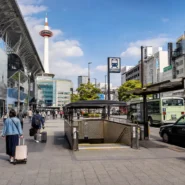
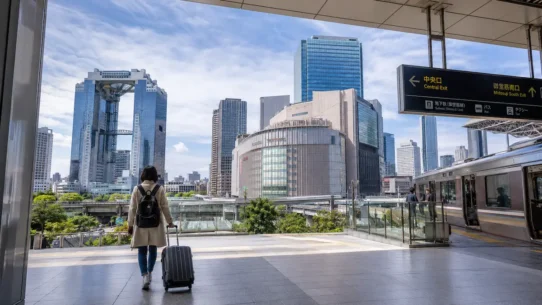
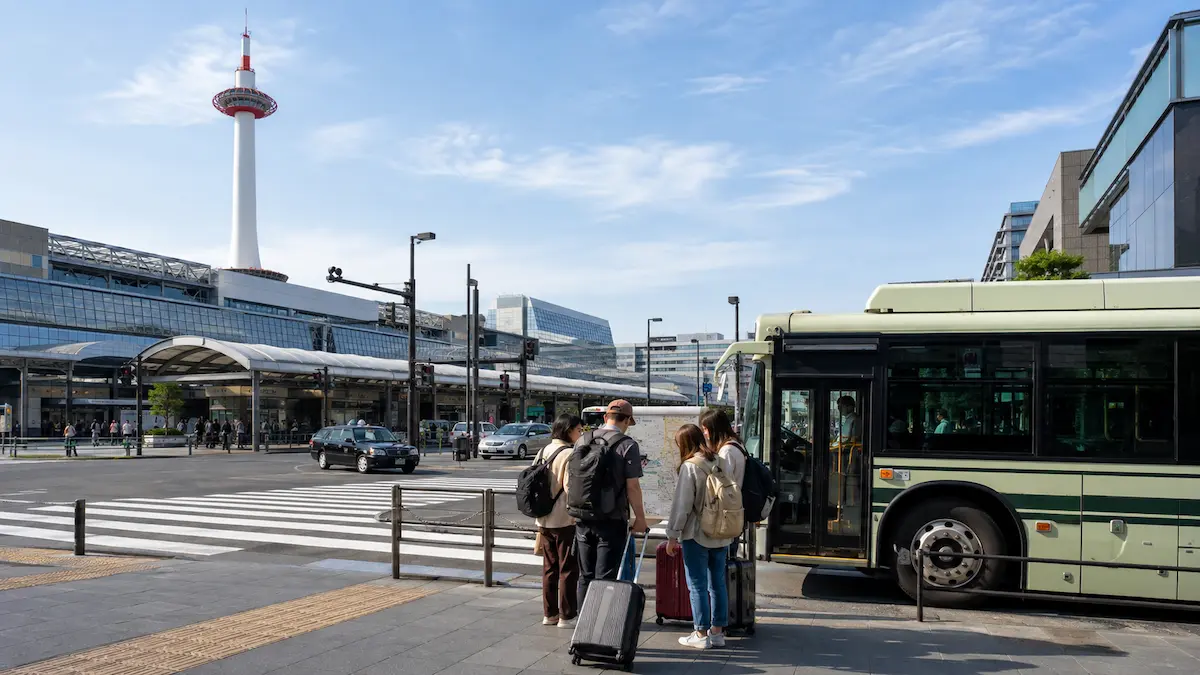
- At Kyoto Station, identify your side before following the crowd. The Central Exit faces Kyoto Tower and the main city-bus terminal. The Hachijo side is on the opposite side and is often more convenient for Shinkansen facilities, airport transport and south-side hotels. “Central Exit” and “Shinkansen Central Exit” are not the same place.
- Use rail for Fushimi Inari and Arashiyama. These are two of the most common places where first-timers waste time on a bus. JR or Keihan is usually the cleaner choice for Fushimi Inari; JR, Hankyu or Randen is usually better for Arashiyama.
- Do not rely on old articles promoting a cheap bus-only day pass. Kyoto’s Bus 1-Day Pass was discontinued. The main citywide option is now the Subway & Bus 1-Day Pass, so recheck the math rather than following an outdated “three buses and you save” tip.
- Regular Kyoto City buses normally board at the rear and exit at the front, paying when you get off. The sightseeing limited express EX100 and EX101 reverse the pattern: board at the front and pay when entering. Watch the door signs instead of copying the passenger ahead of you.
- Keep your IC card separate from other contactless cards. A wallet containing two transport cards can trigger a gate error. Have the correct card ready before reaching the reader.
- Do not take a large suitcase onto a sightseeing bus unless there is no realistic alternative. Kyoto promotes luggage storage and delivery because big bags reduce already-limited space. Use Hands Free Kyoto, station lockers or hotel forwarding.
- Download an offline copy of your hotel name and address in Japanese. It helps when using a taxi and prevents confusion between similarly named branches.
- Build each day by area. Pair eastern Kyoto sights together, western Kyoto sights together and northern temples together. Zigzagging across the city is how travelers accidentally turn an inexpensive itinerary into a pass-chasing marathon.
The Full Experience
🚆 Trains and Subway: Best for Beating Traffic and Crossing the City
Fast · Predictable · Best for Fushimi Inari, Arashiyama, Uji, Osaka and Nara
Kyoto is not a one-network train city. That sounds inconvenient, but the mix becomes useful once you match each railway to the right area.
- JR: The practical choice from Kyoto Station to Saga-Arashiyama, Fushimi Inari, Uji and Osaka. It is also the obvious network for Shinkansen connections.
- Keihan: Excellent for the eastern side of Kyoto, including Gion-Shijo, Fushimi Inari, Demachiyanagi and Uji. It is often more convenient than returning to Kyoto Station when you are staying near Gion or the Kamo River.
- Hankyu: Useful for central Kyoto around Kyoto-Kawaramachi and for travel to Osaka-Umeda. It also connects toward Arashiyama with a change at Katsura.
- Kintetsu: Useful from Kyoto Station toward Nara. Kintetsu Nara Station is generally more convenient for Nara Park than JR Nara Station.
- Randen: A small tram network that is particularly handy for Arashiyama, Ryoan-ji and the northwestern temple area. It is slower than heavy rail but places you closer to several sights.
- Kyoto Municipal Subway: Only two main lines, Karasuma and Tozai, but they are reliable for escaping surface traffic. Karasuma Oike is the transfer point between them.
Best practical rule: Use the railway that starts near where you are, not the one included in a pass you already bought. A JR Pass does not make JR the best choice from Gion to Uji, and a subway pass does not make a long walk from the nearest subway station enjoyable.
✅ What Other Travelers Say
Travelers usually appreciate how calm and predictable rail journeys feel after a crowded bus ride. The recurring frustration is not the trains themselves; it is discovering that two nearby-looking stations have separate gates, ticket rules and platforms.
⚠️ The Catch (Things to Keep in Mind)
Private railways, JR and the municipal subway are separate systems. An “unlimited Kyoto” ticket may cover only one or two of them. Also check whether a limited express or reserved car requires an extra fee rather than assuming every train shown in an app is included.
🚌 Kyoto Buses: Best for the Final Mile, Not Always the Whole Journey
Wide Coverage · Temple Access · Traffic and Crowd Risk
Kyoto buses reach places trains do not, but that strength causes the system’s biggest weakness: visitors funnel onto the same sightseeing routes. The regular flat fare in central Kyoto is ¥230 for adults, while the EX100 and EX101 sightseeing limited express buses cost ¥500 per adult. The official Kyoto City Bus guide explains the different boarding patterns and accepted payment methods.
The smartest bus strategy is to shorten the bus portion. For Kinkaku-ji, take the subway to Kitaoji and continue by bus or taxi. For parts of Higashiyama, use Keihan or the Tozai subway line first. For Arashiyama, take a train. This “rail first, bus last” pattern is usually easier on your legs and your patience.
At the bus stop: Confirm the route number, direction, destination display and exact boarding pole. Large intersections may have several stops with the same place name but different letters or corners. A correct route number at the wrong pole can send you in the opposite direction.
On regular buses: Board through the rear door and exit at the front. Pay or tap as you leave. On variable-fare routes outside the flat zone, follow the onboard instructions and take a numbered ticket if required. On EX100 and EX101, board at the front and pay on entry.
✅ What Other Travelers Say
The positive feedback is simple: buses stop close to major attractions and remove long uphill walks. The complaints are equally consistent: queues can be unclear, buses may arrive full, and a route that looked easy on a phone can crawl through traffic.
⚠️ The Catch (Things to Keep in Mind)
Credit and debit cards are not a direct substitute for an IC card on Kyoto City buses. Carry a compatible IC card or the correct fare method. A Japan Rail Pass is not valid on Kyoto City Bus services. Large luggage can make boarding difficult and inconsiderate during busy periods.
💳 ICOCA and Day Passes: Best for Convenience, but Only One Is Usually Necessary
Low-Friction Payment · Nationwide Compatibility · No Automatic Savings
An ICOCA is a rechargeable IC card issued in the JR West region. Suica, PASMO and other major compatible cards also work on Kyoto City buses and the subway. For most first-time visitors, this is the best default because it removes the need to calculate every fare before boarding.
An IC card is a payment tool, not a discount pass. It will not rescue a badly planned route or automatically cap your daily spending. Its value is speed: fewer ticket-machine decisions, faster transfers and less anxiety about exact change.
The ¥1,100 Subway & Bus 1-Day Pass is worth considering when:
- You will make at least five regular ¥230 bus rides.
- You have a realistic mix such as three regular bus rides plus two subway rides.
- You plan to use the ¥500 EX100 or EX101 and several additional covered rides.
- Your destinations are genuinely inside the covered area and you are not relying heavily on JR, Hankyu, Keihan, Kintetsu, Randen or Eizan trains.
It is probably not worth buying when:
- Your day is Fushimi Inari plus Uji, where JR or Keihan may do most of the work.
- Your day is mainly Arashiyama from Kyoto Station, where JR is likely to dominate.
- You plan only two or three rides and a lot of walking.
- You are buying it because “unlimited” feels reassuring, not because the route math works.
The pass is valid for the service day, not for 24 hours from first use. The separate Kyoto City Subway 1-Day Pass costs ¥800 and is best for a subway-heavy day, not a typical temple-hopping day with only one or two subway trips. See the current range of Kyoto transportation tickets and passes before buying.
✅ What Other Travelers Say
Most travelers love the simplicity of tapping an IC card and moving on. Day-pass buyers are happiest when they planned the exact rides first; disappointment usually comes from discovering that a private railway or suburban bus was outside the covered area.
⚠️ The Catch (Things to Keep in Mind)
Do not let a pass dictate your itinerary. Saving ¥100 is not a win if you spend 40 extra minutes taking covered transport instead of a faster train. Also use up or manage remaining stored value before leaving Japan, especially on short-validity tourist products.
✈️ Kansai Airport to Kyoto: Best Options for Luggage, Late Arrivals and Families
Direct Rail · Luggage-Friendly Alternatives · Book Before Peak Dates
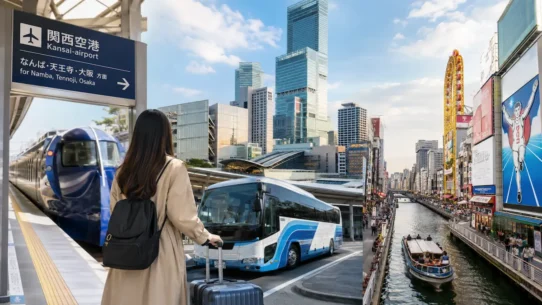
For most travelers staying near Kyoto Station, the JR Haruka airport express is the cleanest answer. JR West currently lists a discounted WEST QR HARUKA one-way ticket between Kansai Airport and Kyoto at ¥2,200 per adult. It avoids a complicated Osaka transfer and gives you a predictable arrival point.
The hidden problem begins after Kyoto Station. A hotel described as “Kyoto” may still require a subway ride, bus ride or taxi. After a long flight, that final transfer with luggage can feel harder than the airport journey itself.
- Choose Haruka for speed and a direct ride to Kyoto Station.
- Choose an airport limousine bus when its stop is closer to your accommodation and you value underfloor luggage storage over rail speed.
- Choose a private transfer for a family or group with several suitcases, a late arrival, mobility needs, or a hotel far from a convenient station.
- Choose a shared shuttle cautiously when price matters more than arrival time; multiple drop-offs can extend the journey.
Before booking, compare the airport arrival time with the last feasible onward connection. “The train still runs” is not enough if the subway or local line you need has already finished.
✅ What Other Travelers Say
Haruka is widely praised for removing the stress of changing trains in Osaka. The most common pain point is hauling luggage through Kyoto Station and then discovering another transfer, a long underground corridor or the wrong exit.
⚠️ The Catch (Things to Keep in Mind)
Airport products can have specific validity, seat, redemption and QR-entry conditions. Read the product page rather than assuming every Haruka ticket works the same way. Road transfers are easier with luggage but can be delayed by traffic.
🚕 Taxis, Walking and Cycling: Best for the Awkward Last Mile
Door-to-Door · Great for Families · Parking Rules Matter
Kyoto is one of the rare cities where a short taxi can be a budget-conscious decision. That sounds contradictory, but consider the real cost of four people buying extra transit rides, waiting for a crowded bus, then walking uphill in rain. A taxi from a subway or railway station to the final sight can protect an entire afternoon.
Licensed local taxis can be requested through taxi stands and apps including GO and Uber Taxi. App fees, pickup charges and availability vary, so review the estimate before confirming. For groups with luggage, check whether the vehicle type can actually hold every passenger and suitcase.
Walking is essential in Kyoto, but map distance understates effort. Temple grounds, slopes, stone steps, crowds and summer heat make a “15-minute walk” feel very different from a flat urban pavement walk. Wear proper shoes and avoid stacking several uphill districts in one afternoon.
Cycling can be excellent along flatter routes and quieter streets, especially outside the busiest pedestrian zones. The non-negotiable rule is parking: leaving a bicycle on the street outside a designated area is illegal, and an illegally parked bicycle can be removed. The official Kyoto cycling guide lists parking and safety guidance.
✅ What Other Travelers Say
Travelers often describe a short taxi as the best money they spent on a rainy, hot or luggage-heavy day. Cyclists love the freedom between neighborhoods, but first-timers frequently underestimate parking restrictions and the density of pedestrians near famous sights.
⚠️ The Catch (Things to Keep in Mind)
Taxis can become slow in the same traffic that delays buses, and app pickup points may differ from taxi stands. Bicycles are not suitable for every traveler, every weather condition or every temple district. Never park wherever space appears available.
The Routes First-Time Visitors Actually Need
Kyoto Station to Fushimi Inari
Take the JR Nara Line to Inari Station. It places you close to the shrine entrance and avoids road traffic. From Gion or the eastern side, Keihan to Fushimi-inari Station can be more logical. Do not take a bus from Kyoto Station unless a specific accessibility need makes it preferable.
Kyoto Station to Arashiyama
Take the JR Sagano Line to Saga-Arashiyama. From central Kyoto or Osaka, Hankyu can be convenient, while Randen is useful when combining Arashiyama with Ryoan-ji or other northwestern sights. At peak foliage or cherry-blossom times, avoid making a cross-city bus your primary plan.
Kyoto Station to Kiyomizu-dera and Gion
There is no train station at Kiyomizu-dera’s gate. A bus to Gojozaka or Kiyomizu-michi is straightforward when traffic is light. During busy periods, take the subway or Keihan closer to Higashiyama, then walk or use a short taxi. Kiyomizu-Gojo Station still leaves a substantial uphill walk, so “nearest station” does not mean “easy walk.”
Kyoto Station to Kinkaku-ji
The beginner mistake is staying on a direct bus for the full journey. A more resilient plan is the Karasuma subway to Kitaoji, then a bus or taxi. It is not always cheaper, but it is usually less exposed to central traffic.
Kyoto to Uji
Use JR from Kyoto Station or Keihan from the Gion, Fushimi or eastern Kyoto side. Choose based on your starting point and the part of Uji you want to reach. A citywide Kyoto bus pass is not the right tool for this day.
Kyoto to Osaka or Nara
For Osaka, choose JR for Osaka Station, Hankyu for Osaka-Umeda from Kyoto-Kawaramachi, or Keihan for Yodoyabashi and the eastern side of Kyoto. For Nara, Kintetsu is often the most convenient for Nara Park, while JR can make sense for JR pass holders or travelers starting at Kyoto Station.
Kyoto Pass Calculator: What Is Actually Worth Buying?
- Pay-as-you-go IC card: Best for a mixed itinerary, a slow-paced day, or anyone who does not know the final route yet.
- Subway & Bus 1-Day Pass — ¥1,100: Best when your planned covered rides exceed the price, particularly with several buses and subway trips or use of an EX sightseeing bus. It is not valid for 24 hours.
- Kyoto City Subway 1-Day Pass — ¥800: Best only when you will make several subway rides. A typical east-Kyoto walking day rarely needs it.
- Keihan Kyoto Sightseeing Pass — from ¥1,100: Best for a Keihan-focused day involving places such as Fushimi Inari, Gion, Uji or Demachiyanagi. It does not replace a city bus or subway pass.
- ONE KANSAI Kyoto Enjoy 3-way Pass — ¥1,800: Covers selected Hankyu, Keihan and JR sections and can suit an ambitious Osaka-Kyoto-Uji or Arashiyama rail day. It does not mean every Kyoto transport operator is included.
- JR West Kansai Area Pass — from ¥2,800 for one day: Useful for regional JR travel and airport access in the covered area, not for an ordinary central Kyoto sightseeing day. It does not cover Kyoto City buses or the municipal subway.
The editorial verdict: Start with an IC card. Upgrade to a pass only after writing down every paid ride for that day. A pass should fit your itinerary; your itinerary should never be distorted to fit a pass.
Key FAQs
What is the best transportation pass for Kyoto first-time visitors?
For most first-time visitors, there is no single best unlimited pass. An ICOCA, Suica or PASMO card is the most flexible starting point. Buy the ¥1,100 Subway & Bus 1-Day Pass only when your planned covered rides clearly exceed the price and private railways are not doing most of the work.
Can I use Suica or ICOCA on Kyoto buses and the subway?
Yes. Major compatible IC cards including ICOCA, Suica and PASMO can be used on Kyoto City buses and the municipal subway. Keep enough stored value, tap at the correct point, and remember that an IC card is payment rather than an unlimited pass.
What is the easiest way to get from Kansai Airport to Kyoto with luggage?
The Haruka airport express is usually easiest for hotels near Kyoto Station. An airport limousine bus may be better when its stop is closer to your hotel, while a private transfer can be worth the cost for families, late arrivals, mobility needs or several large suitcases.
Final Verdict and Your Next Step
Kyoto transport becomes manageable once you stop searching for one magic pass. Use rail or the subway to cover distance, use buses for short final connections, keep an IC card as your default payment method, and spend on a taxi when it genuinely saves energy or protects a reservation.
Before your trip, save your hotel’s Japanese address, screenshot the correct Kyoto Station exit, check the Kyoto congestion forecast, and decide how your luggage will reach the hotel. These small steps prevent the classic first-day disaster: arriving tired, choosing the wrong exit and joining a bus queue with a suitcase.
Book time-sensitive transport before peak dates:
- Reserve the JR Haruka airport express on Klook
- Check the Kyoto Subway & Bus 1-Day Ticket on Klook
- Compare the JR Haruka airport ticket on KKday
- Check a Kansai Airport private transfer to Kyoto on KKday
- Compare Kyoto hotels by station and neighborhood on Booking.com
Choose accommodation for the journeys you will make most often, not merely for a low nightly price. A hotel near Kyoto Station is excellent for regional day trips; a hotel near Shijo, Kawaramachi or Gion can reduce daily transfers for dining and eastern Kyoto. Paying slightly more for the right location can save more than any transport pass.