

💡 Key Takeaways
- Shin-Osaka Station is not downtown Osaka. It is the city’s Shinkansen gateway, while Osaka Station is already inside the Umeda city-center district.
- Take JR for Umeda and Osaka Station; take the Osaka Metro Midosuji Line for Hommachi, Shinsaibashi, Namba and Tennoji. Choosing by hotel neighborhood is more important than choosing the fastest train on paper.
- A taxi is usually a comfort purchase, not a time-saving guarantee. It becomes sensible for families, groups sharing the fare, late arrivals, mobility needs or travelers carrying several large suitcases.
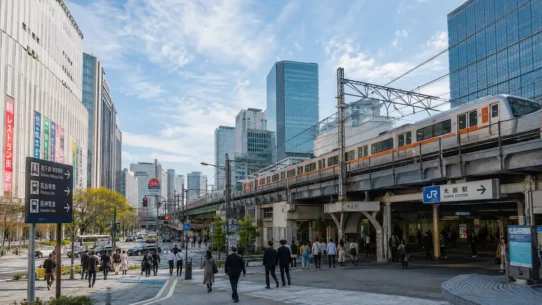
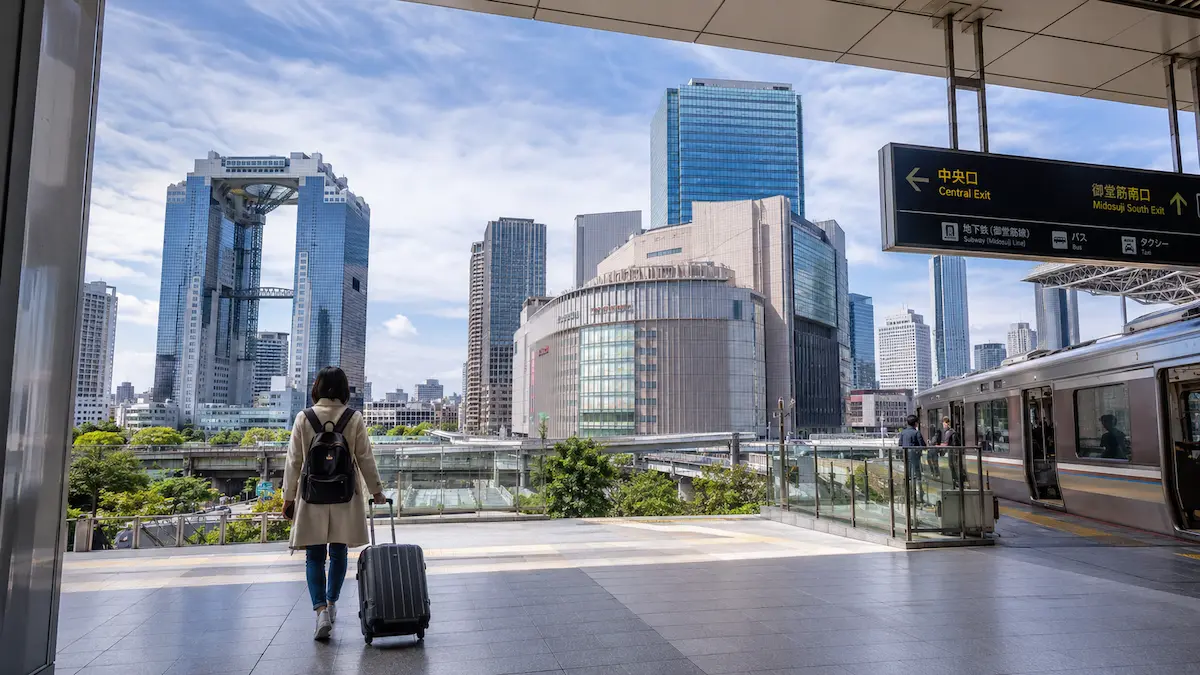
Figuring out how to get from Shin-Osaka Station to Osaka city center looks easy until you arrive tired, step off the Shinkansen and discover that “Osaka” can mean several different downtown areas. Umeda is in the north, Hommachi sits in the business center, and Shinsaibashi, Dotonbori and Namba form the southern downtown area known as Minami. A route that is perfect for one hotel can leave another traveler dragging a suitcase through a huge underground station for 20 minutes.
This confusion affects more than Shinkansen passengers. Travelers arriving from Kansai International Airport on the JR Haruka may also get off at Shin-Osaka and still need a final connection to their accommodation. The actual train ride may take only four to sixteen minutes, but station navigation, elevator detours, ticket gates, crowds and the walk from the arrival station to your hotel can easily double the real journey time.
The practical rule is simple: do not choose your transport until you know the nearest station and exit for your hotel. The guide below compares the real cost, luggage difficulty, hidden walking and best use case for each option.
The 1-Min Cheat Sheet
- JR Kyoto Line to Osaka Station: Around 4 minutes on the train and ¥180 if a separate local fare is required. This is the fastest and cheapest choice for Umeda, Osaka Station City, Grand Front Osaka and hotels around the JR station. Allow roughly 10–20 minutes in real life after leaving the Shinkansen platform.
- Osaka Metro Midosuji Line: Direct to Umeda in about 6 minutes, Shinsaibashi in about 13–14 minutes and Namba in about 15–16 minutes. Typical adult fares are ¥240 to Umeda or Shinsaibashi and ¥290 to Namba. This is usually the smartest route for southern and central Osaka because it avoids a second transfer.
- Taxi or ride-hailing app: Usually 10–15 minutes to Umeda and 20–30 minutes to Namba in normal traffic, but congestion can erase the time advantage. A reasonable working budget is roughly ¥2,000–¥3,000 to Umeda and about ¥2,700–¥5,000 to Namba, depending on traffic, company, pickup fees and time of day.
- Pre-booked private transfer: More expensive than a metered taxi for one or two people, but often easier for five or more travelers, several large bags, child seats, mobility requirements or anyone who wants a confirmed vehicle size and door-to-door pickup.
First, Decide What “Osaka City Center” Means for Your Trip
Osaka does not have one single downtown station that suits every visitor. Before following any route advice, match your hotel to one of these areas:
- Umeda and Osaka Station: Northern downtown, major department stores, business hotels, airport connections and easy JR access. Use the JR Kyoto Line unless your hotel is directly beside Osaka Metro Umeda Station.
- Yodoyabashi and Hommachi: Central business districts along Midosuji Avenue. The Midosuji Line is direct and normally more convenient than changing at Osaka Station.
- Shinsaibashi: Best for shopping, Amerikamura and hotels north of Dotonbori. Take the Midosuji Line directly to Shinsaibashi.
- Namba and Dotonbori: Best for nightlife, street food and southern Osaka transport links. Take the Midosuji Line directly to Namba, then use the exit closest to your hotel.
- Tennoji and Abeno: The Midosuji Line remains direct, so there is no reason to detour through Osaka Station unless a specific JR connection is more convenient for your accommodation.
Top Survival Tips
- Do not confuse Shin-Osaka Station with Osaka Station. Shin-Osaka serves the Shinkansen; Osaka Station is in Umeda. They are separate stations connected by a short JR ride.
- Check your Shinkansen ticket before paying another JR fare. Some paper base-fare tickets may include onward travel within an Osaka city zone, while SmartEX, QR, IC-linked and other ticket products can work differently. Ask station staff if the printed destination or ticket conditions are unclear instead of automatically tapping a second card.
- Budget 10–15 minutes to reach the Midosuji Line from the Shinkansen area. The subway is not a same-platform transfer. You must leave the JR or Shinkansen area and follow signs toward Osaka Metro.
- Use an IC card for ordinary JR and Metro rides. ICOCA, Suica and other major compatible cards remove the need to study ticket-machine fare charts, but they do not make every Shinkansen ticket rule interchangeable.
- Avoid peak commuting periods with oversized luggage when possible. The Midosuji Line and JR trains can be tightly packed on weekday mornings and early evenings. Waiting for one or two trains is often less stressful than forcing several suitcases into a crowded carriage.
- Do not assume the nearest station entrance has an elevator. Following an accessible route can add several minutes, especially inside Umeda and Namba. Use station signs rather than blindly following the shortest blue line on a map app.
- Namba is a district and a collection of stations, not one simple building. Osaka Metro Namba, Nankai Namba, Osaka-Namba and JR Namba are connected imperfectly and can be far apart with luggage.
- Take a screenshot of your hotel name and address in Japanese. It is useful for taxi drivers and prevents confusion between similarly named hotels or branches.
- Do not buy a day pass just for this transfer. A single fare is normally cheaper unless you will continue taking several eligible Metro or bus rides that day.
- Check the last train on your actual travel date. Useful services generally finish around midnight, but the final workable departure depends on your destination, day and required station walk. A late Shinkansen arrival can leave less margin than the timetable suggests.
The Full Experience
🚆 JR Kyoto Line: Best for Osaka Station, Umeda and JR-Connected Hotels
Fastest • Lowest fare • Minimal train time • Best for northern downtown
The JR Kyoto Line is the obvious choice when your accommodation is near JR Osaka Station, Grand Front Osaka, Lucua, Hotel Granvia Osaka, the Umeda Sky Building area or the western and northern sides of Umeda. The rail journey itself takes about four minutes, and every ordinary local, rapid or special rapid service that calls at Osaka Station will get you there.
After leaving the Shinkansen, follow signs for the JR Lines or conventional lines, not Osaka Metro. Check the departure board for a regular service heading toward Osaka, Sannomiya, Kobe or Himeji and confirm that Osaka is the next stop. Platform assignments can change, so copying an old platform number from a blog is less reliable than reading the live station display.
Typical cost: ¥180 for an adult single ride when a separate local ticket is needed. A valid JR pass may cover the ride, and some long-distance paper tickets may already include the local JR segment. Do not purchase an extra fare until you understand what your existing ticket covers.
Realistic total time: Around 10–20 minutes from the Shinkansen arrival platform to Osaka Station, depending on your carriage position, walking speed, elevator use and wait for the next train. Add another 5–20 minutes if your hotel is on the far side of the Osaka–Umeda station complex.
Luggage reality: The ride is so short that standing near the doors is normally manageable with one suitcase. There are no reserved luggage racks on these commuter trains, so avoid spreading bags across the aisle or blocking the doors. The harder part is usually navigating Osaka Station after arrival.
✅ What Other Travelers Say
The recurring traveler experience is that the train ride itself is almost effortless: it is cheap, frequent and over within minutes. The main complaint is not the JR connection but the size of Osaka Station and Umeda. Travelers whose hotels are described as “near Osaka Station” sometimes discover that the final underground or street-level walk is much longer than expected.
⚠️ The Catch (Things to Keep in Mind)
JR wins only when Osaka Station is genuinely convenient for your hotel. It is a poor shortcut to Namba or Shinsaibashi because you would still need another train or a long taxi ride. Also, do not board a Shinkansen for the tiny hop to Osaka Station; the Shinkansen does not stop there. Use the conventional JR line.
Best for: Solo travelers, couples, light packers, JR pass holders and anyone staying in Umeda close to JR Osaka Station.
🚇 Osaka Metro Midosuji Line: Best for Hommachi, Shinsaibashi, Namba and Tennoji
Direct route • No downtown transfer • Best hotel-area coverage • Easiest for Minami
The red Midosuji Line is the most useful north–south subway line for visitors. It connects Shin-Osaka directly with Umeda, Yodoyabashi, Hommachi, Shinsaibashi, Namba and Tennoji. For hotels in central or southern Osaka, this usually beats taking JR to Osaka Station and changing again.
From the Shinkansen area, follow signs for Osaka Metro Midosuji Line. You must exit the JR or Shinkansen ticketed area before entering the Metro. The station walk can take roughly 10–15 minutes with luggage, so the subway’s “six-minute ride to Umeda” is not a six-minute door-to-door transfer.
Use Platform 1 toward Nakamozu, with signs listing Umeda, Namba or Tennoji. Do not board a northbound train toward Minoh-kayano if you are heading into central Osaka.
Typical fares and train times:
- Umeda: About 6 minutes, ¥240.
- Shinsaibashi: About 13–14 minutes, ¥240.
- Namba: About 15–16 minutes, ¥290.
Realistic total time: Roughly 20–35 minutes from the Shinkansen platform to a hotel near the correct Metro exit. Namba can take longer because the station is large and your hotel may be closer to another “Namba” station on the map.
Luggage reality: The Midosuji Line is direct but heavily used. One medium suitcase per traveler is usually manageable outside rush hour. Two large suitcases, a stroller and young children can turn a simple ride into a difficult one, particularly when the train is busy or the most convenient station exit lacks an elevator.
✅ What Other Travelers Say
Travelers consistently value the line’s simplicity: once they reach the Metro platform, there is no transfer between Shin-Osaka and the main hotel districts. The less positive feedback concerns crowding and station exits. Visitors often underestimate how far they may walk underground at Namba or Umeda after leaving the train.
⚠️ The Catch (Things to Keep in Mind)
The Midosuji Line is not automatically better for Umeda. JR is cheaper and faster if your hotel is beside Osaka Station. The Metro becomes better when the hotel is closer to Midosuji Line Umeda Station, Yodoyabashi, Hommachi, Shinsaibashi or Namba. Also remember that a large group must pay the fare per person; the combined cost can approach a shared taxi fare for a short ride.
Best for: Most first-time visitors staying in Shinsaibashi, Namba, Dotonbori, Hommachi, Yodoyabashi or Tennoji, especially when each person has no more than one manageable suitcase.
🚕 Taxi or Pre-Booked Transfer: Best for Heavy Luggage, Families and Late Arrivals
Door to door • Least walking • Best for groups • Traffic-sensitive
A taxi is not the budget option, but it can be the most rational choice after a long Shinkansen journey when you have children, mobility limitations or multiple bags. The main taxi stand is on the third floor near the South Shinkansen Exit. Follow the taxi signs rather than descending all the way to street level and then trying to find a random pickup point.
Working fare estimates:
- Umeda or Osaka Station: Commonly around ¥2,000–¥3,000 in normal conditions.
- Hommachi or Shinsaibashi: Often around ¥3,000–¥4,500 depending on traffic and exact address.
- Namba or Dotonbori: Budget roughly ¥2,700–¥5,000; app estimates and metered fares can differ.
These are planning ranges, not fixed promises. Osaka taxis use metered fares, and time spent moving slowly or waiting in traffic affects the total. Late-night and early-morning surcharges may apply, while ride-hailing apps can add dispatch, reservation or demand-related fees. In Japan, an app such as Uber may simply arrange a licensed local taxi rather than provide a dramatically cheaper private car.
When the price makes sense: A ¥3,000 taxi divided among four people costs ¥750 each. That is still more than the train, but the difference may be worth paying to avoid stairs, station corridors and a final walk in rain or summer heat. The calculation changes again if the group has too much luggage for one standard car.
Luggage reality: A standard taxi may legally seat four passengers, but four adults plus four large hard-shell suitcases may not physically fit. Book a larger vehicle or private transfer when luggage volume is the deciding factor. Confirm the vehicle class rather than assuming “four seats” means “four seats plus unlimited bags.”
✅ What Other Travelers Say
Families and heavily loaded travelers often describe the door-to-door arrival as worth the extra cost, especially after a long travel day. The most common frustrations are taxi queues, locating an app-designated pickup area and watching the meter rise in slow traffic. Travelers with a pre-booked van tend to value the confirmed luggage capacity more than any supposed time saving.
⚠️ The Catch (Things to Keep in Mind)
A taxi can be slower than the train during busy road periods, and the queue at the station may be long. App pickup points may not be the same as the regular taxi line. A private transfer removes some uncertainty but normally costs more and may require a specified pickup window. Always enter the exact hotel branch, not only the brand name.
Best for: Three or four people splitting the fare, families with children, travelers with mobility needs, late arrivals, rainy days and groups that need a van with confirmed luggage space.
Which Option Is Best for Your Exact Situation?
- Staying beside JR Osaka Station: Take JR. Paying more for the Metro or taxi rarely improves the trip.
- Staying in Shinsaibashi or Namba with one suitcase: Take the Midosuji Line. It is direct and avoids a needless Umeda transfer.
- Two adults with two large suitcases: The Metro is still reasonable outside rush hour, but a taxi becomes attractive if the hotel is far from an elevator-equipped exit.
- Four adults with light luggage: Compare the total Metro cost with a live taxi quote. The train remains cheaper, while the taxi may be worth the modest per-person premium.
- Four adults with four large suitcases: Do not assume a normal taxi will fit. Reserve a van or take the train in manageable groups.
- Arriving close to the final train: Check live departure times before leaving the Shinkansen platform. If the connection is too tight, go directly to the taxi stand rather than losing time wandering between systems.
- Hotel near Shin-Osaka and sightseeing immediately: Leave luggage at the hotel or a storage facility first. Dragging bags through Umeda or Namba costs more energy than the short detour saves.
Hidden Costs Most Route Guides Ignore
- The station-exit walk: A cheap train can become the worst choice if your hotel is 15 minutes from the correct exit and you have heavy luggage.
- Elevator detours: Accessible routes are often longer than stair-based directions shown by navigation apps.
- Per-person fares: Metro costs multiply with group size, while one taxi fare is shared.
- Taxi luggage capacity: Needing a second car can instantly double the expected cost.
- Rush-hour fatigue: A theoretically fast route is not efficient if you must wait for several packed trains.
- Ticket overlap: Buying a local JR fare that is already covered by your ticket wastes money, while assuming coverage that is not included can create a gate problem.
- Wrong Namba station: Choosing JR Namba when your hotel is beside Nankai Namba, or vice versa, can add a long underground walk.
Key FAQs
What is the easiest way to get from Shin-Osaka Station to Namba with luggage?
The easiest public-transport route is the direct Osaka Metro Midosuji Line from Shin-Osaka to Namba. It avoids transfers and takes about 15–16 minutes on the train, plus the station walk. A taxi or pre-booked van is easier only when you have several large bags, children, mobility needs or a hotel far from a convenient Namba exit.
Is Shin-Osaka Station the same as Osaka Station in Umeda?
No. Shin-Osaka is the Shinkansen station north of downtown, while Osaka Station is in Umeda. The two are linked by the JR Kyoto Line in about four minutes. This naming confusion is one of the most common first-time visitor mistakes.
How much is a taxi from Shin-Osaka Station to Dotonbori or Namba?
A practical planning range is roughly ¥2,700–¥5,000, but the actual metered fare depends on the exact hotel, traffic, waiting time, vehicle type, booking fee and possible late-night surcharge. Check a live app estimate after arrival and confirm that all passengers and bags will fit.
Final Verdict and Your Next Step
For Umeda, choose JR. It is fast, cheap and hard to beat when your hotel is genuinely close to Osaka Station. For Hommachi, Shinsaibashi, Namba or Tennoji, choose the Midosuji Line. The direct ride is more valuable than saving a few minutes on the first train and then changing again. For a family, group or luggage-heavy arrival, compare the total group cost of a taxi or private transfer rather than looking only at the headline train fare.
The most important next step is not buying a ticket. It is opening your hotel map, identifying the nearest station and checking whether the walking route from the recommended exit is realistic with your luggage. A hotel described as “central Osaka” may be convenient for sightseeing but inconvenient for your arrival route.
Accommodation prices and transfer availability can rise sharply on weekends, public holidays, cherry-blossom season and major event dates. Once your area is decided, reserve early rather than accepting a cheaper hotel that forces a difficult daily commute.