

💡 Key Takeaways
- For Namba, Dotonbori and Shinsaibashi, take a Nankai train. The reserved-seat Rapi:t is the easiest first-day option; the Airport Express is cheaper but less comfortable with large luggage.
- For Umeda, Osaka Station or Shin-Osaka, do not automatically go via Namba. JR HARUKA, the JR Kansai Airport Rapid or a direct limousine bus usually saves a transfer and a long station walk.
- The biggest trap is planning by train time alone. Terminal 2 transfers, ticket collection, platform walks, traffic, and the distance from your arrival station to your hotel can add 20–45 minutes.
Searching for how to get from Osaka Airport to the city center is more confusing than it should be. Osaka has two airports commonly shown with “Osaka” in the name, several downtown districts that function as separate city centers, and multiple airport trains that are excellent only when they match your hotel location.
For most international travelers, “Osaka Airport” means Kansai International Airport (KIX), the offshore airport south of the city. Osaka International Airport, also called Itami Airport (ITM), is much closer to central Osaka but mainly handles domestic flights. This guide focuses on KIX, then gives a separate Itami section so you do not follow the right instructions for the wrong airport.
The practical rule is simple: choose the service that gets you closest to your accommodation with the fewest difficult transfers. Saving ¥400 is rarely a win if it means carrying two suitcases through Namba’s underground maze, standing on a crowded commuter train, or paying for a taxi after getting off at the wrong side of Osaka Station.
Prices and services were checked in August 2026. Timetables can change, so recheck your exact travel date—especially for late-night arrivals.
The 1-Min Cheat Sheet
- Staying in Namba, Dotonbori or near Nankai Namba Station: Choose the Nankai Rapi:t. It has reserved seats, proper luggage space and a direct ride to Nankai Namba in as little as 34 minutes.
- Staying in Namba and watching every yen: Take the Nankai Airport Express. It is direct and costs about ¥970, but seating is not reserved and luggage space is limited.
- Staying near Tennoji, Osaka Station/Umeda or Shin-Osaka: Take the JR HARUKA when you value a reserved seat and easier luggage handling; take the JR Kansai Airport Rapid when budget matters more than comfort.
- Staying beside an airport-bus stop, traveling with children or carrying bulky bags: The limousine bus can be easier than any train, provided traffic is moving and the drop-off point is genuinely near your hotel.
- Arriving very late, traveling as a group, or carrying several large suitcases: Pre-book a private transfer. It is expensive for one person but can make sense when four or more travelers split the cost.
First, Identify Your Real “City Center”
Osaka does not have one single downtown terminal. Your best airport route depends on which of these areas appears in your hotel address:
- Namba / Dotonbori / Shinsaibashi: South-central Osaka, nightlife, food and shopping. Nankai trains are usually the cleanest answer.
- Umeda / Osaka Station: North-central Osaka, department stores, business hotels and major JR connections. JR trains or the Umeda limousine bus are usually better than going through Namba.
- Tennoji / Abeno: Southern transport hub with excellent JR access. HARUKA is fast; the JR Rapid is the cheaper alternative.
- Shin-Osaka: The Shinkansen station. HARUKA is the most straightforward rail choice because it avoids a subway transfer with luggage.
- Universal Studios Japan / Osaka Bay: Check the direct limousine bus first. A train route can involve two or three changes and long platform walks.
Top Survival Tips
- Terminal 2 is not attached to the train station. KIX Terminal 1 connects to Kansai Airport Station, but Terminal 2 passengers need the free shuttle to the Aeroplaza area. The ride itself is short, yet waiting, loading bags and walking can add roughly 15–25 minutes.
- “Namba Station” is not one compact station. Nankai Namba, Osaka Metro Namba, JR Namba and the OCAT bus terminal are linked across a broad area. A hotel described as “near Namba” may still be a 10–20 minute walk from your arrival point.
- Check the hotel’s nearest exit, not only its nearest station. A property five minutes from Exit 25 can be painfully far from the railway platform you actually use.
- Do not rely on the last scheduled train after a late international arrival. Immigration, baggage delivery and Terminal 2 transfers are unpredictable. Build at least 60–90 minutes between landing and a public-transport departure you cannot afford to miss.
- Public transport is not fully 24 hours. A late Umeda bus may operate after midnight, but late-night routes are limited and change more often than daytime services. Keep a private-transfer or airport-hotel backup.
- Use an IC card for ordinary trains, not as a substitute for every express ticket. ICOCA and compatible cards work for basic fares, but reserved-seat limited expresses such as Rapi:t and HARUKA may require a separate ticket or QR product.
- Count luggage before booking a car. A vehicle advertised for six passengers may not hold six passengers plus six full-size cases. Vehicle luggage limits matter more than the seat count.
- Avoid changing trains during weekday rush hour when possible. The Midosuji Line through Namba and Umeda can be stressful with large bags. A slightly more expensive direct route is often worth it after a long flight.
The Full Experience
🚆 Nankai Rapi:t: Best for Namba, Dotonbori and Shinsaibashi
Feature tags: #ReservedSeat #DirectToNamba #LuggageFriendly #FirstTimeVisitor
The Nankai Rapi:t is the easiest all-round choice when your hotel is in the Namba area. It runs from Kansai Airport Station to Nankai Namba without a transfer, offers reserved seating, and has dedicated luggage areas. The fastest services complete the airport-to-Namba section in about 34 minutes.
An official Rapi:t digital ticket is listed from ¥1,410 for a regular seat. That is more than the ordinary Airport Express, but the extra money buys a guaranteed seat, less anxiety around your suitcase and a calmer arrival. For a first trip to Osaka, those advantages are real rather than cosmetic.
Best route: Follow the railway signs from Terminal 1 to Kansai Airport Station, enter through the Nankai side, board your assigned train and seat, then exit at Nankai Namba. From there, walk or take a short taxi to your hotel. Hotels east of Dotonbori or near JR Namba may still require a meaningful walk.
Who should choose it: Solo travelers who want a simple first arrival, couples with one large case each, families staying south of Shinsaibashi, and anyone who prefers a guaranteed seat.
✅ What Other Travelers Say
Travelers consistently like the clear seat assignment, comfortable interior and easy airport boarding. The train also feels like a proper airport service rather than a commuter train, which matters when you are tired and unfamiliar with Osaka.
⚠️ The Catch (Things to Keep in Mind)
Rapi:t is excellent for Namba but not automatically best for Umeda or Shin-Osaka. Continuing north often means changing to the Osaka Metro Midosuji Line and walking through a large station complex. Also check your departure time before buying: if the next Rapi:t is a long wait away, the ordinary Airport Express may reach Namba sooner.
Advance booking: Book the Nankai Rapi:t on Klook or compare the Rapi:t ticket on KKday.
🚃 Nankai Airport Express: Cheapest Direct Train to Namba
Feature tags: #BudgetPick #NoReservation #DirectToNamba #ICCardFriendly
The Nankai Airport Express uses the same airport station and ends at Nankai Namba, but it is a regular train rather than a reserved-seat limited express. The trip takes roughly 45 minutes and the basic fare is about ¥970.
This is the best-value option for a light-packing traveler staying near Namba. You can usually tap in with an ICOCA or compatible IC card, so there is no need to study limited-express ticket rules. Frequency is also useful: when a Rapi:t departure is not imminent, the Airport Express can be the faster door-to-door choice despite taking longer once moving.
Best route: Use the Nankai gates at Kansai Airport Station and confirm that the train is an Airport Express bound for Namba. There is no seat assignment. Keep your luggage close and avoid blocking doors.
Who should choose it: Backpackers, budget travelers, repeat visitors who understand Namba Station, and passengers with one manageable suitcase.
✅ What Other Travelers Say
The strongest praise is simple: it is cheap, direct and frequent. Many travelers feel the time difference from Rapi:t is not large enough to justify paying more, particularly outside busy periods.
⚠️ The Catch (Things to Keep in Mind)
Seats are not guaranteed, luggage racks are limited and the train also serves ordinary commuters. Standing for part of the journey is possible. With two large cases, a stroller or young children, the savings can disappear in stress. It is also still the wrong line for most Umeda hotels.
🚆 JR HARUKA: Best for Tennoji, Osaka Station and Shin-Osaka
Feature tags: #ReservedSeat #DirectToUmeda #BestForShinOsaka #LuggageSpace
HARUKA is the strongest rail option for travelers staying near Tennoji, Osaka Station/Umeda or Shin-Osaka. It runs directly from Kansai Airport and avoids the classic mistake of going to Namba first, then wrestling luggage onto the subway.
Visitor-focused one-way tickets are listed at approximately ¥1,300 to Tennoji and ¥1,800 to Osaka or Shin-Osaka, subject to eligibility conditions. Typical journey times are around 35 minutes to Tennoji and roughly 45–50 minutes to central Osaka or Shin-Osaka, depending on the service.
For Shin-Osaka, HARUKA is especially valuable. The alternative of Nankai to Namba plus the Midosuji Line looks simple on a map, but the transfer requires station navigation and can be unpleasant with luggage. HARUKA keeps you within the JR system and takes you directly to the Shinkansen hub.
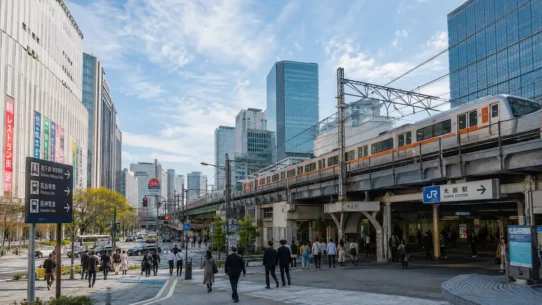
Best route: Enter through the JR side of Kansai Airport Station. If using a visitor or QR ticket, complete any required activation or seat-reservation steps before approaching the gate. At Osaka Station, follow signs carefully because HARUKA uses the Umekita underground platforms, which may be a substantial walk from your hotel or another railway.
Who should choose it: Travelers staying in Tennoji, Umeda, Osaka Station or Shin-Osaka; people connecting to the Shinkansen; families who want reserved seating; and visitors already using an eligible JR West pass.
✅ What Other Travelers Say
Passengers value the quieter ride, reserved seating and luggage facilities. The direct Osaka Station stop has made HARUKA much more useful for central Osaka than older advice online suggests.
⚠️ The Catch (Things to Keep in Mind)
The ticket system can confuse first-time users because basic fares, express charges, visitor tickets and QR products are not identical. Osaka Station is also enormous: “direct to Osaka Station” does not mean “direct to your hotel lobby.” Allow extra walking time from the underground platform. For Namba, HARUKA usually creates an unnecessary transfer at Tennoji.
Advance booking: Book the JR HARUKA on Klook or compare HARUKA tickets on KKday.
🚉 JR Kansai Airport Rapid: Best Budget Train for Tennoji and Osaka Station
Feature tags: #BudgetJR #DirectToOsakaStation #NoReservation #GoodWithJRPass
The JR Kansai Airport Rapid is the cheaper JR alternative to HARUKA. It serves Tennoji and continues to Osaka Station on many services, with no limited-express surcharge. Expect roughly 50–55 minutes to Tennoji and around 65–70 minutes to Osaka Station. A standard trip to Osaka is generally around ¥1,210.
Its biggest advantage is network fit. If your hotel is near a JR station or you already hold a pass covering the route, it can be better than saving a few minutes on a train that leaves you on the wrong side of the city.
Best route: Enter through the JR gates, board the Kansai Airport Rapid for Tennoji/Osaka, and check the onboard display for your stop. Ordinary IC cards can be used for a standard ride.
Who should choose it: Budget-conscious travelers staying near Tennoji or Osaka Station, JR pass users, and passengers with compact luggage who do not need a reserved seat.
✅ What Other Travelers Say
Travelers appreciate that it is straightforward, reasonably priced and connected to useful JR stations. It avoids the extra limited-express ticket and often departs frequently enough that little planning is required.
⚠️ The Catch (Things to Keep in Mind)
This is a commuter-style train. Seats are not guaranteed, dedicated luggage storage is limited, and crowding can make the ride tiring. The service also makes more stops than HARUKA. For a family with multiple large cases, the fare saving may not justify the loss of comfort.
🚌 Kansai Airport Limousine Bus: Best When the Stop Matches Your Hotel
Feature tags: #MinimalLifting #LargeLuggage #FamilyFriendly #TrafficRisk
The limousine bus is often dismissed as slower than the train, but that is the wrong comparison. The real question is whether it eliminates a difficult final transfer. If your hotel is near Hankyu Sanbangai, Herbis Osaka, Namba OCAT, Universal Studios Japan or another direct stop, the bus may offer the easiest complete journey.
Current official fares are approximately ¥1,800 to Osaka Station/Umeda and ¥1,400 to Namba OCAT. Scheduled travel time is about 60 minutes to Umeda and about 50 minutes to Namba OCAT, before traffic delays.
Bags are stored underneath the coach, which means you do not need to lift them onto a train, hold them between your knees or find an elevator during a transfer. This makes a genuine difference for parents, older travelers and anyone carrying sports equipment or several suitcases.
Best route: Buy or redeem the correct destination ticket, confirm your bus-stop number, hand checked luggage to the staff and keep the baggage claim tag. At the city end, check the walking route to your hotel before boarding—not after arrival.
Who should choose it: Families, travelers with bulky luggage, passengers staying beside a bus stop, and anyone willing to trade predictable rail timing for less lifting and fewer station corridors.
✅ What Other Travelers Say
The most common positive feedback is relief: staff handle large cases, seats are comfortable and the route feels much less demanding after a long flight. Travelers staying near Umeda bus terminals often find it easier than navigating Osaka Station’s underground platforms.
⚠️ The Catch (Things to Keep in Mind)
Road traffic can turn a one-hour ride into something much longer. Namba OCAT is near JR Namba, not directly beside every Dotonbori hotel or Nankai Namba. Buses can also be first-come, first-served, and some routes run less frequently than trains. Never choose the bus solely because the destination says “Namba” or “Osaka Station”—plot the exact stop against your hotel.
Advance booking: Book the Kansai Airport limousine bus on Klook or compare bus tickets on KKday.
🚐 Private Transfer or Taxi: Best for Late Arrivals, Groups and Door-to-Door Ease
Feature tags: #DoorToDoor #LateNight #GroupValue #HighestCost
A private transfer is the least budget-friendly option for one or two travelers, but it solves almost every luggage and navigation problem. The driver meets you at a designated point, the vehicle goes directly to your accommodation, and you do not need to understand ticket machines, station exits or the last subway connection.
Official fixed-rate taxi information lists Kansai Airport to Osaka Umeda from around ¥16,400, while ordinary metered taxis to central Osaka can exceed ¥20,000 after tolls and depending on the destination. Pre-booked transfer prices vary by vehicle, date, waiting policy and luggage allowance.
For a group of four or five, divide the full car price before dismissing it. The per-person difference versus four limited-express tickets plus a final taxi can be smaller than expected—especially when the hotel is far from a major station.
Best route: Pre-book with the correct flight number, terminal and hotel address. Save the operator’s meeting instructions offline. Confirm how flight delays are handled and whether the quoted price includes tolls, late-night surcharges, child seats and waiting time.
Who should choose it: Groups, families with small children, travelers with mobility concerns, passengers landing after normal rail hours, and anyone carrying more luggage than they can safely move alone.
✅ What Other Travelers Say
Travelers who pre-book a reputable operator often describe the first hour in Osaka as dramatically easier: no ticket queue, no transfer and no searching for the correct station exit. Groups frequently find the convenience worth the premium.
⚠️ The Catch (Things to Keep in Mind)
The cheapest listing is not always the cheapest final ride. Check luggage formulas, waiting-time limits, flight-delay rules, child-seat fees, service-area surcharges and cancellation terms. A “six-seat” vehicle may be unsuitable for six adults with large luggage. Airport pickup instructions can also differ between Terminal 1 and Terminal 2.
Advance booking: Compare KIX private transfers on Klook or compare private transfers on KKday.
What If You Arrive at Itami Airport (ITM)?
Itami is much closer to central Osaka than KIX and mainly serves domestic flights. Do not take the KIX routes above.
🚌 Itami Airport Limousine Bus: Usually the Easiest Choice
Feature tags: #ClosestAirport #DirectToUmeda #DirectToNamba #EasyWithBags
Direct airport buses run to Osaka Station/Umeda, Namba, Shin-Osaka, Tennoji and other major districts. Scheduled times are roughly 25 minutes to Shin-Osaka and about 30 minutes to Umeda or Namba, though traffic still matters.
✅ What Other Travelers Say
Most visitors find the bus simpler than combining the monorail with another railway. The terminals are close to the bus stops, and baggage handling is easier than on commuter trains.
⚠️ The Catch (Things to Keep in Mind)
Check the exact city terminal. “Osaka Station” bus stops and railway entrances are spread across Umeda, so the last walk can still be significant. At peak road times, rail may be more predictable.
🚝 Osaka Monorail + Hankyu or Metro: Cheapest, but Not the Most Luggage-Friendly
Feature tags: #BudgetRoute #OneTransfer #CommuterRail #LightLuggage
A common route is the Osaka Monorail from the airport to Hotarugaike, then Hankyu Railway to Osaka-Umeda. Other combinations use Senri-Chuo and the Kita-Osaka Kyuko/Osaka Metro Midosuji Line. These routes can be economical and avoid road delays.
✅ What Other Travelers Say
Light-packing travelers like the price and frequency. The transfer is manageable when you already understand the network.
⚠️ The Catch (Things to Keep in Mind)
This is not the route to choose simply because a map labels it “train.” You must transfer, commuter carriages may be crowded, and Osaka-Umeda’s station area is large. With full-size luggage, the direct bus is usually worth the extra cost.
Late-Night Arrivals: The Backup Plan Most Guides Forget
KIX operates around the clock, but central Osaka’s rail network does not. The official late-night access page currently lists a post-midnight bus from Terminal 1 to the Osaka/Umeda area, yet late services are limited and more vulnerable to timetable changes than daytime routes.
If your flight lands after about 10:00 PM, make three plans before departure:
- Plan A: The final practical train or scheduled late bus, allowing realistic time for immigration and baggage.
- Plan B: A pre-booked private transfer with a flight-delay policy you have read.
- Plan C: An airport or Rinku Town hotel, then a fresh start the next morning.
Do not build your entire arrival around a last train that departs 35 minutes after landing. That plan fails as soon as your aircraft parks remotely, immigration queues grow, or your suitcase is among the last delivered.
Key FAQs
What is the best way to get from Kansai Airport to Namba with luggage?
The Nankai Rapi:t is the best balance of speed, comfort and simplicity for most travelers. It goes directly to Nankai Namba, offers reserved seats and has luggage space. The Airport Express is cheaper, but it is less comfortable when busy and does not guarantee a seat.
How do I get from Kansai Airport to Osaka Station without changing trains?
Use the JR HARUKA, the JR Kansai Airport Rapid, or a direct limousine bus to the Umeda/Osaka Station area. HARUKA is the most comfortable rail choice, the Rapid is cheaper, and the bus is easiest when your hotel is near its drop-off point.
What is the cheapest way from Osaka Kansai Airport to the city center?
For Namba, the Nankai Airport Express is usually the cheapest practical direct option at about ¥970. For Tennoji or Osaka Station, compare the JR Kansai Airport Rapid. The cheapest fare is not always the cheapest complete journey if you need a taxi after arriving at the wrong station.
Can I use ICOCA from Kansai Airport to Osaka?
Yes, ICOCA and compatible IC cards can be used for ordinary services such as the Nankai Airport Express and JR Kansai Airport Rapid. Limited express services with reserved seating may require an additional ticket, reservation or dedicated QR product.
Is a taxi from Kansai Airport to Osaka worth it?
It is rarely good value for a solo traveler, but it can be sensible for a group, a late-night arrival, mobility needs or several large suitcases. Compare the total vehicle price, luggage capacity, tolls and waiting policy—not only the advertised starting price.
Final Verdict and Your Next Step
Choose by hotel area, not by whichever airport train has the best advertising.
- Namba / Dotonbori / Shinsaibashi: Book the Nankai Rapi:t for comfort or take the Nankai Airport Express for the lowest fare.
- Tennoji: Take HARUKA when you want a reserved seat; take the JR Rapid to save money.
- Umeda / Osaka Station: Compare HARUKA, JR Rapid and the direct limousine bus based on the exact hotel entrance.
- Shin-Osaka: HARUKA is usually the least troublesome train with luggage.
- USJ / Osaka Bay: Check the direct bus before accepting a multi-transfer rail itinerary.
- Late arrival or four-plus travelers: Price a private transfer before assuming it is unaffordable.
The smartest next step is to choose your accommodation first, pin its nearest station exit or airport-bus stop, then reserve the transport that removes the hardest part of the journey. Popular reserved trains, discounted tickets and appropriately sized transfer vehicles can sell out or rise in price, so do not leave a complicated arrival to the airport Wi-Fi queue.
Book and compare here:
- Compare Osaka hotels on Agoda
- Compare Osaka hotels on Booking.com
- Reserve the Nankai Rapi:t on Klook
- Reserve the JR HARUKA on Klook
- Reserve the airport limousine bus on Klook
- Compare private airport transfers on Klook
- Reserve the Nankai Rapi:t on KKday
- Reserve the JR HARUKA on KKday
- Reserve the airport limousine bus on KKday
- Compare KIX private transfers on KKday