

💡 Key Takeaways
- Best overall balance: Late May and mid-October to early November usually offer the strongest mix of comfortable weather, manageable crowds and reasonable hotel prices.
- Biggest trap: Cherry blossom season is beautiful but expensive, unpredictable and intensely crowded. Book refundable accommodation early rather than betting everything on one forecast.
- Months to avoid for most first-time visitors: Late July and August, unless a summer festival is your main reason for going. Kyoto’s heat and humidity can cut a full sightseeing day in half.
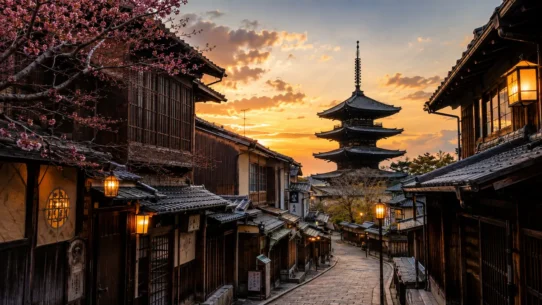
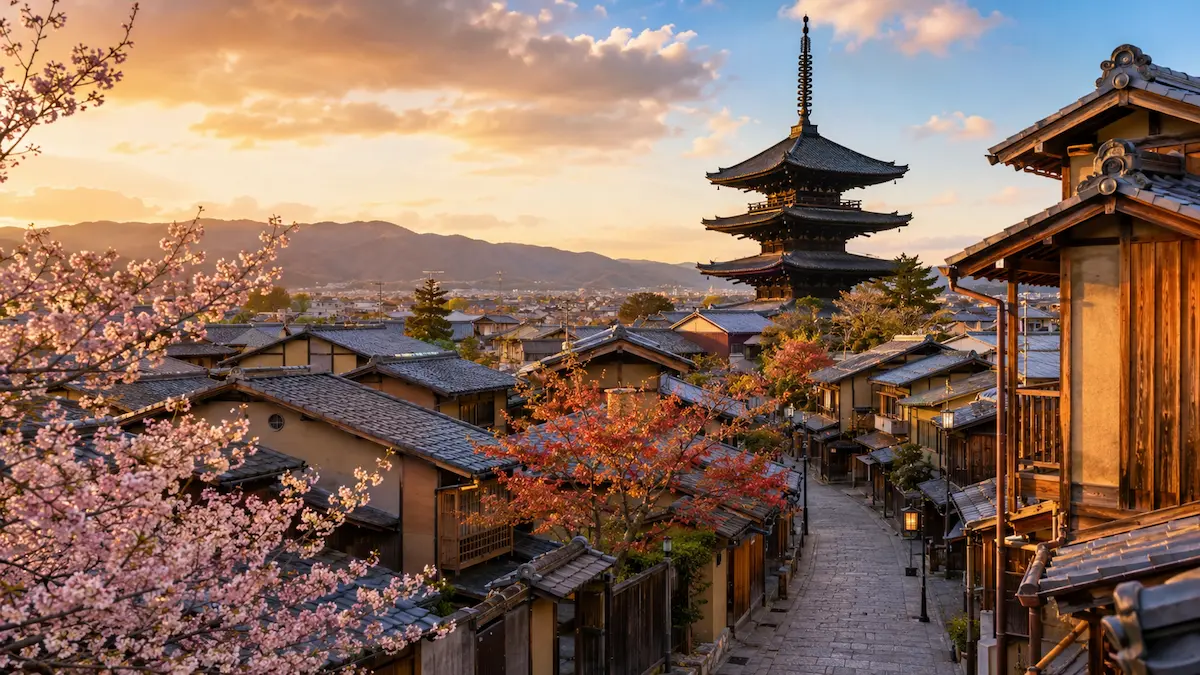
The best time to visit Kyoto is not automatically cherry blossom season. That is the postcard answer, not the practical one. Late March and early April can deliver extraordinary scenery, but they also bring some of the year’s highest room rates, packed buses, restaurant queues and a real chance that your carefully chosen dates miss peak bloom.
Summer creates the opposite problem: availability may look better, yet Kyoto’s basin geography traps heat and humidity. A walking-heavy plan that feels easy on a map can become exhausting by late morning. June’s rainy season is less catastrophic than many travelers imagine—it does not necessarily rain all day, every day—but forecasts become harder to trust and wet stone paths can slow temple-hopping.
Then there are the dates people forget to check. Golden Week around April 29 to early May, major festivals, Japanese three-day weekends, autumn foliage weekends and the Obon travel period around August 13–16 can push up prices and crowd levels. Winter is often cheaper and calmer, but daylight is limited, gardens can look bare and New Year closures complicate itineraries. The right month depends on what you value most: weather, scenery, budget, events or personal space.
The 1-Min Cheat Sheet
- March to April: Best for cherry blossoms and spring atmosphere. Expect volatile bloom timing, chilly mornings, premium hotel rates and severe congestion at famous sights.
- May to June: Best value-for-comfort window, especially after Golden Week and before late-June humidity builds. June is greener, quieter and wetter, but not necessarily a washout.
- July to August: Best for Gion Matsuri and summer traditions, but worst for heat-sensitive travelers. Plan early mornings, long indoor breaks and fewer daily stops.
- September to November: Best broad season for sightseeing. September can still feel like summer and carries typhoon disruption risk; October is comfortable; late November brings spectacular foliage and peak crowds.
- December to February: Best for lower prices, quieter temples and crisp air after the New Year rush. The trade-offs are short days, cold mornings and only an unreliable chance of snow in central Kyoto.
Best Months by Travel Priority
- Best weather with fewer crowds: Late May or mid-October. These are the safest all-round choices for first-time visitors who want long walking days without peak-season chaos.
- Best for cherry blossoms: Usually late March to early April, but exact peak dates vary every year. Build flexibility into your route and expectations.
- Best for autumn leaves: Mid-November to early December, with central Kyoto often strongest in the second half of November.
- Cheapest practical period: Mid-January through February, excluding major holiday surges and dates affected by Lunar New Year travel demand.
- Best budget shoulder season: June or September. Both can reduce accommodation pressure, but you are accepting rain, humidity or storm-related uncertainty.
- Best for festivals: July for Gion Matsuri, May 15 for Aoi Matsuri, August 16 for Gozan Okuribi and October 22 for Jidai Matsuri.
- Best for families and slower travelers: Late May and October. Mild weather makes stroller use, outdoor breaks and flexible meal times far easier.
Top Survival Tips
- Do not book Kyoto by month alone—check the exact week. A calm-looking month can contain Golden Week, a festival procession, a national-holiday weekend or a major illumination event. These short spikes matter more than monthly averages.
- Treat April 29 to early May as a separate peak season. Golden Week is one of Japan’s busiest domestic travel periods. Some years an observed holiday extends the rush through May 6. Trains, hotels and headline attractions can fill well ahead.
- Obon is not a national public holiday, but it still behaves like one. Many people travel or return to family homes around August 13–16. Transport demand rises, popular destinations get busier and Kyoto also hosts Gozan Okuribi on August 16.
- Use refundable hotel rates for sakura and foliage trips. Cherry blossoms and autumn colors respond to weather, not your flight booking. Reserve early, then fine-tune day trips when forecasts become more reliable.
- Stay near a railway or subway station, not just a bus stop. Kyoto buses can be slow and uncomfortably full during spring and autumn peaks. Rail, subway, walking and the occasional taxi are often worth the extra cost.
- Front-load famous sights. Visit Fushimi Inari, Kiyomizu-dera, Arashiyama Bamboo Grove or the Philosopher’s Path early, then move to lesser-known temples after day-trippers arrive. “Early” means before 8:00 a.m. in peak season, not 10:00 a.m.
- Do not overpack a summer itinerary. In July and August, three meaningful stops can be a successful day. Schedule outdoor sights before 10:00 a.m. and after 4:00 p.m., with museums, cafés, shopping arcades or a long lunch in between.
- Pack for wet heat, not just rain. In June, a heavy waterproof jacket can feel worse than the rain. Quick-dry clothing, breathable shoes, a compact umbrella and spare socks are often more useful.
- Budget for Kyoto’s accommodation tax. Since March 1, 2026, the tax is charged per person per night and ranges from ¥200 for rooms under ¥6,000 per person to ¥10,000 for stays of ¥100,000 or more. Mid-range stays commonly fall into the ¥400 or ¥1,000 tiers. Check whether the booking platform has collected it or the property will charge it locally.
- Compare total cost, not the headline room price. Breakfast, cancellation terms, accommodation tax, station access and the number of paid taxi rides can erase an apparent bargain.
- Keep one flexible half-day. Use it for rain, a late-changing blossom forecast, a typhoon-related closure or simply recovery from walking. Kyoto punishes rigid itineraries more than travelers expect.
The Full Experience
🌸 March to April: Best for Cherry Blossoms, but Not for Bargain Hunters
Feature tags: Peak scenery · Cold-to-mild weather · Highest demand · Sakura uncertainty · Early starts essential
March begins cool. Daytime temperatures gradually improve, but mornings and evenings can still require a proper jacket. By April, walking conditions are often pleasant, with warmer afternoons and longer daylight. The catch is timing: Kyoto’s main Somei Yoshino cherry blossoms usually peak somewhere around late March or early April, but warm or cold spells can shift the schedule. Full bloom is brief, and rain or wind can shorten it.
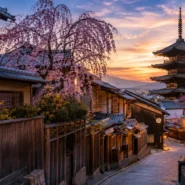
This is the season for the Philosopher’s Path, Maruyama Park, the Kamo River, Keage Incline, Arashiyama and temple night illuminations. The atmosphere can genuinely justify the premium if sakura is a major life-list experience. However, visitors who picture silent temples under pink clouds are often surprised by the reality: dense foot traffic, photo queues, full buses and restaurants that stop accepting names early.
Best dates within this period: Early to mid-March is calmer and cheaper, with plum blossoms and early-flowering cherry varieties providing spring color before the main rush. Late March to early April gives you the best chance of classic sakura, while mid-to-late April can work for later-blooming varieties at selected sites.
Price reality: Accommodation near Gion, Higashiyama, Kawaramachi and Kyoto Station can rise sharply during forecasted peak bloom. Airfares may also climb because this period overlaps with international spring travel and Japan’s school-holiday movement. Booking late means paying more for a worse location.
✅ What Other Travelers Say
Recent traveler discussions repeatedly describe peak sakura Kyoto as crowded but still worthwhile when expectations are realistic. The most consistent advice is to reach major sights before 8:00 a.m., choose weekdays and walk ten minutes beyond the famous photo zones. Travelers also note that blossoms appear across the city, so a good experience does not require standing in the single busiest spot.
⚠️ The Catch (Things to Keep in Mind)
You are paying for a natural event that cannot be guaranteed. A fixed five-day visit may arrive before peak, after peak or during rain. Golden Week begins at the end of April, creating another surge even after most central-city cherry blossoms have finished. For budget travelers who are not emotionally invested in sakura, late May usually delivers a better trip.
🌿 May to June: Best Overall Balance, If You Avoid Golden Week
Feature tags: Best all-round value · Fresh greenery · Aoi Matsuri · Rainy-season risk · Hydrangeas
May is Kyoto’s most underrated month—but only after Golden Week. Once the early-May holiday surge fades, the city becomes easier to navigate, temperatures are warm without being punishing and temple gardens turn intensely green. For travelers who care more about enjoying Kyoto than photographing one famous seasonal moment, mid-to-late May is arguably the best time of the year.
Aoi Matsuri takes place on May 15 and adds a graceful historical procession to the calendar. It is worth seeing, but crowd-averse visitors should avoid the parade route that day or treat it as the focus rather than trying to force a normal sightseeing schedule around it.
June brings the rainy season, known as tsuyu. The common misconception is that Kyoto disappears under nonstop rain for a month. In reality, conditions vary: you may get gray skies, intermittent showers, a humid sunny day or a heavier rain system. The uncertainty is the problem. Outdoor plans need backups, and wet heat can feel tiring even when temperatures are below midsummer levels.
The upside is meaningful. Hydrangeas bloom, moss gardens look richer, photography can be atmospheric and crowds often soften outside weekends. Rain also suits indoor or semi-covered experiences such as tea ceremonies, craft workshops, museums, covered shopping streets and long lunches.
Best dates within this period: Roughly the second week of May through the end of the month is the strongest comfort-to-cost window. Early June can still be a good calculated gamble. By late June, humidity usually becomes more noticeable and the transition toward summer makes long walking days harder.
✅ What Other Travelers Say
Travel forums show very mixed June experiences, which is exactly the point: some visitors report little rain and pleasant sightseeing, while others encounter frequent showers. A recurring positive is that rain usually does not ruin the entire day, and travelers who pack quick-dry gear often enjoy the quieter atmosphere and hydrangeas.
⚠️ The Catch (Things to Keep in Mind)
Rainfall is not the only issue. Humidity, slippery stone steps, wet shoes and last-minute timetable changes create cumulative fatigue. Some gardens and scenic viewpoints lose impact under heavy cloud. June is good value for adaptable travelers, but a poor choice for anyone who needs predictable blue skies or has mobility concerns on slick paths.
🔥 July to August: Best for Festivals, Worst for Comfortable Sightseeing
Feature tags: Extreme heat · Gion Matsuri · Obon travel · Evening events · Heatstroke planning
Kyoto’s summer is not just “a bit hot.” Long-term averages already place daytime highs around the low 30s Celsius, and real-world heat can run higher. Humidity slows sweat evaporation, temple courtyards offer limited shade and nighttime temperatures may remain uncomfortable. The city’s famous itinerary—walking between shrines, gardens, slopes and old streets—is exactly the type of travel most affected by heat.
July has one enormous reason to visit: Gion Matsuri. The festival runs through the month, with the major float processions on July 17 and July 24 and lively evening events beforehand. The spectacle is outstanding, but the combination of crowds, sun, standing time and limited escape routes should not be underestimated.
August is usually the month to avoid unless you are heat-adapted, traveling slowly or prioritizing a specific event. The Obon travel period around August 13–16 increases domestic movement, and Gozan Okuribi draws large crowds on the evening of August 16. Typhoons can also disrupt rail and flight plans during late summer.
A workable summer strategy: Start at sunrise or as close to it as possible. Stop outdoor sightseeing by late morning. Spend midday in air-conditioned spaces. Resume after 4:00 or 5:00 p.m. Carry water and electrolytes, use a sun umbrella or hat, and cut the itinerary before symptoms force you to.
✅ What Other Travelers Say
The dominant traveler feedback is that summer heat changes plans, even for visitors accustomed to warm climates. People commonly report moving outdoor sights to early morning, limiting the day to two or three major activities and using shopping arcades, department stores or cafés during the hottest hours. Festival-focused travelers are more positive because the cultural payoff is clear.
⚠️ The Catch (Things to Keep in Mind)
Cheap-looking hotel rates can be false economy if you lose half your sightseeing time or spend heavily on taxis to avoid walking. Traditional kimono or yukata rentals can become uncomfortable quickly. Families with young children, older travelers, people with cardiovascular conditions and anyone sensitive to humidity should choose another season when possible.
🍁 September to November: Best Weather Window, with Two Different Peak Seasons
Feature tags: Typhoon risk in September · Ideal October weather · Autumn foliage · Jidai Matsuri · November crowds
This three-month block contains Kyoto’s best weather and one of its biggest traps. September is labeled autumn on the calendar, but it can still feel like summer. Humidity lingers, and late August through September is a high-risk period for typhoon disruption. Crowds may be lighter than August, yet flexibility matters more than usual.
October is the best pure sightseeing month for many travelers. The weather is generally milder, long walking days become realistic again and typhoon risk usually declines as the month progresses. Jidai Matsuri is held on October 22. Central Kyoto’s most famous maple displays are usually not at peak yet, but that is precisely why October can feel easier than late November.
November is Kyoto’s second visual blockbuster. Temple gardens shift through yellow, orange and crimson, with many central-city locations strongest from mid-to-late November and some color lasting into early December. Unlike sakura, foliage unfolds over a wider period, so your odds are better—but peak temples and evening illuminations can become extremely congested.
Best dates within this period: Mid-to-late October is the safest weather-first choice. Early November offers a good compromise, especially if you include higher-elevation or northern sites that color earlier. Mid-to-late November is best for classic central Kyoto foliage but requires peak-season tactics and early booking.
✅ What Other Travelers Say
Traveler reports often describe autumn as more manageable than sakura season overall, but only when visitors avoid the handful of famous foliage bottlenecks. Early starts and weekdays still matter. Evening illuminations receive strong reviews for atmosphere, alongside repeated warnings about long entry lines and slow-moving crowds.
⚠️ The Catch (Things to Keep in Mind)
October is not guaranteed red-leaf season in central Kyoto, so do not book early October expecting the full November postcard. Conversely, waiting for peak foliage means higher room prices and more competition. September itineraries should include disruption insurance, flexible tickets and at least one indoor backup day.
❄️ December to February: Best for Quiet Kyoto and Lower Prices, Not Guaranteed Snow
Feature tags: Low-season value · Short daylight · Dry cold · New Year closures · Occasional snow
Winter reveals a calmer version of Kyoto. After autumn foliage fades and before spring demand returns, hotel availability improves, restaurant reservations become easier and many temples regain the quiet atmosphere visitors expect. Clear, crisp days are common, and cold air can produce excellent visibility.
December is transitional. Early December may still catch late foliage at selected lower-elevation locations. By the winter solstice, Kyoto has roughly ten hours of daylight and sunset arrives around the late afternoon, so outdoor sightseeing should start early. Christmas is not a public holiday in Japan, but illumination events and international travel can still affect demand.
The New Year period requires special planning. Shrines become busy for hatsumode visits, while some museums, restaurants, shops and smaller attractions close or reduce hours from late December into the first few days of January. Public transport continues, but a normal dining-and-sightseeing routine cannot be assumed.
Mid-January through February is the strongest low-season value period. Daytime temperatures are cool and mornings can approach freezing, yet snow in central Kyoto is occasional rather than dependable. A snowy Kinkaku-ji photograph is possible, not a product you can book. Mountain areas such as Ohara or Kurama have better odds than downtown.
Late February can bring plum blossoms and a subtle early-spring feeling without sakura-level demand. This is a smart compromise for photographers and repeat visitors who prefer atmosphere over headline seasonal events.
✅ What Other Travelers Say
Winter visitors frequently praise the smaller crowds after the New Year period and the ability to explore at a more human pace. They also note that famous places such as Kiyomizu-dera, Fushimi Inari and Arashiyama can still become busy around midday, so winter does not mean empty Kyoto.
⚠️ The Catch (Things to Keep in Mind)
Gardens can look muted, temple hours may be shorter and cold interiors are common in traditional buildings. Snow may never arrive during your stay. Lunar New Year is not a Japanese public holiday, but international demand can still lift hotel prices and visitor numbers on variable dates in January or February.
Key FAQs
What is the best month to visit Kyoto for good weather and fewer crowds?
Late May is the strongest all-round answer after Golden Week has ended. Temperatures are usually comfortable, gardens are green and prices are generally below sakura and autumn-foliage peaks. Mid-October is another excellent choice, especially for travelers who prefer drier, cooler walking weather and do not need peak red leaves.
Is Kyoto worth visiting during the June rainy season?
Yes, for flexible travelers. June can offer lower prices, fewer crowds, hydrangeas and beautiful moss gardens. It does not necessarily rain continuously, but forecasts are unreliable and humidity can be tiring. Pack quick-dry clothing, waterproof footwear and an indoor backup plan rather than cancelling the idea automatically.
Is cherry blossom season in Kyoto worth the crowds and higher prices?
It is worth it when sakura is a top travel priority and you are willing to start early, pay more and accept uncertain bloom timing. It is not the best choice for budget travelers or anyone who dislikes queues. For a first visit focused on temples, food and neighborhoods, late May or October usually delivers better overall value.
Final Verdict and Your Next Step
For most travelers, the best time to visit Kyoto is late May or mid-October to early November. These windows offer the best compromise between weather, crowd pressure, accommodation cost and the number of useful sightseeing hours in a day.
Choose late March to early April only when cherry blossoms are central to the trip. Choose mid-to-late November for autumn color and accept peak-season crowds. Choose mid-January to February for value and quiet. Avoid late July and August unless summer festivals are important enough to justify the heat.
Kyoto rewards early booking more than many Japanese cities because the most desirable rooms are concentrated near a limited number of convenient transport areas. For sakura, Golden Week and foliage season, reserve a refundable room as soon as your dates are plausible, then compare again before the cancellation deadline.
Check Kyoto hotel availability: Compare Kyoto hotels on Agoda or check Kyoto stays on Booking.com.
Reserve tours, tickets and seasonal experiences: Browse Kyoto activities on Klook or compare Kyoto experiences on KKday.