
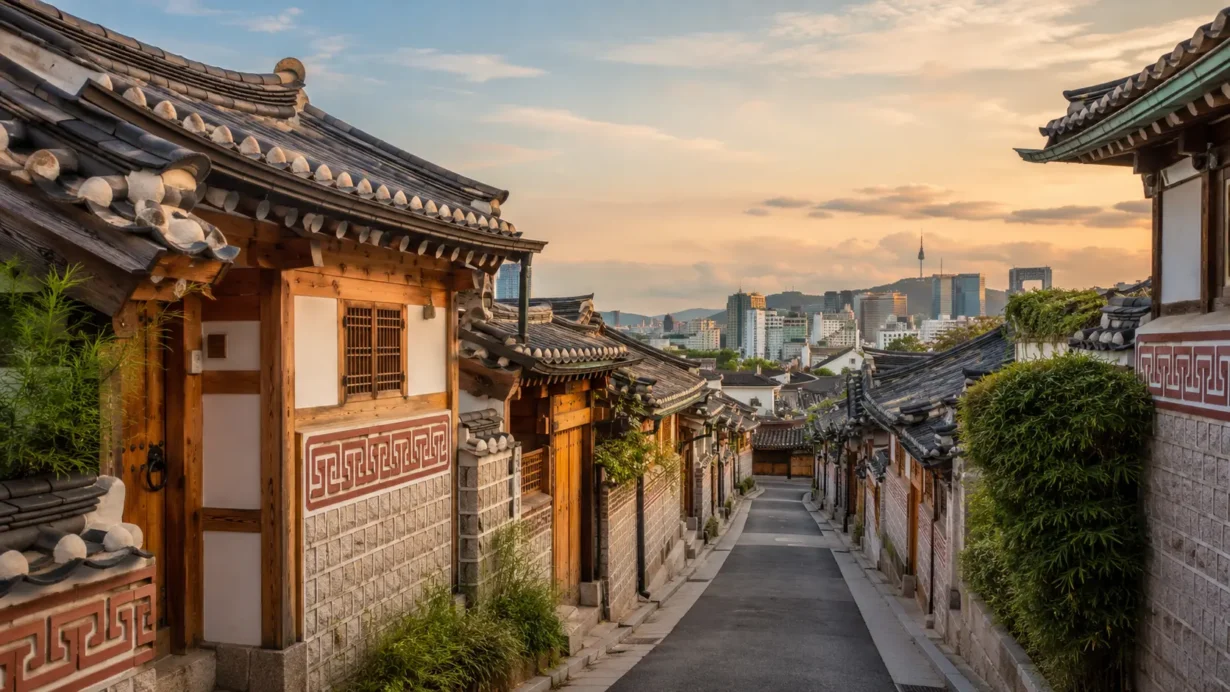
💡 Key Takeaways
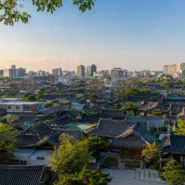
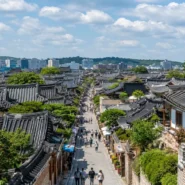
- Do not stretch Jeonju Hanok Village into five repetitive sightseeing days. The headline sights are compact. A better five-day plan uses the extra time to separate the west core, east hillside, old downtown, northern Jeonju and your departure buffer.
- The most common route mistake is geographical, not financial. Jeondong Cathedral, Gyeonggijeon, Pungnammun and Nambu Market belong together; Omokdae, Jaman Mural Village and Jeonju Hyanggyo form another natural walking chain.
- Save KTX seats before worrying about attraction tickets. Most classic Jeonju sights are free, and regular Gyeonggijeon admission is inexpensive and normally handled on site. The intercity train is the reservation that can actually disrupt your trip if a convenient departure sells out.
- Do not drag a suitcase through hanok lanes. Go to your accommodation first or use one of Jeonju’s officially listed tourist-information lockers, then start sightseeing with only a day bag.
- Five days should feel slower, not fuller. This itinerary deliberately includes recovery time, rain options and skippable stops instead of pretending every Instagram-famous corner deserves equal time.
A Jeonju 5-day itinerary looks easy on a map, which is exactly why first-time visitors often plan it badly. The historic core is compact, but the station is not in the middle of the attractions, the eastern side of the Hanok Village climbs into hillside lanes, several small cultural venues close on Mondays, and the famous Nambu Night Market is not a nightly event. The result is a surprisingly common pattern: arrive with luggage, bus back and forth across town, repeat Taejo-ro three times, climb Omokdae at the hottest hour, then save an outlying attraction for departure day. This guide fixes those problems by treating Jeonju as a set of walkable zones rather than a checklist.
Editorial reality check: five days is generous for Jeonju. Many visitors can see the headline sights much faster. If you have five days, the smart move is not to invent more commuting; it is to slow down, eat well, visit quieter cultural spaces, keep one flexible weather day and avoid turning a compact city into an endurance test.
Fact-check date: 13 August 2026. Opening hours, event schedules and commercial products can change. For time-sensitive items, this article links to the relevant official or live booking page so you can re-check before travel.
The 1-Min Cheat Sheet
- Jeonju Hanok Village — Best for: first-time orientation, architecture, food and evening atmosphere. Suggested stay: 2–4 hours per focused visit rather than one all-day marathon. Ticket/transport: the streets themselves are free; walk once you are in the core. From Jeonju Station or the bus terminal, a taxi is often the least stressful choice with luggage.
- Gyeonggijeon Shrine — Best for: Joseon history, photography and travelers wearing hanbok. Suggested stay: 60–90 minutes. Ticket/transport: regular adult non-resident admission is KRW 3,000; ordinary entry is best treated as an on-site ticket rather than a “skip-the-line” attraction. Walk from Jeondong Cathedral.
- Jeondong Catholic Cathedral — Best for: architecture, history and a short first-day stop. Suggested stay: 20–30 minutes. Ticket/transport: no attraction ticket; it remains an active religious site, so interior access should never be assumed during services or parish activities. Walk from Gyeonggijeon.
- Omokdae — Best for: a higher viewpoint, early-morning atmosphere and travelers comfortable with steps. Suggested stay: 40–60 minutes. Ticket/transport: free; go on foot from the eastern Hanok Village, but use a short taxi instead if heat, rain or knee issues make the climb a poor trade.
- Jaman Mural Village — Best for: casual street photography and café breaks. Suggested stay: 30–45 minutes. Ticket/transport: free residential lanes; walk from Omokdae. It is small and hilly, so it is an easy skip if murals are not a priority.
- Jeonju Hyanggyo — Best for: quieter traditional architecture and seasonal ginkgo scenery. Suggested stay: 45–60 minutes. Ticket/transport: free; generally open 09:00–18:00 March–October and 10:00–17:00 November–February, closed Mondays. Walk downhill from Jaman or take a short taxi if needed.
- Nambu Market — Best for: food-focused travelers and Friday/Saturday nightlife. Suggested stay: 60–120 minutes. Ticket/transport: free to enter; individual vendors set their own hours. The official 2026 night-market schedule is Friday and Saturday, 17:00–24:00. Walk from Pungnammun.
- Deokjin Park — Best for: a slower local-feeling day, lake walks and lotus season. Suggested stay: 75–120 minutes. Ticket/transport: the park itself is free; use a city bus or taxi from the center. Do not plan your night around the media façade: Jeonju’s official tourism site currently says it is suspended until repairs are completed, expected within the first half of 2027.
The Most Practical 5-Day Itinerary
Before you assign weekdays: if one of your five days is Monday, make Monday your outdoor-heavy Hanok Village/Omokdae/Deokjin day and move the museum-heavy old-downtown day elsewhere. Jeonju Hyanggyo and several small cultural venues close on Mondays.
Day 1: Arrival Day — Jeondong Cathedral, Gyeonggijeon, Pungnammun & Nambu Market
- Suggested start: around 14:00 after check-in. If you arrive earlier, eat first and still resist the urge to start sightseeing with your suitcase.
- Best sequence: accommodation or locker → Jeondong Catholic Cathedral (20–30 min) → Gyeonggijeon Shrine (60–90 min) → Taejo-ro and one or two back lanes (45–60 min) → Pungnammun Gate exterior (10–15 min) → Nambu Market (60–120 min).
- Transport between stops: walk. These places sit in the same west/southwest core. Taking buses between them creates more waiting and boarding friction than it saves.
- Lunch/rest area: use the Pungnammun or western edge of the Hanok Village for a proper sit-down meal. If Taejo-ro looks packed, walk one or two blocks away before deciding where to eat; the most visible shop is not automatically the best-value shop.
- What to cut if tired: Pungnammun needs only a quick exterior look, and you can skip a deep Taejo-ro browse because you will pass through the core again. Do not cut Gyeonggijeon just to squeeze in more snack stops.
- Rain alternative: shorten the cathedral/Gyeonggijeon exterior time and use the Jeonju Hanok Village History Museum or Jeonju Crafts Exhibition Hall if they are open. Both are far more sensible than climbing the eastern hillside in heavy rain.
- Best evening area: Nambu Market if your Day 1 is Friday or Saturday. On other nights, choose the illuminated Pungnammun–Jeonjucheon area or quieter hanok lanes rather than expecting a full night-market scene.
- Why this beats the typical influencer itinerary: it solves luggage first, then uses one compact walking cluster. A common bad plan goes station → Hanok Village → hotel → Nambu Market → hotel, creating two unnecessary cross-town trips before dinner.
Day 2: East Hanok Village — Omokdae, Jaman Mural Village, Hyanggyo & Riverside
- Suggested start: 07:45–08:00. This is the one day where an early start genuinely pays off: cooler temperatures, gentler light and fewer people on the narrow hillside paths.
- Best sequence: eastern Hanok back lanes → Omokdae (40–60 min) → Jaman Mural Village (30–45 min) → Jeonju Hyanggyo after opening (45–60 min) → lunch/rest in Gyo-dong or Hyanggyo-gil (60–90 min) → optional Hanbyeokdang/Jeonjucheon riverside or National Intangible Heritage Center (60–90 min) → Namcheongyo/Cheongyeonru around dusk.
- Transport between stops: mostly walk in one direction. The logic is to climb once, then gradually drift downhill and south instead of bouncing between the ridge and Taejo-ro.
- Lunch/rest area: Gyo-dong after Hyanggyo. Build a real seated break into the day; Omokdae plus Jaman is not long in distance, but steps, summer humidity and uneven lanes make it feel longer than a flat urban walk.
- What to cut if tired: Imokdae is the first deletion. It is historically related to Omokdae, but for a first visit it rarely justifies extra effort if your legs are already done. Jaman is the second easy cut if murals are not your thing.
- Rain alternative: skip the steep lanes. Spend more time at the National Intangible Heritage Center and indoor cultural venues back in the Hanok Village. Wet stairs are not a badge of honor.
- Best evening area: Jeonjucheon/Gyo-dong. This is a good night to avoid the busiest Taejo-ro strip and enjoy the calmer southern edge.
- Why this beats the typical influencer itinerary: many lists place Omokdae in the middle of a Gyeonggijeon/Nambu day, forcing you uphill at peak heat and then back down to the same streets. This route gives the hills their own morning and turns the day into a one-way gradient.
Day 3: Old Downtown & Culture — Jeolla Gamyeong, Gaeksa Area, Crafts and Optional Hanbok
- Suggested start: 09:00–09:30.
- Best sequence: Jeolla Gamyeong (60–90 min) → Pungpaejigwan/Jeonju Gaeksa area (20–30 min exterior orientation) → old-downtown lunch and café break (60–90 min) → Dongmun Art Street or a small cultural venue → Jeonju Traditional Liquor Museum, Crafts Exhibition Hall or Seonbi Culture Center (choose one or two, 45–60 min each) → optional pre-booked hanbok session for late afternoon photos.
- Transport between stops: walk west-to-east through old downtown and into the Hanok Village edge. Use a taxi only if you choose a restaurant or activity that pulls you away from this line.
- Lunch/rest area: the Gaeksa/old-downtown zone is the right place to sit down. This is also where you should schedule a longer café break if Day 2 left your legs tired.
- What to cut if tired: hanbok is optional, not a cultural obligation. If dressing up is not your thing, keep the time for a slower museum visit or an early dinner.
- Rain alternative: this is your strongest bad-weather day. Prioritize Jeolla Gamyeong’s covered structures and indoor craft/history venues, then move between them by short taxi if the rain is heavy.
- Best evening area: Gaeksa/old downtown for restaurants and cafés. A makgeolli meal can be fun, but check current menu format first—large set spreads can be poor value for solo travelers or light eaters.
- Why this beats the typical influencer itinerary: it gives the historic commercial center its own west-to-east line instead of treating “downtown” as something you commute to after spending all day in the Hanok Village.
Day 4: North & Northwest Jeonju — Deokjin Park, Jeonbuk National University Area & Palbok Art Factory
- Suggested start: 09:00.
- Best sequence: taxi or bus to Deokjin Park (75–120 min) → Yeonhwajeong Library/bridge area (30–45 min within the same visit) → lunch near Jeonbuk National University (60–90 min) → taxi to Palbok Art Factory (60–90 min) → optional café/rest nearby → dinner around the university district or return to the center.
- Transport between stops: this is the day to stop pretending every transfer should be walked. Bus is fine when timing is convenient; a short taxi is often the smarter choice between Deokjin and Palbok, especially for two or more people.
- Lunch/rest area: the university district gives you more everyday food choices and breaks the day naturally between the park and industrial-art zone.
- What to cut if tired: Palbok Art Factory. It is a good change of texture after three historic days, but travelers uninterested in contemporary/industrial culture should use the afternoon as a genuine rest block instead.
- Rain alternative: reverse the order and start with Palbok Art Factory, then visit Deokjin only if the weather improves.
- Best evening area: Jeonbuk National University streets for a more local-feeling dinner, or simply return early. Five-day trips become better when one night is not “programmed.”
- Why this beats the typical influencer itinerary: Deokjin and Palbok are outside the compact Hanok core. Pairing them isolates the cross-town travel to one day instead of leaking 20–40 minutes of repositioning into several days.
- Current trap to avoid: do not build this day around the Jeonju Hanji Museum yet. The official tourism page still displays a notice that museum tours are temporarily closed. Likewise, the Deokjin Park media façade is officially suspended until repairs are completed, expected in the first half of 2027.
Day 5: Buffer Day — Quiet Hanok Lanes, Souvenirs, One Missed Stop & Stress-Free Departure
- Suggested start: 08:00 if you are still sleeping in Jeonju; otherwise tailor the day to your train/bus departure.
- Best sequence: quiet Hanok Village back lanes (30–45 min) → breakfast → one missed indoor venue after 10:00, such as the Hanok Village History Museum, Crafts Exhibition Hall or Seonbi Culture Center (45–60 min) → lunch → final souvenir pick-up around Hanji-gil/Taejo-ro → collect luggage → taxi directly to Jeonju Station or the correct bus terminal.
- Transport between stops: walk in the core, then make one direct vehicle trip to your departure terminal. Confirm whether you are leaving from Jeonju Station, the express bus terminal or the intercity bus terminal; they are not the same place.
- Lunch/rest area: stay near your accommodation/luggage. Departure day is the wrong moment to chase a restaurant on the opposite side of town.
- What to cut if tired or leaving early: everything after breakfast. A calm departure is more valuable than one last minor museum.
- Rain alternative: choose one indoor cultural venue or café near your bags, then leave earlier for the station.
- Best evening area: if you are staying a sixth night, return to Gyo-dong or Nambu Market if it is Friday/Saturday. Otherwise, there is no reason to invent a farewell-night detour before a train.
- Why this beats the typical influencer itinerary: the final day is deliberately local and flexible. Putting Deokjin Park, Palbok or another outlying stop here turns one delayed bus or rainy spell into a missed train.
Tourist Traps to Avoid & Itinerary Hacks
- Trap: treating “Jeonju Hanok Village” as a single attraction you must finish in one block. Hack: use the west core on Day 1 and the east/hillside zone on Day 2. You will see more detail and spend less time retracing Taejo-ro.
- Trap: arriving at Jeonju Station and assuming it is your sightseeing hub. Hack: it is your intercity gateway, not the center of the classic attractions. Once you reach the Hanok Village/old-downtown area, stay there rather than returning to the station every day.
- Trap: choosing a hotel “near the station” because that sounds transport-friendly. Hack: for this itinerary, the western or northern edge of the Hanok Village, Pungnammun or Gaeksa area is usually more efficient. Deep hanok lanes are atmospheric but can be less convenient with wheeled luggage or taxis.
- Trap: dragging luggage through the Hanok Village before check-in. Hack: ask your accommodation to hold bags, or use officially listed lockers. The Jeonju General Tourist Information Center lists 54 lockers including seven large ones; the Hanok Village Tourist Information Center lists 23 medium/mid-large lockers; Gyeonggijeon Travelers’ Lounge lists 17 lockers. Availability is not guaranteed, so do not arrive assuming a large locker will definitely be free.
- Trap: believing every popular sight has an online QR ticket or a fast-pass product. Hack: most core sights are free. Regular Gyeonggijeon admission is cheap and normally handled at the site. Spend your advance-booking energy on the KTX and time-sensitive experiences, not imaginary “skip-the-line” products.
- Trap: scheduling Nambu Night Market on Tuesday because an old blog called it “nightlife.” Hack: the official 2026 schedule is Friday and Saturday, 17:00–24:00. Daytime Nambu Market still exists on other days, but vendor schedules vary.
- Trap: climbing Omokdae after lunch in summer. Hack: make it your early start. The sight itself does not require half a day; the heat and stairs are what make poor timing painful.
- Trap: assuming Jaman Mural Village is a major district. Hack: think of it as a 30–45 minute hillside add-on between Omokdae and Hyanggyo. If you have seen stronger mural districts elsewhere, it may feel small and commercial in places.
- Trap: forcing Imokdae into the plan because the name is paired with Omokdae. Hack: treat it as optional. If you are short on time, energy or interest, Omokdae gives the more useful first-timer experience.
- Trap: building a 2026/early-2027 evening around Deokjin Park’s media façade. Hack: the park is still worth visiting for the lake, bridge and slower atmosphere, but the city’s current notice says the media façade is temporarily suspended pending repairs.
- Trap: relying on the Jeonju Hanji Museum without checking status. Hack: the official page currently states that museum tours are temporarily closed. Use Palbok Art Factory or a central craft venue as your Plan B.
- Trap: taking a bus for every 600–900 metre hop because it looks efficient in an app. Hack: in the Hanok core, waiting and walking to the stop can erase the theoretical gain. Walk compact chains; reserve buses for Deokjin/university travel and use a short taxi when a transfer would otherwise cost time and energy.
- Trap: thinking a traditional hanok stay is automatically “better.” Hack: book one because you want the atmosphere, not because you think you must. Floor bedding, sound insulation and bathroom layouts may be less comfortable than a modern hotel. Light sleepers and travelers with back/knee issues should compare carefully.
- Trap: copying a five-day list that contains five versions of the same photo stop. Hack: if a stop does not add history, food, scenery, rest or a different neighborhood, delete it. Jeonju rewards depth more than collection.
Save Your Legs! The Most Efficient Route
Jeonju should not be planned like Kyoto, Seoul or Busan. There is no metro network to stitch together far-flung districts, and the classic sights are much more concentrated. The practical five-zone split for a first visit is west Hanok core (Jeondong Cathedral, Gyeonggijeon, Pungnammun, Nambu Market), east/southeast Hanok (Omokdae, Jaman, Hyanggyo and riverside), old downtown (Jeolla Gamyeong and Gaeksa), north/northwest Jeonju (Deokjin, university area and Palbok), and a central departure buffer. That is the Jeonju equivalent of “districting”: fewer crossings, fewer transfers and fewer moments where you wonder why you are seeing the same street for the fourth time.
Walk these chains: Jeondong Cathedral → Gyeonggijeon → Pungnammun → Nambu Market; and Omokdae → Jaman Mural Village → Jeonju Hyanggyo. Those routes are close enough that motorized transport usually adds friction. The east-side chain has elevation, however, so “walkable” does not mean “effortless.” If you have knee issues, a stroller, high heat or heavy rain, take a short taxi to the upper/eastern point and walk downhill where possible.
Use buses for meaningful distance, not for proof that you can use public transport. City buses are useful for the Deokjin/university area. They are less compelling for micro-hops inside the historic core. Road traffic affects both buses and taxis, but a taxi removes transfers, stop-watching and the walk from the stop—often worth paying for when two or more people are splitting the fare, when you are carrying luggage, or when a short ride prevents an extra 20–30 minutes on your feet.
There is no reason to return to Jeonju Station each day. The station, express bus terminal and intercity bus terminal are separate gateways. Stay near the attractions you will actually walk to. For a first-timer following this plan, a hotel on the west/north edge of the Hanok Village or around Pungnammun/Gaeksa is usually the best compromise between atmosphere, restaurant choice and vehicle access. Staying deep inside pedestrian-feeling hanok lanes is prettier, but less appealing when rain starts or your suitcase wheels are catching on uneven surfaces.
Luggage strategy matters more than one extra attraction. Jeonju’s official tourism site verifies multiple locker banks at tourist information centers and travelers’ lounges. Use them when you arrive too early to check in or need several bag-free hours after checkout. For very large suitcases, your accommodation’s luggage hold is preferable because the number of large lockers is limited. I could not verify a citywide, traveler-facing same-day hotel-to-station baggage-forwarding system comparable to Japan’s takuhaibin from Jeonju’s official tourism information, so do not build the itinerary around one unless your hotel or transport provider explicitly confirms it.
For navigation, check the live route on Naver Map shortly before leaving. Korean local bus routing and stop details can change. The point of this itinerary is not to memorize bus numbers months in advance; it is to know which legs should be walked, which deserve a vehicle and which should never have been combined in the first place.
Ticket Tips & Skip-the-Line Hacks
The biggest ticketing mistake in Jeonju is overcomplicating it. Hanok Village streets, Jeondong Cathedral as an attraction, Omokdae, Jaman Mural Village, Jeonju Hyanggyo, Nambu Market, Deokjin Park and several municipal cultural venues do not require a general admission ticket. A paid “city attraction bundle” is therefore not automatically a saving.
Gyeonggijeon Shrine: Jeonju’s official page lists standard non-resident adult admission at KRW 3,000, youth/military at KRW 2,000 and children at KRW 1,000. It also lists free admission on the last Wednesday of each month (“Culture Day”) and a 50% discount on the fourth Saturday (“Hanbok Day”). Seasonal closing times vary, with later hours in summer. I did not find an official regular-admission e-ticket that meaningfully lets ordinary daytime visitors bypass a queue, so plan to pay at the site. Special night openings or seasonal programs can have separate rules—check the current event page rather than assuming your daytime ticket covers them. Check the official Gyeonggijeon page.
Free sites: “free” does not mean “open whenever you want.” Jeonju Hyanggyo has published viewing hours and closes Mondays. Jeondong Cathedral is a functioning church, so visitors should respect worship and parish activity. Markets have vendor-by-vendor hours. For small museums and craft centers, Monday closures are common enough that you should verify the specific venue the night before.
The reservation that matters most is your intercity train. Jeonju’s official transport guide warns that Jeonju-bound KTX seats can sell quickly on weekends, holidays, festival periods and major travel dates, and specifically notes that Yongsan often offers more Jeonju-bound choices than Seoul Station. For a simple Seoul–Jeonju–Seoul trip, buy the individual KTX ticket directly from KORAIL rather than assuming a rail pass is cheaper. KORAIL official booking site.
When an advance e-voucher is genuinely useful: a timed hanbok rental is one of the few classic Jeonju experiences where booking online can remove uncertainty, especially on weekends or when you want a particular rental duration. Both links below were live purchase pages when this guide was fact-checked. They are commercial affiliate links, so compare the package inclusions and final price before paying.
- Klook — Hanboknam Jeonju Hanbok Rental: Check live price and availability on Klook. The live product page places the shop about a three-minute walk from Gyeonggijeon and currently offers multiple rental/photo options.
- KKday — Hanboknam Jeonju Hanbok Experience: Check live price and availability on KKday.
What about a KORAIL Pass? It can make sense if Jeonju is one stop in a multi-city rail-heavy Korea itinerary. It is usually the wrong reflex if you only need one round trip. If your trip includes several long KTX journeys, compare the pass against individual fares: Klook KORAIL Pass or KKday KORAIL Pass. Seat reservations still matter; “having a pass” is not a reason to leave a popular departure to chance.
Skip-the-line bottom line: Jeonju is not a city where you win by buying a dozen attraction tickets in advance. You win by reserving the transport/experience that can actually sell out, arriving at small historic sites outside the busiest weekend midday window, and refusing to stand in a famous food queue when an equally sensible meal exists one street away.
Tried & Tested: My Honest Review
Transparency note: this section is an editorial, evidence-based assessment rather than a claim of personal travel. “What Other Travelers Say” summarizes recurring themes in public traveler reviews, balanced with official operating information. For video, YouTube does not provide a stable public “most popular video for this attraction” ranking that can be guaranteed across time. I selected a strong, place-specific public result that was indexed and reachable in search on 13 August 2026. The watch URL is printed under every embed so an editor can re-check it before publication. YouTube creators can change embedding permissions after publication, so no static article can honestly guarantee permanent embeddability.
📍 Stop 1: Jeonju Hanok Village
Tags: #FirstTimerEssential #Architecture #Food #BestEarlyMorning #Free
My take: the village is essential, but “the village” is not one sight. The western core is lively and photogenic; the east is quieter and hillier; the southern edge feels more relaxed. Treating all of it as a single four-hour loop is the fastest way to get visual fatigue and miss the small lanes that make the area worthwhile.
✅ What Other Travelers Say: recurring positives are the concentration of traditional architecture, easy access to food and the atmosphere of seeing hanbok-clad visitors moving through the streets. The most common counterpoint is that the busiest commercial lanes can feel crowded and heavily tourist-oriented.
⚠️ The Catch (Things to Keep in Mind): midday weekends and holidays are the least flattering time to judge the village. Go early for architecture, return after dark for mood, and accept that the main street is commercial. Also remember that a hanok accommodation can mean floor bedding and less sound insulation than a modern hotel.
📍 Stop 2: Gyeonggijeon Shrine
Tags: #JoseonHistory #HanbokPhotos #PaidEntry #60To90Minutes #CoreSight
My take: this is the one paid stop in the classic core that I would keep even on a compressed itinerary. The grounds give historical context to Jeonju that snack streets cannot, and the courtyards create breathing room just off busy Taejo-ro.
✅ What Other Travelers Say: visitors commonly praise the calmer grounds, traditional architecture and photo potential, particularly in hanbok. History-minded travelers get more from it than people who enter only looking for a dramatic “wow” monument.
⚠️ The Catch (Things to Keep in Mind): do not buy a third-party “fast pass” just because it sounds convenient; regular admission is inexpensive and no meaningful general skip-the-line system was verified. If you know nothing about King Taejo or the Joseon context, read a short background note before entering—the site becomes much more interesting.
📍 Stop 3: Jeondong Catholic Cathedral
Tags: #Architecture #ShortStop #Free #ActiveChurch #WestCore
My take: it is a very good 20-minute stop and a poor 90-minute stop for most first-timers. The red-brick Romanesque building is a striking counterpoint to the nearby hanok roofs, and its location makes it almost impossible to justify skipping if you are already at Gyeonggijeon.
✅ What Other Travelers Say: people tend to value the architecture, historical setting and photogenic contrast with the traditional district. Many visits are naturally brief.
⚠️ The Catch (Things to Keep in Mind): it is not a museum with guaranteed tourist access at every moment. It is a living Catholic parish. If a service, ceremony or access restriction is in progress, admire the exterior and move on respectfully rather than treating the interior as something you are owed.
📍 Stop 4: Omokdae
Tags: #Viewpoint #EarlyMorning #Steps #Free #EasyToOverhype
My take: Omokdae is worth the climb when the weather is comfortable, especially as part of a one-way eastern route. It is not worth arranging half your day around. The real value is the change in elevation and perspective over the hanok roofs, not a huge observation-deck spectacle.
✅ What Other Travelers Say: positive reviews often mention the peaceful feel, greenery and view over the historic area. Other travelers find the view less impressive than expected or feel there is not much to do once they reach the top.
⚠️ The Catch (Things to Keep in Mind): the approach has steps and slope. In summer heat or heavy rain, the cost-to-reward ratio drops quickly. Start early, and do not feel guilty about skipping Imokdae if your knees or schedule say no.
📍 Stop 5: Jaman Mural Village
Tags: #Murals #Hillside #30To45Minutes #Free #Optional
My take: this works best as connective tissue between Omokdae and Hyanggyo, not as a headline destination. The lanes are colorful, there are cafés, and the hillside changes the visual rhythm of the trip. That is enough—do not turn it into a two-hour mission.
✅ What Other Travelers Say: fans enjoy the bright murals, quirky photos and café stops. Skeptics describe it as small or not worth a special trip, particularly if they have already visited larger mural villages elsewhere in Korea.
⚠️ The Catch (Things to Keep in Mind): it is a residential area, not an outdoor theme park. Keep voices down, do not block doorways for photos, and expect slope. If you are indifferent to street art, skip it and give Hyanggyo more time.
📍 Stop 6: Jeonju Hyanggyo
Tags: #QuietHeritage #GinkgoSeason #Free #ClosedMonday #SlowTravel
My take: this is one of the best antidotes to “Hanok Village is too commercial” fatigue. It is calmer, historically coherent and especially rewarding when seasonal foliage is good. Even outside peak ginkgo color, the space gives the day a different pace.
✅ What Other Travelers Say: the recurring praise is exactly what you want after busy Taejo-ro: peaceful courtyards, mature trees and photogenic traditional buildings without the same retail intensity.
⚠️ The Catch (Things to Keep in Mind): Monday closure is the practical trap. The current published hours are 09:00–18:00 from March to October and 10:00–17:00 from November to February. Do not arrive at 08:00 just because Omokdae was open earlier.
📍 Stop 7: Nambu Market
Tags: #StreetFood #FridaySaturday #NightMarket #BudgetWatch #NearPungnammun
My take: go for energy and grazing, not because every stall is a bargain. On Friday and Saturday nights it makes a natural finish to the west-core day. On another weekday, visit the daytime market if it interests you but do not expect the same event atmosphere.
✅ What Other Travelers Say: supporters love the variety, casual eating and crowded-night-market buzz. Value opinions are mixed; some travelers feel popular street-food portions can be pricey for what they are.
⚠️ The Catch (Things to Keep in Mind): the official 2026 night-market schedule is Friday and Saturday, 17:00–24:00. Youth Mall and individual shops can keep different hours. If a queue is long enough to consume 30 minutes, ask yourself whether you want that specific dish or simply the fact that it is famous.
📍 Stop 8: Deokjin Park
Tags: #LakeWalk #LotusSeason #Free #NorthJeonju #SlowDay
My take: this is not the place I would prioritize on a one-day Jeonju trip, but it makes much more sense on a five-day stay. The lake, bridge and library add a local, unhurried counterweight to the historical core, especially around lotus season.
✅ What Other Travelers Say: visitors commonly describe it as pleasant, relaxed and attractive for an evening or lake walk. The appeal is atmosphere rather than a packed list of monuments.
⚠️ The Catch (Things to Keep in Mind): outside strong weather/flower conditions, the park may feel modest to travelers expecting a “must-see” blockbuster. More importantly, do not travel across town specifically for the media façade right now: the official notice says operations are temporarily suspended until repair, expected within the first half of 2027.
Key FAQs
Is 5 days in Jeonju too long for first-time visitors?
Five days is longer than you need to tick off the main Hanok Village sights, but it can be excellent if you deliberately travel slowly. Use the time for separate geographic zones, food, museums, a north-Jeonju day and a weather/departure buffer. If your goal is only the classic photo stops, consider reducing Jeonju and adding another Korean city rather than forcing filler into all five days.
Where should I stay in Jeonju for a 5-day itinerary without wasting time on transport?
For this route, the most practical base is around the western/northern edge of Jeonju Hanok Village, Pungnammun or the Gaeksa side of old downtown. You can walk to the classic core but still reach taxis and restaurants easily. Staying beside Jeonju Station is convenient only for arrival/departure; it adds repeated cross-town travel if most of your sightseeing is around the historic center.
Do I need to book Jeonju Hanok Village tickets or attraction passes in advance?
No general Hanok Village ticket is required, and most major outdoor sights in this itinerary are free. Regular Gyeonggijeon admission is inexpensive and does not need an elaborate advance-booking strategy. Prioritize advance booking for your KTX seat, especially around weekends/holidays/festivals, and for time-specific experiences such as a hanbok rental if you care about a particular slot.
Final Verdict and Your Next Step
The best Jeonju 5-day itinerary is not the itinerary with the most pins. It is the one that keeps your luggage off the cobbles, puts hillside walks in the cool part of the day, respects Monday closures, keeps Nambu Night Market on the correct nights, isolates north-Jeonju transport to one day and protects your departure day from unnecessary risk.
If you remember only one principle, make it this: book the things that can genuinely constrain your trip, and stay flexible about the things that cannot. In Jeonju, that means reserving the KTX seat you want, optionally securing a popular timed hanbok session, and then letting the mostly free historic core breathe. You do not need to buy your way out of every queue; often you only need to arrive earlier or walk one street farther.
Book before you go: use official KORAIL for a straightforward individual KTX journey. If a hanbok session is part of your plan, compare the live Klook Jeonju Hanboknam offer with the KKday Jeonju Hanboknam offer. If you are doing several KTX-heavy intercity legs, then—and only then—compare a Klook KORAIL Pass or KKday KORAIL Pass against individual fares.
One final anti-trap reminder: re-check weather, Monday closures, your exact departure terminal and any seasonal event page 24–48 hours before the relevant day. A smart itinerary is a structure, not a contract.
Fact-Check Links Used for Time-Sensitive Details
- Visit Jeonju — Tourist Information Centers and lockers
- Visit Jeonju — Transportation/KTX guide
- Visit Jeonju — Gyeonggijeon Shrine
- Visit Jeonju — 2026 Nambu Night Market schedule
- Visit Jeonju — 2026 Deokjin Park media façade suspension notice
- Visit Jeonju — Jeonju Hanji Museum temporary closure notice
- KORAIL — official rail booking