

💡 Key Takeaways
- October is the safest all-round pick for comfortable walking weather, lower humidity, autumn color potential and fewer weather disruptions than summer. If your priority is easy sightseeing rather than one specific seasonal event, this is the month I would choose first.
- Cherry blossom season is beautiful but fragile. Late March to early April can be fantastic, yet a warm spell, wind or one heavy rain event can shift or shorten peak bloom. Do not build a non-refundable trip around one exact blossom date.
- July and August are the biggest comfort trap. Jeonju’s Hanok Village is best explored on foot, and summer combines heat, high humidity and heavier rainfall. If you dislike sweating through long outdoor days, choose another season.
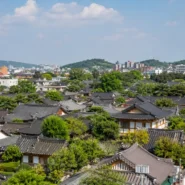
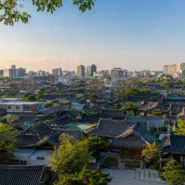
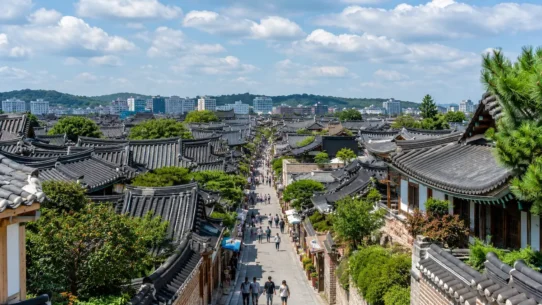
The best time to visit Jeonju is not simply “spring or autumn.” That answer is too vague to help you book anything. Jeonju is a walking-heavy city, so the difference between a dry 20°C afternoon and a humid 30°C afternoon can completely change how much you enjoy the Hanok Village, Gyeonggijeon Shrine, Omokdae and the food streets around Nambu Market. Cherry blossom season looks irresistible in photos, but the bloom window is short and popular weekends can feel far busier than the city does in ordinary weeks. Summer has long daylight, yet the combination of humidity, heat and Korea’s rainy season can make a simple sightseeing route feel exhausting. Winter is quieter and can be cheaper for some room types, but daylight is shorter and cold snaps make outdoor wandering less forgiving.
There is another pricing trap: there is no single “cheap season” that applies to every accommodation category. A current KAYAK hotel-price snapshot for Jeonju lists September as the cheapest hotel month and May as the most expensive, while its guesthouse and hostel data show different patterns. Treat monthly averages as a direction, not a guarantee. In Jeonju, the smarter move is to compare your exact dates against weekends, Korean public holidays and major events before you assume a season will be cheap.
The 1-Min Cheat Sheet
- March to April — best for cherry blossoms and spring atmosphere: Choose this if seasonal scenery is the main reason for your trip. March can still feel chilly, while April is milder. Expect more uncertainty around bloom timing and more competition for good hanok stays on peak blossom weekends.
- May to June — best for comfortable sightseeing before peak summer: May is one of the easiest months for long days on foot, but it can also be an expensive month for hotels. Late June becomes more humid and starts moving toward the rainy-season risk window.
- July to August — best only if your dates are fixed: Average highs reach roughly 29–30°C, humidity is high, and July is the wettest month in Jeonju’s recent climate averages. Early starts, long café breaks and flexible indoor backup plans are essential.
- September to November — best overall balance: September can still feel summery at first, October is the sweet spot for walking, and early November can bring attractive autumn color. Watch Chuseok and October public-holiday weekends because transport and accommodation demand can jump.
- December to February — best for quieter streets and winter mood: This period suits food-focused travelers, photographers who like subdued winter scenes and visitors who do not mind cold weather. January averages around 4°C by day and -5°C at night in recent Jeonju climate data.
Top Survival Tips
- Do not confuse Japan’s Golden Week with a Korean public holiday. Japan’s Golden Week can affect Japan–Korea airfare demand in late April and early May, but it does not shut down Jeonju. For local crowd and transport planning, pay closer attention to Korean holidays such as Children’s Day, Buddha’s Birthday, Chuseok and Seollal, plus event weekends.
- Check the Jeonju International Film Festival calendar before booking late April or early May. In 2026 the festival ran from April 29 to May 8. Even if you are not attending, a major city event can tighten central accommodation and make restaurants or evening areas feel busier.
- Book blossom trips with flexibility, not wishful thinking. Korea’s cherry blossom forecasts are updated close to spring, and full bloom usually follows shortly after opening. A forecast made weeks in advance is not a guarantee; warm weather can accelerate flowering and rain can knock petals down quickly.
- Summer rain does not mean all-day rain every day. The bigger problem is unpredictability: a dry morning can turn into a heavy shower or thunderstorm later. Pack shoes that can handle wet pavement, keep a compact umbrella, and avoid building a minute-by-minute outdoor schedule.
- Humidity matters more than the headline temperature. A 29–30°C day in the Hanok Village can feel much harder than the number suggests because you are walking on exposed streets, climbing viewpoints and stopping for photos rather than sitting in air conditioning.
- For autumn foliage, early November is safer than late November. Foliage timing shifts every year, but travelers planning for the second half of November risk arriving after the strongest color has passed. If leaves are important, keep your dates flexible and check the current-year forecast.
- Weekday versus weekend can matter as much as month. Jeonju Hanok Village is a popular domestic destination. If you can sleep in Jeonju Sunday through Thursday instead of Friday or Saturday, you often gain quieter mornings and more room choice.
- Stay overnight if you care about atmosphere. Day-trippers concentrate in the middle of the day. Early morning and evening are when the lanes feel more relaxed, which is especially valuable during blossom season and autumn weekends.
- Do not overpay for “perfect” Hanok Village proximity if you sleep lightly. A traditional hanok stay can be memorable, but floor bedding, sound insulation and room size vary. Sometimes a modern hotel 10–20 minutes away offers better sleep for less money.
- Compare exact dates instead of trusting seasonal averages. Jeonju pricing is event-sensitive. Check Booking.com and Agoda for your actual nights, then compare refundable rates before committing.
The Full Experience
🌸 March to April: Best for Cherry Blossoms, but Timing Is a Gamble
Tags: Cherry blossoms · Cool-to-mild weather · Photogenic streets · Higher timing risk · Busy spring weekends
If you are choosing Jeonju because you want hanok rooftops framed by spring flowers, this is the obvious window. But March and April are not one continuous “perfect spring.” Recent Jeonju climate averages put March around 12°C by day and 1°C at night, while April is closer to 17°C by day and 6°C at night. That means early March can still require a proper jacket, especially in the morning and after sunset.
Cherry blossoms in Korea usually move from the warmer south toward the north from late March into early April, and the exact timing changes every year. Jeonju sits in a useful middle zone for spring travel, but that does not make the bloom predictable months in advance. The common mistake is booking three non-refundable nights because a forecast graphic says “April 3,” then discovering that a warm week brought the flowers out early—or that rain stripped them soon after peak.
Best strategy: if blossoms are essential, reserve refundable accommodation for a wider window and make the final call when the current-year forecast and weather pattern become clearer. If blossoms are only a bonus, mid-April is less stressful because you can enjoy comfortable sightseeing even if the peak bloom has passed.
✅ What Other Travelers Say
Spring-focused Jeonju travel videos consistently emphasize how well the Hanok Village works for slow walking, café stops and photography. Traveler discussions around Korea’s blossom season also repeat the same warning: peak bloom can move, and a rainy weekend can shorten the best viewing window dramatically.
⚠️ The Catch (Things to Keep in Mind)
Blossom weekends are not the time to hunt for last-minute hanok bargains. Late April can also overlap with the Jeonju International Film Festival period depending on the year, adding another layer of demand. If your only goal is pleasant weather rather than flowers, May or October is easier to plan.
🌿 May to June: Best for Comfortable Sightseeing, but May Can Cost More
Tags: Comfortable walking · Long daylight · Green scenery · Strong food-and-café weather · Rising humidity in late June
For first-time visitors who want to walk all day without obsessing over one seasonal event, May is one of Jeonju’s easiest months. Recent climate averages sit around 23°C by day and 12°C at night. You can comfortably move between Gyeonggijeon, Jeondong Cathedral, Nambu Market, Jaman Mural Village and Omokdae without the heat management required in midsummer.
The downside is price. A current KAYAK hotel snapshot places May at the expensive end of Jeonju’s monthly hotel averages. That should not be treated as a universal fixed price—different room types show different patterns—but it is a useful warning against assuming “shoulder season” automatically means cheap. May also contains Korean public holidays, and the Jeonju International Film Festival often falls around late April to early May.
June is more complicated. Average highs rise to about 26°C and average humidity climbs. Early June can still be very manageable, but by late June Korea is moving into the period when Changma, the summer rainy season, becomes more relevant. The rain pattern is not necessarily a continuous wall of rain; the planning problem is that outdoor-heavy itineraries become harder to predict.
Best strategy: choose early to mid-May if comfort is your top priority, or early June if you want a chance of better room value while accepting warmer conditions. For late June, book flexible activities and make sure at least half your itinerary has indoor alternatives.
✅ What Other Travelers Say
Jeonju vlogs filmed around late spring and early summer often show why this period works: visitors can rent hanbok, walk long stretches of the village, sit outdoors and still have energy for evening food stops. Travelers also tend to value staying overnight rather than rushing back to Seoul after a full day.
⚠️ The Catch (Things to Keep in Mind)
May is not automatically a bargain month, and late June is not automatically dry just because the formal rainy-season dates vary. If price matters more than temperature, compare May and September before deciding.
🔥 July to August: Worst for Walking—Heat, Humidity and Rain
Tags: Hot · Humid · Wettest stretch · Long daylight · Strong air-conditioning dependence
I would not choose July or August for a first Jeonju trip unless school holidays, work schedules or a wider Korea itinerary leave you no alternative. The reason is simple: Jeonju rewards walking, and midsummer makes walking the least pleasant. Recent climate averages put July at roughly 29°C / 22°C with around 87% average humidity, and August around 30°C / 23°C with about 85% humidity. July also has the highest monthly rainfall in the recent Jeonju climate dataset used for this guide.
The biggest misconception is thinking you can solve summer by carrying an umbrella. Rain is only one part of the problem. Humidity slows you down, shaded lanes can still feel sticky, and hanbok rental becomes much less appealing if you are uncomfortable in layered clothing. Even short climbs to viewpoints can feel disproportionally tiring in the afternoon.
That does not mean summer Jeonju is impossible. It means you need a different travel style. Start around 7:00–8:00 a.m., do your longest outdoor walk before lunch, use museums, cafés and restaurants as planned cooling breaks, and return outdoors after 5:00 p.m. Avoid scheduling a tight Seoul-bound evening connection if thunderstorms or road traffic could derail your day.
Best strategy: if summer is unavoidable, late August can sometimes be preferable to the wettest part of July, but heat can still linger. Keep your booking refundable until the short-range weather forecast becomes useful.
✅ What Other Travelers Say
Korea travel discussions repeatedly describe July and August as doable but physically draining, with travelers recommending early starts and realistic pacing. Summer walking footage from Jeonju shows the city is still attractive, but it also makes clear how exposed many sightseeing routes are.
⚠️ The Catch (Things to Keep in Mind)
This is the easiest season to underestimate. If you normally struggle with humid weather, do not assume “30°C is fine.” The combination of moisture, walking, hills and sudden rain is what wears people down. Summer can also include domestic holiday demand, so bad weather does not necessarily guarantee bargain accommodation.
🍂 September to November: Best Overall Balance, Especially October
Tags: Best overall balance · Lower humidity · Autumn foliage · Comfortable walking · Holiday-weekend spikes
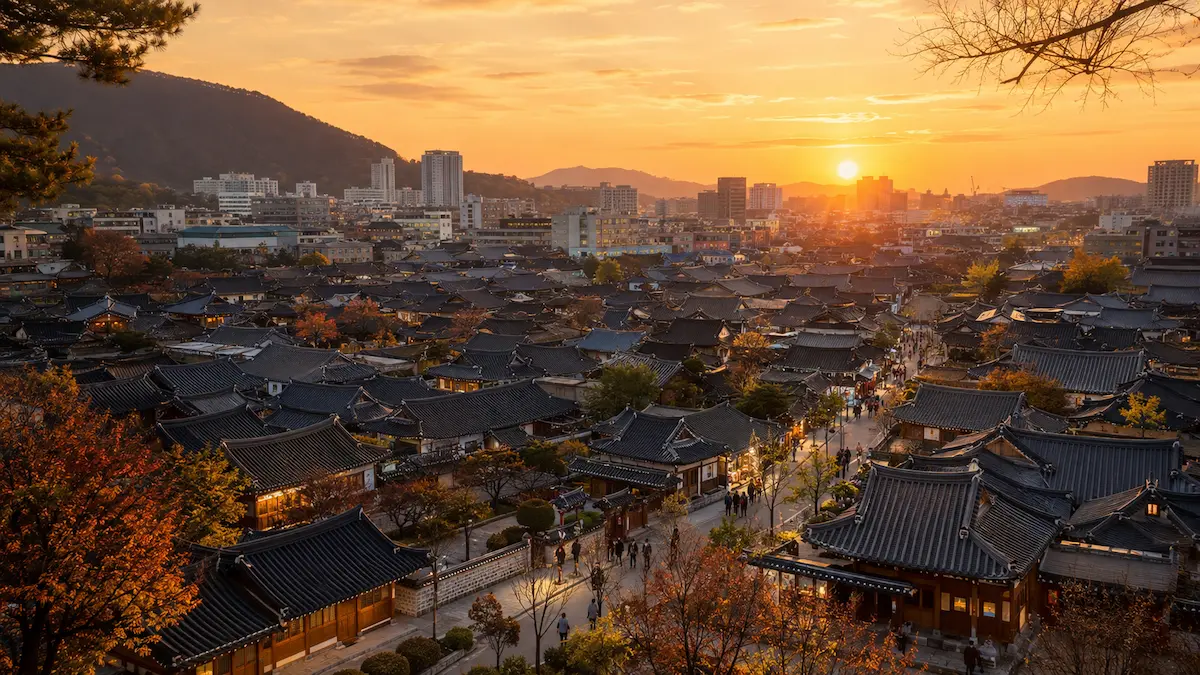
If you want one answer that minimizes regret, choose October. September can still begin warm—recent averages are around 26°C / 17°C—but October cools to roughly 20°C / 10°C with much lower rainfall than midsummer. Those numbers are close to ideal for the kind of slow, outdoor-heavy sightseeing Jeonju does best.
October is also forgiving. If foliage arrives a little early or late, you still have pleasant weather. If a restaurant has a queue, waiting outside is tolerable. If you decide to climb Omokdae twice for better light, the weather is less likely to punish you for it. This is why autumn consistently earns strong traveler feedback across Korea, especially for hanok villages and historic districts.
September deserves more attention from value-conscious travelers. A current KAYAK snapshot lists it as Jeonju’s cheapest hotel month on average for its hotel dataset, though this can vary by property type and date. The important caveat is Chuseok, one of Korea’s biggest traditional holidays. Its Gregorian dates change every year, and transport demand can become intense as people travel around the country.
November is a split month. Early November can be excellent for foliage and cool-weather walking; late November is much less reliable for leaves and starts feeling distinctly wintry. If autumn color is a major goal, do not deliberately push your trip into the final week of November just to chase lower prices.
Best strategy: target mid-October for the easiest weather decision, or late October to early November if foliage is a priority. Check Chuseok and October holiday dates before booking trains or buses.
✅ What Other Travelers Say
Traveler discussions often call autumn the easiest season for Korea because temperatures are comfortable for hiking and wandering historic neighborhoods. Jeonju-specific autumn videos highlight the same strengths: café hopping, hanok stays, night walks and makgeolli outings are easier when you are not fighting heat or cold.
⚠️ The Catch (Things to Keep in Mind)
“Autumn” is not automatically quiet. Chuseok can complicate transport, October weekends are popular for domestic trips, and foliage-focused day tours can increase demand around Jeonju and nearby Naejangsan. For calmer streets, stay overnight and explore the Hanok Village before the day-trip crowds arrive.
❄️ December to February: Best for Quiet Streets and Winter Mood, Not Long Outdoor Days
Tags: Cold · Quieter atmosphere · Short daylight · Possible snow · Good for food-focused trips
Winter Jeonju is underrated if you like food, cafés, quiet streets and atmospheric photos more than long outdoor itineraries. Recent climate averages put December near 6°C / -3°C, January around 4°C / -5°C, and February around 6°C / -3°C. Snow can make hanok roofs look beautiful, but it is a bonus—not something you should expect on demand.
The good part is pace. Outside Christmas, New Year periods, Seollal and specific weekend spikes, you can often find the city less frantic than during blossom or foliage season. Winter is also a good time to lean into Jeonju’s strongest year-round asset: food. Bibimbap, kongnamul-gukbap, makgeolli with side dishes, tea houses and café stops all work perfectly well when the weather outside is cold.
The trade-off is daylight. Around the winter solstice, Jeonju has substantially less daylight than in June, so a late start wastes a meaningful part of the sightseeing day. Cold mornings and icy patches can also make hanok lanes less pleasant for travelers with mobility issues.
Best strategy: stay one or two nights, begin outdoor sightseeing soon after breakfast, and plan the afternoon around warm indoor stops. If you want a snow-covered Hanok Village, keep expectations flexible and watch the short-range forecast rather than booking months ahead for snow.
✅ What Other Travelers Say
Winter Jeonju videos often focus on the mood: snow on tiled roofs, quiet cafés and slower streets. Travelers who enjoy winter Korea frequently appreciate the dry cold and strong indoor heating, but they also warn that late December and January can feel much colder than many first-time visitors expect.
⚠️ The Catch (Things to Keep in Mind)
Seollal can change opening hours and transport patterns, and not every small business follows the same holiday schedule. Snowfall is unreliable, daylight is short, and a traditional floor-sleeping hanok experience is not automatically comfortable for everyone. Check bedding details and heating reviews before paying extra for “authenticity.”
How I Would Choose the Month
- If this is your first Jeonju trip: October.
- If cherry blossoms are non-negotiable: late March to early April, with flexible bookings and a final forecast check.
- If you want the best walking weather before summer: May, especially early to mid-month.
- If you are hunting for hotel value: compare September first, then check June and winter dates by accommodation type instead of assuming one universal low season.
- If you hate heat and humidity: avoid July and August.
- If you want autumn color: late October to early November, with the current-year foliage forecast checked before you lock non-refundable transport.
- If you want quiet streets more than perfect weather: January or February outside Seollal.
Key FAQs
What is the best month to visit Jeonju for good weather and fewer crowds?
October is the best overall compromise. Temperatures are usually comfortable for long walks, humidity is much lower than in summer, and you avoid the fragile timing problem of cherry blossom season. Choose a weekday stay if you also want the Hanok Village at its calmest.
Is Jeonju worth visiting during cherry blossom season in late March or early April?
Yes—if the blossoms are a bonus rather than the only reason for your trip. The scenery can be excellent, but peak bloom is short and can shift with temperature, wind and rain. Book refundable accommodation, check the latest Korea blossom forecast, and avoid assuming one exact date months in advance.
How bad is the rainy season in Jeonju in June and July?
It is disruptive mainly because it is unpredictable, not because every day is guaranteed to be a washout. Korea’s Changma season usually becomes relevant from late June into July, and Jeonju’s recent climate averages show July as the wettest month. You can still travel, but you should build indoor alternatives into every day and avoid tight outdoor schedules.
Final Verdict and Your Next Step
For most travelers, the best time to visit Jeonju is October. It gives you the strongest balance of comfortable weather, manageable rain risk, good walking conditions and seasonal atmosphere without forcing your entire trip to depend on a one-week blossom window. May is my second choice for easy sightseeing, but hotel rates can be less forgiving. Late March to early April is worth the gamble for cherry blossom fans. July and August are the months I would avoid if you have any flexibility, especially if your ideal Jeonju trip involves long walks, hanbok photos and outdoor viewpoints.
If your dates overlap with Chuseok, Seollal, a Korean long weekend, the Jeonju International Film Festival or a major autumn event, book earlier than you normally would. Jeonju has plenty of accommodation overall, but the rooms people actually want—well-reviewed hanok stays and comfortable hotels within easy walking distance of the village—are the first to disappear on high-demand dates.
Check your exact dates before prices move: