


💡 Key Takeaways
- Best weather: December to February is Bangkok’s easiest period for walking, temples and day trips, with much less rain and slightly lower temperatures. The trade-off is peak-season demand, busier attractions and usually firmer hotel rates.
- Best balance of weather and value: Late November is the sweet spot I would target first, with February another strong option. May to June is better for budget-focused travelers who can tolerate heat, humidity and sudden showers.
- Biggest traps: April is brutally hot and Songkran can completely change how the city functions, while September and October are the months most likely to punish a rigid outdoor itinerary with heavy rain and localized flooding.
Choosing the best time to visit Bangkok is less about finding one perfect month and more about deciding which compromise you can live with. Bangkok does not have a cherry-blossom season, Japan’s Golden Week problem, or a cold winter with short sightseeing days. The real planning equation is tropical heat, monsoon rain, festival crowds, air quality and hotel demand. Thai Meteorological Department climate normals show why this matters: April has an average maximum temperature of about 35.4°C, September averages roughly 334.3 mm of rain, while December averages only around 6.3 mm. Those numbers translate directly into how far you will want to walk, how often you need an indoor backup plan, and how much flexibility your schedule requires.
The headline answer is simple: December to February has the most comfortable weather, late November offers one of the best all-round compromises, and May to June can deliver better value if you do not mind rain. But travelers who book only by a generic “dry season” or “rainy season” label often miss the details that matter. April heat can be more exhausting than first-time visitors expect. A rainy-season forecast does not automatically mean all-day rain. Songkran is brilliant if you want a giant citywide water festival and frustrating if you planned a normal sightseeing day. And the supposedly perfect cool season can still bring high prices, large crowds and occasional PM2.5 pollution episodes.
The 1-Min Cheat Sheet
- March to April: Best for travelers who want Songkran and do not mind serious heat. March is hot; April is usually the hotter and more disruptive month. Great energy, poor choice for heat-sensitive travelers or anyone planning long daytime walks.
- May to June: One of the better value windows. The rainy season begins in earnest, but many days still have usable sightseeing hours. Expect humidity, sudden heavy showers and more need for flexible timing.
- July to August: Wet and humid, but not automatically a washout. This period can work well for bargain hunters who are happy to mix temples with malls, food courts, museums, spas and cafes. Build in weather buffers.
- September to November: Do not treat these three months as one season. September and October are among Bangkok’s wettest months; November improves dramatically and can become one of the year’s best times to visit, especially later in the month.
- December to February: Best overall weather and easiest period for first-time sightseeing. It is also the most obvious high-season choice, so book earlier and expect more competition for good-value hotels, popular restaurants and prime riverfront experiences.
Top Survival Tips
- Do not panic when every day shows a rain icon. In Bangkok’s wet season, a forecast of thunderstorms can mean an intense burst in the afternoon or evening rather than twelve hours of continuous rain. The smarter move is to keep one indoor attraction near each outdoor cluster instead of cancelling the whole day.
- Choose your hotel by transit access, not just room price. A cheaper hotel that requires a 20-minute exposed walk becomes far less attractive when it is 34°C, extremely humid or raining hard. Staying within a short walk of BTS or MRT stations can save more time and frustration than a small nightly discount.
- Heat changes what a “walkable” itinerary means. On a map, the Grand Palace, Wat Pho and nearby riverside stops can look manageable. In April heat, direct sun and humidity make the same distances feel much longer. Start major temples early, use the hottest midday hours for lunch, malls, museums, massage or hotel downtime, and return outdoors in late afternoon.
- Songkran is not a normal sightseeing window. Around the mid-April Thai New Year celebrations, major entertainment areas and streets can become packed with water fights. Protect phones, passports and cameras, expect to get wet in festival zones, and do not build a tightly timed itinerary that depends on dry clothes or predictable road traffic.
- Wet-season street flooding is often local, but local is enough to ruin your plan. After a strong downpour, some low-lying sois and intersections can temporarily hold water even when another part of Bangkok is fine. Allow extra transfer time before dinner reservations, airport trips, river cruises or ticketed evening activities.
- Do not assume the dry season means perfect air. Bangkok can experience elevated PM2.5 during the cooler, drier months. Before scheduling a full day of outdoor markets and walking, check Bangkok’s official air-quality information and adjust if pollution levels are poor.
- Low season is not automatically the cheapest for your exact dates. Hotel prices move with weekends, concerts, conventions, school holidays and promotions. Use the season as a starting point, then compare live refundable rates across several booking sites.
- Keep one weather-proof evening option. Rooftop bars, outdoor river cruises and night markets are fantastic when conditions cooperate, but heavy rain can reduce the experience quickly. A good Bangkok plan always has an indoor food hall, restaurant, spa or mall as Plan B.
- If your Thailand trip includes islands, do not copy Bangkok’s weather logic onto the beaches. Thailand’s coastal regions have different monsoon patterns. A month that is acceptable in Bangkok can be much less suitable for a specific island, so plan the city and beach legs separately.
The Full Experience
🔥 March to April: Best for Songkran, but Not for Heat-Sensitive Travelers
Tags: Peak heat · Songkran · High daytime heat stress · Night-first itinerary
March and April are the months when Bangkok’s heat becomes a central part of the itinerary rather than background weather. Thai Meteorological Department climate normals put the average maximum at about 34.3°C in March and 35.4°C in April. April is not simply “warm beach weather”; for travelers spending hours around temple compounds, markets and exposed pavements, the accumulated heat can drain energy surprisingly fast.
April’s great exception is Songkran, Thailand’s New Year celebration in mid-April. If you actively want water fights, street energy and one of Thailand’s most famous festivals, this can be an unforgettable time to be in Bangkok. If you want quiet photography, neatly planned restaurant transfers and normal sightseeing conditions, the same festival can feel like a logistical obstacle. Areas such as Silom and Khao San Road can become the experience rather than merely places you pass through.
A practical schedule in this period is to treat 7:30 a.m. to late morning as premium outdoor time. Use midday for air-conditioned museums, shopping centers, lunch, spas or a hotel break, then return outside near sunset. This sounds conservative until you spend an hour on exposed stone courtyards in April.
✅ What Other Travelers Say
Traveler reports are remarkably consistent on one point: April is very hot, but it is still workable when the day is designed around air-conditioning, cafe stops and evening activities. Festival-focused visitors often consider the atmosphere worth the discomfort, while sightseeing-focused travelers are more likely to say they underestimated how much the heat slowed them down.
⚠️ The Catch (Things to Keep in Mind)
Do not choose April just because the photos of Songkran look fun. Heat, dehydration risk, wet electronics, crowded festival zones and altered traffic patterns can all affect the trip. If Songkran is the reason you are coming, lean into it and book accordingly. If it is not, March is usually easier than mid-April, and the cool season is considerably more comfortable.
🌧️ May to June: Best Value Sweet Spot Before Peak Monsoon
Tags: Early rainy season · Better-value potential · Hot and humid · Flexible sightseeing
May and June are underrated if your priority is balancing cost with a trip that still feels usable. Rain increases sharply compared with the dry season, but “rainy season” is a poor description if it makes you imagine uninterrupted rain from breakfast to bedtime. Storms can be intense, yet there are often substantial dry periods before or after them.
The climate normals also show why simple month labels are misleading: May averages about 247.7 mm of rain, while June averages around 157.1 mm. Real years vary, of course, but the larger lesson is that rainfall does not increase in a perfectly smooth line from May onward. You need flexibility more than you need fear.
This period works especially well for travelers who enjoy Bangkok’s indoor strengths: food courts, Michelin-listed street food alternatives, spas, malls, galleries, cafes and museums. Plan one major outdoor block early in the day, keep a second activity under cover, and avoid making a rooftop bar the only reason your evening is successful.
✅ What Other Travelers Say
Many traveler accounts describe June rain as disruptive for an hour or two rather than a guaranteed all-day washout. A common pattern is a usable morning followed by a later downpour. Visitors who remain flexible often report that the lower-season atmosphere is a fair trade for carrying an umbrella and occasionally changing plans.
⚠️ The Catch (Things to Keep in Mind)
Humidity is high, pavement can become slick, and a sudden storm can make short taxi or ride-hailing trips much slower. If your itinerary depends on sunset photography, outdoor dining every night or precise river schedules, the savings may not feel worth it. For budget-conscious travelers with a mixed indoor-outdoor plan, however, May to June is one of Bangkok’s strongest compromises.
🌦️ July to August: Best for Deal Hunters Who Can Pivot
Tags: Rainy season · Short heavy showers common · Summer travel demand · Strong indoor backup needed
July and August sit firmly in the rainy season, but Bangkok remains very visitable for travelers who understand what that means operationally. The Thai Meteorological Department’s long-term normals show roughly 175.1 mm of rain in July and 219.3 mm in August, still below the much wetter September and October averages. Daytime highs remain around the low 30s Celsius, so the bigger comfort issue is often humidity rather than temperature alone.
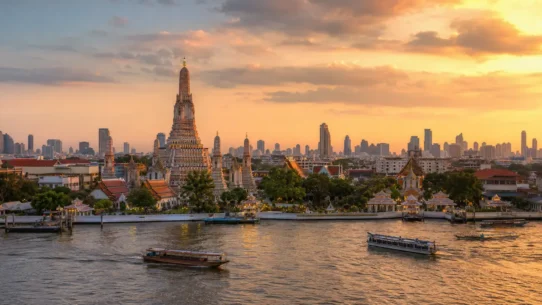
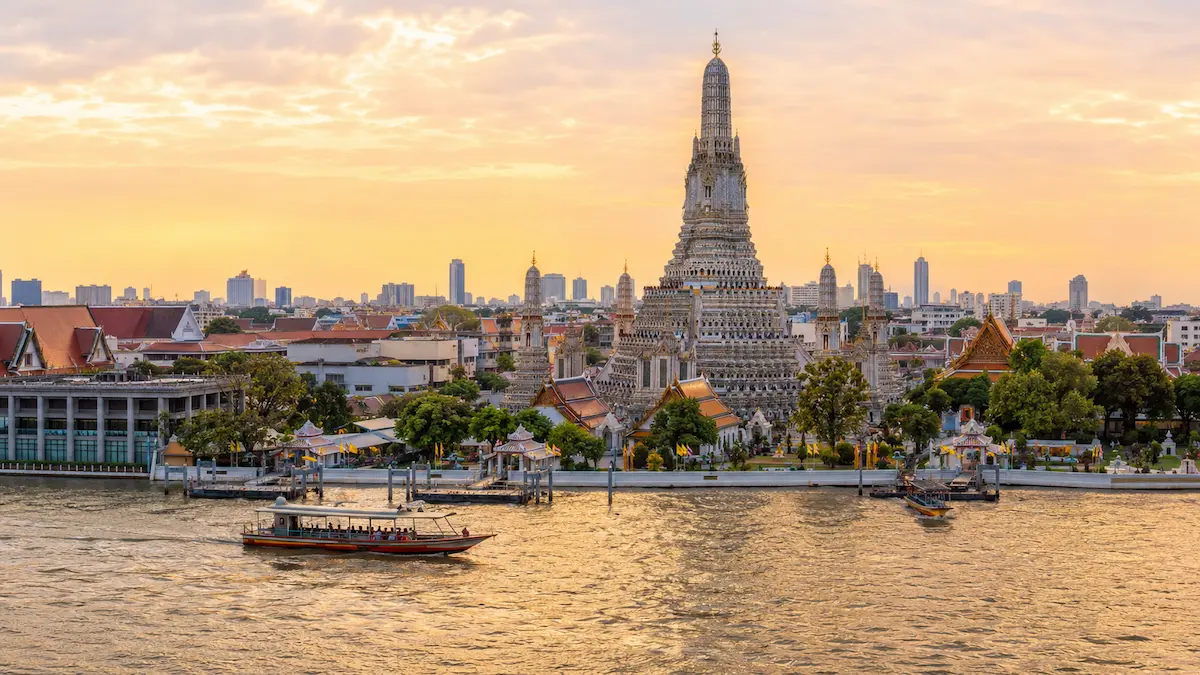
The best strategy is a modular itinerary. Pair an outdoor stop with something nearby that works in bad weather: Wat Arun with a riverside cafe, Chatuchak or a neighborhood walk with an indoor mall later, or an early temple morning with an afternoon massage. When skies are clear, take the outdoor opportunity immediately rather than saving it for a theoretically prettier time later in the day.
This can also be a sensible period for travelers who care more about hotel quality than guaranteed blue skies. The key is to compare live rates rather than assuming every property will be discounted; summer holidays and events can still create pockets of demand.
✅ What Other Travelers Say
Travelers commonly report that July and August rain arrives in concentrated bursts, sometimes for an hour or two, with usable weather around it. Reports of temporary water buildup on smaller streets also appear regularly. That combination explains why some visitors love the value while others remember the inconvenience more than the savings.
⚠️ The Catch (Things to Keep in Mind)
The problem is not simply getting wet. A heavy storm at the wrong time can delay road transfers, kill a rooftop sunset, change river conditions and turn a short walk into an unpleasant one. If your trip is only two nights long and every activity is outdoors, this is a weak choice. If you have four or five days and can reshuffle plans, it can work very well.
🌧️➡️✨ September to November: Worst Weather First, Then a Huge Upgrade
Tags: September-October wettest · November turns drier · Loy Krathong · Excellent late-season shoulder
This is the period most likely to be misunderstood by month-by-month guides. September, October and November should not be bundled together as though they offer the same trip. Bangkok’s climate normals average about 334.3 mm of rain in September and 292.1 mm in October, but only about 49.5 mm in November. That is a dramatic shift.
September is the month I would be most cautious about if rain would ruin your trip. Cheap hotel rates can look tempting, and plenty of visitors still get enjoyable days, but the probability of weather-related disruption is materially higher. October remains wet, though conditions often begin trending toward the seasonal transition. By November, Bangkok becomes much easier for walking, river trips and full-day sightseeing.
November also brings Loy Krathong, a photogenic Thai festival associated with floating offerings and riverside celebrations. Its date follows the lunar calendar and changes each year, so verify the exact date before booking around it. Riverfront locations can become significantly busier on festival nights.
✅ What Other Travelers Say
September traveler experiences vary widely: some people report only brief showers, while others encounter repeated heavy rain and street flooding. That inconsistency is exactly the point. November feedback is generally much more favorable because outdoor plans become easier and the city feels closer to dry-season conditions.
⚠️ The Catch (Things to Keep in Mind)
Do not assume November 1 behaves exactly like December 15. Seasonal transitions are not a switch, and individual years vary. If you want the best odds within this period, target the second half of November rather than early September or October. Around Loy Krathong, book riverfront activities and well-located hotels early if those are priorities.
🌤️ December to February: Best Weather, Highest Demand
Tags: Driest and coolest · Peak season · Best for walking · PM2.5 watch
For a first trip to Bangkok, December to February is the safest recommendation if weather matters more than price. Long-term climate normals show December with an average maximum around 31.7°C and only about 6.3 mm of rain, January around 32.5°C with 13.3 mm, and February around 33.3°C with 20.0 mm. This is still tropical weather, not sweater season, but lower rainfall and less oppressive humidity make full sightseeing days much easier.
This is when Bangkok rewards travelers who want to walk through historic districts, spend longer at temples, take river boats without constantly checking storm radar, and combine the city with nearby day trips. It is also when many other travelers reach the same conclusion.
Christmas, New Year and other holiday periods can tighten hotel inventory and raise prices. If your dates are fixed, a refundable room booked early is a much safer strategy than waiting for an imagined last-minute bargain. December and January are the strongest weather picks; February is slightly warmer but can still be an excellent balance once the New Year rush has passed.
✅ What Other Travelers Say
Traveler feedback often describes December and January as the most pleasant months for long days outdoors. The consistent downside is crowding: popular temples, riverfront venues, markets and well-reviewed hotels are more competitive than in the rainy season.
⚠️ The Catch (Things to Keep in Mind)
Cool season does not mean perfect conditions every day. Bangkok authorities regularly monitor PM2.5 during the drier part of the year, and poor-air episodes can occur from roughly December into March. Travelers with asthma or other respiratory sensitivity should check official air-quality readings before committing to a long outdoor day. Prices and crowd levels can also jump around Christmas and New Year.
So, What Is the Best Month to Visit Bangkok?
If I had to narrow the entire calendar to one practical recommendation, I would choose late November for the best overall balance. Rainfall drops sharply compared with September and October, outdoor sightseeing becomes easier, and you can sometimes avoid the strongest Christmas and New Year demand of December. It is not guaranteed to be cheap, and weather never follows a calendar perfectly, but the trade-off is excellent.
If your priority is weather above everything else, choose December or January. If your priority is value, look first at May and June, then July and August if you are comfortable with rain. If you are heat-sensitive, avoid April. If a few hours of heavy rain would seriously damage a short, tightly scheduled trip, avoid September and be cautious with October.
Sources & Methodology
This guide prioritizes long-term climate data and official local information over generic season labels, then uses traveler reports as a reality check for how weather feels on the ground. Climate averages are not forecasts, and hotel prices are dynamic, so use these sources to choose a period and then check current conditions before travel.
- Thai Meteorological Department: Bangkok 30-year climate normals
- Tourism Authority of Thailand: November-February cool-season overview
- Tourism Authority of Thailand: Songkran festival information
- Bangkok official air-quality monitoring
Key FAQs
What is the best month to visit Bangkok for good weather and fewer crowds? Late November is one of the best compromises because Bangkok is moving firmly into the drier season but has not yet reached the full Christmas and New Year peak. February is another good choice if you want dry weather with slightly less holiday pressure than late December, although air quality should still be checked.
Is Bangkok worth visiting during the rainy season from May to October? Yes, especially if you have several days and can move activities around. May to August can offer good value with many usable sightseeing hours between showers. September and October require more caution because long-term rainfall totals are much higher and localized flooding can create transport delays.
Does Bangkok have a cherry blossom season, and is it worth planning around? No. Bangkok is not a cherry-blossom destination, so planning a Bangkok trip around “sakura season” is a category error carried over from Japan travel advice. Some cooler parts of northern Thailand can have pink wild Himalayan cherry blossoms in the cool season, but Bangkok’s travel calendar should be based on heat, monsoon rain, festivals, crowds and air quality instead.
Final Verdict and Your Next Step
Choose December to January for the best weather, late November for the best all-round balance, and May to June for stronger value. July and August are workable for flexible bargain hunters. April is worth it mainly for Songkran lovers or travelers who handle heat well. September and October are the months I would avoid first if your schedule is short, rigid or heavily dependent on outdoor activities.
Once you have narrowed your dates, compare live refundable hotel rates instead of assuming a season is automatically cheap. For December to February, Songkran and major festival dates, booking earlier gives you more choice and protects you from being forced into a poor location later.