


💡 Key Takeaways
- Best overall balance: May and October usually give you the strongest mix of comfortable walking weather, long sightseeing days, and a lively atmosphere without the physical punishment of midsummer.
- Biggest weather trap: July to August can look manageable on a temperature chart, but heat plus humidity plus sudden heavy rain makes a long Hwaseong Fortress walk far more tiring than many first-time visitors expect.
- Best value: Winter can be cheaper and quieter, but January is genuinely cold. If price matters more than scenery, compare late February and non-holiday winter weekdays before assuming cherry blossom season is worth the premium.
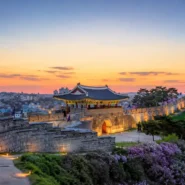
The best time to visit Suwon depends less on one “perfect” month and more on which compromise you are willing to make. Cherry blossom season can be gorgeous, but blossom timing shifts with the weather and the prettiest weekends attract more day-trippers. Summer brings lush green walls and long evenings, yet high humidity and rain can turn a fortress walk into a sweaty endurance test. Korea’s rainy season does not mean nonstop rain every day, but it does make outdoor plans less predictable. Autumn offers the easiest weather for most travelers, although festivals and Korean public holidays can create local crowd spikes. Winter is calmer and often easier on the budget, but daylight is shorter and exposed fortress sections can feel brutally cold in wind.
One correction that matters when planning Suwon: do not use Japan’s Golden Week as your main crowd calendar. It can influence regional airfare and some inbound travel, but Suwon’s local pressure points are more directly tied to Korean holidays, school/family travel periods, major weekends, and events such as the Suwon Hwaseong Cultural Festival. For example, in 2026, Chuseok falls on September 24–26, while the Suwon Hwaseong Cultural Festival is scheduled for October 4–11. Those dates are more relevant to local transport, crowds, and short-stay demand than a Japan-only holiday calendar.
The 1-Min Cheat Sheet
- March to April: Best for spring atmosphere and cherry blossoms. Choose this if photography matters more than price certainty. March is still chilly; early-to-mid April is the stronger target, but bloom timing is never guaranteed.
- May to June: Best for first-time visitors who want comfortable walking and fewer seasonal gimmicks. May is excellent; early June is still workable, while late June becomes more humid and increasingly rain-sensitive.
- July to August: Best only if summer is your only option or you prefer long evenings and green scenery. This is the period most likely to punish ambitious walking plans with heat, humidity, and downpours.
- September to November: Best overall season. Late September through October is especially strong for fortress walks, evening sightseeing, and events. Early September may still feel summery; late November turns cold quickly.
- December to February: Best for quieter sightseeing, winter photos, and deal hunters. The catch is real cold, possible ice, shorter daylight, and holiday disruptions around Christmas, New Year, and Seollal.
Top Survival Tips
- Do not plan the full fortress wall by default. Suwon Hwaseong is roughly 5.7 km around, and a full circuit is a different experience in 31°C heat, freezing wind, or slippery rain than it is on a mild October afternoon. A shorter northern-wall section plus Hwaseong Haenggung and Haenggung-dong is often the smarter first visit.
- Treat blossom forecasts as a moving target. Korea Tourism Organization’s 2026 forecast put Seoul’s first bloom around April 3 and peak bloom roughly a week later, while explicitly warning that real bloom dates can shift with weather. Suwon is close to Seoul but should not be treated as having a guaranteed identical peak date.
- Rainy season is an itinerary risk, not a reason to assume “all-day rain.” The practical problem is uncertainty: one heavy shower can ruin a long exposed wall walk even when the rest of the day is dry. Keep Starfield Suwon, museums, cafés, and markets as indoor or semi-indoor fallback options.
- Start early on hot or busy days. In midsummer, aim to do the exposed fortress sections in the morning, take a long indoor break, then return around sunset. In spring and autumn, arriving before the late-morning day-trip wave can noticeably improve photos and walking comfort.
- Check Korean holidays before booking transport. Seollal and Chuseok are the big ones because domestic travel surges and some small businesses close. Children’s Day and long weekends can also raise family traffic at popular attractions.
- Do not assume autumn means instant foliage on September 1. Early September can remain warm and humid. If colored leaves are the goal, late October into early November is generally a safer visual bet than September.
- Compare Seoul and Suwon hotel prices, not just Suwon alone. Many travelers visit Suwon as a day trip. Staying overnight can be smart during festivals or if you want evening illumination, but if your Seoul hotel is already paid for, moving hotels may erase any room-price saving.
- Build a weather escape into the route. Haenggung-dong cafés, traditional markets, and Starfield Suwon make a big difference when rain, heat, cold, or poor air quality turns a “walk all day” plan into a bad idea.
- Spring air can be the hidden variable. Even on a mild April day, haze, fine dust, or Asian dust can reduce long-distance views. Check the Korea Meteorological Administration forecast and local air-quality readings before committing to panoramic photo plans.
The Full Experience
🌸 March to April: Best for Cherry Blossoms, but Not for Bargain Hunters
Best for: Cherry blossoms · spring photography · first warm-weather trips · romantic walks | Watch out for: variable bloom dates · chilly March mornings · weekend crowds · spring haze
March is a transition month rather than full spring. Typical daytime highs rise from roughly 7°C to 14°C through the month, while nights can still fall close to freezing. That matters in Suwon because the fortress is exposed: a sunny afternoon can feel pleasant, then the temperature drops quickly after sunset.
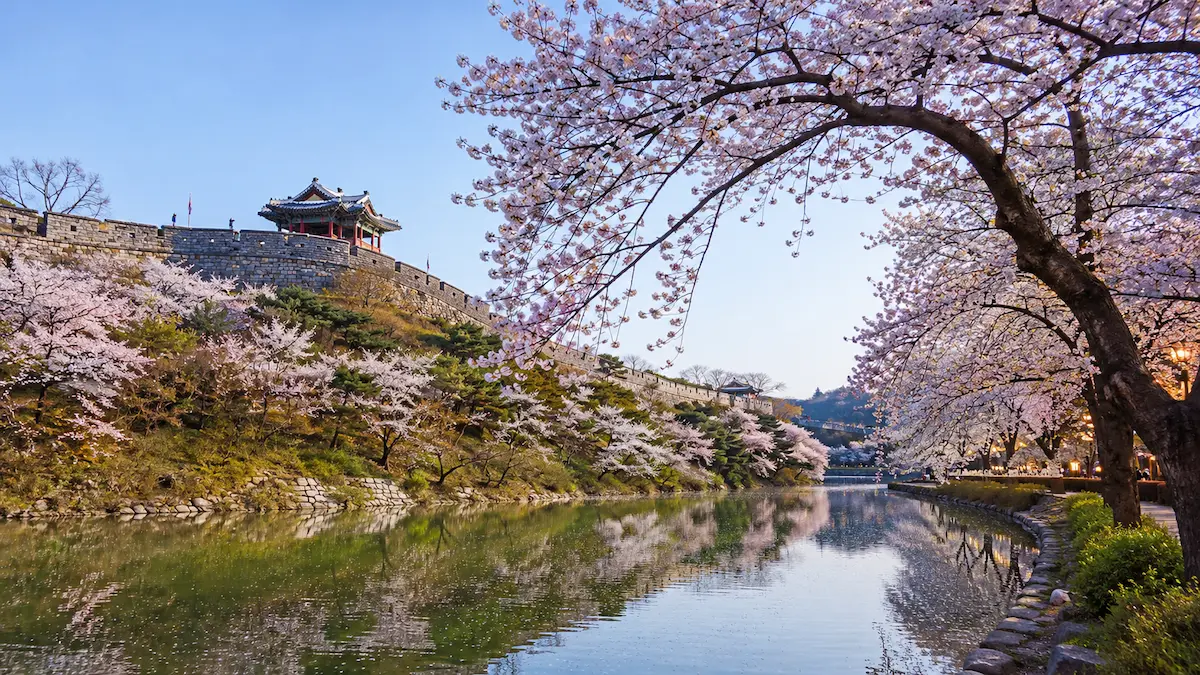
April is much easier. Typical highs rise from about 14°C to 21°C through the month, which is close to ideal for walking. The reason travelers obsess over this period, of course, is blossom season. In 2026, the official Korea Tourism Organization forecast estimated Seoul’s first cherry blossoms around April 3 and peak bloom about a week later. Suwon, in the same wider capital region, often follows a similar broad window, but exact local timing can still move by several days. If blossoms are the entire reason for your trip, keep dates flexible and recheck forecasts shortly before departure.
Is cherry blossom season worth it? Yes for photographers, couples, repeat Korea visitors, and anyone who is genuinely willing to pay more for a narrow visual window. No for travelers whose top priorities are low prices, empty photo spots, or a fixed non-refundable schedule. A calm late-April day after peak bloom can actually be a better sightseeing experience than a packed peak-blossom Saturday.
✅ What Other Travelers Say: Traveler reviews frequently describe April as one of the easiest months for sightseeing when the weather cooperates. Seasonal Suwon videos and local spring coverage also show why the city works well at this time: blossom-lined water, fresh greenery, and historic walls create much more visual contrast than in late winter. The consistent practical advice is to arrive early if you want photos without people in every frame.
⚠️ The Catch (Things to Keep in Mind): Blossom timing is not guaranteed, and a warm spell, cold snap, rain, or strong wind can shorten the best window. March can still feel winter-like, especially after dark. April weekends can be busier, and spring haze can flatten fortress views. If you only have one Suwon day, do not build the whole trip around one specific tree being in full bloom.
🌿 May to June: Best for Comfortable Walking and First-Time Visitors
Best for: fortress walks · café hopping · long sightseeing days · balanced weather | Watch out for: warmer late-June humidity · holiday weekends · rain risk increasing toward summer
May is one of the easiest months to recommend. Typical highs climb from about 21°C to 25°C, and mornings are usually cool enough to start walking without immediately looking for air-conditioning. Flowers and greenery are still attractive, yet you are no longer chasing a one-week blossom window.
This is also the period where Suwon feels most flexible. You can walk a meaningful section of the fortress, spend time around Hwaseong Haenggung, stop for lunch near the markets, and still have energy for Starfield Suwon or an evening return to the walls. For a first-time visitor who wants history, food, cafés, and photos in one day, May is arguably the safest all-round choice.
June is more complicated. Early June can still be excellent, with warm evenings and plenty of daylight. By late June, humidity rises and the rainy-season pattern becomes a bigger planning factor. You may still get beautiful dry days, but the cost of a bad weather day becomes higher because so much of Suwon’s appeal is outdoors.
✅ What Other Travelers Say: Recent independent trip reports often describe Suwon as feeling more local and less overwhelmingly touristy than central Seoul, and May itineraries regularly combine the fortress with Haenggung-dong cafés and modern attractions. That mix works especially well in mild weather because you can alternate walking with indoor breaks instead of racing between air-conditioned spaces.
⚠️ The Catch (Things to Keep in Mind): May includes several Korean public-holiday dates in some years, which can increase family traffic. Late June can become sticky and storm-sensitive quickly. If your trip falls after mid-June, pack for both sun and sudden rain and avoid scheduling your longest walk as the one activity you absolutely cannot move.
🔥 July to August: Best for Long Evenings, Worst for Long Walks
Best for: summer greenery · night views · late sunsets · travelers who tolerate heat well | Watch out for: humidity · heavy rain · heat stress · sudden itinerary changes
This is the period I would tell most walking-focused travelers to avoid if they have a choice. Typical July highs rise from around 28°C to 30°C, with warm nights around 20–23°C. Early August is usually the hottest point of the year, with typical highs around 30°C. Those numbers do not sound catastrophic until you add high humidity, direct sun, stone paths, hills, and limited shade on exposed sections of the fortress.
The rainy-season issue is also frequently misunderstood. It does not mean that every day is a complete washout. The bigger problem is that rainfall can be concentrated and intense, making timing less reliable. You can wake up to dry weather, start the fortress, and still get caught by a heavy shower later. Korea Meteorological Administration also issues dedicated heavy-rain and heatwave alerts, so checking conditions the morning of your visit is more important in summer than in spring or autumn.
If July or August is your only option, redesign the day instead of trying to travel as if it were October. Do a shorter fortress section early, move indoors around midday, eat slowly, explore Starfield Suwon or a museum, then return to Hwaseong after the worst heat has passed. Night views can be excellent, and summer greenery is genuinely beautiful when the weather cooperates.
✅ What Other Travelers Say: Summer traveler reports are unusually consistent: people love how green Suwon looks but underestimate how exhausting the heat feels on the walls. One recent discussion described travelers sweating heavily and needing aggressive air-conditioning breaks. That is not a reason to cancel Suwon; it is a reason to cut the walking distance and change the time of day.
⚠️ The Catch (Things to Keep in Mind): Heat plus humidity is the real problem, not temperature alone. Thunderstorms or heavy rain can shorten outdoor hours. August can also bring heatwave conditions. If your ideal Suwon day involves a full fortress circuit, archery, markets, café hopping, and sunset photos, midsummer gives you the lowest margin for error.
🍁 September to November: Best Overall Weather, Festivals and Autumn Color
Best for: first visits · fortress walking · festivals · autumn photos · evening sightseeing | Watch out for: warm early September · Chuseok · October event crowds · fast cooling in November
If someone asked me to choose one broad season with the fewest regrets, this would be it. September cools gradually: typical highs fall from around 28°C at the start of the month to about 23°C by the end. Early September can still feel humid, so it is not automatically “autumn weather” just because the calendar says September.
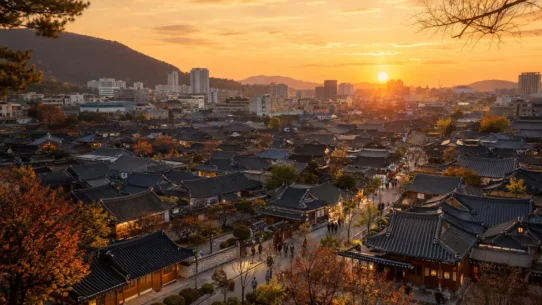
October is the sweet spot. Typical highs drop from roughly 23°C to 16°C through the month, while cooler evenings make the fortress much more comfortable for long walks and night photography. The trade-off is events. The Suwon Hwaseong Cultural Festival is one of the city’s biggest annual draws, and for 2026 it is scheduled for October 4–11. That is fantastic if you want performances and atmosphere, but not ideal if your goal is the quietest possible old-town experience.
Late October into early November is the better target for autumn color. November cools quickly, with typical highs falling from about 16°C to 7°C. The first half can still be excellent for crisp walks; by the end of the month, it begins to feel much more like winter.
✅ What Other Travelers Say: Autumn Suwon content consistently focuses on walking, photography, fortress views, and the combination of historic architecture with colored foliage. Travelers also tend to describe October as a good month for spending several hours outdoors rather than rushing between indoor stops. The season is popular for a reason: it suits what Suwon is best at.
⚠️ The Catch (Things to Keep in Mind): Check Chuseok dates carefully. In 2026, Chuseok falls September 24–26, when domestic movement surges and some smaller businesses may close. October festival dates can create busier weekends. If you want autumn color without the biggest event crowds, late October weekdays or early November can be a smarter compromise.
❄️ December to February: Best for Lower Crowds and Winter Deals, but Cold Is the Price
Best for: quieter streets · winter photography · lower-season hotel shopping · indoor-outdoor itineraries | Watch out for: freezing temperatures · icy paths · shorter daylight · Seollal closures
Winter Suwon can be atmospheric, especially after fresh snow, but it is not a “mild cold.” Typical December highs fall from about 7°C to 2°C. January is the coldest stretch, with typical daytime highs around 2°C and nighttime lows around -8°C. February slowly improves, but mornings can still be well below freezing.
The upside is space. Outside holiday periods, you are less likely to fight spring blossom crowds or autumn festival traffic. Crisp, clear winter days can produce excellent fortress views, cafés feel genuinely useful rather than decorative, and you can structure the trip around short outdoor bursts.
For bargain hunters, late January and February can be worth checking, but do not assume every winter date is automatically cheap. Christmas, New Year, school schedules, and especially Seollal can distort availability and transport. In 2026, Seollal falls February 16–18, and Korea Tourism Organization notes that many businesses close during this major family holiday.
✅ What Other Travelers Say: Winter feedback is mixed in a useful way. Some travelers report clear, pleasant fortress walks and enjoy the lack of crowds; others feel the cold makes Suwon less rewarding if they only have a few hours. The difference usually comes down to weather tolerance, clothing, and whether the traveler actually wants to walk outdoors for two or three hours.
⚠️ The Catch (Things to Keep in Mind): Wind makes exposed walls feel colder than the thermometer suggests, and ice can make stairs or slopes less pleasant. Snow is beautiful but not guaranteed. If you hate cold, choosing winter purely to save a modest amount of money can be a false economy because you may spend less time doing the outdoor sights you came for.
Key FAQs
What is the best month to visit Suwon for good weather and fewer crowds?
May is the easiest all-round recommendation, while late October can be even better for walking if you avoid major festival weekends. May gives you mild-to-warm weather without relying on cherry blossom timing; late October offers cooler air and possible autumn color. For the fewest crowds, choose a weekday rather than obsessing over one exact month.
When is cherry blossom season in Suwon, and is it worth visiting?
Early to mid-April is the most realistic planning window, but the exact peak changes every year. In 2026, the official forecast put nearby Seoul’s first bloom around April 3 and full bloom roughly one week later. It is worth it if blossoms are a major trip goal; it is less compelling if you dislike crowds, need fixed non-refundable dates, or care more about value than photos.
Should I avoid Suwon during Korea’s rainy season in July?
Not automatically, but you should avoid a rigid all-outdoor itinerary. July is hot, humid, and rain-sensitive, and heavy showers can disrupt fortress walking even when it does not rain all day. If you must visit in July, start early, keep a strong indoor backup plan, and leave the longest exposed walks for the coolest, driest forecast window.
Final Verdict and Your Next Step
Choose May if you want the easiest first trip. Choose early-to-mid April if cherry blossoms are the priority and you accept timing risk. Choose late October if you want the best combination of walking weather, atmosphere, and autumn scenery. Choose winter if lower crowds and potential savings matter more than outdoor comfort. And if you have flexibility, July and August are the months I would move first—not because Suwon is bad in summer, but because the city’s signature experience is walking outdoors, exactly what heat, humidity, and heavy rain interfere with most.
Once your dates are narrowed down, compare accommodation before prices move. Check Suwon hotels on Agoda and Suwon hotels on Booking.com. If you prefer a guided day trip from Seoul, compare the currently listed Suwon Hwaseong Fortress tour on Klook and Suwon Hwaseong night tour on KKday. Book earlier for cherry blossom weekends, Korean holiday periods, and the October festival window; if your dates are flexible, recheck prices across weekdays before paying.
Affiliate disclosure: Some booking links above may earn travelstayguide.com a commission at no extra cost to you. Availability, prices, cancellation rules, and tour schedules can change; always confirm the final booking page before payment.
Planning Sources and Verification Notes
This guide uses long-term Suwon weather patterns, current official 2026 holiday and festival information, official blossom forecasts, live booking pages, and traveler reports. YouTube selections were chosen from clearly season-relevant Suwon results surfaced during research; view counts and search rankings change over time, so “most popular” should be treated as a live-search snapshot rather than a permanent ranking.
- Korea Tourism Organization: Climate
- Korea Meteorological Administration
- Korea Tourism Organization: 2026 Cherry Blossom Forecast
- Korea Tourism Organization: 2026 Public Holidays
- Suwon Hwaseong Festival Official Site
- WeatherSpark: Suwon Year-Round Weather Averages
- Traveler discussion: summer walking conditions
- Traveler discussion: winter fortress experience