
💡 Key Takeaways
- Suwon Station is the safest all-round choice for most first-time visitors if you are arriving from Seoul, using KORAIL trains, carrying large luggage, or staying only one or two nights. The trade-off is simple: you are not actually next to Hwaseong Fortress.
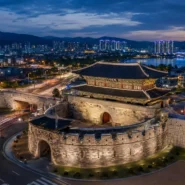
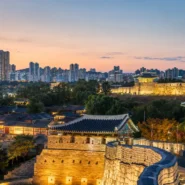
- Haenggung-dong is the best area for atmosphere and sightseeing on foot. Stay here if the fortress, Haenggung Palace, cafés and evening walks are the reason you came to Suwon. Avoid it if you hate buses, taxis or dragging luggage away from a rail station.
- Ingye-dong around Suwon City Hall is the best compromise for restaurants, nightlife and hotel choice. It has a metro station and a wider range of proper business hotels than the historic core, but it feels more like a local downtown than a sightseeing district.
- Gwanggyo is polished, modern and family-friendly but usually poor value for a fortress-focused first trip. It makes much more sense if you want direct Shinbundang Line access toward Gangnam, Gwanggyo Lake Park, the convention center or an upscale hotel.
- Yeongtong and Mangpo are niche choices. They can save time for Samsung Digital City, Kyung Hee University or southeast Suwon, but most leisure travelers will spend too much time commuting back toward the historic center.
If you are trying to decide where to stay in Suwon for your first visit, the difficult part is not finding a hotel. It is understanding that Suwon’s useful transport hubs, historic sights, nightlife streets and newer business districts are spread across different parts of the city. A hotel that looks “central” on a booking site can still leave you taking a bus with a suitcase, while a hotel beside the fortress can be wonderfully atmospheric but inconvenient for repeated trips to Seoul. The right area depends less on which neighborhood sounds nicest and more on what you are doing at 8:00 a.m., what you are doing after dinner, and how much luggage you are willing to move.
This guide takes a deliberately practical approach. I would rather tell you that a pretty neighborhood is annoying with a 23-kilogram suitcase than pretend every district is “perfect for everyone.” Hotel prices below are planning ranges rather than fixed quotes; Suwon rates move by weekday, event dates, season and room type. Current 2026 listings show everything from roughly US$30 budget rooms to US$170-plus upscale stays, so the gap between neighborhoods is meaningful. Always compare your exact dates before paying.
The 1-Min Cheat Sheet
- Suwon Station: Best overall for first-time visitors, KTX/KORAIL connections, Line 1, the Suin-Bundang Line, airport-bus access, short stays and heavy luggage. Biggest drawback: you still need a bus or taxi for the fortress area.
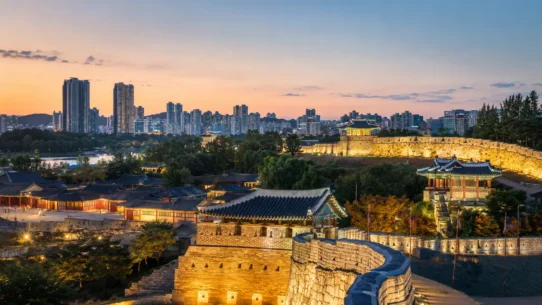
- Haenggung-dong / Hwaseong Fortress: Best for sightseeing, cafés, K-drama atmosphere and evening fortress walks. Biggest drawback: no metro station in the neighborhood and fewer full-service hotels.
- Ingye-dong / Suwon City Hall: Best for nightlife, late dinners, a broad hotel range and a more convenient city-center feel. Biggest drawback: lively streets can be noisy and the historic sights are not outside your door.
- Gwanggyo Jungang / Lake Park: Best for upscale hotels, families, modern surroundings, shopping and direct Shinbundang Line access toward Gangnam. Biggest drawback: usually the most expensive area and relatively far from old Suwon.
- Yeongtong: Best for Samsung-related business trips, Kyung Hee University, local restaurants and travelers who need eastern Suwon. Biggest drawback: inconvenient for a sightseeing-first itinerary.
- Mangpo: Best for value stays in southeast Suwon and travelers with work or family commitments nearby. Biggest drawback: limited tourist appeal and a lodging stock that leans more toward local business hotels and motel-style properties.
Top Survival Tips Before You Book a Hotel in Suwon
- Do not assume Suwon Station means “next to Suwon Hwaseong.” This is the single most common planning mistake. The fortress and Haenggung Palace sit northeast of the railway station, so you normally continue by local bus or taxi. The Suwon Museum of Art’s official access instructions, for example, direct visitors from Suwon Station onto local buses before walking the final few minutes. Why it matters: if your dream trip is sunrise-to-night walks around the walls, saving US$10 at the station can cost you two extra last-mile transfers every day.
- Choose your Seoul connection before choosing your Suwon hotel. If you expect to go back and forth to central Seoul, Suwon Station is the simplest base because it combines Line 1, the Suin-Bundang Line and mainline rail services. If most of your Seoul time is in Gangnam, Gwanggyo becomes much more logical because the Shinbundang Line runs directly toward Gangnam and Sinsa. Why it matters: “close to Seoul” means very different things depending on which side of Seoul you actually need.
- With large luggage, prioritize a station entrance or airport-bus stop over a prettier street. The current Gyeonggi Airport Limousine stop list includes Suwon Station, with the Suwon stop by Exit 13 of the underground shopping area. That can be far easier than arriving in Suwon and then changing onto a city bus with two suitcases. Why it matters: a ten-minute luggage transfer feels much longer when platforms, crossings and rush-hour crowds are involved.
- Check the exact hotel entrance, not just the map pin. Suwon Station is a large transport-and-shopping complex connected with major retail facilities. A property described as “near Suwon Station” can still be on the opposite side of busy roads or beyond the nightlife streets. Why it matters: 500 meters through a mall, underground passage and crowded pavement is not the same as 500 meters on a quiet flat street.
- Cheap rooms around Suwon Station, Ingye-dong and Mangpo deserve a second look at the fine print. Some lower-priced properties are designed primarily for short local stays rather than international tourists. Check check-in time, front-desk hours, window type, non-smoking policy, luggage storage and whether the room photographs match the exact room category you are booking. Why it matters: a US$30 room can be excellent value, but “cheap and central” is not automatically the same thing as “easy for a first-time foreign visitor.”
- Haenggung-dong reduces transport but increases walking. Hwaseong Fortress itself stretches for about 5.7 kilometers and the Paldalsan section adds slopes. Staying nearby is wonderful if you enjoy walking, but not if your goal is to minimize every step. Why it matters: travelers with knee issues, strollers or very young children may prefer a taxi-friendly business hotel in Ingye-dong and visit the fortress in shorter sections.
- For light sleepers, stay one or two blocks away from the nightlife core. Suwon Station Rodeo Street and Ingye-dong both become lively after dark. That does not make them bad or inherently unsafe areas; the practical issue is noise, smoking outside bars, late-night groups and vehicle traffic. Why it matters: a room facing the main entertainment street can undo the convenience you paid for.
- Do not be afraid to use a taxi for the last mile. Suwon is exactly the kind of city where one short taxi ride can turn a clumsy bus-and-bag transfer into a painless arrival. Why it matters: if two people are sharing the fare, the time and effort saved can be more valuable than forcing every journey onto public transport.
Planning note: Rail, airport-bus and hotel information in this guide was checked against current operator pages and major booking platforms in August 2026. Hotel prices are indicative only and can change at any time. YouTube video pages were checked live; creators can change availability or embed permissions after publication.
The Full Experience
📍 Suwon Station: Best Overall for First-Time Visitors and Heavy Luggage
Best for: first trip · one- or two-night stays · Seoul connections · KORAIL/KTX · airport bus · shopping · heavy luggage
If I had to recommend one Suwon area to a first-time visitor without knowing anything else about their trip, I would pick Suwon Station. It is the least romantic answer and often the smartest one. Think of it the way you might choose Shinagawa in Tokyo: not because it has the prettiest evening streets, but because it removes friction from the parts of the trip that are most annoying when you are tired and carrying bags.
Suwon Station is served by Seoul Subway Line 1 and the Suin-Bundang Line, and it is also a KORAIL mainline station. That gives you more ways to enter and leave Suwon than any other neighborhood in this guide. It is also surrounded by shopping, food and entertainment, including the station-side retail complex and Rodeo Street. For a traveler coming from Seoul, Busan or another Korean city, being able to get off the train and reach the hotel without another citywide transfer has real value.
The transport catch: the fortress is not at Suwon Station. For Hwaseong Haenggung, Paldalmun and the museum area, expect a bus or taxi after you arrive. In practical terms, I would still choose Suwon Station over Haenggung-dong if you have big suitcases, an early train, a late arrival, or several rail-heavy day trips. I would choose Haenggung-dong instead if most of your Suwon time will be spent around the fortress and you are staying at least two nights.
Nighttime feel: the streets around the east side of the station are busy, bright and convenient rather than peaceful. Rodeo Street has restaurants, bars, karaoke and late-night activity. Solo travelers who like having people around may enjoy this. Families and light sleepers should avoid rooms directly facing the busiest entertainment lanes and look for a higher floor or a hotel attached more closely to the station complex.
Typical hotel budget: this is one of the easiest areas in Suwon for price flexibility. Current 2026 listings have shown S Stay Hotel around the high-US$30s to US$50s on some dates, while Novotel Ambassador Suwon can sit around the US$100-plus level. A sensible planning range is roughly US$35–60 for a simple room and US$90–130 for a stronger full-service option, before date-specific spikes.
✅ What Other Travelers Say
Recent Booking.com feedback for S Stay repeatedly highlights the ability to walk to Suwon Station, nearby malls and Rodeo Street. Novotel reviews similarly emphasize the station-side location as its biggest practical advantage. That matches what the map suggests: travelers who value a clean arrival and departure day tend to forgive the fact that the fortress is not walkable from the station.
⚠️ The Catch (Things to Keep in Mind)
The station district is busy and visually messy in places, and some inexpensive lodging sits among entertainment or motel-heavy streets. If you booked Suwon specifically for lantern-lit fortress walks, waking up beside a railway hub may feel like a compromise. You also need to budget time for the last leg to Haenggung-dong every day. My rule: choose Suwon Station when transport convenience is more important than atmosphere.
📍 Haenggung-dong & Hwaseong Fortress: Best for Sightseeing and Local Atmosphere
Best for: Hwaseong Fortress · Haenggung Palace · cafés · K-drama locations · couples · photographers · evening walks
Haenggung-dong is where I would stay if Suwon itself is the trip, not just the place where you sleep. This is the neighborhood that makes an overnight stay feel meaningfully different from a rushed day trip out of Seoul. You can walk to the fortress, Haenggung Palace, Paldalmun-side markets, café streets and photogenic low-rise alleys without spending the first and last hour of each day commuting.
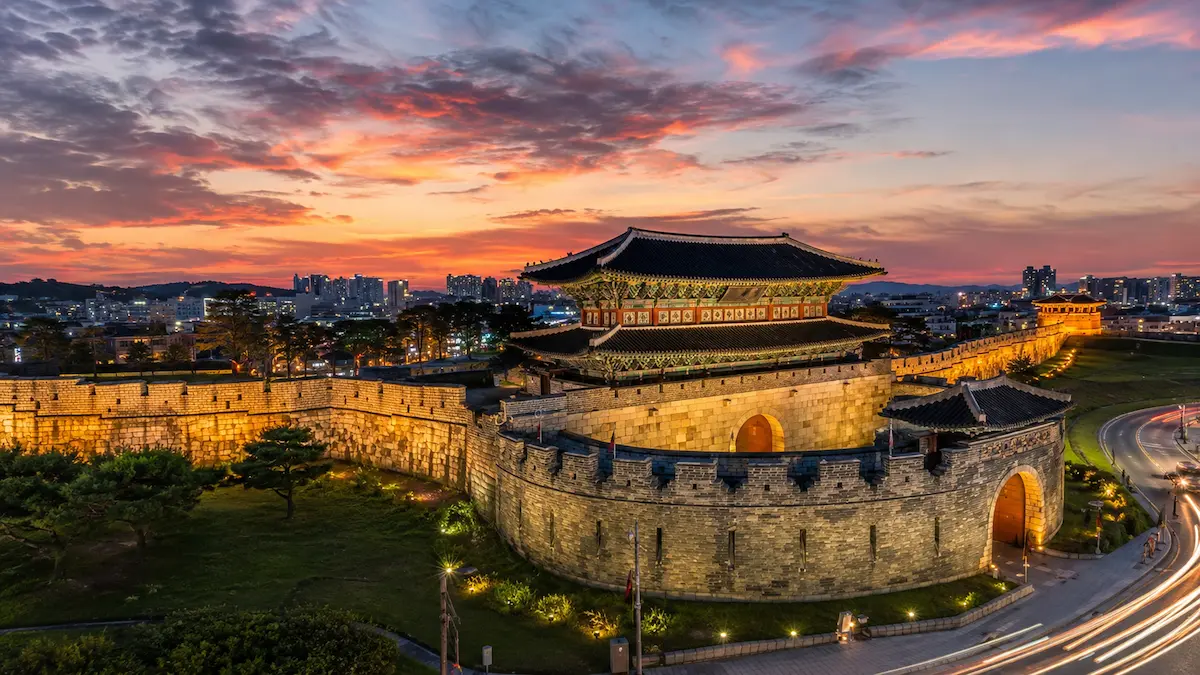
The biggest advantage appears after the day-trippers leave. The walls, gates and pavilions are especially atmospheric toward sunset and after dark, and staying nearby means you can enjoy them without watching the clock for a return train to Seoul. Haenggung-dong also has the strongest sense of place among the areas in this guide: small cafés, converted old buildings, mural lanes and independent shops make it feel more intimate than Suwon’s newer districts.
The transport reality: there is no metro station in the middle of Haenggung-dong. From Suwon Station, visitors normally connect by local bus or taxi. This is fine once you have checked in and dropped your bags; it is less pleasant when you are arriving during rain, rush hour or with multiple suitcases. If your accommodation is inside a narrow lane, a taxi may not stop directly at the door either.
Nighttime feel: lively around restaurants and cafés in the evening, then generally calmer than Ingye-dong or Suwon Station’s nightlife streets. That makes it appealing to couples and travelers who want to walk after dinner without committing to a bar district. It is not silent everywhere, especially on weekends, but the overall energy is sightseeing-and-dining rather than club-and-karaoke.
Typical hotel budget: Haenggung-dong has more guesthouses, small hotels, apartments and design stays than large international hotels. Current listings have shown Dono1796 around the mid-US$30s on lower-rate dates, while newer or more stylish whole-unit stays can rise well above that. For planning, I would think in terms of roughly US$35–90 for many standard options, with boutique stays and multi-person apartments varying more widely.
✅ What Other Travelers Say
Traveler feedback around the fortress repeatedly praises location over luxury. One Booking.com guest at Hwaseong Guesthouse specifically highlighted being only a few steps from Paldalmun and the palace area, while Haenggung Street reviews often focus on the small alleys, cafés and ability to wander. That is exactly why you book this district: not because the hotel inventory is superior, but because the neighborhood becomes part of the trip.
⚠️ The Catch (Things to Keep in Mind)
The lack of a metro station is the obvious downside, but there is another one: walking convenience is not the same as physical ease. The fortress route is long, Paldalsan is hilly and some historic streets are less suitcase-friendly than a modern station district. Travelers with mobility concerns may actually do better in Ingye-dong or Suwon Station and use taxis strategically. My rule: choose Haenggung-dong when sightseeing atmosphere matters more than rail convenience.
📍 Ingye-dong / Suwon City Hall: Best for Nightlife, Food and Hotel Choice
Best for: nightlife · late dinners · business hotels · couples · solo travelers · Suin-Bundang Line · longer stays
Ingye-dong is Suwon’s most useful “middle ground.” You are not beside the fortress, but you are also not trapped in a purely residential district. Around Suwon City Hall Station and Na Hye-seok Street you get dense restaurants, cafés, bars, convenience stores and one of the city’s broadest selections of recognizable hotels.
For travelers who like to return to the hotel, shower, then walk out again for dinner and drinks, Ingye-dong works better than Haenggung-dong. It also has Suwon City Hall Station on the Suin-Bundang Line, which means a straightforward rail connection to Suwon Station and onward connections across the metropolitan network. The district feels modern and local rather than touristic, which is a plus if you want to see where Suwon residents actually spend their evenings.
Nighttime feel: this is one of the liveliest choices in the city. Restaurants stay busy, neon signage dominates the entertainment lanes and bars can run late. A Hotels.com review from a first-time Suwon visitor praised the area specifically for nightlife and food. That is good news if you want energy and bad news if you booked a street-facing room with a toddler. I would stay near the district, but not necessarily on its noisiest block.
Typical hotel budget: Ingye-dong has the widest spread in this guide. Current Booking.com listings have shown budget rooms around US$30–40, Vella Suite around the low-US$60s, Hotel Arte around US$70, and Four Points by Sheraton Suwon around US$125–140 depending on date and taxes. A realistic planning range is roughly US$30–80 for budget-to-midrange and US$120–170 for an upscale international-style hotel.
✅ What Other Travelers Say
Guests often mention the density of nearby restaurants as a major advantage. Booking.com feedback for Hotel Arte notes how much food is available within a short walk, while Hotels.com feedback for Four Points highlights the district as a good first-time base with strong nightlife and food options. This is one of the few Suwon areas where you can pick your hotel based on room quality without giving up evening convenience.
⚠️ The Catch (Things to Keep in Mind)
Some blocks are distinctly nightlife-oriented, and inexpensive hotels can sit beside bars or short-stay lodging. Read recent reviews for noise and smoke, not just the headline score. For sightseeing, you will still be taking a bus or taxi to Hwaseong Fortress. My rule: choose Ingye-dong if you want the best balance of hotel quality, food and nightlife, but do not mistake it for the historic center.
📍 Gwanggyo Jungang & Lake Park: Best for Upscale Hotels, Families and Gangnam Access
Best for: upscale stays · families · Gwanggyo Lake Park · Galleria · convention center · business travel · Shinbundang Line
Gwanggyo looks fantastic in photos: modern towers, a huge lake park, wide pavements, major shopping and some of Suwon’s most polished hotels. It is also the area most likely to confuse first-time leisure travelers, because it can look “best” on a hotel map while being geographically wrong for the trip they actually planned.
Stay here when your itinerary points north and east, especially toward Gangnam. Gwanggyo Jungang sits on the Shinbundang Line, which runs through Pangyo, Gangnam and onward to Sinsa. The operator’s current timetable shows the full Gwanggyo-to-Sinsa line journey at roughly 42 minutes end to end, with frequent peak and off-peak service. That makes Gwanggyo surprisingly useful for travelers mixing Suwon with southern Seoul business or shopping.
For families, the appeal is different. The neighborhood is newer, more spacious and easier for relaxed walks than the bar streets around Ingye-dong. Gwanggyo Lake Park gives you room to decompress, and the shopping-and-dining infrastructure is strong enough that you do not need to plan every meal. If you are attending an event around the convention center or staying at Courtyard by Marriott Suwon, the whole trip can feel very easy.
Nighttime feel: calmer and more polished than central Suwon. You get restaurants, shopping and illuminated park walks rather than concentrated late-night nightlife. This is one of the better choices for travelers who want a modern environment and do not care about being surrounded by historic character.
Typical hotel budget: Gwanggyo is usually the expensive choice. Current 2026 listings for Courtyard by Marriott Suwon have appeared around US$170 on Booking.com, while other platforms sometimes show higher date-specific ranges. For a good full-service stay, I would budget roughly US$140–250 per night and treat anything significantly below that as a strong deal rather than the normal expectation.
✅ What Other Travelers Say
Courtyard guests frequently praise cleanliness, comfortable rooms and proximity to the park, shopping and restaurants. Agoda review summaries also emphasize the modern infrastructure and views. The positive feedback is believable because the district is designed for exactly that experience: clean, controlled, convenient and newer than old Suwon.
⚠️ The Catch (Things to Keep in Mind)
If you came primarily for Hwaseong Fortress, Gwanggyo adds unnecessary cross-city travel and a higher room bill. Also remember that the Shinbundang Line has an additional fare component compared with the basic metropolitan subway fare. My rule: choose Gwanggyo for Gangnam access, family comfort or an upscale stay—not because it is the “nicest” hotel district on a generic map.
📍 Yeongtong: Best for Samsung, Kyung Hee University and a Local Evening Scene
Best for: business travel · Samsung Digital City · Kyung Hee University · local food · Suin-Bundang Line · longer work stays
Yeongtong is not where I would send a typical first-time tourist, but it can be the smartest area in Suwon if your trip has a specific purpose. The district is on the Suin-Bundang Line, has a dense commercial core around Yeongtong Station, and is much more useful for Samsung-related business, Kyung Hee University and eastern Suwon than the fortress side of town.
The center around the station is easy to live in. There are supermarkets, restaurants, cafés, bars and everyday services within a short walk, so business travelers do not need to spend every evening in a hotel. This is not a dead suburb. Local guides and traveler reviews both describe a surprisingly lively restaurant-and-bar scene, particularly around the commercial streets near the station.
Nighttime feel: active but local. You will see office workers, students and neighborhood groups rather than sightseeing crowds. That can be refreshing after Seoul, but it also means fewer tourist-oriented English signs and less reason to wander if you do not have a destination in mind.
Typical hotel budget: Yeongtong can be excellent value. Current listings have shown Amour/Symphony-style hotels around US$45–75, while The Marevo often lands roughly in the US$65–100 band depending on date. You generally get more room for the money than in Gwanggyo.
✅ What Other Travelers Say
Expedia reviews for Yeongtong properties often mention easy access to restaurants and bars, and guests at The Marevo highlight the concentration of shops and dining nearby. These comments matter more here than tourist-attraction reviews because the value of Yeongtong is everyday convenience, not sightseeing prestige.
⚠️ The Catch (Things to Keep in Mind)
For a fortress-first holiday, Yeongtong is simply too far east to be efficient. You will spend time riding back toward central Suwon for the sights that most first-time visitors came to see. My rule: choose Yeongtong only when your work, university or family plans are already in this part of the city.
📍 Mangpo: Best for Budget-Conscious Work Trips in Southeast Suwon
Best for: lower prices · southeast Suwon · local stays · Suin-Bundang Line · travelers with a specific nearby address
Mangpo is the area I would choose only after looking at the exact address I need to reach. It sits on the Suin-Bundang Line just south of Yeongtong and has plenty of everyday shops, restaurants and residential infrastructure, but very little reason for a first-time leisure visitor to base an entire Suwon trip here.
Where it wins is price and functional convenience. If your meetings, relatives, hospital appointments or work site are nearby, you can often get a clean room without paying Gwanggyo prices. The station also gives you a direct rail link back toward Suwon City Hall and Suwon Station, so you are not isolated.
Nighttime feel: calmer and more residential than Ingye-dong, although there are commercial clusters around the station. This is a practical place to eat, sleep and continue with your schedule rather than a district you book for atmosphere.
Typical hotel budget: many properties around this side of Suwon fall into the US$35–70 range, with local motel-style rooms sometimes lower. Agoda has shown Hotel Joy around the mid-US$40s on some dates, while Korean booking platforms list several highly reviewed local properties near Mangpo Station.
✅ What Other Travelers Say
Recent Korean-platform reviews of properties near Mangpo Station frequently focus on cleanliness, parking and value rather than tourism. That is a useful signal: guests tend to be people who already need to be in the area. If that describes you, Mangpo can work very well.
⚠️ The Catch (Things to Keep in Mind)
The hotel stock is less internationally oriented, and some properties are motel-style accommodations with later check-in times or fewer tourist services. Read room and policy details carefully. You are also adding travel time to almost every major first-time sightseeing stop. My rule: choose Mangpo for a location-specific trip, not for a general Suwon vacation.
Key FAQs
What is the best area to stay in Suwon for first-time visitors without a car?
Suwon Station is the best default because it combines Line 1, the Suin-Bundang Line, mainline KORAIL services, shopping and easy onward buses or taxis. If your trip is almost entirely about Hwaseong Fortress, Haenggung-dong can be better once you have reached the neighborhood and dropped your bags.
Is it better to stay near Suwon Station or Hwaseong Fortress?
Stay near Suwon Station if you are arriving with heavy luggage, taking trains to Seoul or other cities, staying only one night, or leaving early. Stay near Hwaseong Fortress if you want to spend mornings and evenings around Haenggung-dong, walk to the main historic sights, and do not mind using a bus or taxi on arrival and departure. For a two-night leisure stay focused on Suwon itself, I personally prefer the fortress side; for a one-night stop in a longer Korea itinerary, I prefer the station.
Where should I stay in Suwon for nightlife but still have good public transport?
Ingye-dong around Suwon City Hall Station is the strongest choice. You get a dense restaurant-and-bar scene plus access to the Suin-Bundang Line, and the hotel range runs from inexpensive rooms to Four Points by Sheraton. Suwon Station also has nightlife around Rodeo Street, but Ingye-dong feels more like a complete evening district rather than a transport hub with nightlife attached.
Final Verdict and Your Next Step
For most first-time visitors, I would rank the choices in this order: Suwon Station for convenience, Haenggung-dong for the best Suwon experience, Ingye-dong for nightlife and hotel choice, and Gwanggyo for upscale comfort or Gangnam access. Yeongtong and Mangpo are excellent only when your itinerary already gives you a reason to be there.
If you are still undecided, use one simple test: where do you want to be when you wake up? If the answer is “on a train quickly,” book Suwon Station. If the answer is “walking to Hwaseong Fortress before the crowds,” book Haenggung-dong. If the answer is “somewhere with dozens of dinner choices and a proper hotel,” book Ingye-dong. If the answer is “in a modern district with an easy ride toward Gangnam,” book Gwanggyo.
Suwon is usually cheaper than central Seoul, but the best-value rooms near stations and the small number of well-located fortress stays can disappear first on busy weekends and event dates. Once your dates are fixed, I would compare refundable rates early rather than waiting for a last-minute bargain.
Check current Suwon hotel availability:
Compare Suwon hotels on Agoda
Compare Suwon hotels on Booking.com
If you prefer a guided Suwon day or night tour from Seoul:
Check Suwon Hwaseong tours on Klook
Check Suwon Hwaseong night tour options on KKday