
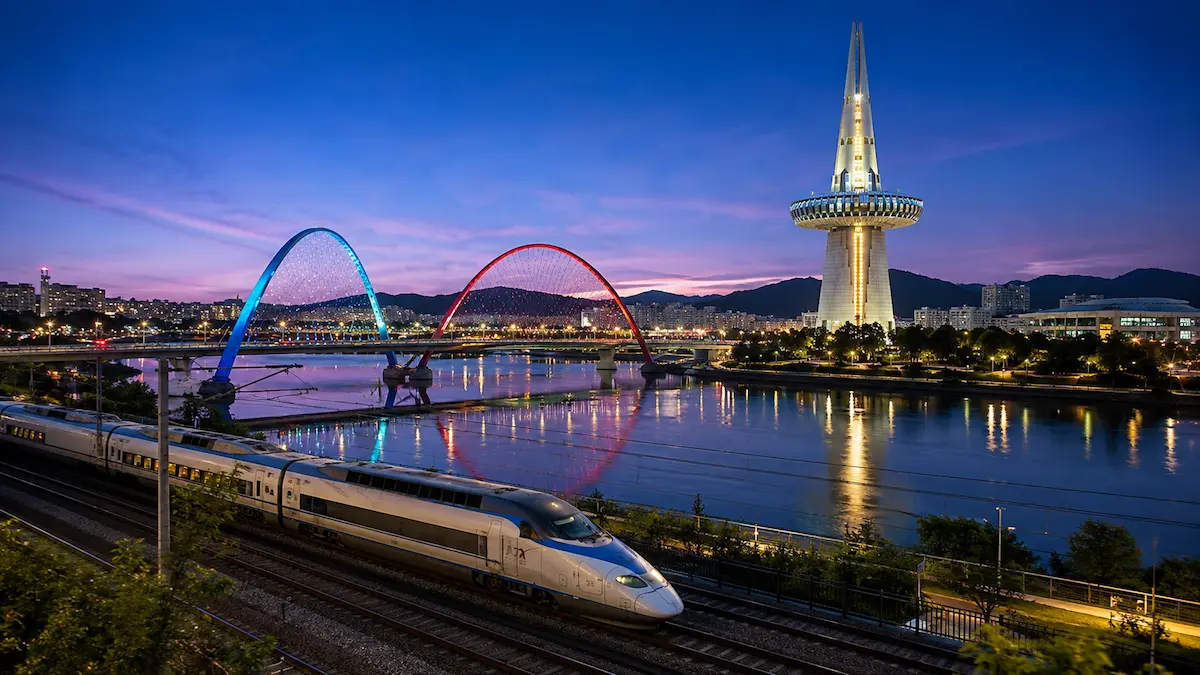
💡 Key Takeaways
- Do not plan Daejeon like Seoul. The city currently has one operating subway line, so buses and short taxi hops often complete the trip. A T-money or EZL card is usually more useful than chasing an “unlimited” local transit pass.
- The biggest first-timer mistake is choosing the wrong station or bus terminal. Daejeon Station, Seodaejeon Station, Daejeon Complex Terminal, Government Complex stops and the new Yuseong Complex Terminal are not interchangeable.
- If you use city buses, tap your transit card when you board and when you get off. Daejeon’s transfer discount depends on proper card tagging, and one card should be used per traveler if you want each person to receive transfer benefits.
This Daejeon Transportation Guide is built for the part of the trip that glossy destination pages usually skip: what happens when you arrive with a suitcase, discover that your hotel is not actually beside a subway station, or realize that “Daejeon terminal” can mean several different places. Daejeon is not difficult to navigate, but it rewards travelers who understand one thing early: the subway is only the backbone. Buses, taxis and the correct long-distance station matter just as much. Get those choices right and the city feels compact and inexpensive. Get them wrong and you can waste 30 minutes crossing town simply to undo one bad transfer.
Fare check: the local fares and transfer rules in this guide were checked against current operator information in August 2026. Transport prices, timetables and route assignments can change, so always recheck a time-sensitive airport bus or last train before travel.
The 1-Min Cheat Sheet
- Daejeon Metro Line 1 — best for predictable cross-city travel: Use it for Daejeon Station, Jungangno, City Hall, Government Complex, Yuseong Spa, Gu-am and Banseok. Adult transit-card fare starts at ₩1,550. It is simple, English-friendly and luggage-friendly compared with buses, but one line cannot reach every neighborhood.
- City buses and BRT — best for the places the subway misses: Adult city-bus fare is ₩1,500 by transit card. Buses are essential for science-district attractions, residential areas and many last-mile trips. The catch is route complexity and the need to tap off correctly.
- Taxi / k.ride — best for luggage, late arrivals and awkward last miles: Daejeon’s regular taxi base fare is currently ₩4,300 for the first 2 km. A short taxi from a station can be smarter than two bus transfers, especially for two or more people.
- KTX and SRT — best for getting into or out of Daejeon quickly: KTX is usually the simplest rail choice if you are using Seoul Station; SRT can make more sense if your Seoul-side trip begins around Suseo or Gangnam. Do not assume a KORAIL PASS covers SRT—it does not.
- Express and intercity buses — best for direct regional links and some airport journeys: They can beat rail when the bus terminal is closer to your hotel or the destination has no convenient train station. Always check the exact terminal name before paying.
Top Survival Tips
- Ignore future-looking subway maps. Daejeon currently operates Metro Line 1. Line 2 is a tram project under construction, not a line you can ride in August 2026. If a route planner or old blog makes the network look larger than it is, verify the operating line before building your day around it.
- Daejeon Station and Seodaejeon Station are different stations. Daejeon Station is the major high-speed rail hub and connects directly with Metro Line 1. Seodaejeon Station is elsewhere in the city and serves different conventional and selected rail services. Read the station name on your ticket, not just the word “Daejeon.”
- There is more than one long-distance bus terminal. Daejeon Complex Terminal is on the east side and is not directly on Metro Line 1. Yuseong Complex Terminal opened on January 28, 2026 near Gu-am Station and is especially convenient for travelers staying around Yuseong. Some services also use Government Complex stops. A taxi driver cannot fix a ticket booked from the wrong terminal.
- Use one transit card per person if you plan to transfer. Daejeon’s official rules allow transfer discounts only with a transit card. You must tag both on and off. If one card pays for multiple passengers, only one person receives the transfer benefit.
- Do not assume every transfer has the same time limit. Current Daejeon rules generally give a 30-minute transfer window for routes with frequent weekday service and up to 60 minutes for less frequent routes. The practical rule is simple: tap off, make your transfer promptly and do not build a café stop into a discounted transfer.
- A T-money or EZL card is the sensible default for most visitors. Both can be bought and reloaded at convenience stores and work across Korean public transport. Seoul-focused products such as Mpass are not a reason to reorganize a Daejeon trip around “unlimited rides.” Pay-as-you-go is usually cleaner for a city where many travelers mix subway, bus and occasional taxi.
- Do the pass math before buying a KORAIL PASS. If your Korea itinerary contains several expensive KTX journeys, a pass can be worthwhile. If you are only doing Seoul–Daejeon–Seoul, compare the pass price with two point-to-point tickets first. The word “unlimited” is not automatically a bargain, and KORAIL PASS does not cover SRT.
- With a large suitcase, optimize for transfers—not just fare. Saving a few thousand won is a false economy if it means carrying a 20 kg bag up and down buses. Metro plus one short taxi often gives a better door-to-door result than bus-bus-bus.
- Do not leave your last long-distance train to chance on busy dates. Friday evenings, Sunday returns and Korean holiday periods can be much tighter than an ordinary weekday. Once your plan is fixed, reserve KTX/SRT or long-distance bus seats rather than relying on a walk-up ticket.
- Near midnight, think in terms of a taxi backup. Daejeon’s metro operates from early morning to around midnight, with exact first and last trains varying by station and direction. Missing the final connection can turn a cheap ride into a longer taxi trip.
The Full Experience
🚇 Daejeon Metro Line 1: Best for Daejeon Station, Downtown and Yuseong
🏷️ Fast • Easy to understand • Good with luggage • Predictable • Limited network coverage
Daejeon’s subway is wonderfully uncomplicated: one operating line, 22 stations and a straight mental map from the eastern side of the city through the central districts toward Yuseong and Banseok. For a first visit, that simplicity is an advantage. You do not need to learn a maze of line numbers, and key stops are clearly signed.
The adult transport-card fare starts at ₩1,550 for the first fare section, with a higher fare for longer rides. A single-journey ticket costs more, so a reloadable transit card quickly becomes the more convenient option if you will ride several times or transfer to buses.
Where it works especially well: Daejeon Station for KTX connections; Jungangno for the old downtown and Sungsimdang area; City Hall and Government Complex for Dunsan; Yuseong Spa for the Yuseong district; Gu-am for the new Yuseong Complex Terminal; and Banseok for connections toward Sejong-area buses.
Luggage strategy: if your hotel is within a short walk of a Line 1 station, the subway is usually your cleanest arrival move. If your hotel is technically “near” the line but requires a steep, long or confusing final walk, get off at the most convenient station and take a short taxi. Do not let a map’s straight-line distance trick you into dragging luggage across wide intersections and multiple blocks.
✅ What Other Travelers Say
Traveler reviews repeatedly describe the Daejeon Metro as clean, fast, affordable and easier for foreigners than expected, with Korean and English station information making the single line straightforward to follow. The consistent criticism is equally useful: one line simply does not cover enough of the city to solve every trip on its own.
⚠️ The Catch (Things to Keep in Mind)
The subway can make an itinerary look easier than it is because many Daejeon attractions sit beyond walking distance from Line 1. The National Science Museum, Expo-area sights and some Daedeok research destinations may still require a bus or taxi after the metro. Also, do not plan around Line 2 yet—it is not an operating passenger line in 2026.
🚌 Daejeon City Buses and BRT: Best for Science Districts, Sejong Links and the Last Mile
🏷️ Wide coverage • Budget-friendly • Essential beyond Line 1 • Transfer discounts • Higher learning curve
If the subway is Daejeon’s spine, buses are the capillaries. They reach the neighborhoods, research campuses, attractions and cross-city corridors that Metro Line 1 cannot. For many travelers, the bus becomes unavoidable on day two—usually after the first attraction that sits 20 minutes beyond the nearest station.
The current adult city-bus fare is ₩1,500 with a transport card. Daejeon has also run card-based boarding across city buses including BRT, so arrive with a usable T-money or EZL card rather than expecting a cash-first experience.
The most important habit is simple: tap when you board and tap again when you get off. That second tap is not ceremonial. It records the end of the trip and protects your ability to receive the correct transfer treatment. Daejeon allows up to three discounted transfers under its rules, but the transfer window depends on the service frequency of the route you board next.
BRT is especially useful beyond Daejeon. Services connect Daejeon with Sejong and Osong, which can be valuable if you are combining Daejeon with government-complex visits, Sejong sightseeing or a rail connection at Osong. But do not assume every BRT number is simply a faster version of a city bus; confirm direction and destination before boarding.
For couples and families: it may be tempting to tell the driver you are paying for two or three people with one card. That can work for the initial fare, but Daejeon’s transfer rules say the transfer benefit applies to only one person when one card pays for multiple riders. If you expect to transfer, give each traveler a card.
✅ What Other Travelers Say
Visitors who get comfortable with the bus network tend to appreciate how much of Daejeon opens up beyond the single metro line. The positive pattern is value and coverage; the negative pattern is that route numbers, stop names and transfer choices feel less intuitive than the subway, especially on the first day.
⚠️ The Catch (Things to Keep in Mind)
Buses are a poor place to improvise with a large suitcase during rush hour. If a route requires two transfers, compare the total effort with metro plus taxi. Also remember that same-route transfers are generally not treated as a normal discounted transfer, and the current 30- or 60-minute transfer window depends on route frequency. Your safest behavior is always to tap off and transfer promptly.
🚕 Taxis and k.ride: Best for Luggage, Late Nights and Awkward Hotel Locations
🏷️ Door-to-door • Best with luggage • Useful after last train • Easy destination handling • Costs rise with distance
Daejeon is one of those cities where a taxi can be a budget tool rather than a luxury—if you use it selectively. The current regular-taxi base fare is ₩4,300 for the first 2 km, with distance charges after that. For two travelers with luggage, a short taxi from Daejeon Station to a hotel can sometimes be worth far more than the small amount saved by forcing an awkward bus connection.
For foreign visitors, k.ride is designed around the language and payment problems that make street hailing uncomfortable. The app supports English, Chinese and Japanese interfaces, destination searching in many languages, automatic translation chat and card/mobile payments. It also shows an estimated fare before you request a vehicle.
When a taxi makes the most sense: after arriving on a late KTX; when your accommodation is more than a comfortable suitcase walk from the station; when a route planner proposes multiple bus transfers; when three or four travelers can split the fare; or when you are moving between a bus terminal and a rail station on a tight connection.
When it does not: long cross-city rides at peak traffic, journeys that run neatly along Metro Line 1, or any trip where you have accidentally selected a premium vehicle category without checking the estimate.
✅ What Other Travelers Say
Foreign travelers value app-based taxi booking because it removes the need to pronounce a Korean address and lets them confirm the destination before moving. k.ride’s app-store ratings are strong overall, but individual reviews also show why you should inspect the vehicle type and fare estimate rather than tapping the first option automatically.
⚠️ The Catch (Things to Keep in Mind)
k.ride offers Standard, Comfort, Deluxe and Luxury options. A larger or premium vehicle can cost far more than the basic taxi you intended to order. There are traveler complaints about expensive suggestions and payment friction, so check the class, estimated fare and payment method on the confirmation screen. Late-night surcharges may also apply, particularly during overnight hours.
🚄 KTX and SRT: Best for Seoul, Busan and Fast Intercity Travel
🏷️ Very fast • Reserved seating • Best for long distances • Good schedule choice • Luggage racks can fill
Daejeon is one of Korea’s most useful rail hubs, which is why many visitors experience the city first through a high-speed train rather than an airport. The important choice is not simply “train or no train.” It is which operator and which Seoul terminal fits your trip.
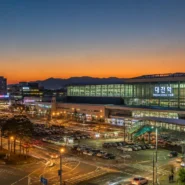
KTX is usually the most natural option if you are traveling through Seoul Station. Daejeon Station is a major stop and connects with Metro Line 1, so the arrival sequence is simple: get off the train, follow signs for the subway or taxi area, and continue into the city.
SRT is worth checking when your Seoul-side destination is around Suseo, Gangnam or southeast Seoul. It uses Suseo Station rather than Seoul Station. For the right hotel location, that can save a long cross-Seoul transfer even if the train journey itself is similar.
KORAIL PASS warning: the pass can be useful for foreign travelers making several KORAIL train journeys, but it does not include SRT. If your itinerary mixes KTX and SRT, calculate the value using only the eligible KORAIL legs. A Seoul–Daejeon round trip by itself is not a reason to buy an unlimited-style rail product without checking the actual ticket total.
Luggage strategy: KTX is comfortable with suitcases, but large luggage storage at carriage ends can fill on busy trains. Keep small bags overhead where practical, arrive at the platform with enough time to board calmly, and avoid planning a one-minute sprint from the subway with multiple large cases.
✅ What Other Travelers Say
The dominant traveler feedback on KTX is speed, comfort and ease. The recurring complaint is not the seat—it is luggage space when many passengers board with large suitcases. That matters for Daejeon because the city is often used as a mid-trip stop, when travelers are carrying their full Korea luggage rather than a day bag.
⚠️ The Catch (Things to Keep in Mind)
Do not confuse Daejeon Station with Seodaejeon Station, and do not buy a KORAIL PASS assuming it unlocks every high-speed train in Korea. SRT is a separate operator. On weekends and holidays, the best departure times can sell out, so point-to-point reservations are often more valuable than pass flexibility.
🚌 Express and Intercity Buses: Best for Regional Cities and Direct Terminal-to-Terminal Trips
🏷️ Excellent regional coverage • Often cheaper than high-speed rail • Comfortable coaches • Multiple terminals • Traffic-sensitive
Long-distance buses are one of Korea’s best travel tools, but Daejeon adds one complication: you must care about the exact terminal. A ticket that says Daejeon does not guarantee that you will arrive beside the neighborhood you expected.
Daejeon Complex Terminal is a major east-side hub serving express and intercity buses. It is convenient for eastern Daejeon but is not directly on Metro Line 1, so a taxi or city bus is often the cleanest onward move.
Yuseong Complex Terminal is the major 2026 update many older guides miss. It began operation on January 28, 2026 near Gu-am Station on Metro Line 1. The city says it integrates intercity, direct and express services with subway, city bus and taxi connections. If you are staying in Yuseong, this can be dramatically more convenient than crossing the city to Daejeon Complex Terminal.
Government Complex stops are also relevant for selected regional and airport services. This is why “I’ll just go to the Daejeon bus terminal” is not a safe plan. Your ticket should decide where you go, not the other way around.
For booking, Korea’s official long-distance systems separate express buses and intercity buses. KOBUS handles express-bus booking, while T-money intercity and Bustago cover intercity services. Some international platforms also sell selected routes. Always check whether your online ticket needs any terminal-side issuance or confirmation.
✅ What Other Travelers Say
Travelers often praise Korean long-distance coaches for comfortable seating and useful direct routes, especially to destinations that are awkward by rail. The pain point is the booking and terminal logic: a first-time visitor can easily compare the wrong departure points or assume two similarly named terminals are the same place.
⚠️ The Catch (Things to Keep in Mind)
Road traffic is the variable rail does not have. A bus can be cheaper and more direct, but it is not always the best choice before a fixed flight or a tight appointment. And because Daejeon now has an updated terminal landscape, articles written before 2026 may send Yuseong travelers to an older stop or omit Yuseong Complex Terminal entirely.
Airport Transfers: What Actually Makes Sense
From Incheon International Airport: first compare a direct intercity/airport bus with a rail combination. A direct bus wins on luggage simplicity because you load your case once and avoid changing trains in Seoul. Rail can win when road traffic is a concern or when a convenient KTX departure lines up with your arrival. One common rail pattern is airport transport into the Seoul/Gwangmyeong rail network, then KTX to Daejeon. Do not lock yourself into one method before checking your landing time and the day’s actual departures.
If using an Incheon Airport bus, search the official airport bus system for “Daejeon” and confirm which Daejeon stop or terminal the service uses. Airport bus routes and times are exactly the kind of information that ages badly in blog posts.
From Cheongju International Airport: Daejeon is a realistic surface-transport connection. Current Korea Tourism Organization guidance notes direct intercity buses from the airport to cities including Daejeon, and also rail access from Cheongju Airport Station/nearby rail points. The best option depends on your waiting time: a direct bus can save handling luggage, while a train can be attractive when its departure is imminent.
Late-night arrival rule: if your flight lands after the final practical connection, do not construct a heroic chain of late buses, transfers and taxi rides just to save a small amount. Price the direct bus if available, an airport-area overnight, or a simpler rail departure the next morning. The cheapest ticket is not the cheapest journey if you miss the last local connection in Daejeon.
Which Transport Card or Pass Is Actually Worth It?
For most first-time Daejeon visitors: buy or reuse a T-money or EZL card. You can purchase and reload them at convenience stores, use them on local public transport and keep the same card for other Korean cities. This is the low-friction choice.
Do not buy a Seoul tourist transport pass for Daejeon benefits. Products such as Mpass are built around Seoul-area transport. They may have stored-value functions beyond Seoul, but the “unlimited” or special ride entitlement is not a reason to buy them for a Daejeon-focused stay.
Consider KORAIL PASS only for a rail-heavy Korea itinerary. Count the KTX and other eligible KORAIL journeys you genuinely plan to take. Compare that total with the pass. Then remove any SRT journeys from your pass-value calculation because SRT is not included.
Skip the psychological trap of “getting your money’s worth.” Travelers sometimes buy a pass and then choose a slower or less convenient route simply because the ride feels free. Your transport plan should serve your itinerary, not the pass. In Daejeon, a ₩4,300-starting taxi that saves 35 minutes can be better value than an unnecessary sequence of “free” local rides.
Best Arrival Strategy by Where You Stay
- Near Daejeon Station / Jungangno: KTX plus Metro Line 1 or a short taxi is hard to beat. This area is excellent if you are doing day trips by rail.
- Dunsan / City Hall / Government Complex: Metro Line 1 is useful, but check the final walking distance. Some hotels are far enough from a station that a taxi from Daejeon Station may be more comfortable with luggage.
- Yuseong / hot spring area: Metro Line 1 works well, and the new Yuseong Complex Terminal near Gu-am makes long-distance bus arrivals much more attractive than older guides suggest.
- Daedeok / research and science districts: expect a bus or taxi for the last mile. Do not choose a hotel purely because a map shows a metro station “nearby” if your daily destinations sit deep inside the research district.
- One-night stop between Seoul and Busan: stay near Daejeon Station if rail efficiency matters most. It minimizes the chance of wasting your short stay on cross-city transfers.
Key FAQs
Can tourists use T-money on Daejeon buses and the subway?
Yes. T-money and EZL are practical stored-value cards for Daejeon public transport. They are especially useful because Daejeon’s bus-to-bus and bus-to-metro transfer discounts depend on transit-card use. For bus transfers, remember to tap both when boarding and alighting, and ideally use one card per traveler.
What is the best way to travel from Seoul to Daejeon: KTX, SRT or express bus?
For most first-time visitors, KTX is the easiest if you are near Seoul Station because it arrives at Daejeon Station with a Metro Line 1 connection. SRT is worth comparing if you are based near Suseo/Gangnam. An express or intercity bus can be better when your Daejeon hotel is near the arrival terminal—especially Yuseong—or when the fare saving matters more than traffic risk.
What is the easiest way to get from Incheon Airport to Daejeon with luggage?
The easiest option is usually the one with the fewest luggage transfers. Check the current direct airport/intercity bus first. If the bus timing is poor, compare an airport-to-rail connection followed by KTX to Daejeon Station. For a family or anyone carrying several large cases, a slightly slower direct bus can be less exhausting than multiple rail changes.
Final Verdict and Your Next Step
Daejeon transportation is easy once you stop expecting the subway to do everything. Build your trip around Metro Line 1 for the reliable core, buses for coverage and short taxis for friction. Then treat KTX, SRT and long-distance buses as separate arrival tools chosen by where you are coming from and where you are actually staying.
The two mistakes worth preventing in advance are simple: book the correct long-distance station or terminal, and do not buy a pass before doing the math. A normal T-money or EZL card is enough for most local sightseeing. Reserve rail or long-distance bus seats when your dates are fixed, especially for weekends and holidays, but do not prepay for an “unlimited” product simply because it sounds convenient.
Book the parts that genuinely benefit from advance planning:
- Check Daejeon hotels on Booking.com — useful for comparing accommodation by Daejeon Station, Dunsan and Yuseong.
- Compare Daejeon hotels on Agoda — check the map carefully against your preferred station or terminal, not just the neighborhood name.
- Check KORAIL PASS options on Klook — only buy after comparing the pass with your actual eligible KORAIL journeys.
- Check KORAIL PASS options on KKday — remember that SRT is not included.
If your hotel is already booked, your smartest next step is to save its Korean address, identify the nearest actual operating Metro Line 1 station or bus stop, and check the exact station/terminal printed on every long-distance ticket. That five-minute check prevents most of the expensive Daejeon transport mistakes.
Useful official checks before travel: Daejeon Transportation Corporation for metro information; Daejeon Bus Association for current city-bus fares; KORAIL for KTX tickets; SRT for SRT tickets; and Incheon Airport Bus Search for current airport-bus routes.