


💡 Key Takeaways
- Use Kintetsu-Nara Station for the easiest first visit. It is much closer to Nara Park than JR Nara Station, and that difference matters when you are already facing a long day on foot.
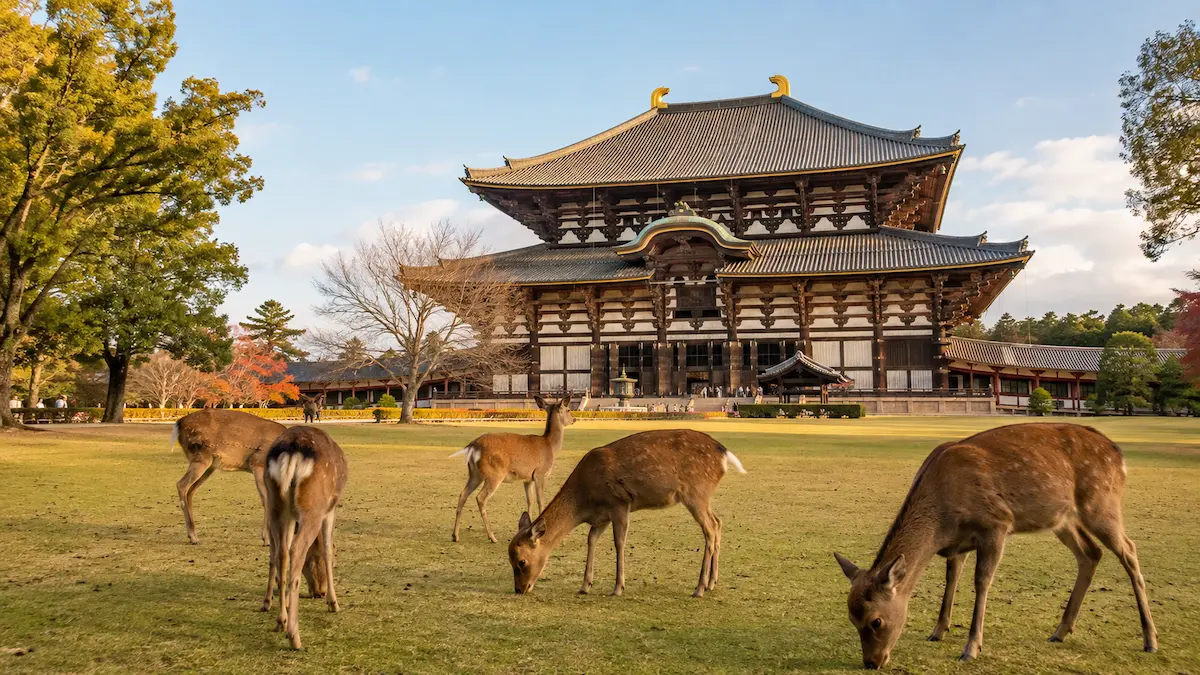
- Do not treat Nara as a 90-minute deer stop. The deer are memorable, but Todai-ji, Nigatsu-do and the lantern-lined approach to Kasuga Taisha are the experiences that usually give the day real depth.
- The biggest itinerary mistake is trying to combine too much. Kyoto sightseeing in the morning, Nara in the afternoon and Osaka nightlife at night is technically possible, but most first-time visitors end up rushing past the best parts of all three.
A first trip to Nara looks deceptively simple on a map: get off the train, see the deer, visit a giant Buddha and return to Kyoto or Osaka. In reality, the main sightseeing zone is large, the most rewarding sites are spread across long walking routes, and the two stations named “Nara” are not equally convenient. This Nara travel guide for first-time visitors is designed to stop you wasting energy on the wrong station, dragging luggage through the park, waiting too long for an overhyped snack performance or cramming a full-day destination into an unrealistic half-day.
Nara is absolutely worth visiting, but only when you plan it for what it really is: a spacious historic landscape rather than a compact animal attraction. The central route can involve several hours of walking, temple opening times matter, deer can become pushy around food, and some famous photo spots do not currently look like the images still circulating online. Most notably, the five-storey pagoda at Kofuku-ji is enclosed for major restoration and is expected to remain hidden until around 2031.
Practical details in this guide were checked against official attraction and transport sources in August 2026. Fares, opening hours and access conditions can change, so use the linked official pages for a final check before travel.
The 1-Min Cheat Sheet
- Best station for most first-time visitors: Kintetsu-Nara Station. Nara Park is roughly a five-minute walk away, while the walk from JR Nara Station is longer.
- Best trip length: One full day for the classic sights; one night for slower travel, early-morning photography, better dining and a less crowded atmosphere.
- Ideal arrival time: Around 8:00 to 8:30 a.m. This puts you ahead of many tour groups and makes the deer area noticeably calmer.
- Core first-time route: Kintetsu-Nara Station → edge of Kofuku-ji and Nara Park → Todai-ji Great Buddha Hall → Nigatsu-do → Kasuga Taisha approach → Naramachi.
- Realistic walking load: Expect a high-step day. The central loop can easily exceed 10 kilometres once detours, gardens, lunch and station walks are included.
- Half-day version: Nara Park, Todai-ji and Nigatsu-do. Skip western Nara, a full Kasuga Taisha visit and lengthy shopping stops.
- Best use of the bus: Save your legs between the station, Kasuga Taisha and more distant western sights. The official Nara one-day bus pass is useful when you expect several rides, not for a mostly walkable central loop.
- What to book ahead: Usually not the central temples. Accommodation, guided day tours, private transfers and special experiences are the things that can sell out first.
- What not to carry: A large suitcase. Use station lockers or forward your luggage to the next hotel.
- What to bring: Comfortable shoes, a small amount of cash, water in hot weather and a bag that closes securely around curious deer.
Top Survival Tips
- Choose your Nara station based on your actual route, not your rail pass. Kintetsu-Nara Station is the practical winner for most first-time sightseeing days because it puts you close to the park, Kofuku-ji, Higashimuki Shopping Street and the start of the main walking route. JR Nara Station is still useful if your hotel is nearby, you are continuing on JR lines or you have a pass that makes the JR journey especially convenient. The common mistake is saving a small fare difference and then spending extra time and energy walking or boarding a bus with everyone else.
- Never drag a suitcase through Nara Park unless you have no alternative. The paths are long, some surfaces are uneven, deer investigate bags, and buses can be crowded. Both station areas have lockers, but large lockers can fill on weekends and peak travel dates. Arrive early, keep ¥100 coins available for lockers that require them, or use luggage forwarding between hotels. The official Nara travel guidance notes that locker prices vary by size and many traditional lockers still require coins.
- Treat the deer as wild animals, not trained performers. They may bow, but that does not mean they are tame. They can nip clothing, push toward food, head-butt, surround children or become agitated during seasonal periods. Feed only the approved shika senbei crackers sold in the park. Do not offer bread, snacks or food from your own bag, and never tease a deer by repeatedly showing food without giving it.
- Do not open a full bundle of deer crackers in the busiest entrance zone. Break the experience into small, calm interactions. Keep the remaining crackers out of sight, feed one animal at a time where possible, show empty hands when finished and walk away slowly. Running, squealing or waving crackers above your head tends to make the situation worse. Travelers frequently report that deer farther inside the park are calmer than those near the main arrival paths.
- Go to Todai-ji before spending an hour taking deer photos. The deer will still be there later. The Great Buddha Hall becomes substantially busier after the morning tour groups arrive, and temple closing times are less flexible than the open park. As of August 2026, adult admission to the Great Buddha Hall is ¥800. Check the official Todai-ji hours and admission page before your visit.
- Do not skip Nigatsu-do just because it is free. Many rushed itineraries visit the Great Buddha Hall and immediately turn back. That misses one of Nara’s best elevated views and one of the most atmospheric walks in the area. Nigatsu-do is open all hours and free to enter, although you still need to be respectful and careful on steps after dark.
- Know what is currently hidden at Kofuku-ji. The famous five-storey pagoda is covered by a large protective enclosure during a multi-year restoration. It cannot currently provide the classic Sarusawa Pond photograph shown in older guides. Kofuku-ji still has important halls and Buddhist art, but do not allocate time based on outdated pagoda views. Read the current restoration notice.
- Use buses selectively rather than automatically buying a pass. The central park is best understood on foot, and waiting for a short bus ride can take as long as walking. A bus pass makes more sense for travelers with limited mobility, families managing tired children, anyone visiting Kasuga Taisha plus western Nara, or visitors returning to the station from the far side of the park. The official one-day pass currently costs ¥600 for adults and covers the central and Nishinokyo sightseeing areas. Check the official Nara Kotsu pass page.
- Do not schedule your day around the viral mochi-pounding clip. Nakatanidou’s high-speed mochi making is entertaining, but the live pounding is brief and timing can depend on production needs. Crowds often block the view, and waiting for a batch can consume the time you needed for Naramachi or Kasuga Taisha. Buy the mochi if you like yomogi and red bean, watch if a demonstration is about to begin, and keep moving if it is not.
- Be honest about heat, rain and daylight. Summer humidity turns the park loop into a much harder walk than the distance suggests. Heavy rain makes stone paths and temple steps slippery. In winter, darkness arrives early and the quieter forest paths can feel isolated. Build in a café or museum break, use a bus for the return leg and avoid planning an unlit hill descent after sunset.
- Do not combine Fushimi Inari, central Nara and a full Osaka evening unless speed is your priority. That social-media itinerary works on paper because the trains connect. It fails in practice because it ignores station transfers, meal queues, walking distance, photography and fatigue. A better split is one early Kyoto sight followed by a focused Nara afternoon, or a full Nara day followed by a relaxed dinner near your hotel.
The Full Experience
📍 Nara Park and Kofuku-ji: Best for First Impressions and Easy Deer Encounters
Best for: First-time atmosphere · Deer encounters · Easy station access · Short visits | Allow: 60–90 minutes, excluding Todai-ji | Budget: Mostly free
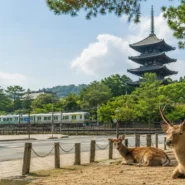
Nara Park is not a fenced deer attraction. It is a broad landscape linking temples, shrines, museums, lawns, ponds, woodland paths and roads. The official park guide describes an area of about eight square kilometres, so “Nara Park” on a map can mean anything from the busy lawns near Kintetsu-Nara Station to much quieter paths toward Kasuga Taisha.
For a first visit, walk east from Kintetsu-Nara Station through or beside Higashimuki Shopping Street, pass the Kofuku-ji side of the park and continue toward the main deer areas. You will probably see deer before you feel that you have arrived. Resist the urge to stop at the first cracker vendor and spend your entire morning there. The most crowded deer are often close to the easiest entrances, where food appears constantly and tour groups bunch together.
Kofuku-ji is worth understanding, but your expectations need updating. The five-storey pagoda is one of Nara’s defining landmarks in old photographs, yet it is currently hidden by a restoration enclosure. A quick exterior stop still makes sense because the temple sits naturally on the route, and the National Treasure Museum can be worthwhile for travelers interested in Buddhist sculpture. It is not the best use of limited time for visitors who mainly wanted the famous pagoda photograph.
Best planning choice: Use this area as your arrival zone, not your entire Nara experience. Spend enough time to enjoy the deer calmly, take a short look around Kofuku-ji and continue toward Todai-ji before the late-morning peak.
✅ What Other Travelers Say
Recent traveler discussions consistently describe the park as much larger and more varied than expected. Many visitors say the experience improves when they walk beyond the entrance crowds, where the atmosphere becomes calmer and the deer less demanding. Travelers who disliked aggressive feeding scenes still often praised the temple grounds, gardens and open walking space. See the broader pattern in recent Nara Park traveler reviews.
⚠️ The Catch (Things to Keep in Mind)
The ground can be dirty, deer may tug at paper or clothing, and the busiest paths feel more like a tourist funnel than a peaceful park. Families should supervise small children closely around antlered or excited animals. Also, do not promise yourself a classic Kofuku-ji pagoda shot during the current restoration period.
📍 Todai-ji and Nigatsu-do: Best for Nara’s Biggest First-Time “Wow”
Best for: Essential history · Monumental architecture · City views | Allow: 2–3 hours | Budget: Paid Great Buddha Hall, free Nigatsu-do
If you visit only one paid sight in Nara, make it Todai-ji’s Great Buddha Hall. Photographs communicate the scale badly: the approach through Nandaimon Gate, the huge wooden hall and the bronze Buddha feel more imposing in person. Even travelers who arrive with “temple fatigue” after Kyoto frequently describe Todai-ji as the exception.
Arrive early and walk straight through the main approach before browsing every souvenir stall. The Great Buddha Hall opens earlier than many museums and shops, which makes it the logical anchor for the morning. The adult entrance fee is currently ¥800, with a joint museum ticket available for travelers who want more historical context. The museum is a reasonable add-on in bad weather or for serious art and history interests; it is not essential for a tight one-day itinerary.
After the Great Buddha Hall, continue uphill to Nigatsu-do instead of retracing your steps immediately. This detour adds cobbled paths, old walls, wooden stairways and an elevated view over Nara. It is a quieter, more textured experience than the main hall and often becomes a surprise highlight. The most efficient onward route continues across the eastern side of the park toward Kasuga Taisha rather than returning to the station side.
Best planning choice: Give Todai-ji enough time to feel the scale, but do not spend the entire morning inside every sub-temple. For most first-timers, Great Buddha Hall plus Nigatsu-do is the strongest combination.
✅ What Other Travelers Say
Traveler reports repeatedly call Todai-ji the reason Nara exceeded their expectations. People who were unsure about adding another temple after Kyoto often say the Great Buddha Hall felt genuinely different, while Nigatsu-do receives praise for atmosphere and views with fewer crowds. Some visitors spend three hours across the wider complex; others are satisfied with about 90 minutes for the main hall and nearby paths.
⚠️ The Catch (Things to Keep in Mind)
The main approach becomes crowded, deer gather near food, and the interior can feel congested around popular photo points. The route to Nigatsu-do includes steps and uneven surfaces. Travelers with limited mobility may need to shorten the route, approach by taxi or ask locally about the most accessible entrance. Do not arrive close to closing time and assume all parts of the complex follow the same hours.
📍 Kasuga Taisha and Mt Wakakusa: Best for Forest Atmosphere and a Slower Nara
Best for: Lantern paths · Sacred forest mood · Photography · Repeat visitors | Allow: 2–4 hours | Budget: General worship area free; special sanctuary access paid
The walk to Kasuga Taisha is where Nara begins to feel less like a collection of headline attractions and more like a historic landscape. Stone lanterns line the forest approach, deer appear between the trees, and the crowds generally thin as you move away from the central lawns. The shrine’s vermilion buildings and bronze lanterns are beautiful, but the approach is at least as important as the destination.
General worship at the main sanctuary has seasonal opening hours, while special worship inside the cloister is currently ¥700 and follows a shorter daytime schedule. Special ceremonies can change access without much notice, so check the official Kasuga Taisha visitor information if the inner sanctuary is a priority.
Mt Wakakusa can add a broad city view and a welcome change from temples, but it should be treated as a weather-dependent extension, not an automatic box to tick. The climb, opening conditions and return timing need more energy than many day-trippers expect. On a clear day with enough daylight, it can be excellent. In heat, rain, haze or a rushed half-day, the hill is one of the easiest additions to cut.
Best planning choice: Walk from Nigatsu-do toward Kasuga Taisha if your legs are comfortable and the weather is good. Use a bus to or from the shrine if you need to protect energy for Naramachi. Add Mt Wakakusa only when you have at least a full day or an overnight stay.
✅ What Other Travelers Say
Visitors often describe the lantern-lined forest approach as more memorable than they expected, especially early in the morning or later in the afternoon. Travelers who went beyond the central deer lawns frequently say this quieter side of Nara was the part that felt most spiritual. The hill receives strong praise for views, but only when weather and daylight cooperate.
⚠️ The Catch (Things to Keep in Mind)
Kasuga Taisha is farther from the station than the map makes it feel, particularly after Todai-ji. The walk can become tiring in summer or with children. Forest and hill routes are not where you want to improvise after dark, and some access may be seasonal or affected by events. The shrine also has photography restrictions in certain areas, so follow signs rather than assuming every lantern corridor is open for unrestricted filming.
📍 Naramachi, Mochiidono and Sarusawa: Best for Food, Cafés and a Less Temple-Heavy Finish
Best for: Lunch and dinner · Traditional townhouses · Rainy-day wandering · Slow travel | Allow: 2–4 hours | Budget: Flexible, with several free houses and small museums
Naramachi is the best antidote to a day that has become too focused on deer and monumental temples. This old merchant district is not a single preserved street with a gate at each end. It is a loose network of lanes, machiya townhouses, small temples, cafés, craft shops, sake-related stops and residential buildings. That subtlety is the appeal, but it also means visitors expecting a dramatic Kyoto-style heritage street can initially feel underwhelmed.
Start around Sarusawa Pond, Mochiidono Shopping Arcade or the southern end of Higashimuki, then wander rather than chasing every saved pin. Naramachi Nigiwai-no-Ie offers a free look inside a traditional merchant house built in 1917, and the official site notes that free English guidance is available on Friday afternoons. Smaller venues can close on Wednesdays or finish by late afternoon, so Naramachi works better as a planned section of the day than a last-minute 6:00 p.m. afterthought.
This is also the right area to eat. Lunch queues near the main park can be frustrating, while Naramachi rewards travelers willing to walk a few extra blocks. Look for kakinoha-zushi, somen, udon, local sake, traditional sweets or a modern café in a renovated townhouse. Check closing days carefully; independent restaurants may sell out, close between lunch and dinner or require reservations in the evening.
Nakatanidou sits conveniently near the route between the station, Sarusawa Pond and Naramachi. The fresh yomogi mochi is a reasonable snack. The pounding demonstration is not worth sacrificing Todai-ji or Kasuga Taisha for, and the crowd can be more memorable than the show itself.
Best planning choice: Use Naramachi as the flexible final section of a one-day route. It gives you food, shelter, shopping and a slower pace before returning to either station. Stay overnight here if atmosphere matters more than the fastest possible morning departure.
✅ What Other Travelers Say
Travelers who stay longer than a rushed half-day often mention Naramachi as the area that made Nara feel like a real city rather than a day-trip attraction. Café breaks, sake tasting and quiet lanes receive strong praise. Other visitors find it too understated when they arrive late, discover several closures or expect every street to be lined with preserved wooden façades.
⚠️ The Catch (Things to Keep in Mind)
The area is spread out, signage can be subtle and many small attractions close earlier than restaurants. It is easy to walk past a worthwhile townhouse without noticing it. Do not expect reliable late-night entertainment; Nara becomes quiet much earlier than Osaka, and even central dining options can thin out.
📍 Western Nara and Horyu-ji: Best for Temple Specialists and a Second Day
Best for: Serious history interests · Lower crowds · Two-day itineraries | Allow: Half to full day | Budget: Multiple admissions plus transport
Yakushi-ji, Toshodai-ji, the Heijo Palace area and Horyu-ji are important enough to justify a trip, but they are not sensible add-ons to an already full central Nara day. This is where many ambitious itineraries break: the attractions look close when viewed at regional scale, yet transfers, bus waits, station walks and separate temple grounds consume hours.
Nishinokyo, home to Yakushi-ji and Toshodai-ji, is the most realistic western extension for travelers staying overnight or skipping part of the central park. Horyu-ji lies farther away and deserves its own block of time. The official wide-area bus passes can help, but rail may be faster for some routes. Always compare the exact journey on the day rather than assuming one bus connects everything efficiently.
Best planning choice: First-time visitors with one day should normally stay in central Nara. Add western Nara when ancient Buddhist architecture is a major personal interest, when you have a second day, or when you actively prefer quiet temple grounds over deer and headline sights.
✅ What Other Travelers Say
History-focused visitors praise Horyu-ji and the western temples for their depth, older architecture and significantly calmer atmosphere. Many also say the travel time was worthwhile because the experience felt less commercial. Casual first-time visitors are more divided, especially when the detour forced them to cut Nigatsu-do, Kasuga Taisha or a relaxed meal.
⚠️ The Catch (Things to Keep in Mind)
This is not one compact “area” in practical travel terms. Admission costs accumulate, English interpretation varies and transport can be less intuitive than the central park loop. Do not attempt central Nara, Nishinokyo and Horyu-ji in one day unless you are comfortable moving quickly and have already checked every connection.
How to Build a Realistic Nara Itinerary
A Balanced One-Day Nara Itinerary
- 8:00–8:30 a.m.: Arrive at Kintetsu-Nara Station. Store luggage immediately if needed.
- 8:30–9:00 a.m.: Walk through the Kofuku-ji edge of the park. Note the pagoda restoration and avoid overinvesting time here unless visiting the museum.
- 9:00–10:15 a.m.: Visit Todai-ji Great Buddha Hall before the heaviest crowds.
- 10:15–11:15 a.m.: Continue to Nigatsu-do for the elevated view and quieter paths.
- 11:15 a.m.–12:30 p.m.: Walk toward Kasuga Taisha, with short deer stops away from the busiest entrance zone.
- 12:30–1:30 p.m.: Lunch near the eastern park, Kasuga approach or back toward central Nara, depending on queues.
- 1:30–3:00 p.m.: Visit Kasuga Taisha. Use the bus for the return if energy is dropping.
- 3:00–5:30 p.m.: Explore Sarusawa Pond, Mochiidono and Naramachi. Visit a townhouse, café or sake stop before smaller venues close.
- After 5:30 p.m.: Eat in Nara if you have a reservation or return to Kyoto/Osaka before fatigue turns the journey into a chore.
A Sensible Half-Day Nara Itinerary
Arrive at Kintetsu-Nara Station as early as possible, walk directly to Todai-ji, continue to Nigatsu-do, interact with deer briefly on the return and finish near Sarusawa Pond or Higashimuki. Do not promise yourself Kasuga Taisha, Mt Wakakusa, Naramachi shopping and a mochi demonstration as well. A good half-day is selective; a bad half-day is a full-day route performed at running speed.
Who Should Stay Overnight?
Stay one night if you travel slowly, enjoy photography, dislike midday crowds, have young children, need regular rest breaks, want a proper dinner in Naramachi or plan to visit western Nara. An overnight stay also lets you experience the park before day-trippers arrive and after they leave. Stay near Kintetsu-Nara for the easiest park access, near JR Nara for convenient onward JR travel, or in Naramachi for atmosphere and dining.
Key FAQs
Is one day enough for Nara for first-time visitors?
Yes, one full day is enough for Nara Park, Todai-ji, Nigatsu-do, Kasuga Taisha and a short Naramachi visit if you arrive early and keep moving at a comfortable pace. One day is not enough for the full central loop plus Mt Wakakusa, museums, Nishinokyo and Horyu-ji. Travelers who want slower meals, photography or western temples should stay overnight.
Should I visit Nara from Kyoto or Osaka, and which Nara station is best?
Both Kyoto and Osaka are practical bases, with typical direct or simple journeys taking under an hour depending on the service. Kintetsu-Nara Station is usually best for first-time sightseeing because it is closest to the park and main central route. JR Nara Station makes sense when your hotel, rail pass or onward connection favours JR. Do not choose purely by the cheapest fare; compare door-to-door time from your accommodation.
Is it worth staying overnight in Nara instead of taking a day trip?
It is worth staying overnight if you value calm mornings, quieter evenings, traditional neighbourhoods or a second day for western Nara. A day trip is enough for travelers who mainly want the Great Buddha, deer and Kasuga Taisha. The overnight advantage is not nightlife; it is the ability to experience Nara when the buses and large day-trip groups have gone.
Final Verdict and Your Next Step
For most first-time visitors, the smartest Nara plan is simple: arrive through Kintetsu-Nara Station early, visit Todai-ji before lingering with the deer, continue to Nigatsu-do, decide honestly whether your legs can handle Kasuga Taisha, and finish with food or a café in Naramachi. Keep large luggage out of the park, do not chase the viral mochi show, and remember that Kofuku-ji’s famous pagoda is currently hidden by restoration works.
For a fast first visit: Prioritize Todai-ji, Nigatsu-do and a short deer encounter. Cut Mt Wakakusa and western Nara.
For families or travelers with limited mobility: Use buses or taxis strategically, reduce the park loop and choose accommodation close to the station you will actually use.
For photographers and slow travelers: Stay overnight, walk the Kasuga approach early, explore Naramachi after the day-trip peak and consider Mt Wakakusa only in good weather.
For temple and history specialists: Add a second day for Nishinokyo or Horyu-ji rather than squeezing them into the central route.
Accommodation near the best station areas can become limited during cherry blossom season, autumn weekends and major events. Compare availability early on Agoda’s Nara hotel page and Booking.com’s Nara listings. Check the cancellation rules and map location rather than choosing only by price.
A guided tour can be useful for travelers who want transport handled, need multilingual explanation or plan to visit western temples. However, many combination tours give Nara only a short stop while packing in Kyoto and Uji. Read the detailed timing before paying and favour itineraries that allow enough time for Todai-ji rather than only deer photos. Compare current options on Klook Nara tours and activities and KKday Nara experiences.
Book the parts that genuinely benefit from advance planning—your hotel, special tour or private transport—and leave enough space in the day to enjoy Nara without turning it into a checklist.