
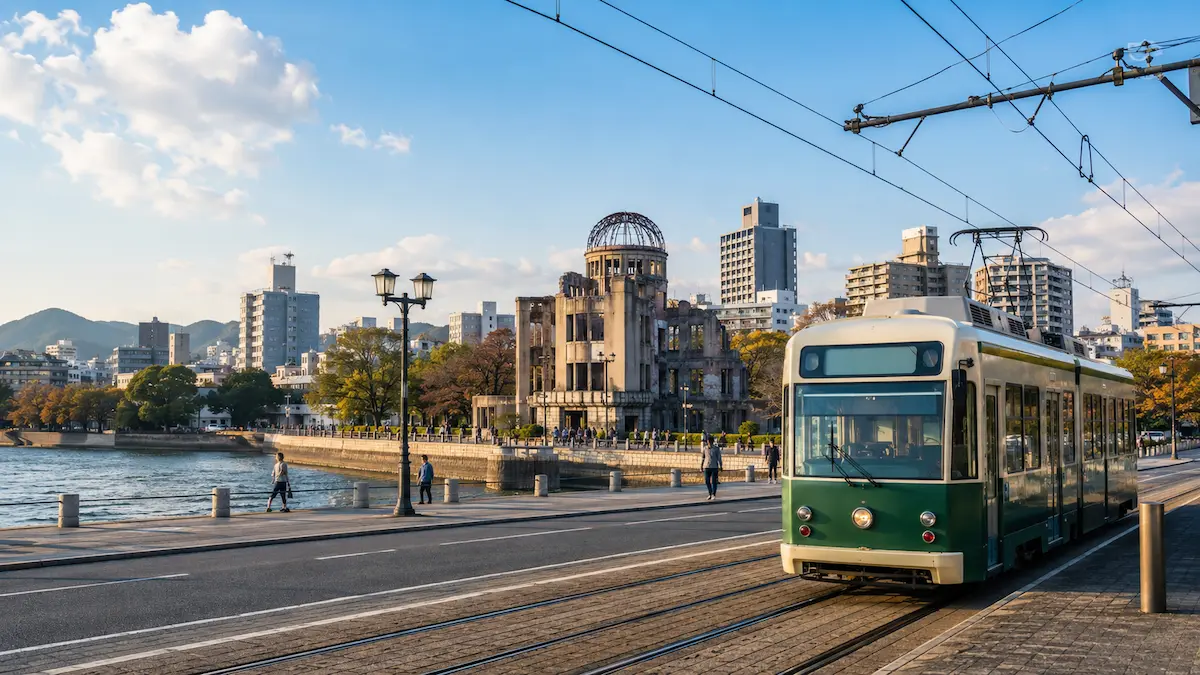
💡 Key Takeaways
- Do not follow old Hiroshima Station tram instructions. Since August 2025, Hiroden streetcars use the new terminal inside the station building on Level 2, not the former ground-level stop shown in many older videos and blog posts.
- Use JR for speed and the streetcar for convenience. JR is normally the practical choice from Hiroshima Station to Miyajimaguchi; Hiroden is better when you start downtown and prefer a direct, no-transfer ride.
- An unlimited pass is not automatically a bargain. The ¥700 streetcar day pass only beats single fares from your third ¥240 ride, while some ferry passes are useless if your plan uses JR trains or the JR ferry.
Last checked: August 2026. Fares, timetables and operating arrangements can change, so reconfirm time-sensitive services shortly before travel.
A good Hiroshima transportation guide should do more than list trams and buses. The real challenge for a first-time visitor is knowing which side of Hiroshima Station to use, whether “Miyajimaguchi” on a tram is the same place as the JR station, which ferry your pass actually covers, and whether an unlimited ticket will save money or simply add another rule to remember.
Hiroshima is not difficult to navigate once you understand its transport geography. Hiroshima Station sits east of the main sightseeing area. Peace Memorial Park, the Atomic Bomb Dome, Hondori and the central shopping districts are west of the station. Miyajima is farther southwest, reached through Miyajimaguchi or by a direct high-speed boat from Peace Memorial Park. Most costly mistakes happen when travelers choose transport by name rather than by where they are starting, how much luggage they have, and what they plan to do afterward.
This guide focuses on those decisions. It explains the route that saves time, the route that saves walking, the route worth paying extra for, and the passes you should skip when the arithmetic does not work.
The 1-Min Cheat Sheet
- Hiroden streetcar: Best for Hiroshima Station to the Atomic Bomb Dome, Hondori, Hatchobori and central hotels. The city fare is a flat ¥240 for adults. It is simple and scenic, but slower and crowded at peak sightseeing times.
- JR local train: Best for Hiroshima Station to Miyajimaguchi. Expect roughly 28–30 minutes on the Sanyo Main Line, followed by a short walk to the ferry terminal. This is usually faster than taking the streetcar all the way to Miyajima-guchi.
- Meipuru-pu sightseeing loop bus: Best for JR Pass holders, travelers staying near the Shinkansen side of Hiroshima Station, and people who want direct stops at major sights. It is a one-way loop, so a short-looking return trip can become surprisingly long.
- Miyajima ferries: Use JR or Matsudai ferry from Miyajimaguchi for the economical route. Pay more for the World Heritage Sea Route when avoiding transfers between Peace Park and Miyajima matters more than budget.
- Airport limousine bus: Best for most arrivals at Hiroshima Airport. It runs directly to Hiroshima Station’s Shinkansen Gate or Hiroshima Bus Center, but road traffic means you should never plan a tight flight connection.
Top Survival Tips
- Ignore old photos of the Hiroshima Station tram stop. The biggest source of outdated advice is the station redevelopment. The Hiroden terminal moved into the central atrium on Level 2 of the station building when the Ekimae Ohashi route opened on August 3, 2025. If a guide tells you to leave the station, cross the road and find a ground-level tram platform, it is showing the old arrangement. Follow signs for the streetcar inside the station instead.
- Know the two sides of Hiroshima Station before dragging luggage around. The south side connects naturally with the Level 2 streetcar terminal and downtown direction. The north side is the Shinkansen Gate, where the airport limousine bus and Meipuru-pu sightseeing bus depart. Walking to the wrong side is fixable, but it is an unnecessary detour with a suitcase.
- Check the destination display, not only the route number. Route numbers help, but the destination is the final safety check. For Peace Memorial Park and the Atomic Bomb Dome from Hiroshima Station, Routes 2 and 6 are the familiar choices. Route 2 continues toward Hiroden-miyajima-guchi, while Route 6 heads toward Eba. Both serve Genbaku Dome-mae, but only one goes toward Miyajima-guchi.
- Do not confuse JR Miyajimaguchi with Hiroden-miyajima-guchi. They are separate stations beside the same ferry gateway. JR is the faster ride from Hiroshima Station. Hiroden is slower but can be convenient from the Atomic Bomb Dome or another downtown tram stop because you stay on one vehicle.
- Your old PASPY card is not a solution. PASPY service ended for Hiroden streetcars and buses in March 2025. Visitors can use major nationwide transport IC cards such as ICOCA, Suica and PASMO where accepted, or pay with cash or a relevant pass. Do not buy an old PASPY card online for this trip.
- On Hiroden, tap when boarding and again when leaving. Major transport IC cards are accepted on the streetcar. With cash, board without taking a paper ticket on the flat-fare city system and pay when getting off. Use the onboard change machine before your stop rather than holding up the exit while searching for coins.
- Calculate passes using the trips you will actually take. A ¥700 streetcar day pass becomes cheaper than single ¥240 fares only from the third ride. Two rides cost ¥480, so the pass wastes ¥220. The Visit Hiroshima Tourist Pass can be excellent when you combine streetcars, eligible buses and a Miyajima ferry, but it does not cover JR West trains or the airport limousine bus.
- Read the ferry name printed on your pass. The Hiroden one-day streetcar-and-ferry pass covers the Matsudai ferry, not the JR Miyajima Ferry. By contrast, the Visit Hiroshima Tourist Pass covers both designated Miyajima ferry operators. “Ferry included” is not enough information.
- A direct boat is a time-and-energy purchase, not a budget purchase. The World Heritage Sea Route between Peace Memorial Park and Miyajima takes about 45 minutes and avoids the tram or JR transfer at Miyajimaguchi. It is valuable when your itinerary links the two World Heritage sites, but it costs far more than the local train-and-ferry route and can be affected by weather or river conditions.
- Do not schedule the airport bus as if it were a train. The official estimate is about 45–50 minutes between Hiroshima Airport and Hiroshima Station, but the bus uses roads. For your departure, add a traffic buffer and allow for the possibility that your preferred bus is full.
The Full Experience
🚋 Hiroden Streetcars: Best for Peace Park, Downtown and Low-Stress Sightseeing
Feature tags: Easy city access · Flat fare · IC card friendly · Scenic · Can be slow
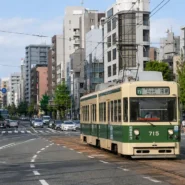
Hiroshima’s streetcars are the transport most visitors remember. They run at street level, stop close to major sights and make the city feel easy to read. From Hiroshima Station, Routes 2 and 6 serve Genbaku Dome-mae for the Atomic Bomb Dome and the north side of Peace Memorial Park. Hondori is also convenient for the covered shopping arcade and hotels around the central district.
The adult flat fare is ¥240. That flat pricing removes one common source of anxiety: you do not need to calculate zones for a normal city ride. With a compatible IC card, touch the reader when boarding and again when exiting. With cash, pay as you leave through the door near the driver or conductor.
The new Hiroshima Station terminal is one of the most important practical updates. It sits on Level 2 inside the station building, creating a far easier rail-to-tram transfer than the old ground-level arrangement. This also means some otherwise useful videos show an obsolete walk. Use the video to understand tram etiquette, but use current station signs for the boarding location.
When it is the best choice: Choose the streetcar when your hotel is near a tram stop, when you are traveling between Hiroshima Station and central attractions, or when you want a direct ride from downtown to Hiroden-miyajima-guchi without changing trains. It is also forgiving for first-time visitors because stops are frequent and route displays are visible.
When it is not the best choice: Do not ride the streetcar from Hiroshima Station to Miyajima-guchi merely because it is direct. The journey is much longer than JR. A no-transfer ride can feel appealing, but losing half an hour or more is rarely worthwhile when you start beside the JR platforms.
✅ What Other Travelers Say
Travelers repeatedly praise the streetcar for putting them close to the Atomic Bomb Dome, shopping streets and hotel districts without needing a subway map. The heritage vehicles and street-level views are part of the experience rather than just a transfer. Visitors using an IC card also find the payment system easier than expected once they understand the two taps.
⚠️ The Catch (Things to Keep in Mind)
Streetcars are not luggage trains. Narrower vehicles, steps on older cars and crowded aisles can make large suitcases awkward. They also share parts of the road network, so journey times are less predictable than JR. At Hiroshima Station, trust the current Level 2 signs, not an old screenshot showing the former outdoor platform.
Pass verdict: Buy the ¥700 streetcar day pass only when you expect at least three streetcar rides. For a simple Hiroshima Station–Peace Park round trip, pay two single fares instead. The ¥1,000 streetcar-and-ferry pass is aimed at travelers using Hiroden plus the Matsudai ferry; it is not valid on JR trains or the JR ferry.
🚆 JR Trains and JR Miyajima Ferry: Best for the Fastest Budget Route to Miyajima
Feature tags: Fastest from Hiroshima Station · JR Pass friendly · Frequent · Easy with luggage · Transfer required
For most travelers leaving from Hiroshima Station, the cleanest Miyajima route is the JR Sanyo Main Line to Miyajimaguchi, followed by the JR Miyajima Ferry. The train ride is roughly 28–30 minutes. After exiting JR Miyajimaguchi Station, follow signs through the pedestrian route to the passenger terminal. The ferry crossing takes about 10 minutes.
This route wins because every stage is easy to understand. The JR train is faster than Hiroden, the transfer walk is short and the ferry terminal is designed for high visitor volume. Compatible IC cards can be used, and eligible Japan Rail Pass or JR West regional pass holders can use the JR ferry. The ¥100 Miyajima Visitor Tax is separate even when your transport fare is covered.
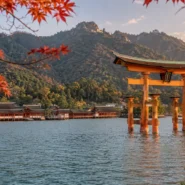
During daytime hours, some JR ferry departures use a route that gives a closer sea view of the Great Torii. Do not build your entire schedule around one photo angle, but it is a pleasant bonus when timing works.
When it is the best choice: Use JR when you begin at Hiroshima Station, Shin-Hakushima or another convenient JR station; when you have luggage; when speed matters; or when your rail pass covers the local train and ferry.
When it is not the best choice: JR is less elegant when you are already beside Peace Memorial Park. You first need to reach a JR station, then travel to Miyajimaguchi and board the ferry. From the park, the direct high-speed boat or a direct Route 2 streetcar may involve less mental effort, even if they are not the cheapest or fastest in pure travel time.
✅ What Other Travelers Say
Visitors commonly describe the JR route as the simplest “just get me to Miyajima” option. JR Pass holders especially appreciate that the local train and JR ferry fit naturally into the pass. The short ferry ride also feels like part of the sightseeing, not an inconvenient final transfer.
⚠️ The Catch (Things to Keep in Mind)
The destination names cause more confusion than the journey itself. JR Miyajimaguchi and Hiroden-miyajima-guchi are adjacent but separate. At the waterfront, JR and Matsudai ferries also have separate gates. Follow the operator named on your pass. Rail-pass users should still budget for the Miyajima Visitor Tax.
Pass verdict: A Kansai-Hiroshima Area Pass can offer strong value when Hiroshima is part of a wider Osaka, Kyoto, Himeji and Hiroshima rail itinerary. It is usually poor value for someone staying only inside Hiroshima for a day or two. Never buy a five-day regional rail pass merely to cover a short Miyajima trip.
🚌 Meipuru-pu Sightseeing Loop Bus: Best for JR Pass Holders and Direct Sight Stops
Feature tags: Major attractions · JR Pass accepted · Station-friendly · One-way loop · Limited luggage space
Meipuru-pu is Hiroshima’s sightseeing loop bus, departing from the Shinkansen Entrance area of Hiroshima Station. Its routes serve visitor-friendly stops such as Hiroshima Castle, the Atomic Bomb Dome, Peace Memorial Park, Shukkeien and downtown districts. The adult single fare is ¥240, and the one-day bus ticket is ¥600.
The bus is especially useful when you arrive by Shinkansen and want a direct ride to Peace Memorial Park without first moving to the south side and boarding a tram. It can also reduce walking for travelers who find repeated tram-platform changes tiring.
Eligible Japan Rail Pass and JR West Rail Pass holders can ride by showing the pass to the driver, subject to the pass conditions. This makes Meipuru-pu one of the rare city sightseeing buses that can genuinely add value to a rail pass you already own.
When it is the best choice: Use it for a first sightseeing leg from the Shinkansen side, for a direct ride to the Peace Memorial Park museum area, or when your JR pass covers the fare. It is also helpful for linking the castle and garden area without wearing out your feet.
When it is not the best choice: Avoid treating it like a two-way local bus. Because the route loops in one direction, the stop that is ten minutes ahead may be forty minutes away on the return. For simple back-and-forth travel along the main east-west corridor, the streetcar is often more flexible.
✅ What Other Travelers Say
JR Pass holders often consider Meipuru-pu an overlooked bonus, particularly when arriving at the Shinkansen Gate. Travelers also like that stop names are sightseeing-oriented rather than requiring them to translate ordinary neighborhood names.
⚠️ The Catch (Things to Keep in Mind)
The bus can fill at popular times, and luggage storage is limited. The current departure point is on the Shinkansen Entrance side, not beside the streetcar terminal. Always check the direction of the loop before boarding; saving a short walk is not worthwhile if the bus carries you through most of the circuit first.
Pass verdict: The ¥600 one-day Meipuru-pu ticket needs three ¥240 rides to save money. Before buying, map the exact boarding points. Many visitors only take one bus to Peace Park and then walk or use the tram, making single fares cheaper.
⛴️ Miyajima Ferries and the World Heritage Sea Route: Best for Choosing Budget or Convenience
Feature tags: Iconic approach · Budget ferries · Direct premium boat · Weather dependent · Visitor tax
There are two different ferry decisions in Hiroshima, and mixing them up creates bad comparisons.
The first is the short crossing from Miyajimaguchi to Miyajima. JR Miyajima Ferry and Matsudai operate frequent local services, and the trip takes about 10 minutes. This is the economical route used after arriving at Miyajimaguchi by JR train or Hiroden streetcar.
The second is the World Heritage Sea Route operated by Aquanet Hiroshima. It links Peace Memorial Park and Miyajima directly in about 45 minutes. Current adult pricing is substantially higher than the local ferry route, with a one-way Peace Park-to-Miyajima ticket including the visitor tax listed at ¥2,500. Online reservations close at 8:30 p.m. on the day before travel, while same-day tickets are sold at the counter if seats remain.
The premium boat solves a specific itinerary problem: it connects Hiroshima’s two World Heritage sites without returning to Hiroshima Station or changing at Miyajimaguchi. When your day is Peace Park in the morning and Miyajima in the afternoon, that can save energy and make the route feel coherent.
When it is the best choice: Pay for the World Heritage Sea Route when you value a direct connection, have limited time, dislike transfers, or are traveling with someone who finds station walking tiring. Choose the local Miyajimaguchi ferries when budget matters or when you are already coming by JR.
When it is not the best choice: The direct boat is poor value for travelers starting at Hiroshima Station, where JR to Miyajimaguchi is straightforward. It is also less dependable than rail during rough weather, and river routing can be affected by tide conditions.
✅ What Other Travelers Say
Travelers who use the World Heritage Sea Route value the absence of transfers more than the boat itself. The direct arrival near Peace Park or Miyajima can turn a fragmented day into a smooth one. Budget-focused visitors remain satisfied with the short local ferry because it is frequent, inexpensive and still provides a memorable island approach.
⚠️ The Catch (Things to Keep in Mind)
The ¥100 Miyajima Visitor Tax applies when entering the island and may be included or collected separately depending on the ticket. Direct-boat services are not covered by the Japan Rail Pass. Reservation rules, tide-related routing and weather cancellations deserve a same-week check, especially when the boat is central to your day plan.
Pass verdict: The Hiroden streetcar-and-ferry pass uses the Matsudai ferry, not JR. The Visit Hiroshima Tourist Pass includes designated streetcars, buses and both main Miyajimaguchi ferry operators but excludes JR trains and the direct World Heritage Sea Route. Choose your transport first, then buy the pass that matches it.
✈️ Hiroshima Airport Limousine Bus: Best for the Easiest Airport Transfer
Feature tags: Direct · Luggage friendly · Frequent · IC card accepted · Traffic risk
Hiroshima Airport is not beside Hiroshima city and does not have a direct rail station. For most first-time visitors, the airport limousine bus is the sensible default. Official journey estimates are about 45–50 minutes to Hiroshima Station’s Shinkansen Gate and about 55 minutes to Hiroshima Bus Center. The adult fare is ¥1,500.
Choose your city stop based on your hotel, not habit. Hiroshima Station is best for Shinkansen connections, station hotels and onward JR travel. Hiroshima Bus Center is better for hotels around Kamiyacho, the Atomic Bomb Dome, Hondori and central Hiroshima. It sits inside the Sogo department store complex, which surprises travelers expecting a roadside terminal.
At Hiroshima Station, the airport bus uses the Shinkansen Gate side. This is the opposite side from the main downtown-facing streetcar direction. When leaving for the airport, confirm “Shinkansen Gate” before following generic bus signs.
When it is the best choice: Use the limousine bus for a direct, reasonably priced transfer with normal luggage. It is also easier than combining a train to Shiraichi with the airport shuttle unless road congestion is a serious concern.
When it is not the best choice: The JR-to-Shiraichi plus shuttle-bus route can be more resilient during severe expressway congestion, but it requires a transfer and more luggage handling. A private transfer is mainly justified for a group, a very late arrival, mobility needs or oversized luggage—not for ordinary solo travelers.
✅ What Other Travelers Say
Most visitors find the limousine bus uncomplicated: ticket or IC card, luggage under the coach, then one ride into the city. Travelers staying near the Bus Center appreciate avoiding an additional tram ride from Hiroshima Station.
⚠️ The Catch (Things to Keep in Mind)
The timetable is not a guarantee against traffic. Buses can also fill, particularly around busy flight banks. On the outbound journey, take an earlier service than the minimum calculation suggests. Missing a museum booking is annoying; missing a flight is expensive.
Pass verdict: The Visit Hiroshima Tourist Pass and normal city day passes do not cover the airport limousine bus. Pay separately. A private airport transfer rarely makes financial sense unless the cost is shared or convenience has unusually high value.
Which Hiroshima Transport Pass Is Actually Worth It?
Hiroden 1-Day Streetcar Pass: ¥700
Worth it when: You will take at least three ¥240 streetcar rides in one day. A realistic winning itinerary is Hiroshima Station to Peace Park, Peace Park to another tram-served district, and a final ride back to the station or hotel.
Skip it when: Your plan is only a return trip between Hiroshima Station and the Atomic Bomb Dome. Two single fares total ¥480.
Hiroden 1-Day Streetcar and Ferry Pass: ¥1,000
Worth it when: You are using Hiroden streetcars extensively and crossing with the Matsudai ferry. It can also unlock a Miyajima Ropeway discount under the current benefit rules, which may be more valuable than the transport saving.
Skip it when: You intend to use JR from Hiroshima Station or board the JR Miyajima Ferry. The pass does not cover either.
Visit Hiroshima Tourist Pass: ¥1,000 for 1 Day, ¥1,500 for 2 Days, ¥2,000 for 3 Days
Worth it when: You combine multiple streetcars, eligible route buses or Meipuru-pu, plus a Miyajima ferry. The two- and three-day versions are particularly attractive for slower itineraries that repeatedly cross the city.
Skip it when: Your itinerary is built around JR trains. The pass does not cover JR West rail services, the airport limousine bus, express buses or the direct World Heritage Sea Route.
Meipuru-pu 1-Day Ticket: ¥600
Worth it when: You plan at least three separate loop-bus rides and have checked that the one-way routing suits each move.
Skip it when: You have an eligible JR Pass, which may already cover the bus, or when you only need a single ride from Hiroshima Station to Peace Memorial Park.
Kansai-Hiroshima Area Pass: ¥17,000 for 5 Days
Worth it when: You are making a wider Kansai–Hiroshima journey with expensive intercity rail legs, such as Osaka or Kyoto to Hiroshima plus other covered travel.
Skip it when: Hiroshima is your only base and your longest trip is Miyajima. A large rail pass should be justified by intercity fares, not by the psychological appeal of unlimited travel.
Best Route for Common First-Time Itineraries
Hiroshima Station to the Atomic Bomb Dome
Take Hiroden Route 2 or 6 from the Level 2 terminal to Genbaku Dome-mae. This is the simplest all-purpose choice. From the Shinkansen Entrance, Meipuru-pu can be more convenient when its departure time aligns and you want a direct bus stop at the dome or Peace Memorial Park.
Hiroshima Station to Miyajima
Take the JR Sanyo Main Line to Miyajimaguchi, walk to the passenger terminal and board the ferry covered by your ticket or pass. This is generally faster than staying on Hiroden from the station.
Peace Memorial Park to Miyajima
Choose between three sensible routes. Pay for the direct World Heritage Sea Route to avoid transfers. Take Route 2 to Hiroden-miyajima-guchi for a cheaper direct land journey with no train change. Or travel to a JR station and use JR when speed and a rail pass matter more than simplicity.
Miyajima to Hiroshima Station
Use a local ferry to Miyajimaguchi and JR to Hiroshima Station. This is the safest choice when you have a Shinkansen to catch. Do not use the much slower streetcar unless you have generous time and want to stop downtown before reaching the station.
Hiroshima Airport to a Downtown Hotel
Take the limousine bus to Hiroshima Bus Center when your hotel is near Kamiyacho, Hondori, the Atomic Bomb Dome or Peace Boulevard. Take the bus to Hiroshima Station for station-area hotels or an immediate JR connection. Choosing the correct airport-bus endpoint can remove one extra tram ride with luggage.
Key FAQs
What is the easiest way to get from Hiroshima Station to Peace Memorial Park with luggage?
For one manageable suitcase, take Hiroden Route 2 or 6 from the Level 2 streetcar terminal and get off at Genbaku Dome-mae, then walk through the park. From the Shinkansen Entrance, Meipuru-pu can reduce station walking when a bus is due soon. With several large bags, use a taxi or leave luggage in a station locker rather than carrying it through a memorial visit.
Is the Visit Hiroshima Tourist Pass worth it for a Miyajima day trip?
It is worth considering when the day includes a Miyajima ferry plus several streetcar or eligible bus rides. It is not automatically worthwhile when you take JR from Hiroshima Station, because JR trains are excluded. Write down each planned leg before buying: JR-heavy itinerary, skip it; bus-and-tram-heavy itinerary, it can be excellent value.
Can I use Suica or ICOCA on Hiroshima trams, buses and Miyajima ferries?
Major nationwide transport IC cards, including Suica, PASMO and ICOCA, are accepted on Hiroden streetcars and many local services. JR Miyajima Ferry also accepts transport IC cards. Acceptance can differ on smaller regional buses or special services, so carry some yen. PASPY is no longer active for normal visitor travel.
Final Verdict and Your Next Step
The best Hiroshima transport strategy is not “buy the biggest pass.” It is match the vehicle to the starting point. From Hiroshima Station to Miyajima, use JR. Around central Hiroshima, use the streetcar. From the Shinkansen side to major sights, consider Meipuru-pu. Between Peace Park and Miyajima, pay for the direct boat only when the saved transfers are worth the premium. From the airport, choose the limousine-bus endpoint nearest your hotel.
Before booking, lock in the two items that can genuinely disrupt the trip: accommodation location and any reserved direct ferry. A hotel near Hiroshima Station is ideal for early Shinkansen departures and the fastest Miyajima access. A hotel around Kamiyacho, Hondori or Peace Park is better for evening dining and central sightseeing. Saving ¥200 on a room is not a bargain if it creates two extra tram journeys with luggage.
Useful booking links:
- Compare hotels near Hiroshima Station on Booking.com for easy JR, Shinkansen and airport-bus access.
- Check Hiroshima transport tickets and transfers on Klook.
- Book the Visit Hiroshima Tourist Pass on KKday after confirming that your itinerary uses the covered trams, buses and ferry.
- Reserve the World Heritage Sea Route with the operator when a direct Peace Park–Miyajima connection is central to your schedule.
Book accommodation early for weekends, cherry-blossom season, autumn foliage periods and major events. Reserve the direct Miyajima boat by the previous day when you need a specific sailing. Ordinary streetcars, JR local trains and local Miyajimaguchi ferries usually do not need advance booking; for those, the smarter preparation is knowing the correct station side, operator and pass coverage before you arrive.