
💡 Key Takeaways
- For most first-time visitors, October is the safest all-round choice. You get cooler walking weather, lower humidity and a strong mix of outdoor sightseeing and city life. Just check the festival calendar before locking in your hotel.
- Cherry blossom season is beautiful, but it is not a bargain season. Late March to early April can mean higher room rates, crowded photo spots and a bloom window that can shift with the weather.
- July and August are beach season, not “perfect weather” season. Heat, humidity, rain bursts, typhoon disruption and peak beach crowds can make a packed walking itinerary much harder than it looks on Instagram.
The best time to visit Busan depends less on finding a mythical “perfect month” and more on choosing which compromise you can live with. Cherry blossom season can be gorgeous, yet rooms around popular areas often cost more and famous blossom streets can become frustratingly crowded. Summer brings Busan’s liveliest beach atmosphere, but high temperatures and heavy humidity can turn a simple afternoon of sightseeing into a sweaty endurance test. The late-June-to-July rainy season does not necessarily mean nonstop rain from breakfast to bedtime, but forecasts are less dependable and outdoor plans need backup options. Regional travel periods such as Japan’s Golden Week, Korean public holidays and major Busan festivals can also tighten flight or hotel availability on specific dates. Winter is usually easier on the budget and much quieter, but daylight is shorter and the coastal wind can feel sharper than the temperature suggests.
If you want the simplest answer: aim for mid-to-late October for the best balance of weather and usability, choose May for an underrated shoulder-season trip, visit late March to early April only if cherry blossoms are a real priority, and think twice about late July through mid-August if heat, humidity or crowds bother you.
The 1-Min Cheat Sheet
- March to April: Best for cherry blossoms and spring photography. Early March can still feel chilly; late March and early April are prettier but busier and less forgiving for last-minute hotel bookings.
- May to June: One of the smartest periods for walking, coastal sightseeing and first-time visits. May is the sweet spot; humidity and rain uncertainty rise as June progresses.
- July to August: Best for swimming, beach energy and summer events. Worst for travelers who dislike heat, sticky weather, sudden rain, typhoon risk or packed Haeundae and Gwangalli.
- September to November: The strongest overall window. September can still be warm and storm-prone, October is the most dependable all-rounder, and November is cooler with good value outside major event weekends.
- December to February: Best for lower hotel prices, quieter attractions, markets, cafés and uncrowded coastal views. Expect cold wind, shorter daylight and little reason to choose this period if beach swimming is your main goal.
Top Survival Tips
- Book around events, not just seasons. “October is shoulder season” can be misleading if your dates overlap with a major film festival or another citywide event. The same applies to fireworks weekends, beach festivals and Korean holiday periods. Compare your exact dates before assuming a month is cheap.
- Do not interpret “rainy season” as “rain every minute.” Busan can get heavy bursts, grey spells and abrupt changes rather than an identical all-day pattern. The practical problem is uncertainty: coastal walks, observatories, boat trips and photo-heavy plans are much harder to schedule tightly.
- Keep typhoon flexibility in late summer and early autumn. A storm does not need to score a direct hit on Busan to disrupt ferries, coastal attractions, flights or rail connections. If your trip is short, refundable or changeable bookings have real value.
- Separate “warm enough for the beach” from “comfortable for sightseeing.” July and August can be fun if your goal is to swim, eat, rest and stay close to the coast. They are much less appealing if your plan involves Gamcheon Culture Village, hillside streets, temple steps and long walks in the middle of the day.
- Do not overstate Japan’s Golden Week effect. The late-April-to-early-May holiday period can add regional demand on short-haul flights and some Busan accommodation, but it is not a guaranteed citywide price spike every year. Treat it as a date to check, not a reason to avoid the whole month of May.
- Korean holidays matter more for domestic movement. Lunar New Year and Chuseok can affect transport demand, business hours and family travel. If your dates overlap, reserve intercity transport earlier and verify whether specific restaurants or independent shops will open.
- Choose your neighborhood to reduce weather pain. In hot or rainy months, staying close to the attractions you care about can be worth more than saving a small amount on a distant hotel. Beach travelers benefit from Haeundae or Gwangalli; food-and-market travelers may prefer Nampo or Seomyeon for easier city access.
- Winter daylight changes the shape of the day. In midwinter, sunset comes early enough that scenic coastal stops are better scheduled before late afternoon. Save markets, cafés, spas and shopping for after dark.
- For blossom trips, pay for flexibility before paying for luxury. Cherry blossom timing can move by several days. A cancellable hotel and a trip spanning several nights are often more useful than an expensive room booked around one “predicted peak” date months in advance.
The Full Experience
🌸 March to April: Best for Cherry Blossoms, but Not for Bargain Hunters
Cherry Blossoms
Cool-to-Mild Weather
High Photo Demand
Variable Bloom Timing
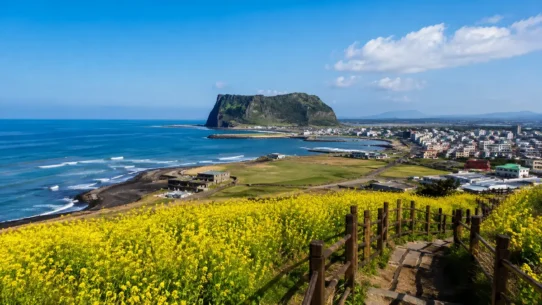
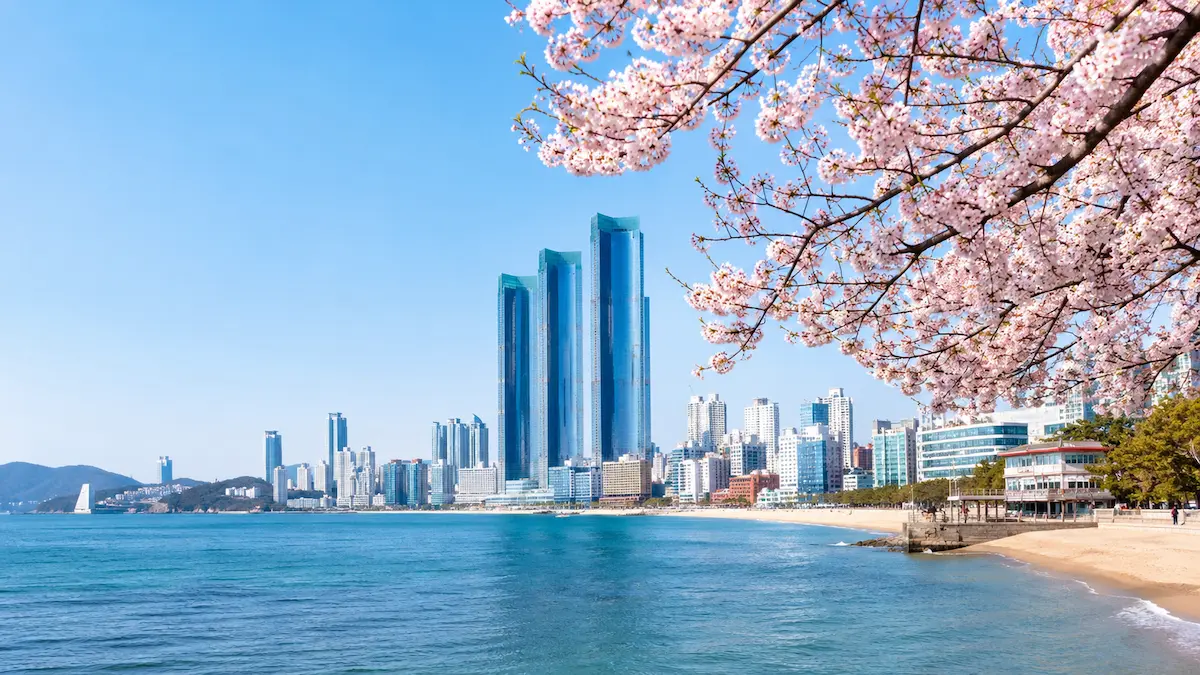
Spring is the season that sells itself in photos. Busan’s cherry blossoms typically arrive around the end of March and spill into early April, but the exact peak is weather-sensitive. Warm spells can bring the flowers forward; cold snaps can delay them; rain and wind can shorten the prettiest part of the show. That is why a blossom trip built around one single forecasted day is riskier than it appears.
March is also a month of two personalities. Early in the month, Busan can still feel decidedly cool, especially by the sea. By late March and into April, walking becomes more comfortable and the city starts to look much more springlike. Popular blossom areas such as Oncheoncheon, Namcheon-dong and roads around Dalmaji can be lovely, but weekends are rarely serene once the flowers are near peak.
Who should choose this period? Photographers, couples, repeat visitors and anyone who considers cherry blossoms a trip-defining experience. If flowers are only a “nice bonus,” May is often a better decision because you trade some seasonal spectacle for simpler logistics and more dependable sightseeing weather.
✅ What Other Travelers Say
Traveler reports commonly describe late March and April as pleasant for walking, but they also warn that spring can look warmer in photos than it feels in real life. Coastal wind, cool evenings and occasional poor-air days can still affect outdoor plans. Blossom-focused visitors repeatedly emphasize the value of flexible dates because the peak is short.
⚠️ The Catch (Things to Keep in Mind)
The obvious catch is price and crowd concentration. You may not see “peak season” pricing across every part of Busan, but rooms near desirable areas and weekend dates can tighten quickly once blossom forecasts become clearer. The less obvious catch is that a perfect bloom forecast is not a guarantee: one windy or rainy system can change the look of a street in a day or two.
Best strategy: stay three or four nights if possible, keep one flexible blossom morning, and use the rest of the trip for markets, temples, coastal walks and neighborhoods. That way the entire trip does not depend on flowers behaving on schedule.
🌿 May to June: Best Shoulder-Season Balance, with a Rainy-Season Warning
Comfortable Walking
Good Shoulder-Season Value
Sand Festival Season
Rain Risk Rises in Late June
May is one of Busan’s most underrated months. Temperatures are generally easier for long days outside, greenery is fresh, beach districts feel alive without full midsummer intensity, and you can combine city neighborhoods with coastal trails without scheduling every move around the heat. In 2026, the Haeundae Sand Festival was scheduled for mid-May, which shows why this part of the calendar can still have event-driven crowd pockets even when the overall city feels manageable.
June is more complicated. Early June can still work very well, but warmth and humidity build and the rainy-season transition becomes a bigger planning factor toward the end of the month. The important distinction is not “dry versus rainy” but predictable versus less predictable. If you are staying five days, you can usually reshuffle plans. If you have only 48 hours and every priority is outdoors, late June is a bigger gamble than May.
Japan’s Golden Week, centered on late April and early May, is also worth checking if you are flying a short-haul regional route. It can increase demand on some travel dates, but it should not be treated as proof that all Busan hotels will suddenly become expensive. Compare your exact flights and neighborhood before changing your trip.
✅ What Other Travelers Say
Travelers who prioritize walking often rate late spring highly because Busan’s distances, slopes and stair-heavy neighborhoods feel much more manageable before peak summer humidity. May is especially popular with visitors who want a full sightseeing schedule rather than a beach-first holiday.
⚠️ The Catch (Things to Keep in Mind)
Late June can look attractive on a price calendar and still disappoint if your itinerary depends on clear sea views every day. Rain can arrive in bursts, and a damp, humid day may make coastal viewpoints less rewarding. Carry a compact umbrella or rain shell, but more importantly, build indoor alternatives such as markets, cafés, Spa Land, museums or shopping into the same area so you can pivot without crossing the whole city.
Best strategy: choose mid-to-late May for the cleanest compromise. If you must travel in June, earlier is generally safer for weather-dependent sightseeing than the tail end of the month.
🏖️ July to August: Best for Beach Energy, Worst for Heat-Sensitive Travelers
Beach Season
Hot & Humid
Peak Coastal Crowds
Rain & Typhoon Risk
This is the most misunderstood part of the Busan calendar. July and August are the right months if your dream is busy beaches, swimming, summer nights and a resort-like atmosphere. They are not the months I would recommend to someone whose priority is comfortable urban sightseeing.
Busan’s own climate guidance describes late July through mid-August as the hottest stretch of summer, with typical midsummer highs around the low 30s Celsius. Humidity makes that feel heavier, and recent Korean summers have also produced extreme heat episodes beyond older averages. Add direct sun, hills, stairs and long transfers, and the real-world effort of sightseeing increases fast.
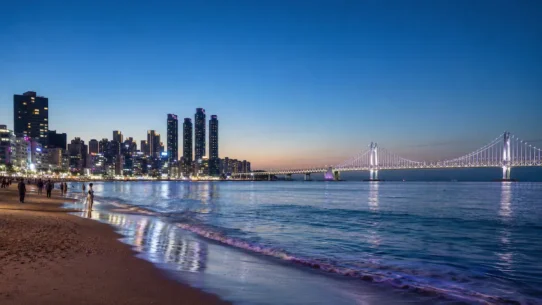
Haeundae and Gwangalli are at their most energetic, but that comes with fuller trains, busier restaurants and higher demand for well-located coastal accommodation. Summer festivals can add another layer. For example, Busan’s 2026 Sea Festival was scheduled for August 7–13 at Dadaepo Beach.
Rain is the second issue. July overlaps with the rainy season, and both July and August sit within the broader period when tropical systems can affect Korea. That does not mean every trip is washed out. It means you should not build a nonrefundable itinerary where every important activity depends on calm seas, clear skies or fixed outdoor times.
✅ What Other Travelers Say
Traveler accounts from wet summer trips often describe a mix of heavy showers, humid dry periods and rapidly changing conditions rather than a week of identical all-day rain. Visitors who came specifically for the beach tend to enjoy the atmosphere more than travelers trying to complete a dense sightseeing checklist.
⚠️ The Catch (Things to Keep in Mind)
The biggest mistake is underestimating how much the heat changes your pace. A day that looks reasonable on Google Maps can become exhausting when you combine Gamcheon’s slopes, open-air markets, temple steps and a long coastal walk. Weather disruption can also affect boats, observatories and exposed coastal attractions.
Best strategy: stay close to the beach if the beach is your priority, do outdoor sightseeing early in the morning or toward evening, reserve midday for air-conditioned stops, and avoid late July to mid-August altogether if you strongly dislike humid heat.
🍂 September to November: Best Overall Weather, but Watch the Event Calendar
Best Overall Window
Lower Humidity
Festivals & Foliage
Event-Weekend Price Spikes
If I had to choose one broad season for most travelers, this would be it. The catch is that September, October and November are not equally good.
September can still feel like an extension of summer. The humidity usually eases gradually, but warm days remain possible and tropical weather can still cause disruption. Chuseok can also reshape domestic travel patterns; in 2026, the holiday fell in late September. If your trip overlaps, do not assume every restaurant or local business will follow normal hours.
October is the standout month. It is generally cool enough for serious walking without being cold, humidity is lower, and outdoor places such as Igidae, Taejongdae, temples and hillside neighborhoods become much easier to enjoy. For a first Busan trip, mid-to-late October is my default recommendation.
But October is not automatically cheap. Busan International Film Festival can create intense demand around central venues and popular neighborhoods. The 2026 festival was scheduled for October 6–15. If you do not care about the festival, arriving after it can be a smarter value play.
November is cooler and often excellent for visitors who like crisp air and fewer beach crowds. Autumn color can become another reason to visit, while major one-night events can still distort prices. Busan’s 2026 Fireworks Festival was scheduled for November 7, with viewing areas around Gwangalli, Haeundae and Igidae.
✅ What Other Travelers Say
Autumn repeatedly earns strong traveler feedback because it is easier to walk for hours, views tend to feel clearer, and the city is still lively without midsummer discomfort. Many visitors consider October the easiest month for a mixed itinerary of food, neighborhoods, temples, coast and day trips.
⚠️ The Catch (Things to Keep in Mind)
“Autumn” does not mean “quiet.” Film-festival dates, fireworks, Chuseok and good-weather weekends can all push up demand. September also carries more weather uncertainty than many travelers expect. If your priority is reliability rather than a specific event, target the second half of October and verify the current year’s event calendar before paying for a nonrefundable room.
Best strategy: make October your first choice, early-to-mid November your second choice if you enjoy cooler weather, and treat September as a transitional month rather than guaranteed autumn.
❄️ December to February: Best for Low Prices and Quiet Streets, Not Long Daylight
Lower Hotel Demand
Quiet Beaches
Cold Coastal Wind
Short Daylight
Winter is the sensible answer for travelers who care more about price, food, photography and quiet neighborhoods than swimming. Busan is milder than inland Korea, and snow is relatively uncommon, but that does not mean the coast feels warm. Wind off the water can make exposed promenades and viewpoints feel much colder than a forecast number suggests.
The biggest advantage is breathing room. Beaches are far calmer, popular photo areas are easier to enjoy, and hotels often have more attractive rates outside Christmas, New Year and Lunar New Year. Winter also suits indoor-heavy itineraries: seafood markets, cafés, shopping, spas and long meals all fit naturally into shorter days.
The trade-off is daylight. Around midwinter, sunset is early enough that you should not leave your best coastal viewpoint until the end of a leisurely afternoon. Plan scenic stops first, then move indoors after dark.
Korean Lunar New Year is the date-sensitive exception. In 2026, the Seollal holiday period was February 16–18. Transport demand can rise and some independent businesses may close or reduce hours, so winter is not automatically friction-free.
✅ What Other Travelers Say
Winter visitors often report that Busan remains enjoyable with the right clothing, especially if they compare it with colder parts of Korea. Quiet beaches and less crowded attractions are a recurring positive. The most common regret is not the cold itself, but planning too much outdoor sightseeing after sunset.
⚠️ The Catch (Things to Keep in Mind)
You are giving up beach swimming, long warm evenings and some of the effortless outdoor energy of spring or autumn. Coastal wind can be unpleasant on exposed days, and a bargain hotel is less impressive if you spend extra time commuting in the cold. Stay somewhere convenient and front-load daylight activities.
Best strategy: choose January or a non-holiday stretch of February for budget value, pack for wind rather than just temperature, and treat sunset as a scheduling deadline.
Best Months by Traveler Type
- First-time visitor: Mid-to-late October. It gives you the most forgiving combination of walking weather, outdoor access and city energy.
- Budget traveler: January or non-holiday February. You sacrifice daylight and warmth but usually gain quieter neighborhoods and better room availability.
- Cherry blossom hunter: Late March to early April. Keep dates flexible and do not book around a single predicted peak day.
- Beach-focused traveler: July to August if swimming and summer atmosphere matter more than comfort. Stay close to the coast and slow your sightseeing pace.
- Hiker or heavy walker: October to early November. Cooler air makes Busan’s hills, stairs and coastal trails far more enjoyable.
- Family trip with a full sightseeing list: May or October. Both are easier for long days outside than midsummer and less limiting than short winter daylight.
- Photographer: Late March to early April for blossoms, or late October to November for clearer-feeling autumn scenes and seasonal color.
Which Months Should You Avoid?
There is no universally “bad” month, but some periods are poor matches for certain travelers.
- Avoid late July to mid-August if you hate hot, humid weather or plan to walk all day.
- Avoid late June through July if your trip is very short and almost every must-do activity is outdoors.
- Avoid major festival weekends if you do not care about the event and your main goal is saving money or staying near the venue.
- Avoid Korean holiday dates if you need perfectly normal business hours and last-minute intercity transport.
- Avoid winter if your definition of Busan is swimming, long sunsets and lively beach culture.
Editor’s reality check: A “cheap month” can still contain an expensive weekend, and a “good-weather month” can still have two poor days. For Busan, exact dates matter almost as much as the season. Before paying, check the current year’s festival calendar, Korean public holidays and the cancellation terms on your hotel.
Key FAQs
What is the best month to visit Busan for good weather and fewer crowds?
October is the strongest all-round answer, especially the second half of the month if it falls outside a major festival period. Temperatures are generally much easier for walking than in summer, humidity is lower, and the city still feels active. May is the best alternative if you prefer spring.
Is Busan worth visiting during cherry blossom season, and when do the blossoms usually peak?
Yes, if cherry blossoms are a genuine priority. Busan usually sees its main blossom period from late March into early April, but peak timing can shift from year to year and bad weather can shorten it. Book flexible accommodation, stay several nights if possible, and avoid treating one forecasted “full bloom” date as a guarantee.
Is July a bad time to visit Busan because of the rainy season?
Not automatically, but it is a higher-risk choice for a short, outdoor-heavy trip. Rain often comes in changing spells rather than a simple all-day pattern, yet humidity, sudden downpours and possible storm disruption can make fixed plans difficult. If you mainly want beaches and can stay flexible, July can still work. If you want comfortable sightseeing, May or October is the safer bet.
Final Verdict and Your Next Step
Best overall: Mid-to-late October, ideally outside major event dates.
Best underrated value: May, especially after the busiest early-May travel dates and before late-June rain risk rises.
Best for cherry blossoms: Late March to early April, with flexible bookings.
Best for beaches: July and August, only if you accept heat, humidity and crowds as part of the experience.
Best for a low-cost, quiet trip: January to February outside Lunar New Year.
Period I would avoid for a first trip: Late July to mid-August if your itinerary is built around walking and outdoor sightseeing.
Once you have chosen your month, book the location before chasing the lowest room price. Busan is spread out, and a cheap hotel on the wrong side of the city can cost you more in time and energy than you save. For cherry blossom dates, summer beach weekends, BIFF and fireworks periods, reserving early with a flexible cancellation policy is usually the safest move.
Check Busan hotels on Agoda
Compare Busan stays on Booking.com
Browse Busan activities on Klook
Browse Busan experiences on KKday
Event dates mentioned above use verified 2026 schedules as concrete examples of how specific weekends can affect a trip. Festival and holiday dates change, so always recheck the current year before making a nonrefundable booking. YouTube links are real public video URLs found during research; video owners can change availability or embedding permissions after publication.
Useful official checks before booking: Busan climate overview · Busan International Film Festival · Busan Fireworks Festival · Busan Sea Festival