

💡 Key Takeaways
- The Keikyu Line is usually the best-value choice for Shinagawa, Shibuya, Shinjuku and Asakusa, but the cheapest route can become the most tiring if you choose a crowded transfer station with large suitcases.
- The Airport Limousine Bus is often worth the extra money when it stops at your hotel or a nearby terminal. One bus with luggage stored underneath can be easier than two trains, three elevators and a 10-minute walk.
- Late-night arrivals need a backup plan. Do not plan around your aircraft’s scheduled landing time. Immigration, baggage collection and a terminal change can push you past the last practical train or bus.
Working out how to get from Haneda Airport to Tokyo looks simple until you realise that “Tokyo” could mean a hotel in Shinagawa, a backstreet in Shinjuku, an apartment in Asakusa or a property near Tokyo Station with a 12-minute walk from the nearest exit. The fastest airport train is not automatically the fastest door-to-door option, and the cheapest ticket can carry a hidden cost in stairs, crowded platforms and awkward transfers with luggage.
This guide compares the real experience: ticket price, transfer difficulty, walking distance, luggage stress, late-night risk and who each option actually suits. Fares and operating details were checked in August 2026, but schedules can change, so use the operator links in this article to confirm your exact travel date.
The 1-Min Cheat Sheet
| Option | Typical Cost | Typical Time | Transfers | Best For | Main Trap |
|---|---|---|---|---|---|
| Keikyu Airport Line | From about ¥330 to Shinagawa; roughly ¥500–¥650 to many central areas after a transfer | About 11–15 minutes to Shinagawa; roughly 30–50 minutes to major central stations | 0–1 for most useful routes | Shinagawa, Shibuya, Shinjuku, Asakusa, Oshiage; budget travellers | Wrong train direction, crowded commuter cars and a stressful Shinagawa transfer |
| Tokyo Monorail | ¥520 paper ticket or ¥519 by IC card to Hamamatsucho, plus any onward JR fare | About 20 minutes to Hamamatsucho; roughly 30–50 minutes door to station | Usually 1 | Hamamatsucho, Tokyo Station, Yurakucho, Ueno and some Tokyo Bay areas | It does not take you directly to most hotel districts |
| Airport Limousine Bus | ¥1,400 adult to the Shinjuku area; other destinations vary | About 35–70 minutes, but longer in heavy traffic | Usually 0 | Heavy luggage, children, older travellers and hotels on a bus route | Traffic, limited departures and stops that may still be far from your hotel |
| Taxi or Private Transfer | Example fixed fares: ¥7,600 to Chiyoda, ¥8,500 to Shibuya or ¥9,000 to Shinjuku before tolls; higher at night | About 25–60 minutes depending on traffic | 0 | Late arrivals, families, groups, mobility needs and multiple large bags | Expressway tolls, late-night pricing and booking a vehicle too small for your luggage |
My practical default: choose Keikyu when you can reach your hotel with no more than one sensible transfer. Choose the bus when it drops you at your hotel or within an easy five-minute roll. Choose a private transfer when the group can split the cost, you land late, or the journey includes children and several full-size suitcases.
Top Survival Tips
- Search your hotel entrance, not only its neighbourhood. A hotel advertised as “Shinjuku” may be closer to Higashi-Shinjuku, Tochomae, Nishi-Shinjuku or a limousine-bus hotel stop than to JR Shinjuku Station.
- Count the final walk as part of the journey. Ten minutes through a giant station plus ten minutes on the street can erase the time saved by taking the “fastest” train.
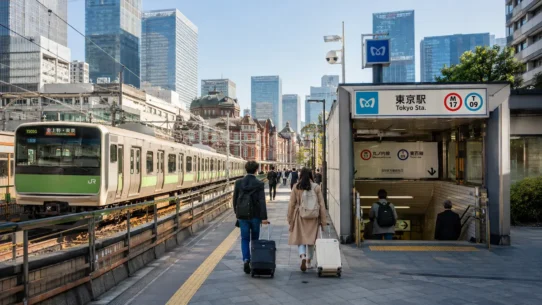
- Check whether your train stays on the same service. Some Keikyu trains continue onto the Toei Asakusa Line, while others require a change. Read the destination board rather than boarding the first train marked “Tokyo.”
- Avoid major commuter transfers during rush hour when possible. Shinagawa and the JR Yamanote Line are efficient, but a full-size suitcase at roughly 07:30–09:30 or 17:00–19:30 can turn a simple route into a battle for space.
- Use an IC card or supported contactless payment, but keep a backup. Keikyu supports tap-to-ride at participating gates, although some transfer gates are excluded and not every overseas card works reliably.
- Do not buy an airport transfer before checking luggage capacity. “Four passengers” does not automatically mean four passengers plus four large suitcases. Vehicle and baggage limits matter more than the seat count.
- For late arrivals, check the timetable after landing. A delayed flight, immigration queue or slow baggage belt can remove your planned option. Selected late-night buses operate on certain routes and dates, but should never be assumed without checking.
Choose by Where You Are Staying
| Hotel Area | Best First Choice | Why | When to Choose Something Else |
|---|---|---|---|
| Shinagawa | Keikyu | Direct, fast and inexpensive | Take a taxi if your hotel is uphill, far from the station or you have several bags |
| Shibuya | Keikyu to Shinagawa, then JR | Usually the best balance of speed and cost | Use a bus or transfer if your hotel is far from Shibuya Station or you arrive in rush hour |
| Shinjuku | Limousine bus for luggage; Keikyu plus JR for speed | The best choice depends heavily on your exact hotel | A private transfer becomes reasonable for three or four people with large bags |
| Tokyo Station / Marunouchi | Monorail to Hamamatsucho, then JR, or a direct bus where available | The JR connection is logical and frequent | Choose a bus if your hotel is not close to the station platform you will use |
| Ginza / Shimbashi | Keikyu through service or Monorail plus JR | Both can work; the best route depends on the nearest station | Choose a taxi if your hotel is several blocks from the station and you have heavy luggage |
| Asakusa / Oshiage | Keikyu through service to the Toei Asakusa Line | Potentially direct with no luggage-dragging transfer | Take a bus or transfer when arriving late or when the through service is inconvenient |
| Ikebukuro | Bus for luggage; rail for frequency | It is a longer cross-city journey, so comfort matters | Private transfer can make sense for a family or group |
| Tokyo Disney Resort | Direct airport bus when the timetable fits | Avoids multiple rail transfers with children and bags | Use a private transfer for late arrivals or large family groups |
The Full Experience
🚆 Keikyu Airport Line: Best for Shinagawa, Shibuya, Shinjuku, Asakusa and Oshiage
Fastest-value pick · From about ¥330 · Best with light-to-medium luggage · Direct trains available to eastern Tokyo
The Keikyu Airport Line is the route I would check first for most travellers. From Haneda Airport Terminal 3, the fastest services reach Shinagawa in about 11 minutes; from Terminals 1 and 2, the official estimate is about 14 minutes. A regular paper ticket from Terminal 3 to Shinagawa is about ¥330, with a slightly lower IC fare.
Its biggest advantage is not only speed. Keikyu connects naturally with the JR network at Shinagawa and operates through services onto the Toei Asakusa Line. That makes it especially useful for Asakusa, Higashi-ginza, Nihombashi and Oshiage, where the right train can remove a transfer entirely.
Best route examples:
- Shinagawa: direct Keikyu train. This is the cleanest airport-to-city rail journey.
- Shibuya or Shinjuku: Keikyu to Shinagawa, then transfer to the JR Yamanote Line. It is efficient but not particularly relaxing with large luggage at rush hour.
- Asakusa or Oshiage: look for a train continuing onto the Toei Asakusa Line. The train may change its service name while you remain on board.
- Tokyo Station: Keikyu to Shinagawa, then JR. It can be quick, but the transfer quality depends on crowd levels and your luggage.
✅ What Other Travelers Say
Travellers regularly praise Keikyu for being surprisingly quick and inexpensive. Those staying near Shinagawa often describe it as the obvious choice. Visitors heading to Asakusa also appreciate the possibility of a one-seat ride. The most common complaints are not about the train itself, but about reading the destination signs, standing with luggage and finding the correct JR transfer path at Shinagawa.
⚠️ The Catch (Things to Keep in Mind)
- Not every train serves your destination directly. Some trains go toward Yokohama; others continue toward central and eastern Tokyo. Confirm the destination before boarding.
- Seats are not guaranteed. These are commuter trains, not airport expresses with reserved seats and large luggage racks.
- Shinagawa is efficient but busy. With one cabin bag it is easy. With two large suitcases, a stroller and a tired child, the bus may be the better journey even if it takes longer.
- Contactless tap-to-ride has exceptions. Keikyu notes that some transfer gates, including the transfer gate at Shinagawa, do not support the service. An IC card remains the simplest all-round option.
Editor’s verdict: This is the best default for solo travellers, couples and anyone staying near a station with a simple one-transfer route. It is less attractive for families carrying more luggage than they can comfortably lift.
Check Keikyu journey times and fares on the official airport access guide.
🚝 Tokyo Monorail: Best for Hamamatsucho, Tokyo Station, Yurakucho and a Simple JR Connection
Easy airport platforms · ¥520 to Hamamatsucho · Good JR connection · Scenic Tokyo Bay approach
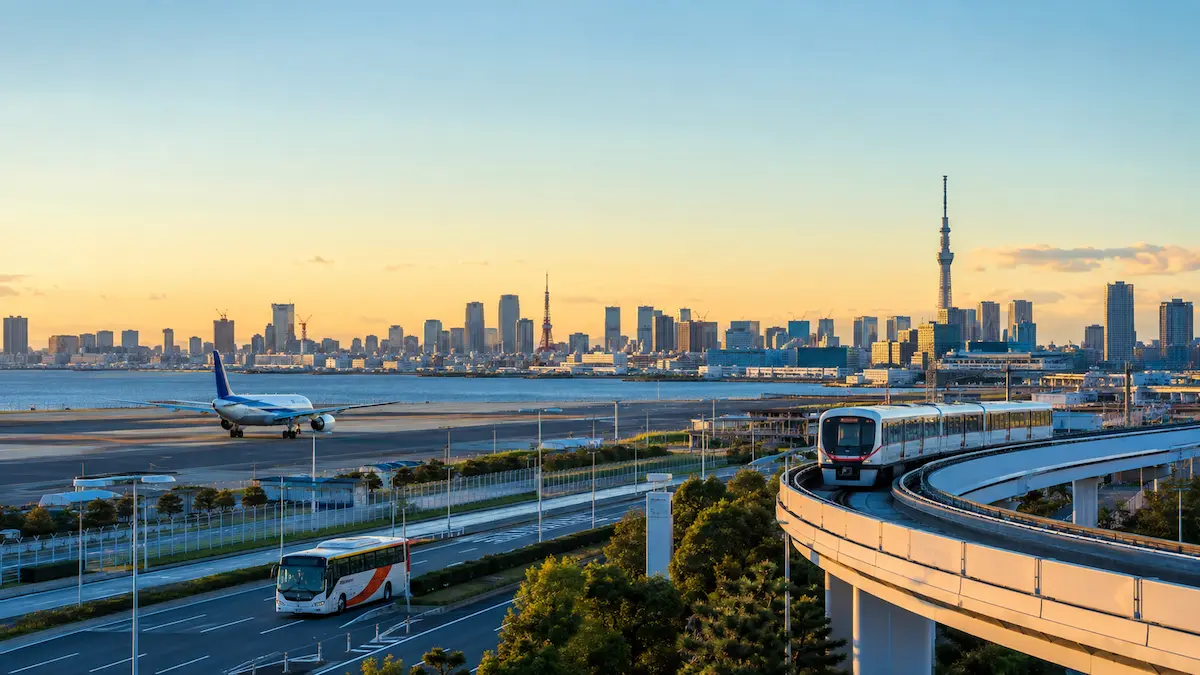
The Tokyo Monorail links all Haneda terminals with Hamamatsucho, where you can transfer to the JR Yamanote Line and Keihin-Tohoku Line. The official airport estimate is about 20 minutes to Hamamatsucho, and the adult fare is ¥520 with a paper ticket or ¥519 using an IC card.
The monorail feels more like an airport route than Keikyu. Airport Rapid services make fewer stops, the route is easy to understand and the elevated ride offers views across Tokyo Bay. It is a good first choice for Hamamatsucho itself and a logical route to Tokyo Station, Yurakucho, Ueno and other JR-served areas.
On weekends, public holidays and selected dates, the Monorail and Yamanote Line Discount Ticket can cover travel from Haneda to any station on the Yamanote Line for ¥590. That can be excellent value, but do not build your plan around it without confirming that it is sold on your travel date.
✅ What Other Travelers Say
Travellers like the clear airport signage, frequent departures and the feeling that the monorail was designed for airport users. Many also enjoy the waterfront view after a long flight. Positive reviews often mention that buying or redeeming a ticket is straightforward.
⚠️ The Catch (Things to Keep in Mind)
- Hamamatsucho is usually not your final stop. Most visitors still need a JR train and possibly a walk or subway connection.
- The transfer can involve more movement than expected. Elevators and escalators are available, but following the luggage-friendly path may take longer than the fastest walking route shown by an app.
- Local trains take longer. Check whether you are boarding an Airport Rapid, Rapid or Local service.
- Rush-hour crowding still exists. The monorail begins at the airport, so you may get a seat, but the onward JR train can be packed.
Editor’s verdict: Choose the monorail when Hamamatsucho creates a clean onward route to your hotel. Do not choose it merely because “the monorail is famous”; for Shinjuku, Shibuya or Asakusa, Keikyu or the bus may involve less effort.
Check the official Tokyo Monorail fare table and discount ticket conditions.
🚌 Airport Limousine Bus: Best for Shinjuku Hotels, Families and Heavy Luggage
No train transfers · Luggage stored underneath · ¥1,400 to Shinjuku · Best when the stop matches your hotel
The Airport Limousine Bus is often dismissed as slower and more expensive, but that comparison is unfair when it ignores the final kilometre. If the bus stops at your hotel, you can leave Haneda, sit down and collect your luggage close to reception. That can beat a faster rail route involving a crowded transfer, elevators, station exits and a long pavement walk.
The official adult fare to the Shinjuku area is ¥1,400, with a child fare of ¥700. Stops include major terminals and selected hotels such as the Shinjuku Washington Hotel, Keio Plaza Hotel, Hilton Tokyo and Hotel Sunroute Plaza Shinjuku, although not every departure serves every stop.
From Haneda, you can reserve online or buy a timed ticket from an airport vending machine. Some routes also accept transport IC cards. The luggage goes in the compartment under the bus, which is the main reason this option feels easier than rail.
✅ What Other Travelers Say
Travellers carrying two large bags frequently say the bus removed the worst part of arriving in Tokyo: navigating a giant station while exhausted. Families appreciate having assigned capacity rather than squeezing into a commuter train. Hotel-stop passengers are usually the most enthusiastic because the real door-to-door time can be competitive.
⚠️ The Catch (Things to Keep in Mind)
- Tokyo traffic is unpredictable. A journey scheduled for around 40–60 minutes can take much longer during congestion, bad weather or an incident on the expressway.
- The stop name matters. “Shinjuku” could mean the expressway bus terminal, the west side of the station or a specific hotel. Check the walking route from the exact stop.
- Not every bus stops at every hotel. Read the individual departure row, not only the route page.
- Seats can sell out. Reservation is sensible for peak travel dates, family groups and late services.
- Check luggage rules. Standard allowances are generous for normal travellers, but oversized items, sports equipment and unusually large quantities may require another plan.
Editor’s verdict: Pay extra for the bus when it removes a difficult transfer or a long final walk. Do not take it merely because your hotel is in the same district; take it because the actual stop is useful.
Check the official Haneda–Shinjuku route, fare and hotel stops.
🚕 Taxi or Pre-Booked Private Transfer: Best for Late Arrivals, Families and Groups
Door-to-door · 24-hour option · Best for 3–6 travellers · Reserve the right vehicle size
A taxi or private transfer is not the budget choice for one person, but the calculation changes for a group. Four travellers splitting a fixed fare may pay only a modest premium over four bus tickets, while avoiding transfers and luggage handling. It is also the most dependable option after the practical end of public transport.
Current published flat-fare examples from Haneda include approximately ¥7,600 to Chiyoda Ward, ¥8,500 to Shibuya Ward and ¥9,000 to Shinjuku Ward during daytime hours. Late-night flat fares are higher: approximately ¥9,000 to Chiyoda, ¥10,000 to Shibuya and ¥10,700 to Shinjuku. Expressway tolls are additional and can add up to roughly ¥1,320 depending on the route.
A regular airport taxi can be taken from the terminal taxi stand without advance reservation. A pre-booked private transfer usually adds benefits such as flight tracking, a named driver or meeting instructions, larger vehicle choices and a price visible before arrival. However, the quality of the booking depends on reading the conditions, not just the headline price.
✅ What Other Travelers Say
Families and groups commonly praise the relief of walking out of arrivals and travelling directly to the hotel. Recent transfer-platform reviews often highlight punctual drivers, clean vehicles and easy communication. The strongest positive feedback comes from travellers arriving in bad weather, after midnight or with children.
⚠️ The Catch (Things to Keep in Mind)
- Fixed fare does not mean all-inclusive. Expressway tolls are normally extra, and late-night pricing applies between 22:00 and 05:00.
- Multiple stops may void the fixed fare. A standard fixed-fare taxi is generally based on one pickup and one drop-off point.
- Vehicle size is the biggest booking mistake. A sedan that seats four may not hold four adults plus four 28-inch suitcases.
- Check waiting-time rules. Flight tracking may be included, but some operators start a free waiting period after the actual landing time or after the driver arrives.
- Private transfer prices vary by provider and demand. Compare the final checkout price, cancellation terms, luggage allowance and child-seat policy.
Editor’s verdict: For one light-packing traveller, take the train. For a family of four with luggage, a late landing or a hotel far from a useful station, compare a private transfer before rejecting it as “too expensive.” Convenience divided by four can be good value.
Read the official Haneda fixed-fare taxi rules.
What to Do If You Land Late at Night
A scheduled arrival at 22:30 does not mean you will reach the train platform at 22:45. The aircraft still has to taxi and park; you then need immigration, baggage collection, customs and the walk to the station. A conservative plan is to assume that an international arrival may need 45–90 minutes before you are ready to leave, with longer waits possible during busy periods.
Your late-night order of preference should be:
- Check live train and bus departures after clearing customs. Do not rely on a screenshot saved weeks earlier.
- Check the official late-night airport bus page. Selected late-night services operate toward Shinjuku, Higashi-Shinjuku and Ikebukuro on relevant dates, but availability and times can change.
- Use a taxi or pre-booked transfer. Expect the late-night fare and tolls.
- Stay near the airport when the fare is unreasonable. An airport hotel can cost less than a late-night transfer for a solo traveller, while also avoiding a 01:00 hotel check-in across town.
Check official late-night and early-morning bus information.
Key FAQs
What is the cheapest way to get from Haneda Airport to Tokyo?
The Keikyu Airport Line is usually the cheapest practical option. Haneda Terminal 3 to Shinagawa costs about ¥330, and many central districts can be reached for roughly ¥500–¥650 after one transfer. The cheapest route is not always the best route if your hotel requires a long walk or several lifts with luggage.
Is the Tokyo Monorail or Keikyu better from Haneda Airport?
Keikyu is generally better for Shinagawa, Shibuya, Shinjuku, Asakusa and Oshiage. The monorail is generally better when Hamamatsucho creates a simple JR connection to Tokyo Station, Yurakucho, Ueno or another Yamanote Line station. Choose by your final hotel station, not by which airport train looks more iconic.
How do I get from Haneda Airport to Tokyo after midnight?
First check whether a dated late-night bus is operating to your area. Otherwise, use a taxi, reserve a private transfer or stay at an airport-area hotel. Public transport does not run continuously through the night, and a 20% late-night taxi premium applies from 22:00 to 05:00, with expressway tolls charged separately.
Final Verdict and Your Next Step
For Shinagawa: take Keikyu unless your hotel is inconveniently far from the station.
For Shibuya and Shinjuku: take Keikyu plus JR when you are travelling light and want speed. Take the limousine bus when the stop serves your hotel or luggage is the priority.
For Asakusa and Oshiage: choose a Keikyu train that continues onto the Toei Asakusa Line. A direct ride is far more valuable than saving two or three minutes on paper.
For Tokyo Station, Marunouchi and Yurakucho: the monorail plus JR is easy to understand, while a direct bus is better when its stop is close to your hotel.
For late arrivals, families and groups: compare a private transfer before committing to a complicated rail journey. The total price per person may be more reasonable than expected.
Book ahead when you need a specific bus departure, a larger private vehicle, a child seat or a late-night pickup. Last-minute transport is usually available at Haneda, but last-minute choices are where travellers overpay, accept the wrong vehicle or discover that the convenient bus has sold out.
Compare and reserve: