
💡 Key Takeaways
- Do not treat Daegu like a checklist city. The smartest 3-day Daegu itinerary separates central Jung-gu, southern Apsan, and northeastern Palgongsan instead of zigzagging across town.
- Seomun Market is a daytime market first and a weekend night market second. Arriving at 8 p.m. on a weekday is one of the easiest ways to find the food scene far quieter than you expected.
- Apsan is best planned around the cable car’s actual last operating time, not around sunset alone. Friday to Sunday generally gives you a much safer window for a sunset-and-night-view visit.
- Palgongsan and Donghwasa deserve their own day. Trying to squeeze them between E-World, Suseongmot, or downtown shopping creates exactly the kind of transfer-heavy itinerary that looks fine on a map and feels awful in real life.
- Most core sights in this itinerary do not have meaningful skip-the-line products. Save pre-booking for optional paid attractions, tours, or transport products rather than buying unnecessary “priority” tickets.
Daegu is easy to underestimate. First-time visitors often see the city’s compact-looking map, save a dozen attractions, and assume they can bounce between Seomun Market, Apsan, E-World, Suseongmot, Dongseong-ro and Palgongsan in one heroic day. That is how a relaxed city break turns into long bus waits, uphill walks, missed cable cars and dinner at the wrong end of town. This 3-day Daegu itinerary is built for real travel conditions: sensible geographic clusters, realistic walking, meal timing, weekend-only night-market hours and enough breathing room to enjoy Daegu rather than simply photograph it.
I have deliberately left several “famous” combinations out of the core route. E-World is fun, but it needs four to six hours if you actually want to ride attractions. Gatbawi is memorable, but it adds a proper uphill effort and should not be treated as a quick add-on to Donghwasa. Suseongmot is pleasant, especially in the evening, but it is a poor reason to cross the city after a full Palgongsan day. The route below focuses on the classic Daegu experiences that work best together.
The 1-Min Cheat Sheet
- Seomun Market — Best for food lovers, market browsers and first-time visitors who want a local-feeling introduction to Daegu. Allow 2–3 hours if you are eating as you go. General market entry is free. The easiest access is Seomun Market Station on Daegu Metro Line 3. No reservation is needed. Go from about 10:30 a.m. to 1:30 p.m. for the fullest daytime food selection; the official night market currently operates Friday–Saturday 19:00–23:30 and Sunday 19:00–22:30. Biggest catch: the night market is closed Monday–Thursday, and individual daytime stalls can shut before the market’s headline closing time.
- Daegu Modern Culture Alley — Best for history, architecture, photography and travelers who want a free attraction with actual context. Allow about 2 hours for the classic route; VisitKorea describes the route as roughly 1.3–1.6 km depending on the version followed. The lanes themselves are free, and Gyesanyega is also free. Cheongna Hill Station is the most useful metro anchor. No reservation is normally required. Start around 9:30–10:00 a.m. before the lanes get hotter and busier. Biggest catch: the famous March 1st Movement section includes around 90 steps, so the route is not as stroller- or suitcase-friendly as its short distance suggests.
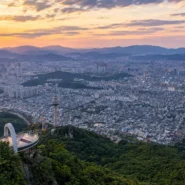
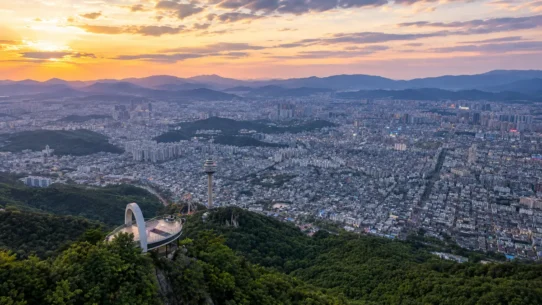
- Apsan Cable Car & Observatory — Best for skyline views, couples, photographers and anyone who wants a mountain experience without a full hike. Allow 2.5–4 hours including access from the city, the walk to the lower station and time at the top. VisitKorea currently lists the cable car at KRW 14,000 round trip for adults and KRW 10,000 for children; the observatory itself is free. Use Metro Line 1 toward the Nam-gu side, then bus or a short taxi to Apsan Park; from the final road-side stop you still have a walk to the cable-car building. No advance reservation is normally needed. Aim for late afternoon on Friday–Sunday if you want sunset plus city lights. Biggest catch: weather and maintenance can change operations, and the weekday closing window can be too early for summer sunset.
- Anjirang Gopchang Alley — Best for adventurous eaters, groups and travelers who want one of Daegu’s signature food streets. Allow 1.5–2 hours for dinner. There is no area admission fee; you pay your restaurant bill. Anjirang Station, Exit 3, is the practical metro stop, with the alley around a short walk away. No reservation is usually needed for casual shops, though larger groups should book. Go around 17:30–19:00 before peak dinner crowds. Biggest catch: gopchang and makchang are offal; if that is not your thing, do not force it for the sake of “authenticity.” Choose another Nam-gu dinner instead.
- Palgongsan Cable Car & Donghwasa Temple — Best for scenery, Buddhist culture and travelers who want one properly paced mountain day. Allow 5–7 hours from central Daegu. VisitKorea currently lists the Palgongsan Cable Car at KRW 14,000 round trip for adults; Donghwasa’s current VisitKorea listing does not show a general admission charge, though paid experiences such as temple programs are separate. From Dongdaegu Station, the official Daegu tourism route uses Express Bus 1 toward Donghwasa; the temple entrance involves an additional walk. No reservation is needed for a normal temple visit or standard cable-car ticket. Go in the morning and return before commuter traffic. Biggest catch: do not add Gatbawi unless you actually want a hike; it is not a casual extension of this route.
Tourist Traps to Avoid & Itinerary Hacks
- Trap: “Seomun Market = night market every night.” It does not. The official Seomun Night Market schedule currently runs Friday to Sunday only. If your Daegu dates fall Monday–Thursday, treat Seomun as a daytime food stop and move your evening to Dongseong-ro, Anjirang or another neighborhood instead.
- Trap: Seomun + Apsan + Suseongmot + E-World because they all look “inside Daegu.” They are inside the same city, but they sit in different directions and have different ideal visiting windows. E-World wants a long block; Apsan wants late afternoon or evening; Seomun is strongest earlier in the day. Combining them usually means paying for taxis simply to repair a bad itinerary.
- Trap: timing Apsan purely for sunset. The view is wonderful, but the cable car is the constraint. Current VisitKorea information lists shorter operating hours Monday–Thursday and later operation Friday–Sunday. In summer, sunset can occur after the weekday cable car’s practical return window. Check the official site on the day and never assume the last car will wait for sunset.
- Trap: “The cable car means no walking.” Both Apsan and Palgongsan still involve approach walks, slopes and stairs. The cable car removes the major climb, not every climb. If you have knee issues, a stroller or a traveler who tires easily, use a taxi for the awkward last-mile sections rather than proving a point with public transport.
- Trap: putting Gatbawi after Donghwasa because both are on Palgongsan. They belong to the same mountain system, not the same casual sightseeing stop. Gatbawi involves a real ascent and should be treated as a hiking objective. For a first three-day visit, Donghwasa plus Palgongsan Cable Car is the better-balanced combination.
- Hack: use taxis strategically, not constantly. Daegu’s metro is excellent for the central spine, but a short taxi can save 30–45 minutes around Apsan or within the Palgongsan tourist district. Spend money where it removes a bad transfer, not where the subway is already direct.
- Hack: keep E-World as a swap, not an add-on. If you are traveling with children or love rides, replace Day 3’s mountain/temple day or replace half of Day 1. Do not bolt E-World onto an already full day. Klook itself suggests roughly 4–6 hours for the attraction.
The Perfect 3-Day Itinerary at a Glance
Day 1: Central Jung-gu — Seomun Market, Modern Culture Alley & Dongseong-ro
Suggested start: 9:15 a.m. from a central hotel, or about 9:30 a.m. from Dongdaegu Station after dropping luggage.
Order: Cheongna Hill / Modern Culture Alley → Gyesan Cathedral and Gyesanyega → Seomun Market for early lunch → optional Dongseong-ro in the late afternoon/evening.
Transport: Metro to Cheongna Hill Station, then walk the historic route. Continue on foot or make a very short metro/taxi hop to Seomun Market depending on your exact finish point. After the market, Metro Line 3 plus a transfer or a short taxi gets you back toward central Dongseong-ro.
Walking & difficulty: Roughly 6–8 km for the full day if you explore properly. Overall easy, but the Modern Culture Alley includes steps and uneven older lanes. In summer, heat is a bigger issue than distance.
Lunch strategy: Make Seomun Market your lunch, not a post-lunch snack stop. Arrive hungry around 11:30 a.m.–12:00 p.m. so you can try flat dumplings, noodles, hotteok and other small dishes without wasting a separate restaurant meal.
Easiest cut: Dongseong-ro. It is enjoyable, but it is shopping and nightlife rather than a must-see historic attraction. If your feet are done after Seomun, go back to the hotel without guilt.
Rain / low-energy alternative: Shorten the alley walk to Gyesan Cathedral + Gyesanyega, spend more time under cover at Seomun Market, then use cafes and underground/department-store shopping around the central district.
Why this works better: The day follows a west-to-east central-city flow. More importantly, it puts Seomun in its strong daytime food window instead of gambling on the night market. If your Day 1 is Friday, Saturday or Sunday and you specifically want the night market, reverse the day: do Modern Culture Alley later in the morning, rest in the afternoon, then return to Seomun after 19:00.
Day 2: Southern Daegu — Apsan Park, Cable Car & Anjirang Gopchang Alley
Suggested start: 11:00 a.m. on a Friday–Sunday sunset plan; 9:30–10:00 a.m. on Monday–Thursday when cable-car closing times may make a late visit risky.
Order: Apsan Café / park area → light lunch or coffee → Apsan Cable Car → Apsan Observatory → descend → Anjirang Gopchang Alley for dinner.
Transport: Metro Line 1 toward Nam-gu, then local bus or taxi to Apsan Park. For first-timers, I prefer a short taxi for the final approach because the bus stop is not the cable-car door. After descending, taxi or bus toward Anjirang Station / Gopchang Alley.
Walking & difficulty: About 5–7 km depending on how much of the park you explore. Moderate because of the slope to the cable-car station and the walking around the upper station. You can reduce the day substantially with taxis.
Lunch strategy: Eat lightly before the cable car. A heavy barbecue lunch makes the uphill approach feel worse, and you want appetite left for Anjirang in the evening.
Easiest cut: Extra Apsan trails or the café street. Keep the cable car and observatory; drop the ornamental walking if the heat, rain or your knees say no.
Rain / low-energy alternative: Skip the cable car if visibility is poor. Replace it with Suseongmot plus a café, or use E-World as a weather-tolerant entertainment swap if rides are operating. Do not pay for a mountain view when the mountain is sitting inside cloud.
Why this works better: Apsan and Anjirang are natural neighbors in Nam-gu. This avoids the classic mistake of descending Apsan and then crossing the city to Seomun or Suseongmot for dinner. Your evening meal is already in the right direction.
Day 3: Northeastern Daegu — Palgongsan Cable Car & Donghwasa Temple
Suggested start: 8:45–9:00 a.m. from central Daegu or Dongdaegu Station.
Order: Dongdaegu transport hub → Express Bus 1 toward the Palgongsan/Donghwasa area → Palgongsan Cable Car → early lunch near the mountain facilities → Donghwasa Temple → return to Dongdaegu before dinner.
Transport: Use the direct bus from the Dongdaegu area rather than building a metro-plus-bus maze. VisitKorea notes that the Palgongsan Cable Car station is about a 15-minute walk from Donghwasa Temple, making these two the obvious same-day pair. If you are tired, take a very short taxi rather than waiting for a local connection.
Walking & difficulty: Roughly 5–8 km with modest slopes if you keep to the cable-car area and main temple complex. Moderate. Add a ridge walk only if everyone in the group genuinely wants more hiking.
Lunch strategy: Eat in the Palgongsan tourist area between the cable car and temple. Do not waste 60–90 minutes returning downtown for a “famous” restaurant mid-day.
Easiest cut: Palgongsan Cable Car in poor visibility. Donghwasa still works in cloudy weather and often feels more atmospheric when the mountain is misty.
Rain / low-energy alternative: Make Donghwasa the main event and return downtown earlier. If rain is heavy enough to make temple paths slippery, substitute the National Daegu Museum plus Suseongmot cafés or spend a half-day at E-World/83 Tower if operations permit.
Why this works better: Palgongsan is not a “quick northern stop.” The ride from central Daegu is part of the day. Giving it its own geographic block lets you enjoy the mountain without looking at the clock every twenty minutes.
Save Your Legs! The Most Efficient Route
The route works because each day has one direction. Day 1 stays in central Jung-gu, where walking is more efficient than repeatedly entering and exiting the metro. Day 2 stays in Nam-gu, pairing Apsan with Anjirang instead of crossing town after the mountain. Day 3 commits to Palgongsan and Donghwasa, which are far enough from the center that they deserve an uninterrupted block.
The most deceptive combinations are the ones that look close on a zoomed-out map. Apsan and E-World are both on the western/southern side of Daegu, but E-World is not a one-hour viewpoint: it is a theme park that wants half a day. Seomun Market and Apsan are not difficult to connect, but their best time windows compete with each other if you are aiming for Seomun food and Apsan sunset. Suseongmot is easy enough to reach, but adding it after Palgongsan creates another cross-city journey when you are already tired.
Use the metro for predictable central-city movement and trips to stations such as Cheongna Hill, Seomun Market, Anjirang and Dongdaegu. Use buses when there is a genuinely direct route, especially Express Bus 1 toward Donghwasa. Use taxis for awkward last-mile links around Apsan or when a 10-minute ride replaces a 30-minute bus wait plus a slope. Walk within Jung-gu because that is where the city’s historic texture actually makes sense on foot.
Do not underestimate surfaces. The Modern Culture Alley includes the famous 90-step March 1st Movement section. Apsan has uphill approaches even if you use the cable car. The upper mountain areas can have stairs, uneven paving and slippery surfaces in rain or winter. Donghwasa is a temple complex on mountain terrain, not a flat indoor attraction. Large suitcases and heavy strollers are a bad match for all of these places.
Where to stay: For this exact itinerary, I would choose either Banwoldang/Dongseong-ro or Dongdaegu Station. Banwoldang/Dongseong-ro is better for evening food, shopping and walking access to central Daegu; the trade-off is that you need to travel to Dongdaegu before the Palgongsan bus. Dongdaegu is better if you arrive or leave by KTX, have a lot of luggage, or value easy transfers over nightlife; the trade-off is a less atmospheric evening base. A hotel near Cheongna Hill is an underrated compromise for Day 1 and the city-tour-bus zone, but it has less big-city evening energy than Dongseong-ro.
Luggage strategy: Do not drag luggage through Modern Culture Alley or up to any cable car. Dongdaegu Station has coin lockers in and around the rail/metro complex; a current locker directory lists small, medium and large units, though real-time availability is never guaranteed. Your first choice should still be your hotel: ask them to hold bags before check-in or after check-out. If you are arriving by KTX and only have a few hours before your room is ready, store luggage at Dongdaegu first, then start sightseeing. For intercity hotel-to-hotel luggage forwarding, ask your accommodation to arrange or recommend a current Korean delivery service rather than assuming every property participates.
Ticket Tips & Skip-the-Line Hacks
Daegu is refreshing because many of its best sights do not require an elaborate ticket strategy. Seomun Market, Modern Culture Alley, Gyesanyega and the general Donghwasa visit do not need advance attraction tickets. Apsan Cable Car and Palgongsan Cable Car are normally straightforward on-site purchases. In other words, there is no legitimate reason to pay a third party for a mysterious “skip-the-line” package at a place that does not operate a true priority-access lane.
For Apsan Cable Car, the bigger issue is operating time and weather, not pre-booking. VisitKorea currently lists the round-trip adult fare at KRW 14,000 and advises checking the official website because hours vary. For Palgongsan Cable Car, VisitKorea also lists KRW 14,000 round trip for adults and states that operating hours vary by month. Buy on site unless an official or reputable seller clearly offers a dated e-ticket product that suits your plans.
Where e-tickets actually help is with optional paid attractions and organized transport. E-World + 83 Tower currently has live Klook and KKday product pages with mobile/e-voucher redemption, and the current Klook listing includes an all-day pass plus observatory package. KKday also has a live Daegu City Tour sightseeing-bus product using an e-voucher. Those products can save you the hassle of translating a ticket counter or deciding on the spot, but they are not magic queue-jump products.
Important: before departure, re-check official opening hours, maintenance days, weather closures, last-entry times and reservation rules. Cable-car schedules are especially vulnerable to wind, rain and inspection changes. Seomun Night Market also posts weather-related closure notices on its official site.
Verified booking pages checked during research (8 August 2026):
Klook — Daegu E-World Ticket
KKday — E-World Park & 83 Tower Admission
KKday — Daegu City Tour Sightseeing Bus
Klook — Daegu Top Attractions Full-Day Private Tour
QR-code reality check: some sellers describe redemption as an e-voucher, mobile voucher or QR code rather than direct gate scanning. Read the “How to use” section before paying. If a product requires ticket exchange, that is not the same as walking straight through a turnstile.
Tried & Tested: My Honest Review
📍 Stop 1: Seomun Market
Food-first • Budget-friendly • Local atmosphere • Best before mid-afternoon • Weekend night market
Seomun is the easiest place in Daegu to overthink and the easiest place to enjoy. Do not arrive with a restaurant checklist. Walk one full pass first, note what looks busy and fresh, then eat in small portions. The market is much larger than a tourist food court, with textiles and household goods mixed into the experience, so it rewards wandering.
✅ What Other Travelers Say
Recent traveler discussions repeatedly praise the size of the market and the street food, but they also confirm the timing problem: visitors who arrive late can find daytime stalls already winding down. A very recent 2026 report described a busy Sunday afternoon with lots of people browsing food stalls, which matches the case for going earlier rather than treating the market as a guaranteed late-night venue.
⚠️ The Catch (Things to Keep in Mind)
The official market and the night market are two different rhythms. The daytime market currently runs roughly 09:00–18:00, while the night market is Friday–Sunday only. Even during published hours, individual vendors make their own decisions. If one specific food is essential to you, go earlier.
Official checks: Seomun Night Market and VISITKOREA market listing.
📍 Stop 2: Daegu Modern Culture Alley
History • Architecture • Free • 1.3–1.6 km core route • Steps and uneven lanes
This is the stop that makes Daegu feel more distinctive than a generic Korean shopping city. The route threads churches, old houses, independence-movement history and small lanes together without requiring a museum marathon. It is also compact enough to finish before lunch.
✅ What Other Travelers Say
Travelers tend to appreciate the free admission and the fact that the history is embedded in a living neighborhood rather than sealed inside one attraction. The route is especially good for people who enjoy architecture and street photography more than “must-do” entertainment.
⚠️ The Catch (Things to Keep in Mind)
Do not judge the effort by kilometers alone. The March 1st Movement section includes about 90 stairs, and some older lanes are uneven. If mobility is limited, focus on Cheongna Hill, Gyesan Cathedral and Gyesanyega, then skip the stair-heavy sections.
Official checks: VISITKOREA Modern Culture route and Gyesanyega practical information.
📍 Stop 3: Apsan Cable Car & Observatory
Panoramic views • Sunset • Cable car • Moderate walking • Weather-sensitive
Apsan is the visual payoff of the city itinerary. The best version of the experience is not “ride up, photo, ride down.” Give yourself time for the approach, the cable car, the ridge-side viewpoint and the change from daylight to city lights if the schedule allows. If the sky is hazy, however, the KRW 14,000 round trip can feel much less rewarding.
✅ What Other Travelers Say
Traveler reviews are unusually consistent: sunset and night views are the reason to go, and the cable car is convenient. Recent comments also point out that there is still a 15–25 minute approach walk from the road-side transport stop to the cable-car station, which catches first-time visitors off guard.
⚠️ The Catch (Things to Keep in Mind)
The biggest danger is planning around a sunset time that does not match the cable-car schedule. Current VisitKorea information shows later operation toward the weekend, but hours are seasonal and subject to change. Never hike up assuming you can cable-car down without checking the last descent.
Official check: VISITKOREA Apsan Cable Car.
📍 Stop 4: Anjirang Gopchang Alley
Daegu specialty food • Nightlife atmosphere • Groups • Casual dining • Not for everyone
Anjirang works because of where it sits in the itinerary, not because every traveler must eat offal. After Apsan, it is an easy thematic finish: mountain view first, Daegu specialty dinner second. The official Daegu tourism site describes dozens of gopchang restaurants clustered in the alley, with the district operating late into the night.
✅ What Other Travelers Say
The alley is regularly presented by local and national media as one of Daegu’s signature food streets. What travelers tend to enjoy is the density of options and the lively dinner atmosphere rather than one single “famous” restaurant.
⚠️ The Catch (Things to Keep in Mind)
Gopchang and makchang are grilled intestines. The texture, smell and smoke are part of the experience. If you already know you dislike offal, choose a different dinner nearby. A travel itinerary is not improved by forcing yourself through a food you hate.
Official check: DaeguTour food streets.
📍 Stop 5: Palgongsan Cable Car & Donghwasa Temple
Mountain scenery • Buddhist heritage • Half-to-full day • Direct bus access • Calm pace
This is the day that separates a thoughtful Daegu itinerary from a rushed one. Palgongsan is far enough from downtown that the journey has to be respected. Once you are there, however, the combination is efficient: VisitKorea notes the cable-car station is about a 15-minute walk from Donghwasa Temple, so the mountain view and temple belong together.
✅ What Other Travelers Say
Travelers who make the trip often describe Donghwasa as worth the bus ride, and hiking-focused visitors regularly recommend Palgongsan as one of the area’s best outdoor escapes. Temple-stay reports are also strongly positive for travelers who want a deeper cultural experience rather than a quick photo stop.
⚠️ The Catch (Things to Keep in Mind)
Do not confuse “Palgongsan day” with “Gatbawi day.” Gatbawi is a separate hiking objective. If your group is not prepared for sustained stairs and uphill walking, keep the itinerary to the cable car, a short ridge stroll and Donghwasa. You will see more by rushing less.
Official checks: VISITKOREA Palgongsan Cable Car and VISITKOREA Donghwasa Temple.
Key FAQs
What is the best 3-day Daegu itinerary for first-time visitors without a car?
Spend Day 1 in central Jung-gu at Modern Culture Alley and Seomun Market, Day 2 in Nam-gu at Apsan and Anjirang, and Day 3 around Palgongsan and Donghwasa. This keeps long-distance travel to one direction per day and works with Daegu’s metro, buses and occasional short taxis.
Is 3 days in Daegu too long?
Not if you like food, urban history and a slower mountain day. Two days is enough for the city highlights; three days becomes worthwhile when you give Palgongsan/Donghwasa proper time instead of using Daegu only as a KTX stop. If you prefer theme parks to temples, swap Day 3 for E-World and 83 Tower.
Should I stay near Dongdaegu Station or Dongseong-ro for a Daegu itinerary?
Choose Dongdaegu Station if KTX convenience, luggage and the Palgongsan bus matter most. Choose Dongseong-ro/Banwoldang if evening food, shopping and central-city atmosphere matter more. For a three-night leisure stay, I slightly prefer Dongseong-ro; for a short stop between Seoul and Busan, Dongdaegu is hard to beat.
Final Verdict and Your Next Step
The best Daegu trip is not the one with the most pins saved in your map app. It is the one where you are eating at Seomun while the stalls are active, reaching Apsan before the cable-car deadline, and giving Palgongsan enough time that the mountain actually feels like an escape. This three-day route does exactly that: central history and food first, southern skyline and dinner second, mountain and temple third.
Before you travel, verify the official hours for Seomun Night Market, Apsan Cable Car and Palgongsan Cable Car again. If your dates include a cable-car maintenance day, poor mountain weather or a Monday–Thursday Seomun evening, adjust the order rather than forcing the original plan.
If you want E-World as your family-friendly or rainy-day replacement, buying a verified e-ticket before you arrive is usually smarter than sorting out the product at the gate. If you would rather outsource transport entirely, a city-tour or private-tour product can also be useful for travelers who dislike Korean bus transfers.
Book / check current availability:
Klook — Daegu E-World & 83 Tower Ticket
KKday — E-World Park & 83 Tower Ticket
KKday — Daegu City Tour Sightseeing Bus
Klook — Daegu Top Attractions Private Tour