
💡 Key Takeaways
- Dongseong-ro and Jungangno are the best all-round choice for most first-time visitors. You can walk to food, shopping and several central sights, then use Line 1 when you need to go farther.
- Banwoldang is the smartest base if transport matters more than nightlife. It is the key transfer point between Metro Lines 1 and 2, and it keeps both downtown and cross-city trips simple.
- Dongdaegu Station is the winner for KTX travelers, heavy luggage and one-night stays. It is Daegu’s main rail hub and connects directly with the metro, but it is not the city’s most atmospheric evening base.
- Do not pick Suseongmot or Anjirang just because the hotel looks nicer or cheaper. Both can be excellent for the right traveler, but daily transport can erase the savings on a short first trip.
- In Daegu, the exact station exit can matter almost as much as the neighborhood name. A “five-minute walk” may feel very different with a suitcase, summer heat, stairs or a late-night arrival.
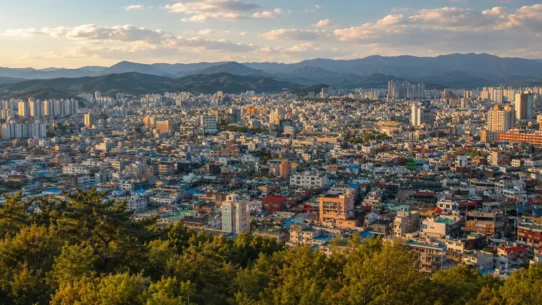
If you are trying to decide where to stay in Daegu for your first visit, the difficult part is not finding hotels. It is understanding which “central” location actually saves you time once KTX arrivals, subway transfers, late-night food, station exits and luggage are added to the equation. Daegu is compact enough that a bad choice will not ruin your trip, but a poorly chosen base can still mean two extra rides every day, awkward transfers with bags, or a quiet evening neighborhood when what you wanted was restaurants outside the door. This guide focuses on those real trade-offs so you can choose the area that fits the way you will actually travel.
Price note: Hotel prices below are planning ranges, not fixed quotes. Recent August 2026 OTA inventory showed central Daegu rooms starting around the US$50–60 mark, Dongdaegu Station options around the US$70+ mark, and upscale Suseongmot hotels substantially higher. Friday and Saturday nights, festivals, holidays, room type and cancellation terms can change the price quickly. Always compare the final total, not just the headline nightly rate.
The 1-Min Cheat Sheet
- Dongseong-ro & Jungangno — Best overall for first-timers: Choose this if you want restaurants, cafés, shopping and nightlife within walking distance. It is the easiest “I do not want to overthink this” choice for a two- or three-night city break.
- Banwoldang — Best for subway transfers: Choose this if your itinerary spreads across several parts of Daegu or you hate unnecessary transfers. Lines 1 and 2 meet here, and Dongseong-ro is still walkable.
- Dongdaegu Station — Best for KTX, day trips and luggage: Choose this for a late arrival, early train, one-night stopover or a trip with several rail journeys. You trade nightlife atmosphere for friction-free transport.
- Seomun Market & Cheongna Hill — Best for food, heritage and value: Choose this if traditional markets and the Modern Cultural Alley matter more to you than late-night shopping. It feels more local and often gives you more character for the money.
- Suseongmot — Best for couples, families and quieter evenings: Choose this if a lake walk, cafés and a calmer hotel experience matter more than being in the tourist core. It is pleasant, but not the most time-efficient first-timer base.
- Anjirang & Apsan — Best for local food, hiking and tighter budgets: Choose this if Apsan and gopchang are priorities. Otherwise, I would not make it the default base for a short first visit.
Top Survival Tips
- Search the hotel entrance, not just the neighborhood. “Near Banwoldang” can mean a hotel beside a useful exit or a property several blocks away on the opposite side of a large junction. With luggage, rain or Daegu’s summer heat, those extra blocks matter. Before paying, pin the actual entrance and check the walking route from the station exit you will use.
- Do not confuse Daegu Station with Dongdaegu Station. Dongdaegu is Daegu’s largest railway station and the major hub for KTX and SRT services. If your booking says “near Daegu Station,” do not assume you can simply roll your suitcase across the road to your KTX platform.
- For a multi-day sightseeing trip, being beside the KTX is not automatically best. Dongdaegu is extremely practical on arrival and departure days, but if most of your evenings are in Dongseong-ro, you will keep commuting back to the station district. A downtown hotel can reduce your daily movement while still keeping Dongdaegu straightforward to reach on Line 1.
- Banwoldang is the safest transport compromise. It sits on both Line 1 and Line 2, so it reduces the number of journeys that require a transfer. This matters most if your plans include both central Daegu and places farther east or west, or if you are traveling with someone who gets tired easily.
- Light sleepers should avoid blindly booking a street-facing Dongseong-ro room. The district is busiest after dinner and on weekends. A high floor or room facing away from the main entertainment streets can give you the central location without taking the full nightlife soundtrack to bed.
- Read recent hotel photos as carefully as the star rating. Daegu has conventional business hotels, compact chain rooms, apartments, guesthouses and motel-style properties appearing on the same booking platforms. A low price is not necessarily a problem, but confirm reception hours, elevator access, bathroom layout, window type and luggage storage before assuming every “hotel” offers the same experience.
- Do not save US$15 on the room and spend it back on taxis. Suseongmot and Anjirang can offer better-looking or cheaper rooms on some dates, but a short first visit is usually more enjoyable when dinner, cafés and transport are close enough that you can return to the hotel without planning another journey.
- For a one-night rail stopover, reverse the advice. If you arrive late and leave by KTX the next morning, Dongdaegu Station is usually more sensible than crossing town to stay somewhere “more touristy.” The best area is the one that removes the most friction from your actual itinerary.
The Full Experience
📍 Dongseong-ro & Jungangno: Best Overall for First-Time Visitors
BEST OVERALL · NIGHTLIFE · SHOPPING · WALKABLE · LINE 1
If a friend asked me where to stay in Daegu for a first visit and gave me no other information, I would start with Dongseong-ro or the Jungangno side of downtown. This is the part of the city where the “small inconveniences” of travel disappear: you finish sightseeing, walk back toward the center, eat without researching a bus route, pick up coffee or snacks, browse shops, and return to the hotel on foot.
Daegu’s official tourism site describes Dongseong-ro as the city’s central business district, packed with cafés, department stores, movie theaters and food. That description matters for hotel choice because this is not a district that shuts down the moment attractions close. For a first-timer, the ability to improvise dinner at 8:30 p.m. or grab something after a long day is more useful than having a famous landmark directly outside the lobby.
Transport reality: Jungangno is on Metro Line 1, the same line as Dongdaegu Station. Banwoldang is immediately to the south and can be reached on foot from much of the district, so you are not locked into one transport option. Central sights such as the Modern Cultural Alley, Gyesan Catholic Church area, cafés and shopping streets are also close enough that you will often walk rather than ride.
Hotel price reality: Recent Klook listings showed Toyoko Inn Daegu Dongseong-ro from about US$56 and Rivertain Hotel from about US$59, while Booking.com had several central properties in roughly the US$50–85 range on the dates displayed during this update. Better rooms, apartments and busy weekends can easily go beyond US$100. I would budget roughly US$50–100 for a typical budget-to-mid-range room, then treat anything below or above that as date-specific.
✅ What Other Travelers Say
Recent traveler feedback repeatedly praises the central location: food and shopping are immediately outside, the subway is only a few minutes away, and it works well for visitors who do not want to plan every meal. The trade-off appears in the same reviews: some chain rooms are compact and practical rather than luxurious. That is exactly how I would frame the area—pay for location first, room size second.
⚠️ The Catch (Things to Keep in Mind)
Dongseong-ro is the part of this guide where I would take noise most seriously. Main pedestrian and entertainment streets stay lively later than the market and heritage areas, especially on Friday and Saturday. If you sleep lightly, request a high floor or a room facing away from the busiest street. Also check the exact walking route: “Dongseong-ro” covers enough blocks that one hotel may be much closer to Jungangno while another is practically a Banwoldang hotel.
Best for: first visits, solo travelers, couples, food-focused trips, shoppers, travelers staying two to four nights, and anyone who wants to minimize evening transport.
Not ideal for: very light sleepers who refuse to compromise on room position, drivers who prioritize easy parking, or travelers whose only reason for being in Daegu is an early KTX connection.
📍 Banwoldang: Best for Subway Transfers and Low-Stress Sightseeing
BEST TRANSIT · LINES 1 & 2 · CENTRAL · WALKABLE TO DONGSEONG-RO
Banwoldang is the area I recommend when a traveler says, “I care more about getting around easily than being in the middle of the nightlife.” It is one of Daegu’s most useful transit points because Metro Lines 1 and 2 meet here. That sounds like a small technical detail, but it changes the rhythm of a trip: more destinations become one-seat rides, and you are less likely to spend time walking through transfer corridors with a suitcase or tired children.
It is also not a sterile station district. Dongseong-ro begins just to the north, and Daegu’s official tourism information points visitors to Dongseong-ro from Banwoldang Exit 13. The Modern Cultural Alley and old downtown are close enough to reach on foot from many hotels. In other words, Banwoldang gives you much of downtown’s convenience without forcing you to sleep directly above its busiest nightlife streets.
Transport reality: Line 1 gets you toward Dongdaegu Station, Jungangno and Anjirang; Line 2 is useful for areas including Kyungpook National University Hospital, Beomeo and points farther east or west. If your itinerary is still half-formed when you book, this is the area with the least chance of becoming inconvenient later.
Hotel price reality: Banwoldang overlaps the broader central hotel market, so a useful working budget is about US$50–110 per night for ordinary private rooms and business-hotel style stays. Apartments can cost more but may make sense for three or four travelers. The biggest price trap here is not the nightly rate—it is booking a “near Banwoldang” property that is much farther from the station entrance than the listing headline implies.
✅ What Other Travelers Say
Travelers who know Daegu often describe Banwoldang as a dependable base because restaurants remain easy to find and central sights are close, while the Line 1/Line 2 interchange keeps day planning flexible. It is especially popular with people who want to see more than one side of the city instead of spending the whole trip around Dongseong-ro.
⚠️ The Catch (Things to Keep in Mind)
The station is useful precisely because it is large. That means the wrong exit can add an annoying underground walk, and the hotel that looks “next to Banwoldang” on a zoomed-out map may not feel next door with bags. The immediate street atmosphere is also more transport-and-shopping oriented than Jungangno’s nightlife core. If your dream Daegu stay is stepping straight into neon, bars and late-night crowds, move a little north.
Best for: first-time visitors with a busy itinerary, older travelers, families, rainy-weather trips, anyone who dislikes transfers, and people who want central convenience with slightly more distance from nightlife.
Not ideal for: travelers who want their hotel literally in the busiest nightlife lanes or those who value a scenic neighborhood view over transport efficiency.
📍 Dongdaegu Station: Best for KTX, Day Trips and Heavy Luggage
KTX & SRT · HEAVY LUGGAGE · SHORT STAYS · TRANSIT HUB
Dongdaegu Station is the area that makes the most sense when your trip is built around trains rather than Daegu nightlife. VISITKOREA identifies it as the largest railway station in Daegu, serving KTX and SRT trains to destinations including Seoul, Gyeongju, Ulsan and Busan. It is also connected to the Daegu Metro and sits beside the large transit-center complex. If you are carrying two suitcases, arriving after dark or leaving on an early train, that convenience is hard to beat.
This is also a smart base for travelers using Daegu as part of a multi-city Korea itinerary. For example, a recent VISITKOREA guide notes that Gyeongju is about 20 minutes from Dongdaegu by KTX or SRT. If you plan rail day trips, or you are stopping between Seoul and Busan, sleeping near the platforms can save more energy than staying in the prettiest neighborhood.
Transport reality: Dongdaegu Station is on Metro Line 1, so reaching Jungangno and the downtown core is straightforward. That is why I do not consider the area “far away.” The question is repetition: a one-way ride is easy, but if every dinner, drink and evening walk is downtown, you will make the same commute again and again.
Hotel price reality: Recent Klook inventory listed Dongdaegu Station Eastern Hotel from about US$77, while other nearby or east-side options varied substantially. A sensible planning band is about US$70–130 per night for a comfortable private room near the station, with apartments and larger rooms potentially higher.
✅ What Other Travelers Say
Recent hotel reviews around Dongdaegu praise the walkability to the station, nearby restaurants, convenience stores and the ease of using the area as a stopover before continuing elsewhere in Korea. The recurring positive is not romance—it is efficiency. You check out, roll the bag to the station and move on.
⚠️ The Catch (Things to Keep in Mind)
This is not where I would stay for three nights if my main goal were Dongseong-ro restaurants, Seomun Market and central evening walks. The area is bright, modern and convenient, but the atmosphere is more “transport hub plus shopping” than “I stepped outside and found old Daegu.” Also remember that a hotel branded around “Dongdaegu” may still require a meaningful walk from the station—check the entrance carefully.
Best for: one-night stays, late arrivals, early departures, KTX/SRT users, rail day trips, families with bulky luggage and travelers connecting onward to other Korean cities.
Not ideal for: visitors who want to spend most evenings downtown and prefer walking home after dinner.
📍 Seomun Market & Cheongna Hill: Best for Food, History and Better Value
MARKET FOOD · MODERN ALLEY · LINE 3 · HERITAGE · VALUE
Seomun Market and Cheongna Hill are where I would send a traveler who says, “I want Daegu to feel different from another Korean shopping district.” You are close to one of the city’s best-known traditional markets and the Modern Cultural Alley, where the pace is slower and the surroundings have more historical texture than the glass-and-neon parts of town.
Daegu’s tourism site places Seomun Market directly on Metro Line 3 and highlights its food stalls, pressed noodles, flat dumplings and other local specialties. It also describes the Modern Cultural Alley as a roughly two-hour walking route beginning around Cheongna Hill. This combination is the reason the area works: breakfast and market food are close, daytime sightseeing starts near the hotel, and central Daegu is still within easy reach.
Transport reality: Seomun Market Station is on Line 3, while Cheongna Hill is a useful interchange between Lines 2 and 3. The central core is close enough that walking can be pleasant in good weather, but I would not plan to drag a suitcase from Dongseong-ro simply because the map makes it look close. Use the metro or a taxi on arrival day.
Hotel price reality: Recent Agoda data around Seomun Market showed average rates around the mid-US$70s for three-star properties and the mid-US$80s for four-star properties, with some guesthouses and simple hotels below that and better-known full-service hotels above US$100. For planning, think about US$40–95 for many budget-to-mid-range options, while stronger four-star choices can run higher.
✅ What Other Travelers Say
Travelers tend to like this part of Daegu for food, traditional atmosphere and walkable access to older central neighborhoods. It is a good antidote to the feeling that every Korean city trip has turned into the same sequence of malls and cafés. Value can also be better than the most fashionable Dongseong-ro addresses.
⚠️ The Catch (Things to Keep in Mind)
Market energy is not the same as nightlife energy. The official daytime market hours are finite, individual stalls close at different times, and night-market operations can vary by season or schedule. Do not book here expecting the entire neighborhood to stay as lively at 11 p.m. as Dongseong-ro. Some smaller guesthouses and older properties may also have more limited reception hours, smaller elevators or no elevator at all—check before arriving with heavy bags.
Best for: food travelers, repeat Korea visitors, photographers, history lovers, travelers who prefer local streets to malls, and anyone looking for a central stay with a little more character.
Not ideal for: travelers who want nightlife outside the lobby every night or who expect the same density of modern hotels as Dongseong-ro and Dongdaegu.
📍 Suseongmot (Suseong Lake): Best for Couples, Families and Quieter Evenings
QUIET NIGHTS · LAKE WALK · CAFÉS · COUPLES · UPSCALE
Suseongmot is the easiest area in this guide to love in the evening and the easiest one to over-recommend to a first-timer. The lake is genuinely pleasant: Daegu’s tourism site describes a lap as roughly a 40-minute walk, and the surrounding area has restaurants, cafés and night views. If your ideal trip ends with a calm walk rather than shopping bags and bar noise, the appeal is obvious.
It also works well for couples and families who prefer a more relaxed hotel environment. The area has larger, more upscale properties than you might expect from a secondary city stay, and the lake gives you somewhere pleasant to spend time without turning every evening into another sightseeing mission.
Transport reality: Suseongmot Station is on Metro Line 3. That line is useful, but Suseongmot is southeast of the main first-timer cluster, and many central journeys involve more time or a transfer compared with Banwoldang or Jungangno. Taxis can make the area much easier, especially for a family of three or four, but that needs to be part of your budget calculation.
Hotel price reality: Suseongmot can be expensive by Daegu standards. During this update, Klook listed Hotel Susung from roughly US$218 for the dates shown. Not every property costs that much, but the area’s better hotels often carry a premium for views, larger facilities and a more resort-like atmosphere. A realistic expectation is around US$80–160+ for many comfortable options, with upscale lake hotels capable of climbing well above that.
✅ What Other Travelers Say
Visitors regularly praise the lake as an evening walking area and like having cafés and restaurants nearby. Hotel reviews around the lake often mention the view and the pleasant surroundings. Families and couples tend to get more value from that environment than a traveler who plans to leave the hotel at 8 a.m. and return at midnight.
⚠️ The Catch (Things to Keep in Mind)
The problem is location efficiency. For a two-night first trip focused on Seomun Market, Dongseong-ro and central sights, Suseongmot can create more transport than it removes. Weekends can also bring local crowds around the lake and restaurant district, so “quiet area” does not mean “empty.” I would choose it because you actively want the lake lifestyle, not because a booking site happened to show a beautiful room.
Best for: couples, families, repeat visitors, travelers who prioritize hotel quality and calm evenings, and anyone willing to use taxis occasionally.
Not ideal for: a first-time visitor with only one or two sightseeing days who wants to maximize central walking time.
📍 Anjirang & Apsan: Best for Local Food, Hiking and Budget Travelers
AP SAN · GOPCHANG · LINE 1 · LOCAL FOOD · BUDGET-LEANING
Anjirang is the niche choice I like but would not push on every first-time visitor. The reason to stay here is very specific: you want local food streets, Apsan access and a neighborhood that feels less visitor-oriented than Dongseong-ro. Daegu’s official tourism site says Anjirang Gopchang Alley has dozens of gopchang restaurants and places the alley about 200 meters from Anjirang Station Exit 3. If that sounds like your perfect evening, staying nearby can be fun.
Apsan is the other reason. The mountain and observatory are among Daegu’s best-known viewpoints, and basing yourself on the south side of the city can make an early hike or evening viewpoint visit easier. For a traveler who has already seen the polished downtown core, this area gives the trip a more local rhythm.
Transport reality: Anjirang is on Metro Line 1, so you can ride directly toward Banwoldang, Jungangno and Dongdaegu without changing lines. That keeps it more practical than it first appears. However, you are still commuting into the main tourist core rather than living inside it, and Apsan itself is not simply “at the station”; buses, taxis or additional walking may still be involved depending on the trail or cable-car access you choose.
Hotel price reality: This part of Daegu often has simpler business hotels and motel-style properties at lower prices than the most in-demand downtown addresses. I would use roughly US$35–80 per night as a budget-planning band, but inventory varies and foreign-facing booking platforms may show fewer choices. Read recent reviews carefully rather than choosing purely by price.
✅ What Other Travelers Say
The food alley is the clear draw: diners come specifically for grilled gopchang and makchang, and the area is lively in the evening. Travelers who enjoy local neighborhoods also appreciate that this is not built around an international-tourist checklist. It can feel more like staying in the city than visiting a sightseeing zone.
⚠️ The Catch (Things to Keep in Mind)
This is a good niche base but a weak default base. If your priorities are Seomun Market, Dongseong-ro shopping and a first overview of Daegu, staying here saves hotel money but costs time. Around the food alley, expect restaurant smoke, voices and late dinners rather than serene residential silence. Some cheaper properties are also motel-style, so check room photos, reception arrangements and recent guest comments before booking.
Best for: hikers, food-focused travelers, repeat Korea visitors, budget travelers comfortable with local-style accommodation and anyone specifically planning Apsan time.
Not ideal for: first-time visitors who want the simplest possible sightseeing base, travelers who dislike commuting after dinner, or anyone expecting a large selection of international-style hotels.
Key FAQs
What is the best area to stay in Daegu for first-time visitors?
For most first-time visitors, Dongseong-ro/Jungangno is the best overall choice because you can walk to restaurants, shopping and several central sights while keeping Line 1 nearby. Choose Banwoldang instead if subway flexibility matters more than nightlife, especially when your itinerary spreads across several parts of the city.
Is it better to stay near Dongdaegu Station or downtown Daegu?
Stay near Dongdaegu Station for a one-night stopover, early KTX, late arrival, heavy luggage or multiple rail trips. Stay downtown around Jungangno, Dongseong-ro or Banwoldang for a two- to four-night sightseeing trip where you want to walk to dinner and spend less time commuting back after dark.
Where should families stay in Daegu without too much nightlife noise?
If you want the calmest evening environment and do not mind extra transport, Suseongmot is the most appealing choice because of the lake, cafés and more relaxed atmosphere. If you want to stay central, look at the Banwoldang edge of downtown rather than a room directly on Dongseong-ro’s busiest lanes, and request a higher or inward-facing room.
Final Verdict and Your Next Step
If this is your first trip and you still cannot decide, use this rule: book Dongseong-ro/Jungangno for the easiest overall stay, Banwoldang for the best transit, and Dongdaegu Station only when rail convenience is a major part of the itinerary. Seomun Market is the more characterful value choice, Suseongmot is the comfort-and-quiet choice, and Anjirang is the food-and-hiking choice for travelers who already know why they want to be there.
The mistake I would avoid is chasing the cheapest or prettiest hotel without counting the journeys it creates. On a short city break, saving twenty minutes twice a day is often worth more than a slightly larger room. Once your dates are fixed, book a cancellable option early—especially for Friday and Saturday nights or event periods—then recheck rates before the free-cancellation deadline. That gives you price protection without locking yourself into a poor location.
Check current Daegu hotel availability and prices:
- Compare Daegu hotels on Agoda
- Check Daegu availability on Booking.com
- Browse Daegu hotels, transport and activities on Klook
- Check Daegu tours and attraction tickets on KKday
Research note: Area recommendations were cross-checked against Daegu Metropolitan City subway information, Daegu’s official tourism site, VISITKOREA transport and attraction information, recent OTA inventory, and recent traveler feedback. Transport routes, business hours and hotel rates can change, so verify your exact travel date before departure.