
💡 Key Takeaways
- Dongseong-ro / Banwoldang is the best all-round base for most first-time visitors. You get central dining, nightlife, shopping, and the most useful subway interchange for exploring Daegu without repeatedly backtracking.
- Dongdaegu Station is the smarter choice when KTX, intercity buses, an early departure, or heavy luggage matters more than atmosphere. Staying downtown may look more exciting, but every extra hotel-to-station transfer becomes annoying with a suitcase.
- Do not book by district name alone. In Daegu, a hotel that looks “central” on a map can still mean a long walk, an extra subway transfer, or a taxi at the end of the night. Check the exact station, exit, slope, and walking route before paying.
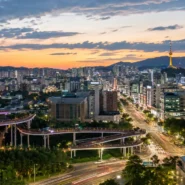
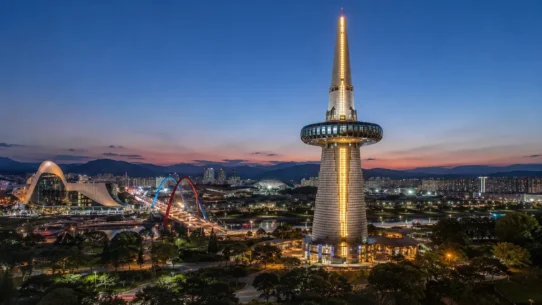
Choosing among the best areas to stay in Daegu is less obvious than it first appears. The city is easy enough to navigate, but the places travelers actually use are split between downtown around Dongseong-ro, the KTX hub at Dongdaegu, the historic market streets west of downtown, the lakeside district at Suseongmot, and the hiking-and-food neighborhoods below Apsan. Pick the wrong base and you may spend a surprising amount of the trip retracing your route, changing subway lines, or dragging luggage farther than the hotel map suggested. The good news is that there is no need to overcomplicate it: once you decide whether your priority is sightseeing convenience, KTX access, local food, quieter evenings, or hiking, Daegu becomes much easier to book well.
The 1-Min Cheat Sheet
- Dongseong-ro / Banwoldang — best overall for first-timers: Choose this if you want restaurants, cafés, shopping, nightlife, and fast access to both Subway Lines 1 and 2. Main tradeoff: lively streets can mean more evening noise, and the most convenient hotels are not always the cheapest.
- Dongdaegu Station — best for KTX, buses, business trips, and heavy luggage: Choose this if Daegu is one stop in a wider Korea itinerary or you have multiple rail day trips. Main tradeoff: the area feels more like a transport and commercial hub than a classic sightseeing neighborhood.
- Seomun Market / Seongnae — best for street food, history, and local character: Choose this if markets, traditional food, old-city walks, and a more lived-in atmosphere matter to you. Main tradeoff: hotel choice is thinner, and some streets become much quieter after market hours.
- Suseongmot — best for couples, families, and quieter evenings: Choose this if you prefer lake walks, cafés, restaurants, and a calmer base over being in the middle of downtown. Main tradeoff: you will spend more time and money reaching central sights.
- Anjirang / Apsan — best for hikers, repeat visitors, and local food: Choose this if Apsan trails and Anjirang Gopchang Alley are part of the trip rather than optional extras. Main tradeoff: it is less efficient for a short first visit focused on downtown attractions.
Top Survival Tips
- Do not confuse Daegu Station with Dongdaegu Station. They are different stations. Dongdaegu is the major KTX and intercity transport hub, integrated with Daegu Metro Line 1 and the express/intercity bus terminal. Daegu Station is closer to the traditional downtown core but is not the same transport node. This is one of the easiest booking mistakes to make when scanning hotel maps quickly.
- Daegu International Airport is not a “walk out of the terminal and onto the subway” airport. The airport’s own transport guidance directs subway users to Ayanggyo Station and then a bus or taxi connection. If you have a very early flight, several suitcases, young children, or mobility concerns, compare the cost of a taxi with the hassle of multiple transfers before choosing a hotel purely because it is on a subway line.
- Banwoldang is the most useful map pin for a first trip. It is the transfer point between Subway Lines 1 and 2, while nearby Jungangno puts you directly under the Dongseong-ro shopping area. If two downtown hotels cost roughly the same, the one with the shorter, flatter walk to either Banwoldang or Jungangno is usually the more practical choice.
- Measure the walk from the station exit, not from the station name. A listing that says “near Banwoldang” may still sit several blocks from the exit you actually need. With luggage, aim for roughly a five-to-eight-minute real walking route when transport convenience is your priority. Check crossings, large intersections, hills, and whether the hotel entrance is on a small side street.
- Ten extra minutes on foot matters more in Daegu than it looks on a clean map screenshot. Summer conditions can be hot and humid, and winter nights can feel sharply cold. A hotel that saves a little money but adds a long exposed walk twice a day may be a false economy, especially for families and travelers carrying shopping bags.
- Downtown convenience and downtown quiet rarely come in the same exact block. Around Dongseong-ro, rooms above or beside late-night dining and entertainment streets can pick up street noise. If you are a light sleeper, look for a hotel one or two streets off the busiest pedestrian lanes, request a higher floor, and read recent noise comments rather than relying only on the property’s star rating.
- Very cheap rooms deserve a closer inspection, not an automatic rejection. Daegu has plenty of simple business hotels and compact local properties that can be good value. Before booking, check recent photos and reviews for window size, smoking policy, bathroom layout, elevator access, luggage storage, room size, and whether the property operates more like a no-frills motel than a full-service hotel. The label “hotel” alone tells you very little about the experience.
- Choose Suseongmot and Apsan because you want their lifestyle, not because they look peaceful on the map. Both can be excellent bases, but they trade central convenience for a specific experience. If your itinerary is mostly Dongseong-ro, Seomun Market, museums, and KTX arrivals, staying farther out will add repeated transit time.
The Full Experience
🛍️ Dongseong-ro / Banwoldang: Best for First-Timers, Food and Nightlife
Feature tags: Best overall · Subway Lines 1 & 2 · Nightlife · Shopping · Food · First visit · Minimal backtracking
If you want one answer without overthinking the map, stay around Dongseong-ro, Banwoldang, or Jungangno. This is the most balanced base in Daegu because the city’s busiest downtown streets, restaurants, cafés, shops, convenience stores, cinemas, and evening activity are concentrated around you. More importantly, Banwoldang is where Subway Lines 1 and 2 meet, which reduces the number of awkward journeys for a first-time visitor.
The biggest advantage is not that every attraction is outside your hotel door. It is that you can return after sightseeing and still have plenty of food and activity within walking distance. That matters more than many travelers expect. A hotel near a transport hub can be convenient at 9 a.m.; a hotel near dinner, coffee, pharmacies, convenience stores, and late-night food is convenient at 9 p.m. as well.
Best micro-location to book: For the best transport balance, look south of the busiest Dongseong-ro lanes toward Banwoldang Station. For maximum shopping and nightlife convenience, aim closer to Jungangno Station and the central pedestrian streets. A hotel one or two blocks away from the loudest lanes is often a better compromise than one directly above the action.
Who should skip it: Travelers catching an early KTX with a lot of luggage, people who strongly prioritize silence, and visitors whose main goal is Suseongmot or Apsan may prefer a more specialized base.
✅ What Other Travelers Say
Recent traveler discussions repeatedly describe the downtown area around Dongseong-ro and Banwoldang as the easiest place to stay for restaurants, convenience stores, public transport, and late dining. Budget-minded travelers also note that central Daegu can still offer reasonably priced simple hotels. The recurring theme is convenience rather than luxury: people like being able to step outside and immediately find food and transport instead of planning every evening around a return journey.
⚠️ The Catch (Things to Keep in Mind)
“Downtown” is not automatically quiet. Weekend evenings can be busy, and some smaller business-style rooms trade floor space for location. Do not pay a premium merely for a Jung-gu address: check the exact walk to Banwoldang or Jungangno, then read recent comments about street noise. If you are sensitive to sound, a slightly less central side street can be the smarter booking.
🚄 Dongdaegu Station: Best for KTX, Day Trips and Heavy Luggage
Feature tags: KTX · Intercity buses · Subway Line 1 · Business trips · Short stays · Heavy luggage · Early departures
Dongdaegu Station is the functional choice. It may not give you the most atmospheric first impression of Daegu, but it solves a very specific travel problem better than anywhere else: moving in and out of the city with minimum friction. The station complex connects KTX and other rail services with Daegu Metro Line 1, while the integrated transfer center handles express and intercity buses. For a Korea trip built around Seoul–Daegu–Busan or multiple regional day trips, this can save repeated suitcase transfers.
The station area also has the practical infrastructure short-stay travelers need: restaurants, cafés, convenience stores, retail, and the Shinsegae complex nearby. You can arrive, drop your bags, eat without hunting for an open restaurant, and get moving again quickly the next morning.
Best micro-location to book: Stay on the station side that gives you the shortest realistic walk to the rail concourse and Metro Line 1. A hotel that is technically “near Dongdaegu” but requires crossing large roads or making a long loop is less useful than it looks. When comparing two properties, prioritize an easy station walk over a marginally nicer lobby.
Who should skip it: Travelers who want to spend every night strolling through Daegu’s busiest dining and shopping streets may find the area too transport-oriented. You can reach downtown by Metro Line 1, but you will still be commuting back after dinner.
✅ What Other Travelers Say
Guest feedback around Dongdaegu commonly praises the simple logistics: easy station access, nearby restaurants, and straightforward onward transport. This is especially valuable for one- or two-night stays. Travelers with larger bags tend to value the area for a reason that barely appears in glossy neighborhood guides: not having to carry luggage through an extra subway ride at both the beginning and end of the stay.
⚠️ The Catch (Things to Keep in Mind)
The tradeoff is atmosphere. Dongdaegu is a major gateway, so the surrounding streets feel more commercial and transit-focused than the central Dongseong-ro lanes or the old-city market area. If you stay here for a four- or five-night sightseeing trip, the repeated ride into central Daegu can become more annoying than the one-time luggage transfer you originally avoided.
🥟 Seomun Market / Seongnae: Best for Street Food, History and Local Character
Feature tags: Traditional market · Street food · Old-city walks · Local atmosphere · Line 3 · History · Value-minded travelers
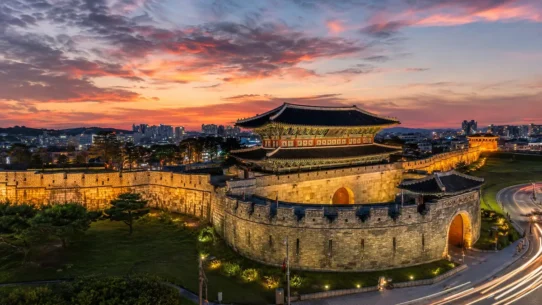
Stay near Seomun Market, Seongnae, or the Cheongna Hill side of the old city if you would rather wake up near market lanes, traditional food, historic streets, and Daegu’s older urban fabric than beside a department store. Seomun Market is one of the city’s best-known traditional markets, while the surrounding area links naturally with Gyesan Cathedral, the Modern Culture Alley area, Yangnyeongsi, and central-city walks.
This is a particularly good choice for travelers who enjoy exploring on foot during the day and who value a neighborhood feeling over polished hotel facilities. It can also be good value because accommodation is not concentrated solely in the city’s most commercial blocks.
Best micro-location to book: If the market is your priority, look around Seomun Market Station on Line 3. If you want a better transport balance, move toward Cheongna Hill Station, where Lines 2 and 3 meet. That puts you closer to both the historic walking zone and a more flexible subway connection.
Who should skip it: Travelers who want a large selection of modern full-service hotels, people arriving very late who want busy streets outside the door, and anyone planning frequent KTX day trips may find Dongseong-ro or Dongdaegu easier.
✅ What Other Travelers Say
Visitors who enjoy this side of Daegu tend to mention the combination of food, history, cafés, and easy access to old-city sights. Recent guest comments for stays near Seomun also highlight being able to walk to the market and historic landmarks rather than treating them as a quick daytime excursion from another neighborhood.
⚠️ The Catch (Things to Keep in Mind)
A market district changes character with the clock. Some lanes that are busy and fascinating in daytime become much quieter after stalls close, so do not assume the night-time atmosphere will resemble Dongseong-ro. Hotel stock is also less uniform: you may see older buildings, hanok-style stays, and simple local properties mixed together. Read room-specific reviews carefully if an elevator, modern bathroom layout, or late check-in is essential.
🌙 Suseongmot: Best for Couples, Families and Quieter Evenings
Feature tags: Suseong Lake · Couples · Families · Evening walks · Cafés · Restaurants · Quieter base · Line 3
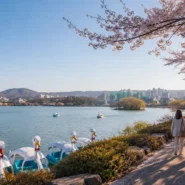
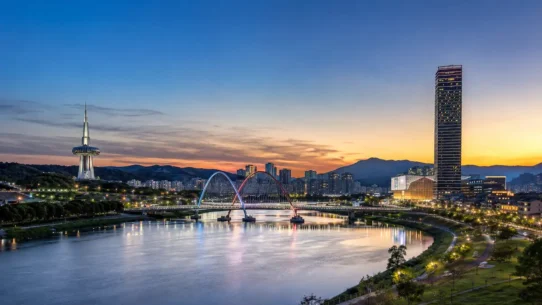
Suseongmot is where you stay when the neighborhood itself is part of the holiday. Instead of stepping into a dense shopping district, you get access to Suseong Lake, waterside walks, cafés, restaurants, and a more relaxed evening rhythm. For couples, families, or travelers who have already visited Korea’s bigger shopping districts and want a calmer Daegu stay, this can feel much more restorative than sleeping downtown.
There is a meaningful range of accommodation here, including more polished and resort-style options than you typically find around the market districts. It also works well for travelers who expect to use taxis occasionally and would rather pay for a more pleasant immediate environment than optimize every subway minute.
Best micro-location to book: Check the actual walking route between your hotel, Suseongmot Station on Line 3, and the part of the lake you want to use at night. “Near Suseong Lake” can cover a surprisingly wide area. Some hotels are pleasant lakeside choices but are not directly beside a subway entrance, so a 10- to 15-minute walk may be part of the deal.
Who should skip it: First-time visitors with only one or two full days, KTX-heavy itineraries, and travelers who want to walk out of the hotel into Daegu’s busiest downtown nightlife should generally stay more centrally.
✅ What Other Travelers Say
Travelers and local discussions often recommend Suseongmot for an evening walk, dinner, and the calmer atmosphere around the lake. Hotel guest feedback in the area also tends to value the location and proximity to the lake. The appeal is not that it beats downtown for transport; it is that coming back to the neighborhood at the end of the day can feel like part of the experience rather than merely returning to a bed.
⚠️ The Catch (Things to Keep in Mind)
Suseongmot can quietly increase your transport budget. Many central sights require a ride plus, depending on the route, a transfer or a taxi. Upscale properties around the lake can also cost more than simple downtown business hotels. Before booking, add up the likely daily journeys instead of comparing room prices alone. A cheaper lakeside rate is not a saving if your itinerary sends you across the city morning and night.
🥾 Anjirang / Apsan: Best for Hikers, Repeat Visitors and Local Food
Feature tags: Apsan hiking · Anjirang Gopchang Alley · Subway Line 1 · Local food · Quieter streets · Repeat visits · Active travelers
Anjirang and the neighborhoods below Apsan are specialist choices—and that is exactly why the right traveler may love them. Apsan is one of Daegu’s signature viewpoints and hiking areas, while Anjirang is known for its gopchang alley and distinctly local evening food scene. If you plan to hike early, spend time around Apsan, and eat locally rather than shop every night, staying nearby turns those activities from cross-city excursions into part of your daily routine.
Anjirang Station sits on Metro Line 1, so you are not cut off from the city center. The difference is that your final destination at Apsan may still involve a bus, taxi, or uphill walk depending on the trail or cable-car approach you choose. This is why the area suits active travelers much better than someone simply looking for “cheap accommodation outside downtown.”
Best micro-location to book: For the best compromise, stay within a manageable walk of Anjirang Station rather than too deep toward the mountain. You keep Line 1 access for downtown while remaining close to the food alley and Apsan side of the city. If the hike is your main reason for coming, check the exact trailhead or cable-car access route before choosing a hotel.
Who should skip it: Travelers with a packed first-time checklist, people who dislike hills or extra buses/taxis, and visitors who need a broad selection of internationally reviewed hotels will usually be happier in Dongseong-ro or Dongdaegu.
✅ What Other Travelers Say
Traveler discussions about Apsan consistently focus on the rewarding city views and the option to combine walking with the cable-car area. Anjirang is also valued for its food culture rather than polished tourist infrastructure. The positive feedback here is experience-driven: people choose the area because they actively want the mountain and local dining scene, not because it is the universally most convenient place to sleep.
⚠️ The Catch (Things to Keep in Mind)
Do not underestimate the “last mile.” A subway station in the general Apsan area does not mean your trailhead is beside the station, and mountain access can involve extra walking, a bus, or a taxi. Hotel inventory is also thinner than downtown, with fewer properties carrying a large volume of recent international reviews. If you book near the gopchang alley itself, check comments about late-night street noise and food smells before deciding that the closest room is automatically the best room.
Key FAQs
What is the best area to stay in Daegu for first-time visitors?
For most first-time visitors, Dongseong-ro / Banwoldang is the best area to stay in Daegu. It puts you near the city’s main downtown dining and shopping zone while giving you access to both Subway Lines 1 and 2 at Banwoldang. It is the easiest base if your itinerary mixes Seomun Market, central sights, cafés, shopping, and occasional trips farther east or south.
Is it better to stay near Dongdaegu Station or Dongseong-ro?
Stay near Dongdaegu Station if KTX trains, intercity buses, a one-night stop, an early departure, or heavy luggage are your main concerns. Stay near Dongseong-ro if you care more about restaurants, nightlife, shopping, and being able to walk around after dinner. For a three-night first visit with only one KTX arrival and departure, downtown usually gives the better overall experience; for a rail-heavy itinerary, Dongdaegu usually saves more hassle.
Where should families and couples stay in Daegu for a quieter trip?
Suseongmot is the strongest choice for travelers who want quieter evenings, lake walks, cafés, and a more relaxed setting. Families should still check the exact station walk, room size, and whether the hotel has the bed configuration they need. Couples who prioritize dinner and evening atmosphere over maximum sightseeing efficiency often find the Suseong Lake area more appealing than a purely transport-focused base.
Final Verdict and Your Next Step
If you are still undecided, use this rule: book Dongseong-ro / Banwoldang unless another neighborhood solves a specific problem for you. Choose Dongdaegu Station to remove KTX and luggage friction; Seomun Market / Seongnae for food and old-city atmosphere; Suseongmot for a calmer couples-or-family stay; and Anjirang / Apsan when hiking and local dining are central to the trip.
The most expensive mistake is not necessarily booking an expensive hotel. It is booking a cheaper room that forces you into two extra rides, a long suitcase walk, or a taxi every night. Before paying, zoom into the property map, identify the station exit you will actually use, read the newest comments about noise and room condition, and compare the total trip—not just the nightly rate.
Once your dates are fixed, it is worth checking inventory early, especially for weekends, festivals, family-size rooms, larger non-smoking rooms, or hotels within a genuinely short walk of Banwoldang and Dongdaegu Station. Use the links below to compare current availability and book activities before the easiest options disappear: